
Lecture
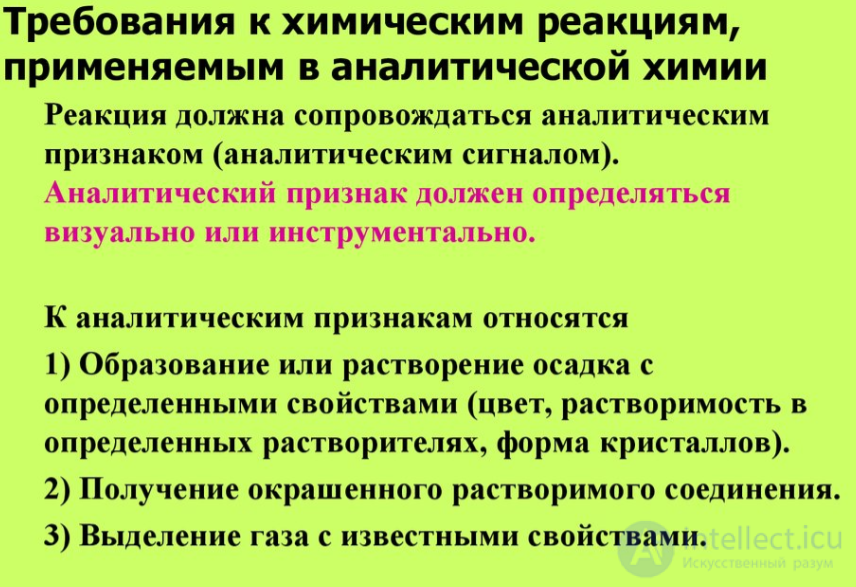
Qualitative analysis is a set of chemical, physicochemical, and physical methods used to detect the elements, radicals, and compounds that make up the substance or mixture of substances being analyzed. Qualitative analysis makes use of easily performed, characteristic chemical reactions in which a color appears or disappears, a precipitate forms or dissolves, a gas is released, and so on. The reactions should be as selective and highly sensitive as possible. Qualitative analysis in aqueous solutions is based on ionic reactions and makes it possible to detect cations or anions.
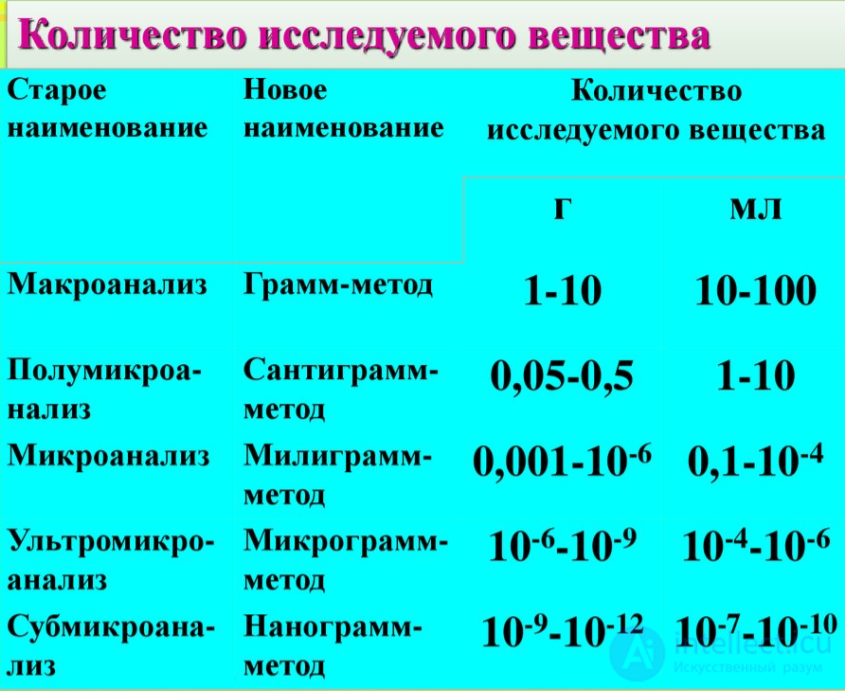
R. Boyle is considered the founder of qualitative analysis; he introduced the concept of chemical elements as the non-decomposable basic parts of complex substances and systematized all the qualitative reactions known in his time.
Qualitative reactions are used to determine the presence of substances, anions, and cations. Carrying them out makes it possible to confirm their presence unambiguously. These reactions are widely used in qualitative analysis, the purpose of which is to determine the presence of substances or ions in solutions or mixtures.
Qualitative reactions for some cations
| Ion | Reagent | Conditions | Reaction indication | Equation in reduced ionic form |
 |
Litmus | In solution | Red solution | 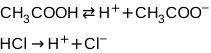 |
| Methyl orange | In solution | Red solution | ||
| Universal indicator paper | Applying a drop of solution to indicator paper | pH < 7 | ||
 |
 |
In solution or solid substances (on heating) | Damp phenolphthalein paper held above the reaction mixture turns crimson | 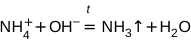 |
 |
 |
In solution | White precipitate |  |
 or or  |
In solution | White precipitate |  |
|
| In the flame of a spirit lamp | Carmine-red flame coloration | |||
 |
|
In solution | White precipitate |  |
| or |
In solution | White precipitate |  |
|
| In the flame of a spirit lamp | Green flame coloration | |||
 |
 |
In solution | White precipitate with a grayish-green tint |  |
 |
|
In solution | Brown precipitate |  |
|
 |
In solution | Red solution |  |
 |
In the flame of a spirit lamp | Yellow flame coloration | ||
 |
In the flame of a spirit lamp | Violet flame coloration | ||
 |
In the flame of a spirit lamp | Red flame coloration | ||
 |
In the flame of a spirit lamp | Red flame coloration |
Qualitative reactions for some anions
| Ion | Reagent | Conditions | Reaction indication | Equation in reduced ionic form |
 |
Litmus | In solution | Blue solution | 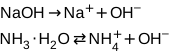 |
| Methyl orange | In solution | Yellow solution | ||
| Phenolphthalein | In solution | Crimson solution | ||
| Universal indicator paper | Applying a drop of solution to indicator paper | pH < 7 | ||
 |
 |
In solution | White curdy precipitate |  |
 |
|
In solution | Light yellow precipitate |  |
 |
|
In solution | Yellow precipitate |  |
 |
 |
In solution | White precipitate |  |
 |
A red-hot ember | Solid salt | Flash on the ember | 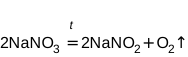 |
 |
 or or  |
In solution | White precipitate | |
 |
 or another acid or another acid |
In solution | Gas |  |
 |
or another acid |
In solution | Gelatinous white precipitate |  |
 |
|
In solution (alkaline medium) | Yellow precipitate, soluble in nitric acid |  |
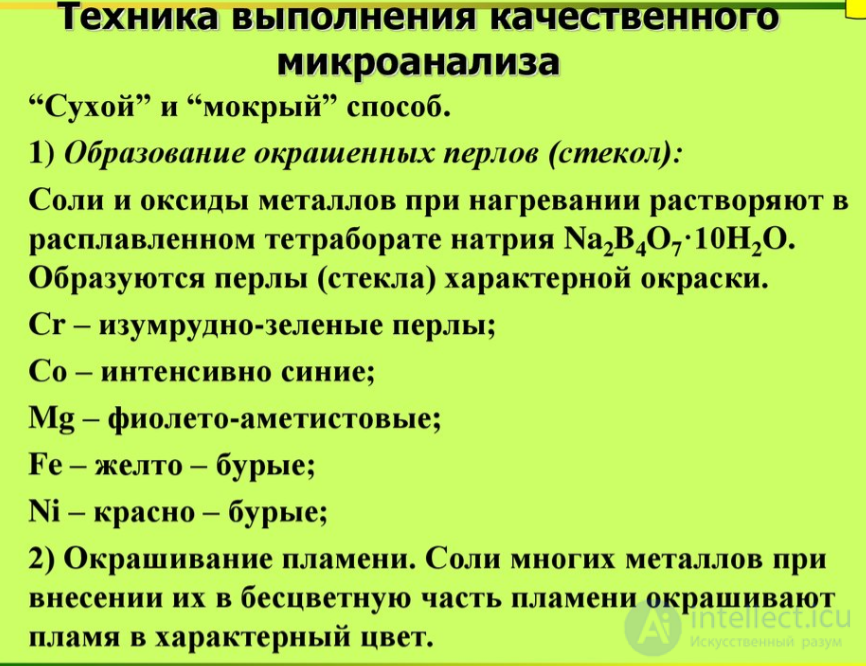
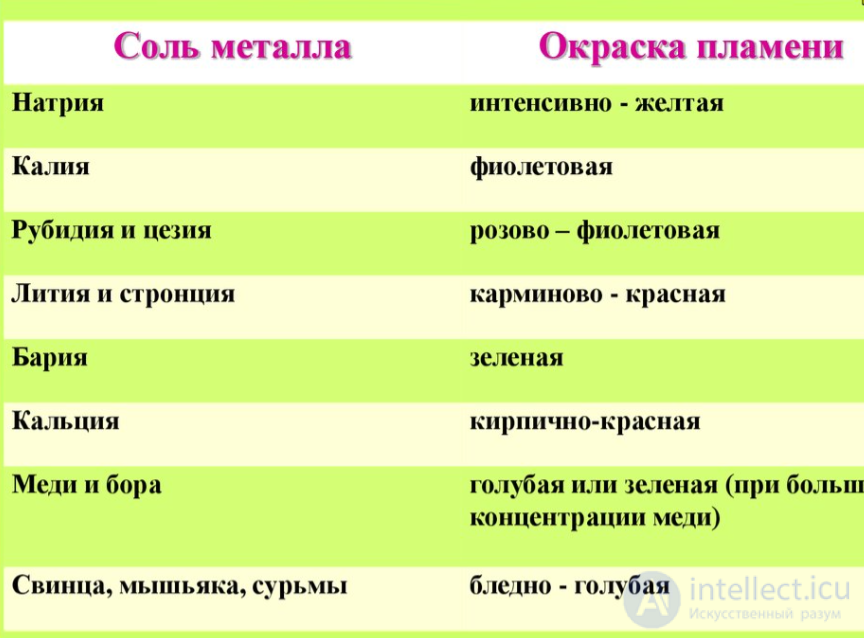
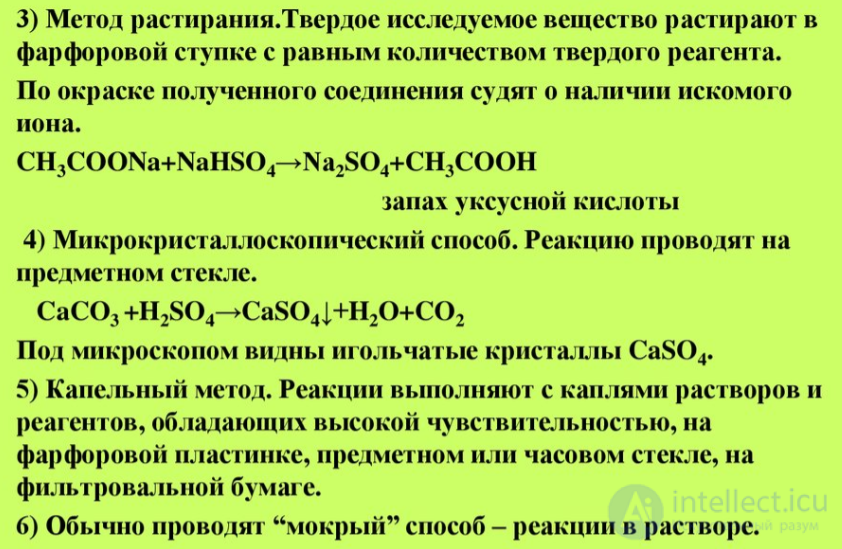
Examples of qualitative reactions for compounds include:
Nowadays, rapid qualitative analyses using especially sensitive reagents are widely used. Instrumental analysis also carries much greater weight, even for very simple qualitative questions. More complex questions, for example in organic chemistry or biochemistry, are usually resolved using chromatographic and spectroscopic methods.
Nevertheless, the first semesters of chemistry education are devoted intensively to the process of cation separation and its detection reactions, since this provides important hands-on knowledge. The same applies to the training of laboratory technicians.

Comments