
Lecture
Ammonia, the hydrogen compound of nitrogen, is a substance of molecular structure. Its structural formula is 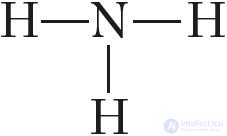 . In the ammonia molecule, as noted in § 13, there are three single covalent polar bonds formed by the exchange mechanism. The electron density is shifted toward the nitrogen atom, which has a lone pair of s-electrons. Therefore the ammonia molecule is polar and has a trigonal pyramidal configuration (Fig. 89).
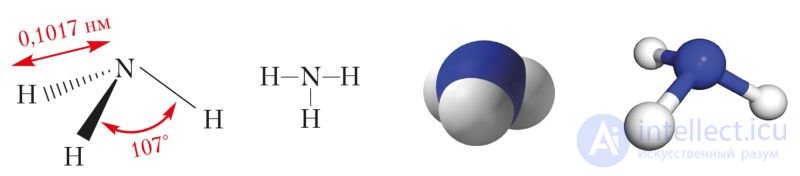
Fig. 89. Spatial and structural formulas, space-filling and ball-and-stick models of the ammonia molecule
Mutual repulsion of the hydrogen atoms leads to an increase in the bond angle between the directions of the N—H covalent bonds from 90° to 107°.
Structure of the ammonia molecule. The pyramidal shape of the ammonia molecule and the 107° bond angle at its apex are explained by the formation of bonds between hybrid orbitals of the nitrogen atom and s-orbitals of the hydrogen atom.
According to the concept of hybridization, the covalent bonds are formed not by the original three valence 2p-orbitals of the outer electron level of the nitrogen atom, but by three of the four sp3-hybrid orbitals, the scheme of formation of which is shown in figure 89.1(a–d).
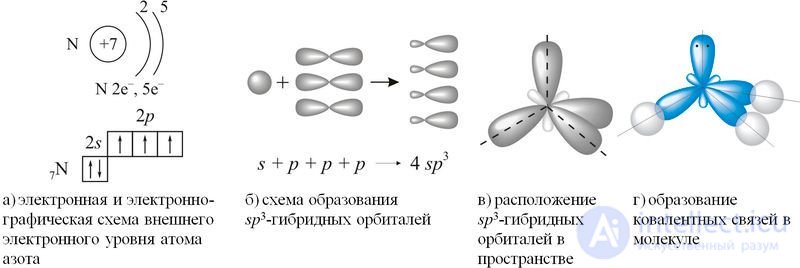
Fig. 89.1. Scheme of formation of covalent bonds in the ammonia molecule
The lone electron pair of the fourth hybrid orbital has a slight repulsive effect, which explains the decrease of the H—N—H bond angle from 109.5° to 107°. The arrangement of the three covalent polar bonds at an angle leads to an asymmetric distribution of electron density, that is, to polarity of the molecule:
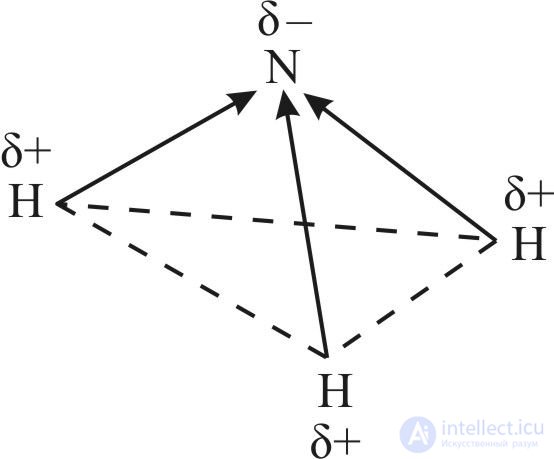
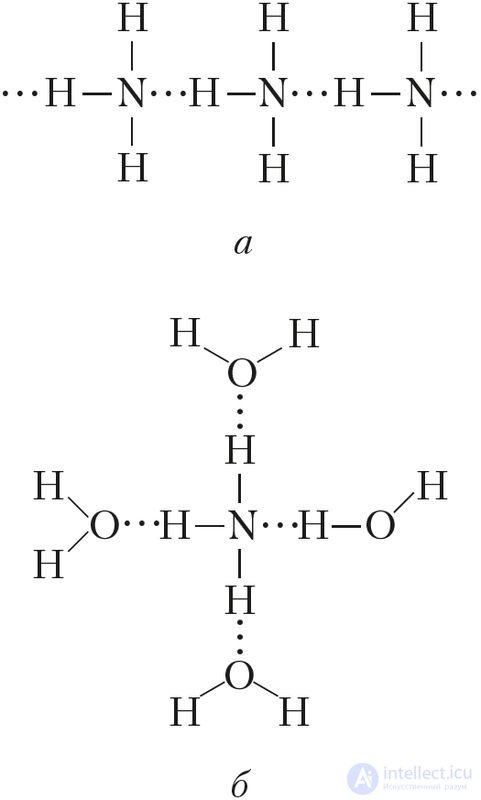
Fig. 90. Hydrogen bonds: a — in liquid ammonia, b — in an aqueous solution of ammonia
Physical properties. Ammonia is a colorless gas (under standard conditions) with a characteristic pungent odor (the smell of ammonia solution/smelling salts). It is highly soluble in water: at 20 °C about 700 volumes of ammonia dissolve in one volume of water (compare: O2 — 0.03, SO2 — 40, HCl — 400 volumes). The boiling point of ammonia is fairly high, at –33 °C. Under slight pressure this gas is easily liquefied. Its melting point is –78 °C; below this temperature ammonia exists as colorless crystals. The high boiling point and solubility in water are due to significant intermolecular interaction, that is, the formation of hydrogen bonds both between the ammonia molecules themselves (in the solid and liquid states) and between water and ammonia molecules (in aqueous solution) (Fig. 90).
Preparation of ammonia. Ammonia is one of the key products of the chemical industry. Its global production is growing along with worldwide demand for fertilizers and currently exceeds 220 million tonnes per year. In the Republic of Belarus it is produced by OAO "Grodno Azot" — more than 1 million tonnes per year.
In industry, ammonia is synthesized from nitrogen and hydrogen. The reaction is exothermic and reversible; the catalyst is iron, the optimal synthesis temperature is 420–450 °C, and the pressure is 30–100 MPa:
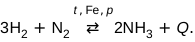
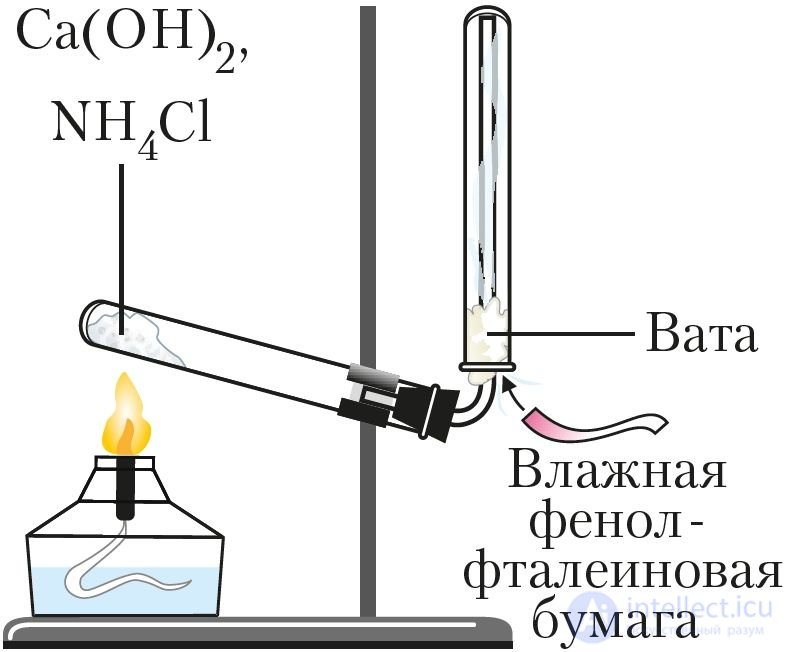
Fig. 91. Preparation of ammonia in the laboratory
To obtain ammonia in the laboratory, a mixture of two solid substances — ammonium chloride NH4Cl and calcium hydroxide Ca(OH)2 — is heated (Fig. 91):

Chemical properties. Ammonia is characterized by reactions that proceed both without a change in the oxidation state of nitrogen and by redox reactions. In the first case, the main role is played by the lone electron pair of the nitrogen atom. New covalent bonds are formed through it by the donor-acceptor mechanism. On the other hand, the presence of the nitrogen atom in its lowest oxidation state, ‒3, means it can only react with an increase in oxidation state. This means that ammonia exhibits reducing properties.
I. Reactions without a change in oxidation state occur when ammonia interacts with water and acids. In these cases ammonia exhibits basic properties.
Dissolving ammonia in water leads to the formation of ammonia hydrate NH3 · H2O — a weak base (Fig. 92).
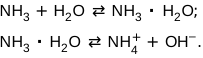
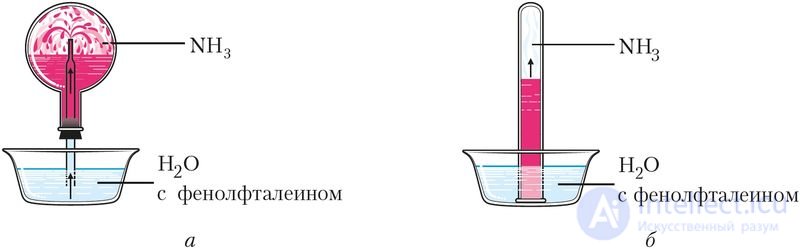
Fig. 92. Dissolving ammonia in water: a — through a capillary — a "fountain," b — in a test tube
Aqueous solutions of ammonia are alkaline (pH > 7) and turn phenolphthalein crimson.
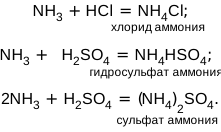
Reaction of ammonia with acids:
II. Reactions with a change in the oxidation state of the nitrogen atom. These are reactions of ammonia as a reducing agent. Ammonia exhibits reducing properties in reactions with oxygen. The composition of the products depends on the reaction conditions. In pure oxygen and in air it burns on heating (in mixtures it explodes), forming nitrogen and water, while in the presence of catalysts (platinum, iron(III) oxide, chromium(III) oxide) nitrogen(II) oxide and water are formed:
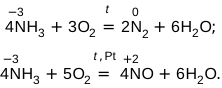
The reaction of catalytic oxidation of ammonia is important as a step in its conversion into nitric acid.
Reactions of ammonia with acids make it possible to obtain a variety of ammonium salts.
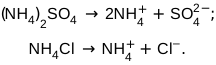
Ammonium salts are solid crystalline substances that are highly soluble in water. Their solutions are strong electrolytes that dissociate to form the ammonium cation and the anion of the acid residue:
The most important feature of ammonium salts is their reaction with alkalis, releasing ammonia:
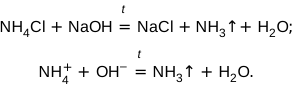
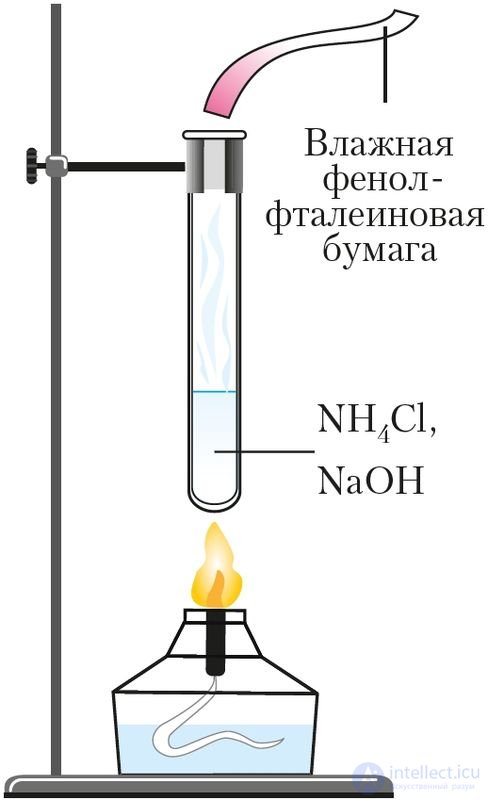
Fig. 93. Detection of the ammonium ion
The reaction of ammonium salts with alkalis on heating is used to detect ammonium ions (the qualitative test for the  ion). To do this, a piece of moist indicator paper is held near the heated mixture. In the presence of ammonia, phenolphthalein paper turns crimson and litmus paper turns blue (Fig. 93, Appendix 3).
The second feature of ammonium salts is their thermal instability. The decomposition of each ammonium salt is specific. Thus, ammonium carbonate and ammonium hydrogen carbonate (food additive E503), which are widely used as leavening agents for dough, decompose even on mild heating to form ammonia, carbon dioxide, and water:
(NH4)2CO3  2NH3 + CO2 + H2O;
NH4HCO3 NH3 + CO2 + H2O.
Ammonium chloride decomposes into ammonia and hydrogen chloride:
NH4Cl NH3 + HCl.
Uses of ammonia and ammonium salts. Most of the ammonia produced is used for the manufacture of fertilizers (ammonium nitrate NH4NO3, ammonium sulfate (NH4)2SO4, urea (NH2)2CO, and others) and nitric acid. Ammonia is in demand in the production of soda, dyes, and polymers. It is used in animal husbandry to increase the nitrogen content of feed. Aqueous ammonia (an 18–25% aqueous solution) is used as a liquid fertilizer. Ammonia solution/smelling salts (an aqueous solution of ammonia with a mass fraction of 3–10%) is used in medicine. In everyday life, it is used to remove stains from clothing, and for cleaning dishes, plumbing fixtures, and jewelry, and for washing glass and crystal.

Ammonia solution (NH3 ∙ H2O) should not be confused with sal ammoniac — a salt and mineral of composition NH4Cl.
Sal ammoniac is used as a fertilizer on neutral and alkaline soils, as a flux to remove the oxide film when soldering metals, and as an electrolyte component in galvanic cells (Fig. 94); ammonium carbonate and ammonium hydrogen carbonate are used as leavening agents for dough in baking.
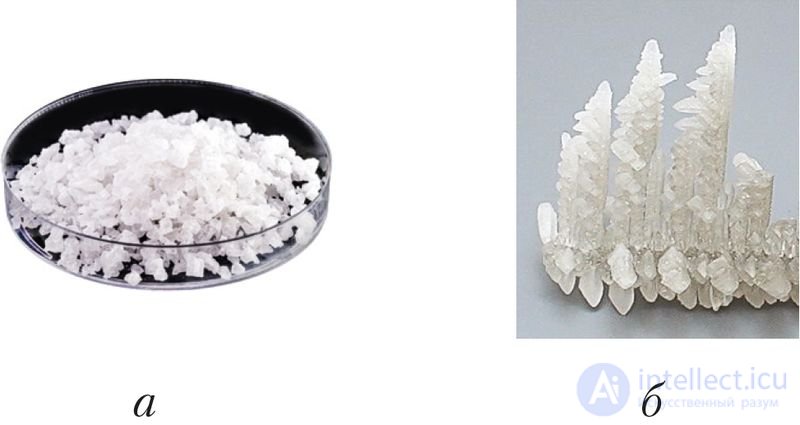
Fig. 94. Sal ammoniac NH4Cl: a — powder, b — crystals
Ammonia NH3 exhibits reducing properties in reactions with oxygen and other oxidizers. An aqueous solution of ammonia is a weak base.
Ammonia is produced industrially by synthesis from hydrogen and nitrogen, and in the laboratory from ammonium chloride and slaked lime.
The most important areas of application of ammonia are the production of fertilizers and nitric acid.
Ammonium salts are detected by the release of ammonia when heated with an alkali.
1. From the given series, write out the formulas of:
2. Indicate the physical state of ammonia at a pressure of 101.325 kPa in the following temperature ranges:
3. Determine the relative density of ammonia with respect to hydrogen and to air. Relative to which of these gases is ammonia lighter?
4. Draw diagrams of the formation of hydrogen bonds:
Why can ammonia not be collected by water displacement?
5. List the conditions for the industrial synthesis of ammonia. Write the equation for this reaction. Why is the synthesis carried out at high pressure?
6. Calculate the volume (at STP) of ammonia released in the reaction of 5.35 g of ammonium chloride with a sufficient amount of calcium hydroxide.
7. Determine the chemical formula of a compound in which the mass fractions of nitrogen, hydrogen, sulfur, and oxygen are 12.17%, 4.35%, 27.83%, and 55.65% respectively.
8. Write the equations of the reactions according to the scheme:

 .
.9. Sodium hydroxide solution was added to four test tubes containing salt solutions.
In the first test tube a white precipitate formed, and in the third a blue one. No visible changes were observed in the second and fourth, so they were heated and moist phenolphthalein paper was held near the openings. The paper turned crimson over the fourth test tube. Name the contents of each test tube, given that the following salts were proposed for identification:
Write the equations of the corresponding reactions.
10. The molar mass of a gas mixture consisting of ammonia and hydrogen is 14 g/mol. Determine the volume fraction of ammonia in the mixture.
1. The following statements are true for ammonia:
2. Nitrogen exhibits an oxidation state of −3 in the compounds:
3. Ammonia is formed in reactions with the schemes:
4. The equation for the qualitative test for the ammonium ion:
 ; + OH– NH3↑ + H2O;
5. As a base, ammonia reacts with:

Comments