
Lecture
The connection of chemistry with various branches of science and technology
Owing to its creative role, chemistry has been and remains a significant part of world culture. Even Paracelsus (1493–1541) noted: "The chemist is a baker when he bakes bread, a winemaker when he makes wine, a weaver when he weaves cloth… The third pillar of medicine is chemistry, for without it medicines cannot be prepared." M. V. Lomonosov (1711–1765) continued this same idea with his famous words: "Chemistry stretches its hands widely into human affairs." The world in which we now live is largely determined by the creative efforts of chemists in studying and synthesizing chemical substances.
Chemical knowledge is the foundation for the development of chemical technologies. It is used in mechanical engineering, oil refining, ferrous and non-ferrous metallurgy, the construction materials industry, glass, ceramics, polymers, paints and varnishes, the food and pharmaceutical industries, in the manufacture of everyday consumer goods, and in the agro-industrial and defense sectors.
Achievements in chemistry often serve as a foundation for the development of natural sciences and technical fields related to chemistry: biology, medicine, electronics, metallurgy, and others.
Products of the chemical industry
Among the products of the chemical industry are basic chemicals, life-support products, specialty chemicals, and household chemicals (Fig. 119).
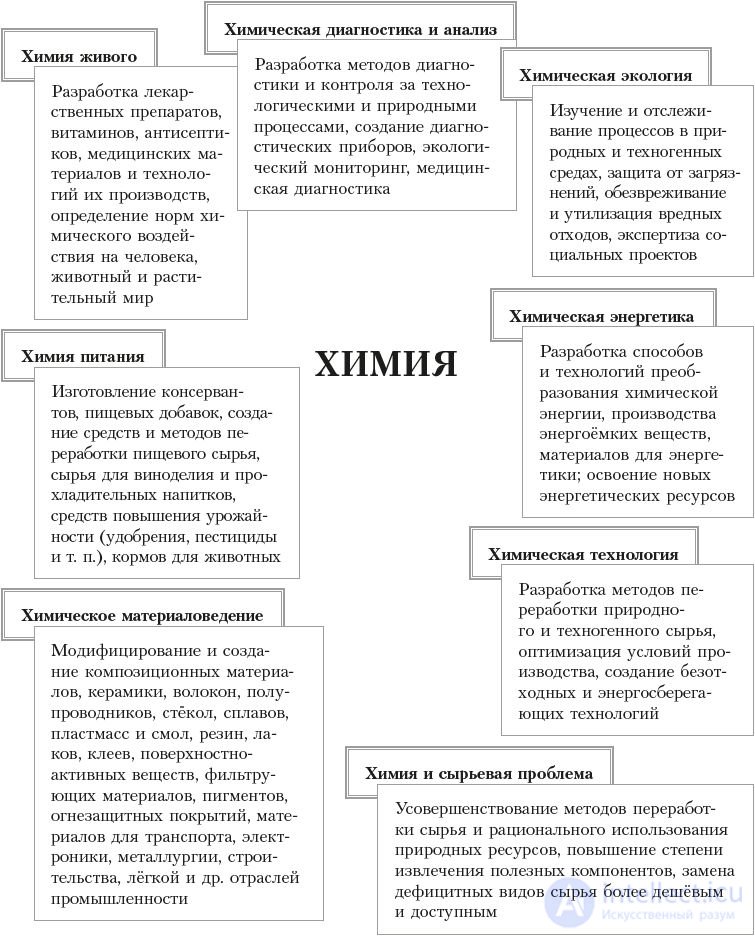
Fig. 119. Tasks addressed by chemistry in the interests of the sustainable development of civilization
Basic chemicals are organic substances — products of the processing of oil and natural gas — as well as inorganic substances and fertilizers obtained from mineral raw materials.
Organic substances — ethylene, propylene, benzene, toluene, methanol, vinyl chloride, styrene, butadiene, etc. — are the starting material for the production of plastics, synthetic fibers, and other more complex organic substances. The most sought-after polymers are polyethylene, polyvinyl chloride, polypropylene, polystyrene, and polyethylene terephthalate.
For example, polyethylene is used in the production of packaging film, containers, and pipes; polyvinyl chloride — in the manufacture of pipelines, window frames, and siding; polypropylene is a raw material for these same products, as well as for fabric and carpet coverings; polystyrene is used in the production of household appliance parts, automobile components, toys, and recreational goods.
Polyethylene terephthalate is one of the most widespread polymers. It is needed for making bottles and product packaging, textile fibers, automobile parts, and is used as a dielectric in the production of electrical equipment. It is used to make heart valve and vessel prostheses, artificial ligaments and tendons, and threads used in surgical operations.
Large-tonnage inorganic chemicals include ammonia, rock salt (NaCl), chlorine, caustic soda (NaOH) and soda ash (Na2CO3), sulfuric, nitric, phosphoric, and hydrochloric acids, titanium dioxide and hydrogen peroxide, phosphate, nitrogen, and potassium mineral fertilizers, agents for chemical soil amelioration, and disinfectants.
The products of petrochemistry are various types of fuel — gasoline, kerosene, diesel fuel, and fuel oil.
Chemical processes are also used in the production of cement, glass, ceramics, and metals.
Chemical life-support products for humans and animals are vitamins and pharmaceutical preparations, and reagents for diagnosing diseases.
Specialty chemicals are substances and materials intended for the manufacture of electronic and electrical devices, cleaning agents, protective coatings, adhesives, sealants, catalysts, food additives, and much more.
Household chemicals are used in the production of detergents and personal hygiene products, perfumes, and cosmetics. This is what we encounter every day.
Our world is rapidly becoming saturated with products of the chemical industry, and handling them properly at work and at home requires a high level of chemical knowledge. Careless handling of substances of natural and man-made origin can harm not only those around us but also have global consequences for society and nature as a whole. Therefore, without mastering chemical knowledge, one cannot maintain one's status as a member of modern society.
The main tasks addressed by chemistry in the interests of the sustainable development of civilization are presented in Figure 119.
You became acquainted with the application of a number of chemical substances in everyday human life while studying the material of Chapters 6 and 7. For example, sodium chloride and acetic acid are used in food preparation and preservation. Crystalline hydrates of copper(II) and iron(II) sulfates are used in crop production as antiseptic agents and also as fungicides — agents for combating fungal diseases of plants. To increase the fertility of acidic soil, chalk or dolomite flour is added to it. Sodium hypochlorite is used for disinfecting premises.
Chemical science, chemical technology, and chemical production constitute one of the most important foundations of the economy of all developed countries of the world. Herein lies the value of chemistry as a factor in the sustainable development of civilization.
The rudiments of chemistry arose as far back as the appearance of humankind. Since humans have always, in one way or another, dealt with chemical substances, their first experiments with fire, tanning hides, and preparing food can be called the rudiments of practical chemistry. Gradually, practical knowledge accumulated, and at the very beginning of the development of civilization people knew how to prepare certain dyes, enamels, poisons, and medicines. At first, humans used biological processes such as fermentation and putrefaction; later, with the mastery of fire, they began to use the processes of combustion, sintering, and fusion. Oxidation-reduction reactions that do not occur in living nature were used — for example, the reduction of metals from their compounds.
Such crafts as metallurgy, pottery, glassmaking, dyeing, perfumery, and cosmetics had achieved considerable development even before our era. For example, the composition of modern bottle glass is practically no different from the composition of glass used in Egypt in 4000 BC. Although chemical knowledge was carefully concealed by priests from the uninitiated, it still slowly spread to other countries. Chemical science reached the Europeans mainly from the Arabs after their conquest of Spain in 711. They called this science "alchemy," and from them this name spread to Europe as well.
It is known that in Egypt, as early as 3000 BC, people already knew how to obtain copper from its compounds using charcoal as a reducing agent, and also obtained silver and lead. Gradually, the production of bronze developed in Egypt and Mesopotamia, and of iron in the northern countries. Theoretical discoveries were also made. For example, in China, from the 22nd century BC, there existed a theory of basic elements (Water, Fire, Wood, Metal, Earth). In Mesopotamia, the idea arose of opposites from which the world is built: fire—water, heat—cold, dryness—moisture, and so on.
In the 5th century BC in Greece, Leucippus and Democritus developed the theory of the structure of matter from atoms — atomism. By analogy with the structure of writing, they concluded that just as speech is divided into words, and words consist of letters, so all substances consist of certain compounds (molecules), which in turn consist of indivisible elements (atoms).
In the 5th century BC, Empedocles proposed considering Water, Fire, Air, and Earth as the basic elements (the "roots"). In the 4th century BC, Plato developed Empedocles's teaching: each of these elements was assigned its own color and its own regular spatial figure of the atom, determining its properties: fire — red color and tetrahedron, water — blue and icosahedron, earth — green and hexahedron, air — yellow and octahedron. In Plato's opinion, it was from combinations of these "building blocks" that the entire material world was constructed. The teaching about the four elements transforming into one another was inherited by Aristotle.
The word "alchemy" entered European languages from the Arabic الخيمياء ('al-kīmiyā'), which, in turn, was borrowed from Middle Greek χυμεία, "fluid."
The culture of Egypt possessed well-developed technologies, as demonstrated by objects and structures whose creation is possible only with a theoretical and practical foundation. Confirmation of the development of primary theoretical knowledge in Egypt has been obtained by science only recently. Nevertheless, this origin is indicated, to a greater degree, by the esoteric, conceptual affiliation of things resembling theoretical concepts — the traditional sources of alchemy — this whimsical and flowery "symbiosis" of art and, to a certain extent, the primacy of one of the main branches of natural science — chemistry — which only formally originates in this body of knowledge and experience. Among such sources, first and foremost should be named the "Emerald Tablet" (Lat. "Tabula smaragdina") of Hermes Trismegistus, as well as a number of other treatises of the "Great Alchemical Corpus" .
An early "prototype" of alchemy already existed in the 4th—3rd centuries BC in the East (in India, China, and the Arab world). In this and subsequent periods, new ways of obtaining such elements as mercury, sulfur, and phosphorus were found, many salts were characterized, and the acid HNO3 and the alkali NaOH were already known and used. From the early Middle Ages, what is now understood as alchemy began to develop, in which, traditionally, alongside the above-mentioned quasi-scientific components (in the sense of the modern understanding of the methodology of science), the philosophical conceptions of the era and craft skills new for that time were combined, together with magical and mystical notions; the latter, however, were also present, in certain of their manifestations and particulars, in the philosophical thought of that period. Well-known alchemists of that time were Jabir ibn Hayyan (Geber), Ibn Sina (Avicenna), and Abu Bakr al-Razi. Even in antiquity, owing to the intensive development of trade, gold and silver became the universal equivalent of manufactured goods. The difficulties associated with obtaining these comparatively rare metals prompted attempts at the practical application of Aristotle's natural-philosophical views on the transformation of some substances into others; the emergence of the doctrine of "transmutation," together with the already-named Hermes Trismegistus, was linked by the alchemical school's tradition to his name as well. These conceptions changed little up to the 14th century .
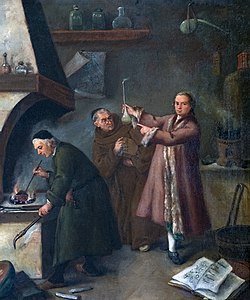
Alchemists in search of the philosopher's stone
In the 7th century AD alchemy penetrated Europe. At that time, as throughout history, luxury items were especially "popular" among the representatives of the dominant strata of society, particularly gold, since it was, as already noted, the equivalent of trade valuation. Among other matters, alchemists continued to be interested in ways of obtaining gold from other metals, as well as in problems of their processing. At the same time, by then Arab alchemy had begun to move away from practice and had lost influence. Owing to features of the technologies, conditioned, among other things, by the system of hermetic views, differences in sign systems, terminology, and the strictly corporate dissemination of knowledge, "alchemical practice" developed very slowly. The most famous European alchemists are considered to be Nicolas Flamel, Albertus Magnus, John Dee, Roger Bacon, and Ramon Llull. The era of the alchemists marked the discovery of many primary substances and the development of methods for obtaining, isolating, and purifying them. Only in the 16th century, with the development of various industries, including metallurgy, as well as pharmacy, owing to its growing role in medicine, did researchers begin to appear whose activity was expressed in substantial transformations of this science, which brought closer the establishment of well-reasoned and relevant practical methods of this discipline. Among them, first and foremost, should be named Georgius Agricola and Theophrastus Bombastus Paracelsus .
Chemistry as an independent discipline took shape in the 16th—17th centuries, following a series of scientific discoveries that substantiated the mechanistic picture of the world, the development of industry, and the emergence of bourgeois society. However, because chemistry, unlike physics, could not be expressed quantitatively, disputes existed as to whether chemistry was a quantitative, reproducible science or some other kind of cognition. In 1661, Robert Boyle produced the work "The Sceptical Chymist," in which he explained the difference in properties of various substances by the fact that they are built from different particles (corpuscles), which are responsible for the properties of the substance. Van Helmont, studying combustion, introduced the concept of gas for the substance formed during it, and discovered carbon dioxide. In 1672, Boyle discovered that when metals are calcined their mass increases, and explained this by the capture of "weighty particles of flame."
M. V. Lomonosov, already in his first known work relating precisely to this field of natural science — "Elements of Mathematical Chemistry" (1741) — unlike most chemists of his time, who considered this field of activity an art, classified it as a science, beginning his work with the words :
Chemistry is the science of the changes occurring in a mixed body, insofar as it is mixed. ...I do not doubt that there will be many for whom this definition will seem incomplete, who will complain about the absence of principles of separation, combination, purification, and other expressions with which almost all books on chemistry are filled; but those who are more perceptive will readily see that the aforementioned expressions, with which very many writers on chemistry are accustomed to needlessly burden their investigations, can be encompassed in a single word: mixed body. Indeed, one who possesses knowledge of the mixed body can explain all its possible changes, including separation, combination, and so on.
At the beginning of the 18th century, Stahl formulated the theory of phlogiston — a substance released from materials during their combustion.
In 1749, M. V. Lomonosov wrote "Reflections on the Cause of Heat and Cold" (the idea for the work dates to 1742—1743 — see his own "Notes on Physics and Corpuscular Philosophy"). L. Euler gave this work the highest praise (letter of November 21, 1747). In 1848, Professor D. M. Perevoshchikov, thoroughly setting out M. V. Lomonosov's most important ideas, emphasized that his theory of heat was half a century ahead of science ("Sovremennik," January 1848, vol. VII, book 1, section II, pp. 41—58) — an opinion with which, both before and afterward, the opinion of many other researchers concurs .
In 1754, Black discovered carbon dioxide, Priestley discovered oxygen in 1774, and Cavendish discovered hydrogen in 1766.
In the period from 1740 to 1790 Lavoisier and Lomonosov chemically explained the processes of combustion, oxidation, and respiration, proving that fire is not a substance, but a consequence of a process. Proust in 1799—1806 formulated the law of constant composition. Gay-Lussac in 1808 discovered the law of combining volumes (Avogadro's law). Dalton, in his work "A New System of Chemical Philosophy" (1808—1827), proved the existence of atoms, and introduced the concepts of atomic weight and element — as a collection of identical atoms.
In 1811, Avogadro put forward the hypothesis that the molecules of elementary gases consist of two identical atoms; later, on the basis of this hypothesis, Cannizzaro carried out a reform of atomic-molecular theory. This theory was confirmed at the first international congress of chemists in Karlsruhe on September 3—5, 1860.
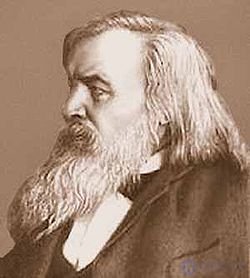
Dmitri Ivanovich Mendeleev
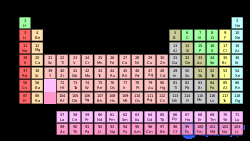
Mendeleev's periodic table of the chemical elements
In 1869, D. I. Mendeleev discovered the periodic law of chemical elements and created the periodic table of chemical elements. He explained the concept of a chemical element and showed the dependence of an element's properties on its atomic mass. By discovering this law, he established chemistry as a quantitative science, not merely a descriptive and qualitative one.
Discoveries of the 19th century played an important role in understanding the structure of matter. The study of the fine structure of emission spectra and absorption spectra led scientists to the idea of their connection with the structure of atoms of substances. The discovery of radioactivity in 1896 showed that some atoms are unstable (isotopes) and can spontaneously transform into new atoms (radon — "emanation").
Quantum chemistry is a branch of chemistry that examines the structure and properties of chemical compounds, reactivity, and the kinetics and mechanism of chemical reactions on the basis of quantum mechanics. The branches of quantum chemistry include: the quantum theory of molecular structure, the quantum theory of chemical bonds and intermolecular interactions, the quantum theory of chemical reactions and reactivity, and others. Quantum chemistry lies at the intersection of chemistry and quantum physics (quantum mechanics). It deals with the examination of the chemical and physical properties of substances at the atomic level (models of electron-nuclear structure and interactions, represented from the standpoint of quantum mechanics). Owing to the fact that the complexity of the objects under study in many cases does not allow explicit solutions to be found for the equations describing processes in chemical systems, approximate calculation methods are employed. Closely connected with quantum chemistry is computational chemistry — a discipline that uses the mathematical methods of quantum chemistry, adapted for composing special computer programs used to calculate molecular properties, the probability amplitude of finding electrons in atoms, and to simulate molecular behavior.
1. Give two examples each of the use of simple substances, oxides, and bases in everyday life.
2. Name examples of acids and salts that are part of food products or used in food preparation.
3. Using the labels on clothing, analyze what fibers it is made from. Write down the names of these fibers and their chemical formulas.
4. Fill in the table below with the names of substances and materials you became acquainted with in the chemistry course.
| Basic chemicals | Chemical life-support products | Specialty chemicals | Household chemicals |
5. Give examples of industrially used chemical reactions for obtaining metals that you became acquainted with while studying the material of Chapter 7.
6. Give examples of industrially used chemical reactions for obtaining nitric and sulfuric acids that you became acquainted with while studying the material of Chapter 6.
7. Based on what you learned in Chapters 6 and 7, propose inorganic substances suitable for combating plant diseases.
8. Gypsum is one of the most important building materials. Besides its use in making plaster, panels, and partitions, it is used to make casts and decorative elements. Calculate the minimum volume of water that must be added to 1000 g of calcium sulfate hemihydrate powder to form the dihydrate crystalline hydrate and obtain a solid, durable material.
9. To remove rust before painting automobile parts, they can be treated with phosphoric acid. For this, it is recommended to add 1 dm3 of water to 100 g of 85% phosphoric acid. Determine the mass fraction and molar concentration of the acid in the resulting solution. Take the density of the solution to be 1.04 g/cm3.
10. The Gomel Chemical Plant produces complex granulated nitrogen-phosphorus-potassium fertilizers of various grades. One of them is characterized by a mass fraction of ammonium nitrogen of 5%, a mass fraction of total phosphates calculated as P2O5 of 16.5%, and a mass fraction of total potassium calculated as K2O of 36%.
Suppose you need to prepare such a fertilizer by mixing three components: NH4H2PO4, (NH4)2HPO4, KCl.
Calculate the mass ratio in which these components must be mixed to obtain a fertilizer with the specified composition of nutrient elements.

Comments