
Lecture
The Mohs Scale (mineralogical hardness scale) is a ten-point scale of the relative hardness of the surface of minerals. If a mineral scratches a reference mineral from the scale, its hardness on the scale is higher; if it is scratched by the reference mineral, its hardness is lower .
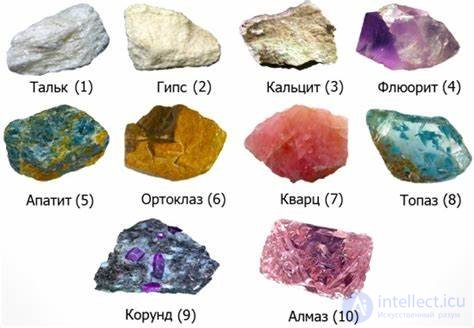
The division of the scale into points is based on a set of reference minerals. Ten minerals arranged in order of increasing hardness are taken as the reference points
The scale is used to identify minerals. It is intended for the approximate assessment and comparison of the relative hardness of materials by the scratch method.
The scale and method for determining the hardness of minerals was proposed in 1811 by the German mineralogist Friedrich Mohs (1773–1839).
The scale values from 1 to 10 correspond to ten fairly common minerals, from talc to diamond.
The hardness of a mineral is measured by finding the hardest reference mineral that it can scratch, and/or the softest reference mineral that scratches the given mineral. For example, if a mineral is scratched by apatite but is not scratched by fluorite, its hardness lies in the range from 4 to 5.
The scale is intended for rough comparative diagnosis of material hardness by the softer-harder criterion. The material being tested either scratches the reference sample, in which case its hardness on the Mohs scale is higher, or is scratched by the reference sample, in which case its hardness is lower than that of the reference. A known exception is kyanite, whose hardness is 4.5 parallel to the long side of the crystal and 7.5 across it; that is, it can both be scratched by a reference mineral (for example, orthoclase) and scratch the reference itself. Thus, a rating on the Mohs scale characterizes only the relative hardness of minerals or materials. For example, corundum (9) is twice as hard as topaz (8), yet it is four times less hard than diamond (10).
Appendix 2. Minerals and their hardness on the Mohs scale
| Mohs hardness | Reference mineral | Workability | Minerals of similar hardness | |
| 1 | Talc (Mg3Si4O10(OH)2) | 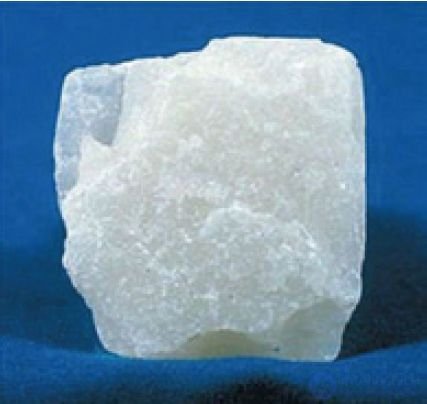 |
Scratched by a fingernail | Graphite |
| 2 | Gypsum (CaSO4 · 2H2O) | 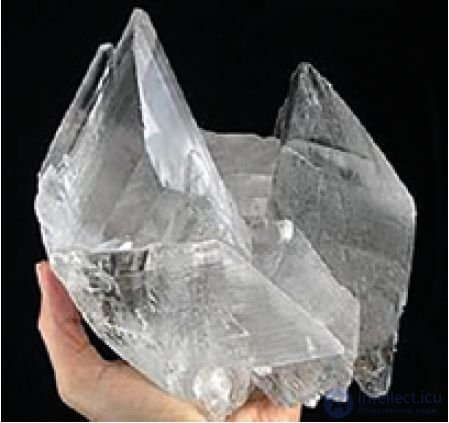 |
Scratched by a fingernail | Halite (NaCl); mica (XY2[AlSi3O10](OH,F)2, where X is K, Y is Mg, Fe, Al |
| 3 | Calcite (CaCO3) | 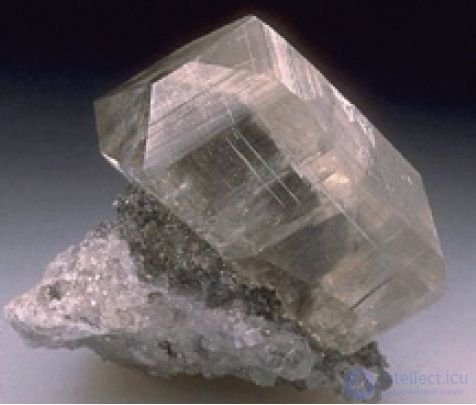 |
Scratched by copper | Gold, silver |
| 4 | Fluorite (CaF2) | 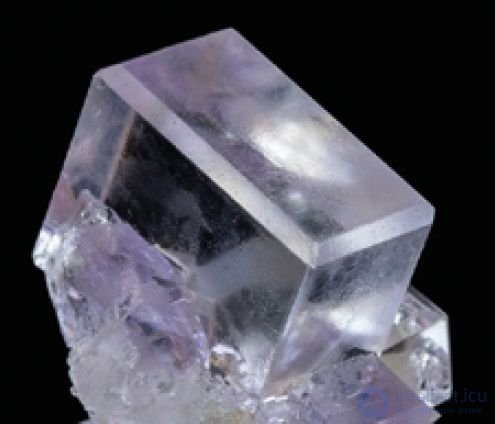 |
Easily scratched by a knife, glass | Dolomite (CaMg(CO3)2); sphalerite (ZnS) |
| 5 | Apatite (Ca10(PO4)6(OH,F,Cl)2) | 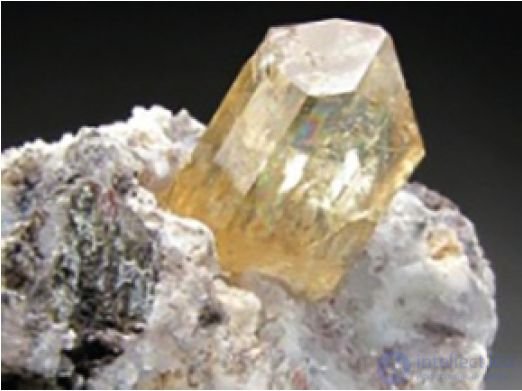 |
Scratched by a knife, glass, with effort | Hematite (Fe2O3); lazurite (Na[(AlSiO4)SO4]) |
| 6 | Orthoclase (KAlSi3O8) | 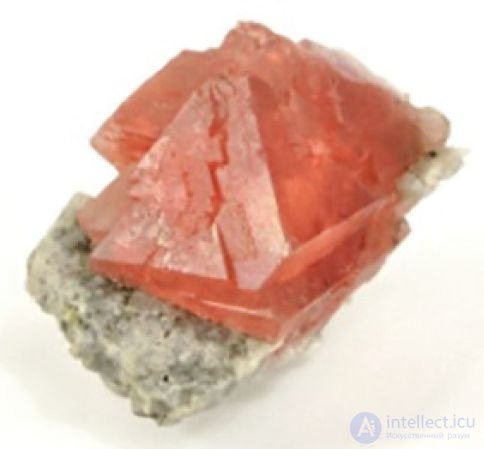 |
Scratches glass. Scratched by a file | Opal (SiO2 · nH2O); rutile (TiO2) |
| 7 | Quartz (SiO2) | 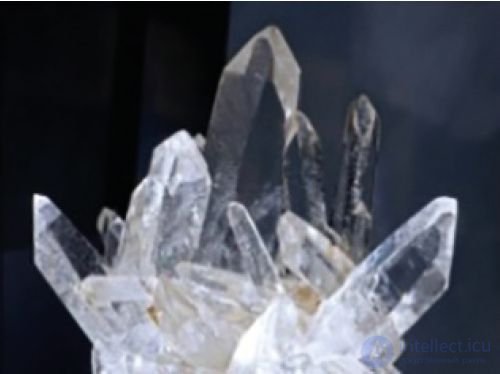 |
Worked with diamond, scratches glass | Garnet (X3Y2[SiO4]3), where X is Ca, Fe, Mg, Mn, and Y is Al, Fe, Cr; tourmaline (Na(Li,Al)3Al6[(OH)4|(BO3)3Si6O18]) |
| 8 |
Topaz (Al2[SiO4](F,OH)2) |
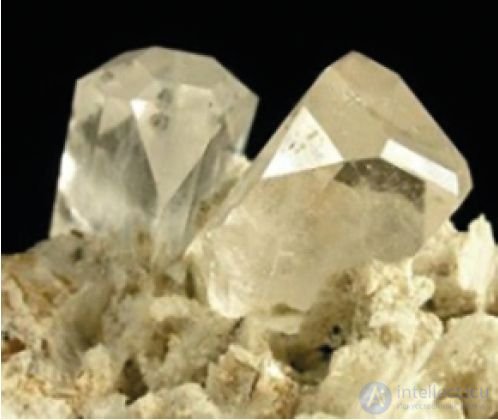 |
Worked with diamond, scratches glass | Beryl (Al2[Be3(Si6O18)]) |
| 9 | Corundum (Al2O3) | 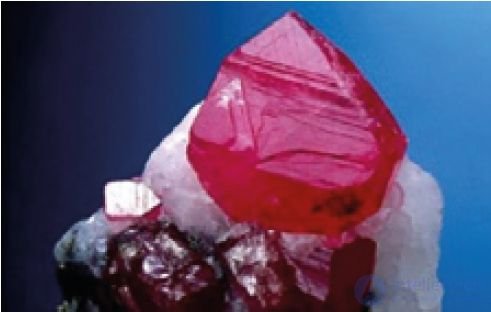 |
Worked with diamond, scratches glass | Tungsten carbide (WC) |
| 10 | Diamond (C) | 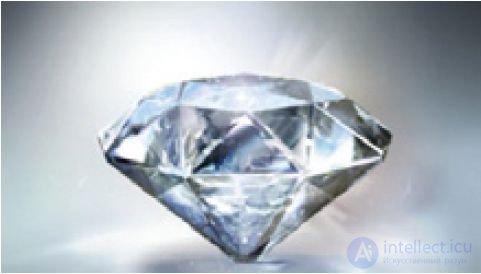 |
Cuts glass | Elbor (cubic boron nitride, BN) |

Comments