
Lecture
In § 45 you became acquainted with the electrochemical method of industrial metal production based on electrolysis — electrometallurgy.
This method has two variants. The first is carrying out electrolysis of a molten mixture of metal compounds. You examined the features of this method using the example of the electrolysis of molten magnesium chloride.
The second variant of the electrochemical method, called hydroelectrometallurgy, is based on the electrolysis of aqueous solutions of metal salts. The advantage of this method, compared with the electrolysis of melts, is that it does not require energy expenditure for melting the substance. The limitation of the electrolytic method of extracting metals from aqueous solutions is that it is suitable only for metals located to the right of aluminum in the activity series of metals.
A feature of carrying out electrolysis of aqueous salt solutions is that, alongside the processes of reduction of metal ions at the cathode and oxidation of salt anions at the anode, a competing process of water molecule electrolysis takes place. As a result, hydrogen may be evolved at the cathode, and oxygen at the anode.
|
Processes at the cathode: 2Н+ + 2е– = Н2↑ at рН < 7; 2Н2О + 2е– = Н2↑ + 2ОН– ≥ 7. |
Processes at the anode: 2Н2О – 4е– = О2↑ + 4Н+ at рН ≤ 7; 4ОН– – 4е– = О2↑ + 2Н2О at рН > 7. |
The ability of metals to be reduced at the cathode during electrolysis of an aqueous salt solution is determined by the position of the metal in the activity series.
Cations of metals in the left part of the activity series, up to and including aluminum (Li+, Na+, K+, ... Аl3+), are not reduced during electrolysis. Instead, hydrogen from water molecules is reduced:
2Н2О + 2е– = Н2↑ + 2ОН–.
Cations of metals located in the activity series to the right of hydrogen (Cu2+, Ag+, Hg2+, Pt2+, Au3+) are reduced at the cathode to the metal during electrolysis:
Cu2+ + 2е– = Cu0;
Au3+ + 3е– = Au0.
This process dominates, but if the electrolyte has a strongly acidic medium, hydrogen ions may be reduced simultaneously with the metal ions:
2H+ + 2е– = Н2↑.
Cations of metals located in the activity series between aluminum and hydrogen (Mn2+, Zn2+, Сr3+, Fe2+, ... Pb) are reduced at the cathode simultaneously with hydrogen from water during electrolysis:
Ni2+ + 2e– = Ni0;
2Н2О + 2е– = Н2↑ + 2ОН–.
During electrolysis of aqueous solutions of metal salts, the possibility of hydrolysis processes must be taken into account; hydrolysis is accelerated as a result of the formation of hydroxide ions in the electrolyte near the cathode. As a result, insoluble basic salts and hydroxides may form on the cathode surface:
2Cu2+ +  + 2ОН– → (CuOH)2SO4;
Ni2+ + 2OH– → Ni(OH)2.
The electrode's conductivity decreases, and the electrolysis process slows down or stops. One way to combat this phenomenon is to acidify the electrolytes.
Oxidation processes of the electrolyte components take place at the anode. The material of the anode itself may also take part in the oxidation process. A distinction is made between electrolysis processes in solutions with active and inert anodes.
Inert anodes are not oxidized under the action of electric current and do not react with substances in the solution. During electrolysis they serve only as electron transmitters. Electrodes made of graphite, platinum, and platinized titanium are inert.
Active anodes include anodes made of Сu, Ag, Fe, Ni, Sn, Zn. The metal of active anodes is destroyed during the electrolysis process and passes into solution in the form of ions. Active anodes are usually used in industry for producing coatings by the electrochemical reduction of metals from solutions, since the dissolution of the metallic anode during electrolysis replenishes the loss of ions of the metal being reduced from the electrolyte. In doing so, they ensure the constancy of the solution's composition, the rate of the electrolysis process, and the composition and properties of the resulting metal coatings.
Let us examine in more detail the processes occurring during the electrolysis of solutions with inert anodes. The following patterns can be identified (Table 31.1):
• in solutions of oxygen-free acids and their salts (except HF and fluorides), anions are oxidized at the anode, for example:
2Cl– – 2e– = Cl2↑;
• in solutions of oxygen-containing acids and their salts, in the case of the maximum oxidation state of the nonmetal atom in the anion (,  ), the oxygen atoms in water molecules are oxidized with the evolution of gaseous oxygen:
2Н2О – 4е– = О2↑ + 4Н+;
• in solutions of oxygen-containing acids and their salts whose anions contain nonmetal atoms in an intermediate oxidation state ( ,
,  ), it is precisely these atoms within the anions that are oxidized, for example:
– 2e– + 2OH– = + H2O.
Table 31.1. Ability of anions to be oxidized at the anode during electrolysis of aqueous salt solutions
| Anions of oxygen-containing acids and the fluoride ion | Anions of oxygen-free acids |
 , ,  , , , , , ,  , F− , F− |
Cl−, Br−, I−, S2− |
|
Not oxidized in aqueous solution; water molecules are oxidized instead, with the evolution of oxygen: 2Н2О – 4е– = О2↑+ 4Н+ |
Readily oxidized in aqueous solution, for example: 2Cl– – 2e– = Cl2↑ |
Under specially created conditions, an oxidation process of oxygen-containing anions with the maximum oxidation state of the nonmetal can also proceed in aqueous solutions. For example, electrolysis of a concentrated solution of potassium hydrogen sulfate produces a strong oxidizer — potassium peroxodisulfate:
2KHSO4  K2S2O8 + H2↑.
When developing electrolysis conditions, it should be taken into account that the electrolysis products may enter into chemical reactions with the electrodes and aqueous solutions or with one another.
Industrial electrolysis of an aqueous NaCl solution. The process is used to obtain hydrogen, chlorine, and caustic soda (NaOH). In this case hydrogen is evolved at the cathode:
2Н2О + 2е– = Н2↑ + 2ОН–,
chlorine at the anode:
2Cl– – 2e– = Cl2↑,
and caustic soda accumulates in the solution:
2NaCl + 2H2O 2NaOH + H2↑ + Cl2↑.
If the electrolysis products are not separated, a chemical reaction will occur between the gases formed.
In the solution, interaction between chlorine and alkali is also possible:
Cl2 + 2NaOH = NaClO + NaCl + H2O.
To prevent interaction between the electrolysis products, the cathode and anode spaces are separated by a membrane (Fig. 108.2).
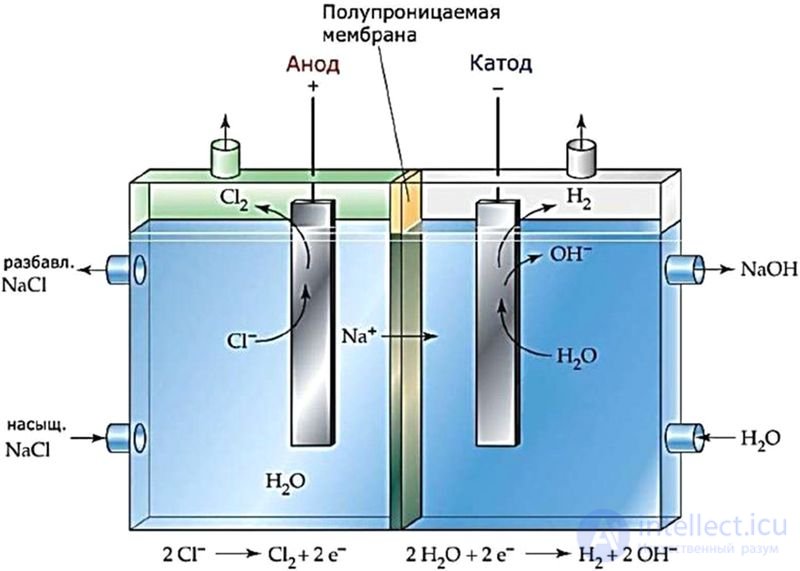
Fig. 108.2. Diagram of an electrolyzer with an ion-exchange membrane for the electrolysis of a sodium chloride solution. The membrane allows Na+ ions through, but not Cl– and OH– ions
The output of the membrane electrolysis shop includes: an aqueous solution of potassium hydroxide (with a mass fraction of KOH of 46−54 %); solid potassium hydroxide (with a mass fraction of KOH of 90−95 %); hydrochloric acid (with a mass fraction of HCl of 28−35 %); sodium hypochlorite NaClO.
Electrolysis of salt solutions in the laboratory.
For clarity, when examining the features of electrolysis of aqueous salt solutions, let us turn to a chemical experiment.
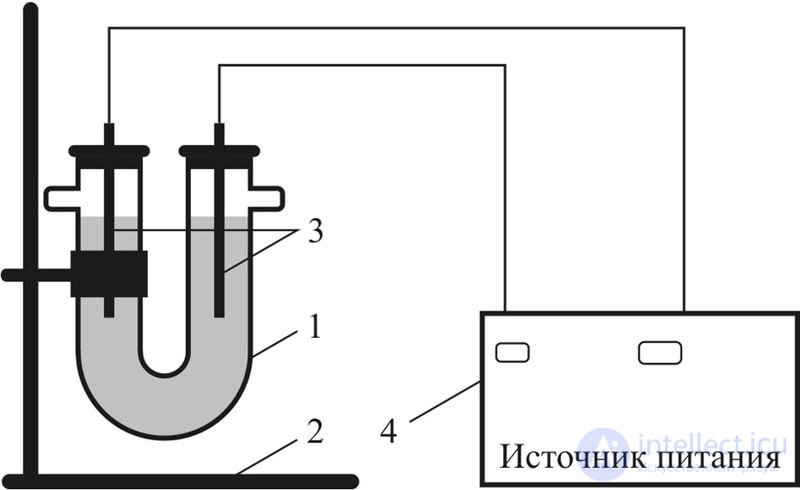
Fig. 108.3. Diagram of the apparatus for electrolysis:
1 — U-shaped tube (electrolyzer);
2 — stand;
3 — electrodes (graphite rods);
4 — direct current power source
Experiment 1. Let us carry out electrolysis of an aqueous CuSO4 solution. To do this, let us assemble the apparatus according to the diagram shown in Fig. 108.3. Pour a solution of copper(II) sulfate into the U-shaped tube and immerse two graphite rods secured in rubber stoppers. Connect the rods with wires to a current source maintaining a direct-current voltage of up to 12 V.
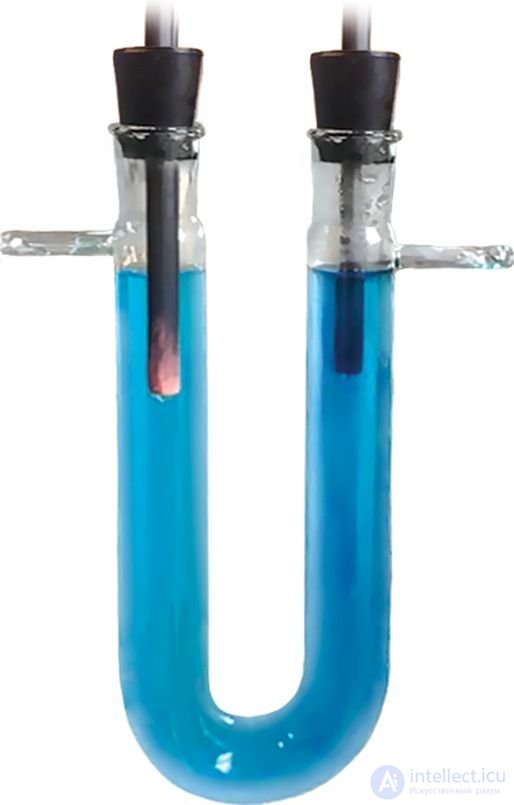
Fig. 108.4. Deposited copper on a graphite electrode after electrolysis of a copper(II) sulfate solution
When electric current is passed through the CuSO4 solution, gas bubbles (this is oxygen) can be observed on the rod connected to the positive pole of the current source (anode), while on the rod connected to the negative pole (cathode), a reddish coating appears (this is reduced copper) (Fig. 108.4).
The observed phenomenon can be explained by the following processes.
Dissociation occurs in the copper sulfate solution:
CuSO4 → Cu2+ + .
When the electrodes are connected to the current source, a directed movement of ions toward the electrodes of opposite charge occurs in the electrolyte solution.
At the cathode, copper is reduced, forming a reddish coating on the electrode:
Сu2+ + 2e– = Сu0
At the anode (the positively charged electrode), oxidation of water molecules occurs with the evolution of oxygen:
2Н2О – 4e– = О2↑ + 4Н+.
The overall equation of the electrode processes in molecular form:
2СuSO4 + 2Н2О 2Сu0 + О2↑ + 2Н2SO4.
Experiment 2. Carry out electrolysis of an aqueous potassium iodide solution.
To carry out electrolysis of a KI solution, let us use the setup from example 1 (Fig. 108.3).
Pour a KI solution into the U-shaped tube and pass an electric current through it. After 3–5 minutes, turn off the current, remove the electrodes, add 2−3 drops of phenolphthalein to the cathode space, and pour starch paste into the anode space.
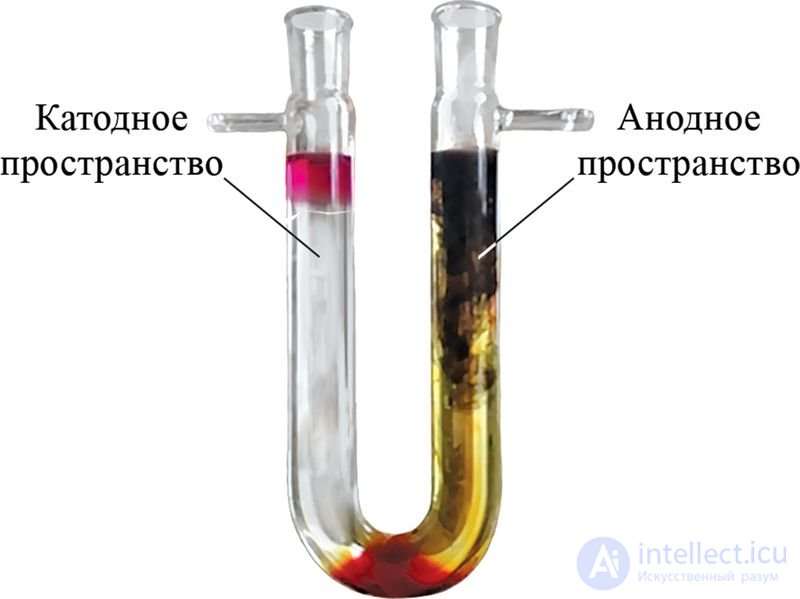
Fig. 108.5. Electrolyzer after electrolysis of a potassium iodide solution and addition of phenolphthalein solution (cathode space) and starch paste (anode space)
The solution in the cathode space turns crimson, which indicates an alkaline medium. In the anode space, a yellow-brown substance is observed to be released; when 2–3 drops of starch paste are added to it, the solution turns blue, indicating the presence of iodine in the solution (Fig. 108.5).
Thus, the products of electrolysis of an aqueous potassium iodide solution are I2 and alkali.
The observed phenomena indicate that the following reactions occur at the electrodes:
2Н2О + 2e– = Н2↑ + 2ОН– at the cathode;
2I– – 2e– = I2 at the anode.
The overall equation of the electrolysis process in molecular form:
2Н2О + 2KI Н2↑ + I2 + 2KОН.
Electrolysis with active anodes in industry. In addition to electrochemical deposition of metal coatings and production of metal powders, this method is used to extract metals from solutions, as well as for purification (refining) of metals from impurities they contain. This is how pure gold, copper, and many other metals are obtained.
For example, in the purification (refining) of copper, the starting metal, containing undesirable impurities, serves as the anode. The anode is immersed in a copper(II) sulfate solution. When current is passed, the copper at the anode is oxidized, its ions pass into solution, migrate to the cathode, and are reduced there. Impurities do not take part in this process because of their low concentration, and therefore a layer of pure copper forms at the cathode.
Electrolysis processes with active anodes are used to obtain coatings of metal oxides. Thus, when electrolysis is carried out with an aluminum anode, its surface is oxidized, becoming covered with a layer of oxide. Such a process of specially building up oxide on a metal surface is called electrochemical oxidation (or anodizing). Anodizing is used to protect metal from corrosion and to give its surface a decorative appearance and increased hardness.
By the method of electrolysis of salt solutions, coatings of metals and their alloys, and composites with nonmetals, are applied to the surface of various articles, giving the articles the desired properties (increased corrosion resistance, decorative finish, electrical conductivity, etc.). Common industrial processes include zinc plating, nickel plating, copper plating, chromium plating, tin plating, gold plating, and silver plating.
Research institutes are developing and introducing into industry processes of electrochemical deposition of coatings made of metal alloys and metal-metal oxide composite coatings, for example: Ni—B, Ni—P, Ni—Sn, Au—Co, Сu—CuO—Cu2O, Ni—diamond (diamond in the form of finely ground powder). Such coatings are harder, more wear- and corrosion-resistant than coatings of individual metals, and have a decorative appearance (Fig. 108.6).
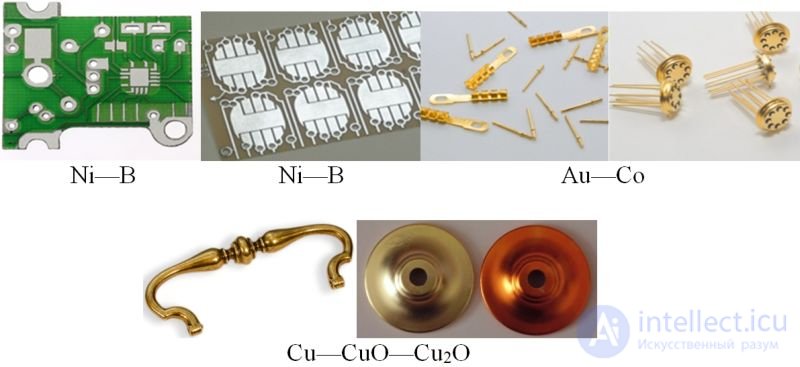
Fig. 108.6. Coatings on watch plates, credit card chips, transistor casings, and hardware items
Electrolysis of aqueous solutions is also used in the synthesis of various inorganic substances, in the surface treatment of metals (nitriding, boriding, electropolishing, cleaning), and in wastewater treatment (electrocoagulation, electroextraction, electroflotation processes). Oxygen and hydrogen are obtained by electrolysis.
During electrolysis of aqueous salt solutions, cations of metals located in the activity series after hydrogen are reduced at the cathode.
Cations of Group IA and IIA metals, located at the beginning of the activity series, as well as aluminum, are not reduced at the cathode; instead, hydrogen from water molecules is reduced.
At the cathode, cations of metals located in the activity series between aluminum and hydrogen are reduced simultaneously with hydrogen from water.
At the anode, in solutions of salts of oxygen-free acids, anions are oxidized (except fluoride ions).
At the anode, in solutions of salts of oxygen-containing acids with the maximum oxidation state of the nonmetal (, ), water molecules are oxidized with the evolution of oxygen.
1. Which of the substances — rock salt, sugar, copper sulfate, glycerol, sulfuric acid — can undergo electrolysis in aqueous solution?
2. Explain why aluminum cannot be obtained by electrolysis of an aqueous solution of its chloride.
3. Give the equations of the reactions at the electrodes during electrolysis of an aqueous solution of nickel(II) sulfate.
4. Compare the products of electrolysis of the melt and the aqueous solution of sodium, nickel(II), and copper(II) chlorides. Give the corresponding chemical reaction equations.
5. In the electrolysis of an aqueous sodium chloride solution without separation of the electrode spaces, sodium hypochlorite can be obtained. Give the possible equations of the electrode processes and chemical reactions in the solution.
6. The output of the membrane electrolysis shop of JSC "Belaruskali" includes an aqueous solution of potassium hydroxide and hydrochloric acid. Give the equations of the reactions underlying the production of these substances.
7. How will the concentration of cations and anions change in aqueous solutions of CuCl2, Na2SO4, KI, NaOH, HCl during electrolysis? Give the corresponding reaction equations.
8. As a laboratory method of water disinfection, electrolysis of an aqueous sodium chloride solution in portable electrolyzers is used. Explain the processes on which this water disinfection method is based.
9. The raw material for obtaining zinc is ore containing zinc blende (ZnS). The product of its roasting is dissolved in sulfuric acid, and after several stages of purification from impurities (Cu2+, Fe2+, Fe3+, etc.) it is subjected to electrolysis. Give the equations of the chemical reactions illustrating all the main stages of zinc production.
10. Manganese(IV) oxide is obtained by electrolysis of a manganese(II) sulfate solution in the presence of sulfuric acid. Suggest which processes occur at the electrodes and give the equations of the corresponding reactions.
1. During electrolysis of aqueous salt solutions, the following ions are reduced:
2. During electrolysis of aqueous salt solutions, the following ions are not reduced:
3. The products of electrolysis of an aqueous solution of a potassium salt are:
4. The following processes can occur at the cathode:
5. During electrolysis of an aqueous sodium chloride solution, hydrogen with a volume of 2.24 dm3 (STP) was evolved. The number of electrons given up by chloride ions in this process equals:

Comments