
Lecture
Sulfuric acid Н2SO4 is the most important of the mineral acids.
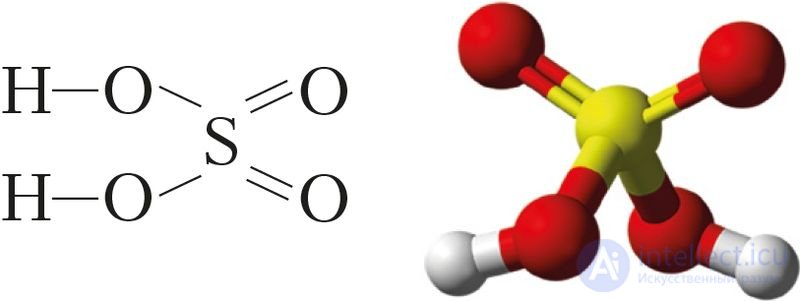
This is a substance of molecular structure. The structural formula shows that sulfuric acid is a hydroxide and belongs to the dibasic acids (Fig. 83).
The industrial production of sulfuric acid is a multistage process; the feedstock for it is pyrite (iron or sulfur pyrites) FeS2 and other sulfide ores, sulfur S, hydrogen sulfide H2S (from petroleum), and metallurgical production waste. The scheme for obtaining the acid from pyrite is as follows:
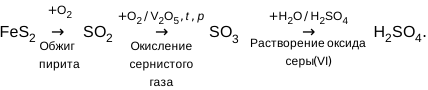
As can be seen, the process includes three stages, expressed by the following reaction equations:
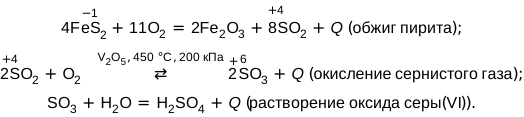
At the third stage, sulfur(VI) oxide SO3 is absorbed in an absorption tower irrigated with concentrated sulfuric acid with a mass fraction of acid of 96–98 % (that is, a water content of only 2–4 %). This produces a solution of sulfur(VI) oxide in sulfuric acid (oleum). Water is not used to absorb SO3, since the release of a large amount of heat produces a "sulfuric acid mist" that is difficult to condense.
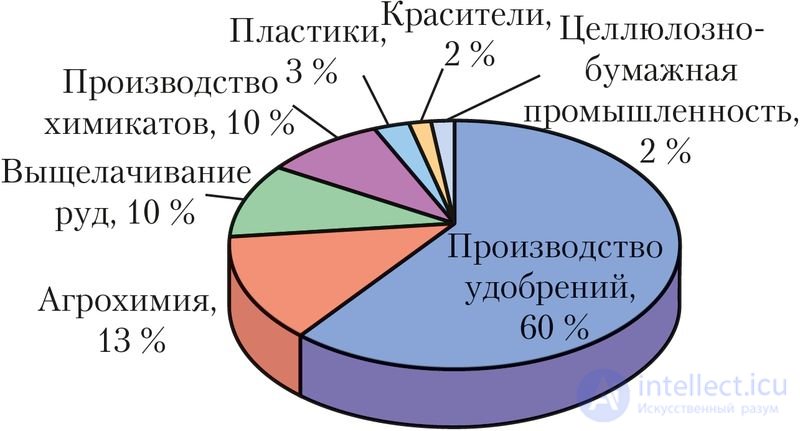
World production of sulfuric acid is about 200 million tonnes per year. The largest consumer of sulfuric acid is mineral fertilizer production. In addition, it is used to obtain various mineral acids and salts, chemical fibers, dyes, explosives, in industrial organic synthesis, in the petroleum, metalworking, textile, leather, food, and other branches of industry (Fig. 84), and as the electrolyte in lead-acid batteries (Fig. 85).

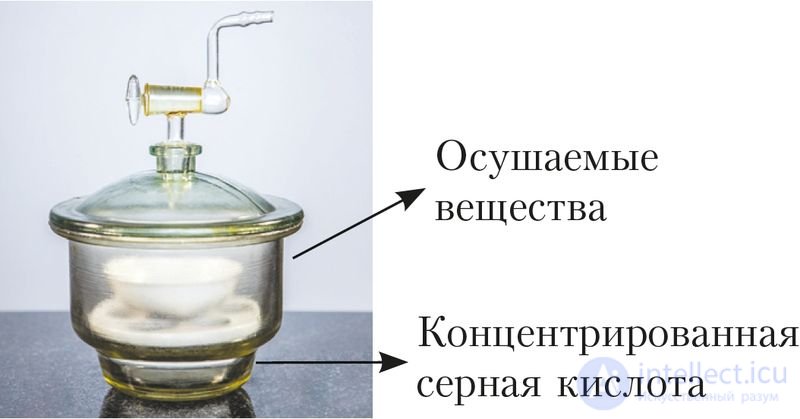
Sulfuric acid is a heavy, colorless, oily liquid with a melting point of 10.4 °С and a density of 1.84 g/cm3. It mixes with water in any ratio. A significant amount of heat is released when the acid dissolves in water, which is evidence of the formation of strong hydrates. For this reason, sulfuric acid is a strong dehydrating agent; it is used for drying various substances, including gases (Fig. 86).
It is important to remember: when diluting, the acid is slowly poured into the water, so that the heavy streams of acid sink to the bottom of the vessel. This is necessary to prevent the liquid from splashing as a result of a sharp rise in temperature.
If it comes into contact with the skin, sulfuric acid causes severe burns, and its vapors damage the mucous membranes and lungs.
The properties of dilute and concentrated sulfuric acid differ substantially.
Chemical properties of dilute sulfuric acid. Dilute sulfuric acid is a strong electrolyte; it exhibits the general properties of acids: it changes the color of indicators and forms salts in reactions with metals, basic and amphoteric oxides, metal hydroxides, and other salts. Let us consider specific examples.
1. Indicators such as litmus and methyl orange turn a sulfuric acid solution red. In dilute solutions, sulfuric acid dissociates according to the scheme:

2. Salt formation:
a) metals located in the activity series before hydrogen displace it from dilute sulfuric acid solutions:
Zn + Н2SO4 = ZnSO4 + H2↑;
Fe + Н2SO4 = FeSO4 + H2↑;
b) reactions of sulfuric acid with basic and amphoteric oxides, as a rule, require slight heating to increase the rate:
СuO + Н2SO4 = CuSO4 + H2O;
Al2O3 + 3Н2SO4 = Al2(SO4)3 + 3H2O;
c) in reactions with alkalis and insoluble bases, salts and water are formed (neutralization):
2NaOH + Н2SO4 = Na2SO4 + 2H2O or NaOH + Н2SO4 = NaНSO4 + H2O;
Сa(OH)2 + Н2SO4 = СаSO4↓ + 2H2O.
Note that at a molar ratio of alkali NaOH to acid Н2SO4 of 2 : 1 or with excess NaOH, a normal salt (sulfate) is formed, while at a ratio of 1 : 1 an acid salt (hydrogen sulfate) is formed. Consequently, an excess of the polybasic (dibasic) acid Н2SO4 leads to the formation of acid salts;
d) reactions of sulfuric acid solutions with salts proceed in full accordance with the conditions for ion-exchange reactions:
H2SO4 + Na2CO3 = Na2SO4 + H2O + CO2↑;
H2SO4 + Na2SiO3 = Na2SO4 + H2SiO3↓.
Chemical properties of concentrated sulfuric acid. In highly concentrated solutions, the dissociation of sulfuric acid proceeds only via the first step:  . Concentrated sulfuric acid is a stronger oxidizing agent than the dilute form. Its oxidizing properties are manifested primarily in reactions with metals. Let us note several important points.
First, it is not hydrogen that is reduced, but sulfur atoms. The reduction products are SO2, S, and Н2S. The composition of the predominantly formed products depends both on the concentration of the acid and on the activity of the metal as a reducing agent. The lower the acid concentration and the higher the metal's activity, the more strongly the sulfur atoms are reduced. In general terms, the interaction of concentrated sulfuric acid with metals can be represented by the scheme:

Thus, in reactions with metals located in the activity series after hydrogen (except gold and platinum), sulfur(IV) oxide SO2 is formed, for example:

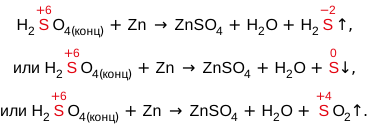
In reactions with metals located in the activity series before hydrogen, SO2, S, and Н2S can all be formed. For example, the schemes of the reactions occurring during the interaction of zinc with sulfuric acid as its concentration increases are as follows:
Second, some relatively active metals (for example, iron, aluminum, chromium) are passivated by concentrated sulfuric acid at room temperature: a dense oxide film forms on the metal surface. Thanks to the passivation of iron, the acid can be transported in steel tank cars.
Among the other features of concentrated sulfuric acid, the following can be noted. It is capable of displacing weaker or more volatile acids (НСl, HNO3, H3PO4, CH3COOH) from their salts:

Concentrated acid oxidizes complex organic substances: it chars paper, wood, and leather, so extremely careful handling is necessary.
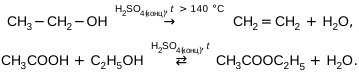
Because of the ability of concentrated sulfuric acid to form hydrates H2SO4 · nH2O, it is widely used as a strong dehydrating agent, as well as a catalyst in organic synthesis.

The use of concentrated sulfuric acid as a dehydrating agent and catalyst in organic synthesis is illustrated by the following reaction equations:
As noted above, sulfuric acid forms two series of salts — hydrogen sulfates (acid salts) and sulfates (normal salts), most of which are readily soluble. In solid form, among the acid salts, only salts of active metals have been isolated (КНSO4, NaHSO4, and others). Normal salts often form crystalline hydrates (Na2SO4 · 10H2O, CuSO4 · 5H2O, and others), so anhydrous salts (sodium sulfate, magnesium sulfate) are used in laboratory practice as desiccants. Alkali metal sulfates have fairly high thermal stability.
To identify (qualitatively detect) sulfate ions, soluble barium salts (ВаСl2 or Ва(NO3)2) are most often used. This produces a white precipitate of barium sulfate (Appendix 3):

Many sulfates are substances of large-scale production (Table 28).
Table 28. Applications of sulfates
| Chemical formula and name | Areas of use | |
Na2SO4 · 10H2O Glauber's salt (mirabilite)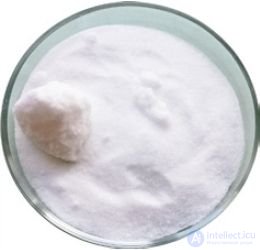 |
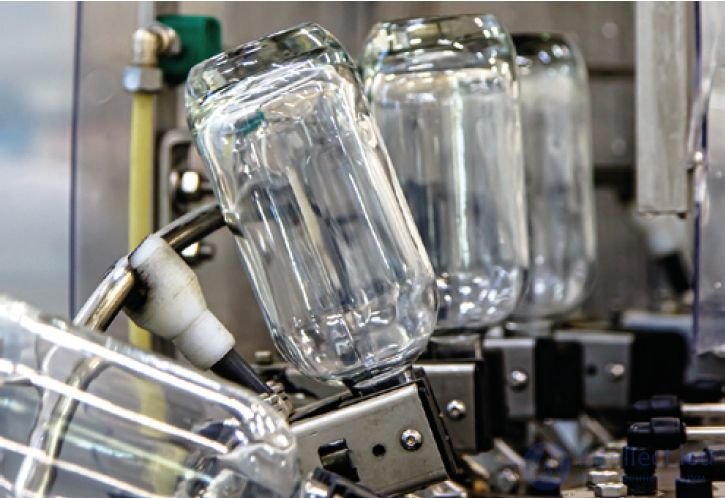 |
Production of synthetic detergents, cellulose, glass production, textile industry |
MgSO4 · 7H2O bitter (Epsom) salt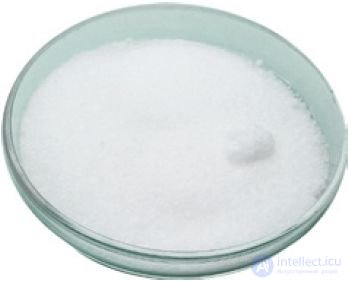 |
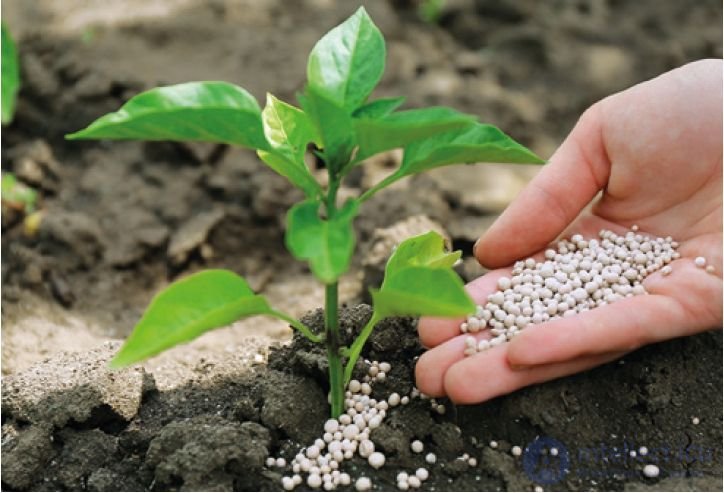 |
Medicine — for lowering blood pressure when administered intravenously; a laxative. Micronutrient fertilizer. Drying of solvents in laboratory practice with anhydrous magnesium sulfate |
CuSO4 · 5H2O copper sulfate (blue vitriol)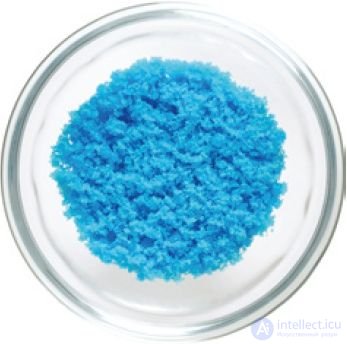 |
 |
Medicine and plant cultivation — an antiseptic. Used as a fungicide in Bordeaux mixture |
FeSO4 · 7Н2О iron sulfate (green vitriol)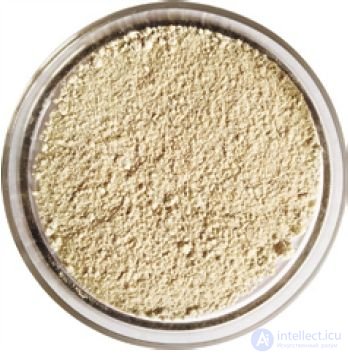 |
 |
Agriculture — a fungicide; woodworking industry — an antiseptic for wood preservation. Production of mineral paints |
* ZnSO4 · 7Н2О zinc sulfate (white vitriol)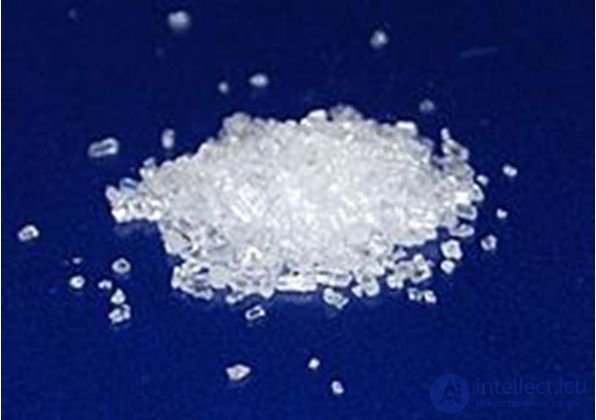 |
 |
Has strong antimicrobial and bactericidal action. Used in medicine (ointments, eye drops, etc.) and in agriculture (increasing crop yields, normalizing the immune system of animals) |
Dilute sulfuric acid is a strong electrolyte and exhibits the general properties of acids. Concentrated sulfuric acid is a strong oxidizing agent.
Being a dibasic acid, sulfuric acid forms two series of salts — hydrogen sulfates (acid salts) and sulfates (normal salts).
When dilute sulfuric acid reacts with metals, a salt and hydrogen are formed, while with concentrated acid a salt, water, and sulfur reduction products — SO2, S, and Н2S — are formed.
Barium chloride or barium nitrate solutions are used for the qualitative detection of sulfate ions.
The industrial production of sulfuric acid from pyrite is based on reactions carried out according to the scheme:
FeS2 → SO2 → SO3 → H2SO4.
1. Write the molecular and structural formulas of sulfuric acid. Name its areas of application.
2. From the text of the section, write out the formulas of:
Name them.
3. Write the formulas of the substances:
4. From the list Mg, Zn, Al, Ag, Fe, Cr, Sn, Cu, Au, Рt, write out the symbols of the metals that:
5. Write the equations of the reactions forming acid and normal salts in the interaction of sodium and calcium hydroxides with:
Name the resulting salts.
6. Sulfur(VI) oxide with a mass of 8 g was dissolved in water with a mass of 132 g. Determine the mass fraction of acid in the solution.
7. Balance the coefficients using the electron balance method in the equations of the reactions occurring during the interaction of zinc with concentrated sulfuric acid of different concentrations, according to the schemes on p. 193, 194.
8. The second stage of sulfuric acid production from pyrite — the oxidation of sulfur(IV) oxide to sulfur(VI) oxide — is based on a reversible catalytic reaction:

Under production conditions, SO3 is a gas. Indicate the conditions for shifting the equilibrium toward the reaction product.
9. Determine the mass of a sulfuric acid solution with a mass fraction of 20 % that can be obtained by diluting a solution with a volume of 1 dm3 (density 1.835 g/cm3) with a sulfuric acid mass fraction of 96 %.
10. There is 500 g of a solution of sulfur(VI) oxide in sulfuric acid. The mass fractions of H2SO4 and SO3 are 92 % and 8 %, respectively. How many grams of water must be added to obtain 100% sulfuric acid?
1. Indicate the characteristics typical of sulfuric acid:
2. Glauber's salt has the composition:
3. A white precipitate forms when barium chloride interacts with aqueous solutions of:
4. The process of roasting sulfur pyrites is illustrated by the scheme:
5. Concentrated sulfuric acid reacts with a metal if the reaction products are:

Comments