
Lecture
The ozone molecule has a bent (angular) structure due to sp2 hybridization of the orbitals of the central oxygen atom, with a bond angle of about 117°. The structure of the ozone molecule is shown in Figure 74.1.
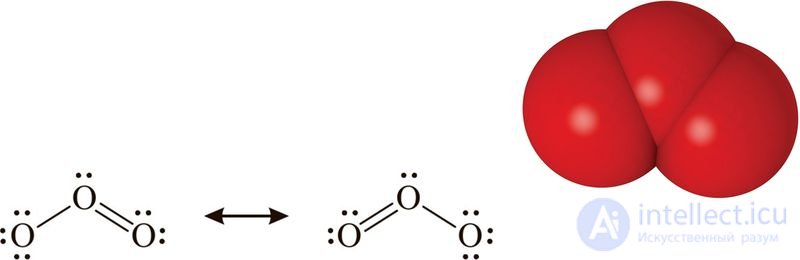
Fig. 74.1. Structure of the ozone molecule
The formation of ozone from oxygen is an endothermic process:
3O2  2O3 – Q.
In nature, ozone forms from atmospheric oxygen during lightning discharges, and at an altitude of 10–30 km under the action of ultraviolet radiation. The formation of ozone from oxygen molecules in the upper layers of the atmosphere is shown schematically in Figure 74.2. The ozone layer above the Earth's surface blocks solar ultraviolet radiation harmful to life and absorbs the Earth's infrared radiation, preventing the planet from overcooling. This is the most important role of ozone for all life on our planet.
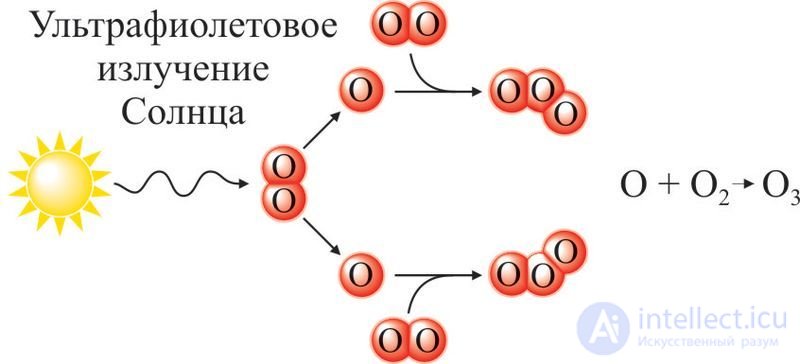
Fig. 74.2. Formation of ozone in nature
The existing ozone layer is being destroyed by the action of fluorinated and chlorinated hydrocarbons, nitrogen(I) oxide, and many other substances found in refrigerants, foaming agents, exhaust gases, solvents, and numerous chemicals.
Ozone forms not only in nature but also during the operation of laser printers, photocopiers, laser sources, gas-discharge and fluorescent devices, and artificial sources of ultraviolet radiation, such as mercury-quartz lamps.
In industry, ozone is obtained from air or oxygen by the action of an electric discharge in special devices called ozonizers.
Ozone is a gas with a sharp odor; it is blue in color, and dark blue in the liquid state. The density of ozone under standard conditions is 1.5 times that of oxygen. Its boiling point is –111.8 °C, almost 70 °C higher than that of oxygen.
Ozone is highly toxic. It is classified in the first, highest hazard class. The maximum permissible concentration (MPC) of ozone in workplace air is 0.1 mg/m3. The characteristic odor of ozone becomes noticeable at concentrations as low as 0.004–0.010 mg/m3, that is, many times lower than the hygienic standard. This is important for personnel working with ozone. Devices that generate ozone during operation should be used only in well-ventilated rooms.
The toxicity of ozone is due to its strong oxidizing capacity. It irritates and damages the tissues of the respiratory organs. When it acts on the body, free oxygen radicals are formed as a result of a series of reactions. Nevertheless, it is precisely these properties that give ozone its bactericidal, antiviral, and antifungal action.
1. Under normal conditions, ozone can slowly and spontaneously convert into oxygen with the release of heat:
2O3 3O2 + Q.
The process is accelerated by catalysts and UV irradiation. A rise in temperature and a drop in pressure also accelerate this process. Ozone is a stronger oxidizing agent than oxygen, since one oxygen atom is readily detached from its molecule during chemical reactions:
O3 = O2 + O.
It is atomic oxygen that takes part in oxidation reactions, while oxygen molecules are most often one of the reaction products. For example, ozone reacts with nitrogen at a temperature of 295 °C:
N2 + O3 = N2O + O2,
whereas oxygen reacts with nitrogen only at a temperature above 3000 °C:
N2 + O2 = 2NO – Q.
2. Ozone oxidizes almost all metals (with a few exceptions, for example gold and platinum):
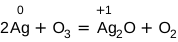 .
.
3. Ozone oxidizes atoms of elements in lower oxidation states within oxides, hydroxides, and salts. For example:
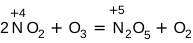 .
.
4. Ozone reacts with a solution of potassium iodide. Even without heating, ozone oxidizes iodide ions, releasing free iodine:
 .
.
This reaction serves as a test (qualitative reaction) for the presence of ozone. Filter paper impregnated with a mixture of potassium iodide and starch turns blue in the presence of ozone as a result of the release of iodine.
5. Ozone destroys organic substances: dyes are bleached, alcohols, ethers, and turpentine ignite, and rubber "ages." The molecules of unsaturated organic compounds break at the site of multiple bonds when reacting with ozone.
Ozone has a destructive effect on bacteria, so it is used to disinfect rooms and medical equipment.
Ozone is a very strong oxidizing agent, so it is used to disinfect water. Unlike chlorination, ozonation of water does not lead to the formation of organochlorine compounds, which are toxic and carcinogenic.
Ozone is formed from oxygen by electric discharges and under the action of ultraviolet radiation.
Ozone is toxic and is a strong oxidizing agent. It is used for the disinfection of rooms, medical equipment, and water.
1. Describe the structure of the ozone molecule.
2. What physiological effects does ozone have?
3. List the physical properties of ozone. Taking into account the melting point of this substance, propose a method for separating oxygen and ozone.
4. Three sealed flasks contain the gases ozone, oxygen, and hydrogen chloride. Propose a plan for identifying them.
5. Calculate the mass of a mixture containing oxygen and ozone in amounts of 3 mol and 0.5 mol, respectively.
6. How, and by what factor, does the volume of gas change as a result of the complete conversion of gaseous oxygen into ozone?
7. Determine the relative density with respect to hydrogen of a mixture containing 3.2 g of oxygen and 0.125 mol of ozone.
8. Write the equations of the reactions according to the scheme:
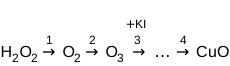 .
.
9. The relative density of a mixture of ozone and oxygen with respect to air is 1.195. Determine the volume of such a mixture (at standard conditions) needed for the complete oxidation of 1 dm3 of methane.
10. In a mixture of oxygen and ozone, the number of molecules is 2.2 times less than the number of atoms. Calculate the mass of ozone in this 100 g mixture.
1. An allotropic modification of oxygen is:
2. The correct statements regarding ozone are:
3. The sum of the coefficients in the reaction equation NaI + H2O + O3 = NaOH + I2 + O2 is equal to:
4. Moist starch-iodide paper turns blue on contact with:
5. A mixture of ozone and oxygen can have a molar mass (g/mol) of:

Comments