
Lecture
Science begins from the time measurements begin.
An exact science is unthinkable without measure.
D. I. Mendeleev
Properties of substances that can be assessed quantitatively, using numbers, are called physical quantities.
Quantities characterizing the mass of particles of a substance (Ar, Mr, ma) or the content of a substance in a mixture (mass fraction ω(substance), volume fraction φ(substance)) were considered in previous sections. Some quantities (volume V, density ρ, mass m) were studied in detail in the physics course.
In this section we will examine in more detail the features of one of the seven base physical quantities of the International System of Units SI — amount of substance, which is also known to you from previous years of studying chemistry and physics.
Amount of substance (chemical amount)
Substances participate in chemical reactions in certain quantitative ratios.
To establish the relationship between the number of interacting particles and mass and volume, the physical quantity — amount of substance — was introduced.
Amount of substance (chemical amount) is a physical quantity equal to the ratio of the number of structural units making up a given portion of it to the Avogadro constant.
The symbol for amount of substance is n, the unit of the quantity is 1 mole. Amount of substance characterizes the number of any specific particles (atoms, molecules, ions, formula units) in a given portion.
A mole is the unit of amount of substance (chemical amount).
1 mole is the amount of substance that contains 6.02 ∙ 1023 structural units of the substance (atoms, molecules, ions, or formula units).
NA = 6.02 · 1023 mol–1 is a fundamental physical constant called the "Avogadro constant". This is exactly how many atoms are contained in a portion of carbon-12 with a mass of 12 g. The same number of formula units is contained, for example, in a portion of silicon(IV) oxide with a mass of 60 g, which is numerically equal to its relative formula mass.
The amount of substance in a given portion can be calculated by dividing the number of all particles by the number of particles contained in 1 mole of the substance:

Thus, by introducing the unit of measurement 1 mole, we move from considering the interaction of individual particles to considering the interaction of portions of substances.
Molar mass
Using the unit of measurement of amount of substance allows substances to be weighed in certain portions of 1 mole or several moles. The mass of one mole of a substance is numerically equal to the molar mass M. It can also be calculated by dividing the mass of a portion of the substance m by its chemical amount (number of moles):

Thus, molar mass is a quantity equal to the ratio of the mass of a portion of a substance to its chemical amount.
The dimension of molar mass is kg/mol, but chemists more often use the sub-unit g/mol. Numerically, molar mass is equal to the relative molecular (formula) mass. Only the numerical equality holds true, since these are different physical quantities. Molar mass characterizes a portion of a substance containing 6.02 ∙ 1023 particles, while relative molecular mass characterizes a single particle (molecule, formula unit, etc.). For example, Mr(CO2) = 44, which means M(CO2) = 44 g/mol. Molar mass depends both on the quantitative and the qualitative composition of the substance (fig. 8).
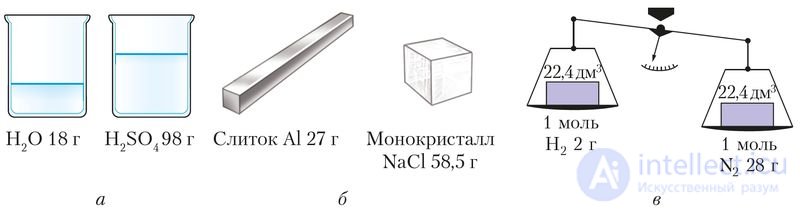
Fig. 8. Portions of substances with an amount of 1 mole:
a — liquids, b — solids, c — gases
Knowing the amount of substance required for a chemical reaction, it is easy to calculate its mass using the formula:

For example, copper(II) oxide with an amount of 0.25 mol is needed for a synthesis. Since the molar mass M(CuO) = 80 g/mol, the mass of its portion is: m(CuO) = M(CuO) ∙ n(CuO) = 0.25 mol ∙ 80 g/mol = 20 g, meaning the experimenter must weigh out 20 g of copper(II) oxide.
In addition to molar mass, every substance has a molar volume Vm, that is, the volume of a substance with an amount of 1 mole.
The molar volume of a gas Vm is a quantity equal to the ratio of the volume of a given portion of substance V(X) to its chemical amount n(X) in this portion:

The molar volume of solids and liquids depends on their density. The molar volume of water, acid, metal, and salt differs because their densities also differ (fig. 8). The molar volume of a substance can also be calculated using the well-known formula  :
:

where ρ is the density of the substance.
For example, the molar volume of acetic acid:

Let us calculate the molar volume of two arbitrarily chosen gases — nitrogen and methane (under standard conditions):


Thus, two arbitrarily chosen different gaseous substances — methane and nitrogen — with an amount of 1 mole under identical conditions occupy the same volume. This is also characteristic of any other gases. Under standard conditions, the molar volume of a gas Vm = 22.4 dm3/mol.
Recall that standard conditions are a temperature of 0 °C (273 K), pressure of 101.325 kPa.
The equality of volumes of different gases with an amount of 1 mole, measured under the same conditions, is explained by the same number of molecules in the case of both gases and the same distance between molecules. In gases, unlike liquids and solids, the sizes of the molecules do not have a significant effect on the molar volume.
Let us systematize the most important quantitative characteristics of a substance and their mixtures (table 3).
Table 3. Quantitative characteristics of a substance, a portion of a substance, and a substance in a mixture
| Quantitative characteristics | |||||
| Substance | Portion of substance | ||||
| Quantity | Symbol and units of measurement | Quantity | Symbol and units of measurement | ||
| Relative molecular (formula) mass | Mr | — | Mass | m | kg, g |
| Molar mass | M | g/mol | Volume | V | m3 |
| Molar volume | Vm | dm3/mol | Amount of substance | n | mol |
| Density | ρ | kg/m3 | Number of structural units (particles) | N | — |
| Mass fraction of an element | ω | —; % | |||
| Substance in a mixture | |||||
| Mass fraction of the substance | ω | —; % | Molar concentration of the substance | c | mol/dm3 |
| Volume fraction of the substance | φ | —; % |
Amount of substance (chemical amount) is a physical quantity equal to the ratio of the number of structural units making up a given portion of it to the Avogadro constant.
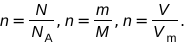
Amount of substance can be calculated using one of three formulas:
Questions, tasks, problems
1. Name the physical quantities denoted by the symbols: N, NA, V, Vm, m, ω, ρ.
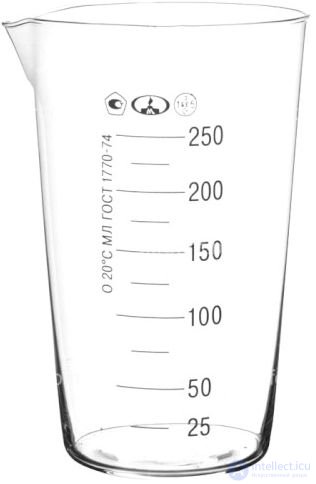
2. Write down the names of the physical quantities that the laboratory equipment shown in figure 9 is intended to measure.
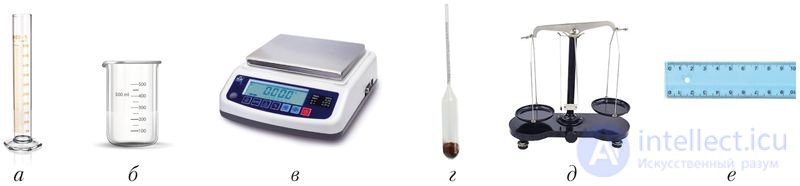
Fig. 9. Laboratory equipment for measurements:
a — graduated cylinder, b — measuring beaker, c — electronic scale, d — hydrometer,
e — pan balance, f — ruler.
3. Calculate the amount of carbon dioxide (mol) containing 1.505 · 1023 molecules.
4. Determine what volume (s. c.) methane occupies:
5. Calculate the relative molecular (formula) mass, molar mass, number of structural units, and volume of a portion of a substance with a mass of 15 g, if the substance is:
6. Calculate the mass of O2 and H2O molecules in a.m.u., grams, kilograms.
7. Determine the mass of a mixture consisting of 12 mol of hydrogen and 8 mol of nitrogen.
8. Determine the total number of atoms in silicon(IV) oxide with a mass of 3 g.
9. What is the mass of acetic acid containing the same number of atoms as are present in carbon dioxide with a mass of 704 g?
10. Determine the mass fraction of carbon in a mixture consisting of 3 mol of carbon dioxide and 5 mol of carbon monoxide.

*Self-check
1. The quantitative characteristics of a substance include the quantities denoted by the symbols:
2. The volume of a liquid in the laboratory is determined using:


3. The mass and volume (s. c.) of a portion of oxygen with an amount of 0.2 mol are equal to:
4. The amount of liquefied nitrogen with a mass of 1.4 g is equal to:
5. The mass of a mixture containing oxygen O2 and ozone O3 with amounts of 2 mol and 0.1 mol respectively is equal to:

Comments