
Lecture
Medicinal chemistry is a scientific discipline concerned with the optimization and discovery of drugs and biologically active compounds, and studies their metabolism, mode of action at the molecular level, and structure-activity relationships (QSAR). It incorporates aspects of chemistry, biology, medicine, and pharmacy.
Medicinal or pharmaceutical chemistry is a scientific discipline at the intersection of chemistry and pharmacy that deals with the design and development of pharmaceutical agents. Medicinal chemistry involves the identification, synthesis, and development of new chemical substances suitable for therapeutic use. It also includes the study of existing drugs, their biological properties, and quantitative structure-activity relationships (QSAR).
Medicinal chemistry is a highly interdisciplinary science that combines organic chemistry with biochemistry, computational chemistry, pharmacology, molecular biology, statistics, and physical chemistry.
Compounds used as drugs are most often organic compounds, which are frequently divided into the broad classes of small organic molecules (for example, atorvastatin, fluticasone, clopidogrel) and "biologics" (infliximab, erythropoietin, insulin glargine), the latter of which are most often protein-based drugs (natural and recombinant antibodies, hormones, etc.). Drugs may also be inorganic and organometallic compounds, commonly called metallodrugs (for example, agents based on platinum, lithium, and gallium, such as cisplatin, lithium carbonate, and gallium nitrate, respectively). The discipline of medicinal inorganic chemistry investigates the role of metals in medicinal metallotherapy, which includes the study and treatment of diseases and health conditions associated with inorganic metals in biological systems. Several metallotherapeutic drugs are approved for treating cancer (for example, containing Pt, Ru, Gd, Ti, Ge, V, and Ga), for antimicrobial use (for example, Ag, Cu, and Ru), for diabetes (for example, V and Cr), broad-spectrum antibiotics (for example, Bi), and bipolar disorder (for example, Li). Other areas of research include metallomics, genomics, proteomics, diagnostic agents (for example, MRI: Gd, Mn; X-ray: Ba, I), and radiopharmaceuticals (for example, 99mTc for diagnostics, 186Re for therapy).
In particular, medicinal chemistry, in its most common practice—focusing on small organic molecules—encompasses synthetic organic chemistry and aspects of natural products and computational chemistry in close combination with chemical biology, enzymology, and structural biology, all jointly aimed at discovering and developing new therapeutic agents. In practical terms, it involves the chemical aspects of identifying, and then systematically and carefully synthetically modifying, new chemical entities to make them suitable for therapeutic use. It includes the synthetic and computational aspects of studying existing drugs and agents in development with regard to their bioactivity (biological activity and properties), i.e. understanding their structure-activity relationships (SAR). Pharmaceutical chemistry focuses on the quality aspects of drugs and aims to ensure the fitness for purpose of pharmaceutical products.
At the biological interface, medicinal chemistry integrates into a set of highly interdisciplinary sciences, aligning its organic, physical, and computational emphases with biological fields such as biochemistry, molecular biology, pharmacognosy and pharmacology, toxicology, veterinary medicine, and human medicine; together with project management, statistics, and pharmaceutical business practice, these systematically oversee the modification of identified chemical agents so that, once formulated pharmaceutically, they are safe and effective, and thus suitable for use in treating disease.
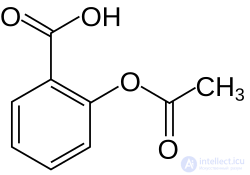
Acetylsalicylic acid (aspirin) is one of the first synthetic drugs.
The beginning of medicinal chemistry can be dated to the late 19th century, but it was not fully established as a discipline until the 1970s. Of course, individual medicinal substances have been known since ancient times; for example, castor oil was used as far back as ancient Egypt. Since the earliest times, derivatives of mercury, arsenic, and antimony have been used, but treatment with them was often more dangerous than the disease itself.
In the 16th century, the Swiss physician and alchemist Paracelsus criticized ancient medicine and promoted the introduction of chemical remedies, founding iatrochemistry. In the 19th century, new methods of chemical analysis and separation made it possible to isolate the active ingredients of many medicinal plants: quinine, morphine, salicylic acid, and others.
The development of organic chemistry in the mid-to-late 19th century made it possible to obtain drugs by purely synthetic means, for example, salicylic acid and its derivative, acetylsalicylic acid (aspirin).

Salvarsan is the first effective drug against syphilis.
At the turn of the 19th–20th centuries, Paul Ehrlich developed the concept of chemotherapy—treating diseases with poisons or toxins that act selectively on the infectious agent (the so-called "magic bullets"). In 1907, his laboratory synthesized salvarsan, the first effective remedy for syphilis.
Between 1920 and 1940, the first antimicrobial drugs and antibiotics were discovered: sulfanilamide (Gerhard Domagk), penicillin (Alexander Fleming), and chloramphenicol.

Benzylpenicillin is one of the first antibiotics.
At the end of the 20th century, the development of biotechnology made it possible to synthesize complex biological molecules by design for use as drugs, for example, hormones and monoclonal antibodies.
Discovery is the identification of new active chemical compounds, often called "hits," which are usually found by screening compounds for a desired biological activity. Initial hits can be obtained by repurposing existing agents for new pathological processes, and from observations of the biological effects of new or existing natural products from bacteria, fungi, plants, and so on. In addition, hits also commonly arise from structural observations of small-molecule "fragments" bound to therapeutic targets (enzymes, receptors, etc.), where the fragments serve as starting points for developing more chemically complex forms through synthesis. Finally, hits also regularly arise from mass testing of chemical compounds against biological targets using biochemical or chemoproteomic assays, where the compounds may come from new synthetic chemical libraries known for their particular properties (kinase inhibitory activity, diversity, or drug-likeness, etc.), or from historical collections or libraries of chemical compounds created through combinatorial chemistry. Although there are a number of approaches to identifying and developing effective drugs, the most successful methods rely on chemical and biological intuition developed in a team environment over years of painstaking practice focused solely on discovering new therapeutic agents.
Further chemical and analytical work is needed, first, to identify "screening" compounds that do not provide series exhibiting suitable SAR and chemical characteristics associated with long-term development potential, and then to improve the remaining hit series with respect to the desired primary activity, as well as secondary activities and physicochemical properties, so that the agent is useful when administered to real patients. In this regard, chemical modifications can improve the recognition and binding geometry (pharmacophores) of candidate compounds, and thus their affinity for their targets, as well as improve the physicochemical properties of the molecule that underlie the required pharmacokinetic/pharmacodynamic (PK/PD) and toxicological profiles (resistance to metabolic degradation, absence of geno-, hepato-, and cardiotoxicity, etc.), so that the chemical compound or biological agent is suitable for introduction into animal and human studies. [citation needed]
The final stages of synthetic chemistry involve producing the lead compound in a suitable quantity and quality to enable large-scale animal testing and then clinical trials in humans. This includes optimizing the synthetic route for large-scale industrial production and discovering the most suitable drug formulation. The former remains the domain of medicinal chemistry, while the latter brings in the specialization of formulation science (with its components of physical and polymer chemistry and materials science). The specialization of synthetic chemistry within medicinal chemistry, aimed at adapting and optimizing the synthetic route for synthesis on an industrial scale of hundreds of kilograms or more, is called process chemistry and requires deep knowledge of acceptable synthetic practice in the context of large-scale reactions (reaction thermodynamics, economics, safety, etc.). At this stage, the transition to more stringent GMP requirements for sourcing, handling of materials, and chemistry becomes critical.
The synthetic methodology used in medicinal chemistry is subject to constraints that do not apply to traditional organic synthesis. Given the prospect of scaling up the drug, safety is of paramount importance. The potential toxicity of reagents influences the methodology.
The structures of pharmaceutical agents are evaluated in many ways, partly as a means of predicting efficacy, stability, and availability. Lipinski's rule of five focuses on the number of hydrogen bond donors and acceptors, the number of rotatable bonds, surface area, and lipophilicity. Other parameters by which medicinal chemists evaluate or classify their compounds include synthetic complexity, chirality, planarity, and the number of aromatic rings.
Structural analysis of lead compounds is often carried out using computational methods before the actual synthesis of the ligand(s). This is done for a number of reasons, including but not limited to: time and financial considerations (costs, etc.). Once the ligand of interest has been synthesized in the laboratory, the analysis is carried out using traditional methods (TLC, NMR, GC/MS, etc.).
Medicinal chemistry is by its nature an interdisciplinary science, and practitioners have a solid background in organic chemistry, which must ultimately be combined with a broad understanding of the biological concepts related to cellular drug targets. Scientists working in medicinal chemistry are mostly industrial scientists (but see below) working as part of an interdisciplinary team that applies their chemical abilities, especially synthetic skills, to the use of chemical principles for developing effective therapeutic agents. The duration of training is intensive, with practitioners often required to obtain a 4-year bachelor's degree, followed by a 4–6-year PhD in organic chemistry. Most training programs also include a postdoctoral fellowship period of 2 or more years after obtaining a PhD in chemistry, resulting in a total training duration of 10 to 12 years of college education. ] However, employment opportunities at the master's level also exist in the pharmaceutical industry, and at the PhD level there are additional employment opportunities in academia and government.
Graduate programs in medicinal chemistry can be found in traditional departments of medicinal chemistry or pharmaceutical sciences, which are traditionally associated with schools of pharmacy, as well as in some chemistry departments. However, most practicing medicinal chemists hold advanced degrees (master's, but especially PhD) in organic chemistry rather than medicinal chemistry, and research positions predominate, where the network is necessarily spread widest and the broadest range of synthetic activity occurs.
In small-molecule therapeutic research, an emphasis on training that provides breadth of synthetic experience and a fast "pace" of laboratory operations is clearly present (for example, for individuals engaged in purely synthetic organic and natural product synthesis during doctoral and postdoctoral positions, ibid.). In areas of medicinal chemistry related to the design and synthesis of chemical libraries or the execution of chemical processes aimed at viable commercial syntheses (areas that generally offer fewer opportunities), training paths are often much more varied (for example, including targeted training in physical organic chemistry, library-related synthesis, etc.).
Thus, most entry-level specialists in medicinal chemistry, especially in the United States, have no formal education in the field, but acquire the necessary medicinal chemistry and pharmacological training after employment—upon joining a pharmaceutical company, where the company provides its particular understanding or "medchem" training model through active participation in practical synthesis within therapeutic projects. (The same applies to some extent to computational medicinal chemistry specialties, but not to the same degree as in synthesis-focused areas.)
Developing a new drug, from hypothesis to market launch, takes 12–15 years and costs more than 1 billion dollars. Between 2006 and 2015 in the United States, only 9.6% of candidates successfully completed clinical trials and received approval from the Food and Drug Administration (FDA).
At the discovery stage, the first compounds that possess the desired activity against a biological target, so-called "hits," are identified. Such initial hits may be new chemical compounds (for example, from combinatorial libraries) or known drug substances and natural compounds. Hits are often found by studying the interaction of small molecular fragments with biological targets (enzymes, receptors, etc.). Fragment libraries can be obtained by combinatorial synthesis or taken from existing pharmaceutical company archives.
After several dozen active hit compounds have been found, they undergo deeper analysis, such as studying the structure-activity relationship and identifying structural fragments incompatible with large-scale chemical synthesis. The structures of the selected compounds continue to be varied to improve biological activity (primary and secondary) and physicochemical properties (solubility, membrane permeability, metabolism, etc.). The main factors at this stage are the ability of the pharmacophore to bind to the biological target (determined by the three-dimensional structure and mutual arrangement of active sites), the pharmacokinetics and pharmacodynamics of the molecule, and its toxicological profile (resistance to undesirable metabolism, absence of geno-, hepato-, and cardiotoxicity). The most promising "hits" (usually 2–3) are promoted to "leads" and sent on to toxicological and, subsequently, clinical trials.
At the clinical trial stage, the selected drug candidates (leads) are introduced into the human body for the first time, and their activity is comprehensively studied in small groups of volunteers (usually from 10 to 3000 people, depending on the disease and the phase of testing). This complex process proceeds under strict control through several stages, so-called phases:
Clinical and preclinical trials require large quantities of the test substances (from several hundred grams to tens of kilograms), which significantly exceed the synthetic capacity of medicinal chemistry laboratories. Therefore, compounds selected for testing undergo repeated retrosynthetic analysis to establish an efficient and scalable synthesis, as well as the most effective drug formulation. Developing an industrial synthesis is a complex, multifactorial process in which production cost (reagents, equipment, labor), safety of the synthesis for workers and the environment, purity of the final product, and stability of the drug formulation during storage must all be balanced. These requirements are governed by the so-called GMP rules (Good Manufacturing Practice).

Comments