
Lecture
The ability of atoms to attach to themselves a strictly defined number of other atoms is characterized by means of valence.
The simplest way to explain what valence is can be shown using compounds with covalent bonds as an example. In such compounds, the valence of the atoms of a given element is conventionally determined by the number of covalent bonds formed.
For example, the valence of oxygen in molecules of water  , hydrogen peroxide
  , and formaldehyde
 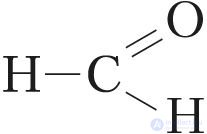 is equal to two.
The valence of nitrogen in the simple substance  and in ammonia
 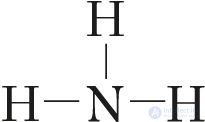 is equal to three, and in the ammonium ion — to four: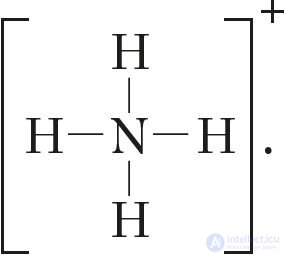
When predicting the number of possible valences of an atom of a given element in various compounds, we indicate the atom's valence possibilities. The valence possibilities of an atom are determined by:
Let us consider the valence possibilities of the phosphorus atom based on the number of its unpaired electrons. The electron configuration of the valence shell of the phosphorus atom in the ground state is 3s23p33d0, which gives it the ability to form only three bonds by the exchange mechanism: 15P 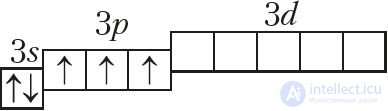
But the phosphorus atom is also capable of forming five bonds if one 3s-electron is transferred to an excited state. In this case the electron configuration of the phosphorus atom will take the form 3s13p33d1:

Applying similar reasoning, one can conclude that the sulfur atom can display valences of 2, 4, 6, and the chlorine atom — 1, 3, 5, 7.
Let us consider the valence possibilities of nitrogen, whose atoms, like those of phosphorus, have five electrons in the outer electron level. Based on the electron configuration of its valence shell 2s22p3 and the electron-graphic diagram 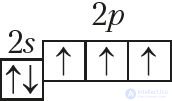 , we conclude that nitrogen atoms can display a valence of 3, since they have three unpaired electrons. A pentavalent state is impossible for it due to the absence of free orbitals at the second level. However, the nitrogen atom has four orbitals (cells) at the outer level. Therefore it can form four covalent bonds, which we observe in the case of the ammonium ion:
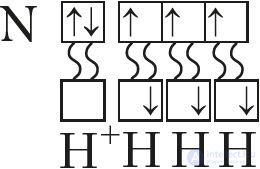
Thus, the maximum valence of nitrogen atoms is 4.
The maximum valence not only of nitrogen but also of other elements of the second period cannot exceed four, since the outer electron shell of the atoms of these elements has only four orbitals.
Why can't the valence possibilities of second-period elements be extended by allowing electrons to move to the 3rd energy level? This is explained by the fact that the energy difference between the 2nd and 3rd energy levels is much greater than between the sublevels of a single energy level, and the energy expenditure for excitation is not compensated by the energy of forming new bonds.
Oxidation state
In the case of substances with ionic or polar bonds, the concept of oxidation state is used to characterize the state of the atoms forming these bonds. As you already know from the material of § 11, the oxidation state of an atom — is the conventional charge assigned to an atom on the assumption that it forms only ionic bonds with neighboring atoms.
The numerical value of the oxidation state of an atom in a specific compound is determined by the number of electrons shifted during bond formation or transferred to neighboring atoms. Thus, the oxidation state of nitrogen atoms in molecules of the simple substance  is 0 (the electrons are not shifted, the bond is covalent nonpolar). In the ammonia molecule, nitrogen displays an oxidation state of –3, since three electrons have shifted toward the nitrogen atom from the hydrogen atoms. The hydrogen atoms, in turn, have an oxidation state of +1.
In calculations it is taken into account that the algebraic sum of the oxidation states of all atoms in a compound equals 0.
It should not be forgotten that the atoms of some elements have a constant oxidation state value in their compounds ( ,
,  ,
,  ,
,  and others). The most electronegative atoms in a specific compound usually have the lowest oxidation state.
Thus, in the CF4 molecule, fluorine is more electronegative, and its atoms have an oxidation state of –1. Consequently, carbon is in an oxidation state of +4, that is,  .
.
In potassium permanganate KMnO4, potassium has a constant oxidation state, oxygen as the most electronegative element is in its lowest oxidation state –2, so the oxidation state of manganese can be found from the equality 0 = (+1) + x + 4(–2), that is,  .
.
In many covalent compounds, the absolute value of the oxidation state of the elements equals their valence. For example, nitrogen in the ammonia molecule has a valence of 3 and an oxidation state of –3. In the case of ionic compounds of metal atoms with p-elements of groups V–VII, the concept of "oxidation state" is used. For example, in calcium chloride СаCl2, the oxidation state of chlorine is –1, and of calcium — +2.
Valence can differ from oxidation state. This is characteristic, for example, of simple substances, in whose molecules the oxidation state of the atoms is always equal to zero, while the valence equals the number of shared electron pairs.
Thus, in the oxygen molecule  the valence of oxygen is 2, while the oxidation state is 0. As another example, let us take the molecule of hydrogen peroxide . In it, oxygen is divalent, and hydrogen is monovalent. At the same time, the oxidation states of both elements are equal in absolute value to 1:
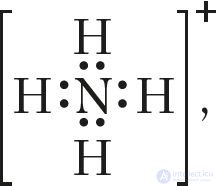
  . The values of oxidation state and valence of nitrogen also do not coincide in the ammonium ion (–3, 4)
  and in the molecule of nitric acid (+5, 4)
  .
.
The oxidation state of atoms determines the nature of the possible chemical interactions involving these atoms. Thus, an element in its lowest oxidation state (in this case nitrogen in oxidation state –3) can act only as a reducing agent:

An element in its highest oxidation state (nitrogen, +5) can only be an oxidizing agent:

In an intermediate oxidation state, an element (nitrogen, +2) can be either an oxidizing agent or a reducing agent:
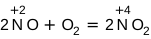 (nitrogen is the reducing agent, it is oxidized);
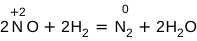 (nitrogen is the oxidizing agent, it is reduced).
The highest oxidation state of the atoms of A-groups equals the group number (with the exception of noble gases, fluorine, and oxygen). The lowest, negative, oxidation state equals the A-group number minus 8.
Valence is the ability of atoms of a given element to attach to themselves a certain number of other atoms.
The valence possibilities of an atom are determined both by the number of its unpaired electrons in the ground or excited state, capable of taking part in the formation of chemical bonds by the exchange mechanism, and by the number of atomic orbitals (vacant or filled) in the outer shell, participating in the formation of a chemical bond by the donor-acceptor mechanism.
The oxidation state of an atom is the conventional charge assigned to an atom on the assumption that it forms only ionic bonds with neighboring atoms.
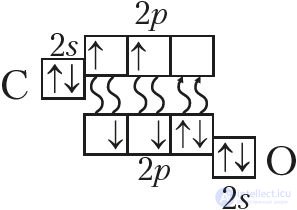
1. Determine the valences of the carbon and oxygen atoms in the compound whose electron formula is  . Write its structural and molecular formulas.
2. Using the electron-graphic formula, write the structural, electronic, and molecular formulas of the substance. Determine the oxidation states and valence of each of the atoms. Name the compound.
3. Name the values of the highest oxidation state of oxygen and sulfur atoms. Why do their values not coincide?
4. Using electron-graphic diagrams and electron configuration formulas, depict the ground and excited states of atoms of S and Cl. Indicate the number of unpaired electrons in each case. Why do chlorine atoms most often display odd oxidation states, while sulfur atoms display even ones?
5. Write the formulas of binary compounds using the oxidation state values of the atoms (table 7): boron nitride, aluminum carbide, calcium phosphide, magnesium silicide, sodium hydride, iron(III) bromide, nitrogen(III) oxide.
6. Determine the oxidation states of the atoms in the ions  ,
,  ,
,  ,
,  , as well as in the salts Na3РО4, Na2SO4, NaClO3, NH4Cl. Analyze the results obtained.
7. Compare the oxidation states of the atoms in each pair of substances and draw a conclusion — is there a correspondence between the oxide and the acid:
8. Write structural formulas, indicate the oxidation states of each atom, show with arrows the shift of electron density:
a) |
b)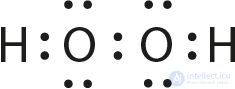 |
c) |
d) |
e)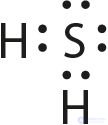 |
9. Determine the valence and oxidation states of all atoms in the compounds:
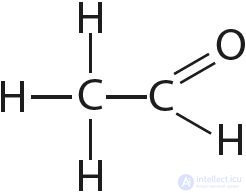
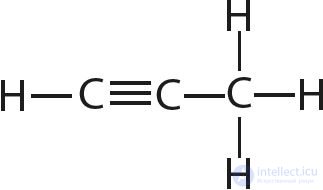
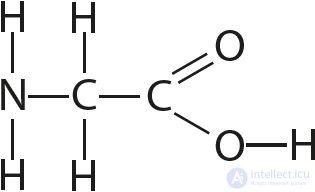
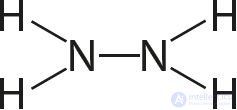
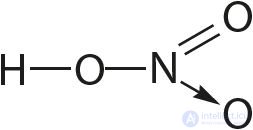
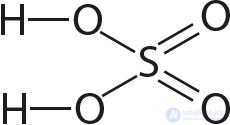
10. Determine the oxidation state of manganese in the compound KxMnyOz, in which the mass fractions of potassium, manganese, and oxygen are 0.396, 0.279, and 0.325, respectively.
1. Metals with a constant oxidation state are part of the compounds:
2. The maximum valence cannot exceed four for the atom of:
3. Valence and the modulus of the oxidation state of carbon do not coincide in the compounds:

 ;
; ;
;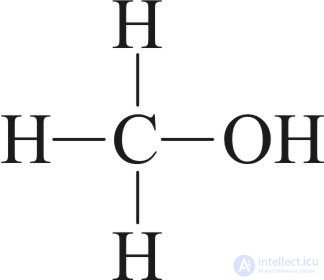 .
.4. Nitrogen can act only as a reducing agent as part of the substances:
5. An increase in the oxidation state of chromium is observed in the series:

Comments