
Lecture
The steady-state short-circuit mode refers to the stage of the short-circuit process in which the free currents that arose in the synchronous machine at the initial instant of the short circuit decay, and the change in voltage 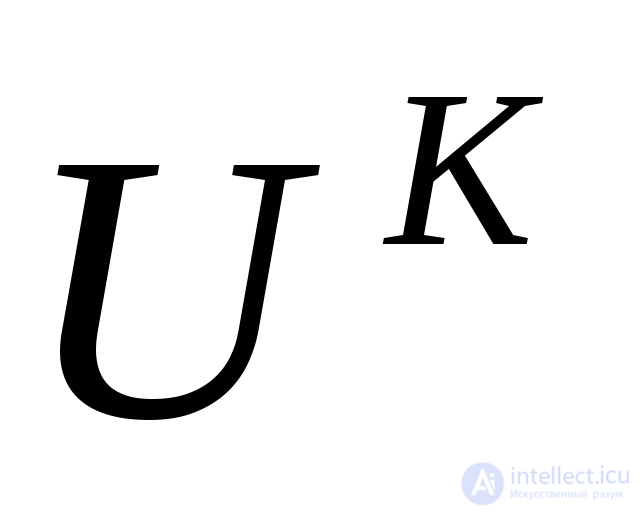 at its terminals under the action of the AVR ceases.
This mode is usually considered to set in within a few seconds after the onset of the short circuit.
The parameters of the short-circuited circuit in the steady-state mode can be determined from the no-load and short-circuit characteristics of the synchronous machine, its synchronous reactances 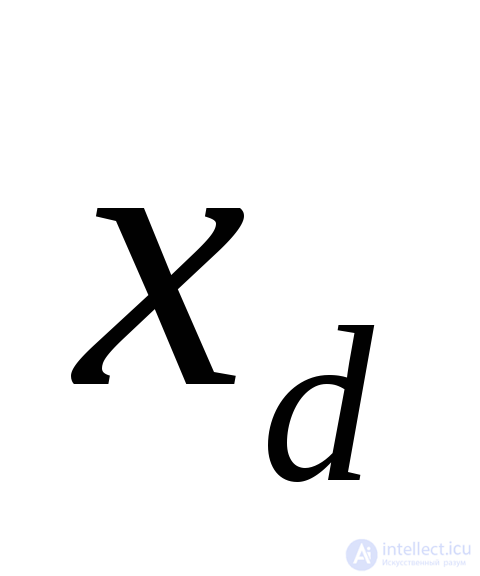 in the direct axis and
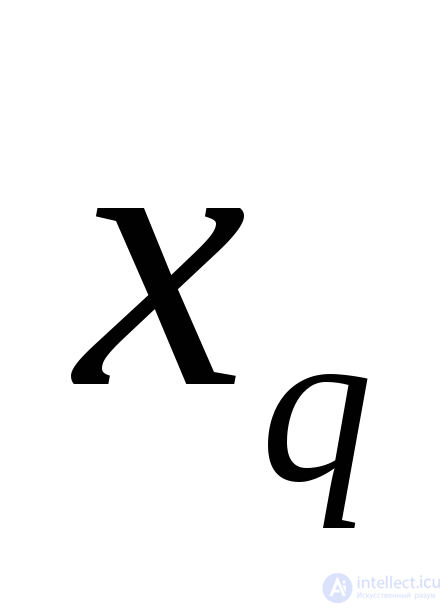 in the quadrature axis, the leakage reactance
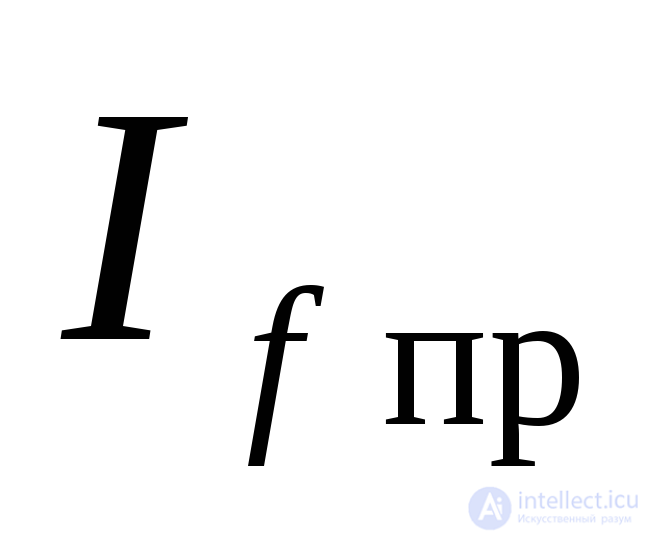
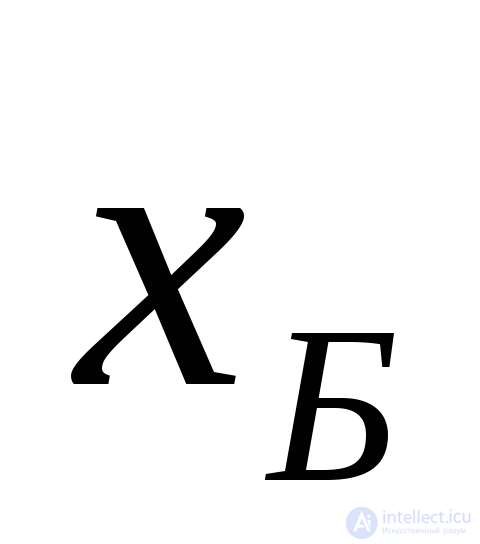 , and the limiting field current
 .
.
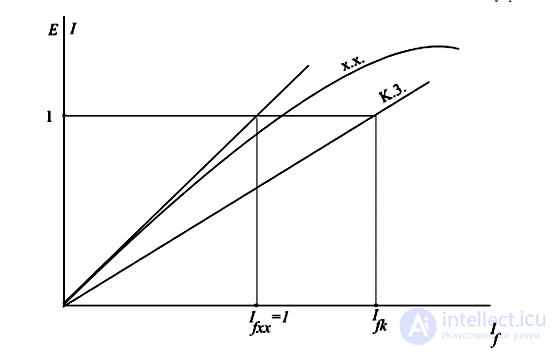
Fig. 4.8. No-load and short-circuit characteristics of a synchronous machine
The synchronous reactance in the direct axis is determined by the expression
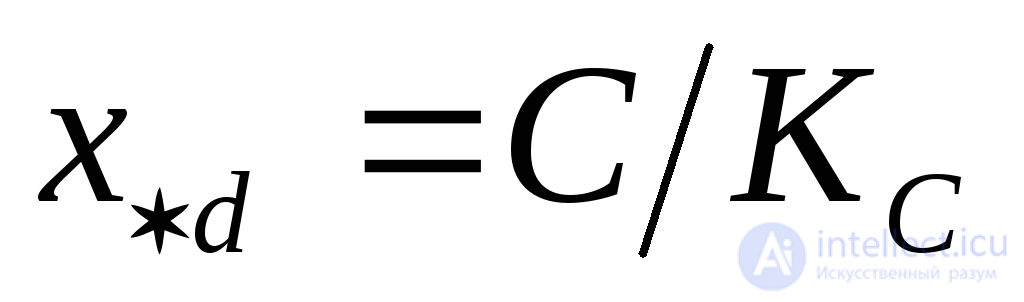 ,
,
where 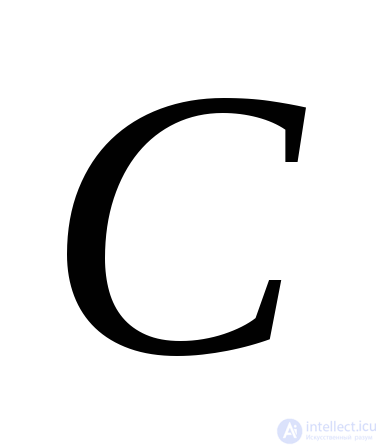 is the per-unit value of the EMF on the unsaturated no-load characteristic
at 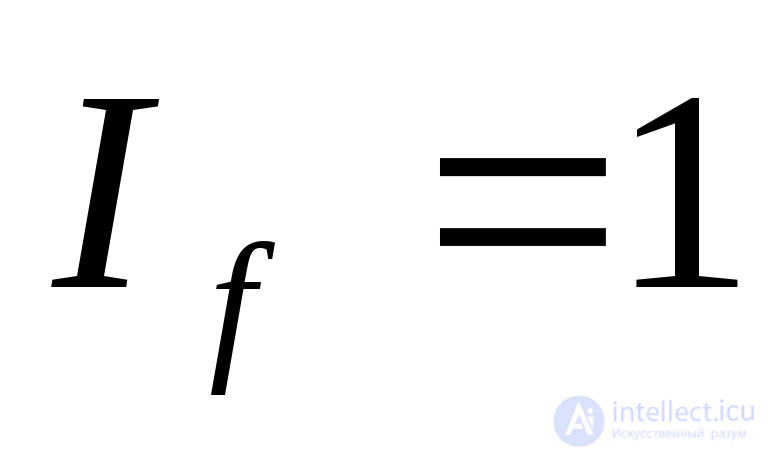 ;
;
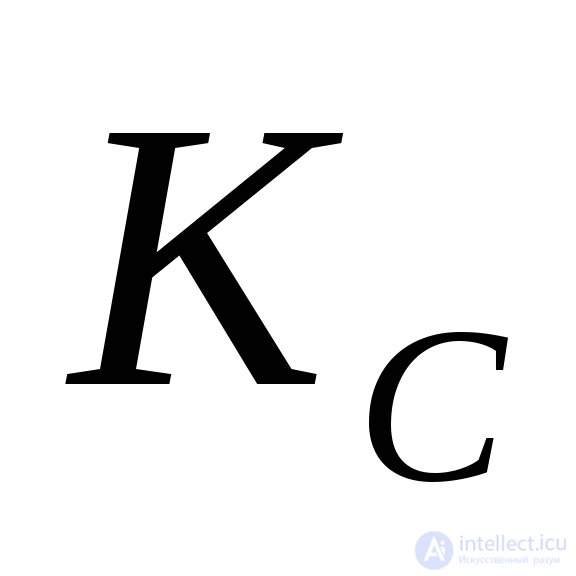 is the short-circuit ratio, corresponding to the per-unit steady-state current at a three-phase short circuit at the generator terminals, to the per-unit field current equal to unity. The limits of variation are
 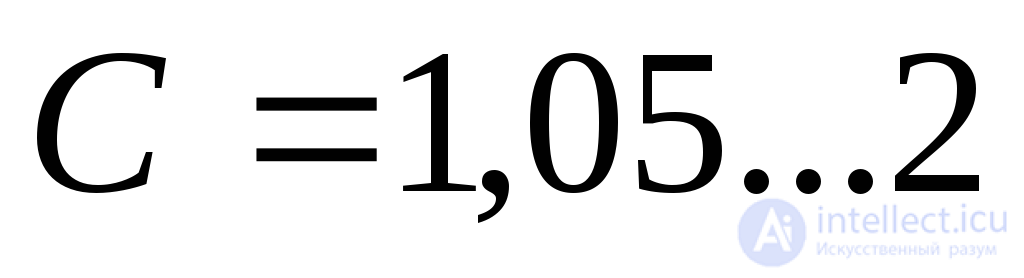 .
.
In non-salient-pole machines 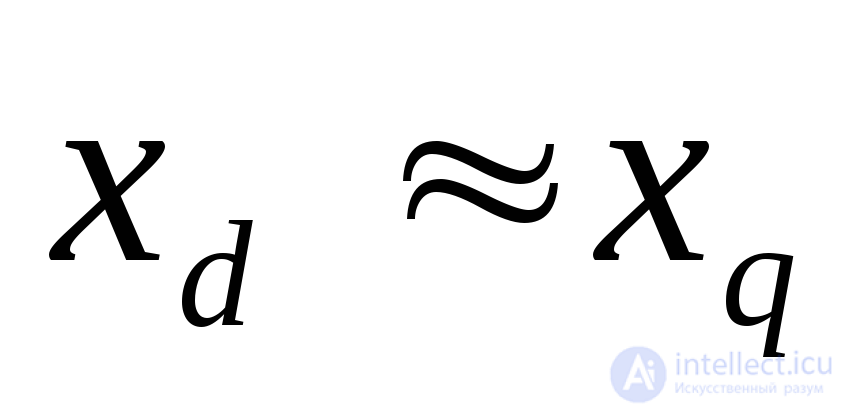 , while in salient-pole machines
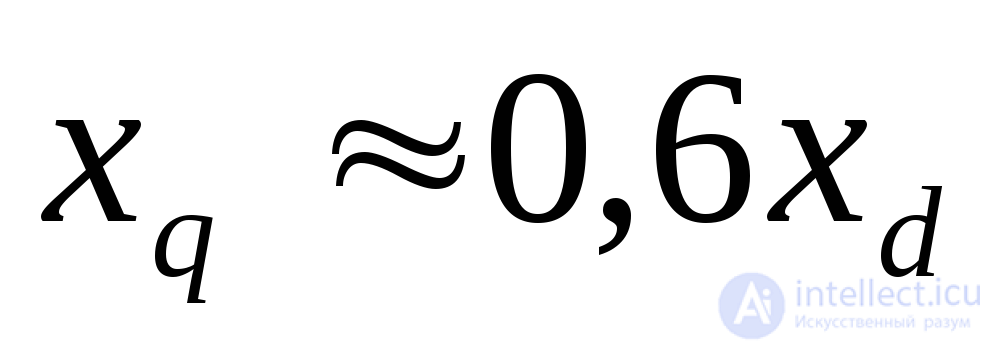 .
.
To simplify short-circuit current calculations, the no-load characteristic 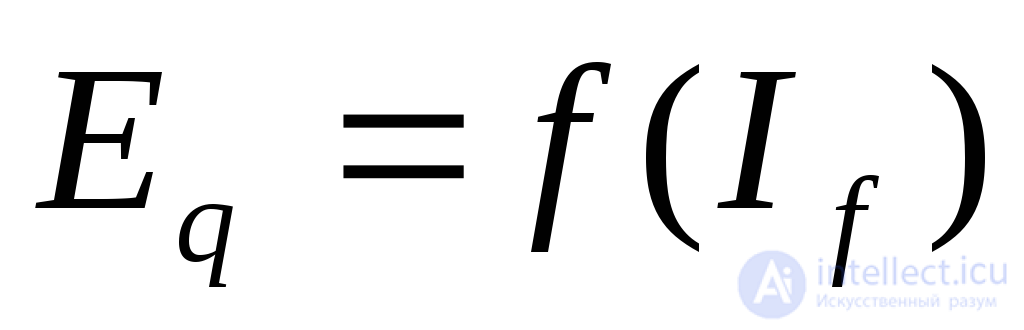 is linearized at the point with coordinates
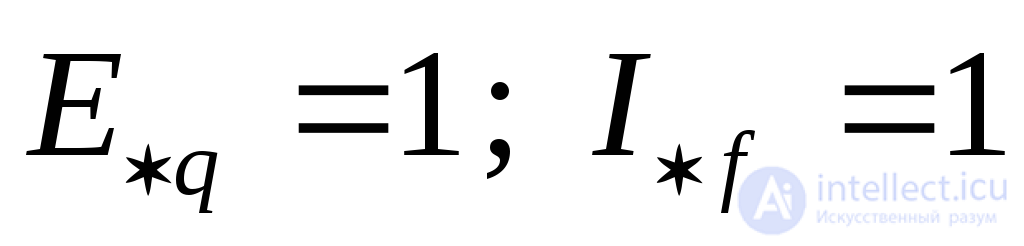 . In this case
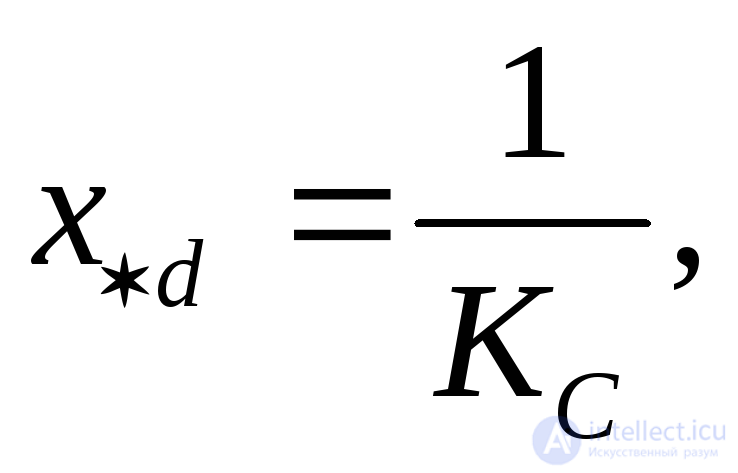 (4.1)
(4.1)
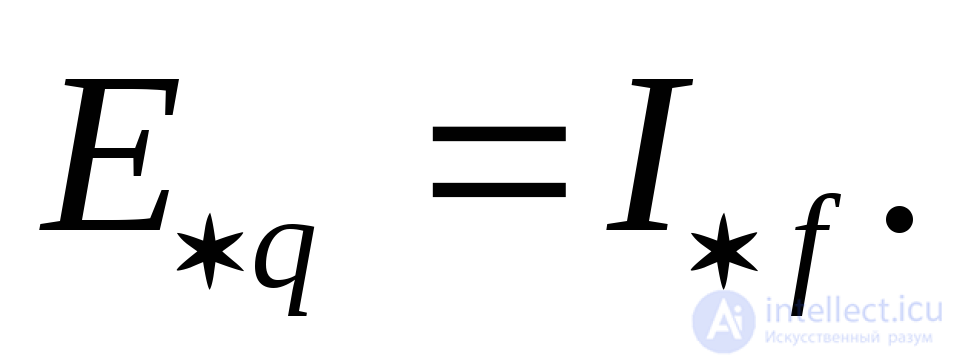 (4.2)
(4.2)
The field current of salient-pole synchronous machines in per-unit values can be found from the vector diagram (Fig. 4.9), taking (4.2) into account:
 . (4.3)
From the vector diagram it also follows that
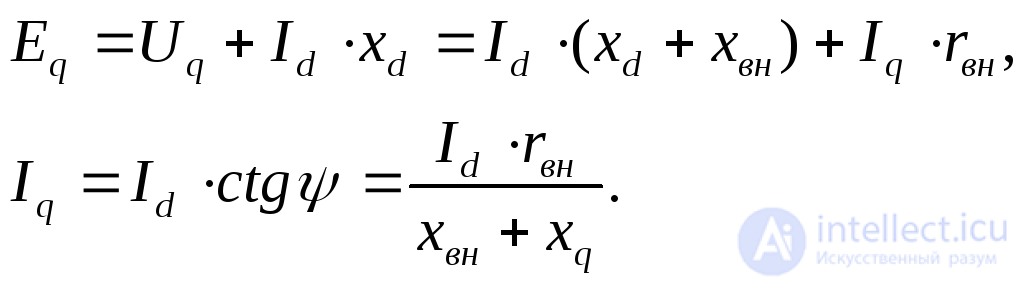
After transformation, we obtain
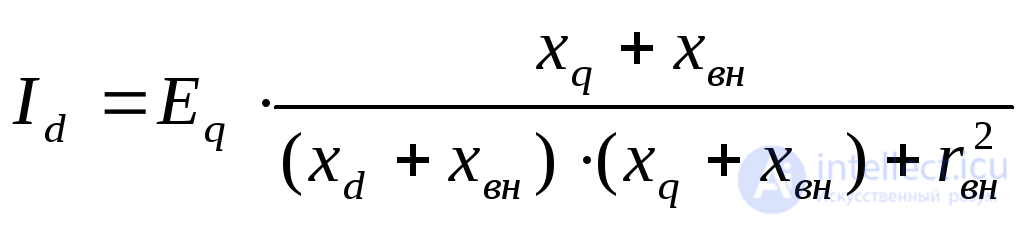 ,
, 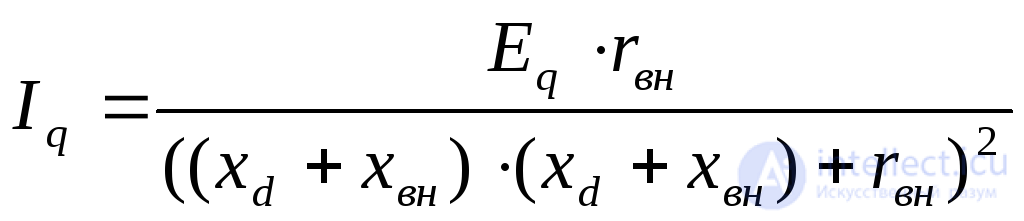 ,
,
 . (4.4)
For non-salient-pole synchronous machines, expression (4.4) becomes

(4.5)
Practical calculations of short-circuit currents show that the currents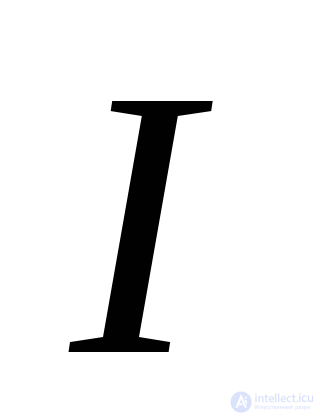 of salient-pole and non-salient-pole machines differ insignificantly and can be determined using (4.5).
The voltage drop caused by the short circuit activates the AVR of the generators, and their excitation increases accordingly. Therefore, under these conditions, the currents and voltages will always be greater than in the absence of AVR. The degree of this increase depends on the remoteness of the short circuit and the parameters of the generators themselves.
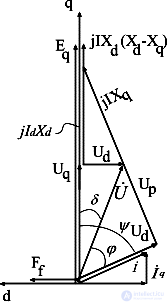
Fig. 4.9
For each generator, it is possible to establish the smallest value of external reactance beyond which the generator, at limiting excitation, still provides normal voltage at its terminals.
Such a reactance is called the critical reactance 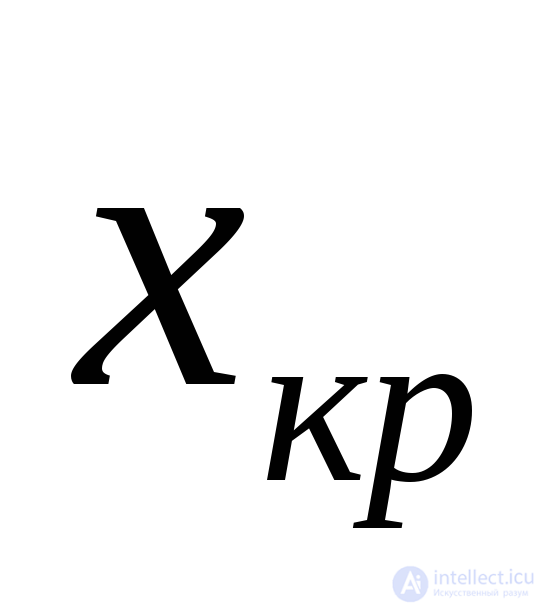 , and the current associated with it by the obvious equality
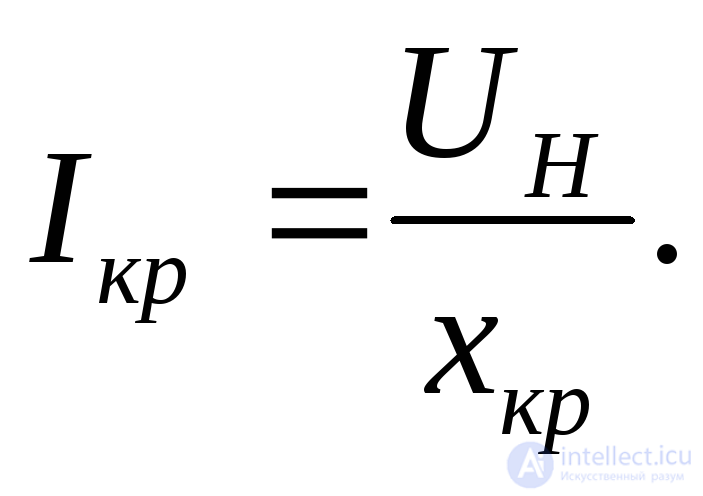 (4.6)
(4.6)
– is called the critical current.
If the external reactance is less than the critical value, then, despite the generator operating at limiting excitation, its voltage still remains below normal. When the external reactance is greater than the critical value, the generator voltage reaches its normal value at an excitation below the limiting one.
The critical resistance of the steady-state short-circuit current can be calculated from the equality
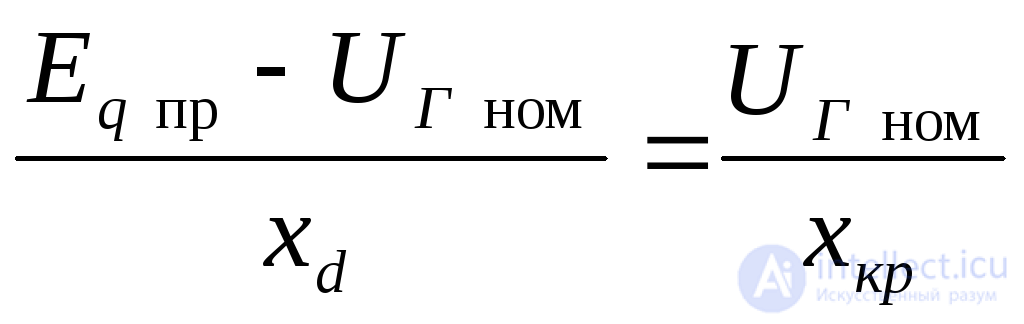 ,
,
whence 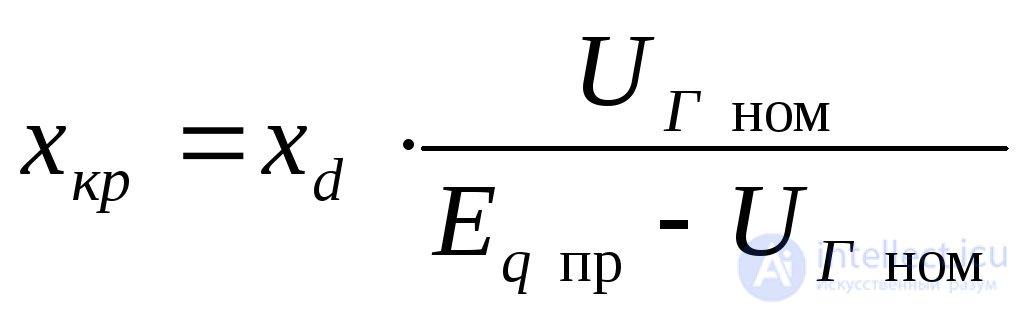 . (4.7)
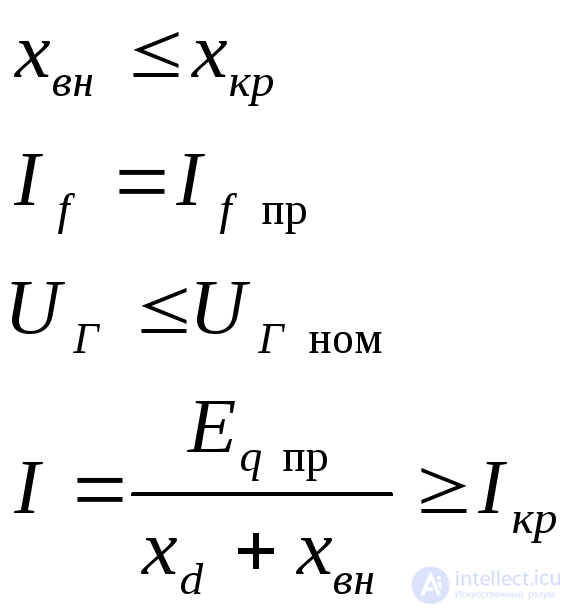
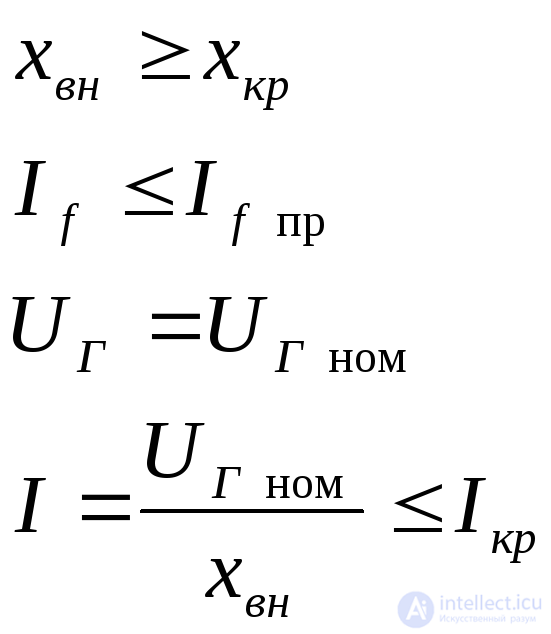
Table 4.1 summarizes all the relations characterizing the generator modes discussed above during a short circuit.
Table 4.1. Relations characterizing generator mode with AVR
|
Limiting excitation mode |
Normal voltage mode |
|
|
|

Comments