
Lecture
Let us consider the problem of determining the initial value of the periodic components of the currents (transient and subtransient). Since the problem is limited to considering only the initial instant, the rotation of the rotor and the resulting change in the machine's inductances play no role, i.e., the machine can be treated as a transformer.
The study of the initial instant of the transient process is more conveniently carried out on the basis of the principle of constancy of flux linkage: at the instant of a sudden disturbance, the flux linked with the rotor remains unchanged, and the corresponding EMF induced in the stator remains constant. Consequently, for a synchronous machine, the conditions at the initial instant of the transient process are analogous to the conditions for a transformer fed from a source of sinusoidal voltage.
Thus, during a transient process, the stator current of a synchronous machine consists of two components: a periodic one (caused by the EMF induced by the rotor flux) and an aperiodic one (caused by the change in stator flux).
Let us adopt the following convention:
+a) the direct-axis component of the stator current is considered positive if the magnetomotive force it creates coincides in direction with the magnetomotive force of the field current;
b) the quadrature-axis component of the stator current is considered positive if the magnetomotive force it creates, when a quadrature-axis circuit is present on the rotor, lags the magnetomotive force of the field current by 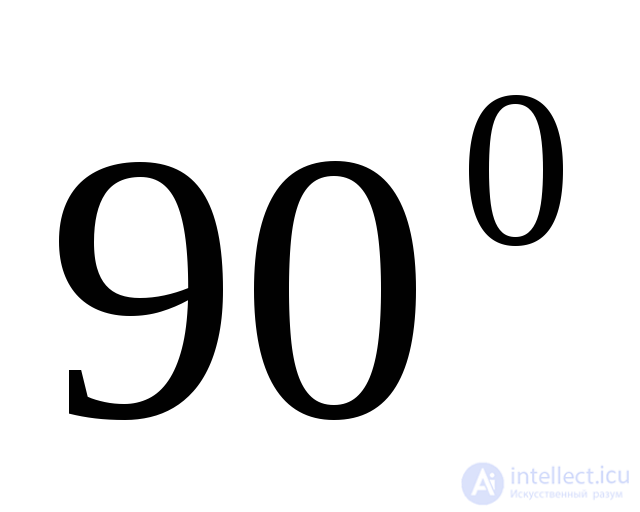 (electrical degrees). This same direction is taken as positive for its magnetic axis.
Let us consider the balance of magnetic fluxes in the direct axis of the rotor of a synchronous machine in a steady-state symmetrical operating mode with a lagging-phase current. In the absence of saturation, each of the fluxes and their individual components can be considered independently of one another.
F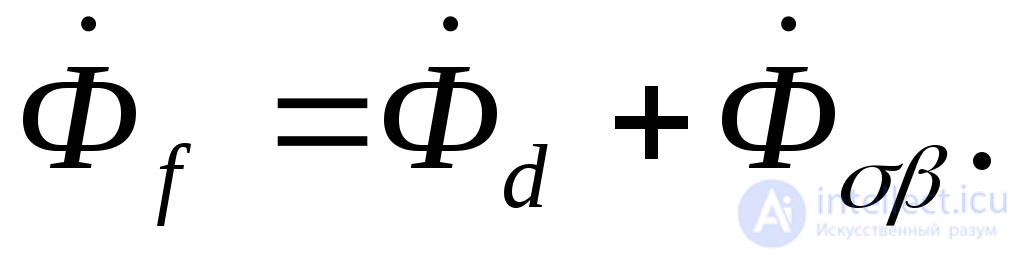 ull flux of the field winding with the stator open-circuited consists of the useful flux
 and the leakage flux:
I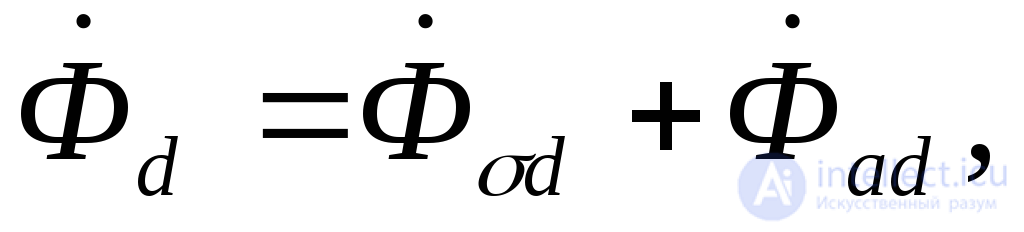 n turn, the useful flux
where  is the direct-axis flux in the air gap,
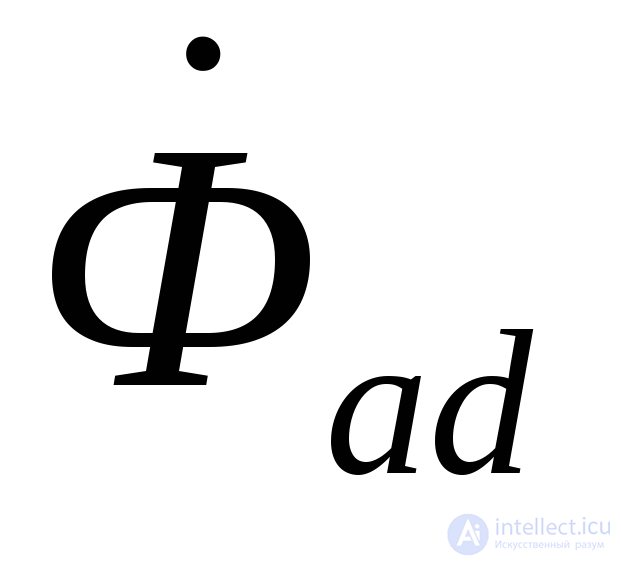 is the direct-axis armature reaction.
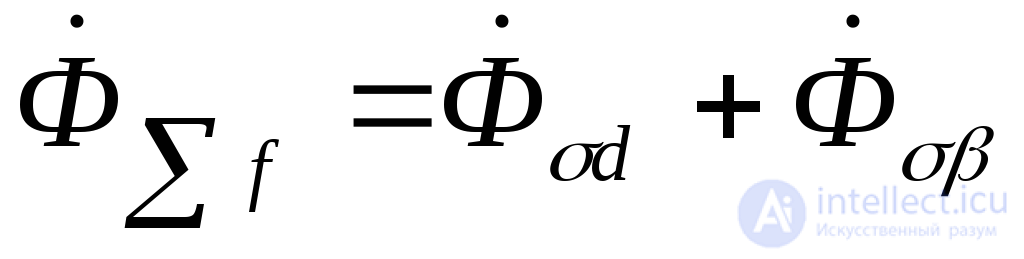
The resultant magnetic flux:
 .
.
Let us consider how the balance of magnetic fluxes changes if, as a result of switching in the stator circuit, the direct-axis armature reaction flux suddenly increases by 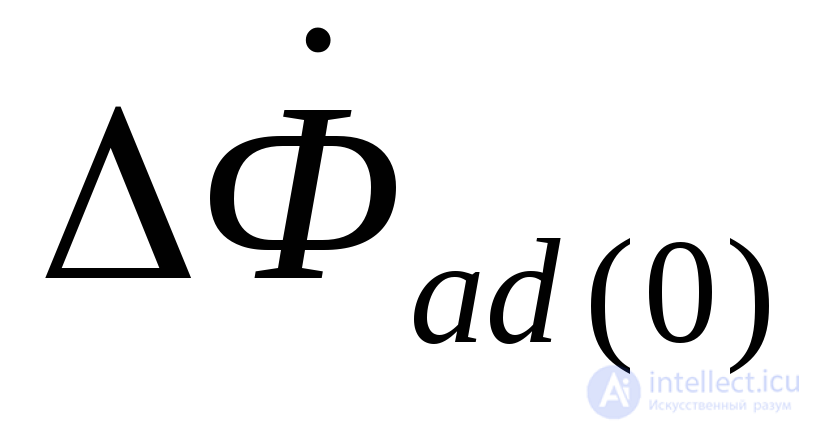 (Fig. 4.4).
Here we assume that, apart from the field winding, there are no other circuits in the direct axis of the rotor. According to Lenz's law, the increment of flux 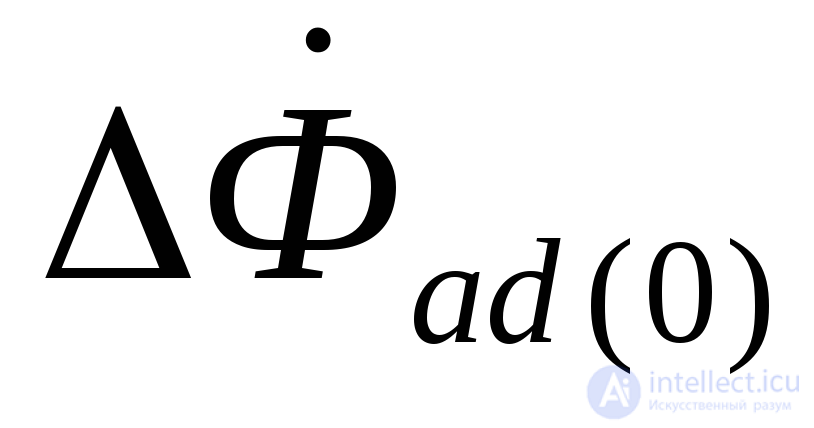 will cause a corresponding response of the field winding
 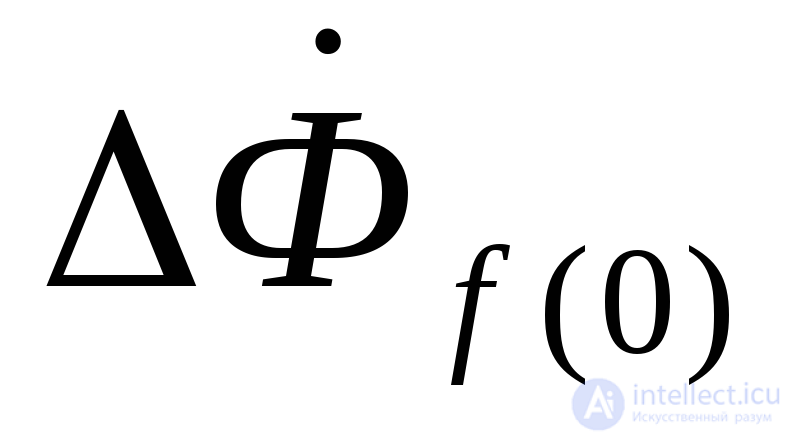 , with the increments of flux linkage compensating each other:
 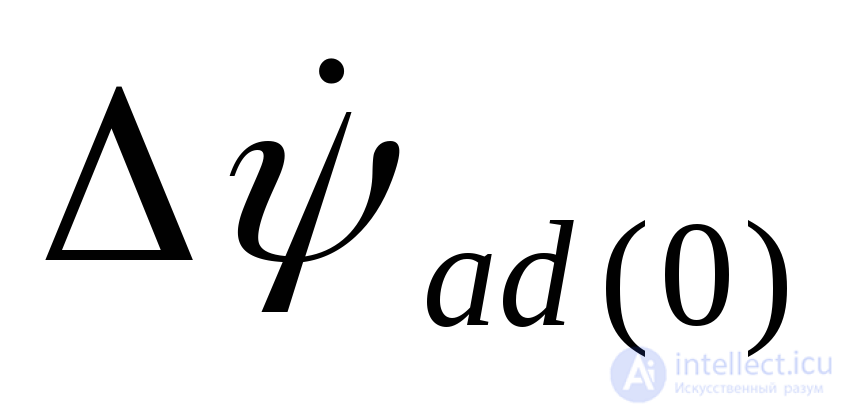 +
+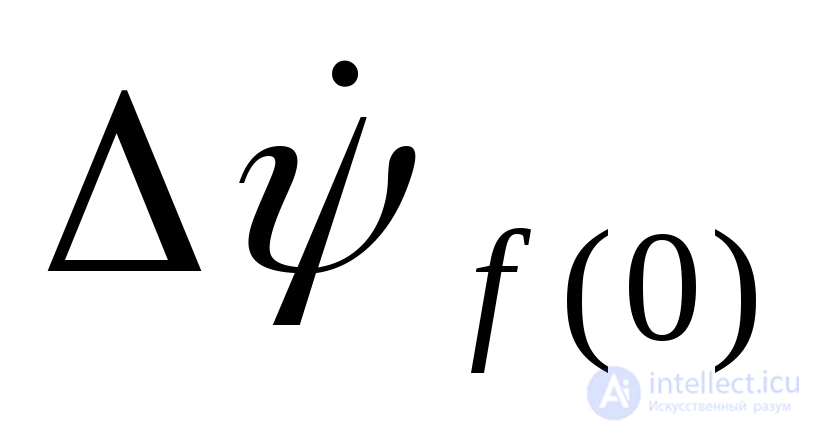 =0.
=0.
Considering the flux linkage to be expressed in per-unit values, and the rotor parameters referred to the stator, this equation can be written as:
 .
.
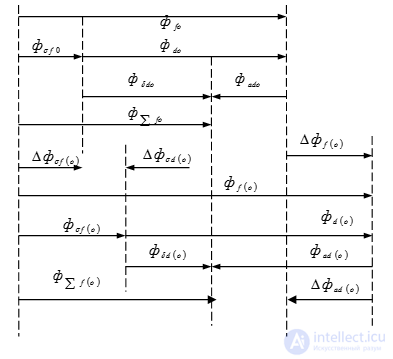
Fig.4.4. Balance of magnetic fluxes
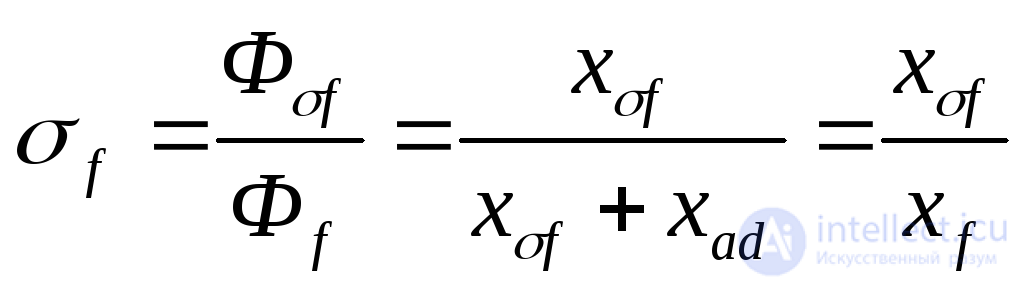
In an unsaturated machine, the flux constitutes a certain constant fraction of the flux
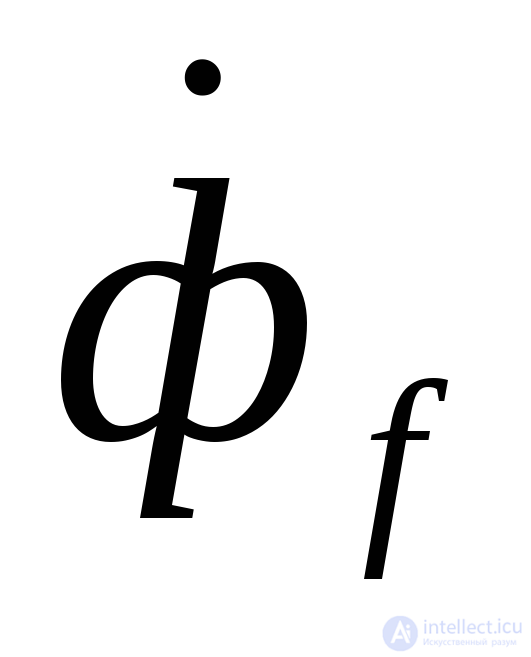 , which is characterized by the leakage coefficient of the field winding
 .
.
With an increase in the flux 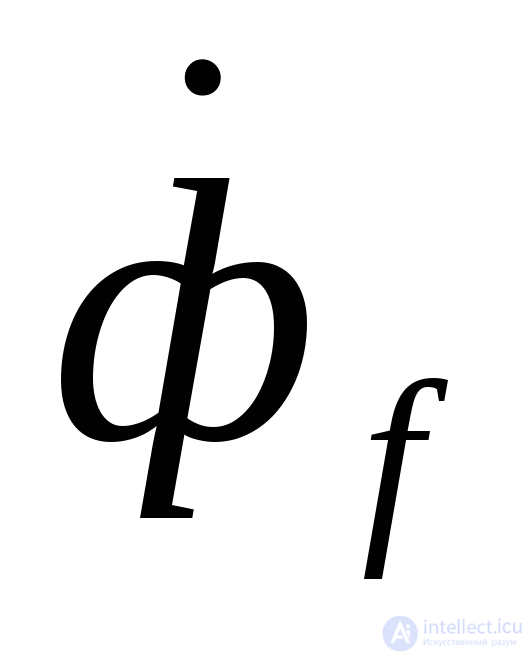 from
from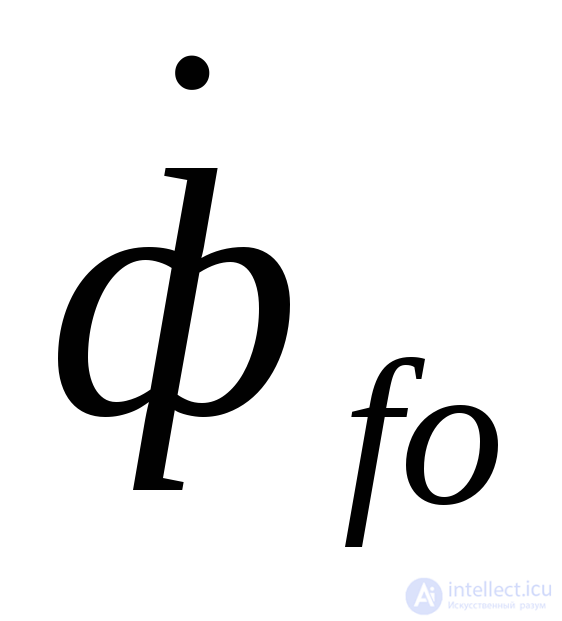 to
to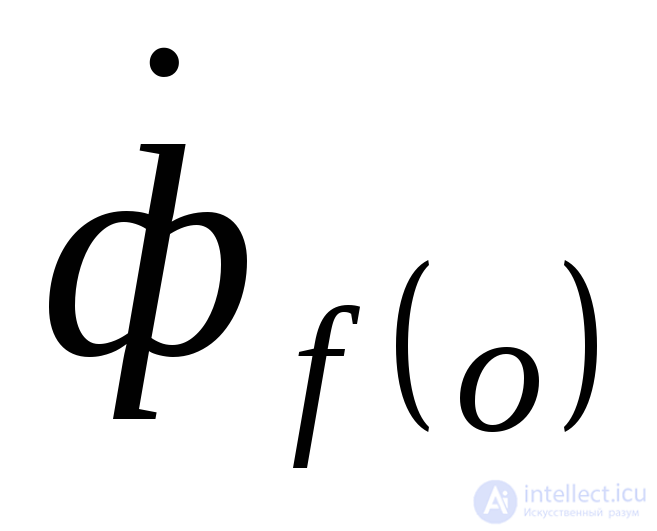 the flux
 increases proportionally to it
from
increases proportionally to it
from to
to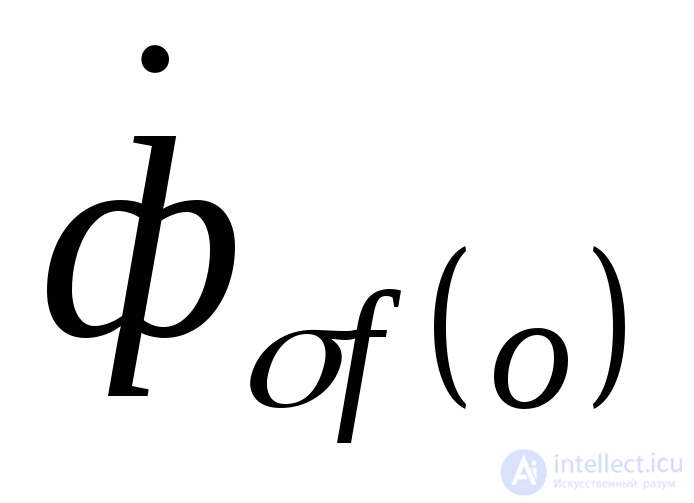 , which leads to a decrease of the flux
 from
from to
to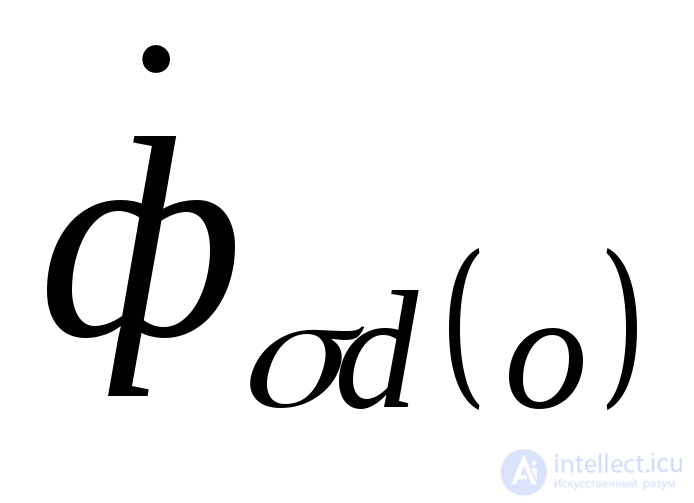 . However,
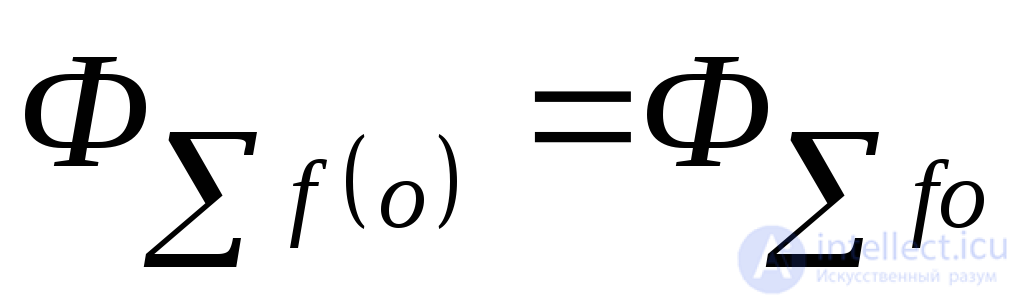 . Knowing the leakage coefficient
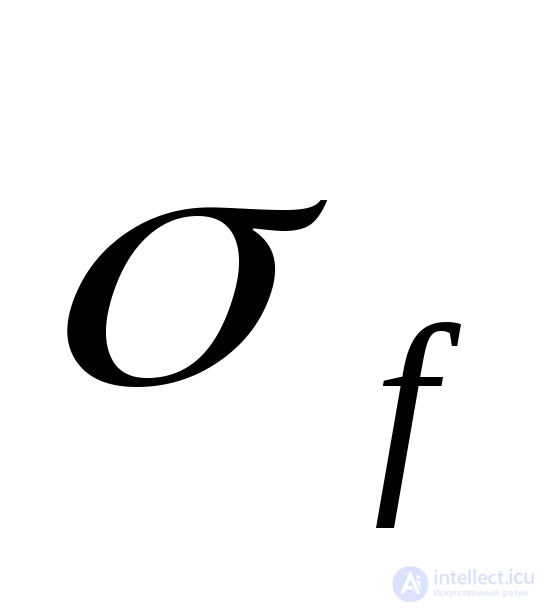 , one can determine the part of the flux
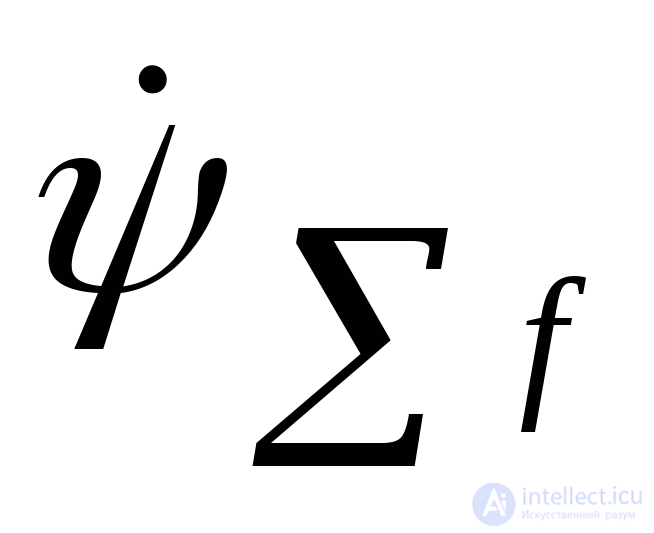 that is linked with the stator:
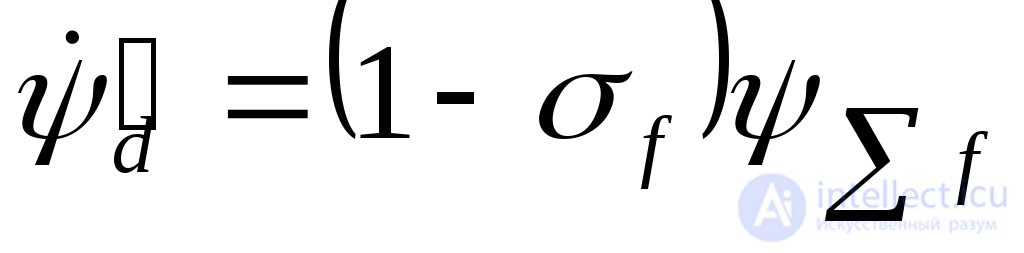 .
.
It is precisely this flux linkage 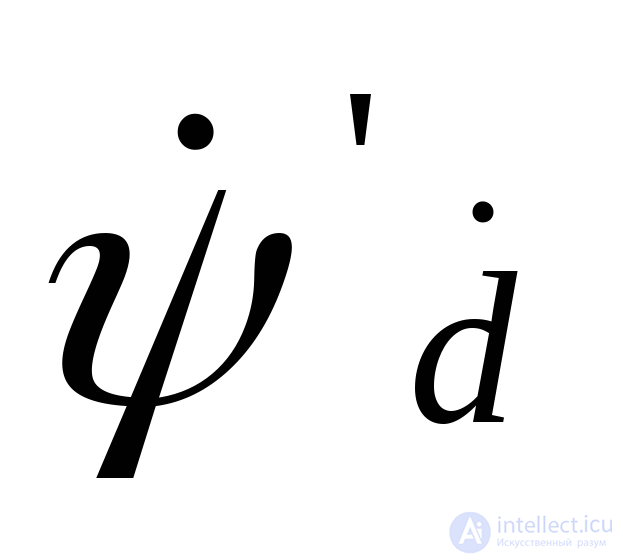 and the EMF it induces in the stator winding
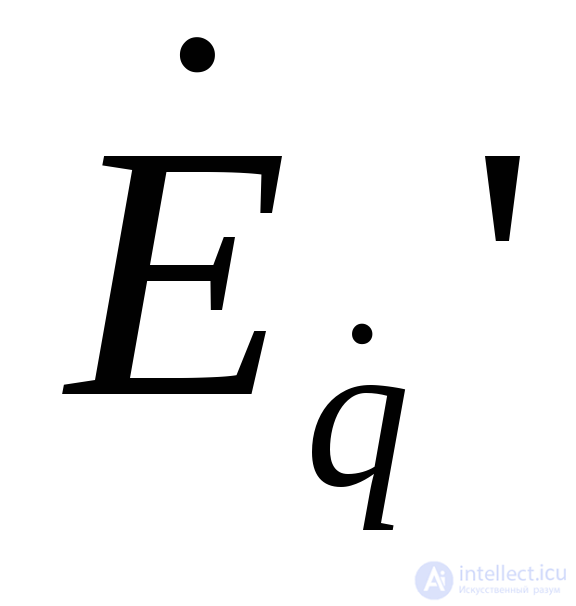 that retain their previous values at the initial instant of the transient process:
,
 .
.
The EMF 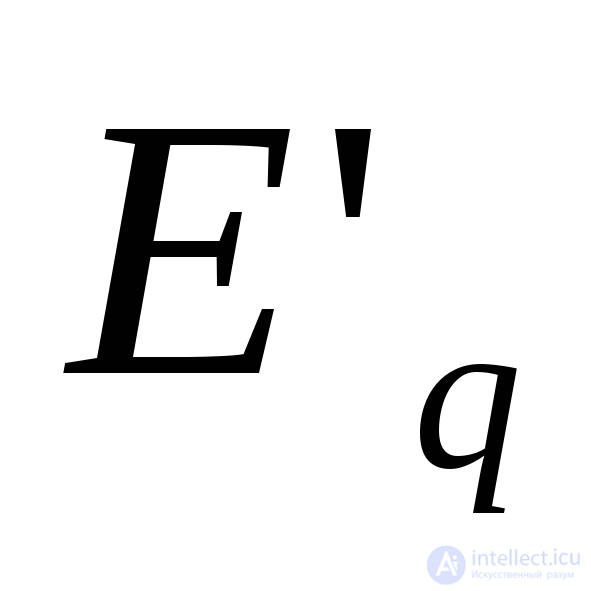 is called the quadrature-axis transient EMF, and the reactance
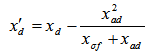 is called the direct-axis transient reactance (determined from nameplate data). The correspondence between the flux linkage in the direct axis and the EMF in the quadrature axis is explained by the relation
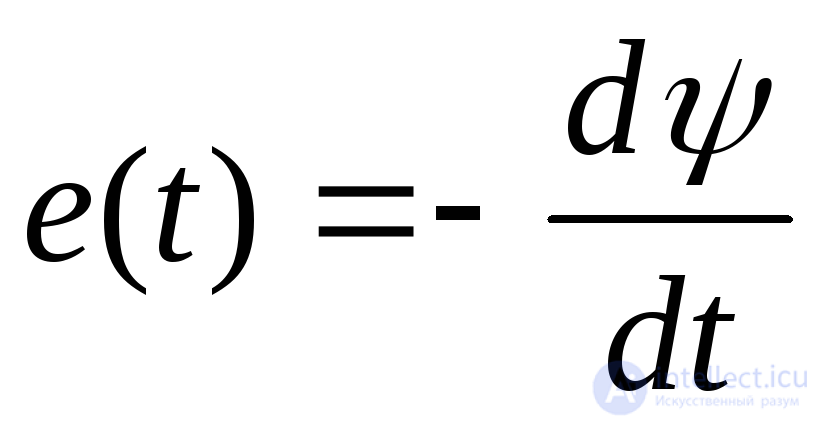 .
.
The «minus» sign, when converting to complex variables, leads to a phase decrease of 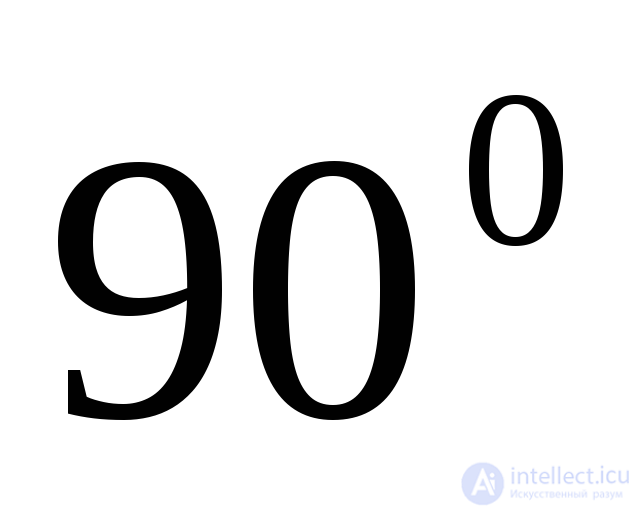 (electrical degrees). Thus, the flux-linkage component along axis
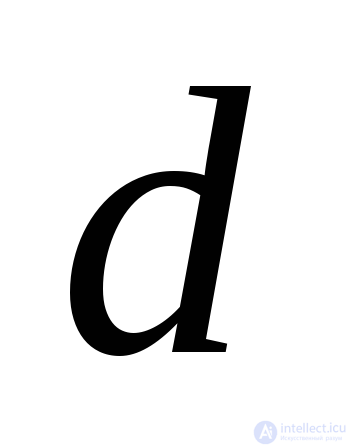 will correspond to the EMF along axis
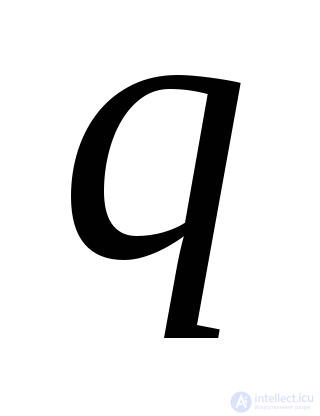 . Equivalent circuits of the synchronous machine for the initial instant of the transient process are shown in Fig. 4.5.
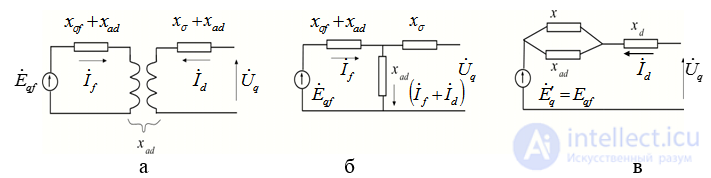
Fig.4.5. Equivalent circuits of the synchronous machine in the direct axis:
a – with magnetic coupling; b, c – with electrical coupling
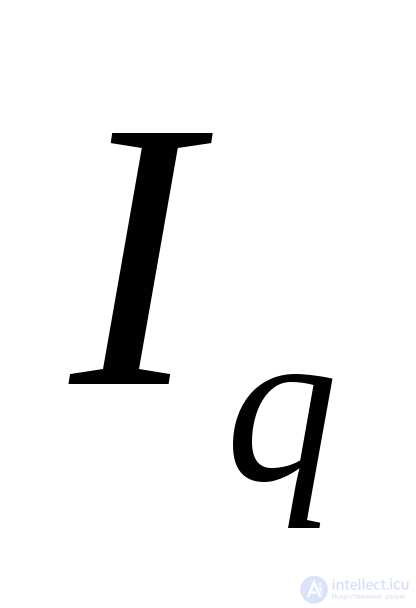
If the rotor has no closed circuits in the quadrature axis, the quadrature-axis armature reaction flux 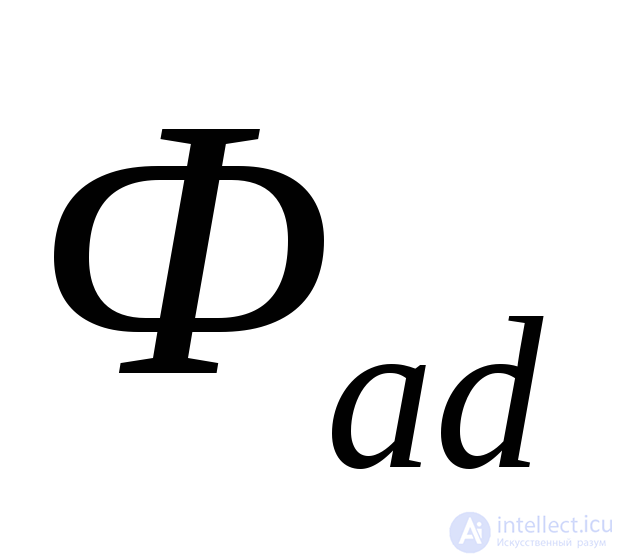 can change without hindrance during transient processes. Therefore, a sudden change in the quadrature-axis armature reaction can be accounted for as a voltage drop due to the current
 across the reactance
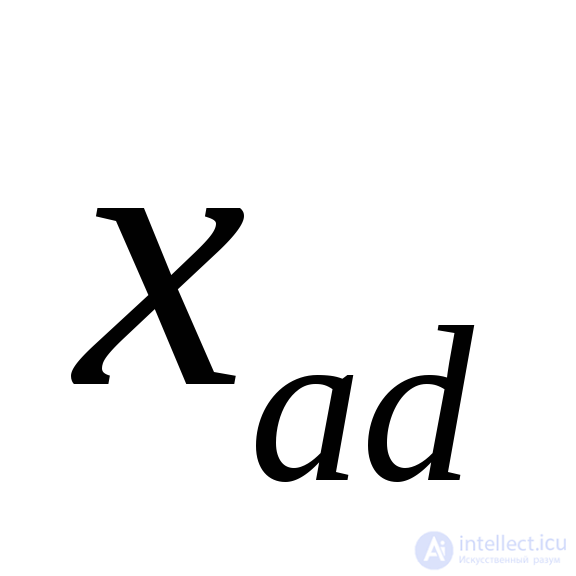 , i.e., for such a machine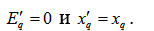
Let us establish the EMFs and reactances that can characterize the transient process of a synchronous machine at the initial instant. Suppose the rotor of the synchronous machine has not only a field winding but also damper windings. The presence of the latter does not yet provide magnetic symmetry of the rotor, which requires the machine's parameters to be determined separately in the direct and quadrature axes of its rotor.
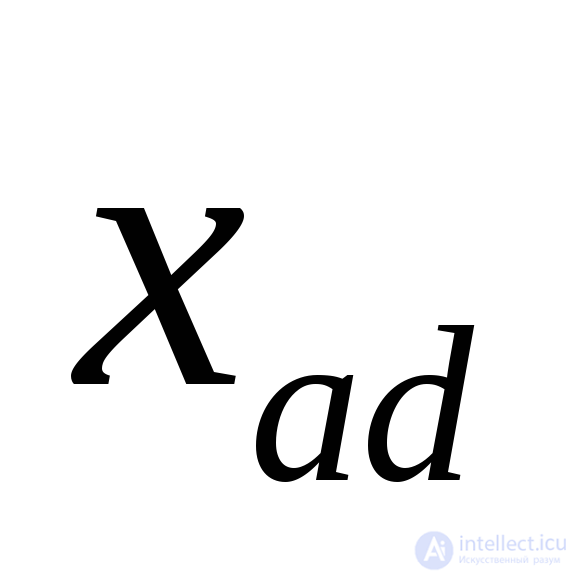
+Let us assume that all parameters are expressed in per-unit values, with the rotor parameters referred to the stator. Suppose the stator winding and both rotor windings in its direct axis are coupled by a common mutual-inductance flux 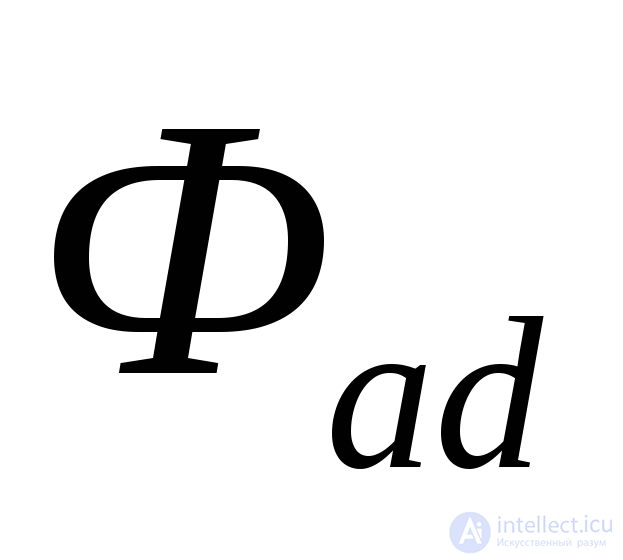 , which determines the direct-axis armature reaction reactance
 . Then a sudden increment of the flux
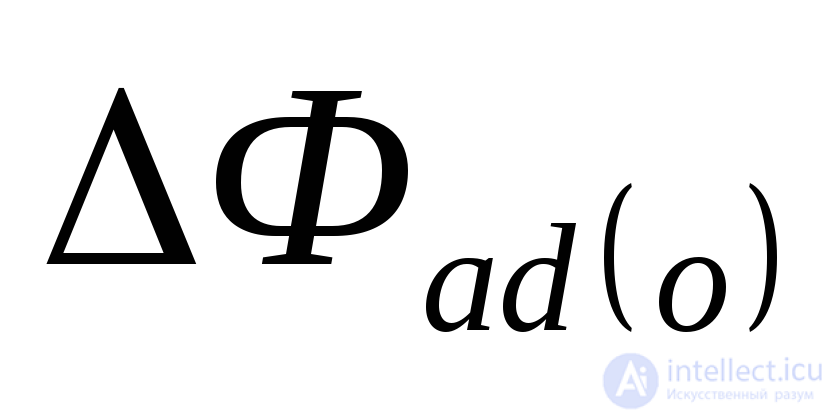 causes a corresponding response of the rotor
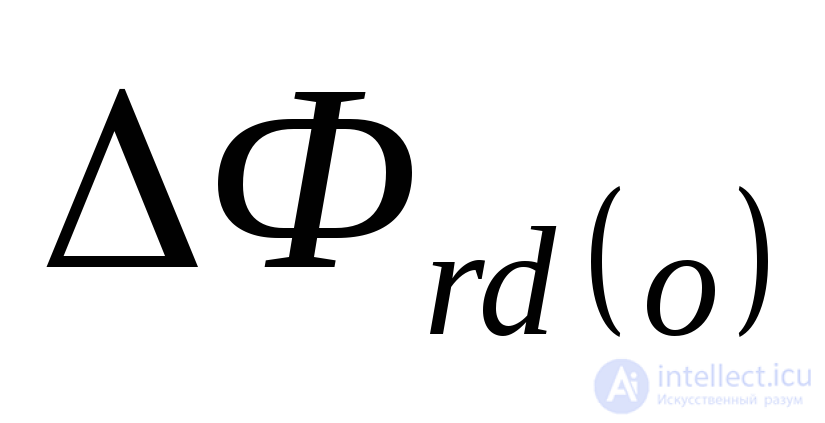 , which is made up of the increments of the field-winding flux
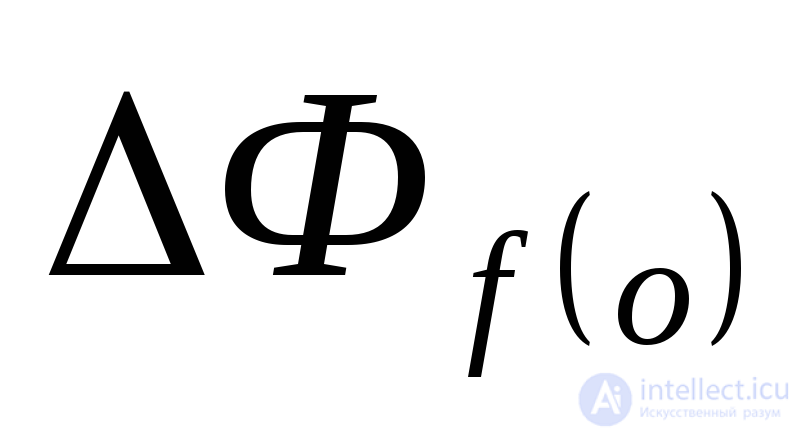 and the direct-axis damper-winding flux
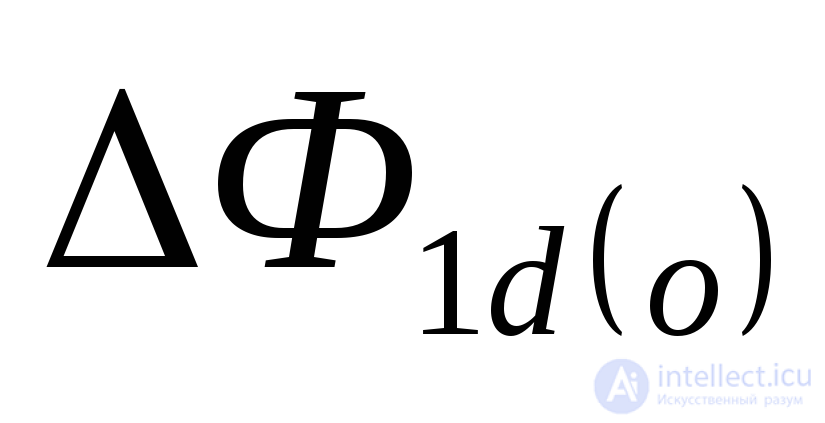 . The balance of the resultant fluxes linked with these windings must remain unchanged. Then, for the field winding

For the direct-axis damper winding

where 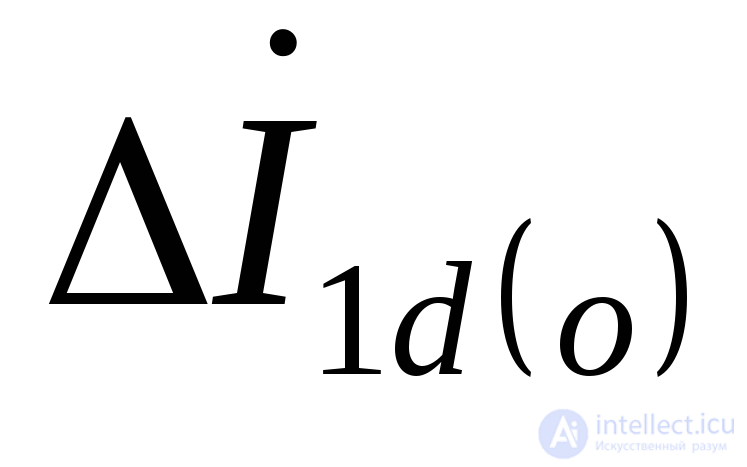 is the initial current in the direct-axis damper winding,
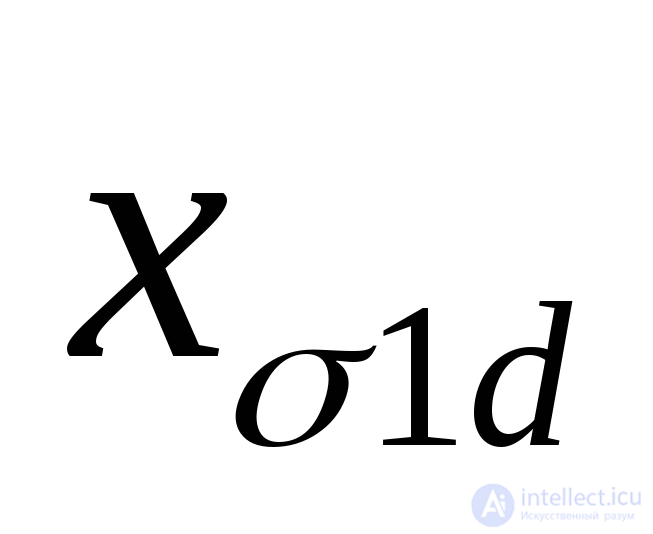 is the leakage reactance of the winding.
Based on these equations we have  .
.
The leakage reactance of the equivalent winding in the direct axis of the rotor
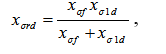 ,
,
i.e., it is determined as the equivalent reactance of two parallel branches 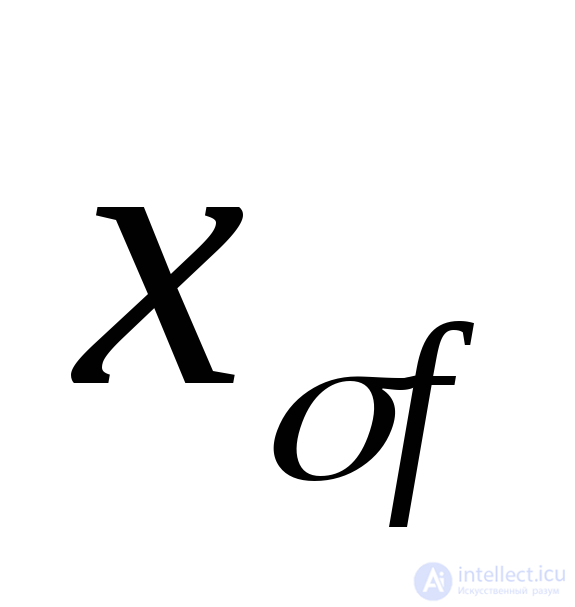 and
and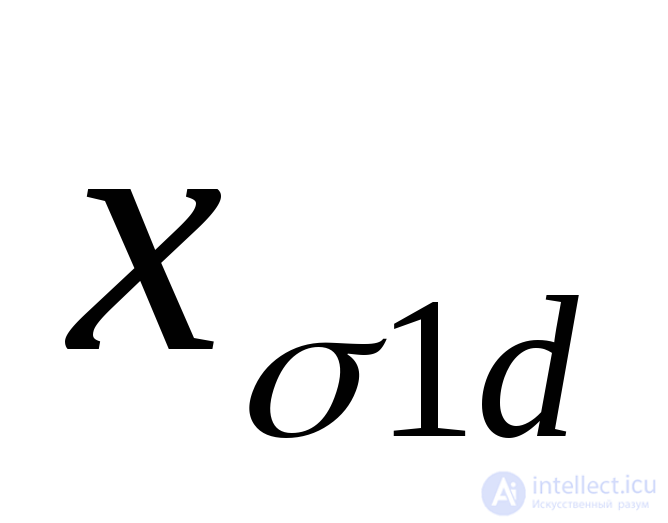 .
.
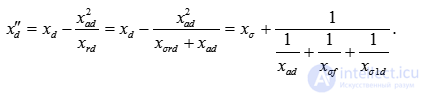
As a result of replacing the rotor windings in the direct axis with a single winding, the problem reduces to the case considered in Section 4.3.1, and the subtransient reactance in the direct axis can be determined by the formula
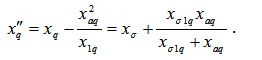
The processes in the quadrature axis, when the rotor has only a damper winding, are likewise analogous to the processes considered in Section 4.3.1., so the subtransient reactance in the quadrature axis (the prefix «sub» emphasizes that these parameters and quantities account for the effect of the damper windings) can be determined as follows:
 .
.
The subtransient EMFs in the direct  and quadrature
  axes retain their values unchanged at the initial instant of a sudden disturbance:
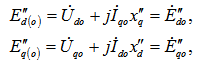
where 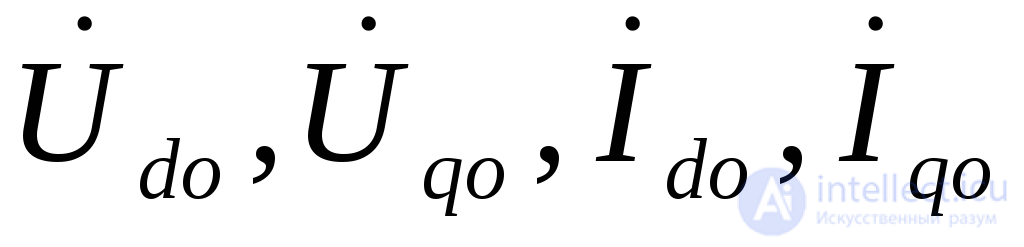 are the voltage and current components of the machine's preceding operating mode. Thus, for a machine with damper windings, the reactances
  together with the EMF
  determine the periodic component of the current in the new mode – the subtransient current – if
  is used as the machine model for the new mode
In the absence of damper windings, i.e., when 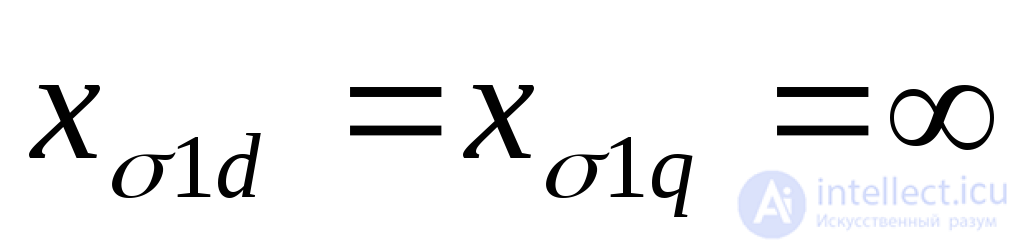 , the expressions obtained for
  and the equivalent circuits (Fig. 4.6, 4.7) are analogous to those obtained in Section 4.3.1.
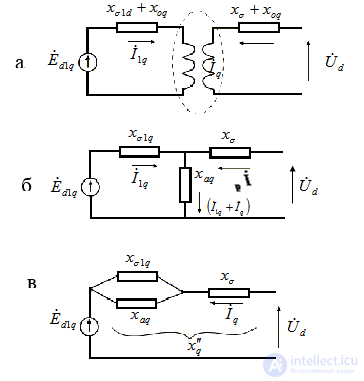
Fig.4.6. Equivalent circuits of a synchronous machine in the direct axis with damper windings on the rotor:
a – with magnetic coupling; b,c –electrical
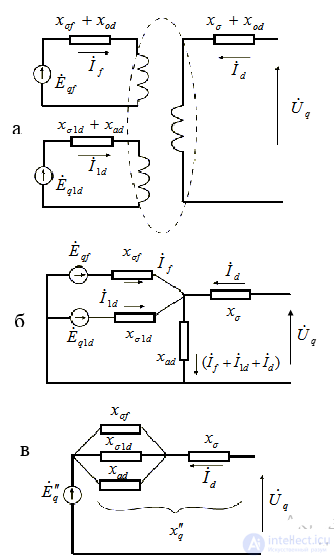
Fig.4.7. Equivalent circuits of a synchronous machine in the quadrature axis with damper windings on the rotor: a – with magnetic coupling; b,c –electrical

Comments