You get a bonus - 1 coin for daily activity. Now you have 1 coin

Hidaka Leak Protection System with WLD-H806 Controller

Lecture


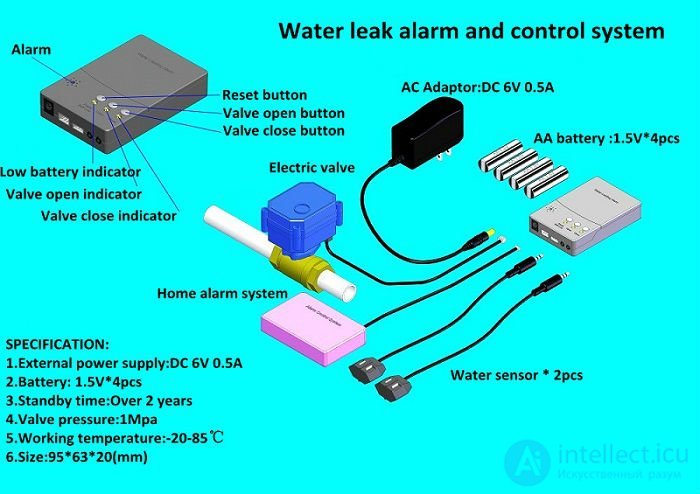
Specification
Working Voltage: 12V Max. Working current: 80mA
Standby current: 5mA Alarm startup time: 1 second
Alarm time: continue Output electric potential: 100dBu
Valve close startup time: 1 second Valve open startup time: 1 second


How to use
• Put the water sensor on the place where water leakage may happen
• Turn off the valve, and connect it to water pipe, to be sure the valve interface can not
have leaks, then the valve connected to the central unit
• Connect central unit to the AC power,(Power LED indicator will light up. Sound one beep
and Sensor LED will light from Sensor 1 to Sensor 8) press the OPEN button to open the
valve.
• Once leakage happens, when the water touch the water sensor, the central unit will
immediately sound warning tone and corresponding LED light up (until there is no
detection of leakage,If more than one Sensor detected water leakage, all corresponding
LED will also light up ), then the valve will automatically shut off
• User can repair the place where water leak happens according to the audible alarm, and
press the RESET button to turn off the alarm
• After maintenance and all the leakage were repaired, press the OPEN button to open
the valve (you can also press the CLOSE button to test if the valve is working properly).
press Reset button and resume to Standby state
• Keep the water sensor flat where water leakage may happen after sopping up the water,
the device can be recycled

Use place
Commercial Residential
Sump Pit Wall/Floor seams Storage rooms Restaurant
Washing Machine Window wells Computer Equipment rooms
Basement floor Leaky drain pipes Warehouses Basement wall
Air conditioner Floor drains Kitchens Banquet halls
Hot water heater Cracks floor seams
Dehumidifier Concrete block joints
Note:
1 Even if the AC power is OFF, the central unit will still operate, detect water leakage
and sound warning tone but the sound level is a little smaller than with AC power.
2 Central unit is not waterproof. Therefore please do not place the unit at where
water may flow.
3 Do not place Sensor terminals on the metallic objects that may cause false warning
sound

Hidaka Leak Protection System with WLD-H806 Controller

HIDAKA WLD-807 wired water leak detector sensor with 3/4 ''* 2 bsp-npt automatic shutoff valve water leak alarm for home alarm system - buy inexpensively in the online store with delivery: price comparison,

HIDAKA WLD-807

Hidaka leak protection system

Hidaka leak protection system

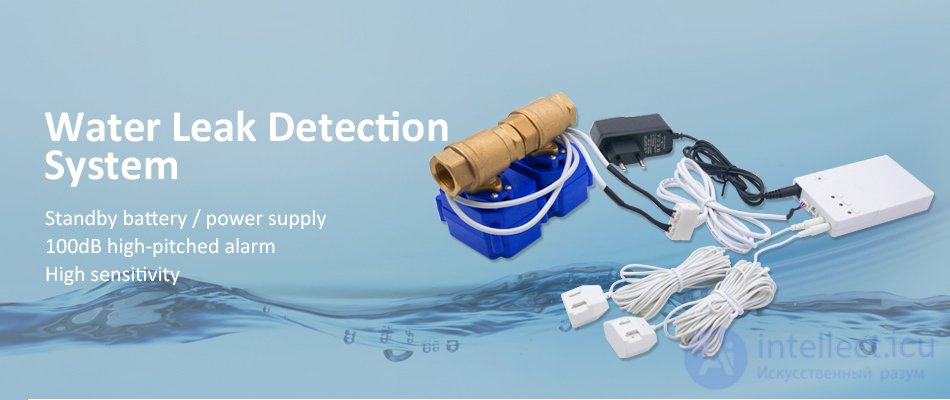
The Hidaka leak protection system (made in China) is designed for timely detection of water leaks, alerting, and shutoff localization in water supply and heating systems.
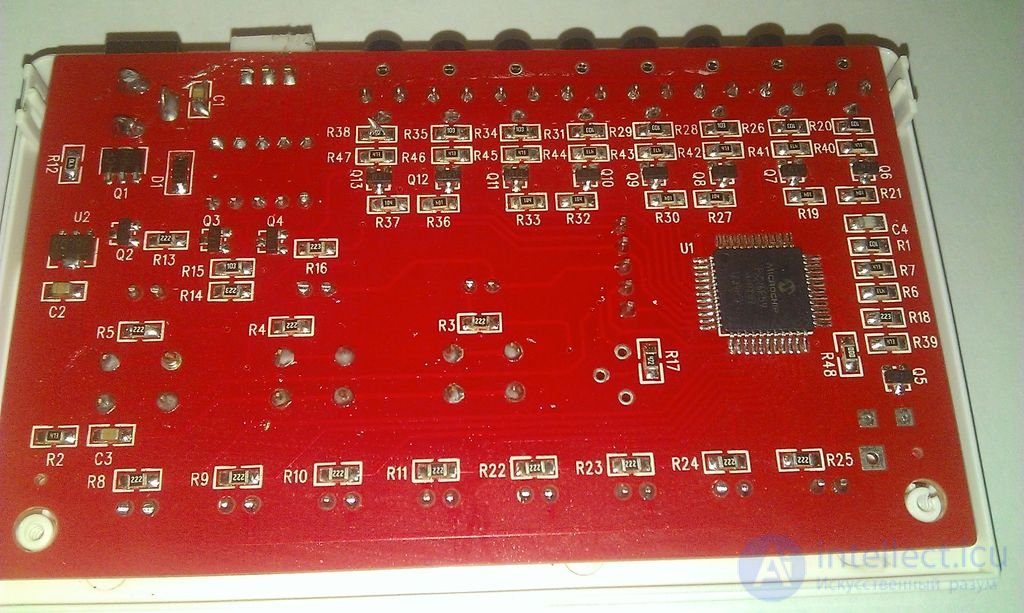
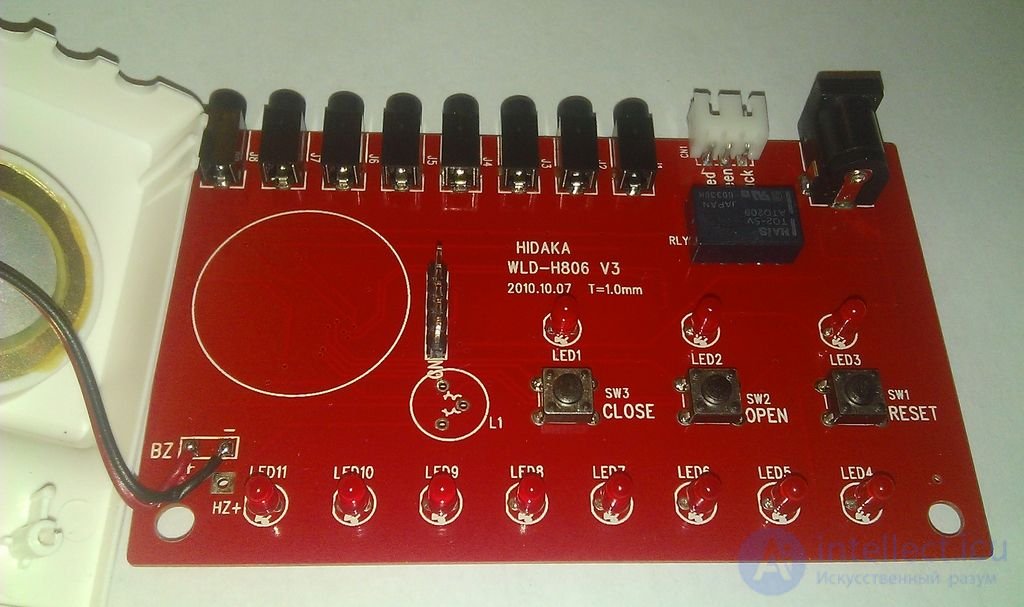
WLD-806 controller board, side 1

WLD-806 controller board, side 1

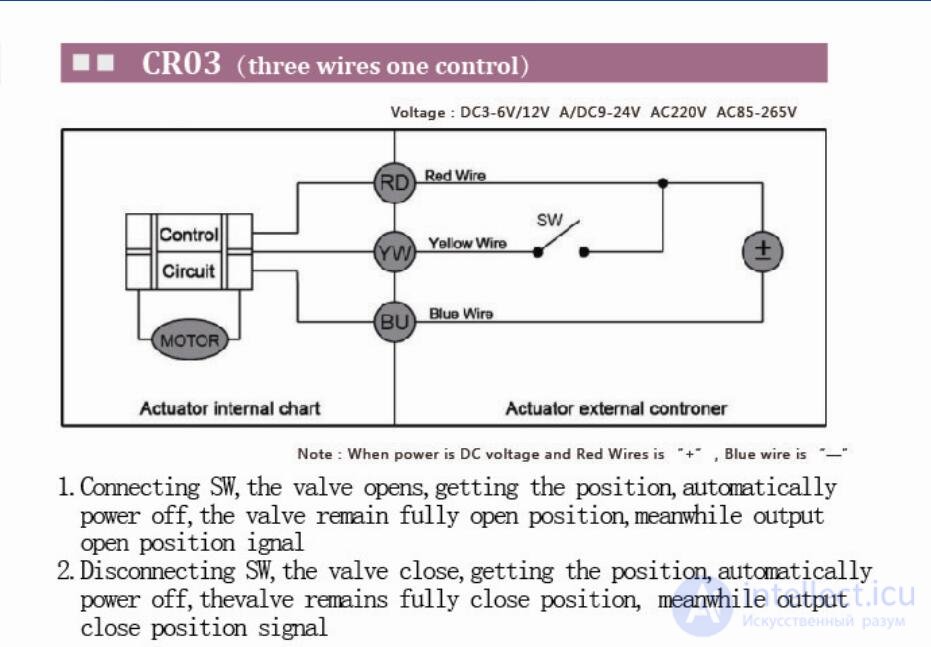
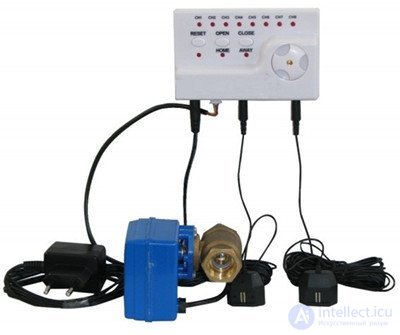
The system consists of water detection sensors, CWX-15Q (CR03) motorized ball valves, and a WLD-H806 controller.

The motorized ball valves connect to the controller via a 3-wire scheme (red +power, blue -power, yellow -control). The valve is controlled by closing the control wire to +power.

The WLD-806 controller is built around a PIC16F59 PIC microcontroller, has 8 inputs for water sensors and a control output for driving the ball valves.
The control signal (yellow wire) is switched by an ATQ209 relay. Power to the valves is controlled by a composite transistor switch.
WLD-806 controller board, side 2
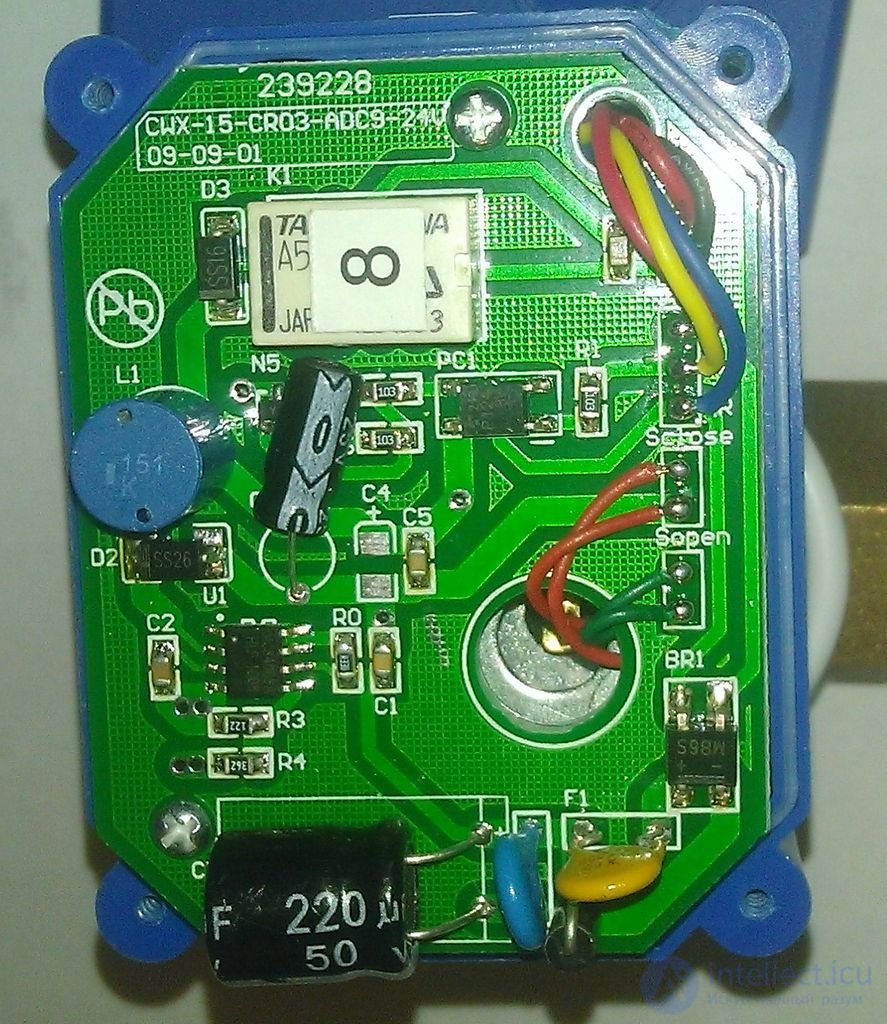
WLD-806 controller board, side 2

Ball valve with cover removed

Ball valve with cover removed

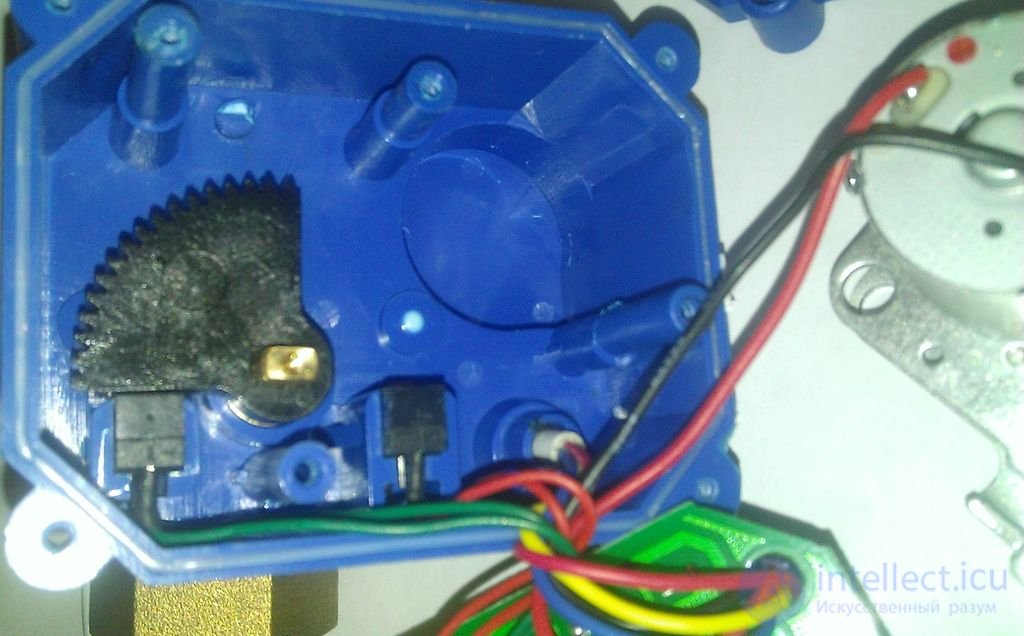
The valve contains a pulse DC/DC converter based on the MC34063 chip for powering the motor. The end positions of the toothed sector that rotates the shutoff ball are determined by 2 microswitches. Reversing the motor's supply polarity to change direction is performed by an electromagnetic relay.
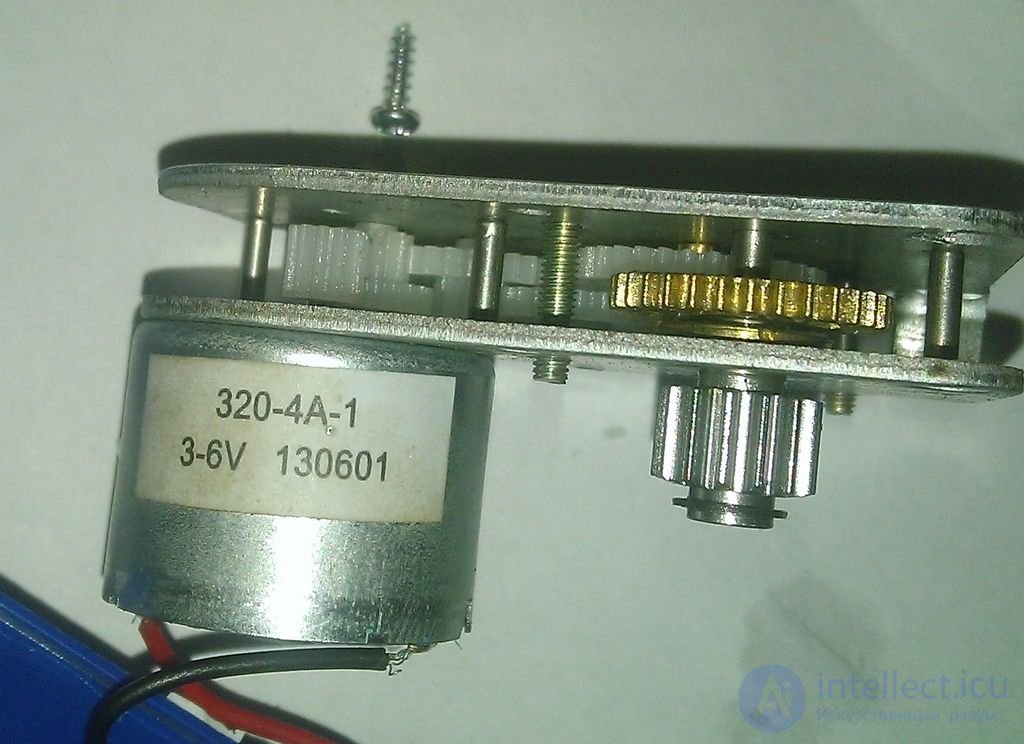
Motor and gearbox
Motor and gearbox

Ball valve, view of the toothed sector and limit switches
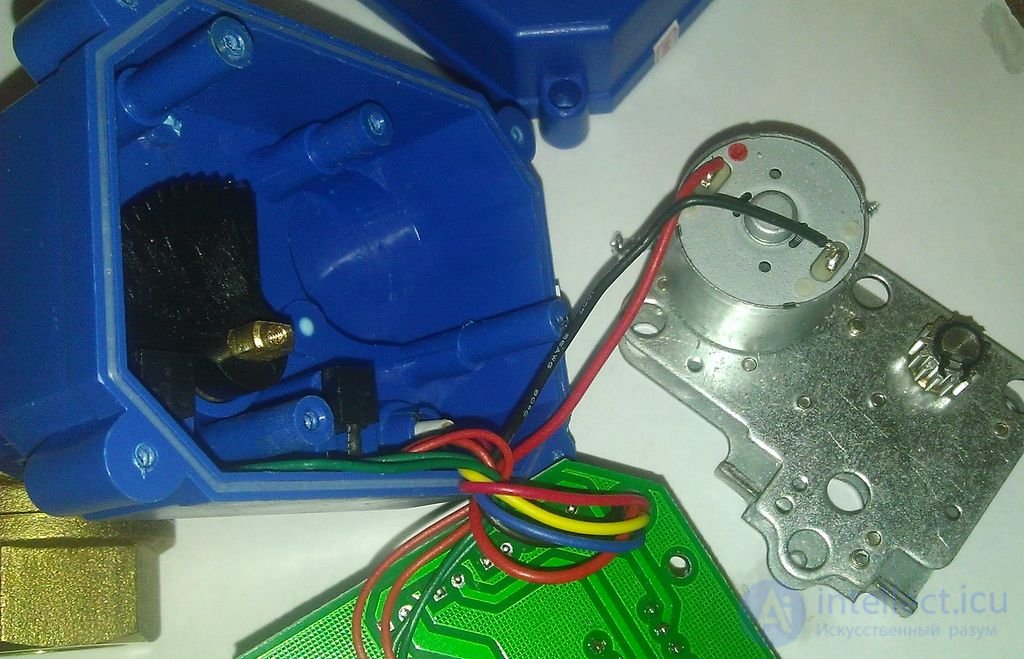
Ball valve, view of the toothed sector and limit switches

Ball valve with gearbox removed

Ball valve with gearbox removed

The controller is powered from an external 12V, 2A power supply.

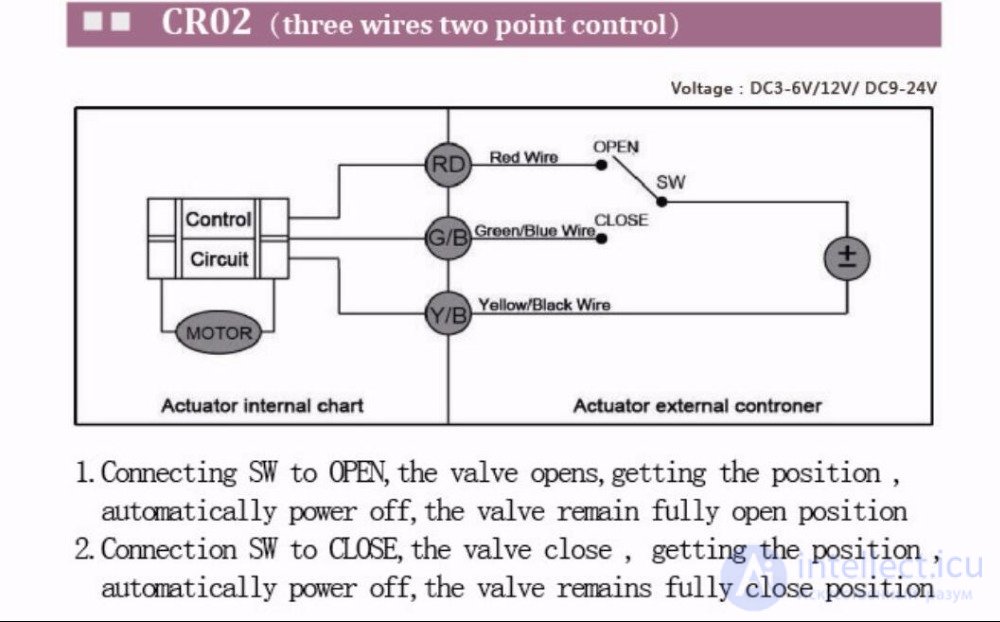
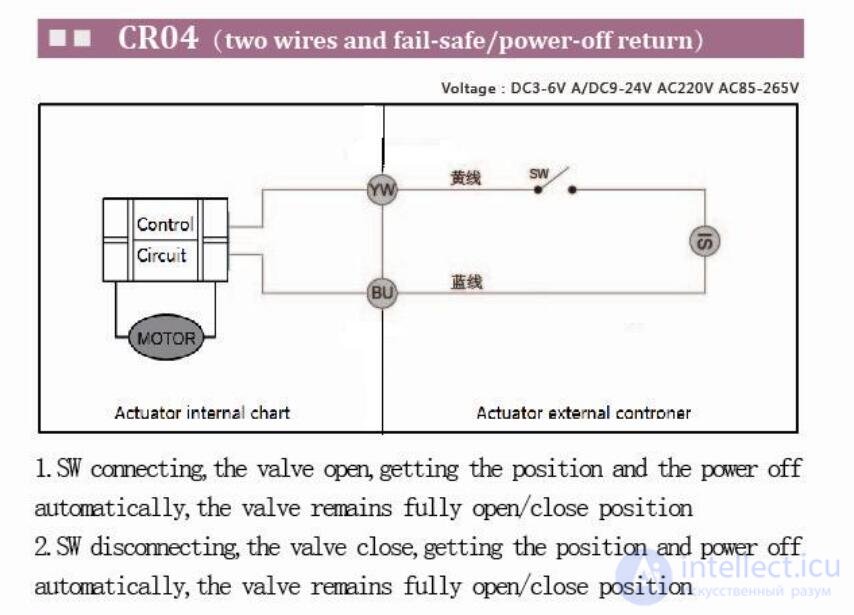
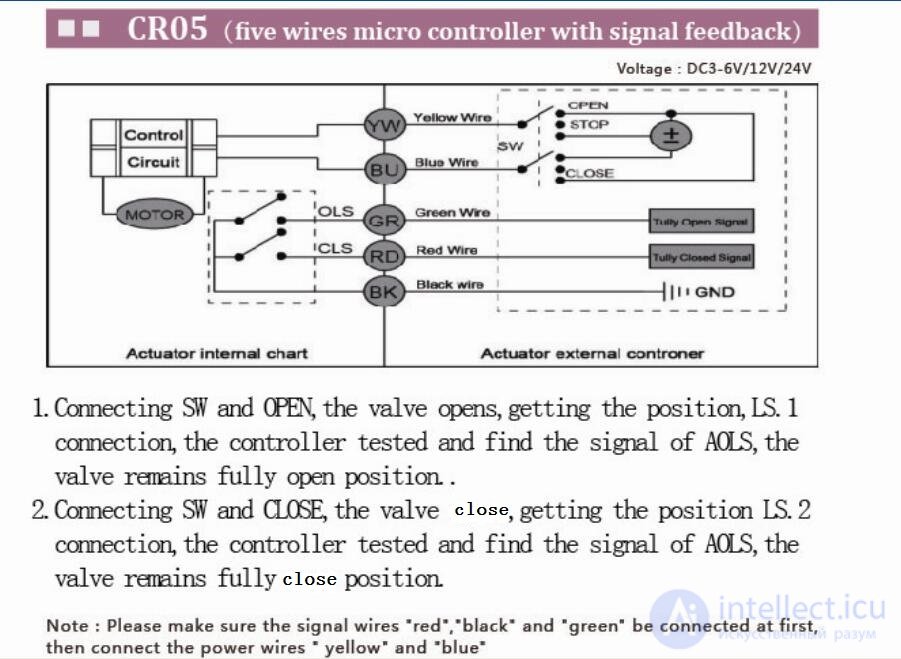
Original operating manual
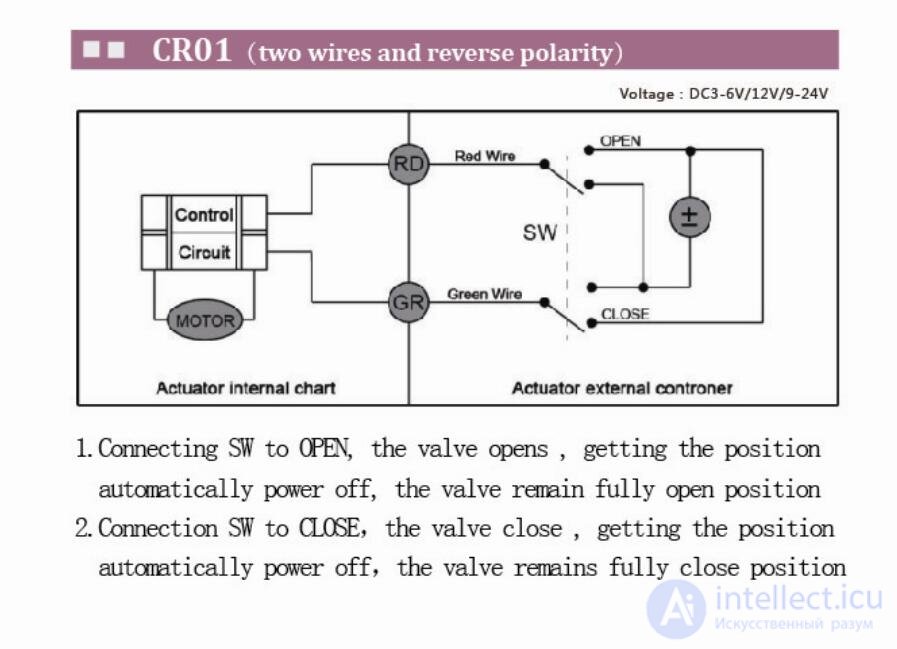
CR01-1

CR02-1

CR03-1

CR04-1-1

CR05-1

«Hidaka leak protection system with WLD-H806 controller»
  1. Igor says:

    Installed it, everything works as described.
    Advantages:
    -inexpensive;
    -Powered from 12V/220V;
    -compact.
    Disadvantage:
    -Plastic gear that turns the ball valve;
    -No automatic close-open (in case of jamming - not mentioned in the description);
    -No battery connection for backup power.

    Reply
  2. Igor says:

    Photo:

    Reply
  3. Igor says:

    Photo of the control unit:

    Reply
  4. Igor says:

    In operation for the 7th month.
    Sensors under the washing machine, in the "Moydodyr" [sink cabinet] and under it, behind the toilet, under the meters, in the kitchen sink cabinet and under it.
    Triggered 2 times:
    — from condensation;
    — the hot water meter housing leaked.
    Installed a 12V 7Ah battery (cut a socket into the control unit, connected it through a diode and a fuse) - now it can stay "on standby" even without 220V.

    Reply
  5. Igor says:

    Almost four years in operation!
    No regrets!

    Reply
  6. Anatoly says:

    Please tell me the rating of resistor R12 on the controller board (it burned out after several activations).

    Reply
    • Igor says:

      47 Ohm - through it +12 V goes to the 78L05 regulator

      Reply
      • Anatoly says:

        Thank you! I fixed it…

        Reply
  7. Igor says:

    47 Ohm

    Reply
  8. Sergey says:

    Good day! Please tell me, can four such electric valves be connected, will the controller burn out? What output current does it supply to the valves?

    Reply
    • admin says:

      Switching of the valves is done through relay contacts, so with 4 valves connected in parallel nothing should burn out.

      Reply
  9. Anton says:

    there are 2 such systems standing 8 meters apart in different bathrooms, is there a way to organize a link between them so that when one system trips, the second one also shuts off, but it would still be possible to start both separately by hand. And the second point — outputting trip information and transmitting it wirelessly to a Home Assistant smart home, is there a way to implement something like that?

    Reply
  10. Nikita says:

    transistor Q1 burned out, please tell me its marking

    Reply
    • Konstantin says:

      transistor Q1 has 1G6 written on it. I suspect it also burned out. How can I find out what kind of transistor it is? Test it?

      Reply

Hidaka leak protection system

Hidaka leak protection system

The Hidaka leak protection system (Chinese-made) is designed for timely detection of water leaks, alerting, and shutoff in water supply and heating systems.

WLD-806 controller board, side 1

WLD-806 controller board, side 1

The system includes water detection sensors, motorized ball valves CWX-15Q (CR03), and a WLD-H806 controller.

The motorized ball valves connect to the controller via a 3-wire scheme (red +power, blue -power, yellow -control). The valve is controlled by shorting the control wire to +power.

The WLD-806 controller is built around a PIC16F59 PIC microcontroller, has 8 inputs for water sensors and a control output for driving the ball valves.
The control signal (yellow wire) is switched by means of an ATQ209 relay. Power to the valves is controlled via a composite transistor switch.

WLD-806 controller board, side 2

WLD-806 controller board, side 2

Ball valve with cover removed

Ball valve with cover removed

The valve contains a pulse DC/DC converter on an MC34063 chip for powering the electric motor. The end positions of the toothed sector that rotates the shutoff ball are determined by 2 microswitches. Reversal of the motor's power supply polarity to change direction is performed by an electromagnetic relay.

Electric motor and gearbox

Electric motor and gearbox

Ball valve, view of the toothed sector and limit switches

Ball valve, view of the toothed sector and limit switches

Ball valve with gearbox removed

Ball valve with gearbox removed

The controller is powered from an external 12V, 2A power supply.

Original user manual

VKFacebookOdnoklassnikiTelegramEmailShare
This entry was posted in the category Miscellaneous devices with tags household appliances, protective devices. Bookmark the permalink.

14 comments on «Hidaka leak protection system with WLD-H806 controller»

  1. Igor says:

    Installed it myself, everything works as described.
    Advantages:
    -inexpensive;
    -Powered by 12V/220V;
    -compact.
    Disadvantage:
    -Plastic gear that turns the ball valve;
    -No automatic closing-opening (in case of jamming - not mentioned in the description);
    -No battery connection for backup power.

    Reply
  2. Igor says:

    Photo:

    Reply
  3. Igor says:

    Photo of the control unit:

    Reply
  4. Igor says:

    In use for the 7th month.
    Sensors under the washing machine, in the «utility sink cabinet» and under it, behind the toilet, under the meters, in the kitchen sink cabinet and under it.
    Triggered 2 times:
    — from condensation;
    — the hot water meter body leaked.
    Installed a 12V 7Ah battery (cut a socket into the control unit, connected through a diode and a fuse) - now it can also «stand by» without 220V.

    Reply
  5. Igor says:

    Almost four years in operation!
    No regrets!

    Reply
  6. Anatoly says:

    Please tell me the rating of resistor R12 on the controller board (burned out after several triggers).

    Reply
    • Igor says:

      47 Ohm - through it +12V goes to the 78L05 regulator

      Reply
      • Anatoly says:

        Thanks! Fixed it…

        Reply
  7. Igor says:

    47 Ohm

    Reply
  8. Sergey says:

    Good day! Please tell me, can four such electric valves be connected, will the controller burn out? What output current does it supply to the valves?

    Reply
    • admin says:

      Switching of the valves is done through relay contacts, so with 4 valves connected in parallel, nothing should burn out.

      Reply
  9. Anton says:

    I have 2 such systems installed 8 meters apart in different bathrooms. Is there any way to organize communication between them, so that when one system triggers, the other one also shuts off, but it should be possible to start both separately by hand. And the second point - outputting trigger information and transmitting it wirelessly to a Home Assistant smart home - can this be implemented somehow?

    Reply
  10. Nikita says:

    transistor Q1 burned out, please tell me its marking

    Reply
    • Konstantin says:

      transistor Q1 has 1G6 written on it. I suspect it might have burned out too. How can I find out what transistor it is? Test it?

      Reply

Comments

To leave a comment

If you have any suggestion, idea, thanks or comment, feel free to write. We really value feedback and are glad to hear your opinion.
To reply

Lectures and tutorial on "Diagnostics, maintenance and repair of electronic and radio equipment"

Terms: Diagnostics, maintenance and repair of electronic and radio equipment