
Practice
What is RSSI Range? save the changed value in the item: Wireless - Antenna Alignment in the router or repeater settings
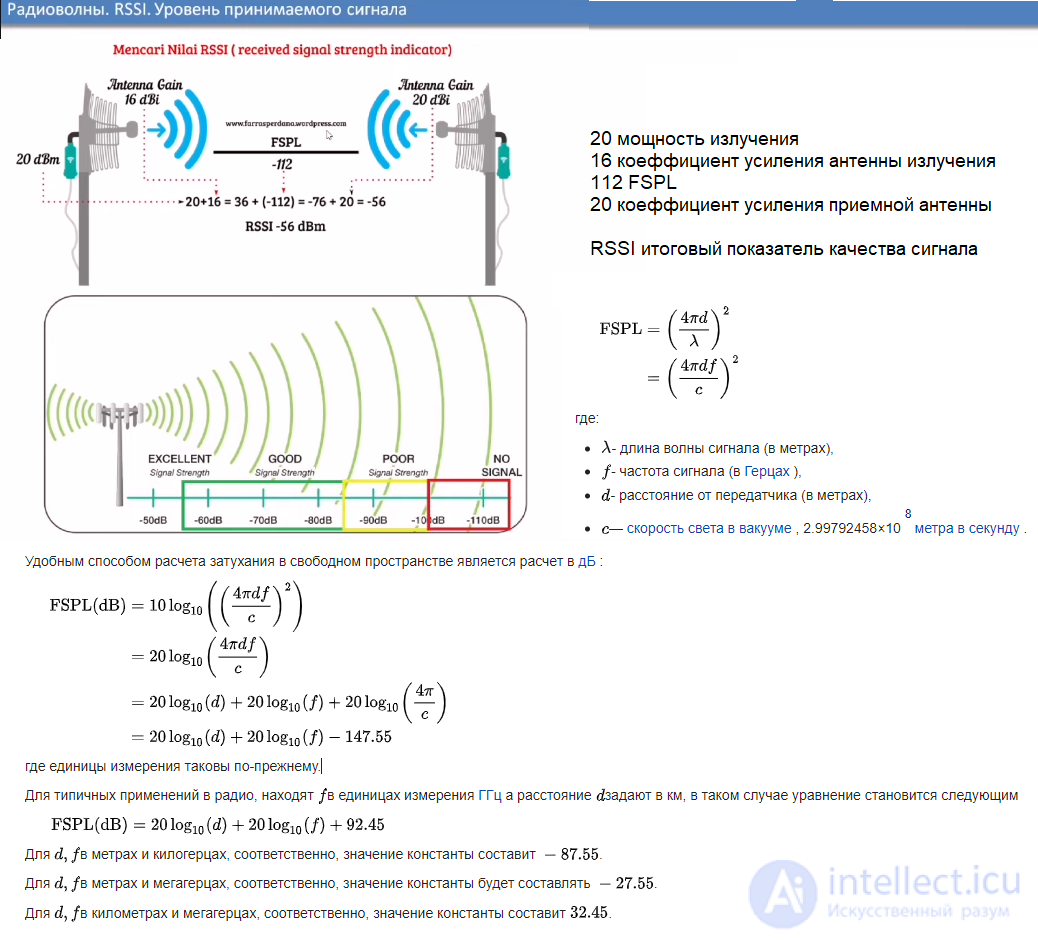
RSSI Range (Received Signal Strength Indication Range) is the range of values indicating the power of the received signal. In wireless communication systems such as Wi-Fi, Bluetooth, Zigbee and others, RSSI is used to estimate the strength of the signal received from a remote device.
The RSSI range represents numerical values, measured in decibels (dBm), indicating the power of the received signal. Typically these values can range from low negative numbers (for example, -100 dBm), which indicates a weak signal, to higher positive numbers (for example, 0 dBm), which indicates a strong signal.
The RSSI range is an important parameter for evaluating the quality of communication in wireless networks. It can be used to determine connection stability, optimize device placement for better signal reception, and other purposes related to wireless communication management.
CSI Wi-Fi — is a technology for analyzing the state of the wireless channel (Channel State Information), which allows using ordinary Wi-Fi signals not only for data transmission, but also for «sensing» the surrounding environment: tracking the movement of people, breathing, position of objects and even building positioning systems.
CSI (Channel State Information) — is detailed parameters of the Wi-Fi channel: amplitude, phase, signal delay, channel matrix, etc.
Unlike ordinary RSSI (signal level), CSI provides a much more detailed picture of the passage of radio waves.
The Wi-Fi signal is reflected from walls, furniture and people's bodies; analyzing changes in CSI allows you to «see» the movement and state of objects without cameras or sensors.
Depending on the location of the transmitter and receiver, CSI measurement can be classified as bistatic or monostatic.
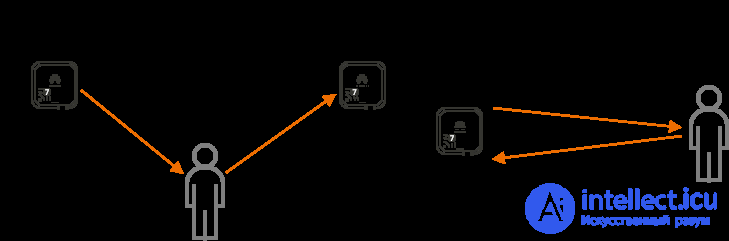
Bistatic and monostatic sensing
Human activity monitoring: walking, breathing, falls — useful for medicine and the «smart home».
Indoor positioning: determining location inside buildings without GPS.
Security: detecting the presence of people in the Wi-Fi coverage area.
Intelligent buildings: automation of lighting, climate control and other systems based on movement.
Operates based on the multipath effect: the signal arrives at the antenna via a direct path and through reflections.
CSI captures changes in these paths, which allows analyzing even minor movements.
Modern chips, for example ESP32 from Espressif, support CSI data collection, which makes the technology accessible for DIY projects and research.
| Parameter | RSSI (ordinary Wi-Fi) | CSI Wi-Fi |
|---|---|---|
| Detail | Signal level only | Amplitude, phase, delay, channel matrix |
| Application | Determining communication quality | Positioning, activity monitoring |
| Accuracy | Low | High (can capture breathing) |
| Equipment | Any Wi-Fi adapter | Special chips (ESP32, Intel 5300) |
Requires complex data processing: machine learning algorithms are needed.
Sensitivity to noise: other devices and interference can distort CSI.
Real-time application is still limited by computational resources.

Comments