Can lamps, fluorescent lights, a refrigerator, a kettle, or a drill be connected to Scorpion or Luxseon UPS units?
A kettle can't, based on the regular (active) power - for example, a 2000 VA UPS is likely rated for around 1400 W of active power
while a kettle can be rated for 2000 W
Fluorescent lamps and devices containing motors (chokes) are better not connected either, since they create a large inductive load, which upon switching the device on will damage the UPS
I wanted to do a full charge/discharge cycle. Charged the battery fully, but didn't want to use the computer for discharging since it was needed, and besides it was connected to a different UPS, and I didn't want to disconnect everything, switch it, etc. So I decided to discharge it with whatever was on hand - the first thing I noticed was a heat gun with smooth temperature control, plugged the heat gun into the outlet, measured the current at the minimum temperature setting - about 550 mA (0.5A basically), for a 500VA (250W) UPS that's fine. Plugged the UPS into the mains, and the heat gun into the UPS, started the heat gun while the UPS was still plugged into the outlet (I'd heard about inrush currents and such), then once it was already running - unplugged the UPS from the outlet.
The result - everything worked fine for a while (I didn't time it, but not long, a couple minutes max), then the UPS went dark and smoke started pouring out of it... I never thought that a device meant to protect equipment couldn't even protect itself - the UPS burned out (one of the MOSFETs burned out, but the fuse was intact, and there was no overload alarm either).
So the question is, how should I understand this - the load didn't seem to be large, the only thing undesirable in the heat gun in my opinion is the electric motor (I don't know what type it is), while the heating coil shouldn't pose any danger if it doesn't draw more current than needed. Can someone explain what's going on, is this how it's supposed to be or is this UPS somehow defective.
The UPS manual says "do not connect household appliances, a UPS that has failed is not eligible for warranty service," and in addition every UPS has a sticker on the same subject.
In your case the heat gun's electric motor created an inductive load, which caused the inverter transistors to fail. As is well known, inductance can "store" energy and release it back into the load, which is what happened in this case.
The UPS battery does not require an initial discharge cycle, it's enough to charge it before first use (plug the UPS into the outlet for about 6 hours and leave it switched on)!
Well alright, let's put the question differently then, does a regular incandescent lamp count as a "household appliance?" What about a CFL (compact fluorescent lamp)? Or is that also not allowed to be connected, even though in the first case there wouldn't be an inductive load
UPS Operating Rules
Do not overload the UPS. Only connect loads that genuinely require uninterruptible power. A UPS is needed only for expensive equipment and equipment holding information (personal computers, modems, servers, routers, etc.)
Ensure the UPS is grounded (otherwise, stabilization efficiency will be reduced)
Protect from impacts and shaking. Do not expose the UPS to moisture.
After a power outage - turn off the equipment, leaving only the UPS plugged into the mains, so that when mains voltage returns the UPS can charge its battery. Powering from a discharged battery will accelerate its wear. A fully discharged battery needs immediate charging!
Do not connect a load to the UPS through a power strip/surge protector, especially during emergency power from batteries (to put it simply - a f i l t e r should not be placed between the UPS and the computer).
Periodically run the UPS self-test procedure to make sure the UPS is fully ready for operation.
Many UPS models charge the batteries even when switched off (the device is turned off by the button and the light has gone out, but the plug is still in the outlet). In such UPS units, when plugged in, you can hear the relay click that turns on charging. At the end of the working day - unplug from the mains.
Battery service life depends on the operating conditions: the frequency of switching to battery mode and the size of the load, charging conditions, ambient temperature, and also on the type of the batteries themselves.
Attention: Connecting laser printers to a UPS (their power is 2 kilowatts or more), and even more so a copier and electric heating appliances - can lead to overload and failure of the UPS.
Warning: The UPS produces 220 V voltage, which is dangerous to life!
You cannot connect real filters - the ones with inductance inside (which, unfortunately, are hard to find these days) because of that very inductance, for the same reason that transformer-based PSUs cannot be connected.
And the so-called "filters" - power strips, of which there are plenty available cheap - go ahead and use those. Varistors are not an obstacle to this, they'll simply be useless in this case.
But it would be worth making sure that the power strip doesn't have chokes (inductors) in it.
Is it allowed to connect two or more UPS units in "series" (the output of one UPS connected to the input of another) to increase backup power time?
If this is a UPS with approximated (stepped) sine wave when running on battery - no, because when the first one switches to battery, the second one may perceive the square/trapezoidal wave at its input as severe mains voltage distortion, and will also switch to battery.
If this is a UPS with a true sine wave when running on battery - there shouldn't be any problems.
Keep in mind that the reliability of a single UPS is higher than that of two connected in series.
Can devices containing electric motors be connected to a UPS?
No, if the UPS output is a trapezoidal waveform. Also keep in mind that electric motors have a very large starting current.
thanks for the answers. shed some light on these UPS problems
Hello, I'm a total newbie, I connected a corded screwdriver/drill to a powercom BNT 600 A UPS, I needed to drill a couple holes in the gazebo at the dacha, worked a bit and then it shut off and stopped turning on, it just lights up the green button for 1 second and shuts off, after inspection some small parts there had come unsoldered, an acquaintance who's an electrician soldered new ones on, see photo [IMG]http://savepic.org/6574899.jpg[/IMG] nothing changed, the symptoms are the same, the battery is good since I connected it to another UPS, what else could the problem be?, maybe someone has experience with this? Thanks.
did he replace the transistors and resistors with new ones?
same rating, name and power exactly?
did he replace the transistors and resistors with new ones?
same rating, name and power exactly?
yes I specifically looked for exactly the same ones that fell out, thought the old ones weren't working anymore, but after him I gave it to another electrician along with the old parts (transistor and resistor) but he said the cause wasn't in those old ones since they were also working, as were the new ones that got soldered on. so the previous guy was just being overly cautious. And the second one gave up and couldn't find anything either.
I read somewhere that it could be the inverter transistor failing for a similar reason to mine. Please tell me what you think about this.
you need to check what's getting hotter or, conversely, suspiciously cold
and even better find the schematic or estimate it yourself roughly
and check the control points with a multimeter for voltage or other characteristics
(current, resistance)
for example first break the schematic down into sub-blocks - stages, and check sequentially at which stage the voltage disappeared... this way you can find the culprit behind the missing voltage
and in general there are detailed repair materials
in the beta version of the site
http://b.my-city.com.ua/index.php?mact=News,cntnt01,default,0&cntnt01detailpage=23&cntnt01category_id=174&cntnt01returnid=23
this of course isn't about a UPS but about a secondary power supply but they have a lot in common
[[b3270]]
and here's how diagnostics should generally be done
[[b899]]
did you figure it out?
not yet.
Already gave it to a third electrician he looked it over and gave a list of parts that need to be bought, I don't know what they're called but they look like this (http://www.aliexpress.com/item-img/Stp75nf75-75nf75-original-field-effect-transistor-inverter-motor-car-controller/1326332169.html) two identical ones and a third one different by name but looking the same, I bought them at the radio parts market, after a couple days he tells me the unit already turns on and works, but it stopped supplying charge to the battery, so there's still some kind of problem, he says he'll keep digging.
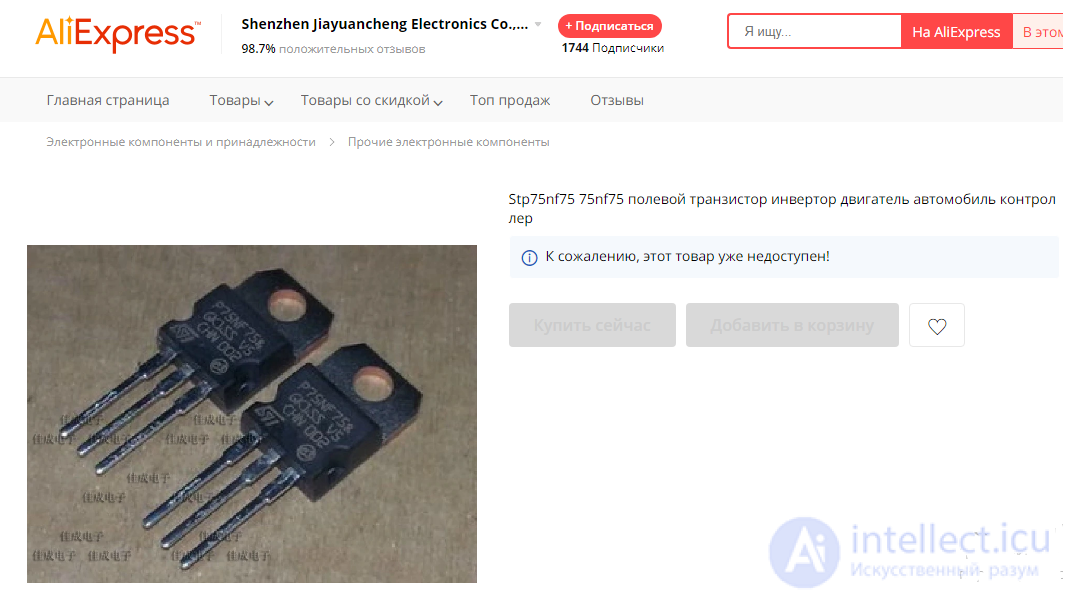
so it's the transistors and in general let me repeat
for example first break the schematic down into sub-blocks - stages, and check sequentially at which stage the voltage disappeared... this way you can find the culprit behind the missing voltage
that is the whole circuit is broken down into stages - blocks
for example
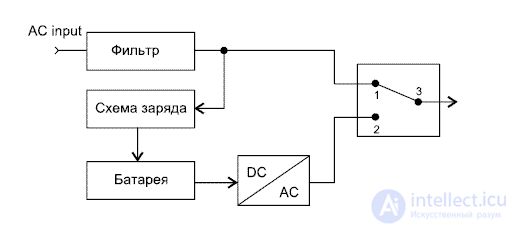
and here's how diagnostics should generally be done
[[b3270]]
and here's a detailed writeup on UPS repair
[[b9237]]
[[b9234]]
[[b9232]]


Comments