
Lecture
Entertainment theory is an interdisciplinary field of research that studies the nature, mechanisms, and impact of entertainment on individuals and society. This article examines the main approaches to analyzing entertainment, key concepts such as hedonism, engagement, and cultural context, as well as prospects for the development of this field of knowledge. Entertainment theory finds application in psychology, sociology, economics, and media content development.
Entertainment (or fun) is a source of pleasure. The immediate physiological cause of pleasure is the release of endorphins and similar substances within our body, which gives us positive sensations. Such a release occurs, in particular, at the moment when we suddenly understand something or solve a certain problem.
“People don't like chaos. We like order – not a rigid system, but a certain stable structure within which minor changes are possible”.
Raph Koster
Entertainment plays a central role in the life of modern society, influencing leisure, the perception of information, and social interactions. Understanding the nature of entertainment requires an analysis of its psychological, cultural, and technological features. Entertainment theory emerged at the intersection of various disciplines, including philosophy, cognitive science, and the media industry.
Entertainment theory draws on several sciences that help study and refine the mechanisms of engagement and interaction with an audience. Psychology plays a key role, as it studies human emotions, motivation, attention, and behavioral responses, which is especially important for creating captivating content. Cognitive science helps us understand how users perceive, process, and remember information, which influences the development of interactive systems and game mechanics. Neurobiology investigates the brain's functioning during entertainment, analyzing the influence of dopamine, serotonin, and other neurotransmitters on pleasure and dependence on content.
Economics and behavioral economics study how people make decisions within entertainment products, whether it be choosing a subscription to a streaming service or making in-game purchases. Marketing and branding play an important role in creating an appealing image of entertainment, applying storytelling, gamification, and research into consumer preferences. Computer science and artificial intelligence help develop algorithms for personalization, predictive analytics, and adaptive systems that improve the user experience in games, films, and other digital products.
Philosophy and aesthetics explore the principles of perceiving beauty, meaning, and artistic design, which is important for creating emotionally rich content. Sociology analyzes the impact of entertainment on society, the formation of trends, and the interaction of people in virtual and real environments. Cultural studies and anthropology help us understand how entertainment develops in different cultures and which traditional elements can be integrated into modern media formats.
All these sciences together form an interdisciplinary approach that allows for a deeper understanding of the nature of entertainment and the creation of more engaging, effective, and meaningful forms of content.
Why are games entertainment?
Psychological approach. It investigates how entertainment affects cognitive and emotional processes. Key concepts include:
Emotional regulation: Entertainment helps reduce stress and improve mood.
Engagement: The state of “flow” is analyzed, in which a person is fully immersed in the process.
Cultural approach. It views entertainment as a product of social and historical context. Key questions include:
How does culture influence the perception of various forms of entertainment?
How does globalization change traditional entertainment forms?
Economic approach. It studies the entertainment industry from the standpoint of supply and demand, content monetization, and the impact of technology on business models.
Entertainment theory, from a psychological point of view, examines how various forms of entertainment affect a person's cognitive and emotional processes. One of the key aspects is emotional regulation, in which entertainment plays an important role in reducing stress levels and improving mood. For example, watching films, listening to music, or participating in games help distract from everyday worries, providing an opportunity to relax and restore emotional balance. This occurs through the activation of positive emotions and a temporary distraction from negative experiences.
Another important concept is engagement, which is especially manifested through the state of "flow". This state is characterized by complete concentration on an activity, a loss of the sense of time, and deep immersion in the process. Entertainment such as video games, sports activities, or creative work often creates the conditions for achieving a state of flow. It not only increases the pleasure of the activity itself but also promotes skill development, improved concentration, and an increased sense of satisfaction.
Thus, from a psychological point of view, entertainment serves not only as a source of pleasure but also as a tool for managing emotions, reducing stress, and increasing personal effectiveness.
The cultural approach to entertainment theory views entertainment as a product of social and historical context, emphasizing that the perception and forms of entertainment are closely tied to cultural traditions, values, and changes in society. One of the key questions is how culture influences the perception of various forms of entertainment. For example, the same types of entertainment may be perceived differently depending on cultural norms and expectations. In some cultures, theater or classical music are considered elite forms of leisure that reflect high social status, whereas in others, preference may be given to more mass-market and accessible types of entertainment, such as sporting competitions or comedy shows.
It also examines how globalization changes traditional entertainment forms. The influence of globalization is manifested in the spread and interaction of various cultural formats, which leads to the emergence of hybrid forms of leisure. For example, Western films, music, and video games have become popular in practically every corner of the world, while simultaneously transforming local traditions. This can both enrich culture by creating new forms of entertainment and cause anxiety over the loss of authenticity or the displacement of local traditions by global cultural products.
Thus, the cultural approach emphasizes that entertainment not only reflects the current social context but is also an important tool through which society adapts, preserves its identity, or transforms under the conditions of globalization.
The economic approach to the study of the entertainment industry focuses on analyzing supply and demand, content monetization, and the impact of technology on modern business models. Entertainment such as cinema, music, video games, sporting events, and streaming platforms is viewed as a commodity that shapes a market with high competition and significant economic effects.
From the standpoint of demand, it investigates which factors influence consumer interest and the choice of entertainment. For example, income level, content availability, cultural preferences, and technological literacy play a key role in shaping demand. On the other hand, supply is determined by the industry's ability to create products that meet the audience's expectations. Here, innovation, marketing, and adaptation to rapidly changing trends are important.
Content monetization is a central aspect of the economic approach. Modern business models encompass a wide range of methods of earning revenue: from selling tickets and subscriptions to advertising and paid services within applications. For example, streaming services such as Netflix or Spotify use a subscription model, whereas video games often include microtransactions and freemium models. The economic success of the entertainment industry largely depends on companies' ability to find a balance between price, quality, and convenience for consumers.
Technologies have a significant impact on business models, transforming the ways content is created, distributed, and consumed. The introduction of artificial intelligence, big data, and virtual reality technologies opens up new possibilities for personalization and improving the user experience. At the same time, digitalization lowers barriers to entry into the market, allowing independent content creators to compete with large corporations.
Thus, the economic approach emphasizes that the entertainment industry is not only a source of pleasure but also an important sector of the economy, which is in constant flux thanks to the development of technology and changes in consumer preferences.
Hedonism. Hedonism is viewed as a fundamental principle of entertainment. People strive for pleasure and the avoidance of discomfort, which explains the popularity of certain types of content.
Engagement. High engagement is associated with the interactivity, personalization, and adaptability of modern entertainment platforms.
Technological factors. Technologies play a key role in creating new forms of entertainment, such as virtual reality (VR), augmented reality (AR), and artificial intelligence (AI).
The key concepts of entertainment theory in games and other fields include several fundamental principles. First, there is gameplay, which defines the player's interaction with the game through mechanics, rules, and goals. It is divided into the gameplay core (the main actions available to the player) and the metagame (long-term goals, strategy, interaction with the community). The second important aspect is motivation. It can be intrinsic (pleasure from the process itself, challenge, creativity) or extrinsic (rewards, achievements, social status). The third concept is immersion, that is, the player's immersion in a virtual world through graphics, sound, mechanics, and story. This also includes agency, which allows the player to influence the development of events. The fourth concept is balance, which ensures a fair and interesting experience for all participants, preventing the dominance of a single strategy or mechanic. Next comes the difficulty curve, which involves a gradual increase in challenges, maintaining interest but not causing frustration. The social aspect is also important, involving interaction with other players through cooperative or competitive elements. It is also worth mentioning aesthetic perception, where artistic style, music, and atmosphere influence emotions and engagement. Finally, entertainment theory takes into account the engagement cycle (hook model), consisting of triggers, actions, rewards, and a return to the game. All these elements are applied not only in video games but also in other fields, such as cinema, theme parks, theatrical productions, and marketing, creating an engaging and memorable user experience.
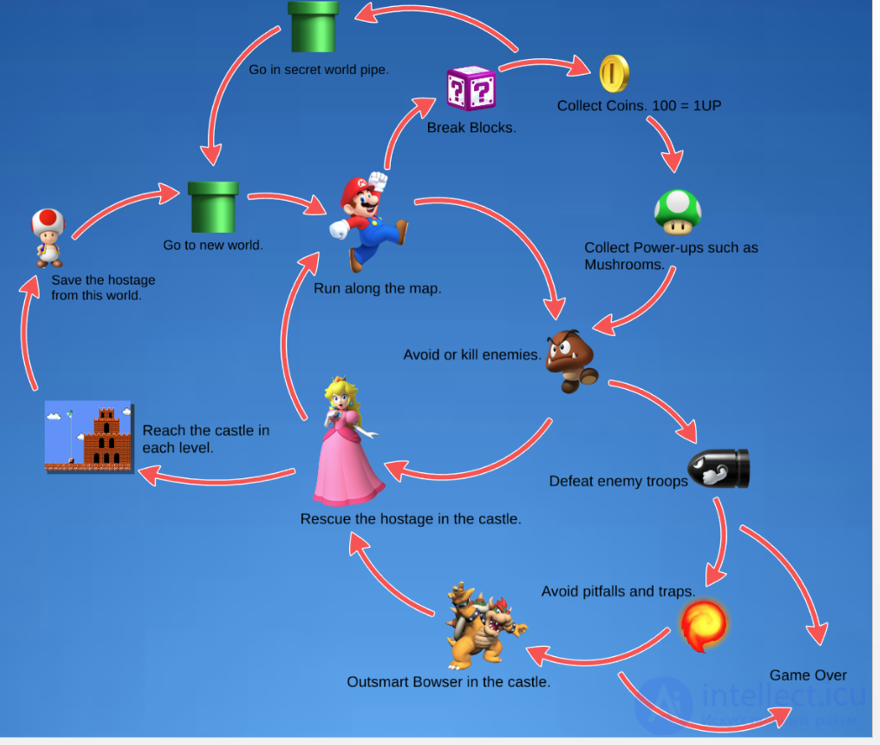
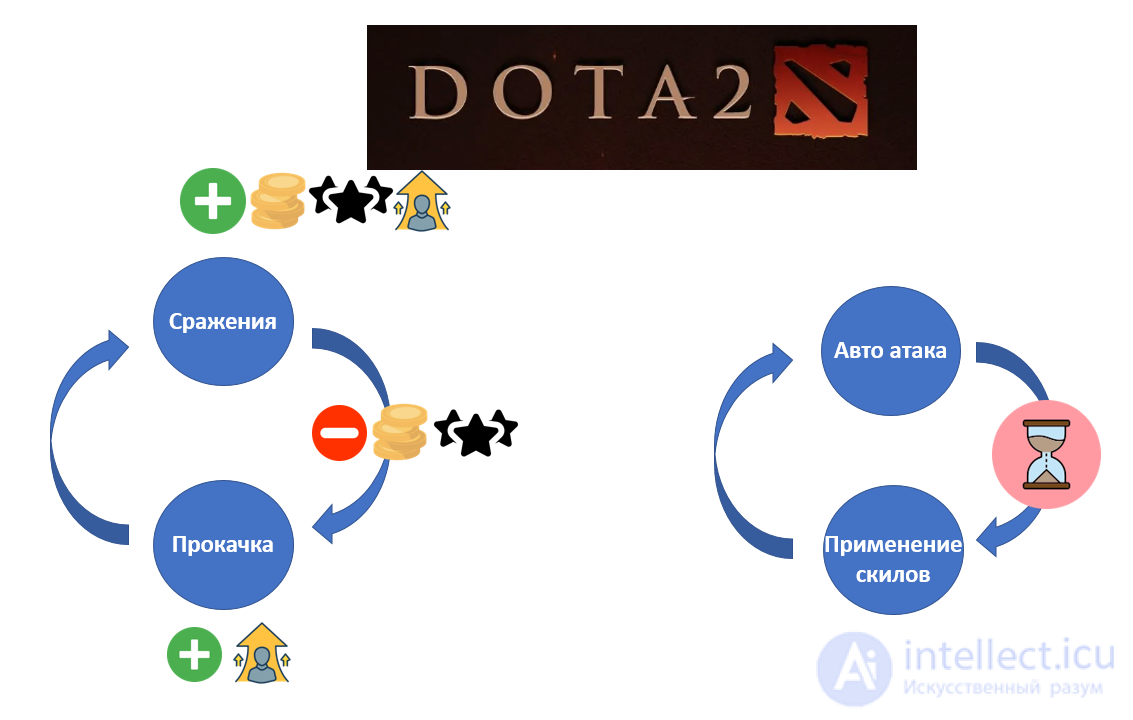
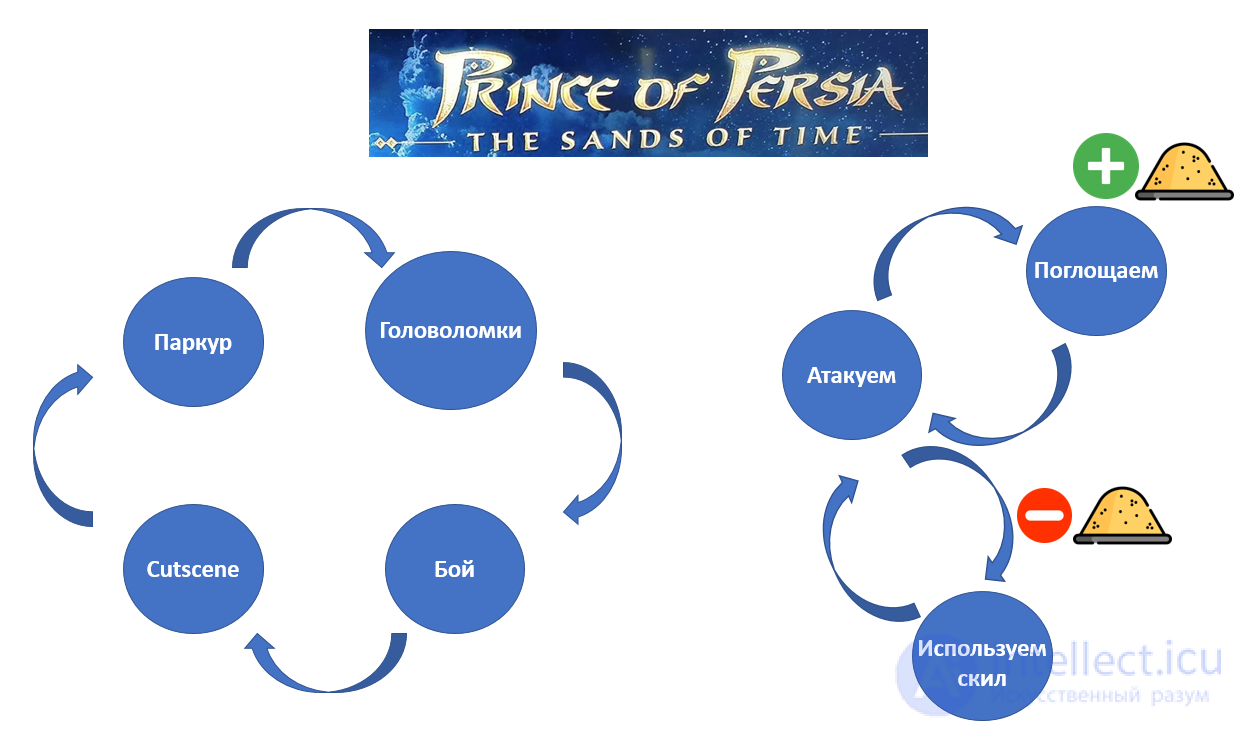
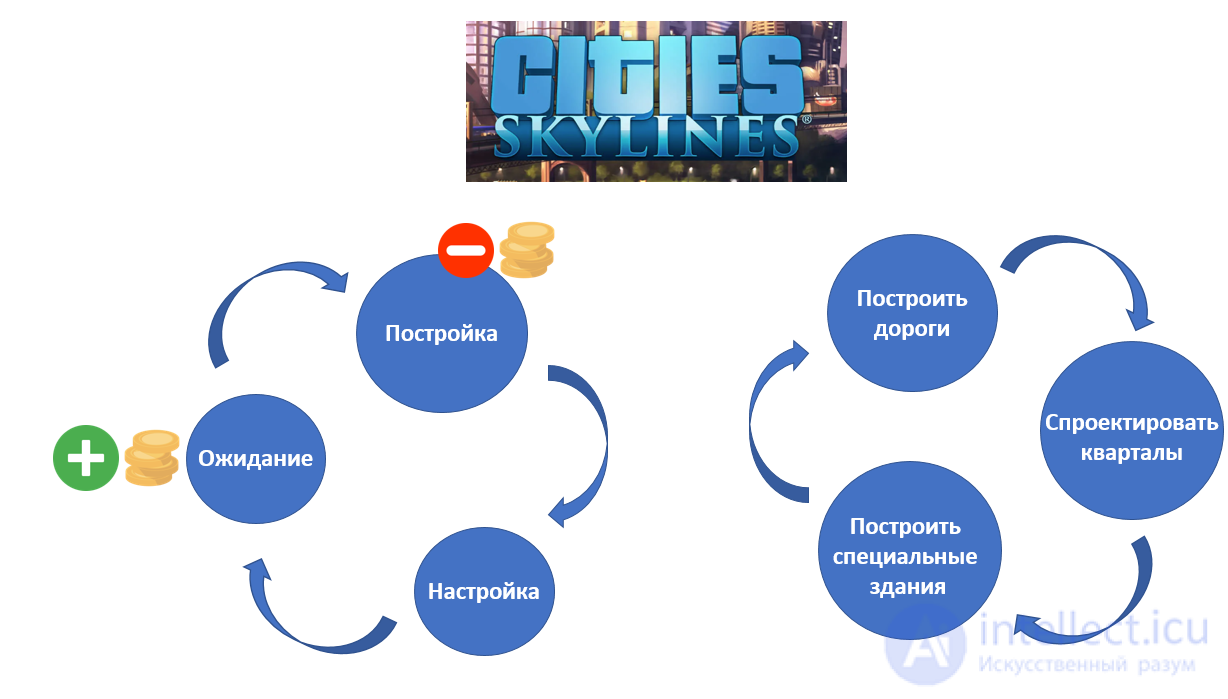
Game loops
Game loops come in these types:


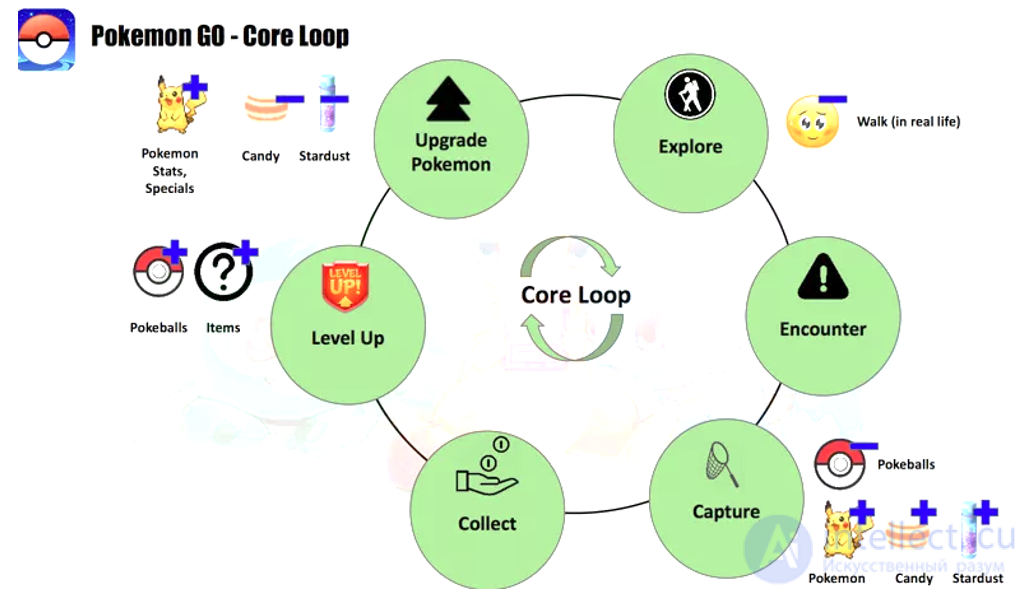
An example of a bad loop
The resource flow is unclear

An example of a bad loop
The connection between entertainment theory and the theory of stupidity manifests itself in the fact that both examine people's behavioral models, their perception of information, and their reactions to stimuli. Entertainment theory investigates the mechanisms of engagement, pleasure, and motivation, while the theory of stupidity (for example, Carlo Cipolla's concept of the fundamental laws of stupidity) studies the irrational, illogical, and destructive actions that people may commit, including in an entertainment context.
One of the key intersections is the phenomenon of mass culture, where entertainment content is often built on simplification, stereotypes, and the use of «stupidity» as an element of comedy, parody, or even manipulation. Many popular forms of entertainment, including memes, reality shows, comedy programs, and viral videos, operate on the mechanics of absurdity, ridiculousness, and illogicality, eliciting laughter and interest from the audience.
In addition, the theory of stupidity asserts that stupidity is not simply a lack of intelligence but a model of behavior that can be systemic and influence social processes. In the entertainment industry, this manifests itself, for example, in the spread of low-quality content, provocations, disinformation, or excessive gamification, which can reduce the audience's critical thinking.
On the other hand, entertainment theory can use elements of stupidity deliberately, turning them into a tool for satire, humor, and social commentary. For example, absurdist humor in cinema, games, and literature often mocks the illogicality of society or emphasizes the depth of human irrationality.
Thus, entertainment theory and the theory of stupidity intersect in matters of influencing people's behavior, shaping mass tastes and cultural trends, as well as in the study of the mechanisms of perceiving information and emotions.
Media production. Applying the theory makes it possible to create more effective and in-demand products. For example, Netflix uses data analysis to personalize content.
Education. Game-based approaches (“gamification”) increase student engagement and improve learning effectiveness.
Psychology and health. Entertainment is used as a therapeutic tool, for example, in the treatment of anxiety disorders or for recovery after stressful events.
in computer games
With the development of technology and the growth of globalization, entertainment theory faces new challenges and opportunities. Future research may focus on:
The ethical aspects of using entertainment.
The long-term cognitive effects of interactive forms of content.
The role of artificial intelligence in creating a unique user experience.
The prospects for the development of entertainment theory are connected with technological innovations and changes in audience preferences. One of the key directions is the integration of artificial intelligence, which will make it possible to adapt content in real time, creating personalized game scenarios, interactive films, and training programs. The development of virtual and augmented reality opens up new possibilities for deep immersion in the entertainment experience, making it more interactive and realistic. Gamification continues to penetrate various fields, including education, medicine, and business, increasing user motivation and engagement. An important trend is the development of metaverses — digital spaces that combine elements of games, social networks, and economics, where users can interact, create content, and earn money. In the field of cinema and streaming platforms, interest is growing in non-linear plots, where the viewer influences the development of the story, which increases the level of engagement. In the social sphere, technologies for emotional analysis are developing, allowing entertainment content to be adapted to the user's emotional state. There has also emerged a tendency to use interactive entertainment to improve mental health, for example, through therapeutic games and meditative VR spaces. Overall, entertainment theory is becoming increasingly multifaceted, combining traditional principles with new technologies to create a unique user experience that not only entertains but also educates, motivates, and even helps in solving real-world problems.
Entertainment theory represents an important area of research that unites many disciplines and finds application in various fields. By developing this direction, we can better understand the nature of human behavior, create more effective educational and entertainment tools, and contribute to the harmonious development of society.

Comments