
Lecture
Game development – this is a complex process that requires the coordinated work of many specialists from various professions. Computer game development (gamedev) — the process of creating computer games.
Every member of the team makes their own unique contribution to the creation of the game world. In this lecture we will examine the main roles on a game development team, how they relate to one another, and the key skills necessary for successful work.
Computer game development can be carried out either by a single person or by a company (a team of developers). Commercial games are created by teams of developers hired by a single company. Companies may specialize in producing games for personal computers, game consoles, or tablet computers. Development may be financed by another, larger company — a publisher. Once development is complete, the publishing company handles the distribution of the game and bears the associated costs. The opposite approach is development in which the company independently (without the involvement of publishers) distributes copies of the game, for example by means of digital distribution.
The development of the largest-budget games can cost tens of millions of US dollars, and over the past two decades these budgets have grown continuously, as have the sizes of development teams and development timelines. Thus, in the late nineties a game for the PlayStation console for the end buyer — could be made by a team of 10 people in a year; for the PlayStation 2 (the first half of the 2000s) a team of 30-50 people and two years of development were required; and by 2012 it was already a matter of teams of more than 100 developers and a timeframe of around three years. According to Alex Moore, a game designer at Sumo Digital, if the price of a game for the end consumer had grown in the same proportion, games in 2012 would have cost 1,800 US dollars each; in other words, in order to recoup the increased budgets while keeping the same store prices, publishing companies have to sell many more copies of their games.
A large-budget game for two platforms — the Xbox 360 and the PlayStation 3 — cost an average of 20 million dollars in 2012, and in order to break even it had to sell around two million copies.
In the early 1980s, after the appearance of the first home computers and game consoles, a single programmer could handle almost all of the tasks involved in developing a game. The development of modern games requires a wide range of skills and support staff. Working on a single project requires entire teams, which usually include representatives of a number of specializations. A typical game development team includes the following specialists and professions:
Game designer:
Programmer:
Artist:
Sound designer:
Tester:
Producer
Game development is overseen by internal and external producers. External producers are those whom the publisher assigns to the development team in order to monitor the progress of development and keep track of budget spending. Internal producers are considered to be those who work at the studio developing the game. They manage the development team, schedules, and progress reports, hire and assign staff, and so on. A producer's responsibilities include public relations, negotiations, signing contracts, maintaining communication between staff and stakeholders, keeping to the schedule and budget, ensuring quality, and managing beta testing and localization. A person in this position may also be called a project manager, project lead, or director.
A computer game publisher — a company that publishes/releases computer games. Games may be either created by the publishing company or developed by another company. Like publishers of books or DVD films, computer game publishers are responsible for the production and marketing of their product, including market research and all aspects of advertising.
Publishers usually finance development, sometimes by paying a computer game developer (the publisher calls this external development), and sometimes by paying an internal staff of developers, called a studio. Consequently, they also, as a rule, own the rights to the game. Large computer game publishers also distribute the games they publish, while some smaller publishers instead hire distribution companies (or larger computer game publishers) to distribute the games they publish.
Other functions typically performed by a publisher include paying for any license the game uses (a music license, a license to use a brand, etc.), paying to localize the game, and creating graphic design elements such as the design of the game's box and cover, and so on.
Large publishers may also try to increase efficiency across all internal and external development teams by providing services such as sound design and code packages for commonly used features.
Since the publisher usually finances the game's development, it usually tries to manage development risk together with producers or project managers. This makes it possible to monitor the developers' progress and help when necessary. Most computer games created by a third-party developer are paid for with periodic royalty advances. These advances are paid out when the developer reaches certain development stages, called milestones.
Independent developers create games without a publisher and can choose the method of distribution themselves. Sometimes independent developers turn to publishers so that the latter can help them with the promotion and/or distribution of the game.
Development teams can range in size from small groups of two or three people who make casual games at home, to hundreds or even thousands of employees who create large-scale games. Companies divide up the subtasks of game development. Individual job titles may differ, but the roles across the industry are the same. A development team consists of several employees. Some of them may perform several roles; likewise, several tasks may be done by the same employee. Team size can range from 20 to 100 or more people, depending on the scale of the game. Artists make up the largest share of the team, followed by programmers, then game designers, then audio specialists, as well as two or three producers who take on management. People in these positions work full time. In other positions, such as testers, employees may work part time. Salaries in these positions depend on the employee's experience and location. The salary of an entry-level programmer in the US averages around 70,000 dollars a year, while an experienced one earns 125,000.
The development team includes the positions presented below.
A game designer — is the person who designs the gameplay, conceiving and designing the rules and structure of the game. Development teams usually have a lead game designer who coordinates the work of the other game designers. They are the ones who, better than others, understand what the game will be. One of a game designer's tasks — is to think through how the narrative in the game will unfold, to think through dialogue, commentary, cutscenes, the packaging of the game at sale, hints, and so on. On large projects there are often separate game designers for different parts of the game, for example, a game designer for game mechanics, for the user interface, for characters, for dialogue, etc.
The artist draws how the game will look. The art department usually has a director or lead, whose responsibilities include making sure that colleagues share the same vision of the game. The director leads the department, plans and coordinates their actions within the entire development team[20].
An artist's work can be 2D- or 3D-oriented. 2D artists can create concept art, sprites, textures, background and terrain images, and the user interface[24]. 3D artists can create models or polygonal meshes[, animation, three-dimensional environments, and cinematics[29]. Artists sometimes perform both roles (2D and 3D).
A game programmer — is a software engineer who mainly develops computer games or software related to them (such as game development tools). All work with the source code is done by programmers]. As a rule, there are one or more lead programmers[32] who implement the initial codebase, plan the future development of the project, and also coordinate the other programmers.
A game programmer may be engaged in developing such aspects as:
A level designer — is the person who creates levels, challenges, or missions for computer video games, using game development tools or other programs[33][34]. These may be publicly available commercial 3D or 2D design programs, or specially developed level editors created for a specific game.
Level designers work with both the unfinished and the finished version of the game. Game programmers usually develop the level editors and game development tools for level designers to use. This spares the designers from having to access or modify the game code. Designers can use a high-level and/or scripting programming language in order to define the interactive interplay between the player and the AI. Unlike level-editing tools, which are sometimes made available to the player community, level designers often work with mock-ups and prototypes aimed at consistency and clarity of layout, and this work can be done before the art portion is finished.
Sound designers are technical specialists responsible for the sound effects and audio throughout the game. Sometimes they supervise the creation of voice and other sound sets. Composers, who create the musical part of the game, are members of the development team working with sound, although this work is often outsourced. Game creators also commission music from music producers.
Quality assurance is carried out through testing. A tester analyzes the computer game and documents the defects and errors they find, which is part of the entire quality control process. Testing, as a rule, requires good computer knowledge and competence in analysis.
Testers verify that the game matches what was designed: it should work as intended and bring the player enjoyment. This includes testing all features, compatibility, localization, etc. Although testing is necessary throughout the entire development process, it can be expensive and is often used intensively only during the completion of the project.
Effective communication — is the key to a team's successful work. Regular meetings, the use of collaboration tools, and openness to feedback help avoid misunderstandings and speed up the development process.
Design:
Programming:
Graphics and design:
Sound design:
Testing:
Polishing and optimization:
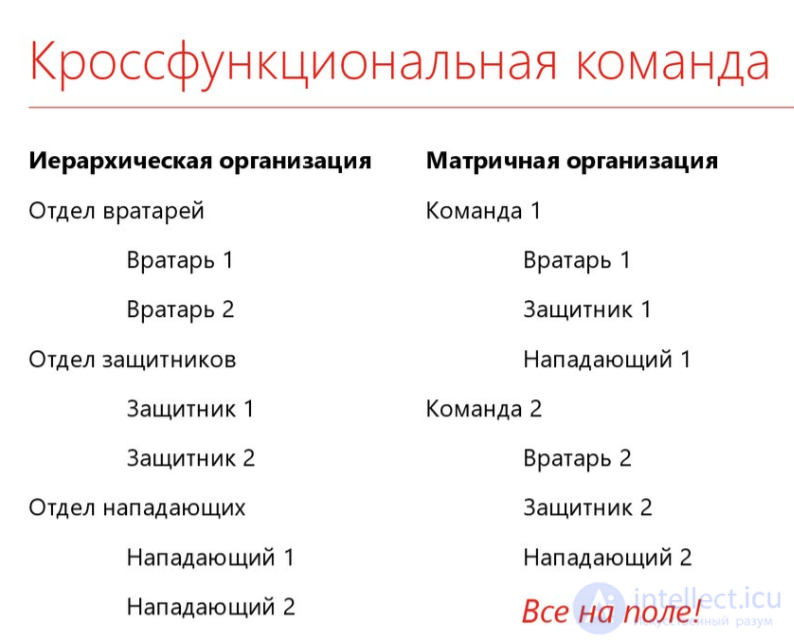
matrix and hierarchical organization of a development team
Ever since entire teams of developers began working on games, the need arose to document the development process. On the one hand, this makes it somewhat easier to find colleagues and investment; on the other, it makes it possible to plan the budget and coordinate development. The content and list of documents vary considerably depending on the level of the developer, but here are 3 main documents:
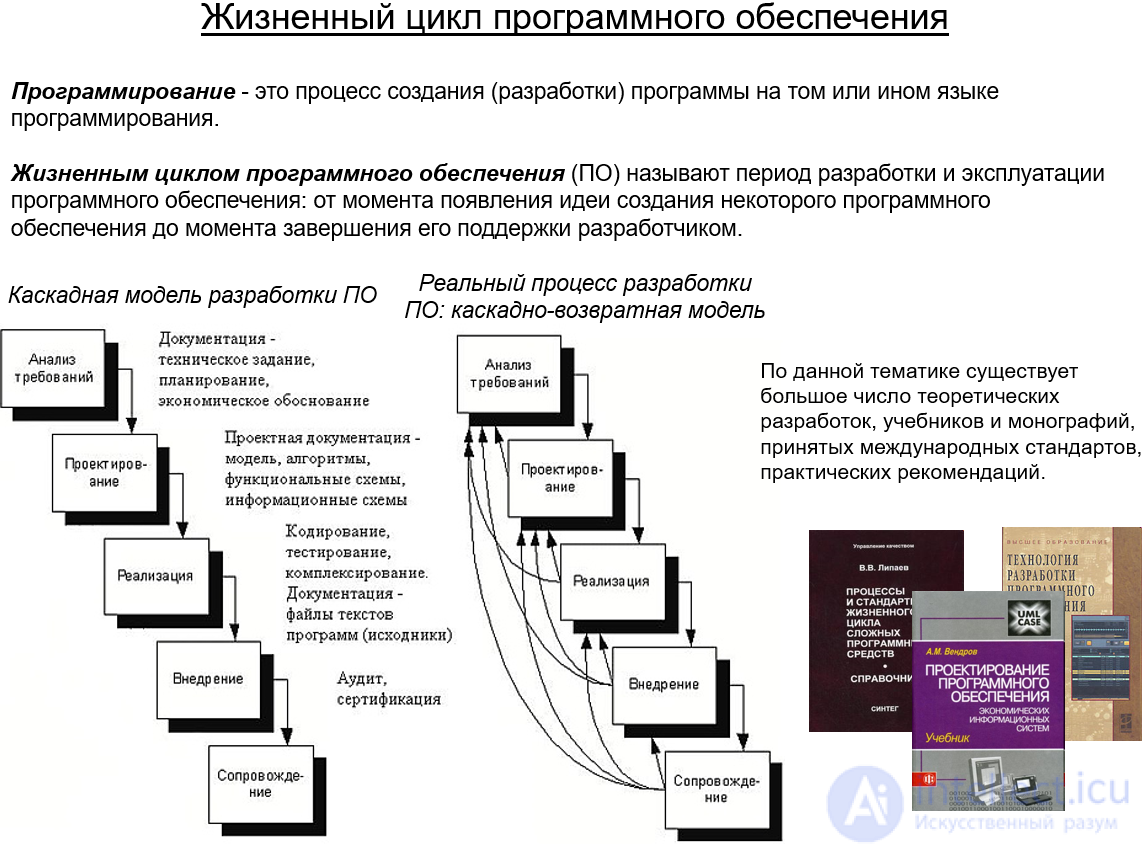
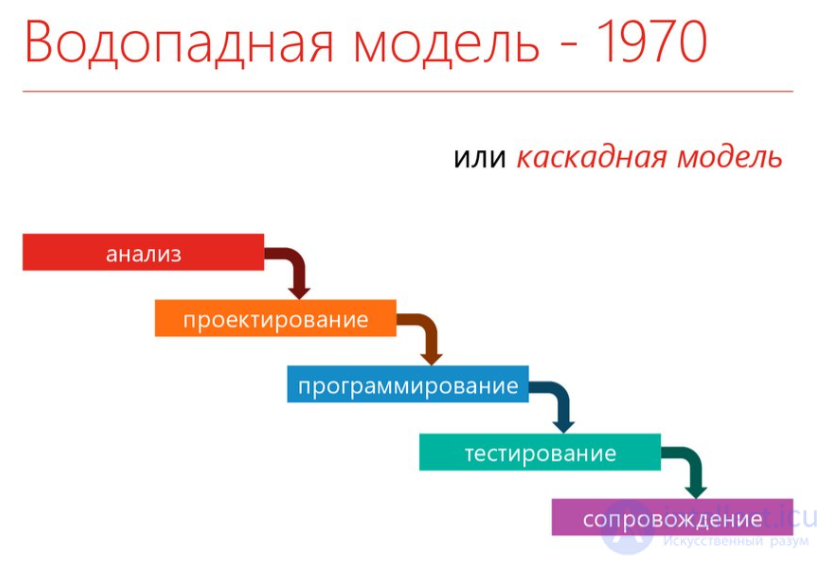
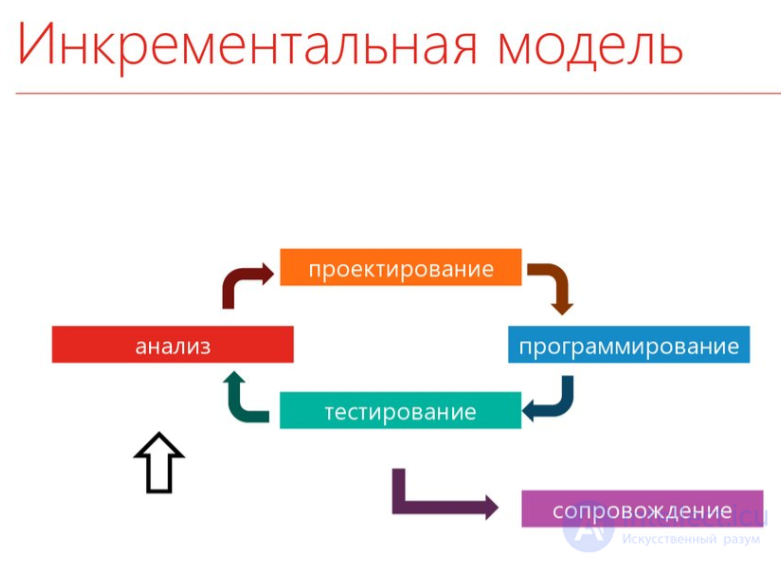
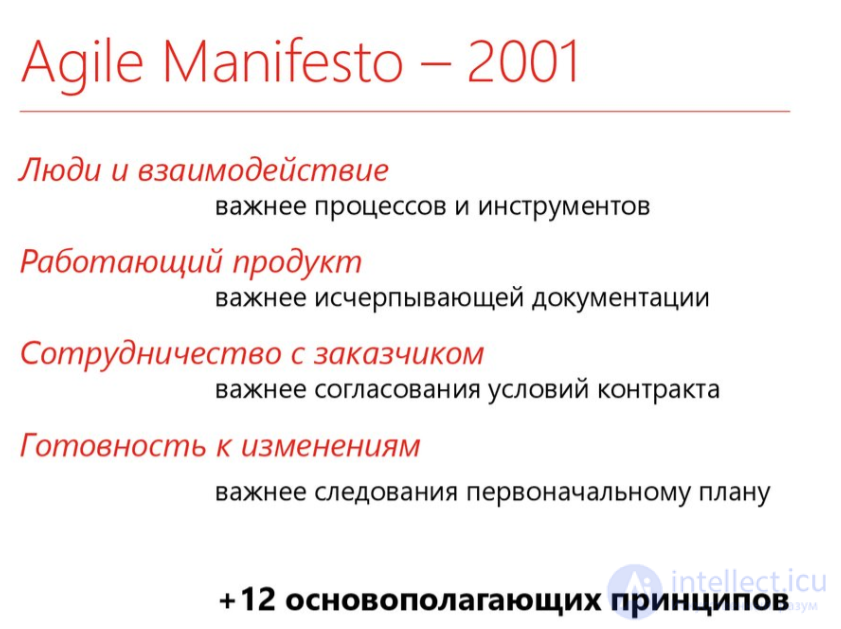
The game development process usually includes the following stages:
The stages may vary depending on the company's preferences and the specifics of the project.
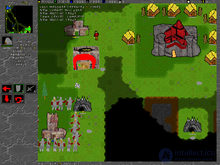
The early stages of game development are often characterized by low-quality graphics. This is especially true of various game prototypes.
Once the initial idea of the game has taken shape, the production risks and budgets need to be assessed and staffing questions decided.
The necessary volume of content is calculated, and the time and money costs for it are estimated. It is decided what level and how many artists are needed for the game, and for how long they need to be hired. The most suitable game engine for the game is chosen, and the level of graphics it can handle is assessed. Prototypes of the game's main elements are created.
A polygon budget is drawn up — how many polygons can be spent on game entities, how many entities can be on screen at once, how many polygons to leave for the environment. In the case of multiplayer games, the potential performance of the server is assessed. A financial budget is drawn up.
In the more common case, where the developer and the publisher are different companies, the idea must be proposed to management, approved, and put forward for consideration by publishers. A working demo can help in this matter, but it is not mandatory for a reputable publisher with a good reputation. If an interested publisher is found, production can begin. Today, a game idea rarely convinces if no publisher is interested in it.
If the developer is also the publisher, or if both are divisions of the same company, then only top management has to give approval. However, depending on the size of the publishing company, it may take several attempts before the idea makes its way up through all the layers of management.
The representative of the project is usually the game designer, but it may also be a person from the game industry in any other position. Before the start of full-scale production, the game designer must write a design document — a detailed document describing the concept and gameplay. It may also contain some preliminary sketches (drafts, drawings) of various aspects of the game. Some game designers even include in the design document a rough working prototype demonstrating one or more sides of the game. Usually the design document combines all or most of the materials of the initial concept. The main feature of the design document — is its «liveness» — in reality it will not be finished as long as the game is in development. It may change every week, sometimes — every day. Therefore, even though the design document must exist in some form before the start of full-scale production, it is almost never a finished design, although it may describe many aspects of all the stages of a fully designed game.
Before an approved design appears, the core team of programmers and artists can begin working on ideas. Programmers can develop initial prototypes to demonstrate one or more features that certain intermediaries want to see in the game. Or they can begin developing the framework that will ultimately be used by the game. Artists can draw sketches as a springboard for developing the actual game assets. At first the producer may work on the game part-time, but increase their involvement as development progresses.
An enormous amount of work is done during the main production stage. Programmers write the source code, artists draw the graphics (sprites or 3D models of game elements). Sound engineers develop sound effects, and composers write the music for the game. Level designers create levels, and writers write dialogue for scripted scenes and non-player characters.
All this time the game designer supplements and modifies the game design to reflect the current vision of the game. Some features or levels may be removed, some added. The artistic treatment may evolve, and the story (backstory) — change. A new target platform may appear, as well as a new target audience. All these changes must be documented, and most of them must appear in the design document.
In terms of time, the first level of the game takes the longest of all to develop. Since level designers and artists use tools to create levels, they require features and changes in the internal tools. As new features appear, some levels may become outdated, so various fixes may be made to the first level of the game. In addition, owing to the dynamic nature of game development, the design vision of the first level may change over time. It is quite common to spend more than 12 months on the first level over the course of a three-year game development. Subsequent levels may be developed significantly faster, since the feature list becomes more complete and the vision of the game — clearer.
Testers get involved with the game when something «playable» appears. This may be a single level or a subset of the game that can be used within any reasonable limits. In the early stage, testing the game takes up a relatively small share of a single tester's time; at any given time testers may be responsible for several games at once. As development approaches its end, one game may begin to take up all of the testers' time — and even overtime — as they try to test new features for which regression tests exist. Today testing is vital for games, since, owing to the complexity of most of them, a single change can lead to catastrophic consequences.
In the ordinary case, support consists of releasing patches to fix errors found after the game's release. However, in the case of massively multiplayer online games (MMOs), support may equal or even exceed production in terms of both effort and time, since a successful MMO must continuously evolve and expand in order to avoid player churn.
Some aspects of computer game production, such as the creation and selection of music and sound, voice acting, or motion capture, often require large and not always sensible financial investments that may be beyond the means of a developer (it can be effective only if the developer creates several games at once and has internal departments to handle specific tasks). It is not profitable for companies to hire in-house staff to perform these tasks, so most developers resort to the services of subcontractors to carry out part of their project — they outsource them.
Plans regarding outsourcing are considered during the pre-production stage; that is when the necessary time and financial costs for work that will be performed outside the developer company are calculated.
Working on a game development team – this is a fascinating but complex process that requires from every team member high qualification, communication skills, and a readiness to cooperate. The success of the project depends on the coordinated work of the entire team.

Comments