
Lecture
Gameplay is the player's interaction with the game through its rules and mechanics. It encompasses all the actions a player performs in the game, including tasks, missions, decisions, and the ways of carrying them out. The main goal of gameplay is to provide the player with an interesting, engaging experience that holds their attention and makes them want to keep playing.
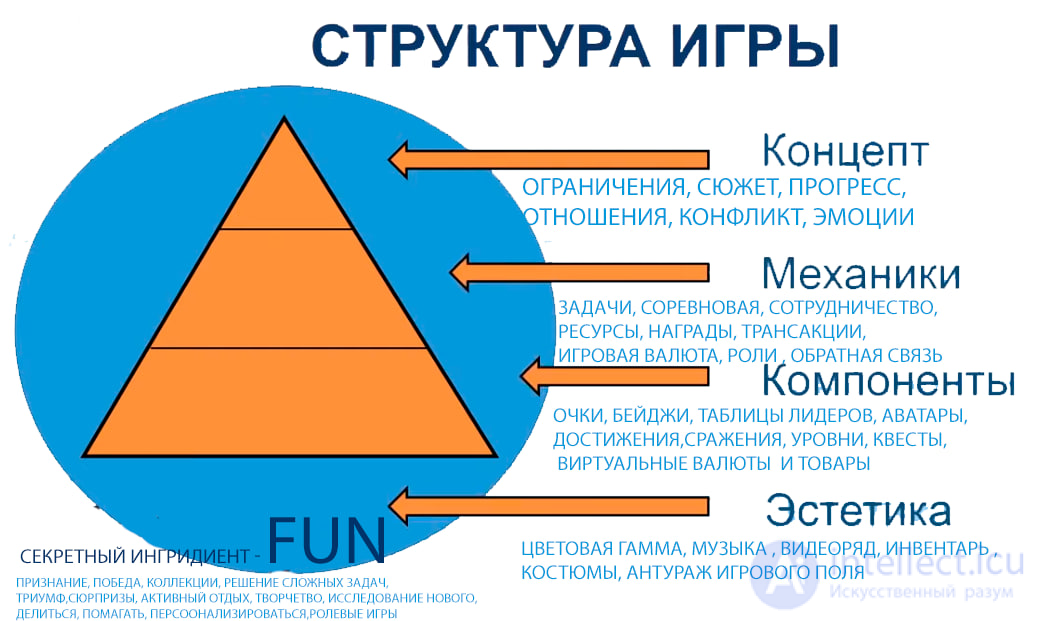
fig. game structure
In the context of games or entertainment projects, "fun" is often a key element that determines how enjoyable or captivating the experience is for the user.
Well-designed gameplay combines several elements:
Game mechanics are sets of rules and systems that govern the player's interaction with the game world. They are the "tools" through which the game provides control and interaction. Mechanics can be varied:
Game mechanics are what form the foundation of gameplay. For example, in platformers, mechanics such as jumping and avoiding obstacles create the dynamics of the game. In strategy games, it is resource management and decision-making that influence the outcome of the game.
The game loop is the core mechanism that controls the execution of all actions in the game. It is a continuous process that allows the game state to be updated, player input to be processed, graphics to be rendered, and other tasks necessary to ensure smooth gameplay to be performed.
Core gameplay (from the English gameplay loop, core gameplay loop) is the principle by which game designers define the main element of the game mechanics that determines the player's fundamental experience. A single game loop represents a player's action, the result of that action in the game world, the player's reaction to the result, and the game's prompt to repeat a new action.
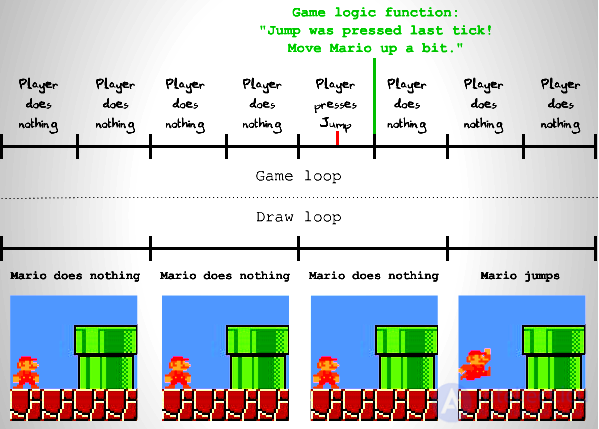
The game loop consists of several key stages:
At this stage, the game receives data from the player, such as key presses, mouse movements, or screen touches. This information is then used to change the game state or control characters.
After processing input, the game updates the state of all objects and elements on the level. This may include:
This stage is responsible for calculating physical interactions between objects, including collisions, movement, and other physical phenomena. This is necessary to create a realistic gaming experience.
At this stage, the game visualizes all the changes that have occurred since the previous frame. Here the following takes place:
After rendering, the game loop completes the current frame and begins the next one. The game loop continues until the player finishes the game or closes the application.
An example of a simple game loop might look like this:
 while (game is active)
{
 process input();
update game state();
 physics();
 render();
}
Goals in a game create structure for the gameplay and motivate the player. They can vary depending on the genre:
Game goals are important because they give the player a sense of progress and achievement. Well-designed goals make the player feel that they are moving forward and provide motivation to keep playing.
The player's interaction with the game is a key element of gameplay. It can occur on several levels:
A key aspect of interaction with the player is agency, the feeling that the player can influence the outcome of the game through their actions. The stronger the sense of agency, the greater the player's engagement.
The balance of gameplay plays a critical role in maintaining the player's interest. If the game is too easy, the player quickly loses interest. If the game is too difficult, it can cause frustration. The ideal balance assumes that the game provides challenges that the player can overcome with effort, while gaining a sense of satisfaction.
A game's unique features (USP) are the elements that set the project apart from others, attract the audience's attention, and make the game memorable. To formulate these features, you need to have a clear idea of your target audience and understand exactly what will captivate them. It could be an innovative mechanic, an original approach to traditional elements, or something completely new and unusual.
It is important to remember that general phrases like "beautiful graphics" or "an interesting story" do not make a project unique. A true USP is a specific feature that sparks interest and leaves a strong impression.
Examples of strong USPs:
Your USP is the key to capturing the audience's interest and making the project successful in the competitive games market.
Defining the core feelings (core gameplay) is a key part of game development that helps articulate its unique value and set it apart from other projects. These are the emotions that players will experience and the experience they will gain from playing your game. The main feelings must be clearly understood and supported by all game mechanics, visual and audio solutions. If these feelings are not clear, players may not understand why they should play, which will reduce interest in the project.
Every massively successful game is based on a clearly formed core feeling. This is the foundation on which the entire gaming experience is built. Games that have gained popularity have always evoked strong emotions in players, whether it be excitement, joy, tension, surprise, or satisfaction. It is precisely this feeling that makes a game unique, memorable, and makes players return to it again and again. If a game does not evoke a clear emotional response, it loses its competitive advantage. In such cases, the audience may not understand why they should play it, and the project risks going unnoticed. That is why working out the core feeling is the key to creating a successful gaming product.
Choose a favorite game and answer the questions:
These answers will help you form a similar structure for your game and highlight its key emotions and experiences that will attract players.
To better understand the relationship between game mechanics, goals, and interaction with the player, let's look at a few popular games:
Understanding gameplay, mechanics, game goals, and interaction with the player is the foundation of game design. Creating an engaging game requires careful planning of these elements and their harmonious interaction. Games that balance all of these aspects well create an engaging and memorable experience for the player.
Questions for discussion:

Comments