"Fun" (from English fun) — is a concept used to denote the pleasure, entertainment, or enjoyment that a person derives from some activity. In the context of games or entertainment projects, "fun" often serves as the key element that determines how enjoyable or engaging the experience is for the user.
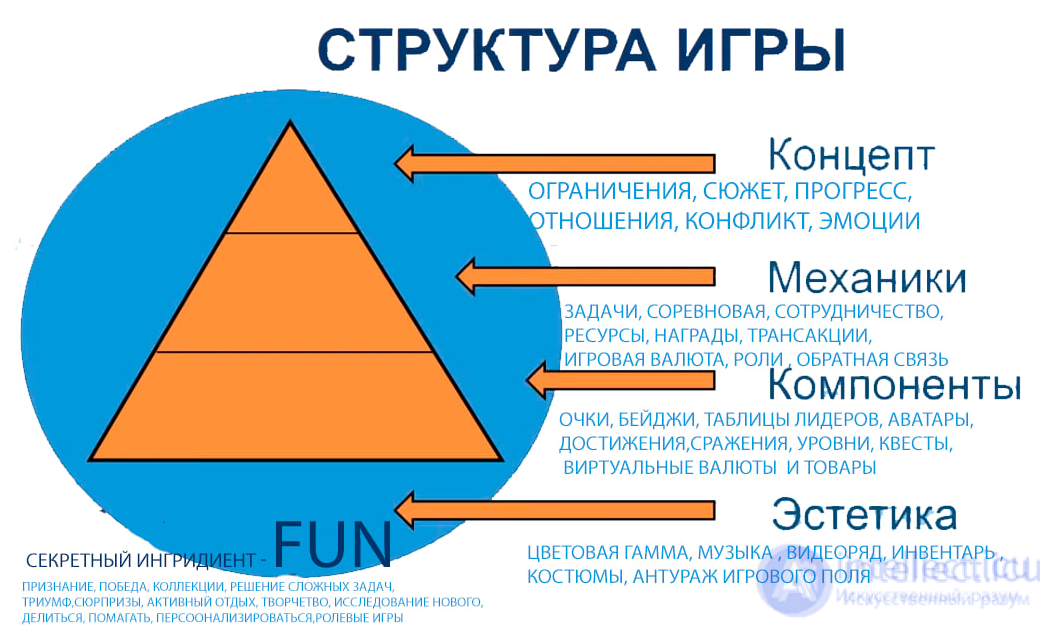
Fun!
- The pleasure derived from the process of playing.
- Everything else the designer does – is merely a tool for achieving fun.
- If players are having fun (and this kind of fun suits you) – then you did everything right.
Key characteristics of "fun":
- Pleasure: The activity brings joy and relaxation.
- Engagement: The activity captivates, holds attention, and creates a desire to continue.
- Emotional response: The feelings evoked by "fun" may be associated with humor, surprise, excitement, or even tension.
In game design, the concept of "fun" is a central idea that determines how engaging a game is for the player. It is a subjective sense of pleasure that the player experiences while interacting with the game. Fun — is what people play for, and at the heart of game design lies the creation of mechanics, visuals, and experiences that evoke this feeling.
Key aspects of "fun" in game design
-
Types of "fun" (according to Marc LeBlanc's classification):
- Sensation: Enjoyment of the visual, audio, or tactile component of a game.
- Fantasy: Pleasure from immersion in a fictional world or role.
- Narrative: Engagement with the story, plot, or characters.
- Challenge: Pleasure from overcoming difficulties and solving problems.
- Fellowship: Social interaction and cooperation with other players.
- Discovery: The joy of learning something new, finding secrets, or exploring the world.
- Expression: Pleasure from creativity and self-expression (for example, creating a character or houses).
- Submission: Simple relaxation through monotonous or repetitive actions.
1. Sensation
- What it is: Enjoyment of stimuli perceived through the senses: sight, hearing, touch, and even imagined smells or tastes.
- Examples in games:
- Vivid visual effects, beautiful landscapes, or cinematic scenes.
- Captivating music or high-quality sound effects.
- Tactile sensations from controller vibration or interaction with objects.
- Example games: The Journey series (smooth visual and audio immersion), Flower.
2. Fantasy
- What it is: Pleasure from immersion in a fictional world, an imagined reality, or a role that the player could never experience in real life.
- Examples in games:
- The ability to be a knight, mage, superhero, or space traveler.
- Creating a unique character or interacting with magical elements.
- Example games: The Elder Scrolls V: Skyrim (immersion in a fantasy world), Mass Effect (a role in epic science fiction).
3. Narrative
- What it is: Pleasure from an interesting, dramatic, or emotional story. Players become involved in a plot that makes them empathize with the characters and make decisions.
- Examples in games:
- An interactive plot with moral choices.
- Gripping dialogue or unexpected plot twists.
- Example games: The Last of Us (a deep emotional story), Detroit: Become Human (choices and consequences).
4. Challenge
- What it is: Pleasure from overcoming difficulties, completing complex tasks, or achieving goals. It is the drive that appears when a player feels that their skills are being tested.
- Examples in games:
- Solving puzzles, difficult platformers, or boss battles.
- Competitions in multiplayer games.
- Example games: Dark Souls (a high level of difficulty), Portal (clever puzzles).
5. Fellowship
- What it is: Pleasure from interacting with other players: cooperation, friendship, jokes, or competition.
- Examples in games:
- Joint quests in MMORPGs.
- Local multiplayer or cooperative modes.
- Example games: Among Us (social interactions), World of Warcraft (group raids).
6. Discovery
- What it is: Pleasure from exploring something new, finding hidden objects, secrets, or discovering uncharted places.
- Examples in games:
- Exploring a vast open world.
- Searching for hidden items, Easter eggs, or alternative paths.
- Example games: The Legend of Zelda: Breath of the Wild (exploration and discovery), No Man’s Sky (exploring uncharted planets).
7. Expression
- What it is: Pleasure from the ability to express oneself through creativity, unique solutions, or choices.
- Examples in games:
- Character customization, building, or creating your own story.
- The ability to influence the game world.
- Example games: The Sims (creating and managing characters' lives), Minecraft (creativity and building).
8. Submission (Submission/Structure)
- What it is: Pleasure from following established rules, order, and a cycle that helps the player relax. These are often games with repetitive actions or structures.
- Examples in games:
- Routine tasks or farming.
- Simple card or board games for relaxation.
- Example games: Stardew Valley (routine farming tasks), Tetris (a structured puzzle).
How to use these types of fun in game design?
- Combining: A successful game often blends several types of fun. For example, RPGs combine challenge, narrative, discovery, and fantasy.
- Audience: Different players seek different types of fun. Understanding your target audience will help you choose the appropriate mechanics.
- Testing: Observing players and their feedback helps determine how well each of these components is implemented.
-
The emotional component:
- Players seek different emotions: from joy and surprise to tension and fear.
- A balance between positive and negative emotions (for example, fear of an enemy and the joy of victory) enhances the experience.
-
Game mechanics and fun:
- Well-thought-out game mechanics — are the key to creating "fun".
- It is important to consider the action and reward loop: the player should feel progress and be rewarded for it.
- Mechanics should be intuitive, yet leave room for mastery.
-
Social fun:
- In multiplayer games, fun is often created through interaction with other players.
- This includes both cooperative and competitive elements.
-
Difficulty dynamics:
- If the game is too easy — the player loses interest.
- If it is too difficult — frustration sets in.
- A balance of difficulty and progress (the "Flow" concept) creates the optimal experience.
Why is fun important in game design?
- Player retention: If a game does not bring enjoyment, players leave quickly.
- Viral effect: Games that create vivid fun become popular through recommendations.
- Replayability: Engaging elements of fun make players come back.
Game designers use testing and feedback to understand whether a game generates "fun", and if not, which elements need to be refined.
See also
- [[b12395]]
- [[b12572]]
- [[b12575]]


Comments