Game monetization – this is the process of generating profit from the development and distribution of games. Choosing the right monetization model is one of the key factors in a game's success. In this lecture we will examine the main monetization models, their advantages and disadvantages, as well as the factors that should be taken into account when choosing a model. Game monetization — this is the process of turning a game product into a source of income. There are many monetization models, each of which has its own advantages and disadvantages. Understanding these models is important for creating successful and profitable games.
Why is game monetization important?
- Funding development: Monetization makes it possible to cover the costs of developing, marketing and supporting the game.
- Ensuring long-term viability: A successful monetization model makes it possible to sustain the game over a long period, releasing updates and new content.
- Defining the company's business model: The monetization model affects the company's entire business model, including marketing, customer support and development strategy.
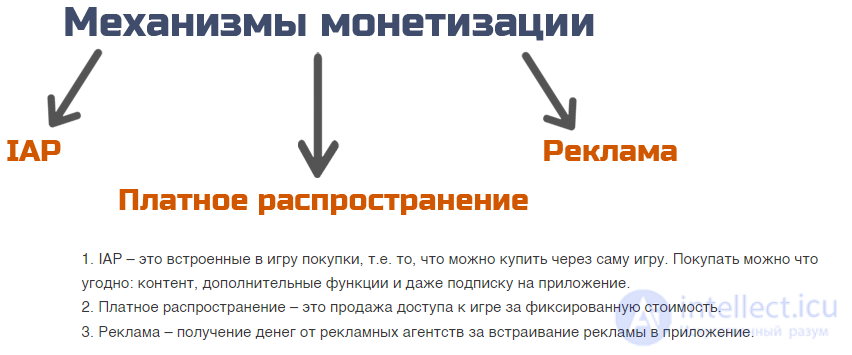
Fig. monetization mechanisms
Main game monetization models
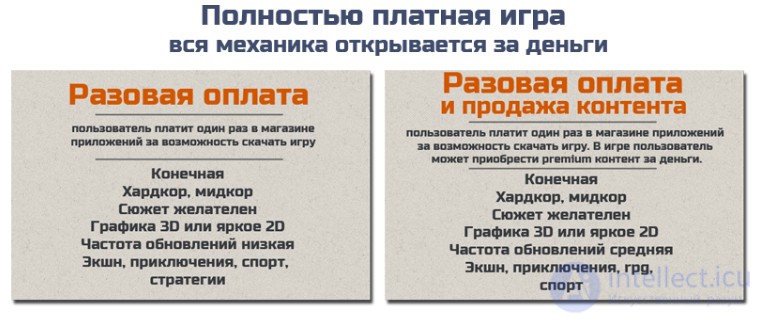
- Premium model (paid game):
- The player buys the game once to gain full access to all content.
- Advantages: No microtransactions, high player loyalty.
- Disadvantages: High entry barrier for players, risk of piracy.
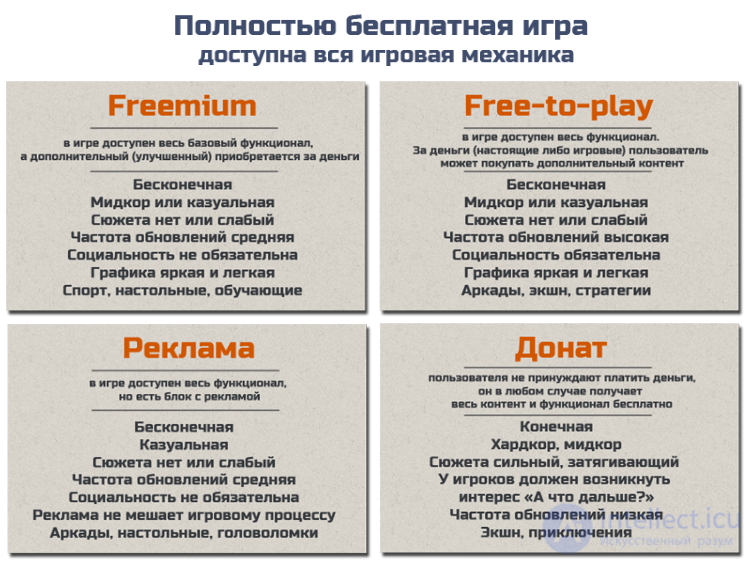
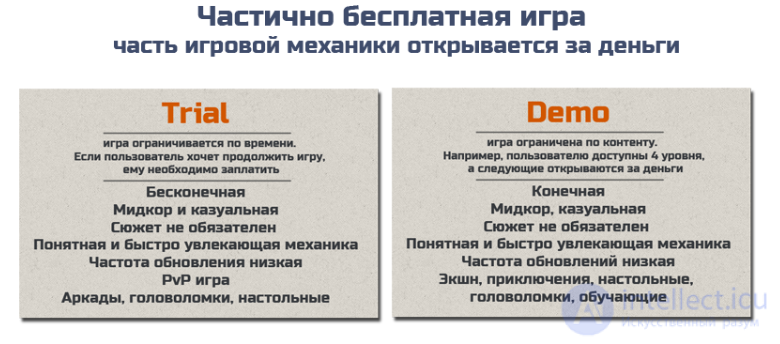
- Freemium model (free-to-play with paid options) Free games with in-game purchases:
- The base game is provided for free, but additional features, items or levels are available for an extra fee.
- Advantages: Low entry barrier, the ability to attract a large audience.
- Disadvantages: Risk of creating an imbalance between paying and non-paying players.
- Free-to-Play (free with microtransactions):
- The game is free, but players can buy in-game currency, items or boosters for real money.
- Advantages: High revenue, the ability to continuously update content.
- Disadvantages: Risk of creating pay-to-win mechanics, negative attitude from some players.
- Subscription:
- Players pay a monthly or annual fee for access to content.
- Advantages: Stable revenue, the ability to offer exclusive content.
- Disadvantages: High entry barrier, players may unsubscribe.
- Advertising:
- Revenue is generated through displaying ads in the game.
- Advantages: Low entry barrier for players.
- Disadvantages: Can distract players, reduce the gameplay experience.
- Combined models:
- Combining several monetization models to achieve optimal results. A combination of several monetization models (for example, a free game with advertising and in-game purchases).
- Advantages: Flexibility, the ability to maximize revenue.
- Disadvantages: Complexity in implementation and balancing.
Factors influencing the choice of monetization model
- Game genre: Different game genres are suited to different monetization models.
- Target audience: Different audiences have different preferences and are willing to pay for different things.
- Competitors: Analyzing competitors' monetization models helps you understand what works in the market.
- Development and support: The chosen model must be compatible with the plans for developing the game.
Important aspects of monetization
- Balance between free and paid content: In free games it is important to provide a sufficient amount of free content to retain players.
- Transparency: Players should clearly understand what they are paying for.
- Value of the offering: The items or services offered for money must represent real value to the player.
- Ethics: It is necessary to avoid creating pay-to-win mechanics that give paying players an unfair advantage.
Examples of successful monetization models
-
Fortnite (Freemium)
- A free game with in-game purchases of cosmetic items.
- Enormous success thanks to constant updates and an active community.
-
World of Warcraft (Subscription)
- A massively multiplayer online game with a monthly subscription.
- Long-term success thanks to regular updates and expansions.
-
Candy Crush Saga (Freemium + Advertising)
- A free game with in-game purchases and advertising.
- High revenue thanks to a broad audience and appealing gameplay.
Conclusion
Choosing a monetization model – this is a complex process that requires careful analysis and planning. A successful monetization model should be balanced, transparent and beneficial to both developers and players.
Questions for discussion
- Which monetization models do you consider the most effective for different game genres?
- How can the creation of pay-to-win mechanics be avoided?
- How can you balance free and paid content in a game?
- What new monetization models might emerge in the future?
Assignments for independent work
- Analyze several games and determine which monetization model they use.
- Create a business plan for your game, including a section on monetization.
- Study cases of successful and unsuccessful monetization models.


Comments