
Lecture
Game theory — is the science that studies strategic interactions between participants within a given set of conditions. In the context of game development, game theory helps create mechanics that not only captivate players but also encourage them to make decisions. It also explains how players interact with one another and with the game world, which influences their behavior and choices.
The core concepts of game theory include the notions of strategies, payoffs, equilibrium, and rationality. Players make decisions based on the possible actions of other participants, striving for the best possible outcome for themselves. One of the key principles — is the Nash equilibrium, which describes a situation in which no player can improve their result by unilaterally changing their strategy.
In video game development, game theory is applied in various aspects, including balancing multiplayer modes, creating artificial intelligence, designing economies, and even the dynamics of player interaction in cooperative and competitive environments. For example, in competitive shooters, a well-thought-out system for balancing weapons and abilities prevents any single strategy from dominating, ensuring a diverse gameplay experience. In strategy and role-playing games, game theory helps developers model NPC behavior, creating more realistic reactions to the player's actions.
In addition, game theory is used in monetization, especially in analyzing in-game economies and the mechanics of player interaction with microtransactions. Understanding users' motives and preferences makes it possible to develop models that both retain interest and encourage certain in-game actions, such as participating in auctions, in-game trading, and cooperative tasks.
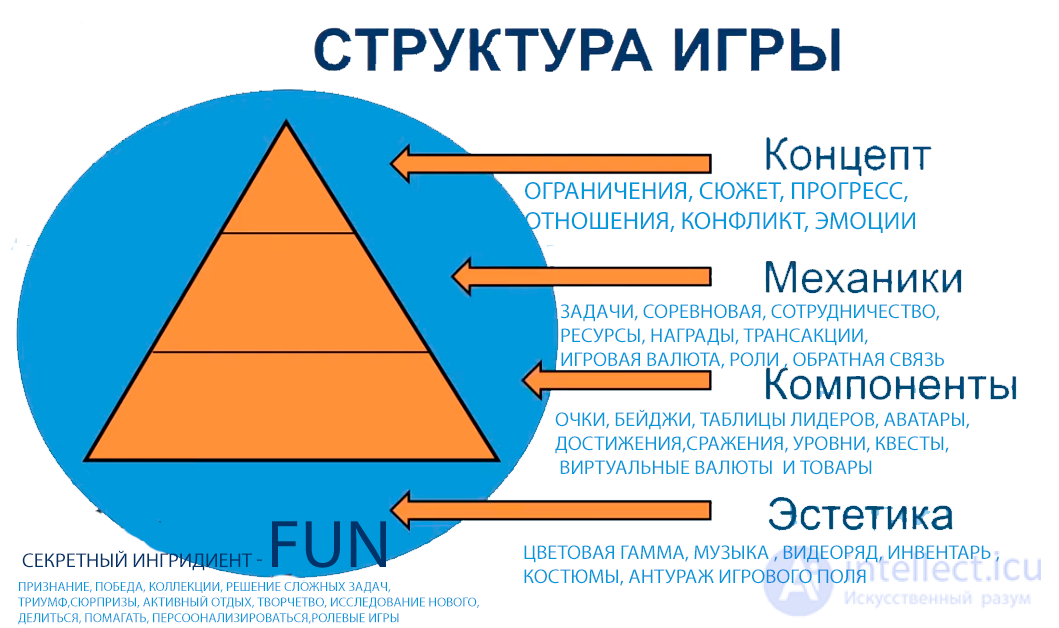
Game structure — is the architecture on which a game is built. Game structure includes several key elements:
Every game has a unique structure that depends on the genre and goals of the game. For example, a strategy game may include a complex system for managing resources and units, whereas a puzzle game focuses on solving problems within a limited space.
Rules — are the core element that defines the boundaries of the game and guides player behavior. They:
Rules can be:
Example rules:
Dynamics (game dynamics) — is the behavior of the game system in response to the players' actions and the progression of the gameplay. Dynamics determine how the game develops over time, and they depend on the interaction between game mechanics, rules, and goals. Dynamics — are the "behavior" of the game that shapes the sense of progress and engagement.
The main types of dynamics:
Example: In the game Civilization, the basic mechanics of exploration, construction, and resource management create the complex dynamics of managing entire empires.
Game mechanics (game mechanics) — are the core rules and systems that shape the player's interaction with the game. They enable the player's actions to be carried out and govern the rules of the game world. Mechanics can be:
Types of game mechanics:
Example: in the game Portal, the mechanic of creating portals allows the player to solve puzzles by moving between two points in space.
All of these elements — structure, rules, dynamics, and mechanics — must work in harmony to create engaging and balanced gameplay. The interaction between these components determines how interesting the game will be for the player and how deeply they will be immersed in the gameplay.
Example: In the game The Legend of Zelda, the rules constrain the player (you cannot enter dangerous areas without a weapon), the mechanics provide tools for overcoming obstacles (swords, bombs), and the dynamics change depending on how the player interacts with the game world and develops their character.
The fundamentals of game theory — are the foundational principles that underlie the design of game mechanics, structure, and dynamics. Understanding these aspects makes it possible to create deeper and more interesting game worlds, where every action the player takes has meaning and interacting with the game becomes engaging and captivating.
Thus, game theory is a powerful tool for creating not only entertaining but also deeply thought-out game mechanics capable of holding players' attention and ensuring fair and balanced interaction within the game world.

Comments