Это продолжение увлекательной статьи про тесты по философии.
...
thrownness;
e) metrics.
39. According to M. Heidegger and J.-P. Sartre, being that is directed toward nothingness and aware of its own finitude is:
- a) thinking;
- b) experience;
- *c) existence (Existenz);
- d) a scientific fact;
- e) the motion of matter.
40. The key category of Heidegger is:
- a) being-toward-God;
- b) being-toward-disappointment;
- c) being-toward-life;
- d) being-toward-happiness;
- *e) being-toward-death.
41. The concept of the "boundary situation" plays a special role in:
- a) pragmatism;
- b) personalism;
- c) phenomenology;
- d) structuralism;
- *e) existentialism.
42. Life is absurd, according to:
- a) Nietzsche;
- b) Dilthey;
- *c) Camus;
- d) Freud;
- e) Sartre.
43. From the standpoint of the Baden school of neo-Kantianism, there exist two basic scientific methods:
- a) natural-philosophical and physical;
- b) analytic and synthetic;
- *c) generalizing and individualizing;
- d) observation and experiment.
44. W. Windelband, a representative of the Baden school of neo-Kantianism, proposed his own division of the sciences into sciences:
- *a) of nature and of mind (spirit);
- b) of laws and of events;
- c) of matter and of consciousness;
- d) of sensations and of ideas;
- e) of reason and of experience.
45. In E. Husserl's phenomenology, the concept of "intentionality" is:
- *a) an essential property of all acts of consciousness, the directedness of consciousness toward an object situated outside consciousness itself;
- b) the analysis of the symbolic aspects of social interactions;
- c) the dependence of the truth-value of statements on the psychological, pragmatic nuances of meaning of these statements;
- d) the borrowing of the basic categories of individual consciousness from the sphere of social representations.
46. In hermeneutics, the main task of philosophy, according to H. Gadamer, is:
- a) the study of philosophical written monuments;
- b) the contemporary interpretation of ancient ideas;
- *c) the interpretation and understanding of a text, in the role of which any object may appear;
- d) bringing philosophical reflection closer to literary and artistic creation.
47. The central characteristic of human existence and its way of being, according to H. Gadamer, is:
- a) prejudice;
- b) explanation;
- c) cognition;
- *d) understanding.
48. Match the philosopher to his philosophical school (movement):
- 2a) Sartre, Camus, Heidegger; 1) "philosophy of life";
- 1b) Nietzsche, Schopenhauer; 2) existentialism;
- 5c) Windelband, Rickert; 3) psychoanalysis;
- 3d) Freud, Jung; 4) positivism;
- 4e) Mill, Spencer. 5) neo-Kantianism.
49. Match the philosophical treatise to its philosopher:
- d1. «Being and Time»; a) Comte;
- c2. «The Will to Power»; b) Marx;
- b3. «Capital»; c) Nietzsche;
- e4. «The World as Will and Representation»; d) Heidegger;
- a5. «Course of Positive Philosophy»; e) Schopenhauer.
-
Advanced questions (history of philosophy)

1. Match the philosopher to the era:
- 4a) Augustine of Hippo; 1) Renaissance;
- 1b) Nicholas of Cusa; 2) Antiquity;
- 3c) Kant; 3) Modern era;
- 2d) Plato; 4) Middle Ages.
2. Match the philosopher to the era:
- 2a) Aristotle; 1) Modern era;
- 1b) Locke; 2) Antiquity;
- 4c) Voltaire; 3) Middle Ages;
- 3d) Thomas Aquinas; 4) Enlightenment.
3. Match the philosopher to the era:
- 4a) Hobbes; 1) Antiquity;
- 1b) Cicero; 2) Renaissance;
- 3c) Rousseau; 3) Enlightenment;
- 2d) G. Bruno; 4) Modern era.
4. Match the philosopher to the philosophical school:
- 3a) Sartre; 1) German classical philosophy;
- 2b) Thales; 2) Milesian school;
- 1c) Hegel; 3) existentialism;
- 4d) Augustine of Hippo; 4) patristics.
5. Match the philosopher to the philosophical school:
- 2a) Thomas Aquinas; 1) school of atomists;
- 1b) Democritus; 2) scholasticism;
- 4c) Marx; 3) natural philosophy;
- 3d) Nicholas of Cusa; 4) dialectical materialism.
6. Match the philosopher to the philosophical school:
- 2a) Diderot; 1) sophistry;
- 1b) Protagoras; 2) encyclopedism;
- 3c) Thomas More; 3) utopianism;
- 4d) Kant; 4) German classical philosophy.
7. Match the philosophical school to the historical era:
- 4a) German classical philosophy; 1) Antiquity;
- 3b) hermeneutics; 2) Middle Ages;
- 2c) patristics; 3) Modernity;
- 1d) sophistry; 4) Modern era.
8. Match the philosophical school to the historical era:
- 4a) encyclopedism; 1) Antiquity;
- 1b) atomism; 2) Middle Ages;
- 3c) Freudianism; 3) Modernity;
- 2d) scholasticism; 4) Enlightenment.
9. Match the philosophical schools to the philosophical culture:
- 3a) philosophy of the Modern era; 1) pragmatism;
- 1b) contemporary Western philosophy; 2) transcendental idealism;
- 4c) philosophy of Antiquity; 3) Cartesianism;
- 2d) German classical philosophy; 4) skepticism.
10. Match the philosophical category to its author:
- 2a) utopia; 1) Heraclitus;
- 1b) logos; 2) Thomas More;
- 4c) morality; 3) Marx;
- 3d) socio-economic formation; 4) Cicero.
11.Match the concepts to the philosophers who use them:
- 3a) being; 1) Aristotle;
- 1b) form; 2) Democritus;
- 4c) idea; 3) Parmenides;
- 2d) atom; 4) Plato.
12. Match the philosophers to the key categories of their conceptions:
- 4a) Epicurus; 1) elan vital;
- 2b) Nietzsche; 2) will to power;
- 1c) Bergson; 3) positive philosophy;
- 3d) Comte; 4) pleasure.
13. Find the match between the author and his work:
- 4a) Homer; 1) «Leviathan»;
- 1b) Hobbes; 2) «On Nature»;
- 3c) Aristotle; 3) «Nicomachean Ethics»;
- 2d) Parmenides; 4) «The Iliad».
14. Find the match between the author and his work:
- 2a) Homer; 1) «Works and Days»;
- 1b) Hesiod; 2) «The Odyssey»;
- 4c) Bacon; 3) «The City of God»;
- 3d) Augustine of Hippo; 4) «New Atlantis».
15. Find the match between the author and his work:
- 2a) Hesiod; 1) «Ethics»;
- 1b) Spinoza; 2) «Theogony»;
- 4c) Kant; 3) «Thus Spoke Zarathustra»;
- 3d) Nietzsche; 4) «Critique of Pure Reason».
16. Match the philosophical positions to their authors:
- 2a) materialism; 1) Hegel;
- 3b) cynicism; 2) Marx;
- 4c) hedonism (philosophy of pleasure); 3) Diogenes;
- 1d) idealism; 4) Epicurus.
17. Match the philosophical positions to their characteristics:
- 4a) anthropocentrism; 1) denial of God;
- 3b) theocentrism; 2) God is everywhere;
- 2c) pantheism; 3) God at the center of the world;
- 1d) atheism; 4) man at the center of the world.
18. Establish the sequence of historical-philosophical eras:
- 2a) scholasticism;
- 4b) Enlightenment;
- 1c) patristics;
- 3d) Renaissance.
19. Establish the sequence in which the philosophical schools arose:
- 1a) Pythagoreans;
- 3b) Epicureans;
- 2c) sophists;
- 5d) existentialists;
- 4e) Neoplatonists.
20. Establish the sequence in which the philosophical directions arose:
- 2a) Epicureanism;
- 1b) atomism;
- 5c) encyclopedism;
- 3d) realism;
- 4e) empiricism.
21. Establish the sequence in which the philosophical directions arose:
- 3a) patristics;
- 1b) sophistry;
- 5c) psychoanalysis;
- 2d) stoicism;
- 4e) realism.
22. Establish the sequence in which the philosophical directions arose:
- 4a) Marxism;
- 3b) humanism;
- 2c) scholasticism;
- 1d) Neoplatonism;
- 5e) neopositivism.
23. Establish the sequence in which the philosophical directions arose:
- 3a) Cartesianism;
- 2b) scholasticism;
- 1c) patristics;
- 4d) positivism;
- 5e) phenomenology.
24. Match the philosophical directions to their characteristics:
- 2a) skepticism; 1) philosophy of existence;
- 3b) Epicureanism; 2) philosophy of doubt;
- 4c) patristics; 3) philosophy of pleasure;
- 1d) existentialism; 4) philosophy of salvation.
Philosophical maxims.
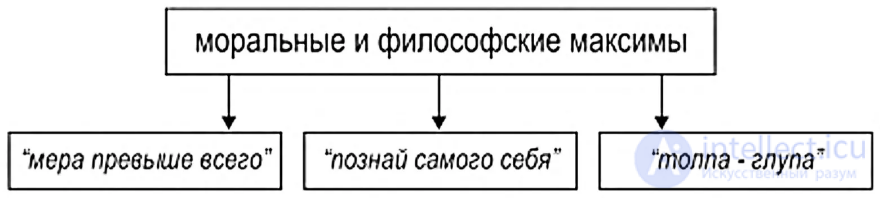
A maxim - from the Latin maxima (regula) or maxima (sententia) — a basic, supreme principle, a guiding rule) — a brief saying that clearly formulates a moral or everyday rule; a rule of conduct or basic principle by which a person is guided in their actions. (Lat. – supreme principle) – this is a rule of life, a principle of conduct, established by a person for themselves. As a rule, it is a generalized everyday thought, the wisdom of generations, expressed in a brief, concise form. Maxims can be proverbs and sayings («If you want to live, know how to get by»), set phrases (everything is «beneath notice»), successful expressions of a literary hero («There is enough simplicity for every wise man»), sayings of the great figures of this world («He who does not work, does not eat») and so on. Maxims are collected in diaries, in books of reflections and aphorisms. People are guided by them, believe in them, include them in their speech, resort to them as proofs, and use them to persuade.
1. To which philosopher is the saying «You cannot step into the same river twice» attributed?
- *a) Heraclitus of Ephesus;
- b) Thomas Aquinas;
- c) Protagoras;
- d) Voltaire;
- e) Plato.
2. Which philosopher is the author of the saying «Man is the measure of all things»?
- a) Augustine of Hippo;
- b) Thomas Aquinas;
- *c) Protagoras;
- d) Voltaire;
- e) Aristotle.
3. Which philosopher is the author of the saying «I believe because it is absurd»?
- a) Augustine of Hippo;
- b) Thomas Aquinas;
- c) Protagoras;
- d) Voltaire;
- *e) Tertullian.
4. Which philosopher claimed that «evil is the absence of good»?
- a) Plato;
- *b) Augustine of Hippo;
- c) Machiavelli;
- d) Marcus Aurelius;
- e) Descartes.
5. Which philosopher is the author of the saying «Philosophy is the handmaiden of theology»?
- a) Augustine of Hippo;
- *b) Thomas Aquinas;
- c) Nicholas of Cusa;
- d) Voltaire;
- e) Plato.
6. To which philosopher is the saying «Knowledge is power» attributed?
- *a) F. Bacon;
- b) Thomas Aquinas;
- c) Protagoras;
- d) Voltaire.
7. Which philosopher is the author of the saying «I think, therefore I am»?
- a) Freud;
- b) Marx;
- *c) Descartes;
- d) Hegel;
- e) Spinoza.
8. Which philosopher is the author of the saying «Freedom is recognized necessity»?
- *a) Spinoza;
- b) Kant;
- c) Marx;
- d) Spengler;
- e) Freud.
9. Which philosopher is the author of the saying «Act so that you treat humanity, whether in your own person or in that of another, always as an end and never merely as a means»?
- a) Freud;
- b) Marx;
- *c) Kant;
- d) Hegel;
- e) Nietzsche.
10. Which philosopher is the author of the saying «God is dead!»?
- a) G. Bruno;
- b) Voltaire;
- *c) Nietzsche;
- d) Marx;
- e) Kant.
11. Which philosopher is the author of the saying: «Whereof one cannot speak, thereof one must be silent, and what can be said at all can be said clearly»?
- *a) Wittgenstein;
- b) Nietzsche;
- c) Kant;
- d) Freud.
12. A representative of which school could not have said: «The world is in constant motion and development»?
- a) atomists;
- *b) Eleatics;
- c) Stoics;
- d) Epicureans.
13. A representative of which philosophical school could not have said: «The names of objects and phenomena are merely names, not really existing»?
- a) utopianism;
- b) rationalism;
- c) nominalism;
- *d) realism.
14. Which philosopher could not have said: «Philosophy occupies first place among the other sciences and is their foundation»?
- a) Aristotle;
- b) Hegel;
- *c) Comte;
- d) Marcus Aurelius.
15. Which philosopher could not have said: «Christian morality is the foundation for the development of society»?
- a) Augustine of Hippo;
- b) Thomas Aquinas;
- c) Nicholas of Cusa;
- *d) Nietzsche.
16. Which philosopher could not have said: «A ruler must always be guided by moral principles, in order to be an example to his subjects»?
- a) Thomas More;
- b) Campanella;
- *c) Machiavelli;
- d) Marcus Aurelius.
17. Which philosopher could not have said: «Arbitrariness is a manifestation of freedom»?
- a) Nietzsche;
- *b) Spinoza;
- c) Spengler;
- d) Freud.
18. Which philosopher could not have said: «By the end of my life's journey I have understood that I have learned much»?
- a) Protagoras;
- *b) Socrates;
- c) Epicurus;
- d) Marcus Aurelius.
19. Which philosopher could not have said: «Our world is the only one of all possible worlds»?
- a) Thomas Aquinas;
- b) Augustine of Hippo;
- *c) G. Bruno;
- d) Nicholas of Cusa.
20. Which philosopher could not have said: «The soul dies together with the body»?
- a) Epicurus;
- b) Marcus Aurelius;
- *c) Plato;
- d) Democritus.
21. Which philosopher could not have said: «Knowledge of the world comes through knowledge of God»?
- a) Thomas Aquinas;
- b) Augustine of Hippo;
- c) Nicholas of Cusa;
- *d) Comte.
22. Which philosopher could not have said: «Human freedom consists in being free to act as one wishes»?
- a) Nietzsche;
- b) Voltaire;
- *c) Kant;
- d) Machiavelli.
23. Which philosopher could not have said: «Before the existence of the state, people lived equal and happy»?
- a) Rousseau;
- b) Voltaire;
- c) Diderot;
- *d) Hobbes.
24. Which philosopher could not have said: «A person should treat others as a means to achieve their own ends»?
- a) Machiavelli;
- b) Voltaire;
- c) Diderot;
- *d) Kant.
Tests on the topic: The doctrine of being. Motion and development, dialectics
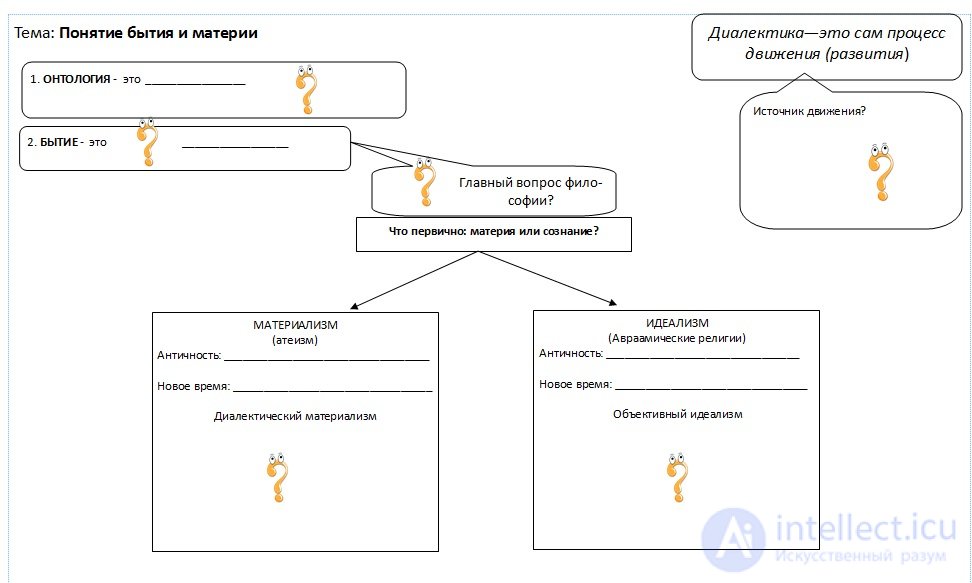
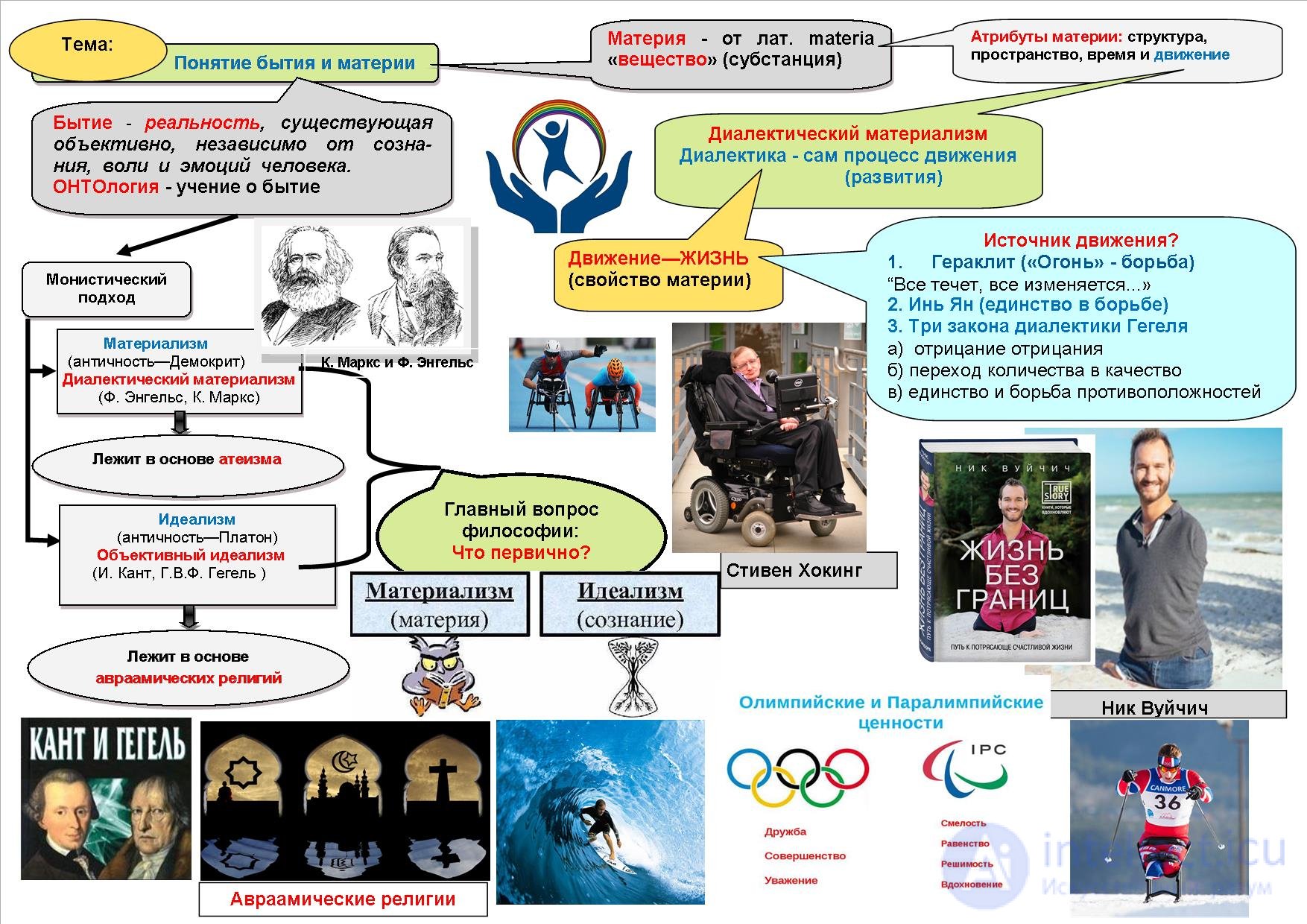
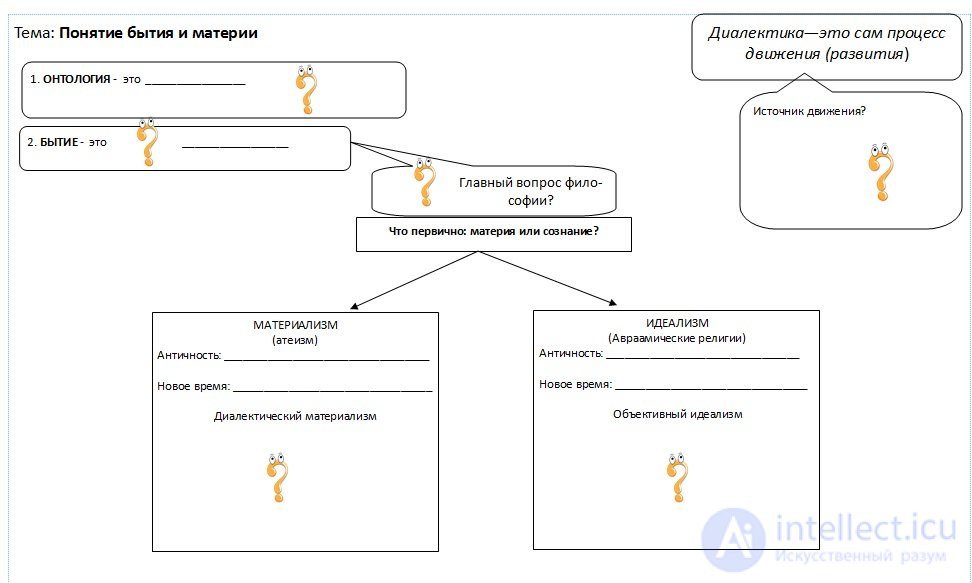
1. Ontology — is the doctrine:
- a) of values, their origin and essence;
- b) of the development of the universe;
- *c) of being as such;
- d) of the spiritual culture of society and man;
- e) of the essence of human history.
2. Which of the ancient philosophers was the first to formulate the concept of «being»?
- a) Pythagoras;
- b) Heraclitus;
- *c) Parmenides;
- d) Plato;
- e) Socrates.
3. Which of these philosophical concepts arose first?
- a) matter;
- b) being;
- c) substance;
- *d) first principle.
4. Aristotle put forward a dual conception of the understanding of being:
- *a) passive matter and active form;
- b) active matter and passive form;
- c) active consciousness and passive form;
- d) passive consciousness and active form.
5. Development accompanied by the appearance of a more perfect quality compared with the previous one:
- a) degradation;
- b) decline;
- c) regression;
- *d) progress;
- e) integration.
6. The objective connection between the individual states of the types and forms of matter in the processes of its motion and development:
- *a) causality;
- b) determinism;
- c) dualism;
- d) synergy;
- e) induction.
7. Determinism is the doctrine:
- a) of divine predetermination;
- b) of the universal knowability of the world;
- *c) of the universal lawlike connection, the causal conditioning of phenomena;
- d) of the unknowability of the world;
- e) of the creation of the world.
8. Materialists claim that:
- a) there exist two independent and equal principles: the material and the spiritual;
- b) the primary basis of the world, of nature, of that which exists, is a spiritual principle;
- *c) matter exists absolutely, it is uncreated and indestructible, infinite in the forms of its manifestation;
- d) the world was created by God out of nothing.
9. Materialists claim that matter is:
- a) a passive principle, transformed under the influence of consciousness;
- *b) an objective reality given to man in sensations;
- c) the absolute One;
- d) an abstract concept.
10. Idealists claim that:
- *a) the primary basis of the world, of nature, of that which exists, is a spiritual principle;
- b) there exist two independent and equal principles: the material and the spiritual;
- c) matter exists absolutely, it is uncreated and indestructible, infinite in the forms of its manifestation;
- d) matter consists of eternal, unchanging and indivisible particles – atoms;
- e) the world was created by God out of nothing.
11. Pantheism — is:
- *a) a doctrine that denies a personal God and brings him closer to nature, sometimes identifying the two;
- b) a doctrine asserting the knowability of the world;
- c) a doctrine concerning the spiritual culture of society;
- d) concerning the essence of cognition, the paths to attaining truth;
- e) concerning the essence of human history.
12. Hylozoism — is:
- a) a doctrine of nature;
- *b) a doctrine that recognizes «life» as an inherent property of matter;
- c) a doctrine of being as such;
- d) a doctrine of the world as such;
- e) a doctrine of the spiritual culture of society and man.
13. What is the first principle in materialist philosophical conceptions?
- a) spirit;
- b) consciousness;
- *c) matter;
- d) logos;
- e) experience.
14. What is the first principle in idealist philosophical conceptions?
- *a) spirit;
- b) deity;
- c) matter;
- d) logos;
- e) experience.
15. An irreversible, unidirectional and lawlike change, leading to the emergence of a new quality – this is:
- a) motion;
- b) deformation;
- c) regression;
- *d) development;
- e) transformation.
16. Fundamental concepts reflecting the most essential, stable, and recurring connections and relations of reality and cognition:
- a) terms;
- *b) categories;
- c) symbols;
- d) universals;
- e) paradigms.
17. The essence of any objects in the world is manifested:
- a) in their internal qualities;
- b) in their external features;
- c) in their isolation;
- *d) in their interaction with other objects.
18. The form of being of matter, expressing the duration of its existence, the succession of the change of states in the change and development of all material systems:
- *a) time;
- b) space;
- c) motion;
- d) development;
- e) interaction.
19. The form of the existence of matter that characterizes its extension, structuredness, coexistence, and interaction of elements in all material systems:
- a) time;
- *b) space;
- c) motion;
- d) development;
- e) interaction.
20. The basic interpretations of space and time include:
- *a) the substantial;
- *b) the relational;
- c) the irrational;
- d) the existential;
- *e) the subjective-idealist.
21. The basic interpretations of the category of matter include:
- *a) the substratal;
- *b) the corpuscular;
- *c) the continual;
- d) the existential;
- e) the irrational.
22. From the point of view of the continual interpretation, matter is something:
- a) possessing energy and mass;
- b) possessing soul and vitality;
- *c) possessing spatiotemporal characteristics;
- d) possessing will and desire;
- e) in a state of motion.
23. The universal form of the existence of matter is:
- a) immobility;
- b) consciousness;
- *c) motion;
- d) a definite set of forms;
- e) limitation in space.
24. The basic types of interaction of elements at the level of inanimate nature (indicate all options):
- a) psychological and emotional;
- *b) gravitational and electromagnetic;
- *c) energetic and informational;
- d) social and institutional.
25. An essential, stable, and recurring interrelation is:
- a) a phenomenon;
- *b) a law;
- c) a condition;
- d) a quality;
- e) karma.
26. Unevenness of flow is inherent in:
- a) physical time;
- b) mathematical time
- c) biological time;
- *d) historical time.
27. The materialism of the French Enlightenment encyclopedists was:
- a) naive;
- *b) mechanistic;
- c) metaphysical;
- d) spontaneous;
- e) dialectical.
28. The materialism of Feuerbach came to be called:
- a) naive;
- b) mechanistic;
- c) metaphysical;
- *d) anthropological;
- e) dialectical.
29. The reduction of higher forms of the motion of matter to lower ones is called:
- a) empiricism;
- b) formalism;
- c) relativism;
- *d) reductionism;
- e) agnosticism.
30. The reduction of all forms of motion (including biological, etc.) to mechanical motion is called:
- a) formalism;
- b) relativism;
- *c) mechanism;
- d) empiricism;
- e) agnosticism.
31. Objective idealism recognizes the following position:
- a) the world consists of material bodies, and each body consists of the smallest particles;
- b) the world is an arena of the war of all against all;
- c) the world was created by God, and everything in it happens by higher will;
- d) the world is a totality of the experiences, ideas, aspirations, and ideals of a particular person;
- *e) the world of visible things is merely a reflection of the true world of perfect archetypes, existing eternally and unchangingly.
32. Which law of dialectics can be figuratively illustrated by a spiral?
- a) the identity of matter and consciousness;
- b) the transition of quantitative changes into qualitative ones;
- c) the conservation of matter;
- *d) the negation of the negation.
33. Which law of dialectics is clearly illustrated by D. I. Mendeleev's periodic table of chemical elements?
- a) the identity of matter and consciousness;
- *b) the transition of quantitative changes into qualitative ones;
- c) the conservation of matter;
- d) the negation of the negation.
34. The basic laws of dialectics are (indicate all correct options):
- *a) the law of the unity and struggle of opposites;
- b) the law of Heaven (Li);
- *c) the law of the mutual transition of quality and quantity;
- *d) the law of the negation of the negation;
- e) the law of moral retribution.
35. Progress and regress are two forms of:
- a) existence;
- *b) development;
- c) motion;
- d) hierarchy;
- e) determinism.
36. Which of the following is not one of the laws of dialectics:
- a) the unity and struggle of opposites;
- *b) the identity of matter and consciousness;
- c) the transition of quantity into quality;
- d) the negation of the negation.
37. Dialectics is:
- *a) the doctrine of the universal connections and laws of development of nature, society, and thought;
- b) the doctrine that considers God to be the source and final goal of all changes in nature;
- c) the totality of methods used in some field of human activity;
- d) the doctrine of the universal cause-and-effect connection;
- e) the doctrine of divine predetermination.
38. Complete the paired categories of dialectics:
- a) the individual – the general;
- b) cause – effect
- c) the possible – the actual;
- d) essence – phenomenon
- e) form – content.
39. Establish the sequence in which the interpretations of being arose:
- 2a) being that creates and being that is created;
- 4b) being as existence;
- 1c) being as the One;
- 3d) the being of the world as a "clockwork mechanism."
40. Establish the sequence in which the philosophical categories arose:
- 2a) being;
- 1b) the first principle (arche);
- 4c) existence;
- 3d) substance.
41. Establish the sequence in the historical development of materialism:
- 2a) mechanistic materialism;
- 1b) spontaneous materialism;
- 4c) dialectical materialism;
- 3d) anthropological materialism.
42. Establish the sequence in the development of idealism:
- 5a) Hegel's absolute idealism;
- 4b) Kant's transcendental idealism;
- 1c) Plato's objective idealism;
- 3d) Descartes's rationalism;
- 2e) the scholastic realism of Anselm of Canterbury.
43. Establish the sequence in which the ontological interpretations arose:
- 1a) the world of ideas and the world of shadows;
- 2b) the earthly city and the City of God;
- 4c) the world as objective reality;
- 3d) the world as a mechanism.
44. Establish the sequence in the development of dialectics:
- 4a) dialectical materialism;
- 1b) spontaneous dialectics (Heraclitus);
- 2c) idealist categorial dialectics (Plato);
- 3d) absolute idealism (Hegel).
45. Match the definition of being to the corresponding philosopher:
- 2a) being is the essence and existence of man; here existence 1) Bl. Augustine;
- precedes essence; man is what he makes of himself; and
- he is condemned to be free;
- 1b) God, and only He, is that which truly exists; unchangingly abiding, 2) J.-P. Sartre;
- engendering all things, the source of all being;
- 3c) to be is to be perceived through the senses; sensation and 3) G. Berkeley.
- the object of perception are one and the same.
46. Match the understanding of time to the corresponding philosophical conception:
- 2a) space and time are special entities, 1) relational;
- existing on their own;
- 1b) space and time are special relations 2) substantial;
- between objects and processes;
- 3c) space and time are forms of perceiving the world; 3) subjective-idealist.
47. Match the following interpretations of being to philosophical schools:
- 2a) In the beginning God created the heaven and the earth. And the earth was without form and void, 1) the Eleatics;
- and darkness was upon the face of the deep; and the Spirit of God moved upon the face of the waters;
- 3b) the void; the presence of an infinite number of indivisible particles; 2) Christianity;
- all of them differing in size and shape; whirling in a vortex,
- the particles form fire, water, air, and earth; the motion
- of the particles is subject to necessity;
- 1c) motionless, infinite, indivisible; abiding forever; 3) the atomists.
- only being; continuous, filled, with no non-being present.
48. Match the interpretation of being to the teaching of the corresponding philosopher:
- 4a) the being of nature is, in reality, non-being, the "other"; true 1) Hegel;
- being has no origin (no beginning), it is eternally coming-to-be;
- it is grasped by means of reflection;
- 2b) being is an objective reality, independent of human consciousness; 2) Marx;
- it is material, and its various spheres include inorganic and
- organic nature, the biosphere, society, etc.;
- 1c) being is the eternal self-development and self-motion of the absolute idea; 3) Berkeley;
- the other-being of the idea is nature; the concept is the truth of being;
- 3d) the being of things consists in their being perceived. 4) Plato.
Test questions with answers on the topic The Problem of Consciousness in Philosophy
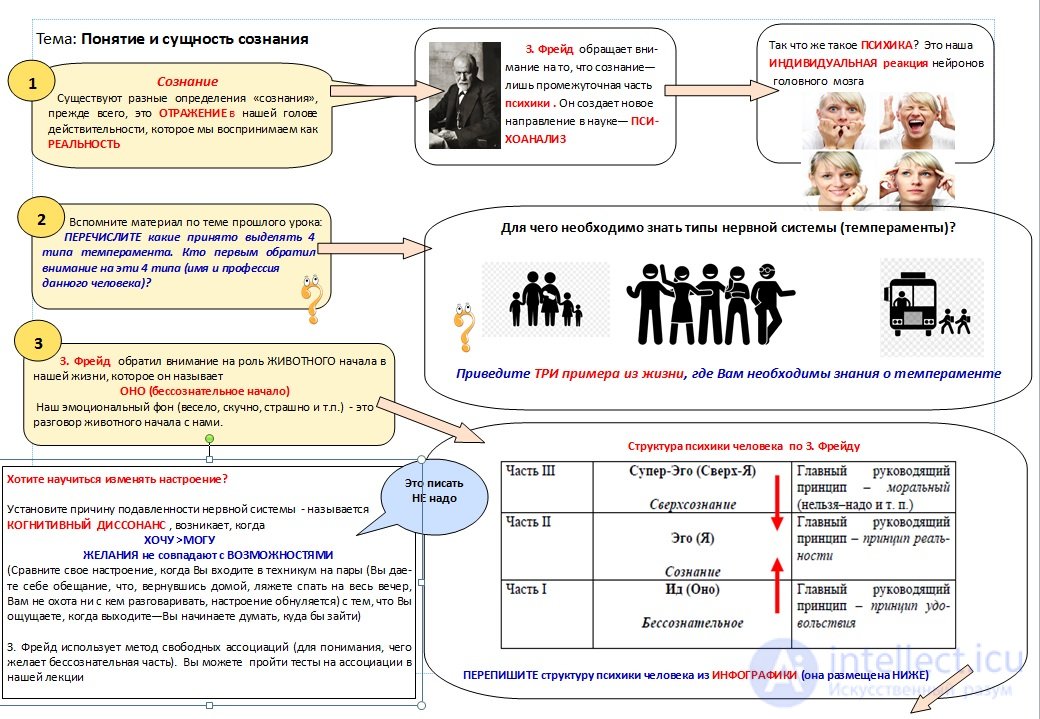
1. Consciousness is regarded as a property of highly organized matter in the philosophical direction of:
- a) objective idealism;
- b) subjective idealism;
- *c) dialectical materialism;
- d) existentialism;
- e) Thomism.
2. Consciousness is regarded as a complex software product in:
- a) mechanics;
- *b) cybernetics;
- c) Platonism;
- d) Freudianism;
- e) existentialism.
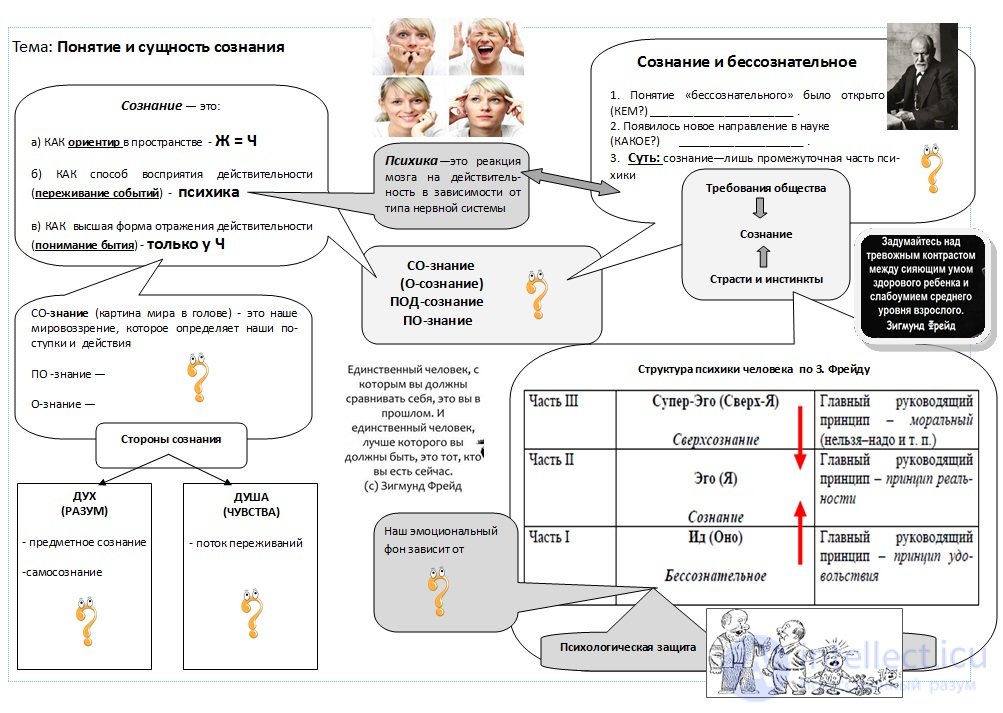
3. The "unconscious" in contemporary philosophy is:
- *a) phenomena and processes in the human psyche that are not consciously registered but influence behavior;
- b) reflex processes in the human organism;
- c) experience not amenable to logical analysis;
- d) something inherent only to a particular individual;
- e) the social, communal element in the personality.
4. The unconscious, according to Z. Freud, is:
- a) divine illumination;
- b) spontaneous impulses arising from the sphere of cognition;
- *c) "primal drives" aimed at obtaining the greatest pleasure;
- d) spontaneous processes occurring in collectives (the "collective unconscious").
5. According to Freud, the "I" and the "It" are in a relationship of:
- a) identity;
- *b) constant conflict;
- c) the "I" and the "It" complement one another;
- d) there is no connection at all between the "I" and the "It";
- e) the "I" constantly controls the "It".
6. The unconscious in philosophy is:
- *a) phenomena and processes in the human psyche that are not consciously registered;
- b) a concept identical to the psychic;
- c) the highest level of the human psyche;
- d) intentional behavior that does not conform to the moral and legal norms of society;
- e) part of the collective spiritual memory of humanity, manifesting itself in the borderline states of individuals.
7. The philosophical notion of reflection pertains to the phenomenon of:
- a) empirical cognition;
- b) logical cognition;
- c) intuitive cognition;
- *d) self-consciousness;
- e) the subconscious.
8. Consciousness arises, functions, and develops in the process of:
- a) a person's growing up;
- *b) a person's interaction with reality;
- c) obtaining an education;
- d) scientific cognition.
9. Choose the correct answer:
- a) consciousness arises already in the mother's womb;
- *b) consciousness (in the form of self-consciousness) arises at the age of 2-4 years;
- c) consciousness pre-exists the human being;
- d) consciousness arises immediately after the child's birth.
10. The most important condition for the emergence of consciousness in a human being is:
- a) the development of labor skills;
- *b) communication with other people;
- c) acquiring a political stance;
- d) the individual's growing up.
11. In early ancient philosophy the category of "consciousness" was defined through the notion of:
- a) apeiron;
- b) atom;
- c) logos;
- *d) soul;
- e) reason.
12. The first to consider the act of self-consciousness as a condition for the reliability of knowledge of the world was:
- a) Marx;
- b) Democritus;
- *c) Descartes;
- d) Bacon;
- e) Hobbes.
13. In which era did consciousness begin to be regarded as a function of the human brain that reflects reality?
- a) Antiquity;
- b) the Middle Ages;
- c) the Renaissance;
- *d) the Enlightenment.
14. Hegel held that consciousness:
- a) is generated by matter;
- b) is a way in which matter knows itself;
- *c) is autonomous from matter;
- d) depends on matter.
15. The first to unite consciousness and the psyche was:
- a) Bacon;
- b) Schelling;
- *c) Freud;
- d) Hegel;
- e) Kant.
16. The property of reflection:
- a) is inherent only to inanimate matter;
- b) is inherent only to living matter;
- c) is inherent only to human beings;
- *d) is a global property of matter.
17. From the point of view of vulgar materialism:
- a) consciousness is a property of all matter;
- b) consciousness is a property of living matter;
- *c) consciousness is a substance secreted by the brain;
- d) consciousness is a property of the human being.
18. Human consciousness differs from the psyche of vertebrate animals in:
- *a) the presence of abstract thought and speech;
- b) the presence of the ability to work with real objects;
- c) the presence of anticipatory reflection;
- d) the presence of irritability.
19. Identify the three most characteristic functions of language:
- *a) the constructive function (instrument for expressing thought);
- *b) the reflective function (instrument of cognition);
- c) the political function;
- d) the literary function;
- *e) the communicative function.
20. Which appeared earlier in humans — thought or language?
- a) thought;
- b) language;
- *c) simultaneously;
- d) they are not connected at all, so the question is incorrect.
21. Human consciousness differs from the psyche of animals in:
- a) the ability to reflect the surrounding world more clearly;
- b) the ability to act upon the surrounding world;
- *c) the capacity for reflection, that is, for self-knowledge;
- d) the ability to respond adequately to the influence of the environment.
22. From the point of view of structuralism, human consciousness is a product of:
- *a) speech activity;
- b) social reality;
- c) divine creation;
- d) the creative activity of the absolute spirit.
23. Establish the sequence of the evolution of reflection in living nature:
- 4a) unconditioned reflexes in animals;
- 3b) conditioned reflexes in animals;
- 2c) irritability in the amoeba;
- 5d) human consciousness;
- 1e) the opening and closing of flowers in plants.
24. Establish the sequence in which interpretations of consciousness arose:
- 4a) consciousness as a function of the brain reflecting reality;
- 3b) consciousness as a property of the human organism;
- 2c) consciousness as a divine gift;
- 1d) consciousness as soul.
Test questions on the topic Theory of Knowledge. Philosophy of Science
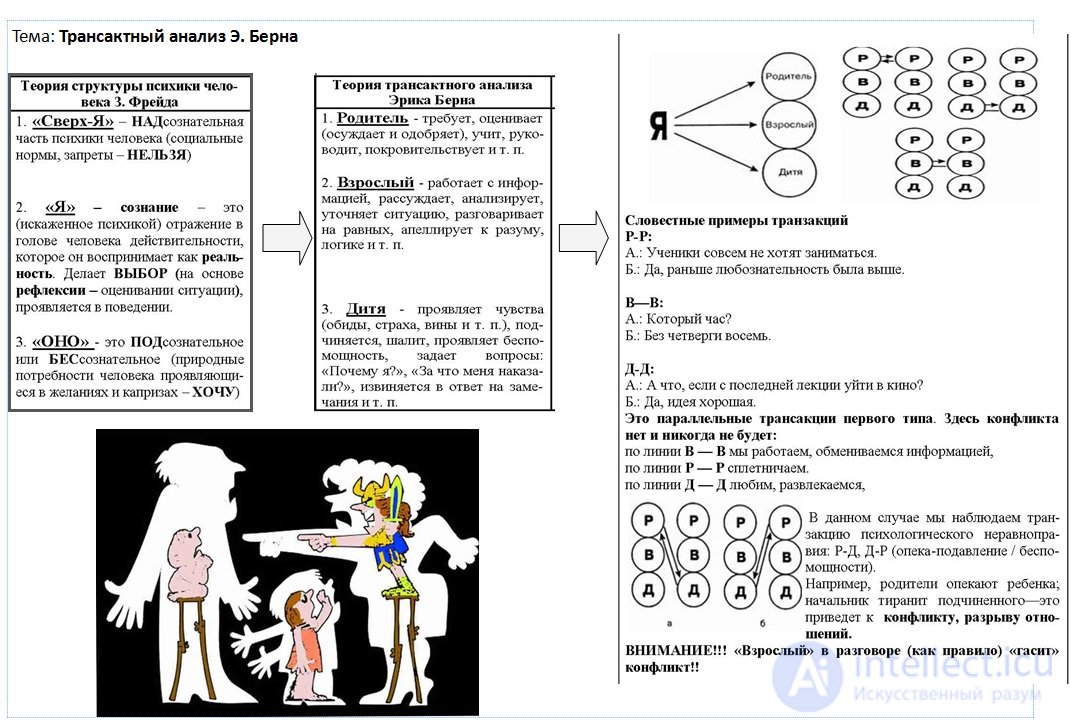
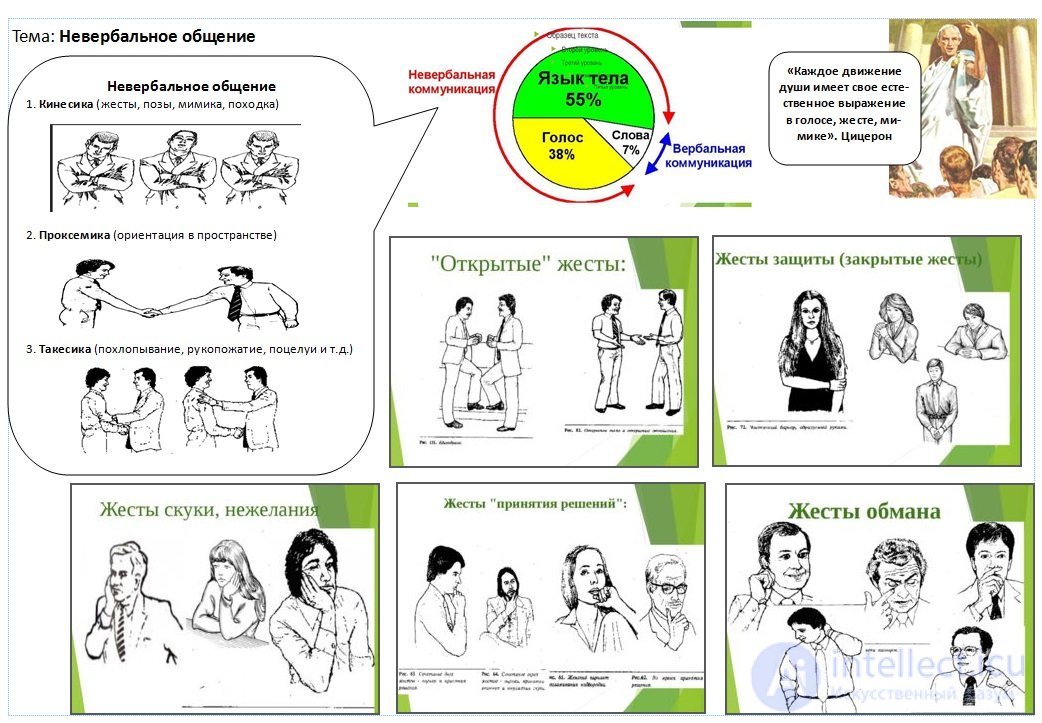
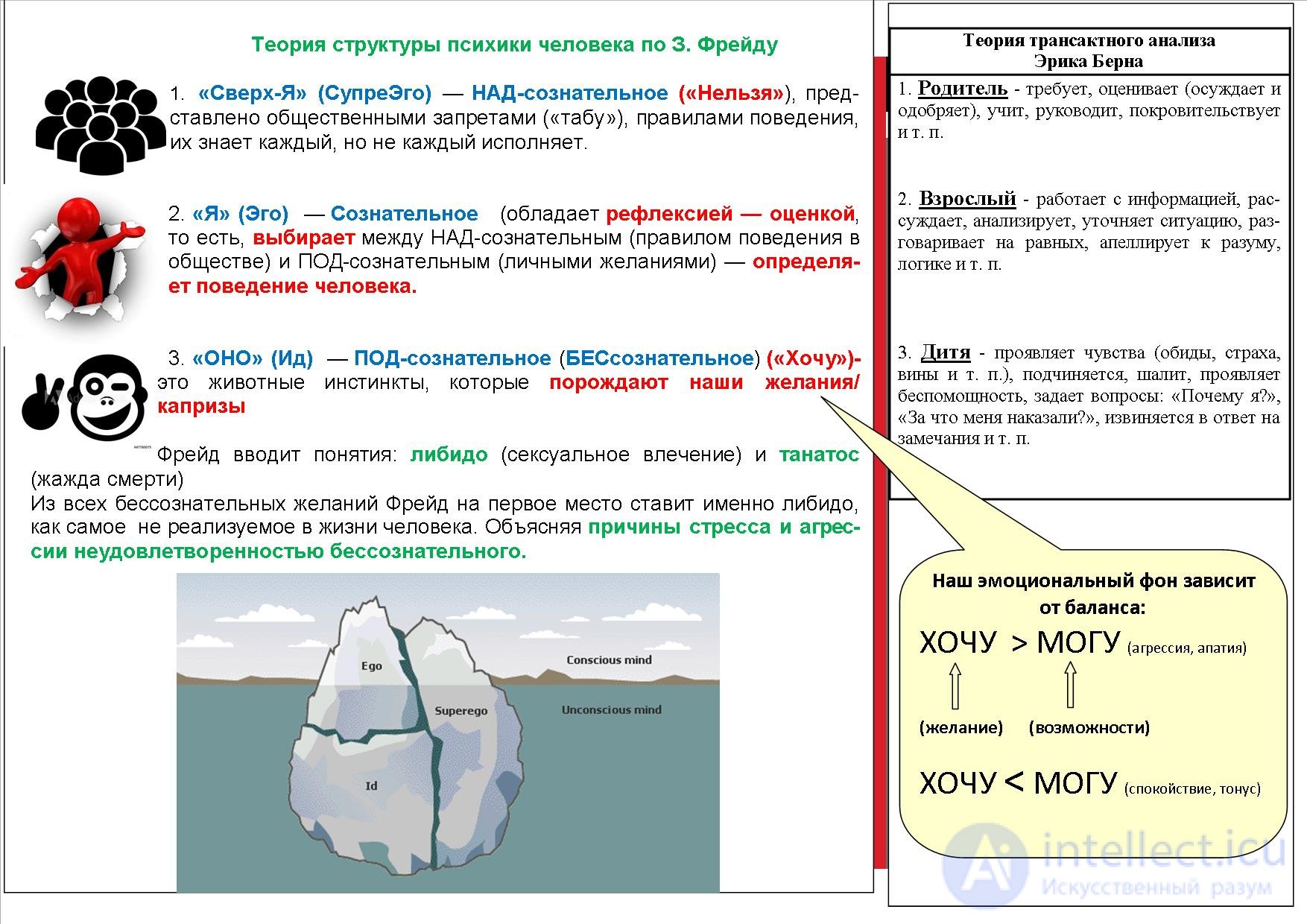
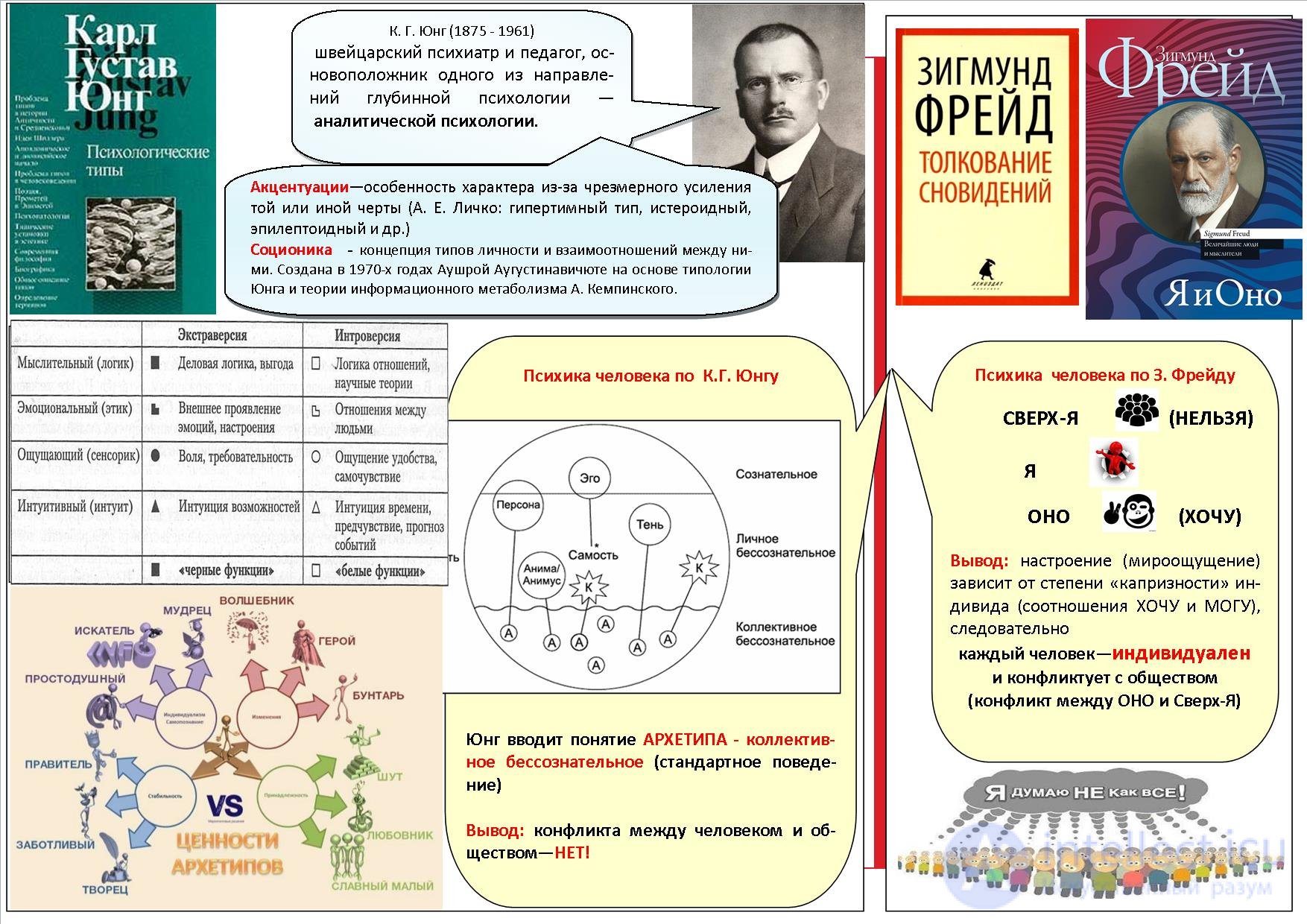
1. Epistemology is the doctrine:
- a) of values, their origin and nature;
- b) of the development of the universe;
- c) of being as such;
- *d) of the nature of cognition, of the paths to attaining truth;
- e) of the nature of human history.
2. Cognition in contemporary philosophy is chiefly regarded as (indicate the most correct answer):
- a) abilities, skills, and know-how in a particular field of activity;
- b) significant information in the context of activity;
- c) objective reality given in the consciousness of the acting person;
- *d) a process of acquiring and developing knowledge, conditioned by practice.
3. The absolutization of the role and significance of sensory data in philosophy is associated with the direction of:
- a) rationalism;
- b) realism;
- c) skepticism;
- *d) sensualism;
- e) hedonism.
4. Deduction is:
- *a) the logical path from the general to the particular;
- b) the transmission of false knowledge as true;
- c) the ascent of cognition from particular, individual facts to generalizations of a higher order;
- d) a moment of intellectual illumination;
- e) a relative, incomplete truth.
5. Induction is:
- a) a logical path from the general to the particular;
- b) the presentation of false knowledge as true;
- *c) the ascent of cognition from particular, singular facts to generalizations of a higher order;
- d) a moment of intellectual insight;
- e) a relative, incomplete truth.
6. The method of cognition in philosophy and science in which thought moves from general propositions to particular conclusions:
- a) induction;
- *b) deduction;
- c) analysis;
- d) synthesis.
7. A form of thought reflecting the most general lawlike connections, aspects, and features of phenomena, fixed in definitions:
- a) word;
- *b) category;
- c) definition;
- d) term;
- e) name.
8. Empiricism is:
- a) a trend in the theory of knowledge holding that thought is the source of knowledge;
- *b) a trend in the theory of knowledge holding that sensory experience is the source of knowledge;
- c) a trend in the theory of knowledge holding that absolute consciousness is the source of knowledge;
- d) a trend in the theory of knowledge holding that intuition is the source of knowledge;
- e) a trend in the theory of knowledge holding that innate ideas are the source of knowledge.
9. Agnosticism is:
- a) a doctrine in ontology dealing with the problems of human existence;
- *b) a doctrine in epistemology denying the possibility of reliable knowledge of the world;
- c) a doctrine about the development of the world;
- d) a doctrine about universal causal connection;
- e) a doctrine about the essence of human history.
10. In philosophy, «agnosticism» is understood as:
- a) consideration of the process of cognition;
- b) consideration of the objects of cognition;
- *c) complete or partial denial of the fundamental possibility of cognition;
- d) doubt about the possibility of cognition;
- e) a method of cognition.
11. The highest stage of logical understanding; theoretical, reflective, philosophically thinking consciousness, operating with broad generalizations and oriented toward the fullest and deepest knowledge of truth – this is:
- a) reason (understanding);
- *b) reason (Vernunft);
- c) feeling;
- d) experience;
- e) intuition.
12. In resolving the question of the knowability of the world, the following positions exist (indicate all correct options):
- *a) agnosticism;
- b) empiriocriticism;
- *c) skepticism;
- *d) epistemological optimism;
- e) hedonism.
13. The doctrine asserting the limited possibilities of human beings in knowing the world is called:
- a) materialism;
- *b) skepticism;
- c) empiricism;
- d) idealism;
- e) rationalism.
14. Which of these concepts is out of place in this list?
- a) epistemological optimism;
- b) agnosticism;
- c) skepticism;
- *d) anthropocentrism.
15. Levels of scientific cognition (indicate all options):
- *a) empirical;
- b) religious;
- *c) theoretical;
- d) mythological;
- e) dialectical.
16. A certain stage of the cognitive process at which information about an object, obtained through sensations and perceptions and retained in consciousness, is later reproduced without the direct action of the object on the subject — this is:
- a) sensory reflection;
- b) cognitive contact with the object of cognition;
- *c) representation;
- d) explanation;
- e) noumenon.
17. Which of the following is not among the basic forms of living contemplation (in the theory of knowledge as reflection)?
- a) representation;
- b) perception;
- *c) idea;
- d) sensation.
18. These forms of cognition do not belong to theoretical cognition:
- a) concept;
- *b) representation;
- c) inference;
- d) judgment;
- *e) perception.
19. A kind of cognition woven into the fabric of the subject's life activity, but lacking demonstrative force, is called:
- a) abstract;
- b) theoretical;
- *c) ordinary (everyday);
- d) scientific;
- e) divine.
20. In terms of its functions in the process of cognition, practice is not:
- a) the basis of cognition and its driving force;
- b) the goal of cognition;
- c) a criterion of truth;
- *d) a successful substitute for theoretical research and scientific creativity.
21. Since truth does not depend on the cognizing subject, it is:
- a) abstract;
- *b) objective;
- c) subjective;
- d) absolute;
- e) divine.
22. The concept opposite in meaning to «truth» in epistemology:
- a) propaganda;
- *b) error;
- c) judgment;
- d) prejudice;
- e) illusion.
23. The set of approaches, techniques, and ways of solving various practical and cognitive problems — this is:
- *a) methodology (methodics);
- b) development;
- c) skill;
- d) mechanism;
- e) process.
24. To which form of scientific cognition does the concept of the extraterrestrial origin of life on Earth belong?
- *a) hypothesis;
- b) theory;
- c) problem;
- d) paradigm;
- e) model.
25. Science, as a specific type of spiritual production and a social institution, arose in the era of:
- a) antiquity;
- b) the Middle Ages;
- c) the Renaissance;
- *d) the Modern era;
- e) the 20th century.
26. The structural components of theoretical scientific cognition are (indicate all correct options):
- *a) problem;
- b) pain;
- c) faith;
- *d) hypothesis;
- *e) theory.
27. The doctrine asserting that the criterion of truth is recognition within the scientific community is called:
- *a) conventionalism;
- b) relativism;
- c) rationalism;
- d) agnosticism;
- e) skepticism.
28. In West European philosophy, rationalism developed primarily on the basis of the method of:
- a) analogy;
- b) induction;
- *c) deduction;
- d) analysis;
- e) mathematical analysis.
29. In the theory of knowledge, mutually exclusive but equally demonstrable propositions are called:
- a) categories;
- b) universals;
- c) modes;
- *d) antinomies;
- e) laws.
30. Which definition of rationality is regarded in philosophy as the principal one?
- a) the calculation of adequate means for a given end;
- b) the best adaptability to circumstances;
- c) the logical soundness of the rules of activity;
- *d) the capacity of reason for a holistic grasp of nature, society, and its own subjectivity.
31. The empirical methods of cognition include (indicate all correct answers):
- a) analysis;
- *b) observation;
- *c) experiment;
- *d) measurement;
- e) modeling.
32. The theoretical methods of cognition include (indicate all correct answers):
- *a) analysis;
- b) observation;
- *c) idealization;
- d) measurement;
- *e) modeling.
33. When this method is used, individual properties of the object under study are replaced by symbols or signs:
- a) induction;
- b) deduction;
- *c) idealization;
- d) observation;
- e) analysis.
34. Scientific knowledge differs from other kinds of knowledge (indicate all correct answers):
- *a) in its precision;
- *b) in its justification;
- *c) in its great predictive power;
- d) in a great degree of imagination (not necessarily justified);
- e) in its exceptional aesthetic value.
35. In T. Kuhn's conception, a paradigm is understood as:
- a) absolute truth;
- b) empirically reliable knowledge;
- c) mathematically grounded knowledge;
- d) error;
- *e) a set of premises accepted at a given stage that determine concrete scientific research.
36. In this scientific picture of the world, general scientific concepts such as instability, nonequilibrium, nonlinearity, and irreversibility are used:
- a) pre-classical;
- b) classical;
- *c) non-classical;
- d) post-non-classical.
37. Science has such basic functions as (indicate all correct answers):
- *a) worldview-forming;
- *b) methodological;
- c) aesthetic;
- d) political;
- *e) predictive.
38. At the earliest stages of human history, the following forms of cognition played an important role:
- a) scientific;
- *b) ordinary-practical;
- *c) playful;
- d) philosophical;
- *e) mythological.
39. Among the main conceptions of truth are:
- *a) conventional;
- *b) pragmatic;
- c) systemic;
- *d) correspondence;
- e) analytic.
40. The concept of «practice» in philosophy may be denoted by such terms as (indicate the most correct answer):
- a) action;
- b) cognition;
- *c) experience as a whole;
- d) physical life;
- e) truth.
41. Establish the sequence in which the following epistemological attitudes arose:
- 2 a) «I believe in order to know»;
- 1 b) «I know that I know nothing»;
- 3 c) «I think, therefore I am»;
- 4 d) «We live within language».
42. Establish the correspondence between philosophical schools with regard to how they understand the significance of science:
- a) scientistic trends 4,5 1) neo-Thomism;
- b) anti-scientistic trends 1,2,3 2) existentialism;
- 3) «philosophy of life»;
- 4) neopositivism;
- 5) neo-Kantianism.
43. Match the term with its definition:
- c 1. Absolute truth a) Knowledge that penetrates and encompasses the infinite spiritual foundation of the universe;
- b 2. Relative truth b) Incomplete knowledge of an object (a complexly organized natural system);
- a 3. Truth as revelation c) Truth that is identical to its object, having withstood a test of many years.
44. Which definition of truth corresponds to which historical epoch?
- a) Antiquity 2 1. Truth is the correspondence of feelings and ideas to facts;
- b) The Middle Ages 3 2. Truth is the manifestation of an idea (Plato) or of essence (Aristotle);
- c) The Modern era 1 3. God, that is what truth is;
- d) The 20th century 4 4. Truth is the essence of a thing disclosing itself (hermeneutics).
45. Determine which period of time is characterized by each of the following historical forms of science:
- a) romantic; 2 1) 17th century
- b) classical; 1 2) 15th century
- c) non-classical; 3 3) 21st century
- d) post-non-classical. 4 4) 20th century
46. Which level of scientific research corresponds to the following goal?
- a) Empirical 2,3 1. To come up with a new theory that would be more effective than the old one;
- b) Theoretical 1,4 2. To compare a theory against the facts, to test its degree of effectiveness;
- 3. To obtain new experimental facts;
- 4. To carry out a theoretical interpretation of experimental facts.
47. Establish the correspondence between the definition and the given philosophical trend:
- a) we cannot fully know the world, because our senses and reason are imperfect;1 1) skepticism;
- b) science is merely a description of the flow of our perceptions and 2) agnosticism; gives no knowledge of the world at all;2
- c) objects exist only insofar as they are perceived;4 3) pragmatism;
- d) philosophy should be a method for solving the problems that 4) solipsism. arise for concrete people in life situations.3
48. Establish the correspondence between the criterion of truth and the given philosophical trend:
- a) a self-consistent judgment in agreement with the scientific community;3 1) neopositivism;
- b) verifiability;1 2) dialectical materialism;
- c) practice.2 3) conventionalism.
topic The essence and nature of the human being
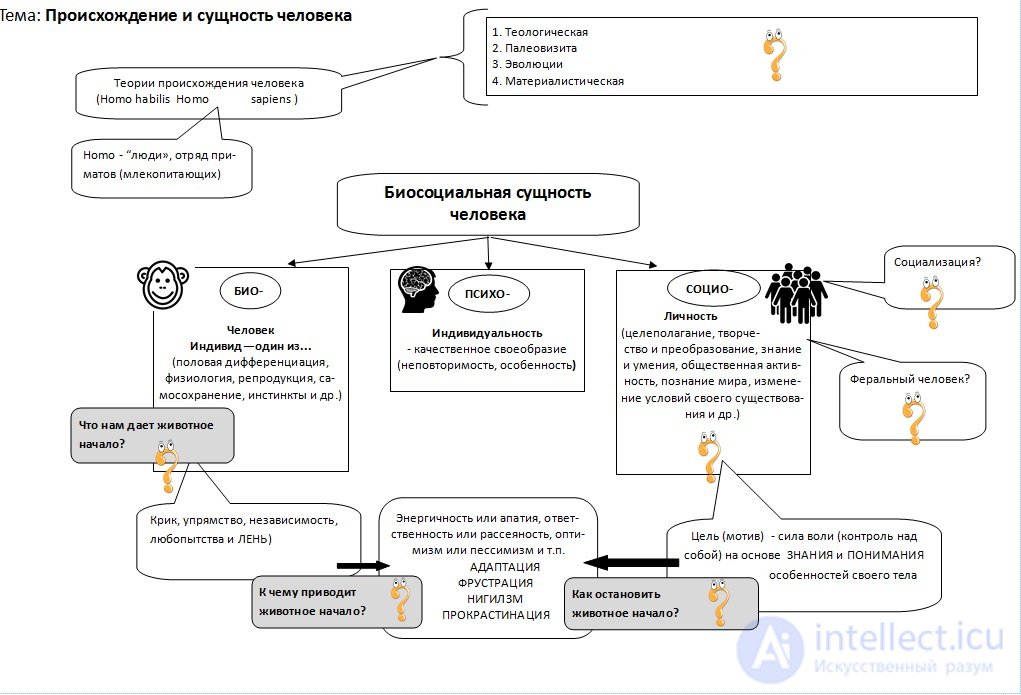
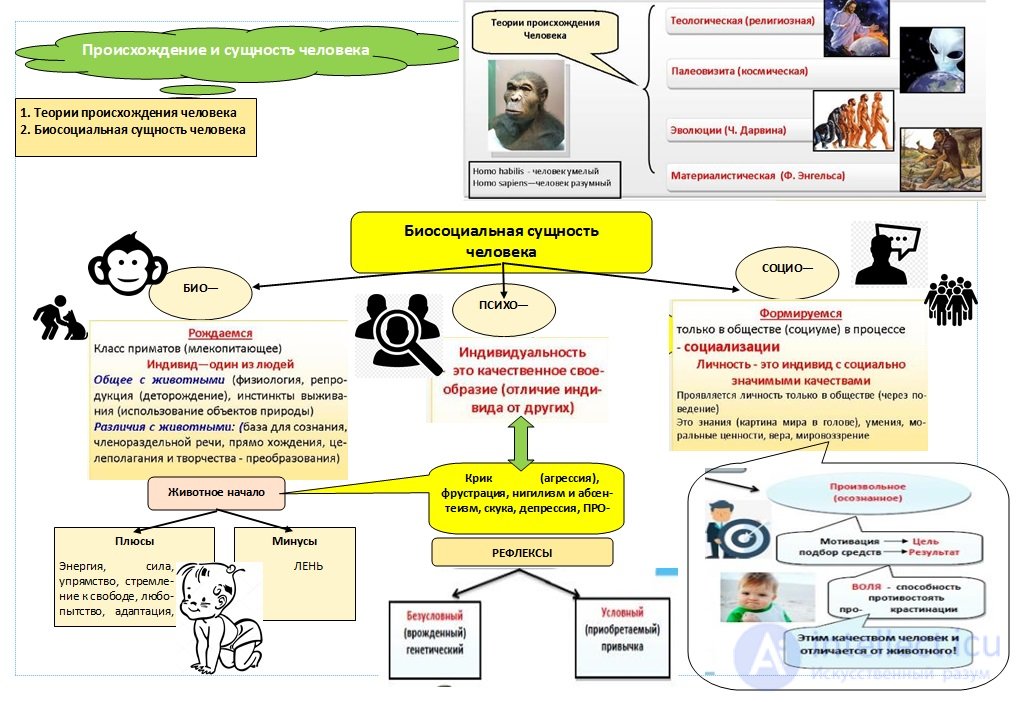
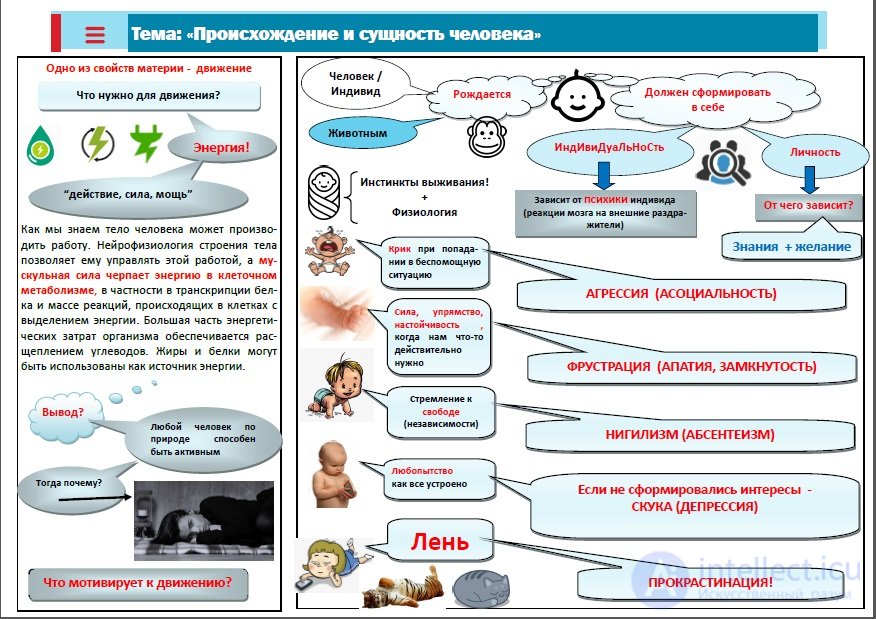
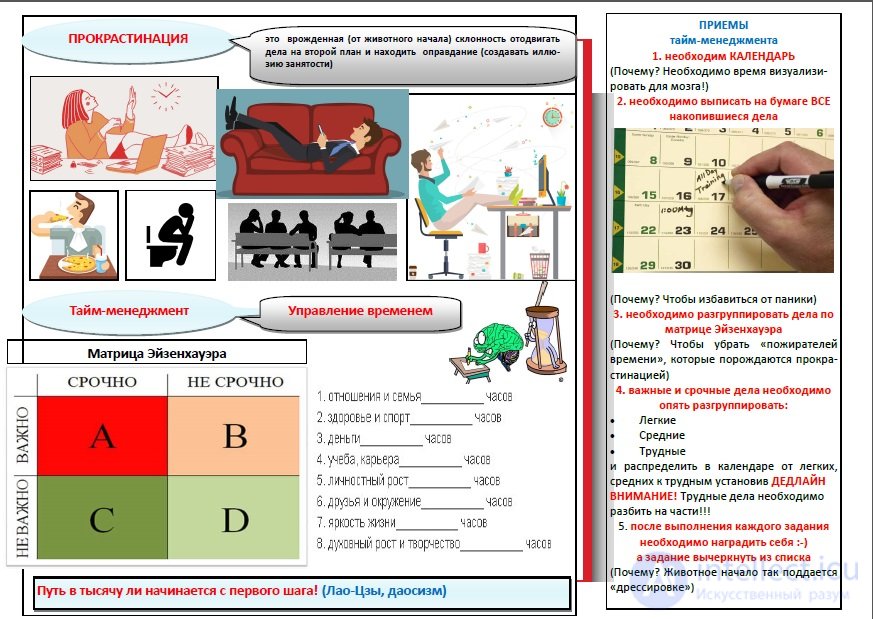
1. In philosophy, the individual is understood as:
- a) a synonym for the concept of «human being»;
- *b) a generic concept, i.e. one expressing the general features inherent in the human race;
- c) a stable system of socially significant traits, a characterization of a person as a member of society;
- d) the set of physical abilities of a particular person;
- e) a social «mask».
2. In philosophy, personality is understood as:
- a) a synonym for the concepts of «individual»,
продолжение следует...
Продолжение:
Часть 1 1000 Online Philosophy Tests with Answers, Diagrams, and Infographics
Часть 2 - 1000 Online Philosophy Tests with Answers, Diagrams, and Infographics
Часть 3 tests on the topic Society and History - 1000 Online
Часть 4 Topic 1 Philosophy and the scientific picture of the world


Comments