
Lecture
The philosophy of culture is a branch of philosophy that considers culture as a whole.
The philosophy of culture develops in four directions:
1. In the first direction, culture is examined in the aspect of the problem of perfecting the mind. The latter is proposed to be resolved by developing methods for obtaining true knowledge.
2. The second direction in the philosophy of culture presents the latter as a collective social product.
3. The third direction is a conception that was developed within the philosophy of history.
4. The fourth direction develops the point of view according to which culture has set itself the goal of synthesizing, in a unified, integral, practical construction, the diversity of one-sided and particular approaches, methods of analysis, and interpretations of culture. The philosophy of culture in the nineteenth century
The philosophy of culture appeared in the nineteenth century, relying on philosophical systems that encompassed the unconscious, the mind, and the will. On the basis of critique of the existing systems, three main directions were formed: positivism, neo-Kantianism, and «philosophy of life». By the beginning of the twentieth century the concept of culture arose, which came about through the convergence of the culturology of positivism with the philosophy of culture of neo-Kantianism and the philosophy of life. It was then that German, French, and Anglo-American attempts to grasp the philosophy of culture began to be distinguished.
In the twentieth century, the philosophy of culture was influenced by such scholars as Wilhelm Dilthey, Henri Bergson, Georg Simmel, and representatives of the Baden school of neo-Kantianism.
The modern version of the philosophy of culture took shape only from the mid-twentieth century.
In Russia, the philosophy of culture was pursued by P.A. Florensky, Andrei Bely, V.V. Ivanov, P.A. Sorokin, E.V. Spektorsky, P.S. Gurevich, and G.G. Shpet.
The history of the philosophy of culture is conventionally divided into three stages:
1). From antiquity to the eighteenth century – the emergence of the philosophy of culture – culture is not yet conceived as an integral phenomenon; problems of culture are worked out within the problem field of ontology, theology, and epistemology. Human thought at this stage is characterized by a «summative character» (a totality, a combination of knowledge about the world)
2). Eighteenth century – beginning of the nineteenth century – the search for supra-summative laws of the functioning of culture – G. Vico, J.G. Herder, Kant, F.W. Schelling, A. Comte;
3). From the nineteenth century – the existence of the philosophy of culture as a separate discipline – culture as a phenomenon becomes the object of independent philosophical analysis.
In antiquity, real life was for a person not something distinct from the mythological world. The ancient religions were polytheistic (polytheism – belief in many gods). People communicated with the gods just as they did with one another. Mythological thought, as a form of collective consciousness, constitutes an enormous stratum of culture, is a cultural reality, and at the same time contains a notion of culture among the ancients. In this case, the perception of culture included veneration, reverence, and cult.
Analogues of the word «culture» existed in many languages: in Chinese, «ren» and «wen» meant the upbringing of a noble person; in ancient Indian literature there was talk of «dharmashastra» (the doctrine of the rules of life and the duties of a believer).
The ancient Greek philosophers Plato, Protagoras, and Polybius, and the Chinese philosopher Sima Qian, regarded culture as part of divine nature and its manifestation. Like any living being, culture is born, lives, and dies, and the stages of its development resemble the change of the seasons. This tradition of understanding culture would later be preserved by some Arab scholars. Thus, the historian and philosopher Ibn Khaldun asserted that the full cycle of a culture's development occurs over 120 years, after which the old culture is «defeated» by another, stronger culture (most often, the culture of nomads). This direction came to be called «cultural naturalism». It is characterized by: the transfer of the features of nature onto culture, the deification of culture in all its manifestations, including in the form of state power, and the idea of the cyclical development of culture.
The following concepts are formed:
The Roman statesman and writer Marcus Porcius Cato (234 – 149 BC) wrote a treatise on «agriculture» – the tending of a plot of land, which also presupposes a heartfelt attitude toward the land. Marcus Tullius Cicero (106 – 43 BC) understood by the word «culture» the improvement of a person's spirituality. He laid the foundations of the concept of humanitas – «human dignity», a characteristic feature of the Roman ethos, attainable only after long labor, representing a combination of such traits as political maturity, a sense of duty, oratorical skill, developed artistic taste, and creative abilities.
In medieval Europe, Christianity – a monotheistic religion (monotheism – belief in one god) – became established. It united within itself worldview, philosophy, ethics, and legal norms, and subordinated to itself science, education, and art. Accordingly, problems of culture were treated in the works of philosopher-theologians. The understanding of culture changed significantly. It is recognized that the world was created by a single God (the idea of creationism). Besides the bodily, earthly light, there also exists a heavenly, spiritual one, where a person attains the fullness of their essence. Laws operate in the world that are beyond human understanding – the higher Reason and Justice. Special significance was acquired by the concept of «cult» – the capacity of a person to reveal their creative potential in love for God. Unlike antiquity, where «culture» was understood as the observance and cultivation of harmony and order, and as the overcoming of the limitedness of human nature,
Special significance is acquired by the book, chiefly the Bible.
For Augustine of Hippo, "without faith there is no knowledge, no truth». World history, for Augustine of Hippo, is the result of divine determination. To the «sinful» earthly city he opposes the «city of God», thereby affirming the priority of the Church.
An attempt to combine Aristotelianism and Christianity was made by the famous Catholic theologian Thomas Aquinas. The basic principle of his philosophy is the harmony of faith and reason, since reason is capable of rationally proving the existence of God and refuting objections against the truths of faith. In the system he developed, philosophy and theology, state and church, civic and Christian virtue were combined without being mixed together.
Whereas in the previous era culture had been understood as the cultivation of measure, harmony, and order, now it is understood as the overcoming of the limitedness and sinfulness of the human being, and continual spiritual perfection. The need to reflect on one's own essence, one's place in the surrounding world, takes the form of individual confession (for example – the «Confessions» of Aurelius Augustine).
Thomas Aquinas, in his teaching, combines ancient philosophy (the conception of Aristotle) with the Christian worldview (the ideas of Aurelius Augustine). He substantiated a new concept of artistic beauty: a materially good form is an expression of spiritual excellences.
A transition takes place from traditionalism, as the fundamental principle of existence of the preceding type of culture, based on mythological consciousness, to a personalist type. Sciences directed at the study of human problems are formed – studia humanitatis. The work of the artist is identified with the creative power of God.
The Renaissance affirms the humanist ideal. Culture appears to the thinkers of the Renaissance as the result of the free creative activity of the human being. Freedom and creativity, as principles of human coexistence, are opposed to the medieval hierarchy and subordination to the Church. G. Manetti writes the treatise «On the Dignity and Excellence of Man», directed against Pope Innocent III; Giovanni Pico della Mirandola creates the «Oration on the Dignity of Man». Free creativity and worthy conduct become the obligatory content of the moral-ethical considerations and conceptions of the era.
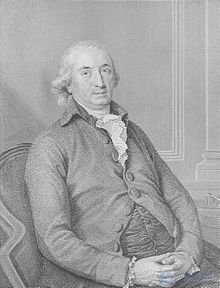
In a fundamentally new way, the cultural experience of the past and the present, the causes of the emergence and the paths of the development of culture, are rethought in the eighteenth century by the Enlightenment. The era strives for a holistic perception of the culture of humanity, understanding it as a product of the activity of the human mind. In a number of works, the concepts of «culture» and «nature» are opposed to one another. Thus, Jean-Jacques Rousseau considers nature to be the product of a perfect divine reason, and culture to be the product of an imperfect human mind, and takes a negative view of cultural progress. The elimination of the opposition «culture» – «nature», the search for ways of their harmonious combination, are the subject of the works of Immanuel Kant (1724–1804). For Kant, the cause of the emergence of culture is the social essence of the human being. The philosopher distinguishes two realities: the world of nature (the animal principle, evil, cruelty) and the world of freedom (the human being, culture, morality). Two opposing principles intersect and are reconciled in ideas of the beautiful and in the creation of the beautiful, which is properly the goal of cultural activity. In ethics, Kant introduces the categorical imperative, that is, an obligatory and unconditional moral rule, a universal law of conduct, which overcomes and excludes any evil.
Scholars of the eighteenth and early nineteenth centuries often identify culture with civilization and oppose it to nature. Thus, people who lack the elements of "high culture" are spoken of as «natural», assigning them the role of bearers of «low» culture. Such a definition of culture was criticized for attempting to suppress «human nature».
The second half of the eighteenth century saw the activity of the German philosopher and historian J.G. Herder. For Herder, culture is a consequence of the human capacity for creative and intellectual activity, which finds expression in language, science, craft, art, the state, religion, and the family. Herder was the first to define culture as a necessary and inalienable reality of human society, asserting that uncultured peoples do not exist at all. There are more cultured and less cultured peoples. The philosopher connects the level of culture with the progress of education. In the work «On the Origin of Language» (1772), Herder connects the emergence of language with the capacity for thought physiologically inherent in the human being, and sees in the development of speech the progress of culture. He was one of the first to take an interest in studying national cultures as forms of existence of world culture. Herder identified the stages through which national revival passes: I – the study of history and ethnography, II – the formation of a national literary language,
The opposition of "nature" and "culture" is finally removed in the philosophy of Georg Wilhelm Friedrich Hegel (1770–1831), for whom «culture is ... liberation and the labor of higher liberation», understood as a gradual movement from natural immediacy to higher spirituality. The history of humanity, for Hegel, is a ladder upward, by which the human being, becoming free, ascends through the cognition of the absolute spirit. Hegel reduces culture to the spiritual development of humanity, understanding creativity as the dialectical ascent of spirit.

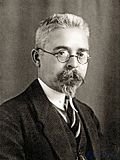
In the first half of the nineteenth century, the works of the Russian scholar N.Ya. Danilevsky appeared. In the book «Russia and Europe» he advanced the concept of the «closed (local) development of cultures». Every people, according to Danilevsky, creates a specific system of values. The culture it produces has weak contact with other cultures, resisting the penetration of foreign elements into its «body». Danilevsky created a «system of types» of humanity. He wrote that there are peoples devoted to the idea of statehood, and there are those to whom it is alien. There are people who profess the ideals of chivalry and honor, and there are their antipodes – cunning deceivers, unprincipled traders. The peoples of the East created a refined but sluggish, contemplative culture, which reproduces itself from generation to generation. In the West, a dynamic, utilitarian-practical culture was created, directed at the transformation of nature and society.
Danilevsky's ideas subsequently had a strong influence on twentieth-century culturology. The emergence of Ukrainian culturological thought is connected with the activity of the Brotherhood of Saints Cyril and Methodius. In the Statute of the Brotherhood, in the appeals «To Ukrainian Brothers», «To Russian Brothers», «To Polish Brothers», and in the works of its founders – M. Kostomarov («Thoughts on the History of Malorossiya», «Two Russian Nationalities»), P. Kulish («The Tale of the Ukrainian People») – the ideas of the cultural distinctiveness of the Slavic peoples and their right to free development, guaranteed by a free federative union of Slavic republics, are defended. A significant contribution to the development of culturological thought was made by M. Drahomanov (1841–1895). From the standpoint of comparative-historical methodology, M. Drahomanov opposed parochial ethnographism, advancing the idea of the free development of folk culture into a national culture imbued with universal human values.
An integral conception of the history of Ukrainian culture was advanced by M. Hrushevsky (1866–1934). It was based on the theses of the distinctiveness and independence of Ukrainian culture. He was one of the first to question and criticize the theory of a single monolithic culture of Kievan Rus, and demonstrated the existence of various ethnic tribes as far back as the era of the Trypillia culture. Without opposing Ukrainian and Russian culture to one another, he nevertheless considered the former closer to European culture.
The most thoroughgoing case for the distinctiveness and self-sufficiency of Ukrainian culture was presented by Ivan Ohienko in the book «Ukrainian Culture» (1918), together with an exposure of the myth of the unity of Ukrainian and Russian culture. In the pamphlet «The Teaching on Duties Toward One's Native Language» (1935), I. Ohienko takes language as the main marker of cultural identity, emphasizing the role of the formation of a unified literary language for a people, which Ohienko considered «the main engine of the development of a people's spiritual culture». I. Ohienko laid down a division of culture into material and spiritual, later fixed in Ukrainian encyclopedic publications, with the more important role assigned precisely to the spiritual, to which he attributed the development of science, faith, convictions, customs, ethics, and so on.
The contemporary understanding of culture, in the context of social history, regards it as a system of a person's vital orientations. Culture is the sphere of the spiritual, value-based, communicative organization of society, which determines the norms of behavior, thought, and feeling of the various strata of the population and of nations as a whole (Gurevich, 1991; Parakhonsky, 1995).
Acculturation – to make cultured; to transform from a wild state into a cultured one, . to introduce to culture
De-culturation – the partial loss by a society of a culturedness it previously possessed; a transition to a lower degree of culturedness, often used by unfriendly countries to destroy the culture of an adversary.

Comments