
Lecture
Optimism (from Latin optimus — «best») – an attitude reflecting belief or hope in a positive and desired outcome of events. A well-known illustration of the contrast between optimism and pessimism is a person's judgment about a glass half-filled with liquid, where the optimist considers it half full and the pessimist — half empty.
Pessimism (German Pessimismus, from Latin pessimus — worst) — a negative outlook on life. The opposite of pessimism is optimism.
We find a very widespread, elementary form of this assessment in comparative-historical pessimism; from Hesiod to the present day, every era has considered itself the worst. It is evident that people are subjectively especially sensitive to the misfortunes of their own time, and this form of pessimism is a natural and practically inevitable illusion. We are theoretically freed from it once we learn of its recurrence across different eras and under the most varied historical conditions.
The pessimistic view of history is opposed by the idea of the continual increase of human wellbeing . The awareness that evil exists in the world and is not abolished by the mere progress of social conditions of life raises the fundamental question of how to assess existence as a whole, the most extreme of the negative answers being unconditional pessimism, which received its most recent philosophical elaboration in the systems of Schopenhauer and E. von Hartmann.
The term «optimism» arose relatively recently, as did the related term «pessimism». In the 18th century Leibniz introduced this term to denote a particular way of thinking. Voltaire popularized the concept in his novel «Candide, or Optimism», published in 1759.
Gottfried Leibniz believed that we live in «the best of all possible worlds». Leibniz's philosophy also held that the existing world is the most perfect one, and that everything in it is directed toward the realization of the good, despite all its shortcomings. For Leibniz, optimism appeared above all in its rational content, reflecting the conviction that good triumphs over evil.
Although the term appeared comparatively recently, it is unsurprising that even Plato described the varying degrees of people's susceptibility to pleasant and unpleasant impressions, since this trait of human nature substantially determines human behavior. Questions of optimism and pessimism were addressed by many ancient thinkers and philosophical schools (Stoicism, Epicureanism, and so on). The teaching of the Stoics, and of Seneca in particular, was considered pessimistic by many, because it emphasized self-control and self-restraint. Epicureanism, by contrast, was regarded as a doctrine of optimists, since its adherents held that one of humanity's principal goals is to strive for maximum enjoyment of life. In modern philosophy, the problem of optimism found reflection in the work of existentialist philosophers, among whom the contribution of M. Heidegger should above all be noted. In «Being and Time» he was the first to pose the fundamental-ontological question of human potentiality – of the potential to live one's life in a certain way. Heidegger held that our being is influenced in particular by two of these potentialities: 1) the expectation that good events will occur, that something good will happen (optimism); 2) the expectation that something bad will happen (pessimism).
Before the second half of the twentieth century there was practically no properly psychological research on optimism and pessimism. An exception is a monograph published in the late nineteenth century by the English psychologist J. Sully, devoted to the study of pessimism, though it was written in a philosophical rather than psychological vein
Also, in 1907 Ilya Mechnikov published «Studies on Optimism», considered the first credible research on this topic. The studies address the causes of the emergence of a pessimistic worldview and its dependence on health, interpersonal problems, and cultural and environmental factors.
Optimism has been considered in the history of science and philosophy in two aspects: as a manifestation (or part) of human nature and as an individual psychological trait. Considering optimism in the first aspect, many thinkers of the past expressed skepticism toward it (from Sophocles to Nietzsche and Freud), believing it better to face reality. For a long time it was assumed that, at least in the normal case, a person accurately reflects the real ratio of the positive and the negative, of good and evil. Moreover, in keeping with Stoic traditions, the importance of a realistic attitude toward the inevitable evil in human life was emphasized.
At the same time, by the 1960s and 1970s psychology had accumulated various empirical data showing that such realism and precise correspondence to reality in thinking is not characteristic of most people. A positive bias was found, manifesting itself in language, memory, and thinking. For example, people use more positive words than negative ones, both in writing and in speech. In free recall, people more often remember positive events than negative ones. Most people evaluate themselves positively, and typically substantially more positively than they evaluate others. These facts convincingly suggested that optimism does indeed serve as an integral part of human nature
This idea was most vividly expressed by the anthropologist L. Tiger in his book «Optimism: The Biology of Hope». He linked the problem of optimism to the biology and evolution of Homo sapiens and believed that optimism is one of our most adaptive traits, acquired through natural selection. Since optimism entails thinking about the future, it arises once people begin to anticipate. However, once people begin to anticipate the future, they may imagine terrible events, including their own death. Something had to arise in human beings that would allow them to withstand the fear of such events, a fear that paralyzes the will, and this something, in Tiger's view, is optimism. In this context, optimism appears as an innate, hereditary trait present in all people to one degree or another.
Considering optimism and pessimism as individual psychological traits from a historical perspective, C. Peterson notes that contemporary conceptions of these phenomena have been significantly influenced by many approaches and theories, among which the most important role belongs to K. Lewin's field theory and G. Kelly's theory of personal constructs. These theories laid the groundwork for the modern understanding of how expectations — optimistic or pessimistic — guide human behavior. J. Rotter's theory of locus of control also contributed to the development of personality research in terms of attributions and expectations.
In the contemporary foreign literature, two main approaches to the study of optimism and pessimism can be distinguished: the study of dispositional optimism (C. Carver, M. Scheier, and others) and the study of optimism as an attributional style (M. Seligman, C. Peterson, and others). These approaches share a good many common tenets, reflecting closely related theoretical and methodological foundations, and can be regarded within positive psychology as related and complementary directions.
Research on optimism in Russia and the USSR was conducted not so much within psychology as within sociology. In this field, the concept of personal optimism (pessimism) came into use in the late 1920s and early 1930s. In Soviet empirical sociology, which was revived in the 1960s, the concept of «optimism» was widely applied. Most often, in various empirical studies Soviet sociologists were compelled to search for individual manifestations and confirmations of the social optimism of Soviet citizens. The other end of the scale was silenced in publications and reports in sociological research of that time, or was forcibly ignored already at the stage of designing the research program. As an indicator of optimism, various measures were typically used that were related not to attitudes toward the future and visions of prospects, but to satisfaction with the current situation (satisfaction with work, family, leisure, the decisions of leadership, and so on, down to satisfaction with one's way of life and a «sense of happiness»). An indicator of pessimism-optimism that captures not the attitude toward the current situation but the expected future is used considerably less often in the practice of sociological research.
Contemporary Russian psychologists studying personal optimism most often rely on approaches and theories already established in foreign psychology. Thus, for example, staff, graduate students, and undergraduates of the Faculty of Psychology at Lomonosov Moscow State University, under the guidance of D. A. Leontiev and T. O. Gordeeva, conduct research on optimistic thinking as one of the components of personal potential, relying primarily on M. Seligman's approach.
Martin Seligman turned to the cognitive features characteristic of psychologically well-adjusted and poorly adjusted individuals and described the optimistic and pessimistic attributional style. In the optimistic attributional style, failures are perceived as temporary, affecting only a small part of life, and subject to change, while successes are perceived as stable, global, and dependent on the individual's own efforts. In the pessimistic attributional style, failures are perceived as permanent, universal, and internal in character, while successes, conversely, are perceived as accidental, local, and caused by external factors.
Martin Seligman, Lyn Abramson, and Christopher Peterson developed the main methods for identifying the level of attributional style, namely ASQ and CAVE, two popular versions of the ASQ, and the children's questionnaire CASQ.
The CAVE method involves a combination of content analysis of verbal material, namely diaries, letters, interviews, publications, and other sources. ASQ and CAVE data show a strong positive correlation with each other.
The ASQ method contains an assessment of successes and failures. The questionnaire is divided evenly between good and bad events. Also, for greater representativeness, situation types were divided in half, namely into interpersonal and achievement-related situations. The subject's task is to imagine themselves in the situation, suggest its cause, and rate its personalization, permanence, and pervasiveness.
CASQ (Children’s Attributional Style Questionnaire) — is a children's attributional style questionnaire containing 48 statements, divided evenly into positive and negative situations. The statements cover 4 areas of a child's life, namely academic and athletic achievement, relationships with parents, health, and relationships with peers. The children's task is the same as in the ASQ method. A short version of this questionnaire with 24 items was created, in which only two explanatory options are given for each item, differing along three parameters, with the personalization rating reduced.
The popular version of the ASQ has positive and negative situations with two types of response to them, as in the CASQ. The first variant has 48 items with parameters of internality (locus), permanence, and stability; the second has 32 items with parameters of permanence and stability only.
Each version exists in a Russian-language variant.
The drawback of the popular versions is that they offer only two response options, where the subject finds it difficult to choose a viewpoint when either both fit or neither does. In the standard ASQ, the subject records the cause and rating of the situation themselves, which is a greater advantage.
The Russian-language version of the ASQ yields reliable results on the relationship between attributional style and depression, psychological wellbeing, and achievement. T. O. Gordeeva, E. N. Osin, and V. Yu. Shevyakhova developed a questionnaire on the style of explaining successes and failures for adults (STOUN-A) and for adolescents (STOUN-T).[15] The questionnaire contains 24 items based on a combination of the original ASQ questionnaire, its popular versions, and P. G. Stoltz's Adversity Quotient (AQ) questionnaire. The wording of the statements was composed in accordance with the logic of the situation and the features of Russian culture. The Russian-language method for adults and adolescents has high validity and reliability as a psychological diagnostic tool.
In the dispositional optimism approach of Charles Carver and Michael Scheier, optimism/pessimism is understood as a broad sense of confidence or doubt, manifesting itself across different situations and associated with generalized positive or negative expectations about the future spanning various areas of life. Optimists, accordingly, can be called people who tend to hold positive expectations about the future; pessimists, correspondingly, are more inclined toward negative ones.
To diagnose dispositional optimism (a person's expectations regarding a favorable outcome of future events), M. Scheier and C. Carver devised the LOT (Life Orientation Test, 1985) and LOT-R (Life Orientation Test Revised, 1994) methods. These methods consist of 10 statements, for which subjects express their degree of agreement or disagreement. The statements are divided into 4 positive, 4 negative, and 2 «buffer» items, in which the main purpose of the study is embedded. Since in the dispositional approach optimism and pessimism are regarded as bipolar constructs, an overall optimism score is calculated, supplemented as needed by separate analysis of the positive and negative statements.
Russian scientists developed a similar method, the LOT-TDO (Dispositional Optimism Test) . This adaptation is reliable, since the coefficient of single-occasion reliability is 0.84 for a sample of 639 subjects.
In the modified LOT-R version, the two positive statements were combined into one, and the same was done with the negative statement. Thus, the LOT-R questionnaire included 3 positive, 3 negative, and 3 «buffer» statements. Unfortunately, this version does not have as high a reliability, and the LOT still holds the leading position, since the LOT-R has a single-dimension reliability coefficient of 0.76 to 0.78. Nevertheless, the modified method is still used when little time is available to complete the questionnaire
There are also other ways of identifying the level of dispositional optimism. For example, the OPS (Optimism/Pessimism Scale) method[18], in which optimism and pessimism refer to the perception of oneself in a positive or negative light and the expectation of bad or good future events.
The ELOT (Extended Life Orientation Test) method is based on the LOT and contains 20 statements.
Based on the LOT, the YLOT (Youth Life Orientation Test) method was also developed for younger adolescents, containing 12 statements.
A popular method for research is the GESS (Generalized Expectancy for Success Scale) (Fibel, Hale, 1978) , and many diploma theses of students at the Faculty of Psychology of Moscow State University have been devoted specifically to this questionnaire. It includes 30 statements asking what a person imagines about their future — whether they will be successful or unable to achieve anything. The modified GESS-R method, containing 25 statements, has low social desirability and high internal validity.
The term pessimism derives from the Latin word pessimus, meaning «worst». It was first used by Jesuit critics of Voltaire's novel «Candide, or Optimism» in 1759. Voltaire mocked the philosophy of Leibniz, who had asserted the «best (optimal) of all possible worlds». In their attacks on Voltaire, the Jesuit Revue de Trévoux accused him of pessimism .
Philosophical pessimism is not a state of mind or a psychological disposition, but rather a worldview or ethics that seeks to confront the perceived unpleasant realities of the world and to dispel irrational hopes and expectations (such as the idea of progress and religious faith) that can lead to undesirable consequences. In Western philosophy, philosophical pessimism is not a single coherent movement, but rather a loosely connected group of thinkers with similar ideas .
Philosophical pessimists are often existential nihilists, holding that life has no intrinsic meaning or value. The main themes of philosophical pessimism were first put forward by Jean-Jacques Rousseau, who has been called the "patriarch of pessimism" . Among the authors of the 19th and 20th centuries who can be said to express pessimistic views in their works or to be influenced by pessimistic philosophers are writers such as: Charles Baudelaire , Samuel Beckett , Gottfried Benn, Jorge Luis Borges , Charles Bukowski, Dino Buzzati , Lord Byron , Louis-Ferdinand Céline , Joseph Conrad , F. M. Dostoevsky , Mihai Eminescu , Sigmund Freud , Thomas Hardy, Sadegh Hedayat , H. P. Lovecraft , Camilo Pessanha , Thomas Mann , Edgar Saltus , and James Thomson . Among the authors of the late 20th and early 21st centuries who can be said to express or explore philosophical pessimism are: David Benatar , Thomas Bernhard , Friedrich Dürrenmatt , John Gray , Michel Houellebecq , Alexander Kluge, Thomas Ligotti , Cormac McCarthy , Eugene Thacker , and Peter Wessel Zapffe .
Cultural pessimism
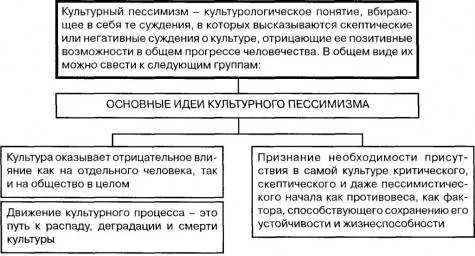

The most recent form of absolute pessimism (in Schopenhauer and E. Hartmann) likewise provides no grounds for turning evil into some transcendent attribute of being. Here too, evil reduces essentially to suffering, and suffering truly exists only insofar as it is felt — and for the philosophy of pessimism, consciousness is nothing more than a brain phenomenon (Gehirnphänomen), and is therefore possible only for organisms endowed with a nervous system and capable of suffering under a certain degree of irritation of sensitive nerves. Consequently, the sufferings of any being are limited to the bounds of its given bodily existence and cease entirely with the destruction of the organism in death.
Schopenhauer and Hartmann speak a great deal of "world suffering," but from their own point of view this can only be a rhetorical figure, for the world — that is, its single metaphysical principle, the "will," the "unconscious," and so on — cannot suffer: for that it would have to possess, at the very least, its own sensitive nerves and brain, which it is not granted. The universal cannot suffer; only the individual suffers, in its organic embodiment, which is destroyed by death. Really existing suffering is limited only to the realm of consciousness — to people and animals; all these beings suffer, but each separately, and the sufferings of each cease entirely with the end of its life.
If Schopenhauer is right that one cannot sense, represent, or know "beyond one's own skin," then it is equally impossible to suffer beyond those bounds; therefore the suffering of others can be painful for anyone only through its reflection within the bounds of their own "skin," that is, through their own organism, and it disappears entirely with their death. Thus unconditional pessimism, whether in its ancient Indian or its modern German form, is unable to deprive death of its significance as the final deliverer from the afflictions of life, and from this point of view nothing logically prevents anyone from hastening such deliverance through suicide.
The attempts of Schopenhauer and Hartmann to deflect this conclusion confirm its inevitability by their sheer weakness. The former says that suicide is a mistake because it does not destroy the essence of evil (the world will), but only the phenomenon. But no suicide sets themselves such an absurd task as the destruction of the essence of things. As a suffering phenomenon, they wish to be rid of their life as a painful phenomenon — and this goal they undoubtedly achieve, from the standpoint of Schopenhauer himself, who, for all his pessimism, cannot claim that the dead suffer.
Hartmann, fully acknowledging that the ultimate goal is indeed suicide, requires that the individual, in the interests of humanity and the universe, refrain from personal suicide and devote their strength to preparing the means for that universal, collective suicide with which the historical and cosmic process must end. This — is the highest moral duty, whereas killing oneself in order to be rid of one's own sufferings is characteristic of people standing on the lower, eudaemonistic level of ethics. The latter is, of course, fair, but the very principle of unconditional pessimism logically excludes any other ethics.
If the whole point is to destroy painful existence, then there is no way to reasonably prove to anyone that they should have in view not their own, actually experienced sufferings, but the presumed sufferings of that distant posterity that will be capable of the act of collective suicide; and moreover, for those future pessimists, the present individual's personal suicide could (in Hartmann's sense) be useful as an example to imitate, for it is clear that if everyone kills themselves, the common goal will be achieved. In reality, unconditional pessimism, both as it originally arose and to the very end, remains merely the fruit of a jaded sensuality. Herein lies its true meaning and its limitation. A fair assessment of material life, which, taken in isolation, is only "the lust of the flesh, the lust of the eyes, and the pride of life," leads the reflective mind to the true conclusion that "the whole world lies in evil," and with this the truth of pessimism is exhausted.
But when a person, having come to know to the point of satiety the unsatisfactory nature of fleshly life and not animated by a predominant interest in something else, something better, illegitimately generalizes and extends the negative result of their experience, then instead of a correct pessimistic attitude toward the one-sidedly material direction of life, one gets the false assertion that life itself, the world itself, and being itself are evil and torment. In this principle of unconditional pessimism, 1) moral evil is not distinguished from suffering and misfortune, or physical evil, and 2) evil, so vaguely understood, is taken to be the true first foundation of all being, which is not only groundless but also leads to obvious absurdities. Thus, consistently applying this point of view, one would have to regard illness as the constant normal state, and health as an accidental and incomprehensible anomaly; but in that case we would not notice illness and would painfully feel health as a violation of the norm; whereas, on the contrary, health is ordinarily not noticed by us precisely as the primary, normal state, while illness is painfully perceived as an intruding, accidental deviation from the norm. Unconditional pessimism leads to similarly absurd conclusions in the moral sphere as well.
Sometimes the term pessimism is applied to any view that recognizes the reality and significant role of evil in the world, but only as a secondary, conditioned, and surmountable factor of human and natural being. Such relative pessimism is present in many philosophical and most religious systems; but it cannot be considered apart from the general context of the particular worldview of which it forms one of the constituent elements.
In the last years of Schopenhauer's life and in the years following his death, post-Schopenhauerian pessimism became a fairly popular "current" in 19th-century Germany . Nevertheless, it was received with disdain by other popular philosophies of the time, such as Hegelianism, materialism, neo-Kantianism, and the emerging positivism. In an age of coming revolutions and new scientific discoveries, the humble and non-progressive character of the typical pessimist was seen as harmful to social development. To respond to this growing criticism, a group of philosophers strongly influenced by Schopenhauer (some of whom were even personally acquainted with him) developed their own form of pessimism. Thinkers such as Julius Bahnsen, Karl Robert Eduard von Hartmann, Philipp Mainländer, and others transformed Schopenhauer's transcendental idealism into what Frederick C. Beiser called transcendental realism .

Comments