
Lecture
In a broad sense, informational metabolism (the metabolism of information) is how our thinking works. However, to fully describe a phenomenon, it is not enough simply to give it a name. We must also break it down into its components and analyze their content.
Thus, informational metabolism is divided into three stages: perception, processing, and assimilation of information. In the course of these stages we first register incoming data, then process it, and then fit it into the ideas we already held about the phenomenon we have interacted with. Our socionic type takes a direct part in this process: it determines the properties of thinking through which we pass information belonging to one or another of its kinds.
Information – the self-reflection of an object, given partially in acts of reflection (it contains the diversity, meaning, and sense of the object); when sought by a consumer for the achievement of some goal, it has positive value.
Internal information (of an object) – the self-reflection of an object in the totality of its properties (its quality).
External information (about an object) – the partial manifestation of an object's internal information in acts of reflection.
Mutual information (between subject and object) – external information that is quantitatively identical for the subject and the object.
Example 1. If we assume that the number of states of the Universe tends toward potential infinity, then the potential entropy of the Universe as a source of information also quantitatively tends toward infinity. Against the background of the scientific-philosophical debate on the spatio-temporal infinity or finitude of the Universe, this proposition allows us to assert that if the Universe is infinite, it is so first and foremost in an informational sense. The difficulty of our position stems from the absence of experimental or simulation-computational methods for verifying the informativeness of the Universe, these being the most probative in rational science. An attempt at absolute, complete knowledge of a source with an infinite number of states leads to a vicious circle within which we are forced to revolve endlessly, posing an infinite number of questions and receiving just as many answers, which, to be stored, would require infinite memory. Hence the amount of information obtained in any experiment is always finite and never exceeds the entropy of the source – the Universe, or any system contained within it. These arguments also have a rigorous mathematical basis (the law of finite information).
The measurement of information is traditionally linked to cybernetic systems (biological and artificial). However, it cannot be denied that cybernetic systems are simultaneously physical systems as well, since they obey general physical laws (including the second law of thermodynamics) and consist of the same chemical elements (and, in part, substances) as inanimate nature. It follows that within a cybernetic system there must be a constant struggle between order (controllability, unfreedom, knowledge, life with its non-equilibrium) and chaos (uncontrollability, freedom, ignorance, death with its equilibrium). In this regard, it is necessary to pay closer attention to the interaction of the evolutionary mechanism with the second law of thermodynamics, and to the relationship between the thermodynamic and informational entropic components within the overall entropy of a system.
Example 2. Figuratively, the relationship between the internal and external forms of an object's (system's) information can be represented as the relationship between the interior of the Sun and a solar prominence – the manifest interior of the star, having burst outward (Just as the Sun and the planets have their own physical mantles, any object, including the Sun and the planets, possibly has an informational mantle (aura) as a transitional zone between the internal and external forms of the object's information.). Just as internal and/or external physico-chemical causes trigger the eruption of prominences, there exist similar informational causes for an object's generation of external information - for example, the curiosity of a subject who thereby participates in the "creation" of the external information of cognition. As a result, the partial (relative) truth contained in the external information of cognition, in our knowledge and consciousness, becomes an objective-subjective truth. And it cannot be otherwise. The notion of objective truth, so common in Marxist philosophy, is nothing more than an idealization, one that at best relates to an unattainable absolute truth. "Even if objectivity is attainable for this subject, it nevertheless remains simultaneously with human subjectivity and at the disposal of the human being" (M. Heidegger).
Example 3. The concept of the quantity of information, applied to calculating external information, is interesting not in itself, but only in the relation between object and subject, as the quantity of mutual information between them. According to A.N. Kolmogorov's algorithmic approach, the quantity of mutual information is taken as a measure of the complexity of the object relative to the subject. This means that the subject can perceive external information from the object in an amount not exceeding the subject's potential capacity to assimilate information - that is, their mutual complexity must be matched in the informational process.
Example 4. At a symphony orchestra concert there are people with different musical tastes (even among music lovers). Accordingly, each person perceives, in the orchestra's sonic palette (qualitatively and quantitatively), only those musical fragments that accord with their tastes and capacity for perception. Thus, as many informational relations and processes are formed in the concert hall as there are listeners - consumers of the external (musical) information - even though its source is a single one: the orchestra.
As a result of the interaction between the subject and the object of cognition, physically ineradicable errors of cognition arise, owing to the fact that the subject cognizes not the "thing in itself" (internal information) but the "thing for itself" (external information), distorted by this very interaction. Should we manage to rid ourselves of the errors of interaction, the process of cognition would itself become impossible (Just as the development of an organism is impossible without food, which always contains, alongside useful ingredients, harmful ones. To be rid of the latter, one would simply have to eat nothing) Consequently, errors, inaccuracies, approximations, and, ultimately, the relativity of the truths we obtain are inseparable companions of the process of cognition. Moreover, without them cognition is simply impossible. Absolute truth and cognition are incompatible. This qualitative conclusion has a quantitative analogue in information theory – the law of finite information.
Based on the foregoing, the following conclusions can be drawn.
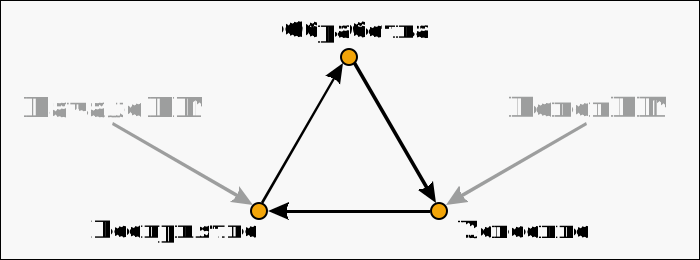
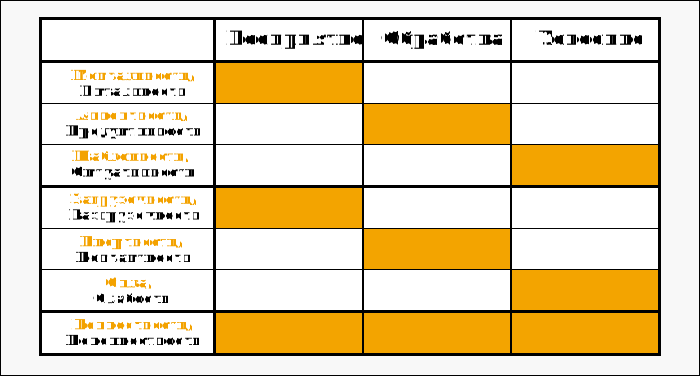
In socionics we describe informational metabolism by means of the eight functions of Model A: the task of each function is to work with its own kind of information, perceiving, processing, and assimilating it in a manner characteristic of it. The features of a function are determined by the properties it possesses, and each property in turn relates to one of the three stages of working with information. Thus, we distinguish properties of perception (mentality/vitality and loadedness/unloadedness), of processing (acceptance/productivity and inertness/contactness), and of assimilation (templateness/situationality and strength/weakness). It should be noted that the properties “value/non-value” have a more global manifestation and pertain to our thinking as a whole at once.
From the standpoint of cognitive psychology, the general model of information processing brings together two important questions: the first – what stages information passes through during processing, the second – in what form information exists within each stage [20]. Within the framework of the present work, we consider models that lay claim to answering both questions and that naturally integrate the informational circulation of any hierarchy (for example, "information," "data," "knowledge," and the like) into the process of managing systems.
Structurally, information is a closed dynamic hierarchical category. The dynamic category of information – that is, the metabolism of information – is realized in the logical space of processes of analysis and synthesis unfolding in time. Such logical structures have come to be called informational domains. Within each informational domain there occurs a natural, continuous circulation of information: from an object, process, or factor (whose states are digitized or formalized according to other "non-distorting" rules and which generate the initial information flows) to their com- 21 prehension, generalizing analysis, quantitative reduction, and qualitative transformation of information; from generalized analytical conclusions – to a continuous cyclical-iterative model that can be "turned over" and "played with events"; from a limited set of conclusions of the model – to its expansive interpretation, a "synthesis of reality" in the form of a system of formalities – rules, order, laws, and so on; from the points of the "rules" – to operational-logical activity, that is, back again directly to actions upon objects, processes, factors, states. Representing the circulation of information in nature – informational metabolism – in the form of a uniform informational entity – the informational domain, whose laws are "fractally" applicable to cognitive systems of any level, allows us to better understand the qualitative essence of information, to separate the concept of information from its material carriers and transmission channels, and also to purposefully construct cognitive or control systems with given properties, as well as to study them according to unified formal logical properties – analysis, synthesis, and their combinatorial combinations.
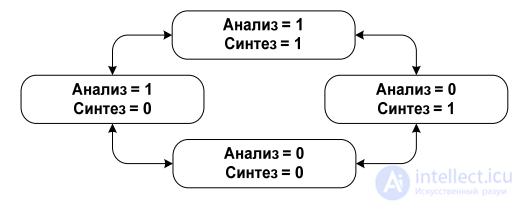
Fig. 1. The informational domain. Schematic diagram
Informational domain – a term introduced for the precise formal definition of the systems under study. On the one hand, an informational domain is a system based on two postulates: the first – the informational nature of interactions, the second – the strict distribution of the informational tasks of analysis and synthesis among the elements of the system (Fig. 1). On the other hand, an informational domain is a cognitive system based on models of information processing, used to organize the existing body of knowledge, to stimulate and coordinate further efforts, and to facilitate communication between the objects and subjects of management (Fig. 2).
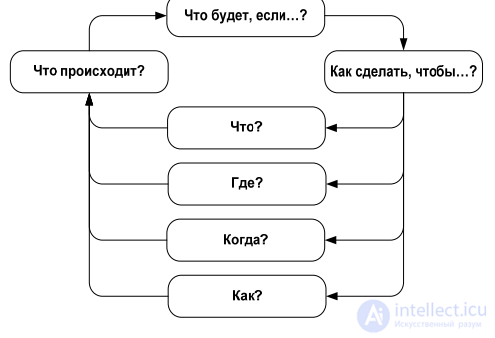
Fig. 2. Information flows as system-forming
factors
Undoubtedly, for the switching of each pair of phases of the circulation
there is its own, separate "data bus," distinct from the others. Nowhere should there be a "bottleneck," so that
all the information, so that any data and knowledge describing the current or desired state of the system, continues onward in
undistorted and undelayed form. For example, monitoring descriptions of resources that may be used by the system must arrive in undistorted and undelayed form at the "what is happening" node; or, to take another example, so that instructions from the "how to make it happen" node
reach their destination without delay.
An important condition is the relative informational isolation of the system. This means that working information enters and leaves the system only
through the corresponding inputs and outputs. Compliance with this condition
is monitored by an extra-systemic regulator. Not a single bit of working information, however and by whomever it was obtained or generated, should bypass the input or output of the system.
Analytically, an informational domain is a system
having the following typical parameters, structure, and properties:
a) formalized boundaries separating it from the surrounding environment,
b) an open structure that carries out exchange with the surrounding environment,
c) an internal formal bidirectional network of connections
between elements,
d) a defined (finite) number of elements,
e) a non-elementary-autonomous structure (an element does not
possess the characteristics of a complete system),
f) non-immanently regenerative properties (elements and
relations are restored with the help of other
systems),
g) an elementary structure (allowing self-similar hierarchical scaling in the direction of growth),
h) a non-wholly-reliable structure (not allowing
the removal of elements without destroying the system),
i) without mediation of properties (each of its elements
forms the properties of the complete system), j) secondariness of properties (the system is formed by the relations of other correlates),
k) instability of the system (not allowing changes to structure without destroying the system),
l) a strong system (the degree of dependence of the parts on the whole
is insignificant),
m) a homogeneous system (composed of uniform two-factor
elements),
n) a minimally complete system (not allowing the
addition or removal of elements),
o) an ordered system (not allowing the permutation of elements),
p) a dynamically stationary system (not changing its
characteristics with a change of elements),
q) a substrate-cyclical system (changes in the properties of
elements obeying a certain periodic law),
r) a formally centered system (structurally converging to a point),
s) a closed-chain system (an element relates directly to two and only two other elements),
t) a determining system (the system-forming relation can be determined from an incomplete set of elements),
u) a single-layer system (all elements of the system can
be divided into groups with identical components of the system-forming relation),
v) an internal system (the relation is determined by the very
nature of the elements being related),
w) a partial system (the relation is established not across
all properties of the system's elements),
x) structurally punctiform (the fundamental relation
exists in itself, without reference to its correlates).
The properties listed make it possible to formalize the functional diagram of the informational domain (Fig. 3).
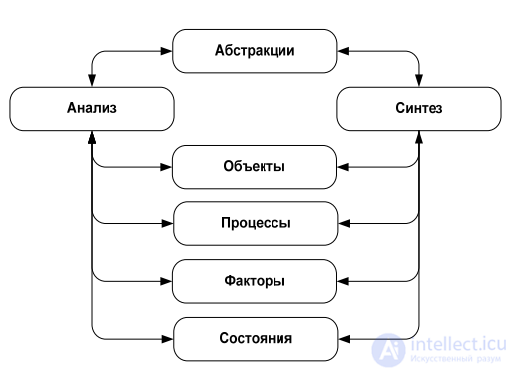
Fig. 3. The informational domain. Functional diagram
Functionally, an informational domain consists of four main components:
1. Analysis – the restriction of the field of perception, concentration of attention on key elements, reductionism (the process of collapsing the real world into models).
2. Abstraction (modeling) – informational games involving the folding of space and time, matter and
energy, money and decisions.
3. Synthesis – the process of unfolding a limited
number of conventions into the breadth of real embodiment.
4. Logic – objects, processes, factors, states.
Thus, the schematic diagram of the informational
domain can be transformed into a more evident format - a diagram of informational nodes and flows (Fig. 4).
Formally, an informational domain is a four-level
hierarchy, folded into a ring. Between the components there exists
a bidirectional connection – an informational exchange of various
character and intensity. A domain is an open system, interacting with the rest of the world through receptors and effectors.
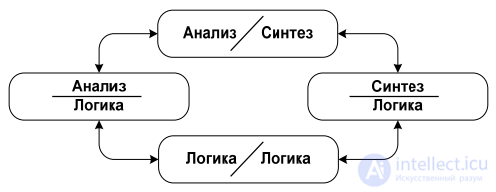
Fig. 4. Information domain. Diagram of information nodes and flows
The relationship between property and relation in the phenomenon of information.
This problem, first, is immanent to internal information, which can be interpreted simultaneously as a relation and
as a property. Second, between internal information as a founded property – an attribute of the object – and external information as a relation between objects, there operates its own relation, governed by the law of conservation of information.
Is there not a contradiction in the fact that internal information as a system
of ontological relations between the elements of an object's structure is redefined into its property? There is no contradiction if one does not think of information
apart from motion, if one regards it dually - not only in the context of the result, but also as a processual phenomenon. There are ample grounds for this, laid down already in the axioms of Heraclitus (everything in the world changes) and
Parmenides (everything in the world is unchanging). Here "everything" means everything available, not
necessarily everything existing (if by existing one understands that which in
being is manifested externally). What is available is that which is manifest and unmanifest: the irreal, the fantastic, the transcendental, the ideal, including
philosophical concepts, including the concepts of property and relation.
Then a property (attribute), while being self-identically stable and
unchanging, is at the same time also mutable, dynamic in its self-development,
processual. Hence any properties, states, and entities are in fact stable, stationary, equilibrium processes. When these processes become unstable, non-stationary, non-equilibrium,
properties acquire the features of the relations that form them, states – those of events, and entities – those of phenomena («entities appear»), and vice versa. A property can also be characterized, according to the probabilistic law of large
numbers, as a statistically stable regularity (vector) of the behavior
of a composition of a large number of relations, their resultant, their «center
of gravity», their mathematical expectation. In this sense internal information is a property, an entity, while external information is a relation, a phenomenon. In modal categories, internal information is possible (potential) as external information, which is actual1
.
Figuratively, the relation between the internal and external forms of an object's information can be represented as the relation between the interior
of the Sun and a solar prominence – the manifested interior of the star,
erupting outward. And just as internal and/or external physico-chemical causes give rise to eruptions of prominences, there exist similar informational causes for an object's generation of external information, for example, the curiosity of a subject. And just as
the Sun and the planets have their own physical mantles, any object, including
the Sun and the planets, may have an informational mantle as a transitional region between the internal and external forms of information.
The law of conservation of information postulates a static relation between the internal and external forms of information for a closed subject-object system – a complex source (X,Y). But the real relation is dynamic, like any metabolism (in
this case – informational metabolism), and a generalized law of conservation of information (in its philosophical interpretation) is required for
a closed environment that includes a dependent open system. The environment and the system interact informationally, forming a complex information source «environment-system», in which the entropy of the environment is greater than the entropy of the system, since the latter is included in the environment, and not the reverse.
Let us represent the Universum as a closed environment X, including
a dependent open system Y, interacting informationally with the environment. The nature of this interaction is quite complex and depends largely on the goals of the system and the environment. If the goal of the system is self-organization, then the external information perceived by the system from the environment has
the meaning of negentropy and, only when reflected in the thesaurus, acquires the meaning
of internal information proper, the quantitative measure of which is entropy, characterizing the potential informativeness of the thesaurus. If the goal of the system is self-learning, then external information is a measure of the mutual cognition of the system and the environment. In practice the stated goals of the system are not alternative and not even complementary – they are diffuse with
respect to one another, and there is no unambiguous boundary between them.
Since X⊃ Y, the entropy of the environment is greater than the entropy of the system:
H(X) > H(Y) (24)
According to (11)…(15) the total mutual information (or simply total information) I(X,Y) of a complex source is expressed through the unconditional and conditional entropies of both the environment X and the system Y, i.e. external information is mutually reciprocal for the environment and the system. Here the conditional entropies entering into
(11)…(13), as well as the unconditional ones in (24), obey the inequality:
H(X|Y) > H(Y|X) (25)
Consequently, under rigid dependence of Y on X, the conditional entropy
of the system will be exhausted, while the conditional entropy of the environment will remain nonzero:
H(Y|X) = 0 ; H(X|Y) >0 (26)
This means that the system will be completely known by the environment, while the environment
will not be fully known by the system. Complete cognition of source Y means that its potential informativeness, characterized by the unconditional entropy H(Y),
will be converted without remainder into external information, and this information will be quantitatively maximal:
max I(X,Y) = H(Y) (27)
Rigid dependence, at which I(X,Y) is maximized, is achieved when the system is fully adapted to the environment, fully predictable. Such a state is theoretically achievable for a complex system,
but in practice - never. The minimum I(X,Y)=0, as shown in section 2.1,
is achieved under complete independence of X and Y, which is unrealistic and, incidentally, does not
correspond to the initial condition of dependence of Y on X.
Thus, the total information of the complex source «environment-system» does not exceed the entropy of the system. This means that external information is transmitted from the environment to the open system in an amount I(X,Y),
not exceeding its potential capacity H(Y) for absorbing
information.
From the standpoint of synergetics this means that the system acquires information in an amount no greater than it can «digest», use for its own self-organization. It is obvious that this amount cannot theoretically exceed the unconditional entropy H(Y) as a measure of the diversity accumulated by the system, and in practice is always less than H(Y).
From the point of view of cognitive psychology, equation (27) means: everyone knows what they can, and if they want to know more, they must increase their informational capacity, i.e. the potential informativeness of their thesaurus.
From the standpoint of informational monism this means that the informational
field is open to us only to the extent of the capacity of our thesaurus. Since
the thesauri of different systems differ, systems receive different amounts of external information I(X,Y) from the environment even within a shared informational process. But
the source likewise generates different information for each of them (according to
the principle of mutual information). Thus, several observers may
draw different conclusions from one and the same observation. Different
societies and different individuals fail to fully understand one another's mentality (and never will
fully understand it!), because, presumably, they «till» different (at best
partially overlapping) regions of the informational field. Thus,
the informational diversity of systems in the Universum is due
to a significant degree to the diversity of system thesauri, which select the information available to them within the informational field of the Universum.
Let us proceed to formulating the dynamic law of conservation of information. To do this, we shall first present the static relations of the informational balance between total information and total entropy
of the complex source «closed environment (X) - open system (Y)»:
Table 1. Informational balance in the complex source (X,Y)
| Dependence | I(X,Y) | H(Y|X) | H(X,Y) | I(X,Y) +H(X,Y) |
| none |
0 | H(Y) | H(X) + H(Y) | H(X) + H(Y) |
| non-rigid | H(Y) - H(Y|X) | H(Y|X) | H(X) + H(Y|X) | H(X) + H(Y) |
| rigid | H(Y) | 0 | H(X) | H(X) + H(Y) |
Let us note the decrease in the «production» of the conditional entropy H(Y|X) of the system relative to the environment (i.e. the deficit of the environment's information about the system) as the system develops (as the system moves from independence toward full adaptation – rigid dependence on the environment).
Since development is a process, let us represent the informational interaction of the system and the environment through the dynamics of the total information I(X,Y) over
time. Then, with the entropy of the system H(Y) constant, according to (13)
 (28)
(28)
If we assume that self-organization and self-learning of the system lead to the development of the thesaurus, whose entropy in the process increases
(H(Y) va ≡ r), and that this development occurs discretely (in leaps) [50], then
law (31) remains in force for each of the set My of discrete states of development of the system's thesaurus, where the i-th state corresponds to
its own values of entropies H(Yi) and H(Yi|X):

At the same time, the constraints of the informational balance given in Table 1 constitute the law for the current state of the system's thesaurus. When, in the course of informational metabolism, the system increases its
diversity at the expense of the environment, and the thesaurus learns to master this new diversity up to
a qualitatively new level of stationary behavior in the environment, it (the system) moves to this level, and the law of conservation of information begins
to operate for the new attractor, with a redistribution of the joint entropy H(X,Y) and the total mutual information I(X,Y) within the framework of laws
(11), (17), Table 1.
As a result, the process of informational metabolism of a developing
open system takes the form shown in Fig. 12.
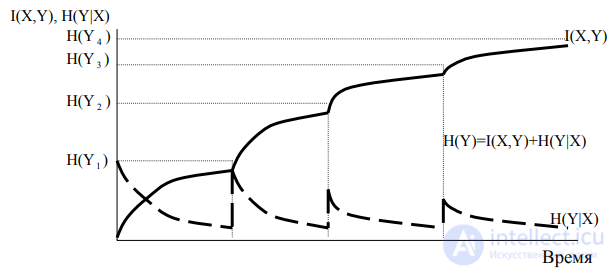
Fig.12. The process of informational metabolism of an open system
(phenomenological model)
Let us formulate two versions of the law of conservation of information:
the synergetic version: the dynamics of the quantity of external information in an
open system is inverse to the dynamics of its conditional entropy relative to
the environment, at a maximum quantity of information not exceeding the current
unconditional entropy of the system; whereby the sum of the quantity of information and
the joint entropy of the system and the environment is constant and equal to the sum of the unconditional entropies of the system and the environment;
the epistemological version: the dynamics of the external information of an open
system is inverse to the dynamics of the environment's information deficit about the system, at a
maximum external information, quantitatively not exceeding the current informativeness of the system's thesaurus; whereby the sum of the total mutual information and the joint entropy of the system and environment is constant and
equal to the sum of the current informativeness of the system's thesaurus and the environment's internal
information.
The formulated versions of the law of conservation of information are consistent with the known synergetic principles governing the behavior of dissipative systems, in particular, with I. Prigogine's principle of minimum entropy production
[110]. Wherever this principle operates, its
complementary principle of maximum information production also holds –
after all, entropy and information are strictly complementary. But whereas the asymptotic minimum of entropy is known (zero), the corresponding asymptotic maximum of information was not so obvious. According to the proposed versions of the law of conservation, it is determined by the internal information of the system (quantitatively – by its unconditional entropy).
Let us move from the general-scientific versions of the law of conservation to a generalized
philosophical law, bearing in mind that entropy is a measure of internal information, while total mutual information is a measure of external information. Then
the phenomenological generalized law of conservation of information may
be formulated as follows:
the dynamics of the external information of a complex source «closed
environment - open system» is inverse to the dynamics of the information deficit,
at a maximum external information, quantitatively not exceeding
the current internal information of the system; whereby the sum of the quantities of
mutual information and of mutual information deficit is constant and
equal to the current sum of the entropies of the system and the environment.
Given that any system consists of subsystems, this formulation of the informational law of conservation holds for any subsystem of the Universum. In this formulation the law of conservation of information is philosophically significant, since it embraces all open systems and any
environment. Here the relations between the unobservable internal information, the observable external information, and the law of conservation of information are such that possible changes in the internal information of an object
are not necessarily accompanied by a change in external information, and never by a violation of the law of conservation of information.
Let us note that all the versions given here do not coincide with the law of conservation of information proposed in [ ]. The entire logic of our proof proceeds from the additive character of the relations between the quantity of
information and entropy as logarithmic informational measures of the diversity of the system and the environment, whereas in [ ] this relation
is multiplicative. The latter might possibly be valid in a combinatorial interpretation of informational measures; however, the concept of entropy is historically linked to the taking of the logarithm of the combinatorial measure of diversity, and therefore its complementarity with information is mathematically
additive, rather than multiplicative. Nevertheless, conceptually both approaches are similar in that the complementary superposition of information and entropy is quantitatively a certain constant. As shown above, this constant is determined by the internal information of each of the sources –
the environment and the system.
A.I. Veinik proposed a law of conservation of informational energy
(infoenergy) as a measure of the quantity of behavior of the system under study [26,
pp.287, 552-554]. It is assumed that the behavior of a system characterizes its
outward manifestation in the broadest sense in interaction with the surrounding environment.
Interaction, as is known, may be material, energetic, or informational. Energy characterizes the intensity
of the interaction, while information characterizes its diversity, and together energy and information characterize, from different sides, the change in the state of systems.
Information is not energy, but behaviorally they are similar in many particulars.
If, by analogy with the Kelvin gradation of the value of types of energy, we move to a gradation of the value of types of interaction, then in decreasing
order of value they can be arranged in the following sequence: informational→energetic→material. In terms of their degree of influence on objects, energy and information are, perhaps, not inferior to each
other. At the same time, energy acts on objects directly in a forceful form, while information acts indirectly – through the energy which it
(the information) governs. In any case, this holds for most of the manifest processes of our material world. Moreover, in this world
all informational processes are energy-dependent, and energetic processes are informationally dependent, in the sense that the transfer of information, as
a rule, is carried out by a material-energetic carrier (a signal), while the transfer of energy is usually initiated by information. Therefore
the introduction into scientific-philosophical usage of the phenomenological concept of
infoenergy is, apparently, legitimate.
But as soon as we move from the phenomenology of this concept to its
physical nature, a problem of interpretation arises: is it – a mixture
of independent entities, or a self-sufficient entity, not decomposable into
an informational and an energetic component? Thus, if infoenergy is applied to the system «human being», can we quantitatively assess human behavior if, following Veinik, we understand behavior «in the broadest sense of the term»? This is no easy task, and one should approach its solution only after the physical relation between information and energy has been clarified – whether it is causal, correlational, or independent. If these are different entities, then is the physical unit bit-watt-second legitimate, one that follows from the formulation, proposed in [26], of the law of conservation of infoenergy:
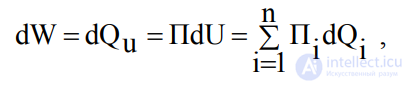 (30)
(30)
where dW – the change in infoenergy; dQu- the change in informational work performed by the system; P – the informacial (a measure of the «intensity
of informational interaction»); dU – the change in energy; Pi, dQi- the particular values of the informacial and the change in work for the i-th substance entering into the system (n – the number of substances).
Equation (30) does not explicitly indicate the conservation parameters or the restrictions imposed on them (the property of constancy, or the values of the constants).
Therefore an objection arises to the attempt to call it a conservation law.
Veinik asserts that what is transferred (transmitted) is not information but
energy, under the action of a difference in informationals; the information of the system itself,
like temperature or electric potential, is only capable of changing in the course of the transfer of energy. With reference to section 2.1, we consider this
judgment unconvincing, at least for us. First, it eliminates the very concept of an informational process (informational
interaction). To be consistent, then according to Veinik only material and energetic interactions remain in the world, and informational metabolism is excluded. But this is not so – all energetic processes are informational, while the converse claim is open to question.
Energy – is a measure of the work performed by the carrier of information in these processes. Who, then, is the employer? – information! – this conclusion follows from the whole course of the preceding argumentation – it is precisely information that is teleologically grounded in all interactions. On the other hand, an informational process may in principle have no need of known forms of
energy – may be energy-free in the traditional sense. If by
info-energy in [26] is meant a non-traditional energy, latent for the material world, of «subtle worlds» (according to Veinik – the nanoworld, the picoworld,
the femtoworld, the attoworld), carrying information about their states, then there is no ground for criticism. But we cannot assert this with certainty,
for Veinik gives no convincing grounds on this score.
In connection with the foregoing, we do not deny the possibility of informational energy as a concept linking information and energy together, not
merely as two sides of a single process, but in its deeper ontological understanding. Moreover, from the standpoint of the unity of the nature of interactions, this connection is plausible. And if we, in our own way, maintain its existence, there is no reason to deny A.I. Veinik and other scholars the analogous right. A deeper substantiation of the generalized information-energy conservation law (drawing on experimental
data) – is a rewarding field of research for scientists and philosophers.
According to the law of conservation of information, external information, as
a replication of part of the internal information of the source, does not diminish its
informativity, whose quantitative measure is the unconditional
entropy of the source. Indeed, as a result of cognizing a certain
object X, its initial entropy decreases by an amount I(X), which in
information theory is called the amount of information. Does this
mean that, given an infinite a priori entropy H(X) of a continuous source, the a posteriori entropy H(X|Y) is finite? No, it does not. The amount of information, as an empirical measure of cognition, does not change the quality (nature) of the source – it does not turn from continuous into discrete:
∞-const=∞. Consequently, the entropy H(X|Y) is likewise infinite. Then in
expression (12) for I(X) we obtain an indeterminate form of type ∞-∞. Recognizing logically that the quantity I(X) is finite, we shall nevertheless resolve this indeterminacy mathematically with respect to I(X). For this let us consider the problem
of determining the position of a point on a line segment with precision ε – the problem
of L. Brillouin (fig.13) [19, p.264-265].
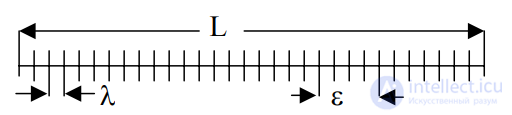
Fig.13. On the law of finite information
Let this segment, of length L, be divided into a finite number (ni) of small segments of length λ, such that the interval ε also contains a whole number (nk)
of such segments:
ni =L/λ ; nk = ε/λ (31)
Then, taking into account the equiprobability of the point's position on the intervals L and ε, and
the asymptotic formula (4), we obtain:
I(X)=log ni - log nk = log L/ε = log L – log ε (32)
As λ→0, ni →∞, nk →∞, H(X)=log ni →∞ , H(X|Y)=log nk →∞ . But I(X)
according to (32) does not depend on ni, nk, and remains finite.
This problem can be extended to an object of any dimensionality, including the universe, and we do so. Conclusion: the amount of
information obtained in an experience, an act of cognition, is always finite. Hence
any truth, as a product of cognition, is relative.
Physically this result is explained by the same thing as the ineradicable errors of cognition – the interaction of the subject and object of cognition, as a result of which the subject cognizes not the «thing in itself», but the «thing for itself», made noisy, distorted, approximated, and simplified by this interaction. Should we rid ourselves of this interference (noise), the process of cognition would become impossible. Consequently, errors, inaccuracies, approximations, simplifications, and, ultimately, the relativity of the truths obtained, are an inevitable companion of the process of cognition. Moreover, without them cognition is simply impossible. Absolute truth and cognition are incompatible.
Let us consider another – dynamic – aspect of this problem. Suppose the productivity of a source of information (R) and the throughput capacity
of a communication channel (C) together satisfy Shannon's principle of reliable coding, R≤C, where R and C are measured in bits/sec [42,52]. Then in
T seconds the source X will generate I(X,Y)=RT bits of external information, perceived by the consumer Y. But R and T are in reality finite; otherwise
any informational process loses its meaning. This means the amount of information I(X,Y) is likewise finite.
The foregoing allows us to formulate the law of finite information: any external information is finite.
From a joint consideration of the laws of finite information and of conservation of information it follows that, if the amount of mutual information I(X,Y) is always finite, while the internal information of the consumer system Y (as a subsystem-«microcosm» of the Universum X) tends to infinity, then the law of finite information strengthens the law of conservation of information with respect to the upper bound of I(X,Y); namely, equality (27) is transformed into the inequality:
max I(X,Y) < H(Y) , (33)
that is, the maximum of the mutual information between the system and the environment must quantitatively be less than the system's informational entropy, which tends to infinity.
In the epistemological aspect, the law of finite information postulates the relativity of any truth as a product of an act of cognition that is finite in time and
space.
The entropy of linguistic noise is too high to be ignored even in particular cases involving the solution of so-called «exact» (zero-entropy) problems, where every bit of information lost or gained has a very high value. Therefore the problem of linguistic noise deserves separate investigation within the framework of cognitive psychology and mathematical linguistics.
On the other hand, the zero entropy of any language, according to the law of conservation of information, means an informational limit of development, from complete indeterminacy and inarticulateness to complete order and the absence of any alternative in the choice of meaning, that is, to the absence of any degrees of freedom for the consumer of information. We showed above that such language-creation is alien to the entropic mentality of the human spirit: «…where a commensurability is found between a thing and its retelling, there the sheets are not rumpled… poetry did not spend the night» (O. Mandelstam). Philology – love of the word – would cease immediately, as soon as that word attained the maximum possible informativity and, consequently, zero entropy of its meaning. Painting and music would fade in their inimitable colors, were they dispassionately broken down into brushstrokes and notes, unambiguously ordered and explained by art critics: «Having put sounds to death, I dissected music like a corpse. I verified harmony with algebra» (A.S. Pushkin, Mozart and Salieri). The epistemological form of the law of conservation of information, by defining the entropy of the thesaurus as the upper bound on the amount of external information that can be consumed, simultaneously asserts that this information, once it has filled the thesaurus, leaves not a single bit in it for new external information, for grasping some other meaning of «language games», for creative thought. Fortunately, the law of finite information rules out such a sad possibility, making it purely hypothetical. The foregoing leads to the formulation of an extremal problem, namely: between the external and internal information of a language, between the amount of information and the entropy of a language, there exists a certain movable optimum. We suppose that this optimum may be determined by the «golden ratio» – one of the fundamental principles of the harmony of the world. The principle of the golden ratio establishes such a quantitative relation between two homogeneous parts of a whole that the whole itself is psychologically perceived as «harmonious», that is, proportionate, well-balanced, beautiful, consonant, coherent, aesthetic, and so on. Quantitatively this relation gives one part approximately 60% of the whole, and the other, correspondingly, 40%, and within these limits fluctuations are permissible that do not disturb the harmony. According to [43] the golden ratio is optimal (most effective) in the sense that it provides the observer with the maximum amount of information at the least expenditure of resources, that is, the maximum of aesthetic pleasure
Conclusions
1) The factors raising the philosophical status of the phenomenon of information to the level of a philosophical category are:
a) the epistemological productivity of the concept of information in the cognition of subject-object, corporeal-spiritual, inter-systemic, and intra-systemic relations – informational processes – of arbitrary nature;
b) the worldview significance of dividing the concept of information into the ontological concept of internal information, as an attribute of all that exists, and the epistemological (praxeological) concept of external information, as a universal relation;
c) the higher (metaphysical) level of abstraction of the concept of information compared with scientific and general-scientific concepts; d) the relative independence of the concept of information among other philosophical concepts and categories, together with its simultaneous interconnection with the categories
of matter and the ideal.
2) The developed conception of informational monism asserts that
information lies at the foundations of the world order, determining its diversity as informational diversity, and all the meanings and senses of what exists
as, correspondingly, its informational symbols (codes) and the content
of its internal information, and all interactions as informational
(information-energy) processes.
3) The possible (upper) and necessary (lower) bounds of the informational phenomenon of diversity, as the morphological content of information,
have potential and actual values, conditioned by the regularities of the accumulation (generation) of internal information and the dynamics
of external information, and the dialectic of diversity consists in the progressive quantitative-qualitative transformations of the elemental composition
of heterogeneous structures and their internal informational connections.
4) Internal information, as a property of objects, is objective in the form of memory and is possible (potential); external information, as a relation
between objects (subject and object), is actual in the form of a signal;
Both forms of information are interconnected by the law of conservation, which postulates the quantitative constancy of the sum
of external information and the unmanifested part of internal information, in the statics and dynamics of informational metabolism, by the law of finite information, which postulates the finiteness of any external information, and by the principle of mutual information (the mutual information of two objects about one another is quantitatively
the same).
5) External information is transmitted from the environment to an open system in an amount not exceeding its potential capacity for assimilating
information, which means:

Comments