
Lecture
1) The most important watershed running between civilizations is the difference between the European and non-European types of civilization. Non-European civilizations represent a significant group (according to Toynbee's classification, 21). These are the so-called traditional civilizations, which reproduce their way of life for centuries or even millennia and develop slowly. European civilizations include technogenic civilizations, whose distinguishing feature is the rapid development of technique and technology, as well as intensive communication between people and the formation of effective means of communication (these are Western, Eastern, and South-Eastern Europe, the USA, Canada, and Japan).
2) According to the time of emergence and demise, modern and extinct civilizations are distinguished. Extinct civilizations include, for example, the Mexican, Chaldean, or ancient Semitic civilizations. According to Toynbee's classification, 5 civilizations exist today: Western Christian, Orthodox Christian, Islamic, Hindu, and Far Eastern (Confucian).
3) According to the nature of socio-political life, traditional, liberal, and intermediate-type civilizations are distinguished. Traditional civilizations represent the original form of social life associated with overcoming barbarism; they are based on the dominance of communal values, respect for authority, and agrarian-craft production. Liberal civilization is associated with cultural and political pluralism and the establishment of a legal system. The intermediate, or transitional, type of civilization arises in connection with the need for gigantic structures (dams, canals), the need to conquer new territories, or to defend one's own territory from an external enemy. As a result, a mechanical unification of communities that differ in traditions and values occurs.
4. The culturological approach to the periodization and typology of society (O. Spengler)
The most important structural element of civilization is culture.
Spengler viewed culture as split into 8 cultures, each of which grows on the basis of its own primal phenomenon, i.e., its own way of experiencing life. Spengler distinguished: Egyptian, Indian, Babylonian, Chinese, Greco-Roman, Byzantine-Arab, Mayan, and Russo-Siberian culture. Each culture, like a human being, is subject to a biological rhythm that determines the main phases of its internal development: birth and childhood, youth, maturity, old age, and decline. More generally, it can be said that every culture passes through 2 stages: the ascent of culture (culture proper) and the descent of culture (civilization). The first is characterized by an organic type of evolution in all spheres of the life of society. The second stage is characterized by a mechanical type of evolution, representing the ossification of culture and its disintegration.
5. Typology of societies according to K. Popper
The post-positivist Karl Popper distinguished «closed» and «open» societies. A «closed» society is a society organized on a totalitarian principle on the basis of authoritatively established and immutable norms (traditional societies). An «open» society is based on the powerful critical potential of the human mind, in which dissent, the intellectual freedom of individuals and social groups aimed at solving social problems and the continuous reform of society, is not merely tolerated but actively stimulated with the assistance of democratic institutions.
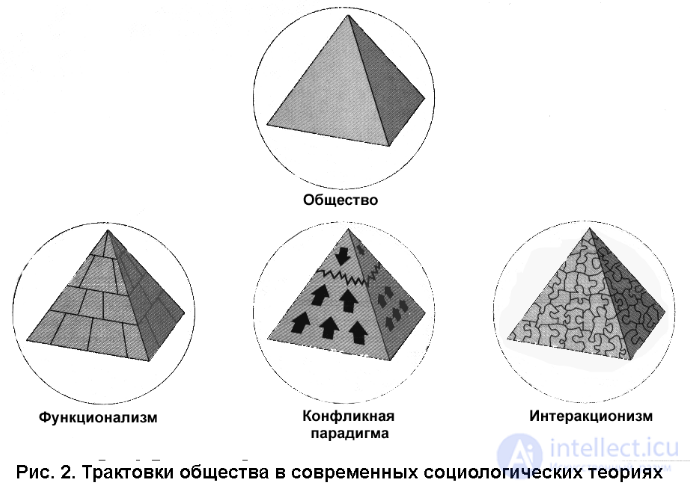
In modern sociology there are three main approaches to defining the concept of “society”: functionalism, the conflict paradigm, and the interactionist approach.
Functionalists base their approach on the assertion that society is a stable and orderly system whose stability is achieved through shared values, beliefs, and social expectations1.
Thus, from the point of view of this theory, society consists of interconnected parts, each of which performs certain functions and duties, contributing to the maintenance of the stability and stability of the entire system.
Until approximately the 1950s, functionalism was the most influential approach in sociology. The first representative of this school is considered to be the English sociologist Herbert Spencer, who viewed society as an organism in which individual parts must function harmoniously. This same view is also offered in many of E. Durkheim's works. Modern functionalists speak of society more as a system than as an organism, but the approach to how the various elements of the system are interconnected remains largely the same. Prominent representatives of this school are T. Parsons and R. Merton.
Modern functionalism's approach to society is based on the following propositions.
Society is a system of integrated parts.
The social system is characterized by stability, since it has built-in control mechanisms, such as prosecutorial oversight, the court, and so on.
The social system has not only functions but also dysfunctions, which indicates the possibility of the system deviating from the accepted normative model. However, such deviations are usually overcome on their own or, eventually, become entrenched in society. For example, the radicals of the 60s significantly changed our society, bringing into it a new ecological consciousness, distrust of the government, and a casual style of dress.
Changes usually occur gradually, rather than through revolution.
Social integrity is formed as a result of the agreement of the majority of the population with the value system adopted in a given society1.
Functionalist sociology, therefore, places emphasis on the functions of the various elements of the social system. In practice, this usually means a closer analysis of such social institutions as politics, the economy, law, religion, and so on, establishing connections between them and clarifying the functions they perform in society.
Recent years have seen fairly strong criticism of this approach to society among sociologists. What provokes rejection above all are the functionalist ideas about the value of social cohesion and the striving for social order. These assumptions do not reflect the diversity and contradictions inherent in most complex societies. The functionalist point of view masks the conflicts and contradictions that exist in every society and underestimates the significance of social change. In addition, functionalists do not explain how social institutions arose in the first place and what makes them change over time1.
Conflict theory is likewise based on ideas about the role and influence of social structures, but it does not recognize solidarity and cooperation as a means of achieving social change and social progress. It is conflict, not cohesion, that, according to proponents of this theory, embodies the relations between different groups in society.
At the origins of social conflict theory stood the American sociologist Charles Wright Mills. He argued that any macrosociological analysis of anything is worthwhile only if it concerns the problems of the struggle for power between conflicting social groups2. Social conflict theory received a clearer formulation in the works of the American sociologist Ralf Dahrendorf, who argues that all complex organizations are based on the redistribution of power, and that people who hold power are able, by various means, chief among which is coercion, to extract benefits from people with less power. The opportunities for distributing power and authority are limited, so members of any society struggle over their redistribution. This struggle may not manifest itself openly, but the grounds for it exist in any social structure.
Thus, according to R. Dahrendorf, conflicts are based not on economic interests but on people's desire to redistribute power. The source of conflicts becomes the so-called homo politicus (political man). Therefore, social conflicts are inherent in any society. They are inevitable and constant, serve as a means of satisfying interests, and as a way of mitigating the manifestations of various human passions1.
However, contemporary adherents of conflict theory argue that society is characterized by inequality not only in the political sphere but also in the economic and social spheres, and social life is interpreted by them as a struggle between different social groups over a lack of resources. Therefore, conflict theorists place the main emphasis on the problems of inequality in society and the analysis of its negative impact on people.
Within this approach, the Marxist concept deserves special mention. From the point of view of Marxism, society is a relatively stable system of social ties and relations, formed in the course of the historical development of humanity, encompassing both large and small groups of people, maintained by the force of custom, tradition, law, social institutions, etc., and built on a particular mode of production, distribution, exchange, and consumption of material and spiritual goods. Society, from the point of view of scholars of this school, arises from man's natural drive toward unification through property2. Society gradually evolves, but social progress is associated with revolutionary events, during which one social order is replaced by another as a result of the clash of interests of various groups.
Interactionism (the theory of action) studies not the macrosystems and structures of society, but the ways in which individuals and small groups in society are connected. At the center of attention of scholars of this school are the interpersonal relations between individuals, how they are regarded by others, and how they perceive and evaluate one another's behavior. These views are based on the belief that a person needs to determine what is happening in life and then decide how to act.
Thus, theorists of the interactionist orientation focus their attention on the micro-level of social life, on clarifying the role of specific interpersonal interactions in the creation and functioning of the structures of the social world. Among the many micro-theories developed by sociological science, the best known are George Homans and Peter Blau's theory of social exchange, and the concept of symbolic interactionism of George Herbert Mead and Herbert Blumer.
The starting premise of social exchange theory is that people need diverse kinds of rewards, which they can obtain only by interacting with other people. Individuals enter into social relations because they expect to be rewarded, and they continue these relations because they receive what they are seeking. Rewards may include social approval, respect, status, authority, and so on, as well as practical and material assistance. If the relations between individuals in the process of interaction are unequal, a person who possesses the means to satisfy the needs of others may use them to acquire power over them. This is possible given four conditions: 1) if those in need do not have the necessary means; 2) if they cannot obtain them from another source; 3) if they do not want to obtain what they need by force; 4) if no such changes occur in their value system as would leave them unable to do without what was previously necessary to them.1
The characteristic features of symbolic interactionism are, first, the striving to explain behavior not on the basis of individual drives, needs, and interests, but on the basis of society, understood as a totality of inter-individual interactions, and, second, the attempt to treat all the diverse connections of a person with things, nature, other people, groups of people, and society as a whole as connections mediated by symbols. Particular significance is attached here to linguistic symbolism. Thus, at the basis of symbolic interactionism lies the idea of social activity as a set of social roles, which is fixed in a system of linguistic and other symbols.1
As a result, on the basis of various concepts, a definition of society has taken shape in modern sociology as a relatively independent or self-sufficient population, characterized by internal organization, territoriality, cultural differences, and natural reproduction.
There are two approaches to analyzing the changes that socio-economic systems may undergo – the formational and the civilizational.
The formational approach prevailed for a long time, or rather was the only one in Russian scholarship, while world legal thought developed other criteria for the typology of states as well.
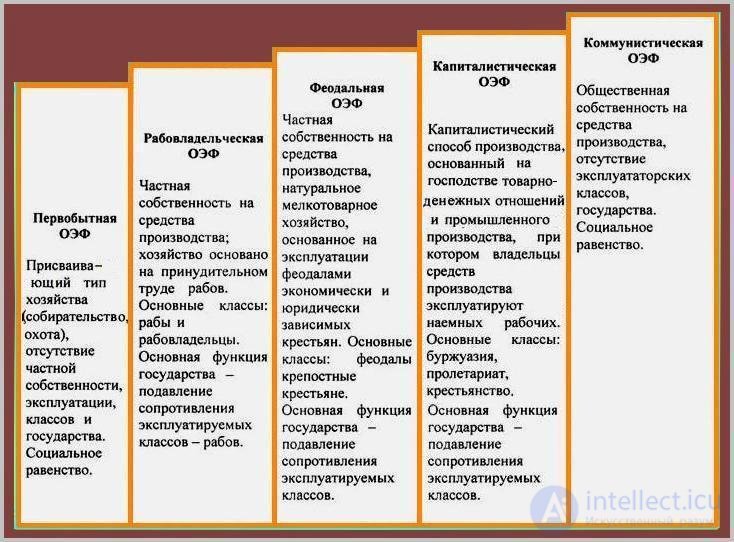
Formation theory. This theory was laid out in the work of K. Marx and F. Engels, "The German Ideology." The authors identified the structure of society, comprising the productive forces – relations of production – the political superstructure – forms of social consciousness. Formational periodization involves distinguishing in the development of society the primitive, slaveholding, feudal, capitalist, and communist modes of production. According to the formational approach, the development of society can be represented as a sequential change of formations from the older, lower ones to the newer and more progressive ones: from primitive-communal to slaveholding, from slaveholding to feudal, from feudal to capitalist, from capitalist to communist. The criterion for distinguishing a formation is relations of production – the relations between people that arise in the process of the production, distribution, exchange, and consumption of material goods.
Relations of production and the productive forces, by which K. Marx meant the means of production and the people who set them in motion, form a particular mode of production, above which an ideological and political superstructure arises. The mode of production, taken together with the superstructure, constitutes a socio-economic formation. According to Marx, the main driving force behind the transition from one formation to another is the class struggle. He considered an evolutionary change in the nature of the capitalist system impossible.
Global changes in the development of society in the second half of the 20th century, caused by the scientific and technological revolution and the transformation of science and information into a decisive factor in the development of society, and the emergence of a mixed economy based on the diversity and equality of all forms of ownership, led to the appearance of a new theoretical model of social development. The formational concept began to be displaced by the civilizational one. Formational theory is regarded today only as a special case, applicable to a certain segment of human history and a limited region of human habitation, mainly Western Europe.
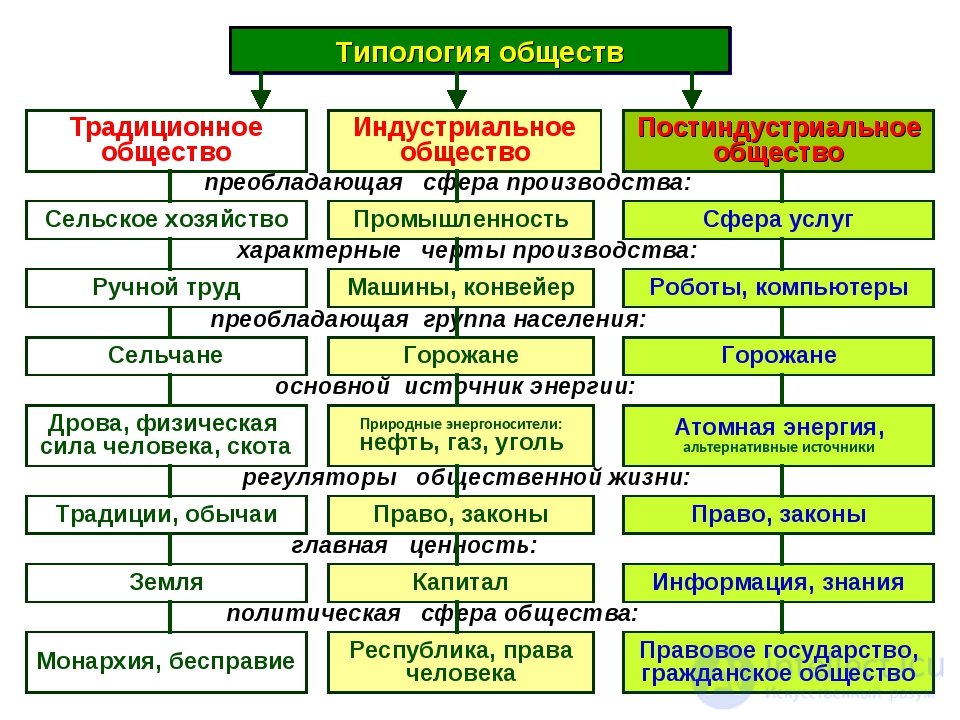
The civilizational approach. The concept of "civilization" to characterize a given stage in the life of peoples was first used by the English scholar Arnold Joseph Toynbee (1889–1975). At the foundation of the civilizational approach lie not forms of ownership, not relations of production, but the level of development of technology, technique, and the satisfaction of human needs. According to this approach, the foundation of society consists of civilizations, which pass through a series of successive stages in their development: emergence, flourishing, aging, decline. A civilization – is a large-scale sociocultural community of peoples and nations. The civilizational approach involves distinguishing pre-industrial, industrial, and post-industrial economies. In the pre-industrial economy, manual labor prevailed, and agriculture was the main sphere of production.
The main features of the industrial-type economy:
The formational approach puts forward socio-economic characteristics as the main criteria of the historical process. The basic unit of classification is the type of socio-economic formation. It was developed by K. Marx in its most general form, as a generalization of the historical path of Europe. Supporters of Stalinist Marxism-Leninism simplified this idea of Marx's and formulated a rigid law of socio-economic formations into which the whole of world development was fitted.
Socio-economic formation (SEF) is a historical type of society representing a certain stage of the forward development of humanity, based on a certain mode of production with its own base and superstructure.
According to the representative of this approach K. Marx, the decisive factor of social development is the base (the economic structure of society, representing a certain system of historically determined relations of production), which also determines the corresponding type of superstructural elements (the superstructure – the totality of ideological relations and views – politics, law, morality, religion, philosophy, art, and the corresponding organizations and institutions).
Depending on the types of economic base, the following types of formations are distinguished: primitive-communal, slave-owning, feudal, bourgeois, and communist
Each formation corresponds to a certain type of relations of production. Their change due to the improvement of the mode of production (the way material goods are created) leads to a social revolution, to a transition from one formation to another. For example: the invention of the steam engine led to the emergence of fundamentally new tools of labor (machines), to the formation of machine (factory) production, and to the transition from the feudal to the capitalist SEF.
The most important factor determining the type of state under this approach is its class essence (i.e., the interests of which class the state ) expresses, as well as the presence or absence of private property and commodity production.
The first SEF was the primitive-communal one, but it knew neither private property, nor commodity production, nor classes, so there was no primitive type of state, and the typology of states begins with the slave-owning one, and further each of the formations corresponds to its own historical type of state.
Slave owners and slaves, feudal lords and serfs, capitalists and the proletariat represent the main classes of the slave-owning, feudal, and bourgeois SEF; between them there exist antagonistic (irreconcilable) contradictions, and therefore class struggle is inevitable.
Class struggle, in the course of which the role of the popular masses, in particular the working class, continuously increases, must lead to the socialist revolution, the establishment of the dictatorship of the proletariat, which will ensure the transition to a classless communist SEF, where all are equal.
Merits of this typology:1) the idea itself of analyzing the historical process on the basis of socio-economic factors, which indeed significantly influence society, is productive; 2) it shows the stage-by-stage, natural-historical character of the development of society.
Weaknesses: 1) it is characterized by excessive programming, whereas history does not always «fit» into the schemes drawn up for it. There have always existed and still exist in the world many transitional types that "do not fit" within the framework of one formation or another (for example: Kievan Rus in the 10th–12th centuries); 2) only the bourgeois socio-economic formation had a universal character. Slave-owning states in their pure form existed only in Greece and Rome, feudal ones only in Europe. The socialist state never became the highest type of state. 3) there is no explanation for the very important differences between states of one and the same formation; 4) spiritual factors (religious, national, cultural, etc.) are underestimated.
The civilizational approach bases its classification on the belonging of societies to one or another civilization.
Civilization - (from Lat. civilis - civil, state) - 1) a synonym for culture; in Marxist literature it is also used to denote material culture. 2) The level, stage of social development, of material and spiritual culture (ancient civilization, modern civilization). 3) A certain stage of the historical process, following savagery and barbarism (L. Morgan, F. Engels).
The concept of "civilization" appeared in the 18th century in close connection with the concept of "culture". French Enlightenment philosophers called a society civilized if it was based on the principles of reason and justice. In the 19th century the concept of "civilization" was used as a characteristic of capitalism as a whole, though this understanding of civilization was not the dominant one.
No generally accepted classification of civilizations has developed. Each author makes this division on his own grounds — chronological, spatial, religious, and so on. Thus, N. Ya. Danilevsky formulated a theory of the general typology of cultures, or civilizations, according to which there is no world history as such, but only the history of cultural-historical types, each having an individual, closed character.
In the conception of O. Spengler, civilization is the final stage of the development of any culture, its decline. For A. Toynbee, civilization – is a closed, local state of society, distinguished by a commonality of religious, national, geographic, and other features.
Unlike primitive societies, the characteristic features of established civilizations also include the duration of their existence, the coverage of vast territories, and their spread to an enormous number of people.
Thus, the civilizational approach is the study of the state and development of society and the natural succession of historical types of states from the point of view of qualitative changes in the sociocultural environment of society, in the spiritual culture of the people, its religion, and its mores.
Merits of this typology: 1) the factors of culture are singled out as significant under certain conditions; 2) due to the expansion of the number of spiritual criteria that characterize the specific features of one or another civilization, a more «grounded» picture of the development of society is obtained.
Weaknesses: 1) the existence of a multitude of grounds for distinguishing various civilizations and the corresponding types of states; 2) the original orientation of "civilization" toward the classificatory characterization of highly developed societies and associations.
Table No. 5. The formational approach
Within the framework of the civilizational approach, of particular interest today is the «theory of the stages of economic growth» developed by W. Rostow. It links the type of state to the stage of scientific-technical progress and the standard of living of the population, as determined by consumption and the provision of services, to which a given state corresponds. According to this theory, all societies, by their economic development, can be assigned to one of several types (stages): traditional society, transitional society, a society undergoing a process of take-off, a maturing society, and a society that has reached a high level of mass consumption .
Also, the grounds for distinguishing various types of state may be the stages of development of production, the economy, and technology: agrarian, industrial, post-industrial, and information (the theory of the «post-industrial society»).
Within the framework of the civilizational approach, as can be seen, there are a great many different theories; however, an analysis of the main ones allows us to conclude that the following civilizations and their corresponding types of state exist (fig. 4.3):
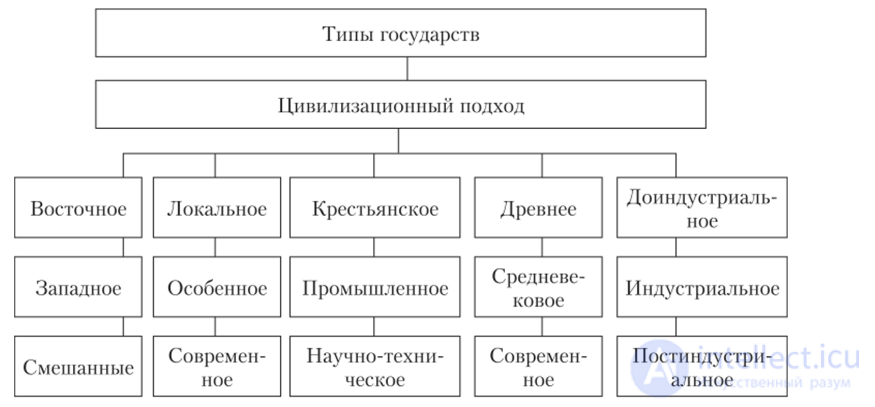
Fig. 4.3. The civilizational approach to the typology of the state
Like the formational approach to the typology of the state, the civilizational approach also has its positive and negative features.
Among the positive features of the civilizational approach, one should note its consideration of cultural factors, which emphasize the specific features of one or another civilization. Its value also lies in the fact that it makes it possible to overcome the limitations of the formational approach. It is much more complex and multivalent — whereas for determining the type of state in accordance with the formational approach it is sufficient merely to determine the mode of production, according to the civilizational approach a whole complex of criteria is required. At the same time, which is also undoubtedly a plus, within the framework of the civilizational approach quite different criteria, characterizing various aspects of social life, may be taken into account.
Some of the positive features of the civilizational approach may at the same time be regarded as negative ones. Thus, for example, the absence of strict criteria, as in the formational approach, can provoke subjectivism, which is expressed in the identification of rather contentious civilizational differences.
What is negative in the civilizational approach is also that socio-economic factors are taken into account only in a very limited way, and also that all the classification criteria have no direct connection with the essence of the state itself.
THE TECHNETRONIC (POST-INDUSTRIAL, INFORMATION) SOCIETY is a concept of contemporary Western sociology and social philosophy, based on the principle of technological determinism. According to this concept, technetronic society is a fundamentally new stage in the development of society, based on the application of high, primarily information, technologies. The characteristic features of technetronic society are:
The character of the economic, socio-political relations and structures of everyday life arising in technetronic society can vary greatly among the conceptions of different authors (D. Bell, H. Kahn, A. Toffler, Z. Brzezinski, J. Fourastié, Y. Masuda). The objective grounds of the theory of technetronic society are:
The features of the economic, socio-political, and spiritual life of these countries, which are in essence the «managing offices» of the world economy, are what this concept records.
Characteristics of technetronic society: culture, psychology, social life, and the economy are shaped under the influence of technology and electronics, especially computers and communications. Under the influence of the technetronic revolution, traditional ties within the family and between generations collapse. The collapse of old beliefs, tied to the national and ideological communities of people, forms a new global vision of the world
Technology, as a sphere of human activity, has long attracted the attention of philosophers. Since the 1960s, philosophical studies of technology have acquired the status of an independent philosophical discipline. This is usually linked to the fact that the influence of technology in the modern world is becoming all-encompassing. The economy, ecology, science, politics, and so on all experience the determining influence of technology. In the 20th century this fundamentally changes the social status of technology, turning it into a factor determining the future of humanity.
In the 1960s the American sociologist Daniel Bell proposed a new theory of the development of society. He presented the development of society through the prism of technology and knowledge and distinguished pre-industrial (traditional), industrial, and post-industrial societies.
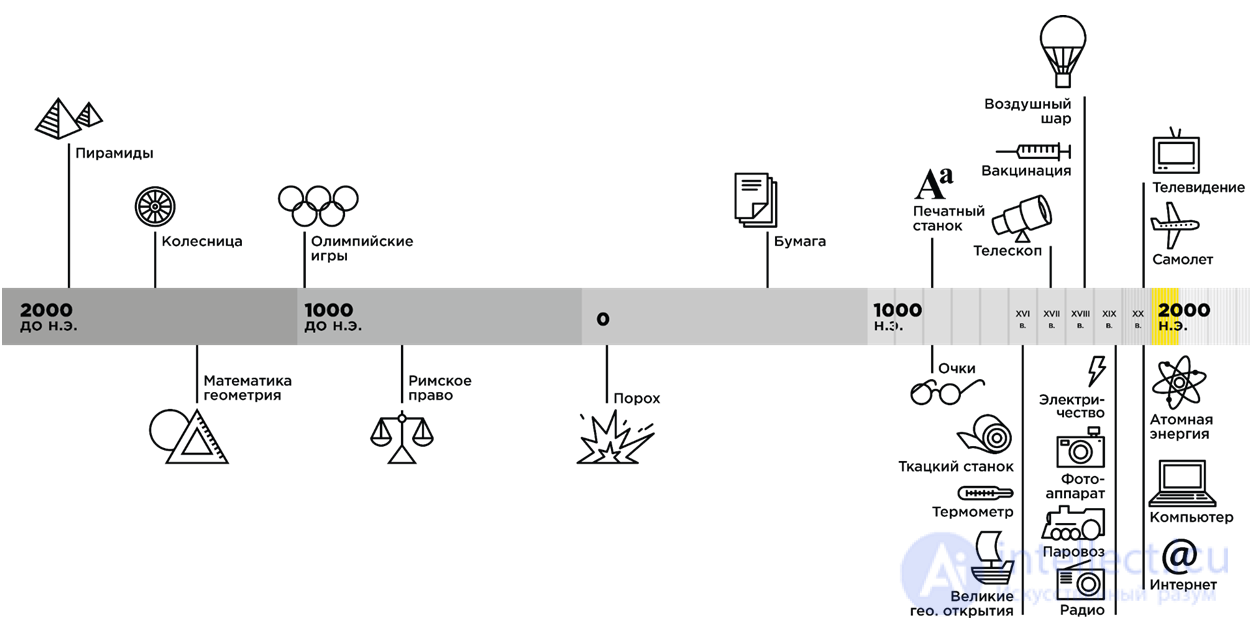
The change of technological paradigms followed by a sharp leap in productivity and economic growth (industrial revolutions)
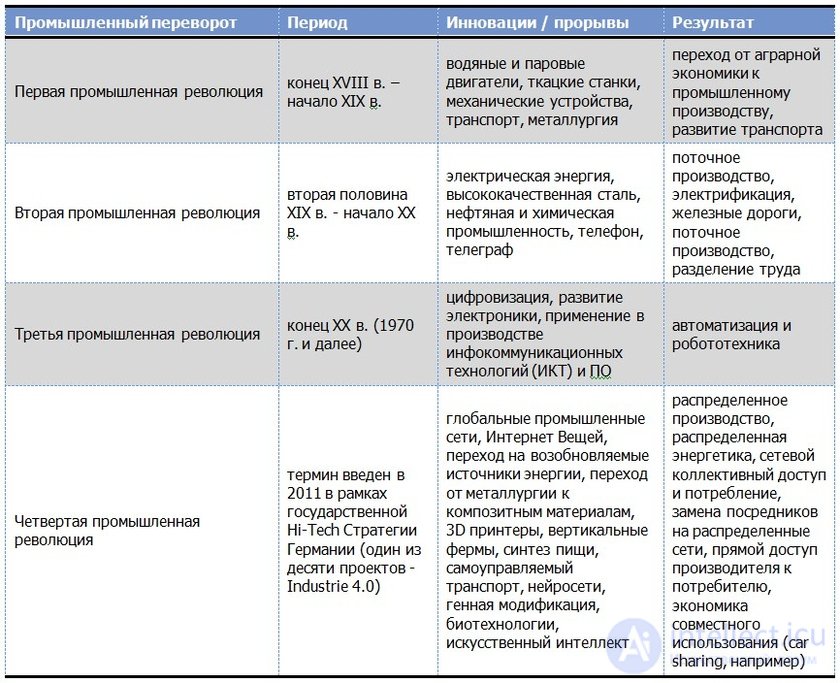
Features of pre-industrial society: tradition is the main means of social production, personal ties between people in society predominate, changes in society occur slowly, over the course of centuries.
Features of industrial society: a radical break with traditionalism, the extraction of natural resources gives way to the production of predetermined products, the importance of worker qualification grows, energy becomes the main productive resource, man turns out to be capable of making technological and economic forecasts.
Features of post-industrial society: the industrial sector loses its all-pervasive role under the influence of increasing technologization, science and knowledge become the main productive force, the main resource is information, priority shifts from semi-skilled workers to engineers and scientists, an ever-growing number of symbolic intermediaries take part in human activity, and the dynamism of the economy increases.
D. Bell's theory of post-industrialism belongs to the concept of the «information society». Viewing the development of society as a succession of stages, supporters of this theory link its formation with the predominance of the «fourth», information sector of the economy. Capital and labor as the basis of industrial society give way to information and knowledge in the information society.
One of the theorists working within the concept of the «information society» was also the American sociologist and futurologist Alvin Toffler. He wrote that at the end of the 20th century humanity was moving toward a new technological revolution, connected with the intensification of information processes in society. Bell's pre-industrial, industrial, and post-industrial societies correspond to Toffler's societies of the First, Second, and Third Wave.
Researchers in the field of philosophy of technology are interested in such problems as the social consequences of technological development, the ethical problems and features of the modern information society, and the formation within it of a system of values. These problems affect the interests of all humanity. Moreover, the danger lies not only in changes to the natural environment: a direct consequence of these processes is a change in man himself, his consciousness, his perception of the world.
Philosophers saw the main problems of the present day as follows:
The gap between the levels of technology and morality. Technology increases the quantity of material goods at the cost of limiting the spheres of human activity, which leads to dehumanization (Lewis Mumford, American philosopher and sociologist).
The improvement of scientific technology leads to the atrophy of the ability of man to imagine. Having a general method for creating technical means to satisfy any request, people have lost the ability to desire some goal and to strive for it. (Ortega y Gasset, Spanish philosopher)
Technology reveals what was previously unknown — by processing, accumulating, and transforming, it changes the face of the surrounding nature, and consequently man's perception of nature also changes. Thus, technical progress has a disastrous effect on man's perception of the surrounding world. (Martin Heidegger)
Thanks to technology, a new reality arises — that of machines, of technology — which is distinct from the natural one. As a result of the technological revolution, time accelerates, which demands high activity from man; man becomes spiritually passive, depersonalized. (Nikolai Berdyaev)
Nevertheless, modern technology has reached such a level of development and gained such powerful influence in the world that we can speak of a certain autonomy of technology, of its ability to steer the development of society and shape its worldview. The mass media and information-computer technologies play an important role in this respect:
they serve as a new means of cognition (→ the possibility of influencing mass consciousness);
they further accelerate scientific and technological development;
they change the nature of labor, making it more creative;
they participate in the process of communication (mediating interaction);
they become embedded in management processes across various spheres of social life (→ the possibility of influencing mass consciousness).
Let us emphasize once again that by post-economic society we mean a type of social order in which human economic activity becomes ever more intensive and complex, yet is no longer determined by material interests, nor governed by traditionally understood economic expediency.
The notion of an economic epoch in the development of society was first proposed by K. Marx. Drawing on the resources of German terminology, he singled out the so-called "economic social formation" (oekonomische Gessellschaftsformation) as the central link in the historical evolution of humankind. In his view, this epoch encompassed the "Asiatic, ancient, feudal, and modern bourgeois modes of production" and brought the "prehistory of human society" to a close. In grouping together a number of rather heterogeneous social forms under the economic social formation, the founder of Marxism regarded as economic that mode of interaction among members of society which was determined not by religious, moral, or political factors, but primarily by spontaneously emerging productive factors. At the same time, it should be stressed that, terminologically, K. Marx never actually constructed the seemingly logical triad "pre-economic - economic - post-economic society"; the first he defined as an "archaic," or "primary," social formation, and the last as the communist order. Marx's neglect, largely for political reasons, of the very methodology he himself had created substantially diminished the predictive capacity of Marxist theory.
As we emphasized above, it is currently impossible to give a detailed definition of the principal characteristics of the new social order taking shape within developed Western societies. Its emergence is comparable in scale not so much to the replacement of feudal society by bourgeois society, mediated by the rapid industrial revolution, as to the vast period of transition from the primitive community to a relatively developed market economy. Even standing on the solid foundation of science, we cannot today look far enough into the future to speak with confidence about the fundamental principles governing the functioning of the new society. Defining the emerging social state as post-economic is the most adequate characterization at the current level of knowledge, not merely because it echoes the concepts of postindustrialism and postmodernity already accepted by sociology. On the one hand, it highlights the main direction of social evolution; on the other, it notes that humanity, while prospectively moving beyond economic organization, remains a social organism, even as the fundamental principles of social interaction may undergo substantial transformation. Thus, the concept of post-economic society captures both the changeability and the continuity inevitably present in the development of civilization.
Comparing the changes occurring today with the main tendencies of the economic epoch provides a point of reference for analyzing the process by which the new social order is taking shape. Such a comparison also makes it possible to assess the significance of particular social changes; here it is important not to confine oneself to considering technological or economic shifts alone, but to strive to encompass the entire range of social processes.
The most important methodological consequence of the concept of post-economic society is the thesis of three vast epochs in human history: the pre-economic, the economic, and the post-economic. This distinction is drawn on the basis of two key criteria: the type of human activity and the character of the subordination of individual interests to those of society within each epoch.
In the early stages of history, human activity was carried out on the basis of instinctive impulses inherent in humans as biological beings, and arose above all from the need to withstand nature, which threatened their very existence. Gradually it acquired an increasingly conscious character, giving rise to a system of consciously coordinated social efforts. Humans came not only to stand in opposition to the surrounding world, but also to distinguish themselves from others of their kind. The alienable material product, embodying the primary goal of conscious activity, became the means of overcoming the forces of nature. And finally, at the higher stages of progress, humans developed a striving to develop themselves as individuals, with the main outcome of activity in this case being the human being itself - the bearer of unique qualities and abilities.
Thus, three types of activity correspond to the three vast epochs of social progress: pre-labor instinctive activity, essentially driven by animal, instinctive impulses; labor as conscious activity aimed at transforming external nature in order to achieve a material result; and creativity, not motivated in a utilitarian way, but directed above all toward the maximal development of the creative subject's own personality.
An important remark should be made here. The transition from agrarian to industrial society did not at all lead to the disappearance of agriculture. Its share in the social product declined, and the production relations dominant in society came to be determined by the industrial mode - but no more than that. Likewise, in the transition to a postindustrial society, the industrial production sector does not disappear, but merely shrinks its share of gross national product. Knowledge-intensive, information industries play an ever more significant role, giving rise to new relations, new values, and new contradictions - and all of this shapes the character of postindustrial society. It is precisely this that creates the preconditions for labor - the type of human activity typical of the entire economic epoch - to be displaced by creativity, a qualitatively different type of activity that conceals within itself the principal features of post-economic society. Creativity, let us stress once again, is driven by the human striving for self-improvement, and its goal is the human being itself; yet it retains features of labor as conscious, tool-mediated activity and may still be carried out in the form of material production. In the process of creative activity, what matters most is not the nature of the human impact on the substance of nature, but the interaction among people.
Another aspect of this problem should also be examined. Under the dominance of instinctive activity, humans do not feel themselves separated from nature, nor are they separated from others like themselves. The entire complex of economic relations is exhausted by the relations of direct production, and each person can satisfy their material needs only to the extent that everyone can do so. The aspirations of a given individual are focused on maintaining the necessary level of consumption, and in this respect are fully identical to the aspirations of other members of the community. Individual interests, in the proper sense of the term, are absent: they are one-dimensional, as it were lying along a single line coinciding with the direction of the social interest. The consequence of this is the absence of any conflict of material interests fixed in social institutions.
The boundary between the pre-economic and economic types of society lies at the point where a person begins to recognize their material interest as distinct from the interests of other people and of the community as a whole. From this moment, a multitude of individual, interacting interests arises. Although differing in scale and direction, they nevertheless do not step outside a certain two-dimensional plane set by their material character. The mechanism of their subordination determines the social structure of economic society, which presupposes the existence of classes - stable groups of people with similar material interests.
In this terminology, the transition to post-economic society means the movement of individual human interests beyond the purely material plane, and a colossal increase in the complexity of social reality, a multiplication of the diversity of models of social life and even of the possible variants of its development over time. When the most important goal for the majority of people becomes the development of their own personality, interests, proving to be non-uniformizable, cease to be mutually exclusive and potentially hostile. From this point of view, post-economic society appears as a complex social state, potentially free of insurmountable contradictions between people.
Thus, the analysis of the subordination of interests likewise leads to the conclusion that there are three global periods in human history. First, the epoch of the dominance of the collective interest (material or non-material) over the personal; second, the epoch of the prevalence of the personal material interest over the interests of the community (which in part became a kind of resultant of the interests of individuals); and third, the epoch in which the fundamental interests of most people move beyond the traditionally understood materialistic bounds and therefore no longer intersect with one another as mutually exclusive.
The foundational elements of economic society are the proportionality between the expenditure of raw materials and labor and the economic result obtained; the reproducibility of the overwhelming majority of goods; and the material interest of all participants in production. Under conditions in which the results of economic activity represent a linear function of resources, which are limited, and of labor as alienated activity, economic goods by their very nature possess the properties of finiteness and scarcity. The institution of private property is inherently characteristic of the economic system, and commodity relations represent the universal form of connection between individual counterparties producing and consuming goods or services.
All these seemingly eternal principles are eliminated under the conditions of the emerging post-economic order. The expenditure of materials and labor has only a minor influence on the quality of the resulting product if the principal resource in its production is knowledge; such a product turns out to be non-reproducible, and human activity contributes to a person's intellectual and spiritual development to such an extent that it becomes self-sufficient. Acquiring the status of a variable independent of expenditures of labor and materials, the products of creative activity turn out to be inexhaustible and therefore unlimited, while their true result, embodied in the development of the human personality, is individual and inalienable. The post-economic economic system rejects exploitation and private property, and relations of exchange lose the value-based nature characteristic of them in the economic epoch.
The transition from the economic epoch to the post-economic, interpreted as a post-economic transformation, can be compared in significance only to the process by which economic society itself came into being, a process that took many centuries of human history.
Until quite recently, the future was viewed above all as a field of cooperation or rivalry between two minds: natural and artificial. Most futurologists inclined toward the victory of artificial intelligence, which would gradually absorb the human mind into itself and lead civilization forward, leaving for our biological species an ever-narrowing field of freedom in the choice of entertainment, artistic creativity, and religious searching. Disagreements concerned mainly the extent to which the human being, enhanced as a cyberorganism, would be able to incorporate artificial intelligence into their "augmented" brain and, through techno-genetic modifications, attain physical immortality. Or was the fate of the "unenhanced" human being to become an inhabitant of the noospheric parks of the future - well-appointed territories resembling today's nature reserves, zoos, and botanical gardens for the inhabitants of the biosphere?
Elon Musk is convinced that the digital intelligence revolution will occur in the coming years. "We are rapidly moving toward the creation of digital superintelligence that far surpasses any human being - I think that's fairly obvious," Musk said. "We have about five years." Musk went even further, calling humanity "a biological bootloader for digital intelligence. Unfortunately, this is becoming more and more likely."
Some prophets of such a "posthuman" future - for example, the inventor and futurologist Ray Kurzweil - regard it with optimism, predicting a "technological singularity" by 2045, when the power of computer programs will exceed the combined computational power of the human mind. As a result, the evolution of intelligence will acquire an explosive character, and generations of self-learning programs will rapidly succeed one another. The traditional notion of a linear course of history, slowly wrought by the biologically conditioned succession of human generations, will come to an end, and the future beyond this event horizon becomes unpredictable, since it will no longer be shaped by us.
Other thinkers view such a future with pessimism, though without doubting its inevitability. The apocalyptic consequences of the techno-intellectual explosion are summarized in James Barrat's book "Our Final Invention: Artificial Intelligence and the End of the Human Era" (2013). Yuval Noah Harari, in his book "Homo Deus: A Brief History of Tomorrow" (2016), predicts that the triumph of algorithms and "big data," that is, of a self-sufficient information process, threatens to push humans out of the future history of the mind:
"...High-tech gurus and prophets of Silicon Valley are creating a new universal narrative that legitimizes the authority of algorithms and Big Data. This new creed may be called 'Dataism.' In its extreme form, adherents of the Dataist worldview perceive the entire universe as a flow of data, see nothing in organisms but biochemical algorithms, and believe that the cosmic vocation of humankind is to create comprehensive data-processing systems - and then to dissolve into them. We are already becoming tiny chips inside a giant system that no one understands... When that happens, people will lose their power, and humanist practices such as democratic elections will become as outdated as rain dances and flint knives."
Artificial intelligence will know the inner workings of each of us better than we know ourselves, and will create for each person a calm and possibly even happy life, devoid of that which some of us value most - freedom. Or rather, devoid of what we took to be freedom while held captive by that myth, conditioned by our imperfect knowledge of our own instincts and psychophysical determinations. Before we even have time to think or decide what we want to do today, what clothes to wear, what to make for dinner, algorithms penetrating deep into the neurons of the brain, capable of summarizing our actions and preferences over the course of a lifetime, will already be setting the pattern of our behavior - that is, ultimately, substituting for our own will, keeping us under complete control. The algorithm grows into Fate. "Looking back, humanity will turn out to be merely a ripple in the cosmic flow of data." We were a biological and psychic machine, blinded by the illusion of its free will. The future will strip us of this illusion, but beyond that we will, in essence, lose nothing - artificial intelligence will provide us with psychological comfort and physical health, and will serve our needs better than we do ourselves. The main feature of the future from this perspective is the transfer of the principal constructive efforts and decisions to the combined natural-artificial intelligence, with the share of the latter rapidly growing.
It cannot be ruled out that by 2050 humanity will be even more technically armed, yet psychologically even more disunited, than it is now.
In other words, it is precisely those means of technical development which turn our life into paradise that may turn it into hell. Material comfort may turn into monstrous spiritual discomfort. Such may be the condition of humanity in 2050 — a social hell-paradise, that is, simultaneously a social hell and a technological paradise. A scientific-technical paradise and a socio-psychological hell. In fact, we are already experiencing this future in microdoses right now.
Phantomatics (Polish Fantomatyka — from «phantom») — a term introduced by Stanisław Lem in the early 1960s (in the book «Summa Technologiae») to denote a technology intended to substitute arbitrary sensations for those given by reality. Thus, for the individual a new reality is created, within which they cannot distinguish it from actual reality by means of their senses. The author also described in detail the phantomization of the sensations of members of society in the satirical novel «The Futurological Congress» (1971). Lem developed the theme of phantomatics in his essays: «Phantomatics» (1993), «Phantomatics II» (1994), «Problems with Phantomatics» (1997), «Automotive Phantomatics» (2005).
Phantomatics is divided into two main categories:
Apparently, the forerunner of phantomatics is the virtual reality that exists today.
The Metaverse (formed from the prefix Greek μετά- «between, after, through» and the word universe) — a persistent virtual space in which people can interact with one another and with digital objects through their avatars, by means of virtual reality technologies. Interaction can take place by means of various technological devices, both by means of traditional personal computers, as well as with headsets for virtual and augmented reality

Comments