
Lecture
Universe (lat. universum, "totality, generality" or lat. summa rerum "the sum of all things," "the world as a whole," "all that exists") — in philosophy — the totality of objects and phenomena as a whole, regarded as a single system, that is, objective reality in time and space. In the general sense it is identical to the term "universe"
In logic, the universe is called the set (genus) of objects from which, in accordance with a given attribute, a set (species) of objects representing the extension of a concept is singled out
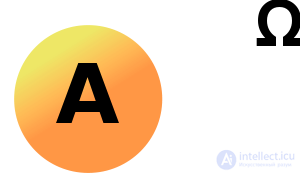
The relation between the universe and its complement.
The ancient Greek atomist philosophers understood the universe as a multitude of innumerable worlds coming into being and perishing, arising from the motion of matter.
The ancient Greek idealist philosopher Plato rejected the atomists' claim of a plurality of worlds, identifying the universe with the visible world (see Works, vol. 3, part 1, Moscow, 1971, pp. 497–98).
The German philosopher and mathematician Gottfried Leibniz held that the universe is "the set of all possible worlds," of which only one — our world — is real, while all the others can only be conceived logically, that is, by representing possible facts or connections of things in a non-contradictory way. It was this interpretation of the universe that gave rise to the notion of "state descriptions" (as possible worlds) in logical semantics and modal logic.
In mathematics, and in particular in set theory, category theory, type theory, and the foundations of mathematics, the universe is a collection that contains all the objects one wishes to consider in a given situation.
In set theory, universes are often represented as classes containing (as elements) all the sets for which a certain theorem is intended to be proved. These classes can serve as inner models for various axiomatic systems, such as ZFC or Morse–Kelley set theory. Universes are crucial for formalizing category-theoretic concepts within set-theoretic foundations. For example, the canonical motivating example of a category is Set, the category of all sets, which cannot be formalized in set theory without some notion of a universe.
In type theory, a universe is a type whose elements are types
Perhaps the simplest version is that any set can be a universe, as long as the object of study is confined to that particular set. If the object of study is the real numbers, then the real line R, which is the set of real numbers, could be regarded as the universe. Implicitly, this is the universe that Georg Cantor used when he first developed modern naive set theory and cardinality in the 1870s and 1880s in applications to real analysis. The only sets Cantor was initially interested in were subsets of R.
This conception of the universe is reflected in the use of Venn diagrams. In a Venn diagram, the action traditionally takes place inside a large rectangle, which represents the universe U. It is usually said that sets are represented by circles; but these sets can only be subsets of U. The complement of a set A is then given by that part of the rectangle outside the circle representing A. Strictly speaking, this is the relative complement U \ A of A with respect to U; but in a context where U is the universe, it can be regarded as the absolute complement C of A. In addition, there is the notion of a nullary intersection, that is, the intersection of zero sets (that is, not a set of sets, but of zero sets).
Without a universe, the null intersection would be a set of absolutely everything, which is generally considered impossible; but with a universe in place, the nullary intersection can be regarded as the totality of everything under consideration, that is, simply U. These conventions are quite useful in the algebraic approach to basic set theory, based on Boolean lattices. Except for some non-standard forms of axiomatic set theory (such as New Foundations), the class of all sets is not a Boolean lattice (it is only a relatively complemented lattice).
By contrast, the class of all subsets of a set U, called the power set of U, is a Boolean lattice. The absolute complement described above is the complementation operation in the Boolean lattice; and U, as the nullary intersection, serves as the top element (or nullary meet) in the Boolean lattice. De Morgan's laws then apply, which concern complements of meets and joins (which are unions in set theory), and apply even to null meets and null joins (which are the empty set).
However, as soon as subsets of a given set X (in Cantor's case, X = R) are considered, the universe may need to be the set of subsets of X. (For example, a topology on X is a set of subsets of X.) Various collections of subsets of X will not themselves be subsets of X, but will instead be subsets of P X, the power set of X. This can be continued; the object of study may then consist of such collections of subsets of X and so on, in which case the universe will be P(PX). In another direction, binary relations on X (subsets of the Cartesian product X × X) may be considered, or functions from X to itself, requiring universes such as P(X × X) or XX.
Thus, even if the main interest is X, the universe may need to be considerably larger than X. Following the ideas above, one may want the superstructure over X as a universe. This can be defined by structural recursion as follows:
Then the superstructure over X, denoted SX, is the union of S0X, S1X, S2X, and so on; that is
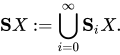
No matter which set X is the starting point, the empty set {} will belong to S1X. The empty set is the von Neumann ordinal 0. Then {{}}, the set whose only element is the empty set, will belong to S2X; this is the von Neumann ordinal 1. Likewise, {{}} will belong to S3X, and hence so will {{}, {{}}}, as the union of {{}} and {{{}}}; this is the von Neumann ordinal 2. Continuing this process, every natural number is represented in the superstructure by its von Neumann ordinal. Further, if x and y belong to the superstructure, so does {{x}, {x, y}}, which represents the ordered pair (x, y). Thus the superstructure will contain the various desired Cartesian products. The superstructure then also contains functions and relations, since these can be represented as subsets of Cartesian products. The process also yields ordered n-tuples, represented as functions whose domain is the von Neumann ordinal [n], and so on.
So if the starting point is simply X = {}, most of the sets needed for mathematics appear as elements of the superstructure over {}. But each of the elements of S{} will be a finite set. Each of the natural numbers belongs to it, but the set N of all natural numbers does not (although it is a subset of S{}). In fact, the superstructure over {} consists of all hereditarily finite sets. Thus it can be regarded as the universe of finitist mathematics. Speaking anachronistically, one might suggest that the 19th-century finitist Leopold Kronecker worked in this universe; he held that every natural number exists, while the set N ("completed infinity") does not.
However, S{} is unsatisfactory for ordinary mathematicians (who are not finitists), because even though N may be available as a subset of S{}, the power set of N is not. In particular, arbitrary sets of real numbers are not available. Thus it may become necessary to start the process anew and form S(S{}). However, to avoid unnecessary complication, one can simply take the set N of natural numbers as given and form SN, the superstructure over N. This is often regarded as the universe of ordinary mathematics. The idea is that all mathematics ordinarily studied refers to elements of this universe. For example, any of the usual constructions of the real numbers (say, Dedekind cuts) belongs to SN. Even nonstandard analysis can be carried out in the superstructure over a nonstandard model of the natural numbers.
There is a slight shift in philosophy compared with the previous section, where the universe was any set of interest U. There, the sets studied were subsets of the universe; now they are members of the universe. Thus, although P(SX) is a Boolean lattice, what matters is that SX itself is not. Consequently, the notions of Boolean lattices and Venn diagrams are rarely applied directly to the superstructure universe, as they were to the power-set universe of the previous section. Instead, one can work with the individual Boolean lattices PA, where A is any relevant set belonging to SX; then PA is a subset of SX (and in fact belongs to SX). In particular, in Cantor's case X = R, arbitrary sets of real numbers are not available, so there it may indeed be necessary to start the process anew.
One can give precise meaning to the statement that SN is the universe of ordinary mathematics; this is a model of Zermelo set theory, the axiomatic set theory originally developed by Zermelo in 1908. Zermelo's set theory was successful precisely because it was able to axiomatize "ordinary" mathematics, carrying out the program that Cantor had begun more than 30 years earlier. But Zermelo's set theory proved insufficient for the further development of axiomatic set theory and other work on the foundations of mathematics, especially model theory.
As a striking example, the above description of the superstructure process cannot itself be carried out in Zermelo set theory. The last step, forming S as an infinite union, requires the axiom of replacement, which was added to Zermelo set theory in 1922 to form Zermelo–Fraenkel set theory, the set of axioms most widely accepted today. Thus, while ordinary mathematics can be done within SN, discussion of SN goes beyond the "ordinary," into metamathematics.
But if one introduces a more powerful set theory, the superstructure process described above turns out to be merely the beginning of a transfinite recursion. Let us return to X = {}, the empty set, and introduce the (standard) notation Vi for Si{}, V0 = {}, V1 = P{}, and so on, as before. But what was previously called the "superstructure" is now simply the next element in the list: Vω, where ω is the first infinite ordinal. This can be extended to arbitrary ordinals:
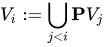
which defines Vi for any ordinal number i. The union of all Vi is the von Neumann universe V:
 .
.
Each individual Vi is a set, but their union V is a proper class. The axiom of foundation, which was added to ZF set theory at about the same time as the axiom of replacement, states that every set belongs to V.
Kurt Gödel's constructible universe L and the axiom of constructibility
Inaccessible cardinals yield models of ZF, and sometimes additional axioms, and are equivalent to the existence of a set-theoretic Grothendieck universe.
In an interpretation of first-order logic, the universe (or domain of discourse) is the collection of individuals (individual constants) over which the quantifiers range. A statement such as ∀ x (x2 ≠ 2), is ambiguous unless the domain of discourse has been identified. Under one interpretation, the domain of discourse might be the set of real numbers; under another interpretation, it might be the set of natural numbers. If the subject under discussion is the set of real numbers, the statement is false, with x = √2 as a counterexample; if the domain is the set of natural numbers, the statement is true, since 2 is not the square of any natural number.
There is another approach to the universe, historically connected with category theory. This is the idea of the Grothendieck universe. Roughly speaking, a Grothendieck universe is a set within which all the usual operations of set theory can be carried out. This version of the universe is defined as any set for which the following axioms hold:
 implies
 and
and  imply { u, v }, ( u, v ) and
  . implies
  and
and 
 (Here
(Here  is the set of all finite ordinals.)
 is a surjective function with
  and
and  , then
  .
.The advantage of the Grothendieck universe is that it is in fact a set, not a proper class. The disadvantage is that if one tries hard enough, one can leave the Grothendieck universe.
The most common use of a Grothendieck universe U is to take U as a replacement for the category of all sets. One says that a set S is U-small if S ∈ U, and U-large otherwise. The category U-Set of all U-small sets has as its objects all U-small sets and as its morphisms all functions between these sets. Both the collection of objects and the collection of morphisms are sets, so it becomes possible to discuss the category of "all" sets without invoking proper classes. It then becomes possible to define other categories within this new category. For example, the category of all U-small categories is the category of all categories whose object set and morphism set lie in U. The usual set-theoretic arguments then apply to the category of all categories, and one need not worry about accidentally referring to proper classes. Since Grothendieck universes are extremely large, this suffices for almost all applications.
When working with Grothendieck universes, mathematicians often adopt the Axiom of Universes: "For any set x, there exists a universe U such that x ∈ U." The essence of this axiom is that any set one encounters is U-small for some U, so one can apply any argument made within a general Grothendieck universe. This axiom is closely connected with the existence of strongly inaccessible cardinals.
In some type theories, especially systems with dependent types, types themselves can be regarded as terms. There is a type called the universe (often denoted  ), whose elements are types. To avoid paradoxes such as Girard's paradox (an analogue of Russell's paradox for type theory), type theories are often equipped with a countably infinite hierarchy of such universes, with each universe being a term for the next.
There are at least two kinds of universes considered in type theory: Russell-style universes (named after Bertrand Russell) and Tarski-style universes (named after Alfred Tarski). A Russell-style universe is a type whose members are types. A Tarski-style universe is a type together with an interpretation operation that lets us treat its terms as types.

Comments