
Lecture
Philosophical zombie (p-zombie, also p-zed) — a hypothetical being identical to a human in physical body down to elementary particles and quarks, but lacking consciousness . A philosophical zombie is indistinguishable from a human except that it lacks conscious experience, qualia (Lat. qualia), or the capacity to feel (sentience). When a zombie, for example, pricks itself with a sharp object, it does not feel pain. At the same time it behaves as if it really does feel it (it may say «ouch» and recoil from the stimulus, or tell us that it is experiencing intense pain), even though the zombie in fact has no experience of pain, as a supposedly «normal» person would.
The zombie argument — an argument in the philosophy of mind based on the concept of the philosophical zombie and used in philosophical disputes and proofs. Most often the zombie argument is applied in criticizing physicalism, in the forms of materialism and behaviorism.
A substantial portion of academic philosophers working on philosophy of mind acknowledge the hypothetical (imaginable) possibility of the existence of a philosophical zombie, and this «possibility» permits an a priori claim about the non-physical nature of consciousness, which is one of the forms of epiphenomenalism .
Few people believe in the actual existence of zombies, but many hold that they can at least be conceived, that is, that they are logically or metaphysically possible. It is argued that if zombies are even minimally possible, then physicalism is mistaken and some dualism (duality) of this world must be acknowledged. It is precisely in this conclusion that most philosophers see the main merit of zombie theory. At the same time it is also interesting for its assumptions about the nature of consciousness and about the connection between the material (physical) and the spiritual (phenomenal), and the use of the zombie idea in criticizing physicalism raises broader questions about the relations between the imaginable, the conceivable, and the possible. Finally, the zombie idea leads researchers to such a difficult problem of the theory of knowledge as the «other minds» problem.

«P-zombies» were used, first of all, as arguments against certain types of physicalism, in particular behaviorism. According to behaviorism, mental states exist exclusively from the standpoint of behavior. Thus belief, desire, thought, consciousness, and so on are essentially just certain kinds of behavior or a disposition toward them. It then follows that a p-zombie, which is behaviorally indistinguishable from a «normal» person but lacks conscious experience, is, according to the behaviorist position, a logically impossible being. This is explained by the strict dependence of the origin of consciousness on behavior. From the above, one may conclude that appealing to the intuition about the existence of a p-zombie thus described reinforces the argument that behaviorism is false.
There are several types of «zombies». They differ in their degree of similarity to «normal» human beings and are applied in different thought experiments as follows.
However, the «philosophical zombie» is above all considered in the context of arguments against physicalism (or functionalism) in general. Thus, by p-zombie is generally understood a being that is physically indistinguishable from a «normal» person but lacks conscious experience (more precisely, philosophically-phenomenal sensations; there is a certain problem in specifying what this actually is). Contrary to the notion that materialists (those who claim that mental states are explained by physiology) must somehow assert that philosophical zombies are logically or metaphysically impossible or unthinkable (but not factually impossible, since opponents of materialism generally agree that philosophical zombies are physically impossible — which, in turn, is a mistaken attribution, see below) — other materialists claim that in fact the materialist position is that our world is a world of philosophical zombies, that the people in our world are precisely philosophical zombies, that is, that the philosophically-phenomenal properties of sensations or consciousness-as-such (consciousness itself) occur nowhere.
Kripke
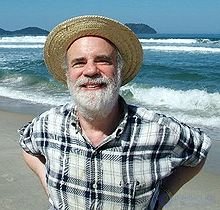
A good way to vividly demonstrate the weak points of physicalism is to turn to some ideas of the American analytic philosopher Saul Kripke, set out in his work «Naming and Necessity» (1972).
Imagine God, Kripke writes, creating a world and deciding to make the entire physical universe according to a complete specification (denoted P) purely in physical terms. P describes, first, the arrangement and state of elementary particles everywhere in space and time and, second, the laws governing their behavior. Now the question arises: having created a purely physical universe according to this specification, did God have to do something more to bring about the existence of human consciousness? An affirmative answer to this question implies that there is something more to consciousness than merely the physical facts from which it could be derived. Such an answer means dualism. Since consciousness requires non-physical properties in the strict sense, and properties of this kind would not exist in a purely physical world, this would be a world of zombies. Physicalists, on the other hand, choose to answer the question in the negative. Then they must say that, in fixing purely physical facts in accordance with P, God thereby fixed all the mental facts about the organisms whose existence P provides for, including facts about people's thoughts, feelings, emotions, and events.
Evidently physicalists hold the view that the physical world, defined by P, is the sole true order of things, while all other true statements are alternative ways of talking about the same world. In this sense physicalists must hold that facts of consciousness «follow» from physical facts and that zombie worlds are «impossible». Therefore a proof of the possibility of zombies existing will show that mental facts do not follow from physical facts: that a zombie world is possible, and physicalism is false.
The argument is formalized as follows . In Kripke's formulation: let «p» denote pain, and «c» denote C-fiber firing.
Kripke does not say very much about the apparent contingency of the statement, but he says that this is consistent with the sense that the statement could have turned out false. Chalmers proposes identifying this with something like the primary positive conceivability of the negation of this statement ("pain = C-fiber firing"). The modality "there exists a world with some character in an epistemic situation qualitatively identical to mine, in which the statement takes on such-and-such character" is denoted as "Kripke possibility" (K-possibility). From which a transition is made to the modality "possible" (in the sense of "primarily possible", that is, in a certain sense "a priori possible" — see below for the further development of the argument).
In Chalmers's refined formulation, the modal argument proposed by Kripke looks like this :
Chalmers
However, the zombie argument (also called the "conceivability argument") against physicalism in general was best applied and elaborated in detail by David Chalmers in «The Conscious Mind» (1996). According to Chalmers, one can coherently imagine an entire zombie world: a world physically indistinguishable from our world, but entirely devoid of conscious experience. In such a world, the counterpart of every being that is conscious in our world would be a «p-zombie». The structure of Chalmers's version of the «zombie argument» can be outlined as follows:
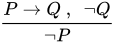 )
)More precisely
Or, substituting an equivalent statement for the negation, and explicitly writing out the materialist position as described by Chalmers:
This result of the argument (regardless of the argument itself, about which debate may continue) is accepted by at least some materialists in philosophy of mind (such as Dennett (see the corresponding section below) and Frankish ).
In a shorter form the argument can be presented as
Or
Here "P" denotes "all microphysical facts about the world" (a distinction is assumed between physical facts about the world as "micro" and "macro" physical, or as "narrow" and "broad"; "narrow" or "micro" is mass that is mass in this world; charge that is charge in this world; any function as it is in this world. Whereas "broad" or "macro" physical facts are "mass as a concept", regardless of how it is realized in some particular world (a reference to Hilary Putnam's thought experiments, which considered scenarios of worlds where "water is not water", and so on). "Q" denotes the presence of philosophical qualia, that is, non-physical sensations; not observed by anyone except a single subject; while being accessible to that subject through the sensations themselves, or through infallible introspection ; not connected to any physical stimuli or bodily functions . "A world in which there are philosophical zombies" is equivalent to "a world in which all the same P holds, but Q is absent", that is, "P&¬Q"
Chalmers provides critics of this argument (that is, materialists) with two possibilities for counterargument: to dispute the premise that "P&¬Q is conceivable" or to dispute the premise "if P&¬Q is conceivable, P&¬Q is metaphysically possible". Indeed, some philosophers develop their criticism in these directions. However, Chalmers does not mention the possibility of other lines of criticism or acceptance on the part of materialists, which also exist: one can dispute the hidden premise that "in our world there is Q" or the hidden premise that "P does not cause Q" (or that "Q is not part of P" — these possibilities arise from the ambiguity in the use of the terms "consciousness", "qualia", "phenomenal consciousness", etc.; obviously, disputing this premise is problematic if it is part of the definition of Q, as described above — however, the definition of what counts as Q and what its properties are also remains a matter of criticism and debate) or one can accept the result that "materialism, which asserts that our world has P&Q (i.e., that people are not philosophical zombies) — is false". Also, Chalmers apparently believes that he has sufficiently justified the transition between the modalities "conceivable" ("imaginable", or more precisely "ideally negatively conceivable", which he uses) and "possible" and has sufficiently defined the content of these modal concepts themselves, and does not envisage criticism of these things as possible — however, such criticism also exists.
The argument seems logically valid, since in form it resembles modus tollens, and for the latter, if the premises are true, the conclusion must also be true. The argument may seem logically correct if considered as formal logical notation (If A, then B; it is not the case that B — therefore, it is not the case that A) — without going into[10] the meaning of what is placed under the letters, nor into the validity of such placement and the attribution of truth/falsity, nor into the type of implication used (connected with the content of the propositions used, see below on counterfactual assumptions), nor into the use of modalities[11] in the course of the argument, nor into the transitions between modalities, nor into hidden[12] premises. For example, regarding premise 2: is such a zombie world indeed possible? Chalmers states that «it certainly seems that a logically consistent situation is depicted; I cannot detect a contradiction in the description». Since such a world is conceivable, Chalmers claims that it is possible; and if such a world is possible, then physicalism is false. Chalmers argues solely about logical possibility, and he believes that this is all his argument requires. He states: «Zombies are probably not naturally possible: they probably cannot exist in our world with its natural laws».
This leads to the following questions: for example, in what sense is the concept of «possibility» used here? Some philosophers argue that the kind of possibility relevant to this question is not as weak as logical possibility. They hold that, despite the logical possibility of a zombie world (that is, there is no logical contradiction in any complete description of the situation), such a weak notion is irrelevant to the analysis of a metaphysical thesis such as physicalism. Most philosophers agree that the relevant notion of possibility is, in a sense, metaphysical possibility. That whoever advances the claims of the «zombie argument» is the only one who can say, sitting in an armchair and using pure reason alone, that this whole zombie situation is metaphysically possible. Chalmers states: «From the conceivability of zombies, proponents of the argument derive their metaphysical possibility». Chalmers claims that this inference from conceivability to metaphysical possibility is not fully valid in general, but that it is entirely valid for phenomenal concepts such as consciousness. In fact, according to Chalmers, what is logically possible is, in this case, also possible metaphysically because it concerns consciousness (although it would not be metaphysically possible if it concerned other things).
Using his ph-zombie argument, D. Chalmers carries out a generalization of arguments against materialism and proposes a "generator" of such arguments. All of them have a similar structure, are built within the logic of modalities and Kripke's semantics of multiple worlds, all of them are constructed as a variety of "a "two-dimensional argument" against materialism", and all of them are based on the use of specially introduced modalities "conceivable" and "metaphysically possible" (more precisely, almost all of them — Chalmers also uses "Kripke-possible" instead of the latter in one place). To justify the use of modalities in the way he uses them, Chalmers specifically develops the distinction between different kinds of conceivability (specifically, he introduces the concepts of negative conceivability and positive conceivability; and also the concepts of prima facie conceivability and ideal conceivability; and also the concepts of primary conceivability and secondary conceivability) and metaphysical possibility (primary and secondary), and provides certain arguments to persuade one of the legitimacy of these transitions. The arguments, however, remain contentious. As do the very definitions of the modal operators "conceivable" and "possible". In particular, Chalmers agrees that positive conceivability (the ability to imagine and describe in detail a scenario realizing a given situation) is problematic in these arguments; and that prima facie conceivability (that is, an assessment limited by the knowledge and skills of the reasoning individual) does not allow a transition to the modality "metaphysically possible". However, he insists that he can somehow use the modality "ideally conceivable" (that is, the imaginability of a counterfactual scenario, not limited by the knowledge or skills of the reasoning individual) in combination with the modality "negatively conceivable" (that is, ultimately — "ideally negatively conceivable"; by negative conceivability he means an assessment indicating that the individual has no knowledge that would allow the imagined scenario to be excluded as internally contradictory or contradictory in light of external facts; by ideal negative conceivability he means an assessment that the counterfactual scenario cannot be excluded even in the course of some ideal consideration in light of all the knowledge available to humanity ) to build his argument, which can then be used for a transition to the modality "metaphysically possible". Chalmers does not discuss how the modalities he introduces relate to the commonly accepted modalities "logically possible", "ontologically possible", "logically necessary", and "ontologically necessary", although he indicates that his "conceivable" modalities relate to epistemic modalities, while the modality "metaphysically possible" relates to ontological ones (although, traditionally[13] [14], the concept of "ontological modalities" is identical to the concepts "factual", "physical", "empirical", and is defined not through anyone's ability to imagine some imagined scenario, but through correspondence to measurable facts or known scientific laws). There is no generally accepted possibility of such a transition[11][15][16]. However, Chalmers develops the idea that if one relies on a priori judgments and the conceivability of scenarios, and uses two-dimensional semantics, then such a transition can indeed be made.
A list of the modal arguments against materialism that Chalmers considers [17] as having the same structure as his proposed zombie argument and generalizes into a single "two-dimensional argument against materialism":
Other arguments with a similar structure[11]:
Chalmers describes many problems that "arise for those who deny the possibility of zombies" — but finds[19] a solution to such problems for those who do not deny the possibility of zombies. It should be noted that these problems also do not exist for physicalism, which holds that zombies are possible and that people are zombies (see below).
As noted above, Chalmers, in developing his "two-dimensional modal argument" against "physicalism", which accepts the premise of the existence of non-physical qualia, does not consider the variant of physicalism that does not accept this premise. But besides this, he also allows for one more kind of physicalism that his argument does not affect. He calls this "Russellian monism"[19] , a position that allows for property dualism by assuming that physical properties are divided into "structural" and "intrinsic" (roughly analogous to Kant's things-in-themselves, that is, certain entities standing behind observable things and manifesting as observable things from some other realm of being), and that these "intrinsic" physical properties are philosophically-phenomenal or "proto-philosophically-phenomenal" (whatever that might mean, no definite meaning being given).
However, another philosopher — Philip Goff — goes further[20], and whereas Chalmers uses the paraoptic metaphor of consciousness as certainly correct, Goff returns to the Cartesian ghost in the machine and reformulates Chalmers's argument against materialism in the following way (he calls this the "ghost argument against any a priori physicalism"). Instead of the p-zombie (a "body without a mind", that is, with observable sensations but without philosophical sensations) he proposes imagining a philosophical ghost (a "mind without a body"). He describes the ghost as a "pure subject of experience": "a being whose existence is exhausted by its consciousness, that is, by the experience of what it is like to be it"[20]:125. He defines consciousness here as "the property of being something such that there is something that it is like to be it"[21], and he also introduces, for further use in the argument, the concept of a "mode (form) of consciousness"[22]: "a mode of consciousness is a property of being something such that it is like something to be it, where «it» picks out a fully determinate way of being a subject of experience" (a notion known in folk psychology as the "observer of the experience of being"). He then further defines the concept of "ghost" by enumerating its properties. A ghost is (1) conscious: that is, there is something it is like to be it; (2) such that its mode of consciousness does not depend on some more fundamental property or properties; and (3) has no other fundamental property besides its mode of consciousness. Goff argues that the ghost thus described is, firstly, equivalent to Goff's own conscious experience, and secondly, is "conceivable" (imaginable, not excluded a priori as impossible). He then proceeds to actually construct his argument against any "materialism":
Goff then goes even further and formulates[20] two ("first" and "second") "ghost arguments against any a posteriori physicalism", in which he returns to Chalmers's modal structure of the argument, deriving some indeterminate "possibility" from some "conceivability"[20].
The first of these is as follows:
The second is as follows:
Goff holds that this argument, like the zombie argument, must be built and defended on the basis that our introspection is undoubtedly infallible and complete. Chalmers defends this position by appealing to the idea that sensations cannot have different primary and secondary contents (that is, if it seems to us that our sensations are such-and-such, then they automatically are so). Goff and Nida-Rümelin defend the same position by appealing to the idea that people have a "transparent conception of phenomenal properties" (that is, they see, automatically fully and infallibly know, what properties their sensations have and what they lack, and if it seems to them that their sensations are a fundamental and atomic process, not composed of anything beyond itself, then that is indeed the case)[20]:129. This contradicts observed facts and the empirical philosophy based on them[23] (a refutation of the zombie and ghost arguments by pointing to fact). The position held by Chalmers and Goff is also known as the "concept of dual privileged access" in Ryle's terminology.
Goff also does not consider all the previously published objections (from Locke and Hume to Ryle, and from Ryle to Smart, Metzinger, Carruthers, Dennett, and Frankish) to the factual and logical untenability of the assumption of such ghosts, which he describes as "imaginable", "possible", and "equivalent to his experience", nor the objections to the assumption of infallible knowledge of the properties of one's own sensations.
Goff argues[20] for the possibility of a transition between the modalities "conceivable" and "possible" by introducing the "Cartesian principle": "since the concept consists of phenomenal properties as phenomenal properties — that is, from the standpoint of what it is like to have them — there cannot be a gap between conceivability and possibility", that is, he postulates the correctness of such a transition because it is beyond doubt. This is a reference to the famous, disputed Cartesian principle: "whatever I clearly and distinctly conceive is also true".
In fact, in all these cases, the arguments proposed above are constructed as an illustration of philosophers' intuitive notion that "the fact that we have infallible and complete introspection" (an infallible and complete representation of the properties of one's sensations and their connection to all processes and stimuli) "entails the falsity of any a posteriori identity of physical and phenomenal states"[20]. It is precisely this assumption, as noted above, that is criticized by empirical philosophers and scientists. It is precisely the position regarding the incompleteness and partial inaccuracy of people's introspection about the properties of sensations that underlies the illusionist approach to explaining the properties of sensations. Although this very pointing out of the error of trusting introspection about phenomenal properties, which is made (by definition of this error, taking introspection about the properties of sensations for the genuine properties of sensations, especially — taking the absence of something in introspection about sensations for the absence of that thing in the processes by which sensations arise) by philosophers such as Chalmers and Goff, appeared even earlier
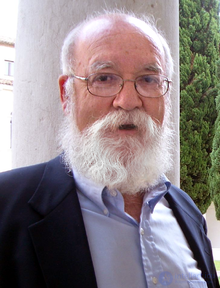
Daniel Dennett — a well-known critic of the «zombie argument», since he holds that it is of no use in philosophical discussions, that it is based on illusions and is contradictory in nature, insofar as it relates to the concept of a person. It should be noted, however, that Dennett himself, in his 1991 work «Consciousness Explained», spoke of the idea of the «zombie» «as something well known and even claims that there is „general agreement among philosophers“ that „zombies are or would be people who exhibit entirely natural, attention-accompanied and speech-accompanied, lively behavior, but who in reality are completely devoid of consciousness, being something like automatons“». A physicalist could respond to the zombie argument in several ways. Most responses deny premise 2 (Chalmers's version above), that is, they deny that a zombie world is possible.
One clear response is that the idea of qualia and the corresponding phenomenal representations of consciousness are unrelated concepts, and the zombie idea is therefore contradictory. Daniel Dennett and others hold this position. They argue that although subjective experience, etc. exist in some representation, they do not manifest as the requirements of the zombie argument's proponent; pain, for example, is not something that can be quietly separated from a person's mental life without causing behavioral or physiological deviations (discrepancies). Dennett introduced the term „zimbo“ („philosophical zombies“ that have second-order beliefs or „advanced self-monitoring mechanisms“), in order to argue that the idea of the philosophical zombie is contradictory. He states: „Philosophers should hastily abandon the zombie idea, but since they continue to hold it in a tight embrace, this gives me an excellent occasion to focus attention on the most seductive error in current thinking.“
Similarly, Thomas Nagel argues that the concept of the zombie is inherently internally contradictory: since zombies, apart from various assumptions, behave exactly as ordinary people do, they would claim to be conscious. Thomas insists that any interpretation of this claim (that is, whether it is taken to be true, false, or neither true nor false) inevitably entails either a contradiction or plain absurdity. Taking the position of physicalism, one would have to hold either that anyone, including oneself, could be a zombie, or that no one can be a zombie — following from the claim that one's own conviction that zombies exist (or do not exist) is a product of the physical world and therefore no different from anyone else's. This argument was put forward by Daniel Dennett, who states that «„zimboes“ are conscious, they have qualia, they undergo pains — they are only „wrong“ (according to this sad tradition) in a way that none of them will ever be able to detect». While it has been argued that zombies are metaphysically impossible under the assumption of physicalism, it has also been argued that zombies are not conceivable. This argument was expressed by Daniel Dennett, who states that, «when philosophers claim that zombies are conceivable, they invariably underestimate the task of conception (or fantasy), and end up imagining something that violates their own definition».
According to Dennett, there is no difference at all between humans and «philosophical zombies». For consciousness, of which zombies are supposedly deprived, simply does not exist, and in the sense in which it does exist, zombies fully possess it. That is precisely why, if one wished, one could call all people zombies.
Eliezer Yudkowsky came out with a critique of the «zombie argument» and of the whole concept of the «philosophical zombie» from the standpoint of rational knowledge. He emphasizes that the concept of the «philosophical zombie» should be discarded in accordance with both the conjunction rule of probabilities and Occam's razor — it is less probable than at least two earlier philosophical conceptions — substance dualism and reductionism. Yudkowsky points to the complete unfalsifiability of the idea of the «philosophical zombie», which rules out the possibility of testing the truth or falsity of this concept. In addition, he points to the internal inconsistency of Chalmers's reasoning about the actions of a human being and of a «zombie» resembling him .
The argumentation proposed by Chalmers is a special case of the «conceivability argument»[26], also known as the «requirement of metaphysical possibility», or, more generally, is a special case of the «consideration of the minimal counterfactual world» (or minimal counterfactual scenario) — that is, it considers a world or object which is «in every respect exactly the same as the really observed object, but differs in a single property». All such considerations have serious logical problems — problems of fundamental undecidability.[
Also, logical undecidability is a general problem of all counterfactual scenarios (considerations of situations of the type «if A were/existed, then B would be or would take place»). Such scenarios contain a false (counterfactual, not corresponding to reality) "if" and a false "then". But this means that the truth function of any counterfactual scenario is not a function of the truth of its components[30][27][28]. That is, it is impossible to say whether a "conceivable" scenario and the conclusion drawn from it are true, even if it is known whether the individual propositions offered by this scenario are true. This is a general problem of considering counterfactual implication (entailment). Therefore, to answer the question of the truth of a counterfactual statement, one must rely on other methods, since the truth of such a statement is determined not by the truth or falsity of its components, but by the connection in meaning between them, that is, by whether its consequent can be derived from its antecedent according to some law. If this cannot be done, then in order to derive the consequent from the antecedent it is usually necessary to attach a set of certain conditions. For example, if one considers the sentence "If this grain had been sown, an ear would have grown from this grain", one can see that the consequent follows from the antecedent only given the fulfillment of a certain number of necessary conditions (that the grain was viable, that there was sufficient moisture in the soil, that the crops were tended, and so on). The same problem exists with counterfactual scenarios of the alternate-history type. For example, one can consider a world where, up to a certain day, everything is exactly the same as in our world — but then a single event occurs differently. For example, Kennedy was not assassinated. Next the question is posed — what would have happened? But it is quite difficult to answer this question. Another example — consider a world in which only one parameter (that is, without changes to other parameters connected with it) differs from the one present in our world. The problem is that this is logically possible only if the given parameter experiences no causal influences from anything and itself exerts no causal influences on anything. But then consideration of such a scenario cannot yield any new information. If we consider the example with history, then to assess the truth of the alternative scenario and the conclusions drawn from it, without additional data (besides the statement itself "if..., then..."), it is necessary to consider all possible alternatives and interconnections, that is, it is necessary to consider a potentially infinite number of counterfactual worlds in order to assess the validity or truth of a conclusion drawn from the consideration of a single such world. But people do not have the cognitive capacity to consider all potentially infinite sets of possible worlds, and they cannot compare all the counterfactual alternatives, interconnections, and so on, that must be constructed in order to assess the truth of an imagined scenario and the conclusion drawn from it..
Consideration of the minimal counterfactual world is attractive and convincing to people. However, in reality, such a world is either logically impossible — as in the case of considering an alternative physical reality corresponding, in its changes, precisely to the minimally counterfactual world — or logically undecidable (it is impossible to assess its truth and the validity of conclusions drawn from the assumption of its existence) — as in the above-described consideration of alternate history. The very idea of the minimal counterfactual world is, in the opinion of some researchers, logically shaky and "extremely slippery"[38][39].
The zombie argument is not easy to assess, since it reveals fundamental disagreements among philosophers regarding the methodology and subject matter of philosophy as such, as well as the nature and possibilities of conceptual analysis. Supporters of the zombie argument, such as Chalmers, believe that conceptual analysis is the central, if not the sole, part of philosophy, performing important cognitive functions. However, others, such as Dennett, Paul Churchland, Willard Quine, and others, hold diametrically opposed views on the nature and scope of philosophical analysis. Therefore, argumentation based on the concept of the «philosophical zombie» is still being actively discussed in contemporary philosophy of mind.
The theory of the philosophical zombie is discussed and pondered by the main character of Victor Pelevin's novel S.N.U.F.F., Damian-Landulph Damilola Karpov. The question of whether the artificial woman Kaya, with whom Damilola cohabits, is a philosophical zombie, or more precisely a «zimbo»[40], never finds a final answer in the thoughts of the main character.

Comments