
Lecture
Natural philosophy (from Latin natura, "nature") is a historical term denoting (roughly until the 18th century) the philosophy of nature, understood as an integral system of the most general laws of natural science . The term "philosophia naturalis" first appears in Seneca. Natural philosophy arose in antiquity as an attempt to find the "final causes" and fundamental regularities of natural phenomena. Prominent representatives of natural philosophy in the Middle Ages were the scholastics. Most natural-philosophical systems before the 18th century were purely speculative; with the emergence of classical physics, natural philosophy was rapidly supplanted by the philosophy of science, which cuts off any hypothesis not deemed necessary for proof. Nevertheless, various natural-philosophical systems continued to appear in the 19th and 20th centuries.
Natural philosophy is usually understood as a philosophical and natural-scientific discipline within which an attempt is made to reduce all currently available knowledge about nature to a single system based on certain initial principles. Inevitable gaps in scientific knowledge were filled in by extrapolating already known facts, based on the scientific worldview accepted in a given era. The interests of natural philosophers included questions of cosmology, cosmogony, the structure of matter, and the essence of motion. Various natural-philosophical systems incorporated such fundamental scientific concepts as substance, matter, space, time, motion, natural law, and others.
As Professor G. V. Drach notes, in Russian scholarly literature the term "natural philosophy," when applied to ancient Greek philosophy, orients one toward interpreting the doctrines of nature it covers in opposition to the doctrine of man, which usually begins with the Sophists and Socrates .
The most important schools of philosophy in the Islamic world are called kalam and falsafa.
Kalam is orthodox Muslim theology. The foundation of kalam is the idea of God's infinite omnipotence. The mutakallimun (adherents of kalam) rejected causality in the material world, holding that the sole cause of everything that happens in the universe is Allah; Allah did not simply create the world at some point in the past, but creates the world at every moment. In the field of natural philosophy this idea is combined with the concept of atomism, borrowed from the Greeks. According to adherents of kalam, the atoms of which all physical bodies are composed are not held together by any physical bonds, but solely because Allah holds them together. The greatest representatives of kalam were Abu al-Hasan al-Ash'ari (873 or 874—935) and Abu Hamid al-Ghazali (1058—1111).
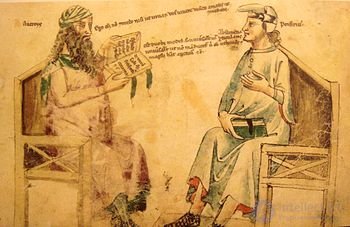
Falsafa, translated from Arabic, simply means "philosophy." Most adherents of falsafa supported the teaching of Aristotle. Its first propagandist in the Arab world was Abu Yusuf Ya'qub al-Kindi (c. 800—873), who worked at the Baghdad "House of Wisdom" under the patronage of Caliph al-Ma'mun. The philosopher Abu Nasr Muhammad al-Farabi (c. 870—950), who worked in Baghdad, was called the "Second Teacher" (the "First" being Aristotle himself). The next outstanding natural philosopher was Abu Ali ibn Sina, a native of Bukhara, known as Avicenna (980—1037), also renowned as an outstanding physician and astronomer. However, the interpretation of Aristotle's teaching by these three philosophers bore a substantial imprint of Neoplatonism. The purest treatment of Aristotelianism is considered to be that expounded by Muhammad ibn Rushd (1126—1198), also known as Averroes; it was from his commentaries that Aristotle was studied in medieval European universities.
A special place in Arab natural philosophy is occupied by the Persian polymath Abu Bakr al-Razi, known in the West as Rhazes (c. 865 — c. 925). In his views he was closer to Democritus than to Aristotle. Interesting natural-philosophical ideas were also put forward by Abu al-Rayhan al-Biruni (973—1048), Muhammad ibn Bajja (c. 1070—1138), also known as Avempace, Abu al-Barakat al-Baghdadi (c. 1080—1165), and Muhammad ibn Tufayl (c. 1110—1185).
Adherents of falsafa by no means always followed Aristotle unconditionally. For example, Rhazes and al-Biruni rejected Aristotle's theory of natural places, holding that all particles of matter possess weight, albeit to differing degrees; in their tendency toward the center of the world, heavier particles displace lighter ones) . Avicenna and Abu al-Barakat al-Baghdadi considered Aristotle's views on the causes of the motion of thrown bodies to be incorrect, developing a theory that later came to be called the theory of impetus . Non-Aristotelian views on motion were also developed by Avempace. Some thinkers of the Islamic world (in particular, Rhazes, al-Biruni, Avempace, and Abu al-Barakat) considered the existence of a vacuum to be possible .
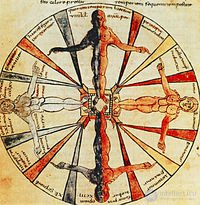
The main source of knowledge on natural philosophy and secular sciences in Europe of the 5th–11th centuries were the works of ancient Roman popularizers — Pliny, Martianus Capella, Macrobius, and Chalcidius. Some European authors (mostly representatives of the Catholic Church) also created their own encyclopedic works touching on questions of natural philosophy: Etymologies and On the Nature of Things by Isidore of Seville (c. 560—636), On the Nature of Things by Bede the Venerable (c. 672—735), and On the Nature of Things by Hrabanus Maurus (822—842). These works contained no fundamentally new ideas, but played a major role in acquainting Europeans with the foundations of the scientific knowledge of ancient Greece.
During this period arose scholasticism — a distinctive field of thought that attempted to harmoniously combine Christian theology with the ancient heritage of logic, metaphysics, and natural philosophy. Early representatives of this movement were John Scotus Eriugena (c. 810—878), Anselm of Canterbury (1033—1109), Berengar of Tours (c. 1000—1088), John Roscelin (c. 1050—1122), and Peter Abelard (1079—1142).
A turning point in European science came in the 12th century. This period is often called the Renaissance of the 12th century. In this century scientific literature in Latin — the language of the educated strata of the European population — first arose. Initially these were works by ancient Greek and Arab authors translated into Latin from Arabic. Thus, the Italian Gerard of Cremona (c. 1114—1187) translated more than 70 books on mathematics, astronomy, optics, philosophy, and medicine from Arabic into Latin, including Aristotle's natural-philosophical works — the Physics and On the Heavens.
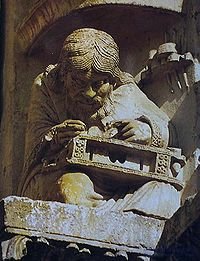
Original works by European authors soon appeared as well. The English philosopher Adelard of Bath, in his work Natural Questions, expressed the view that nature develops according to its own laws and that man is capable of understanding these laws with his reason . This view found vivid embodiment in the works of a group of natural philosophers of the School of Chartres — William of Conches, Thierry of Chartres, and Bernard Silvestris . The Chartres natural philosophers developed naturalistic conceptions in which the development of the world does not presuppose direct divine intervention.
Thus, according to William of Conches[10], God created four kinds of atoms, characterized by four qualities: moistness, dryness, coldness, and heat. Between the atoms act certain physical forces, thanks to which they can combine with one another, forming the elements of earth, water, air, and fire. Under the influence of stellar heat, the substance of the Earth dries out, and as various elements are released from it, various living beings are formed, including man. Direct intervention by the Creator consisted only in his giving man a soul: his body arose in a natural way. In the cosmogonic scheme of Thierry of Chartres[11][12], God's work likewise consisted only in the creation of matter, composed of four elements: fire, air, water, and earth. The heavier an element, the closer to the center of the world it ended up. The lightest of the elements, fire, ended up on the periphery of the Cosmos, with air closer to the center of the world, then water, and finally earth. The heat emanating from the fire evaporated the water, and part of the earth's surface was exposed; thus islands appeared amid the world ocean. The water vapor that rose upward congealed and formed the stars.
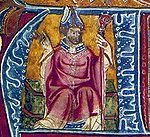
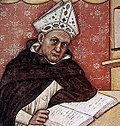
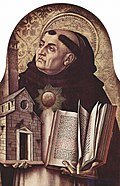
The beginning of the 13th century was marked by the rapid spread of Aristotle's teaching. A synthetic conception, attempting to reconcile Aristotle's natural philosophy with the dogmas of Christianity, was developed by Albertus Magnus and Thomas Aquinas. Among the supporters of Aristotle were also Roger Bacon and Robert Grosseteste. Grosseteste developed a cosmogonic theory reconciling Aristotelianism, Neoplatonism, and Christianity. In this theory it is assumed that the world arose from the emission of light from a single point, created by God. However, a number of leading theologians (including Bonaventure and Henry of Ghent) considered attempts to synthesize Christianity with Aristotle's teaching hostile to the faith. Despite this, Aristotle's teaching soon became a practically unquestionable dogma among natural philosophers.
At the beginning of the 13th century, David of Dinant, a lecturer at the University of Paris, presented a pantheistic interpretation of Aristotelianism: "the world is God himself," "God is the mind of all souls and the matter of all bodies"[13]. These views were condemned as heretical in 1210.
In the mid-13th century a group of thinkers formed among the teachers of the Faculty of Arts of the University of Paris, who held that in all cases of such contradiction the opinion of philosophy should be considered at least no less true than the opinion of religion. In cases where the viewpoints of religion and philosophy contradicted one another, these thinkers appealed to the doctrine of double truth. These philosophers are often called "Latin Averroists," since they based their views on Aristotle's teaching as expressed by Averroes. The informal leaders of this movement were Siger of Brabant (c. 1240—1282) and Boethius of Dacia (c. 1240—1284).
Through various logical arguments the Averroists proved the eternity and uncreatedness of the world. The question inevitably arose of how the eternity of the world could be reconciled with the Christian dogma of the world's creation by God. In response the Averroists turned to the doctrine of double truth. Thomas Aquinas opposed this view (in defense of the Christian dogma), but was unable to refute the Averroists' logical arguments.
On the initiative of Henry of Ghent, in 1270 the Archbishop of Paris, Étienne Tempier, issued a special edict of 13 propositions condemning the views of the Averroists as anathema. In 1277 an edict of as many as 219 propositions was promulgated. Siger of Brabant was soon placed under inquisitorial investigation and died under unclear circumstances; Boethius of Dacia fled Paris. Almost all of these philosophers' writings were burned. Some points of the 1277 edict were, however, directed against Thomas Aquinas.
Although the edict was directed above all against the claims of rational knowledge to independence from religion, it also had, in part, positive consequences, since by the end of the 13th century Aristotle's teaching was beginning to become a brake on scientific progress. Nevertheless, it failed to seriously shake the dominant position of Aristotelianism in natural philosophy.
The 13th century is also marked by notable achievements in specific sciences: mathematics (Fibonacci), statics (Jordanus Nemorarius), optics (Roger Bacon, Witelo, Dietrich of Freiberg (English)Russian, John Peckham (English)Russian), and astronomy (Guillaume de Saint-Cloud). An important event in the science of the 13th century was the compilation of the Alfonsine Tables of planetary motion, which served as the principal astronomical reference work until the 17th century.
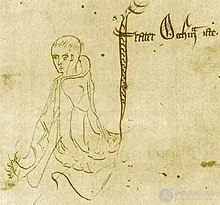
The pinnacle of the philosophical and theological disputes of the Middle Ages was the work of William of Ockham (c. 1285—1349). The foundation of his teaching was the idea of the omnipotence of God, limited only by the impossibility of creating logically contradictory things. Thus, everything logically possible could exist in reality. From this followed two crucial consequences. The first concerned the relationship between reason and faith. Since the order of nature depends entirely on divine will, studying it can tell us nothing about God, including establishing the very fact of his existence. This meant, in turn, a complete separation of philosophy from theology: just as philosophy could give nothing to theology, so theology could give nothing to philosophy. Although from a theological point of view the world depended entirely on God, from a philosophical point of view, in Ockham's teaching the world is entirely free of God.
The second conclusion concerned natural philosophy as such. A feature of the philosophy of the preceding period was the belief that the entire order of the universe could be logically deduced from a small number of postulates; the result of such investigation was considered to be Aristotle's teaching. Ockham largely devalued this notion: God, by virtue of his omnipotence, could create the universe on the basis of whatever principles he wished. It followed that a person who genuinely wishes to understand the structure of the universe has no choice but to observe nature and conduct experiments. For this reason some modern philosophers hold that Ockham's teaching laid the foundation for the experimental method in the natural sciences[14][15]. Ockham's closest followers (among them the University of Paris scholastics Jean Buridan, Albert of Saxony, Nicole Oresme, and Nicholas of Autrecourt), however, did not engage in experimentation as such, but did devote great attention to developing new natural-philosophical ideas going beyond the bounds of Aristotle's teaching — which could no longer be regarded as the logically inevitable foundation of science.
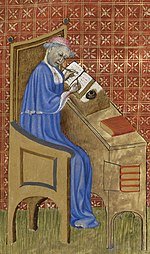
In many cases the new natural-philosophical ideas of the 14th-century scholastics were "well-forgotten old ones," since they had already been considered in antiquity:
The least radical of these ideas fared best — the theory of impetus, as being consistent in spirit with Aristotelian dynamics. Over time it gained fairly wide currency among the scholastics. The remaining hypotheses remained mere thought experiments: what the world might be like if it were not Aristotelian. It was believed that God, had he wished, could have created the world differently, but in reality he created it exactly as described in Aristotle's teaching.
An important achievement of 14th-century science was the attempt to mathematize natural philosophy undertaken by the Oxford Calculators — a group of English philosophers associated with the University of Oxford (Thomas Bradwardine, William Heytesbury, Richard Swineshead, John Dumbleton). In effect they laid the foundations of kinematics. They introduced the concepts of uniform and uniformly accelerated motion, and formulated the theorem according to which the distance traveled by a body in a given time under uniformly varying motion equals the distance traveled by the body in the same time under uniform motion at a speed equal to the arithmetic mean of the maximum and minimum velocities in the uniformly varying motion[21]. The ideas of the Oxford Calculators were further developed in the works of Nicole Oresme and Giovanni di Casali, who were the first to present a graphical analysis of the motion of bodies with variable speed. However, the work of these scholars was not applied to the actual motion of terrestrial bodies and remained in the realm of pure abstraction[22].
A significant step toward the methodology characteristic of modern science was the rejection, by Ockham and Buridan, of the Aristotelian theory of causation. They denied the existence of the Aristotelian final cause (entelechy) and held that, in order to explain the phenomena of nature, the search for efficient causes was sufficient[23]. A consequence of this rejection of final causation was the interest with which Ockham approached Empedocles's views on the evolution of the organic world[24]. A number of natural philosophers of this era (Buridan, Oresme, Albert of Saxony, and others) are characterized by a naturalistic approach: they held that in explaining any phenomenon of nature one should avoid assuming the direct intervention of God[25]. An example of the use of this approach is Buridan's explanation of the ashen light of the Moon[26], and the attempts by Buridan and Albert of Saxony to explain geological processes by a mismatch between the center of gravity of the solid earth and that of water[27][28].
On the whole, however, the natural philosophy of the 14th century remained within the Aristotelian paradigm. An example is the endless fruitless disputes about the nature of motion carried on by the Scholastics (Ockham, Buridan, Albert of Saxony): whether motion is a "flowing form" or a "flow of form"[29]. Another example is the discussions about the possible ensoulment of the heavens and about the nature of the intelligences responsible for the motion of the celestial spheres[30]. The very existence of the celestial spheres was not even called into question. In 1341, teachers of the "liberal arts" at the University of Paris were required to swear an oath to teach students the doctrine of Aristotle and his commentator Averroes, except in cases where it contradicted Scripture[31].
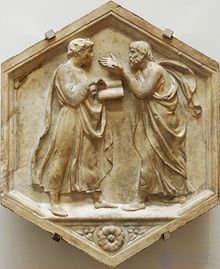
The only philosopher of antiquity studied in the Middle Ages was Aristotle. Aristotle's influence remained strong throughout the entire Renaissance. His most prominent defenders at the turn of the 15th/16th centuries were Pietro Pomponazzi and Alessandro Achillini. At the same time, during the Renaissance Europeans also discovered other schools of ancient philosophy, which could not but influence the development of natural philosophy and science.
Plato's natural-philosophical views were known through the dialogue Timaeus, partly translated into Latin as early as the first half of the 4th century AD by Calcidius. Although in the 12th century Plato exerted a certain influence on the philosophers of the School of Chartres, during the period of middle and high Scholasticism he was almost entirely displaced by Aristotle. At the beginning of the Renaissance, Plato's views again became sought after. The leading role in the revival of interest in Plato was played by the Byzantine thinker George Gemistos Plethon (c. 1360—1452), and later by Marsilio Ficino (1433—1499) in Florence. Ficino translated all of Plato's works into Latin and wrote the treatise "Platonic Theology on the Immortality of the Soul," a significant part of which is devoted to expounding Plato's natural-philosophical views — albeit combined with the ideas of the Neoplatonists and the Hermetists.
In 1417, the Italian humanist Poggio Bracciolini happened to discover a manuscript of Lucretius's poem "On the Nature of Things," devoted to expounding the natural-philosophical views of Epicurus. Various editions of this poem appeared in 1473, 1500, 1515, and 1563. Renaissance philosophers studied ancient atomism through this poem.
The ethical views of the Stoics, known through Cicero and Seneca, gained some recognition already during the Italian proto-Renaissance, and in the 16th century became widespread among humanists. Along with Stoic ethics, interest in their natural-philosophical views also revived. Individual natural-philosophical and cosmological ideas of the Stoics were adopted by such late-Renaissance thinkers as Jacob Ziegler and Christoph Rothmann in Germany, Jean Pena in France, and Tycho Brahe in Denmark[32][33]. The Stoic idea of the material unity of Earth and heaven played a major role in the collapse of the influence of Aristotelian cosmology in the following, 17th, century[34].
Various magical conceptions, together with the natural-philosophical ideas they contained, also gained wide currency in the Renaissance, in particular Hermeticism and the Kabbalah (Pico della Mirandola, Paracelsus, Agrippa of Nettesheim).
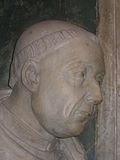
The outstanding natural philosopher of the early Renaissance was Nicholas of Cusa. Although he retains many elements of medieval cosmology (including belief in the existence of celestial spheres, including the outermost of them — the sphere of the fixed stars), his cosmology is on the whole innovative in character. The celestial "spheres" are not perfectly round, their rotation is not uniform, and their axes of rotation do not occupy a fixed position in space. As a result, the world has no absolute center and no clear boundary (it is probably in this sense that Cusa's thesis of the boundlessness of the universe should be understood)[35]. Cusa assumed the material unity of the universe and considered the Earth to be one of the planets, also undergoing motion; celestial bodies are inhabited, just as our Earth is, and an inhabitant of any body in the universe could, with equal justification, consider himself motionless.
In assuming the identity of the matter of the heavens and of the Earth, Leonardo da Vinci followed him, attempting to support his ideas with observations of celestial bodies. Leonardo correctly explained the cause of the Moon's ashen light. He concluded that the Earth is a body of the same kind as the Moon. In the field of mechanics, Leonardo was an adherent of impetus theory, of which he most likely learned from the writings of Albert of Saxony. He considered the Earth to be a living being, in which dry land is the flesh, streams of water are the blood, and the ebb and flow of the tides are the beating of the pulse[36].
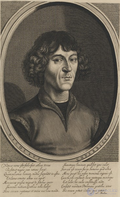
The first half of the 16th century is marked by the appearance of Nicolaus Copernicus's new, heliocentric system of the world. Copernicus placed the Sun at the center of the world, around which the planets revolved (including the Earth, which also rotated on its axis). Copernicus was aware that his theory contradicted the fundamental tenets of Aristotle's natural philosophy, but he hoped that only minor modifications would be needed to reconcile the latter with it. In particular, he suggested that not only the Earth, but all celestial bodies, possess gravity.
Developing Copernicus's ideas, the English astronomer Thomas Digges suggested that the stars are arranged in the universe not on a single sphere, but at various distances from the Earth extending to infinity[37]. In his view, the "sphere" of the fixed stars is "the Palace of the greatest God, the abode of the elect, the dwelling of the heavenly angels"[37]. The next step was taken by Giordano Bruno, who put forward the conception of an infinite, qualitatively uniform universe and of stars as distant suns (see below ).
).
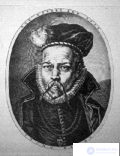
Apparently, Copernicus still believed that the planets were carried in their motion by celestial spheres. However, certain celestial phenomena observed in the second half of the 16th century (the Nova of 1572, the comet of 1577) forced astronomers to abandon this dogma. By measuring the horizontal parallax of these celestial bodies, the Danish astronomer Tycho Brahe concluded that novae and comets are located not in the immediate vicinity of the Earth (as Aristotle had held), but beyond the Moon. From this followed revolutionary conclusions for cosmology and for the whole of natural philosophy: solid celestial spheres do not exist, and the matter of the heavens is subject to change, just as the matter of the Earth is.
Tycho Brahe, however, did not accept the heliocentric system of the world. In opposition to Copernicus, he put forward his own geoheliocentric system of the world, in which the Earth is immovably located at the center of the world, with the stars, the Moon, and the Sun revolving around it, but all the planets revolving around the Sun. Tycho Brahe's system of the world became the main rival of the Copernican system in the following, 17th, century.
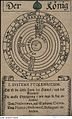
The geocentric system of the world: the Sun and the planets revolve around the Earth
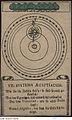
The limited geoheliocentric system of the world: Mars, Jupiter, and Saturn revolve around the Earth; Mercury and Venus revolve around the Sun; the Sun revolves around the Earth
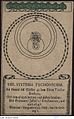
The geoheliocentric system of the world: all the planets revolve around the Sun, and the Sun revolves around the Earth
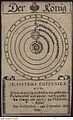
The heliocentric system of the world: all the planets revolve around the Sun, and the Moon revolves around the Earth
A distinctive phenomenon in the thought of the 16th and early 17th centuries was the Italian natural philosophy represented by the names of Bernardino Telesio (1509—1588), Francesco Patrizi (1529—1597), Giordano Bruno (1548—1600), and Tommaso Campanella (1568—1639). The ideas of these philosophers developed the principles of Neoplatonism. The views they held on the ensoulment of nature (earlier expressed by Leonardo da Vinci, Ficino, and others) were, on the threshold of the scientific revolution, gradually becoming archaic; at the same time, their deep philosophical analysis of space is of great importance for the development of science, having considerably prepared the ground for the Newtonian idea of absolute space. A great merit of the Italian natural philosophers is their systematic critique of Aristotelian physics.
In his work On the Nature of Things According to Their Own Principles, Bernardino Telesio maintains that all of nature consists of one and the same matter and is the arena of action of two forces, cold and heat. Heat is the basis of life. Since heat is inherently present in nature, all matter is, to one degree or another, ensouled. Telesio denies the existence of Aristotle's fifth element (aether). Thus, in his theory there is no room for a special element of which celestial bodies are made, though the assumption of the existence of celestial spheres is retained.
Francesco Patrizi, in his work New Philosophy of the Universe, maintains that all bodies consist of four internal principles — space, light, heat, and flow. Space in Patrizi's natural philosophy is homogeneous and infinite. Beyond the boundaries of the material universe it is described by the same laws of geometry as within, but is filled not with material bodies, but with a special supernatural light emanating directly from God. In Patrizi's view, the Earth is located at the center of the world and performs a rotational motion around its own axis. The assumption of the axial rotation of the Earth makes superfluous the existence of a sphere of fixed stars completing a full revolution around the Earth in a day. Patrizi held that the planets move on their own, being gigantic living beings endowed with their own intellect. Light is the active principle of nature, creating various things by means of the heat emanating from it. Flow is matter itself, in a state of eternal becoming.
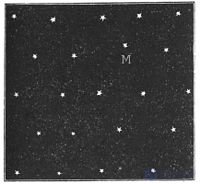
Giordano Bruno was one of the few thinkers of the 16th century to fully accept the heliocentric system of the world. However, he went considerably further than Copernicus. He did away with the celestial spheres and assumed the infinity and uniformity of space, uniformly filled with matter. The space between bodies is not entirely empty, but is filled with an all-pervading medium — the aether. In the field of mechanics he followed impetus theory, attempting to use it to account for the absence of any deviation of falling bodies from the vertical on a rotating Earth. In Bruno's view, matter consists of atoms; unlike the atoms of Epicurus, Bruno's atoms are not entirely material and inert, but possess a certain inner force and life, resembling Leibniz's monads more closely. Besides the Solar System, there exist other systems as well, consisting of central hot bodies (suns) with cold planets revolving around them. Bruno identified the distant suns with the stars. In Bruno's natural philosophy the celestial bodies were considered gigantic living, rationally thinking beings. Bruno did not merely consider the infinite universe a creation of an almighty deity, but to some extent a manifestation of God himself.
The natural philosophy of the Italian Renaissance was further developed by Tommaso Campanella already at the beginning of the 17th century. In Campanella's view, all things partake of a divine unity and are thereby inseparably connected with one another. Natural magic is a manifestation of this "sympathetic" connection among things. At the basis of creation lies a single world soul, which is connected with the material world by means of four first principles: space, heat, attraction, and repulsion.
The Laws of Nature for the French Enlightenment thinkers represent what accords with the nature of natural right and what accords with reason — what can bring happiness and benefit to humanity; to these they also added their own considerations, which they often identified with the requirements of nature[38].
At the end of the 19th and beginning of the 20th century, attempts to revive natural philosophy were made by W. Ostwald, H. Driesch, T. Lipps, and others. Elements of idealist natural philosophy are present in the philosophy of A. Whitehead and in the theory of emergent evolution[39].

Comments