
Lecture
Rhizome (Fr. rhizome, «rootstock») — one of the key concepts of poststructuralist and postmodernist philosophy, introduced by Gilles Deleuze and Félix Guattari in their book of the same name in 1976, intended to serve as the foundation and form of realization of these authors' «nomadological project.» The rhizome is meant to stand opposed to the fixed linear structures (of both being and thought) that, in their view, are typical of classical European culture.
Poststructuralism — a conventional designation for a philosophical movement and a critical approach to the analysis of culture and society that arose after the decline of French structuralism in the early 1970s. Poststructuralism gained prominence in the United States in the 1980s and spread to Europe in the 1990s. In France, the term itself was generally not used.
Postmodernism (Fr. postmodernisme — after modernism) — a concept reflecting structurally similar phenomena in world social life and culture of the second half of the twentieth century and the beginning of the twenty-first, often interpreted as «that which came to replace modernism.» It is used both to characterize a post-nonclassical type of philosophizing and to denote a complex of styles in the visual arts.
Nomadology (from nomad) — a project (concept) of a new vision of the world, proposed by G. Deleuze and F. Guattari in the 1970s. It is characterized by a rejection of the idea of a rigid structure based on binary oppositions, as well as a rejection of the idea of strict determinism (the metaphor of the General). One of the key symbols of nomadology is the rhizome. Nomadology also draws attention to the emergence in the West of «tribes of psychology,» expressed in the formation of groups that set themselves apart from the rest of society and create their own symbolism and rituals (for example, subcultures). According to Deleuze's original conception, set out in chapter 12 of the treatise «Anti-Oedipus» (1980), these anarchist «tribes» resemble the nomads of antiquity and challenge the repressive apparatus of civilization and the state.
In general, nomadology can be regarded as a synonym for postmodernism in the version put forward by Deleuze and Guattari.
In the twenty-first century, the ideas of nomadology were adopted by Kazakh thinkers, who saw in it an expression of the distinctiveness of their culture, which has Turkic-nomadic roots. In particular, pantheistic Tengrism is understood by them as removing the idea of hierarchy and binarism (up and down, good and evil).
Nomadism is characterized by the idea of the assembly of man and horse into a «desiring machine,» which is subsequently assembled together with other singularities into a horde — a desiring megamachine. In the course of its activity, the nomad creates an open, evolving space of being through expansion, while the state seeks to fix territory by establishing borders and segmenting the space that belongs to it.
The nomad's movement conditions its existence, and therefore the nomad also secures territories for itself — through constant movement, opening up space anew each time.
Understanding the nomad's movement has its own peculiarities.
The nomad does not move, in the sense that it does not travel from point to point. In the existential sense, it does not exist outside of movement; movement is inherent to it from the outset and defines it as a nomad. It does not move toward or away from home, as a settled person does, but together with its home. In this sense, the nomad is motionless.
The expansionary character of the nomad's activity, as well as the constant expansion of space, implies that war is the natural mode of the nomad's existence. The nomad is presented as a «war machine,» as a warrior — that is, an autonomous and independent unit, in contrast to a serviceman, regulated by and subordinate to a code of statutes. In the state, the function of the war machine is performed by the army, which exists as a social institution with norms and rules regulated by statutes. The nomadic war machine has an abstract numerical character (like the Mongol cavalry, measured in hundreds and thousands) and itself moves through space, without attaching itself to or dividing up the surface.
In twenty-first-century postmodernism, according to A. M. Bekarev, the following forms of nomadism can be distinguished: networkism, global corporations, and diasporas. The network becomes a key concept, taking shape in the economy with the separation of the financial sector from the real sector and covering the remaining networks, including political ones. In the sphere of trade, brand warfare leads to mergers and acquisitions; large companies become multinational corporations, and their activity thereby acquires a rhizomatic character. What is called network imperialism arises, which A. M. Bekarev considers a synonym for contemporary nomadism, based on the triad «capital-power-fame,» necessary for the realization of possession as an important principle of postmodernity. The striving for possession implies the constant performance of movements, that is, the need to become a kind of nomad.
The development of the Internet affects social ties (which are not originally virtual) and gives people relative freedom in hyperspace. The emerging global information networks serve not only as a means of communication and information transfer but are also integrated into the financial environment, becoming an instrument for the dissemination of electronic money and technologies.
The term «network society,» which describes not only virtual space but society as a whole, belongs to M. Castells. In the era of the information society, the network is regarded as a special form of social organization. This network possesses common characteristics that are present in biological, technical, and social forms alike: fractality (the capacity to fragment), connectedness into a whole at high speeds, and multi-nuclearity (the absence of a dominant vector). These properties are also characteristic of the rhizome, and therefore network society can be regarded as a rhizomatic space in which the laws of nomadology operate.
The network, as a rhizomatic field of nomadism for postmodern subjects, allows social interactions to be fragmented, adapting to individual conditions of human existence, helps to remove enclosure and the limitation of space, and to open up the horizons of communication. Like the world of traditional nomads, the network spreads over a horizontal surface, eliminating vertical hierarchies. Immersed in the network, postmodern nomads move toward the extraterritoriality of social ties, losing their attachment to the state, the local community, and the home.
Not all researchers agree with applying the metaphor of the nomad to contemporary humans. Zygmunt Bauman holds that today the metaphors of the vagabond and the tourist are most fitting.
The tourist pays for his freedom, the right to disregard local concerns and feelings, the right to create his own network of meanings… The world belongs to the tourist, … he must live in it with pleasure and thus endow it with meaning.
Vagabonds are travelers who are denied the right to become tourists. They are permitted neither to remain in place (no particular place guarantees permanence, an end to unwanted movement) nor to seek a more suitable place to live.
Another interpretation of contemporary nomadism is offered by Rosi Braidotti, who emphasizes the nonlinearity of women's thinking and contrasts «male» reason — legislative and logocentric — with «female» reason — interpretive and nonlinear .
Nomadism is a difference of the sexes, understood as the possibility of a shift in position acquired by the multiple female, feminist voices that have bodily embodiments; feminist nomadism as a theoretical position allows for the coexistence… of different representations and ways of understanding female subjectivity, and provides rich material for discussion.
The figure of the General in nomadology functions as a kind of external cause, or determinant. It can be expressed in several forms:
Nomadology does not accept the figure of the General as an external dominant and driving force, declaring instead the principle of spontaneous self-organization. Any process is carried out without forced subordination, but proceeds from a «decentered multiplicity,» which, in accordance with the principles of the rhizomorphic structure, rids itself both of outsiders and of any centralizing force.
Deleuze and Guattari describe the properties of the rhizome by means of two approaches: as informal properties (in the form of free-flowing text) and as formal properties (in the form of a list of individual properties, with a description of each property) .
Deleuze and Guattari use the words «rhizome» and «rhizomatic» to describe any theory or research that allows for multiple non-hierarchical (not ordered into any hierarchy) points of entry and exit in the representation and interpretation of knowledge. In A Thousand Plateaus, they contrast the rhizome with the tree, the arborescent (hierarchical, tree-like) representation of knowledge that reflects dual categories and binary choices. The rhizome reflects horizontal/cross-species and planar connections, whereas the arborescent model reflects vertical and linear connections. To illustrate the horizontal/cross-species and planar connections in the rhizome, Deleuze and Guattari use a phenomenon from biology — the «orchid and the wasp» . Mutualism is when two different species interact with each other to form a substantive multiplicity that is not tied to any single thing that gave rise to it (a multiplicity is called «substantive» when it lacks any single «one» that produced it). Other examples of horizontal connections in the rhizome may include hybridization and horizontal gene transfer .

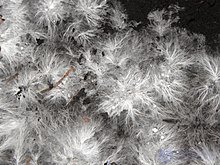
A vivid example of the rhizome is the tangled root system of a plant. According to Deleuze and Guattari, the rhizome has neither a beginning nor an end, neither a center nor a centering principle (a «genetic axis»), nor a single code .
In the authors' view, the rhizome is capable of generating unsystematic and unexpected differences that cannot be set in opposition to one another on the basis of the presence or absence of some feature. This function of the rhizome arises from its construction. The rhizome includes lines of segmentation, «comparative speeds,» movements along which constitute its organization. The connections of the rhizome's lines form what is called a «plateau» — a temporary zone of stability within its constantly pulsating configuration .
However, the authors fundamentally contrast these zones with the binary vectors of development typical of «arborescent structures» . At the same time, nomadology raises the problem of the interaction between linear («arborescent») and nonlinear («rhizomorphic») environments. According to M. A. Mozheiko's interpretation, «rhizomorphic environments possess an immanent creative potential for self-organization» and can be called synergetic .
Deleuze and Guattari name the following principal properties of the rhizome:
In a first approximation, the rhizome's property of «multiplicity» is a negation of the tree's property of «unity.» In a second approximation, the rhizome's property of «multiplicity» is a negation of the tree's property of «having some one thing that gave rise to the multiplicity» .
In a first approximation, the rhizome's property of «multiplicity» is a negation of the tree's property of «unity» . By «tree» one may understand either a hierarchical linear tree (or root) , or a fascicular root, a fibrous root system (a root without a main root, which has either failed to mature or is deteriorating, and in whose place secondary roots grow to full strength) . Deleuze and Guattari use the word «root» and do not use the word «tree,» since they point to one and the same concept (a hierarchical linear model for representing knowledge) .
In the rhizome, the negation of the tree's property of «unity» is manifested in the absence of a main stem or main root, and this absence is manifested at all the levels at which this property is manifested in the tree .
In a second approximation, the rhizome's property of «multiplicity» is a negation of the tree's property of «having a one that gave rise to it» . The multiplicity that enters into the rhizome is not tied to any one thing that gave rise to this multiplicity, or, as it is said, it is «substantive» :
If the rhizome is represented as a book, its content will be generated not by any single subject or author, but by the conflict of flows moving along certain lines .
In the rhizome there is movement along certain lines at a certain speed, in which different flows either accelerate or lag relative to one another. When one flow accelerates relative to another, the phenomenon of acceleration, of rupture, arises. When one flow lags relative to another, the phenomenon of viscosity, of delay, arises. The conflict between the speeds of different flows is what generates the content of the rhizome .
In Deleuze and Guattari's description of the rhizome, the lines (as trajectories of the flow's movement) are described very vaguely and unclearly, and it is hard to understand what kind of lines these are: «In [the rhizome] there are lines of articulation or segmentation, strata, territorialities; but also lines of flight (lignes de fuite), movement, deterritorialization and destratification» As follows from their description, movement along any given line, and the line itself, are in some way connected with the segmentation and desegmentation of the rhizome, but exactly what this connection is remains unclear.
As follows from Deleuze and Guattari's description, in the rhizome a line (of articulation or segmentation; of flight) is a line along which something moves (the rhizome or its individual parts — segments, strata, territories); a line along which the movement of something is carried out; the trajectory of something's movement; and not a line that divides the parts of the rhizome .
According to Umberto Eco, in building the world of the novel «The Name of the Rose» as a «space of conjecture», he relied precisely on the concept of the rhizome — one of the types of labyrinth .

Comments