
Lecture
Qualia (from Lat. qualitas (sing.) — properties, qualities, quale (sing.) — of what sort or of what kind) — a term used in philosophy, primarily in Anglophone analytic philosophy of mind, to denote sensory, experiential phenomena of any kind. It was introduced by the American philosopher C. I. Lewis (Eng.)Rus. in 1929.
Qualia is «an unfamiliar term for something that could not be more familiar to us: how things seem to us» .
Qualia is a term in philosophy that refers to the qualitative aspects of our consciousness, including our sensory and experiential perceptions of the world.
Sensory and experiential phenomena are our perceptions of the world through the senses, such as sight, hearing, taste, smell, and touch. These perceptions include qualitative aspects such as colors, sounds, smells, tastes, and sensations on the skin.
Qualia are described as something pertaining to our consciousness that cannot be explained solely by objective facts and laws of nature. For example, a description of the color green can be based on objective facts about the wavelength of light, but the sensation of "green", as we experience it, is qualia.
Qualia are important for the philosophical understanding of consciousness and our relation to the world, since they describe our personal and subjective perceptions and sensations. They can also be connected to problems such as the problem of "liveliness" (i.e., what makes living organisms special and not explainable by physical laws alone) and the problem of free will (i.e., the question of how our subjective sensations and desires influence our decisions and actions).
They can be defined as qualities or sensations, such as redness or pain, and are considered separately from their influence on behavior, as well as from any physical conditions that might have caused them. In more precise philosophical terms, qualia are properties of sensory experience.
One of the founders of quantum mechanics, Erwin Schrödinger, expressed his view on this matter:
The sensation of color cannot be reduced to the objective picture of light waves available to the physicist. Could a physiologist explain it if he had more complete knowledge than he currently possesses of the processes in the retina and the nerve processes they trigger in the bundles of optic nerves in the brain? I do not think so.
The status of qualia is one of the sharpest and most widely discussed problems in contemporary philosophy, since it serves as a key to understanding the nature of consciousness. Qualia occupy a central place in solving the mind–body problem .

«Redness» is a classic example of qualia (a sensation)
The word acquired its modern meaning at the beginning of the 20th century in the works of C. I. Lewis, who considered it separately from the properties of the object. The importance of qualia in the philosophy of mind is primarily related to the fact that they are often presented as a fundamental problem for physicalism. The greatest disputes about their existence revolve, however, around the problem of precisely defining the term, since different philosophers argue for or deny the presence of various properties in qualia. Extending the definition beyond the vague phrase «sensory, experiential phenomena» simultaneously leads into contested territory.
There are many definitions of qualia, and they have changed over time. The simplest, broadest definition is the following: the «what it is like» property of mental states. How it feels when experiencing such mental states as pain, seeing red, smelling a rose, and so on .
Lewis, in his book «Mind and the World Order» (1929), was the first to use the term «qualia» in its now-generally-accepted modern sense.
| There are recognizable qualitative characteristics of the given which recur in various acts of apprehension, and are thus a species of universals; I call them „qualia“. But although such qualia are universals, in the sense of being recognized from one to another experience, they must be distinguished from the properties of objects. The confusion of these two things has run through much traditional conception, as well as contemporary essence-theories. A quale is directly intuited, given, and is not the sort of thing that is capable of being false because it is purely subjective. |
Frank Jackson (1982) later defined qualia as «certain features of the bodily sensations especially, but also of certain perceptual experiences, which are not physical information in any of its forms» (p. 273).
Under such broad definitions as those given above, there is no doubt that qualia exist . However, such broad definitions make it difficult to discuss the precise nature of qualia and their interaction with consciousness and the external world. Some philosophers have attempted to give a more precise, and possibly narrower, definition of qualia, describing things whose existence is more contested.
Daniel Dennett identifies four properties that are commonly ascribed to qualia. According to these, qualia are:
If qualia of this kind exist, then a person with normal vision who sees red would not be able to describe the experience of this perception in such a way that a listener who has never seen this color could learn everything there is to know about this experience. Although an analogy can be given, for example: «red looks hot», or a description of the conditions under which this experience occurs, such as: «this is the color you see when light with a wavelength of 700 nm is directed at you», proponents of this definition of qualia argue that such a description is incapable of conveying a complete description of the experience.
Another way of defining qualia is as «raw feels». A raw feel is a perception in and of itself, considered entirely in isolation from any effect it may have on behavior and behavioral dispositions. Conversely, «cooked sensations» are those perceptions whose existence is manifested through their effects.
According to a thesis put forward by Saul Kripke in the book «Identity and Necessity» (1971), one important consequence of the claim that a thing such as raw feels can be a subject of meaningful discussion — that is, that qualia exist — is that it leads to the logical possibility of the existence of two beings that behave identically in every respect, even though one of them has absolutely no qualia. Although very few claim that such a being, called a philosophical zombie, actually exists, the very possibility is claimed to be sufficient to reject physicalism. Those who doubt the existence of qualia must inevitably also doubt the existence of philosophical zombies. But the converse is not true — to reject the existence of philosophical zombies does not mean rejecting sensations.
An ancient Sufi metaphor about coffee expresses this concept well: «He who tastes, knows; he who does not taste, does not know».
John Searle rejected the notion that the problem of qualia differs from the problem of consciousness itself, arguing that consciousness and qualia are one and the same phenomenon.
Since, by definition, it is difficult or impossible to convey qualia verbally, it is difficult to demonstrate them directly through argument, and a more subtle approach is required. Arguments for qualia usually take the form of thought experiments intended to lead to the conclusion that qualia exist.
Although it does not mention the word qualia, Thomas Nagel's article «What Is It Like to Be a Bat?» (What is it Like to Be a bat) is often cited in discussions surrounding qualia. Nagel argues that consciousness has an essentially subjective character, namely the «what it is like» aspect. He argues that «an organism has conscious mental states if and only if there is something that it is like to be that organism — something it is like for the organism». Nagel also suggests that the subjective aspect of consciousness can never be effectively accounted for by the objective methods of reductionist science. He states that «if we acknowledge that a physical theory of mind must explain the subjective character of experience, we must admit that no currently available conception gives us the slightest idea of how this could be done». Moreover, he argues that «it seems unlikely that any physical theory of mind can be adequately arrived at before new ideas emerge about the fundamental relationship between the objective and the subjective». Simply put, it is impossible to say what it is like to be a bat.
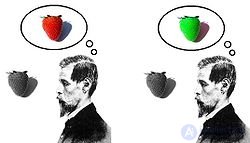
Inverted qualia
The thought experiment of the inverted spectrum, first proposed by John Locke, invites us to imagine that we woke up one morning and discovered that, for some unknown reason, all the colors in the world had been inverted. Moreover, we found that no physical changes had occurred in our brain or body that could explain this phenomenon. Proponents of the existence of qualia argue that, since we can imagine this situation without contradiction, it follows that we are imagining a change in a quality that determines how things appear to us but which has no physical basis. In more detail:
This proof thus asserts that if we accept the possibility of an inverted spectrum, we must accept that qualia exist (and are not physical).
There is yet another proof of the same kind, which asserts that it is conceivable that physical duplicates of people, called «zombies», could exist without any qualia at all. This idea can also be criticized on the grounds of conflating conceivability with possibility .
Joseph Levine's article «Conceivability, Identity, and the Explanatory Gap» begins precisely where the critique of conceivability-based arguments, such as the inverted spectrum argument and the philosophical zombie argument, leaves off. Levine agrees that conceivability is a shaky basis for establishing metaphysical reality, but points out that, even if we conclude that qualia are non-physical, they still present an «explanatory» problem.
| Although I think this materialist response is correct in the end, it does not suffice to put the mind–body problem to rest for good. Even if considerations of conceivability do not prove that consciousness is in fact distinct from the body, or that mental qualities are metaphysically underivable from physical qualities, they nevertheless demonstrate that we lack an explanation of the mental in terms of the physical. |
However, such an epistemological or explanatory problem may point to an underlying philosophical problem: the non-physicality of qualia, although not proven through considerations of conceivability, is nonetheless far from ruled out.
| In the end we find ourselves right back where we started. The explanatory gap argument does not demonstrate a gap in nature, but a gap in our understanding of nature. And so long as we have counterarguments for doubting the latter, we need to look elsewhere for an explanation of the former . |
Mary's Room
Frank Jackson, in his article «Epiphenomenal Qualia» (1982), presents what he himself calls a «knowledge argument» for qualia. One version of it reads as follows:
| Mary is a scientist who studies color and knows all the physical facts about color, including all the physical facts about other people's experience of color, from the behavior that a particular color may cause up to the specific sequences of neurological responses recorded upon perceiving a color. However, she has been confined since birth to a room decorated only in black and white and could observe the outside world only through a black-and-white monitor. When she is allowed to leave the room, it must be admitted that she will learn something new about the color red the first time she sees it — namely, what it is like to see the color. |
This thought experiment has two aims. First, it is intended to show that qualia exist. If we agree with this thought experiment, we must admit that Mary gains something upon leaving the room — that she acquires knowledge of a certain thing that she did not possess before. This knowledge, Jackson argues, is knowledge of the quale that corresponds to the experience of the color red, and hence it can be concluded that qualia are real qualities, since there is a difference between a person who has access to certain qualia and one who does not.
The second aim of this argument is to reject the physicalist conception of the mind. Namely, the knowledge argument is an attack on the physicalist claim of the completeness of physical truth.
The challenge that the knowledge argument poses to physicalism is as follows:
Ultimately, Jackson argues that qualia are epiphenomena, possessing no causal effect on the physical world. Jackson does not give positive proof of this claim; rather, he asserts it because it protects qualia from the classical problem of dualism. Our natural assumption is that qualia must have a causal effect on the physical world, but then we may ask how we can know of their existence at all if they do not affect our brain. If qualia possess non-physical properties (which must be the case according to the argument against physicalism), then it is unclear how they could have any influence on the physical world. By calling qualia epiphenomena, Jackson seeks to protect them from the requirement of playing a causal role.
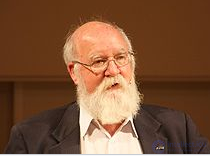
Daniel Dennett
In his works «Consciousness Explained» (1991) and «Quining Qualia» (1988), Daniel Dennett presents an argument against qualia intended to show that the definition given above does not hold up when one attempts to apply it in practice. In a series of thought experiments which he called «intuition pumps», he considers qualia in the domains of neurosurgery, clinical psychology, and psychological experimentation. His argument seeks to demonstrate that when the concept of qualia is placed within such a framework, it turns out to be useless for answering a specific question, or that the questions created by the introduction of the concept of qualia have no answers precisely because of the specific properties ascribed to qualia by definition.
In Dennett's improved version of the inverted-spectrum thought experiment, called "alternative neurosurgery," you again wake up and it turns out that your qualia have been inverted — grass has become red, the sky — orange. Based on the description of the original experiment, you should immediately detect that something is wrong. Dennett argues, however, that it is impossible to know whether devilish neurosurgeons really did invert your qualia (by switching your optic nerve) or whether they simply inverted the connection to your memories of past qualia. Since both operations would produce the same result, you have no way of determining for yourself which of the two operations was actually performed, and because of this you find yourself in the strange position of not knowing whether a change in "immediately perceived" qualia has actually occurred.
Dennett's argument rests on the following central objection. In order for qualia to be taken seriously as a component of experience — in order for them to make sense as a separate concept — it must be possible to show that:
a) it is possible to know that the change occurred specifically in the qualia and not in something else;
or that
b) there is a difference between the state with altered qualia and the state with unaltered qualia.
Dennett seeks to show that we cannot satisfy requirement (a) either through introspection or through thought experiments, and that the very definition of the concept of "qualia" undermines the possibility of satisfying requirement (b).
Dennett also objects to the "Mary's Room" thought experiment. He argues that Mary will not learn anything new if she leaves her black-and-white room to see the color red. Dennett claims that if Mary really does know absolutely everything about color, this knowledge would include a deep understanding of how and why human neurology gives rise to our qualia of color. Mary would thus already know what to expect from seeing color before she leaves the room. Dennett argues that the unclear point in this experiment is that Mary is supposed to know not merely about color, but, generally speaking, to know all the physical facts about it. This would be knowledge so vast that it would exceed everything we can imagine, and it would change our intuitive perception.
If Mary really does know everything about the physics of the experience of color that can be known, this means she is effectively omniscient. She would therefore be able to compute her own reaction and establish what seeing color would actually be like.
Dennett believes that many people will find this difficult to grasp, so he offers the example of RoboMary to better illustrate what it would be like for Mary to possess such enormous knowledge of the physics of brain function and color vision. RoboMary is an intelligent robot whose eye-cameras have a software restriction imposed on them, allowing her to perceive only black and white and the shades between them.
RoboMary can examine the computer brains of robots like herself that have no restrictions on color vision when they look at a red tomato. She sees exactly how they react and exactly what impulses arise. RoboMary can also construct a model of her own brain, disable the color-vision restriction in that model, and, using knowledge about the other robots, investigate exactly how this model of herself reacts to perceiving a red tomato. RoboMary, by her very nature, has full command of all her internal states except for the restriction on color perception. Thus, having never seen a red tomato through her own cameras, she will know exactly what it is like to see a red tomato.
Dennett uses this example to show us that omniscience about physics makes Mary's internal states just as clear as those of a robot or computer, and that she can directly determine what this sensation — seeing red — would be like for her.
It is possible that Mary's inability to learn what the perception of red is like is simply a problem of language, or a problem of our inability to describe experiences. A race of aliens with a different method of communication or description might well be able to teach their version of Mary what the sensation of red is like. Perhaps the cause is a specifically human inability to describe first-person experience from a third-person standpoint. Dennett suggests that such a description might be possible even in English. He offers a simpler version of the Mary thought experiment to show how this could be done. What if Mary were in a room without triangles, arranged so that she never made or saw a triangle? A description of just a few words in English might be enough for her to imagine a triangle: she would be able to visualize a triangle directly in her mind without any trouble. Similarly, Dennett suggests, it is abstractly logically possible that the qualia of what it is like to see red could ultimately be described in English using millions or billions of words.
Dennett's views can be characterized as a reduction of sensations to thought, which in turn is reduced to language. It remains unclear how words that stand in for sensations relate to reality, and whether reality exists at all if it is not given to us in sensation.
Mary can be regarded as a feral child. Feral children suffer from extreme isolation in childhood. Technically speaking, when Mary leaves the room, she will not have the ability to see or know what color is. The brain must learn and develop the ability to see color. Certain patterns must arise in area V4 — the visual region of the cerebral cortex. These patterns form under the influence of the perception of different wavelengths of light. This learning must occur in the early stages of brain development. In Mary's case, the identification and categorization of color will occur only in the forms of black and white.
David Lewis offers an argument that introduces a new hypothesis about types of knowledge and the ways it is transmitted in the case of qualia. Lewis agrees that Mary cannot learn what red looks like through her monochromatic physicalist research alone. But he suggests that this does not matter. Learning conveys information, but experiencing qualia does not convey information; instead, it conveys abilities. When Mary sees red, she does not gain any new information. She gains new abilities — she can now remember what red looks like, imagine other red things, and recognize other instances of red. Lewis argues that Jackson's thought experiment relies on the "phenomenal information hypothesis." Lewis proposes a different "ability hypothesis," which separates two types of knowledge: knowledge that is information (knowing-that) and knowledge that is ability (knowing-how). Normally the two types are linked: ordinary learning is also an experience for the subject involved, and people simultaneously acquire information (for example, that Freud was a psychologist) and ability (the ability to recognize pictures of Freud). In the case of this thought experiment, however, Mary can only acquire knowledge in the form of information during her ordinary learning. She cannot use experience to acquire knowledge-abilities that would allow her to remember, imagine, and recognize red.
We proceed from the assumption that Mary was deprived of certain critically important data necessary for experiencing red. It also seems consistent that some things cannot be learned inside the room. For example, we would not expect Mary to learn to ski inside the room. Lewis emphasizes that information and abilities are fundamentally different things. In this case physicalism once again turns out to be consistent with the claim that Mary gains new knowledge. This idea is also useful when considering other examples involving qualia; "being a bat" is an ability, so it is knowing-how.

Marvin Minsky
Marvin Minsky, a veteran of artificial-intelligence research, believes that the problem of qualia is essentially a problem of complexity, or more precisely a confusion of complexity and simplicity.
| Now the dualist philosopher may object: "You have described how the injury affects your mind, but you still cannot describe what the injury feels like." This, I maintain, is a great error, which consists in trying to define "feeling" as an independent object whose essence is indescribable. It seems to me that feelings are not some mysterious separate phenomena. They are precisely those cognitive changes that determine what an "injury" is. And they include all those clumsy attempts to express and connect these changes. This great error arises from the search for a simple, unified "essence" of the injury, instead of recognizing that what we call by this word is a complex redistribution of our resources. |

Michael Tye
Michael Tye holds the view that there is no qualia acting as a "veil of perception" between us and the referents of our thought. Tye describes our experience of perceiving an object in the world as "transparent." By this he means that regardless of whatever subjective understanding and/or misunderstanding we may have of an object, in reality it exists independently of the observer. He considers the idea that qualia intervene between the observer and the essence of the object to be a "serious mistake": "it is not credible that visual experience is thus systematically misleading"; "the only objects you are aware of are the objects of the surrounding world that make up the scene before your eyes";[10] "there are no such things as qualities of experience," because "they are qualities of the external surfaces of the object, if they are qualities of anything at all."[11] This position of Tye's allows him to treat our experience as a reliable foundation, since there is no fear of losing contact with the reality of objects in the surrounding world.
Tye does not raise the question of qualia unless it contains information; it is always "awareness," always "representation." He characterizes children's perception as a misperception of referents, which are undoubtedly represented for them just as they are for adults. In his words, children may not know that "the house is dilapidated," but there is no doubt that they see the house. Afterimages are dismissed as posing no problem for the transparency theory because, in his view, afterimages are illusory, and no one is seeing anything.
Tye proposes that phenomenal experience has five basic elements, for which he coined the acronym PANIC — Poised, Abstract, Nonconceptual, Intentional Content.
"Poised," in the sense that the characteristics of phenomenal experience are always ready to be presented to understanding, whether or not the subject is able to apply a concept to it. Tye adds that experience is "map-like" in the sense that in most cases it extends to the arrangement of shapes, surfaces, volumes, and so on in the world; you might not "read" the "map," but, as with a real map, there is a reliable correspondence with what it depicts.
"Abstract," because in a specific case it remains an open question whether you are dealing with a concrete object (someone may feel pain in their "left leg" when that leg has actually been amputated).
"Nonconceptual," because a phenomenon may exist even though a person has no concept by which to recognize it.
Nevertheless, the Content is "Intentional" in the sense that it represents something, depending on whether the particular observer makes use of that fact.
Tye therefore calls his theory "representationalism." The latter attests that Tye believes he has preserved direct contact with what causes the phenomena, and therefore is not hindered by any trace of a "veil of perception."[12]

David Chalmers
David Chalmers formulated the hard problem of consciousness, raising the question of qualia to a new level of significance and recognition in the field. In his work "Absent Qualia, Fading Qualia, Dancing Qualia," Chalmers argues for what he called the "principle of organizational invariance." In this paper Chalmers argues that if a system, such as, for example, a properly configured set of computer chips, reproduces the functional organization of the brain, it also reproduces qualia, just as the brain does.
E. J. Lowe of Durham University denies that a tendency toward indirect realism (in which we have access only to sensory functions internal to the brain) necessarily implies Cartesian dualism. He agrees with Bertrand Russell that our "retinal images," that is, distributions across the retina, are linked to "patterns of neural activity in the cortex" (Lowe 1986). He defends a version of the Causal Theory of Perception, in which a causal path can be traced between the external object and its perception. Lowe carefully denies that we draw any inferences from the sensory field, and, in his view, this allows us to gain access to knowledge of this causal connection. In later work he moves closer to a non-epistemic theory in the sense that he posits a "wholly nonconceptual component of perceptual experience,"[13] but refrains from analyzing the relation between the perceptual and the "nonconceptual." In 2008 he drew attention to the problems that hallucinations pose for realists, and to their reluctance to engage in discussion on this topic.[14]
John Barry Maund, an Australian researcher in the philosophy of perception at the University of Western Australia, draws attention to a key distinction within qualia. Qualia is open to description on two levels, a fact he calls "dual coding." Using an analogy with television broadcasting (which, as the non-epistemic argument shows, can be stripped of its unwanted aspects), he points out that if asked what we see on a television screen, there are two answers we could give:
Maund turns to the example of a "Movitype" screen, often used for advertisements and announcements in public places, to explain this. A Movitype screen consists of a matrix, or "raster" (from the Latin rastrum, "rake"; the lines on a television screen are perceived as "raked"), made up of an array of tiny light sources. Computer input can excite these light sources, creating the impression that letters move from right to left, or even in more complex forms, commonly used in advertising, to display moving images. Clearly there are two ways of describing what you see. We could either adopt everyday public language and say: "I saw several sentences followed by a picture of a can of 7-Up." Although this is a perfectly adequate way of describing the view, there is nevertheless a scientific way of describing it that has nothing to do with this ordinary description. One could ask an electronics engineer to provide us with a computer printout, made over the course of the seconds during which you observed the pointwise states of the raster of light sources. Without doubt, this would be a long and complex document specifying the state of each tiny light source in sequence. The interesting aspect of this list is that, although it gives an exhaustive and detailed description of the state of the screen, nowhere in this list will there be any mention of "English sentences" or "7-Up."
This makes it clear that there are two ways of describing such a screen: (1) "common sense," in which well-known objects are mentioned, and (2) a precise engineering report of the actual state of the screen. This second description would be non-epistemic from a common-sense point of view, since the printout mentions no objects, but it is perfectly acceptable from an engineer's point of view. It is worth noting that if this analysis is carried over to human perception, it rules out Daniel Dennett's claim that all qualia-philes must regard qualia as "ineffable," since at this second level its description is in principle "not achievable" — in fact, it is not impossible that some future neurophysiologist will be able to describe the neural causes of qualia at this level in detail.
Mound also extended his argument, especially with regard to color.[15] Mound treats color as a dispositional property rather than an objective one, taking into account the facts of variation from person to person, while also setting aside the claim that external objects are colored. Consequently, colors are «virtual properties» in the sense that they belong to things; although the naive view attributes them to objects, they are an internal, non-relational inner experience.
In his book «Sensing the World»[16] Moreland Perkins argues that qualia need not be identified with their objective sources: smell, for example, has no direct resemblance to the molecular form that causes it, unlike a toothache, whose source really is in the tooth. Perkins, like Hobbes, holds to the view of the perceptual process as something self-sufficient; in his words, a quale is not like «a kick in football», which requires an external object — a quale is more like simply «a kick», an explanation that entirely avoids the Homunculus argument, which is upheld, for example, by Gilbert Ryle. Ryle was quite unable to make use of this possibility, objecting that «in effect he explains the having of sensations as the not having of sensations».[17] However, A. J. Ayer, in his response, called this objection «very weak», since it betrayed an inability to separate the notion of the eyes, or indeed of any sense organ, from neuro-sensory experience.[18]
Vilayanur Ramachandran and William Hirstein proposed 3 laws of qualia (later adding a fourth), or «functional criteria that must be met for certain neural events to be associated with qualia» by philosophers of mind:
Ramachandran and Hirstein suggested that the phenomenal nature of qualia might be conveyed (in the manner of «oh, so that's what salt tastes like») if the brain could be suitably connected to a «neuron cable».[19] If this were to prove possible, it would scientifically prove or objectively demonstrate the existence and nature of qualia.
Howard Robinson is a philosopher who has concentrated his research on the philosophy of mind. While accepting that qualia have spent the latter part of the past century as an unfashionable position, he has consistently opposed those explanations of sensory experience that would reduce them to a physical origin. He has never regarded sense-data theory as refuted, but has instead set out one by one to refute the objections that many considered compelling. The version of sense-data theory that he defends treats what is present in perception before consciousness as qualitative mental representations that are causally connected to external entities but are not themselves physical. Unlike the philosophers mentioned above, H. Robinson is a dualist who employs both matter and mind to draw a demarcation between real and metaphysical nature. His books (in particular, «Matter, Meaning, and Perception»[20]) are characterized by careful engagement with the arguments of opposing philosophers. In doing so, Robinson sets a professional example that his opponents would do well to follow (since there has been a tendency to take it for granted that sense-data theory is entirely outdated). In his articles, H. Robinson urges physicalists not to ignore the fact that sensory experience can be entirely free of representational character. He offers phosphenes as a striking example (phosphenes are flashes of light not caused by light, arising instead from sudden pressure in the brain, caused for example by intense coughing or direct physical pressure on the retina), and points to the extreme inconsistency of claiming that this is not a visual experience on a par with sight.
The view of William Robinson (no relation to Howard Robinson) is very similar to that of his namesake. In his book «Understanding Phenomenal Consciousness»[21] W. Robinson is unusual as a dualist in calling for research programs that investigate the relation of qualia to the brain. W. Robinson says that the problem of qualia is so difficult that too many philosophers would rather «walk away from explaining it», but he himself prefers to find the foundations of qualia and does not share the view of colleagues who have chosen not to make the effort. However, W. Robinson does not expect that a direct scientific account of phenomenal experience will be found in terms of its grounding in neural architecture; on the contrary, he regards this as a vain hope. The concept of «Qualitative Event Realism», which W. Robinson holds, relates phenomenal consciousness to the processes evoked in the brain, but does not assume their identity.
Notably, W. Robinson refuses to disregard the commonality of mental, visual, and auditory imagery, thereby coming into direct conflict here with Daniel Dennett, who has difficulty attributing experience to others. The research of W. Robinson, like that of Moreland Perkins, is broad enough to be applied to all the mental senses.
Edmond Wright is a philosopher who examines the intersubjective aspect of perception.[22][23] Beginning with Locke, it has been standard to formulate problems of perception in terms of a single subject S considering a single object E with property p. But if we begin to register the facts of variation in sensory discrimination from person to person, combined with differences in the criteria we recognize for distinguishing what we jointly call «the same» things, then the problem arises of how two people reconcile differences at these two levels such that practical overlaps still exist for correlating information about things and, in particular, for informing each other about these differences.
Wright mentions that he was struck by the difference in auditory ability between himself and his son, discovering that his son can hear sounds up to almost 20 kHz, while his own range reaches only about 14 kHz. This implies that a substantial difference in qualia can arise between two people (for example, the son might be able to warn the father of a dangerous pressurized gas leak, whose sound waves would generate no obvious evidence of the fact for the father through qualia). Thus, for linguistic practices this becomes critically relevant, since an informative statement is best understood as an updating of perception, and this may involve a radical re-selection from fields of qualia treated as non-epistemological, even, perhaps, of the presumed singularity of the referent, and especially if this "referent" is the Self. Here Wright's view differs from that of Revonsuo, who describes the «virtual space» as «egocentric».
Wright places special emphasis on what he claims is a fundamental feature of communication: for an update to be established and made possible, both speaker and listener must behave as though they had identified «the same feature», which, as Wright notes, is part of the structure of, for example, a joke or a story.[22] Wright says that this systematic ambiguity strikes opponents of qualia as a sign of a flaw in the argument (since ambiguity is determined by pure logic), whereas, on the contrary, it is a sign of «what» is perceived prior to logical structure — something one must learn to use in linguistic communicative practices. Extending this analysis, Wright has argued for an important feature of human communication — the degree and character of the trust maintained by participants in a dialogue, trust that takes priority over what used to be regarded as key linguistic virtues, such as «sincerity», «truth», and «objectivity».
Erwin Schrödinger, a theoretical physicist and one of the leading pioneers of quantum mechanics, also published work in the field of colorimetry and color perception. In several of his philosophical writings he defends the view that qualia are not physical:[24]
The sensation of color cannot be explained by the physicist's picture of light waves. Could the physiologist explain this sensation, if he had fuller knowledge than we have of the processes in the retina and the nervous processes set up by them in the bundles of nerve fibers and in the brain? I do not think so.
Schrödinger goes on to observe that subjective experiences do not form a one-to-one correspondence with stimuli. For example, light with a wavelength of about 590 nm produces the sensation of yellow, whereas exactly the same sensation arises when red light at a wavelength of 760 nm is mixed with green light at a wavelength of 535 nm. From this he concludes that there is no «numerical relationship with these physical, objective characteristics of the waves» and the sensations they produce. Schrödinger concludes that we may arrive at a mistaken belief in a satisfactory theoretical description of qualitative experience that has been, or can be, achieved:[24]
Scientific theories serve to simplify the results of our observations and experimental findings. Every scientist knows how difficult it is to remember even a moderately large body of facts until at least some primitive theoretical picture about them has been formed. It is therefore not surprising that the authors of original papers or textbooks, once a sufficiently coherent theory has been formed, are unable to describe the bare facts they discovered or wish to convey to the reader, but are compelled to clothe them in the terminology of that theory or theories. This procedure, though very useful for our remembering the facts in an orderly way, tends to blur the distinction between actual observations and the theory derived from them. And since the former always have some sensory quality, it is believed that theories account for these sensory qualities, which, of course, in reality, they never do.
From a philosophical standpoint, qualia become a turning point between the physical and the metaphysical, which polarizes the discussion, as we have seen above, around the question «Do they exist or not?» and «Are they physical or beyond the physical?» However, from a strictly neurological standpoint they may exist and be of very great importance for the survival of the organism, being the result of strict neural oscillations, and yet not exclude the metaphysical. A good example of such a blending of «for/against» positions is found in Rodolfo Llinás's book « The Vortex» (MIT Press, 2002, pp. 202–207). Llinás argues that qualia are ancient and necessary for the survival of the organism and a product of neuronal oscillations. Llinás cites evidence from brain anesthesia followed by stimulation of the limbs to demonstrate that qualia can be «switched off» by altering only the variable of neural oscillation (local electrical brain activity), while all other connections remain intact, which strongly points to an oscillatory-electrical origin for qualia, or for their important aspects.
Roger Orpwood, an engineer with extensive experience studying neural mechanisms, proposed a neurobiological model that gives rise to qualia and, ultimately, to consciousness. As progress in cognitive and computational neuroscience continues to grow, the need arises to study the mind and qualia from a scientific standpoint. Orpwood does not deny the existence of qualia and does not intend to discuss their physical or non-physical existence. Rather, he suggests that qualia are created by means of a neurobiological mechanism of recurrent feedback in cortical systems. [46] [47] [48]
Orpwood develops his mechanism by first addressing the problem of information. One unresolved aspect of qualia is the concept of the fundamental information involved in the creation of experience. He does not take a position on the metaphysics of the information underlying the experience of qualia, nor does he claim what information actually is. However, Orpwood suggests that information generally comes in two types: informational structure and informational message. Informational structures are defined by physical carriers and by structural, biological patterns encoding information. This encoded information is the informational message; the source describing what this information is. A neural mechanism or network takes input informational structures, performs an assigned learned task (firing of a neuron or network), and outputs a modified informational structure to downstream areas. The informational message is the goal and meaning of the informational structure and exists causally as a result of that particular informational structure. Modification of the informational structure changes the meaning of the informational message, but the message itself cannot be changed directly.
Local cortical networks possess the ability to receive feedback from their own output-information structures. This form of local feedback continuously cycles a portion of the network's output structures back in as the next input informational structure. Since the output structure must represent the informational message derived from the input structure, each successive feedback cycle will represent the output structure that the network has just generated. Because the network of mechanisms cannot recognize the informational message, but only the input informational structure, the network does not know that it is representing its own previous outputs. The neural mechanisms simply perform their learned tasks and output whatever recognizable informational structures result. Orpwood proposes that these local networks settle into an attractor state that consistently outputs the same informational structure as the input structure. Rather than representing only the informational message derived from the input structure, the network will now represent its own output and, consequently, its own informational message. Since the input structures are fed back, the network identifies the previous informational structure as a previous representation of the informational message. As Orpwood states, the network identifies the previous informational structure as a previous representation of the informational message. As Orpwood asserts, the network identifies the previous informational structure as a previous representation of the informational message. As Orpwood states,
Once the attractor state is established, the output [of the network] is a representation of its own identity to the network. [48] : 4
The representation of the networks' own output structures, by means of which the network represents its own informational message – this is Orpwood's explanation, which grounds the emergence of qualia in neurobiological mechanisms. These mechanisms are characteristic of networks of pyramidal neurons. Although computational neuroscience still has much to learn about pyramidal neurons, their complex circuitry is relatively unique. Research shows that the complexity of pyramidal neural networks is directly related to the increase in a species' functional capacities. [49]When human pyramidal networks are compared with other species and with primate species that have less complex behavioral and social interactions, the complexity of these neural networks decreases sharply. The complexity of these networks also increases in the frontal regions of the brain. These regions are often associated with the conscious evaluation and modification of the immediate environment; they are often called executive functions. Sensory input is necessary for obtaining information from the environment, and perception of that input is necessary for navigating and modifying interactions with the environment. This suggests that frontal regions, which contain more complex pyramidal networks, are associated with an enhanced capacity for perception. Since perception is necessary for conscious thought to arise, and since the experience of qualia stems from conscious recognition of some perception, qualia may indeed be specific to the functional capacity of pyramidal networks. This gives rise to Orpwood's view that recurrent feedback mechanisms may not only produce qualia but also form the basis of consciousness.
A critique similar to Nietzsche's critique of the Kantian «thing-in-itself» can be applied to the problem of qualia: qualia are unobservable in others and are non-quantitative in nature within us. We cannot even be certain, when discussing some particular quale, that we are discussing the same phenomenon. Thus, the value of any discussion of qualia is unclear, since the accuracy of descriptions of qualia is entirely impossible to determine. Qualia can be compared to «things-in-themselves» in the sense that they have no properties that can be demonstrated to others; this, in addition to the impossibility of being certain that we are talking about the same qualia, prevents the value of qualia from being determined within any philosophy that relies on proof through rigorous definitions. But denying qualia leads to denying consciousness, which is unscientific.
The view known as epiphenomenalism, which holds that consciousness lies outside the physical world and has no causal power over it, is often considered unlikely[25] or entirely implausible[26], if only because our own consciousness appears causally active. To avoid epiphenomenalism, anyone who considers qualia non-physical must accept something like interactionist dualism or, perhaps, emergentism — that is, the claim that there exist as-yet-unknown ways in which the physical and the mental interact. This, in turn, means that qualia could be detected by an external observer through their causal effects.
Scientific critiques of the idea of qualia may point out that the claim that qualia exist cannot be proven or disproven through experimental evidence, and hence the claim of their existence is not a «scientific» hypothesis, since, according to Karl Popper's philosophy of science, a hypothesis or theory must be falsifiable. Moreover, as the argument from the philosophical zombie shows, qualia cannot be regarded as describable in empirical terms, whereas science seeks exclusively to describe objects and events that are empirically describable, or that are demonstrably connected to empirically describable things.
However, this makes qualia only physically inadmissible; it does not make them psychologically or philosophically inadmissible, or simply nonexistent. A proponent of the existence of qualia might simply respond that the inability of physics to describe qualia is entirely to be expected, since qualia are non-physical.
By way of illustration: one might be tempted to cite as examples of qualia «a headache, the taste of wine, or the redness of the evening sky». But this list of examples already anticipates the central problem in current debates about qualia. An analogy may clarify this. Suppose someone wants to learn the nature of the liquid-crystal pixels on a television screen, those tiny elements that produce all the distributions of color making up the image. As an answer, it would be insufficient to say that it is «the redness of the evening sky» as it appears on the screen. We would object that their true character is being ignored. It can be seen that, relying on the list above, it is assumed that we should associate sensations not only with the notion of the given objects in the world («head», «wine», «evening sky»), but also with the properties by which we characterize the experiences themselves (for example, «redness»).
It is likewise unsatisfactory to print a small red square, as at the top of the article, since, because each person has a somewhat different registration of light rays [53], it is misleading to assume that we all have the same response. Imagine that in a television shop you see a «red square» simultaneously on twenty screens, each slightly different — something very important would be lost from view if one example were taken as defining them all.
Nevertheless, there has been debate over whether identification with an external object should still be at the core of a correct approach to sensations, since many formulate the definition this way because they consider the connection to external reality decisive. If sensations are defined as «raw feels», a palpable threat to the reliability of knowledge arises. It has been pointed out that if they are regarded as neurophysiological phenomena in the brain, it is difficult to see how they could have any connection to entities, whether in the body or in the external world. For example, John McDowell stated that endorsing qualia as «bare presence» prevents us from ever obtaining a firm basis for our knowledge. [54] Thus the problem is epistemological: access to knowledge appears to be blocked if one allows for the existence of qualia as fields in which only virtual constructs stand before the mind.
The reason is that it places the entities we need to know about behind a «veil of perception», an occult field of «appearance», which leaves us ignorant of the reality supposedly lying beyond it. He is convinced that such indeterminacy leads into the dangerous territory of relativism and solipsism: relativism regards all truth as determined by a single observer; solipsism, in which the sole observer is the sole creator and legislator of their own universe, presupposes the assumption that no one else exists. These charges constitute a powerful ethical argument against the notion that qualia are something that happens in the brain, and these conclusions are probably largely responsible for the fact that in the 20th century it came to be considered not merely quaint but dangerously mistaken to maintain the notion of sensations as occurring inside the head. The argument was usually reinforced by ridiculing the very idea of «redness» in the brain: the question was – and remains [55]: «How can there be red neurons in the brain?» – which strikes one as a justified appeal to common sense.
To preserve philosophical balance, the argument for «raw feels» must be set alongside the claim above. Regarding sensations as «raw feels» implies that at first they have not yet been «cooked», that is, combined into «things» and «persons», which the mind does after the sensation has reacted to an otherwise empty input — this reaction, driven by motivation, being first pain and pleasure,
продолжение следует...
Часть 1 Qualia as Sensory and Felt Phenomena — Philosophy of Mind
Часть 2 See also - Qualia as Sensory and Felt Phenomena —

Comments