
Lecture
Contemporary Western philosophy is the name commonly given to the philosophy that emerged after German classical philosophy and, to a large extent, developed on its basis. It encompasses several dozen different currents and movements, differing in the number of their adherents, the nature of the problems they pose, and the ways they resolve them. The most important currents and schools, with approximate chronological boundaries, are presented in Diagram 146, and the interconnections between the schools in Diagram 147.
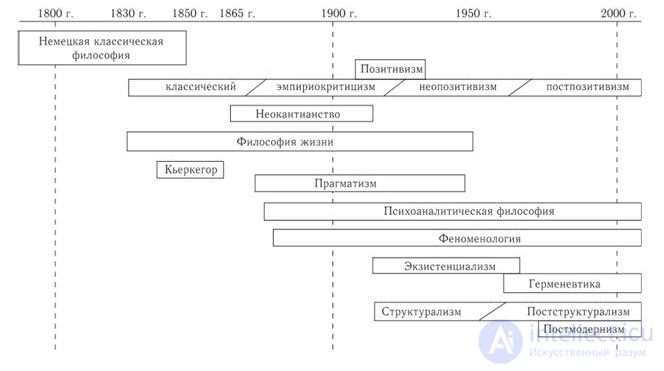
Diagram 146. Contemporary Western philosophy: chronological framework
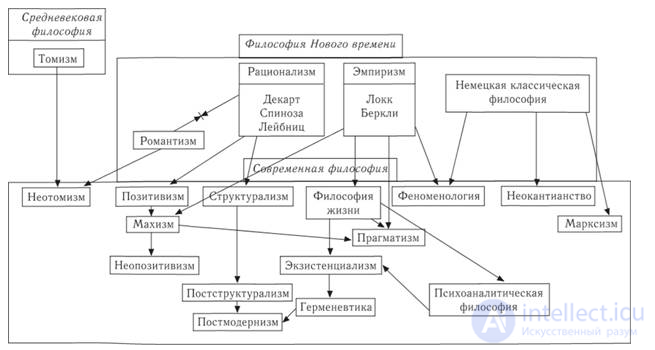
Diagram 147. Contemporary Western philosophy: genesis and interconnections
The presentation of this material in a textbook on the history of philosophy can be organized as follows:
First, one could create a general classification of all schools and movements and present the material in accordance with this classification. However, no such generally accepted classification exists today, and creating one presents certain difficulties. For example, some schools and currents are grouped by "genetic lineage," such as "structuralism → poststructuralism → postmodernism" or "phenomenology → existentialism → hermeneutics" (Diagram 147), others can be divided by their main object of study, still others by their methods, and so on. Yet no acceptable classification emerges from this.
Second, one could follow the principle of historicism and arrange the material according to the time (or at least the period ) in which the corresponding schools and teachings arose. But a whole series of currents (for example, philosophy of life, positivism, etc.) existed throughout, or almost throughout, this entire period and passed through several stages of development in the process; therefore, such a method of presentation would break up their exposition.
Third, one could present the material by individual schools, tracing their internal genesis. Given that the examination usually asks specifically about schools, this textbook has chosen the latter method. At the same time, the schools themselves are arranged with maximum attention both to the time of their emergence and to their ideological proximity to one another.
Table 66
The main periods of contemporary Western philosophy
|
Period |
Years |
Main events |
|
First, "anthropocentric" |
1830-1865 |
German classical philosophy continues to develop (Schelling, Hegel, Feuerbach) until roughly 1850; the emergence, flourishing, and decline of Old Hegelianism; the emergence, flourishing, and decline of Young Hegelianism; the emergence, flourishing, and decline of classical positivism (1830 to the late 19th century); the emergence of philosophy of life (Schopenhauer – c. 1818); the emergence of classical Marxism; the philosophy of Kierkegaard (1842–1855) |
|
Second, cognitive |
1865-1920 |
The emergence, flourishing, and decline of neo-Kantianism (1865–1920); the emergence, flourishing, and decline of empirio-criticism (Machism); the emergence of neopositivism (logical positivism); the emergence of pragmatism; the emergence of Marxism-Leninism; the flourishing of philosophy of life (Nietzsche, Bergson, Dilthey, Spengler); the emergence of phenomenology (Husserl); the emergence and the beginning of the flourishing of psychoanalytic philosophy (Freud, Jung); the development of hermeneutics (Dilthey); the emergence of neo-Thomism |
|
Third, linguistic |
1920-1970 |
the flourishing and decline of neopositivism (logical positivism); the flourishing and decline of pragmatism; the flourishing of Marxism-Leninism; the development of neo-Thomism; the development and decline of philosophy of life (Bergson); the emergence, flourishing, and decline of existentialism; the development of phenomenology (Husserl, Heidegger, Sartre); the development and flourishing of hermeneutics (Heidegger, Gadamer); the emergence, flourishing, and decline of structuralism; the emergence and flourishing of poststructuralism; the emergence of postmodernism |
|
Fourth, postmodern |
1970 – present |
The decline of Marxism and Marxism-Leninism; the development of psychoanalytic philosophy; the development of phenomenology; the flourishing of hermeneutics; the emergence and flourishing of postpositivism (linguistic philosophy; analytic philosophy); the flourishing and decline of poststructuralism; the appearance and development of postmodernism |
The twentieth century was saturated with events that affected every aspect of human civilization. World wars, the collapse of the colonial system, and scientific and technological growth had an enormous impact on the spiritual sphere of society. Under these conditions a multitude of philosophical schools arose, each offering its own vision of the problems of human existence and the destiny of civilization.
Neopositivism - arose in the 1920s on the basis of positivism and empirio-criticism. It reproaches traditional philosophy for the vagueness of its statements, the complexity of its language, and its use of unclear concepts, and so on. It is not uniform. Its main variant, logical positivism, advances the idea that statements claiming scientific meaning must be verifiable. Representatives - R. Carnap, L. Wittgenstein.
Postpositivism - the subsequent development of neopositivism, modified in connection with changes in scientific knowledge.
Hermeneutics - the art and theory of interpreting texts. A text is regarded as a unity of grammar, style, and content, and as a relation of part to whole (to the author's body of work, to a school). It arose in Ancient Greece and began to develop actively in the 18th century. Representatives - F. Schleiermacher, H. Gadamer.
Phenomenology - one of the leading movements of the 20th century; its central theme is the interaction of consciousness, the ego, and the surrounding world of things. The conception of consciousness and the world is built on the basis of the concept of intentionality. The world is disclosed to the ego through interaction - through the construction of a system of experiences by means of which the world exists for the ego. The leading representative - Husserl.
Neo-Thomism - a renewed Thomism. Part of the official doctrine of the Catholic Church. It regards modern philosophy as an unbroken chain of errors and delusions, and sets itself the task of reviving the spirit of medieval philosophy (as exemplified by the Thomism of Thomas Aquinas).
The three waves of positivism
|
Stage |
Characteristic |
Representatives |
|
Classical positivism 1830 - late 19th century |
Philosophy should systematize and generalize scientific knowledge, not explain it |
A. Comte, J.S. Mill, H. Spencer |
|
Empirio-criticism late 19th - early 20th century |
Science should answer the question "how," not "why" |
E. Mach, H. Poincaré, R. Avenarius |
|
Neopositivism, or Logical positivism 1920 — 1950 / 60 |
The reduction of philosophy to the logical analysis of the language of science The verification principle |
B. Russell, R. Carnap, K. Gödel M. Schlick |
Characteristics of positivism
Positivism remained within the bounds of the classical ideal of rationality, according to which scientific knowledge is ideologically and morally “neutral”: scientific – “positive” – cognition must be freed from any worldview-based or value-laden interpretation, and all “metaphysics” must be abolished and replaced either by the special sciences (“science is philosophy in itself”), or by a generalized “economical” picture of empirical knowledge, or by a doctrine of the relations among the sciences of language, and so on.
the French philosopher, founder of positivism: «We gradually arrive at the discovery of an invariable hierarchy – equally scientific and logical – of the six fundamental sciences: mathematics, astronomy, physics, chemistry, biology, and sociology»
The founder of the first positivism, Auguste Comte: "The true positive spirit consists chiefly in replacing the study of the first or final causes of phenomena with the study of their invariable laws - in other words, in replacing the word why with the word how"
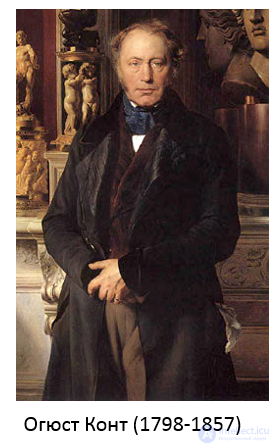
Auguste Comte (1798-1857)
Auguste Comte's three stages of humanity's intellectual evolution
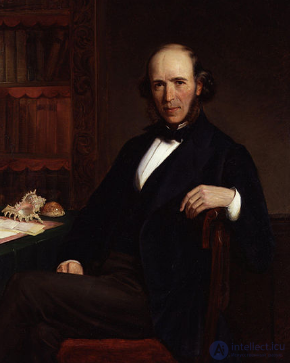
Herbert Spencer (1820-1903)
The positivist movement in philosophy
Empirio-criticism – the critical study of experience
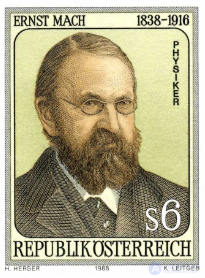
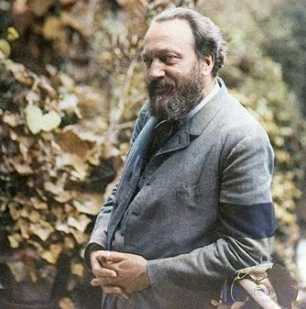
Richard Avenarius (1843–1896)
The laws of nature are to be understood as conventions, that is, as conditionally accepted propositions.
“The Value of Science” (1905): “These conventions are the products of the free activity of our mind, which in this domain knows no obstacles. Here it can assert, because here it also prescribes...”
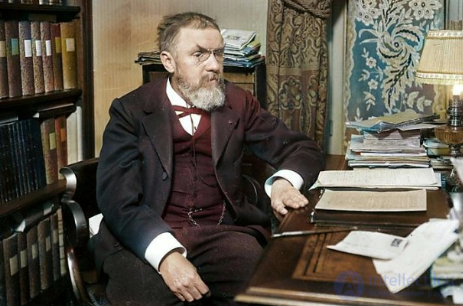
Henri Poincaré (1854-1912)
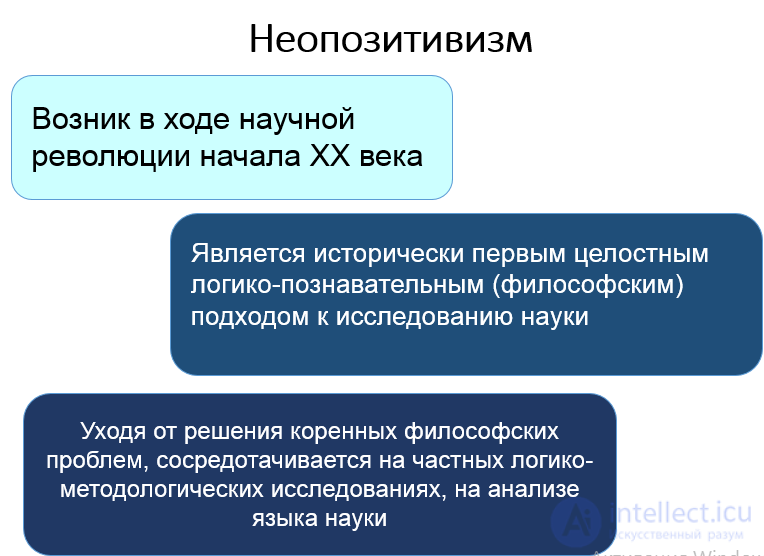


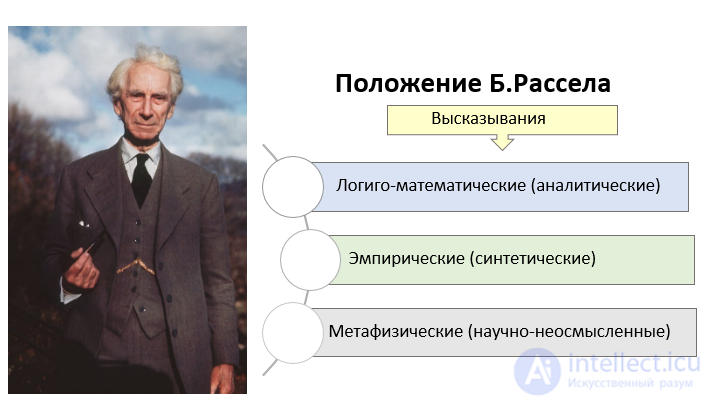
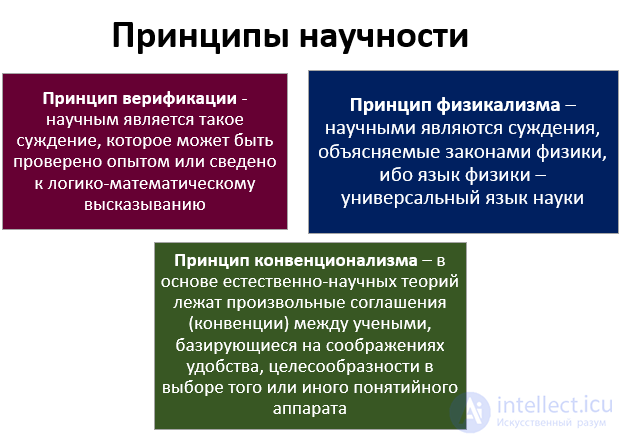
The verification principle for statements
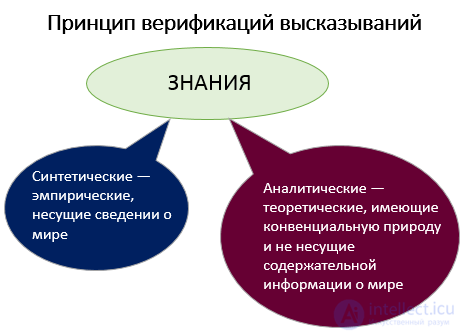
The verification principle: a statement is scientific if it
can be
verified by experience or reduced
to a logico-mathematical
proposition
The principle of physicalism –
statements are scientific if they are
explained by the laws of physics,
since the language of physics is
the universal language of science
The principle of conventionalism – at the
basis of natural-scientific theories
lie arbitrary agreements
(conventions) among scientists,
based on considerations
of convenience and expediency in the
choice of one or another conceptual
apparatus
Neopositivism (1920s-1930s)
The Vienna Circle, led by Moritz Schlick (1882-1936): R. Carnap, O. Neurath, H. Reichenbach
Representatives of the Lvov-Warsaw school: A. Tarski,
J. Łukasiewicz, K. Ajdukiewicz
the English logician, mathematician, and philosopher Bertrand Russell;
founder of the philosophy of linguistic analysis
the Austrian philosopher L. Wittgenstein
the movement of general (popular) semantics: A. Korzybski, S.
Chase, S. Hayakawa
Currents within neopositivism
1) Logical positivism - historically the first and principal variant of neopositivism
- The central task of philosophy is to work out principles for verifying statements against human experience
- The principle of verification (from the Latin for "truth") of statements was introduced, according to which any statement in science, practice, or philosophy is subject to empirical testing for truth
2) Semantic positivism (early 1940s)
3) Linguistic analysis - understands philosophy as
an analytical activity aimed at clarifying language, though no longer
scientific language, but ordinary language
- The task of philosophy is to investigate the actual use of
natural spoken language in order to remove
the misunderstandings that arise from its incorrect
use
Logical positivism
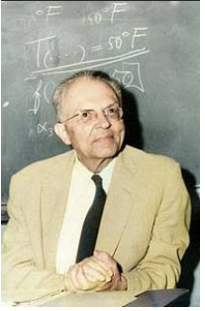
Rudolf Carnap (1891-1970)
«Old and New Logic» (1930)
«The Overcoming of Metaphysics Through the Logical
Analysis of Language» (1932)
«The Logical Structure of the World» (1928)
«The Logical Syntax of Language» (1934)
«Studies in Semantics» (1942–1943)
«Meaning and Necessity» (1947)
«Introduction to Symbolic Logic» (1958)
«Logical Foundations of Probability» (1950)
«The Continuum of Inductive Methods» (1951)
Main ideas
1) Solving a philosophical problem requires the logical analysis of the language in which the problem is formulated, and therefore logic plays the central role in philosophy;
2) Any meaningful theory that is not purely logical or mathematical must be open to empirical verification.
The verification principle - any proposition of science is true if and only if it can be reduced to propositions of fact, to protocol sentences, which are directly verifiable by experience.
The word «God» can be used in three senses: mythological, metaphysical, and theological. The metaphysical sense is meaningless («first cause», «the absolute», «the unconditioned», «the independent»).
Five types of propositions
Meaningful propositions:
1) tautologies (A=A), or Kant's analytic judgments
2) knowingly false propositions, contradictions
3) empirical propositions, i.e., propositions that can be verified
Meaningless:
4) meaningless propositions (tra-la-la, blah-blah, etc.)
5) metaphysical propositions
Ludwig Wittgenstein (1889-1951)
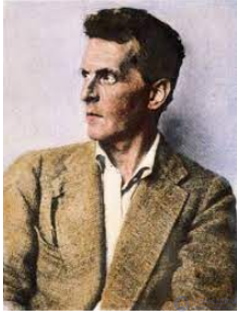
«Tractatus Logico-Philosophicus» (1921)
«Philosophical Investigations» (1953)
Put forward a program for constructing an artificial "ideal" language, modeled on the language of mathematical logic.
He understood philosophy as "the critique of language."
He developed the doctrine of logical atomism, representing a projection of the structure of knowledge onto the structure of the world
POSTPOSITIVISM
A set of conceptions in the philosophy and methodology of science that arose as a critical reaction to the program
of the empirical grounding of science put forward by logical empiricism (neopositivism)
Features of postpositivism:
1. Diminished attention to problems in formal logic
2. Active engagement with the history of science, concentrating attention on the dynamics of scientific development and its contradictions
3. Rejection of rigid boundaries between empiricism and theory, science and philosophy
4. Analysis of the sociocultural factors of scientific activity
5. The replacement of verification by falsification
6. Recognition of the role of philosophy
Karl Popper (1902-1994)
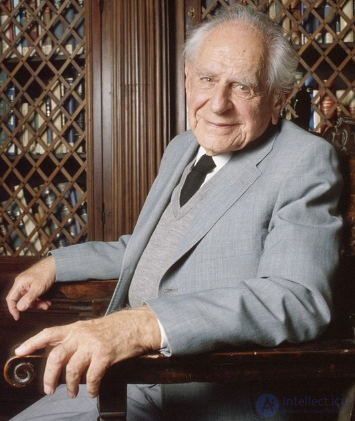
British philosopher and sociologist.
Best known for his critique of the classical notion of scientific method, as well as his vigorous defense of democracy and the principles of social criticism.
«The Logic of Scientific Discovery» (1935)
«The Open Society and Its Enemies» (1945)
«The Poverty of Historicism» (1957)
«Conjectures and Refutations: The Growth of Scientific Knowledge» (1963)
«Objective Knowledge: An Evolutionary Approach» (1972)
Karl Popper's evolutionary epistemology
First thesis. The specifically human capacity to know, like the capacity to produce scientific knowledge, is a result of natural selection. They are closely connected with the evolution of specifically human language
Second thesis. The evolution of scientific knowledge is essentially the evolution of the construction of ever better theories. This is a Darwinian
process. Theories become better adapted through natural selection
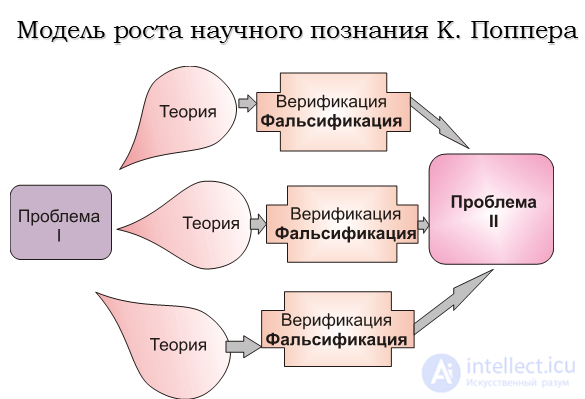
K. Popper offers a scheme reflecting the growth of scientific knowledge: P1-TT-EE-P2,
where P1 – is some initial problem, TT – a tentative trial
theory by means of which this problem is solved, EE – the process
of eliminating errors in the theory through criticism and experimental testing
and P2 – a new, deeper theory, for the solution of which it is necessary
to construct a new, deeper and more informative theory.
• Third thesis. There is a similarity between living organisms and thinking man: both the one and the other are «problem-solvers»;
problems arise together with the emergence of life. The difference is that man eliminates former theories through their criticism and by means of language (for instance, an amoeba is not aware of the process of error elimination, and therefore perishes together with their elimination)
• Fourth thesis. A critique of the traditional theory of knowledge, which rests on the idea that knowledge is a generalization of sense-data. In
fact, information does not «flow in» from outside into the knowing subject; rather, the subject itself actively «draws it out of the surrounding environment»
• Fifth thesis. The specificity of human language. Whereas in animals the function of language is reduced to expressing the internal state of the organism and
transmitting signals that facilitate communication, human language, besides these functions, performs a descriptive and
an argumentative function
K. Popper's model of the growth of scientific knowledge
Problems of the verification principle
1. Is the verification principle itself a protocol statement or not? Can the verification principle itself be verified?
2. The basic tenets of science - laws - turn out to be unverifiable.
The principle of falsification
Scientific knowledge must be falsifiable, i.e., knowledge is scientific if and only if it can be refuted. It must allow for the possibility of disputing it, of refuting it through experience. Not falsifiable are: scientific communism, Hegelian dialectics, and Freudianism.
«Postpositivism» - the logic of science
THE PROBLEM OF DEMARCATION - one of the fundamental tasks of philosophy, consisting in separating scientific knowledge from non-scientific knowledge.
THE PRINCIPLE OF FALLIBILISM - asserts that any scientific knowledge bears only a hypothetical character and is subject to error. The growth of scientific knowledge, according to Popper, consists in putting forward bold hypotheses and carrying out their decisive refutations.
THE THEORY OF THE "THREE WORLDS" - asserts the existence of a first world, the world of objects, a second world - the world of subjects, and a third world - the world
of OBJECTIVE KNOWLEDGE, which is generated by the first and second worlds but exists independently of them. The analysis of the growth and development of knowledge in this independent third world is, according to Popper, the subject matter of the philosophy of science.
Imre Lakatos (1922-1974)
The historical movement of science can be explained as a rivalry among scientific theories, victory in which is ensured not by the accumulation of confirmations of the hypotheses put forward, but above all by the heuristic potential of the theory, its ability to yield new empirical knowledge, its scientific productivity
«Proofs and Refutations: The Logic of Mathematical Discovery» (1967)
«Falsification and the Methodology of Scientific Research Programmes» (1968)
Thomas Samuel Kuhn (1922-1996)
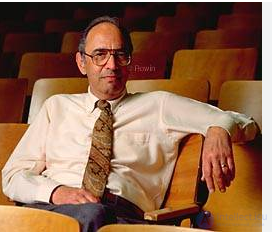
Science - a developing, changing living whole.
The principle of historicism in science - a means of comprehending the phenomena under study.
In science, it is man who acts - the scientist as the subject of scientific activity.
Basic concepts: normal science, scientific revolution, the notion of a «paradigm»
«The Copernican Revolution» (1957)
«The Logic of Discovery or the Psychology of Research» (1961)
«The Structure of Scientific Revolutions» (1962)
Paul Karl Feyerabend (1924-1994)
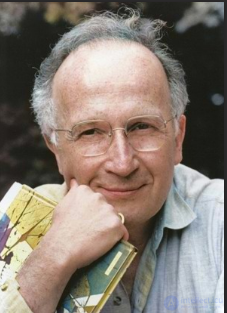
There are no universal methodological rules in science.
The conception of epistemological anarchism.
«Against Method: Outline of an Anarchistic Theory of Knowledge» (1975)
«Science in a Free Society» (1978)
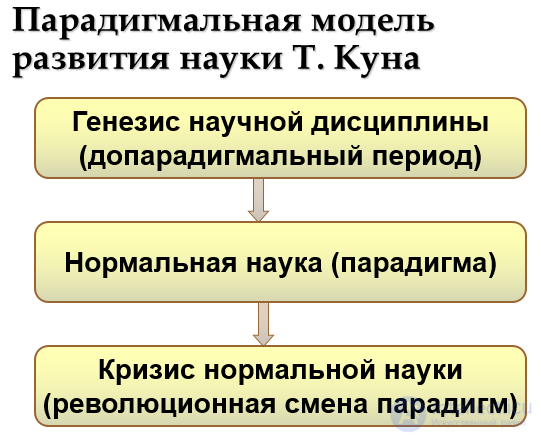
T. Kuhn's paradigmatic model of the development of science
The genesis of a scientific discipline (the pre-paradigmatic period)
Normal science (paradigm)
The crisis of normal science (a revolutionary change of paradigms)
Three main stages in the development of science
Classical science (17th-19th centuries). An object-oriented style of thinking predominates, a striving to know the object as it is in itself, independent of the conditions of its study by the subject
Non-classical science (the first half of the 20th century) rejects objectivism, and considers the connections between knowledge of the object and the character of the means and operations of the subject's activity
Post-non-classical science (the end of the 20th - beginning of the 21st century) includes subjective activity within the "body of knowledge".
It takes into account the correlation of the character of the knowledge obtained about an object not only with the activity of the knowing subject, but also with its value-oriented, goal-directed structures
Each of these stages has its own paradigm, its own picture of the world, its own fundamental ideas
Classical - mechanics, the picture of the world is built on the principle of rigid (Laplacian) determinism, the image of the universe as a clockwork mechanism
Non-classical - relativity, discreteness, quantization, probability, complementarity
Post-non-classical - the paradigm of becoming and self-organization. Its basic features are expressed by synergetics, which studies the general principles of self-organization processes occurring in systems of the most varied nature.
The «synergetic movement» - is an orientation toward historical time, systemicity (wholeness), and development
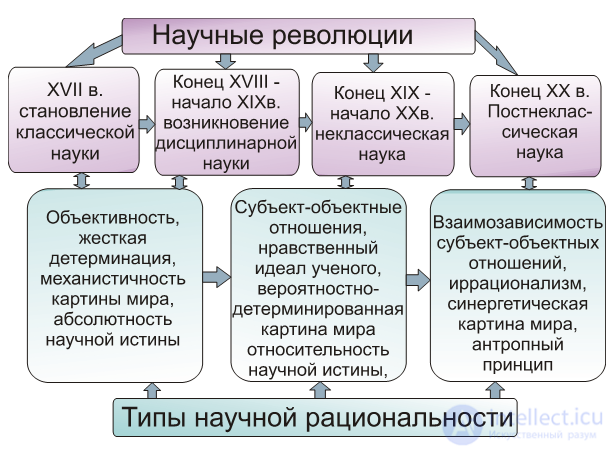
Scientific revolutions
A change of scientific pictures of the world, accompanied by a radical change in the normative structures of research and the philosophical foundations of science, may legitimately be regarded as scientific revolutions, which lead to a change in the type of scientific rationality.
Four scientific revolutions
I. 17th century – the formation of classical natural science
II. End of the 18th – first half of the 19th century – disciplinarily organized science
III. End of the 19th – middle of the 20th century – the formation of non-classical natural science
IV. End of the 20th – beginning of the 21st century – post-non-classical science is born
Paul Feyerabend's epistemological anarchism
He put forward the methodological principle of proliferation (multiplication) of theories:
scientists should strive to create theories incompatible with existing and recognized theories. The creation of such alternative theories promotes their mutual criticism and accelerates the development of science. The principle of proliferation is intended to justify pluralism in the methodology
of scientific knowledge.

Michael Polanyi's conception of personal knowledge
- science is made by people possessing mastery;
- the art of cognitive activity cannot be learned from a textbook. It is transmitted only through direct contact with a master;
- the people who make science cannot be replaced by others or alienated from the knowledge they have produced;
- in cognitive and scientific activity, the motives of personal experience, feeling, inner faith in science, in its value, the scientist's personal interest, and personal responsibility turn out to be extremely important.
Personal knowledge — is intellectual self-giving, the passionate contribution of the knower

Comments