
Lecture
tests with answers on the topic Conflict Studies
single-answer choice questions, correct answers at the bottom of the page
1. Conflict studies as a science originated within:
2. Conflict studies was recognized abroad as an independent science:
3. The term "Sociology of Conflict" first appeared in the works of:
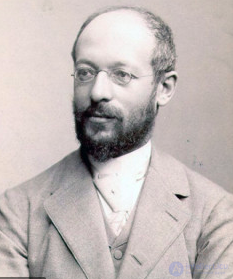
4. Who was the first to subject the system of causes of social conflicts within a country to thorough theoretical analysis, examining the material, political, and psychological conditions of social unrest:
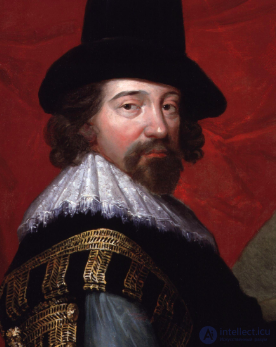
5. The author who believed that conflict is based on emotional relationships between people, which should be studied using sociometry, is:
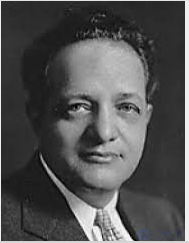
6. The author who believed that conflict is based on crossed transactions is:
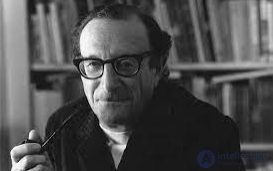
7. The foundations of the modern sociological General Theory of Conflict were created by:
8. The subject of study of conflict studies is:
9. The internal driving force that pushes subjects of social interaction toward conflict is:
10. The reflection of the object of conflict in the minds of the subjects of the conflict interaction is called:
11. The first clash between the parties, which serves as the occasion for the start of open conflict, is called:
12. Based on their social consequences, the following types of conflict are distinguished:
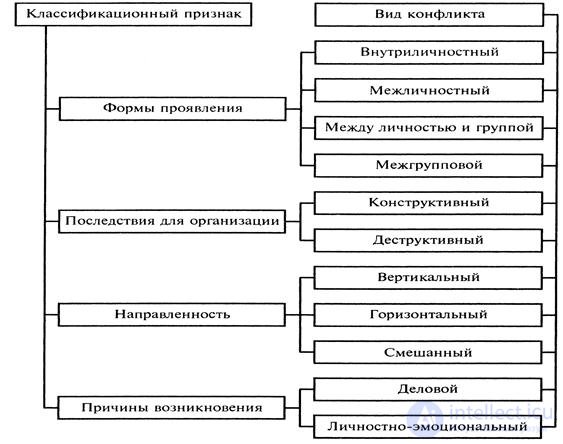
13. Based on the number of subjects of conflict interaction, the following types of conflicts are distinguished:
14. Are the following statements correct? A. Conflict is a contradictory phenomenon. It has both constructive and destructive functions. B. One of the constructive functions of conflict is that it makes it possible to detect and register the presence of contradictions and problems within a society, organization, or group.
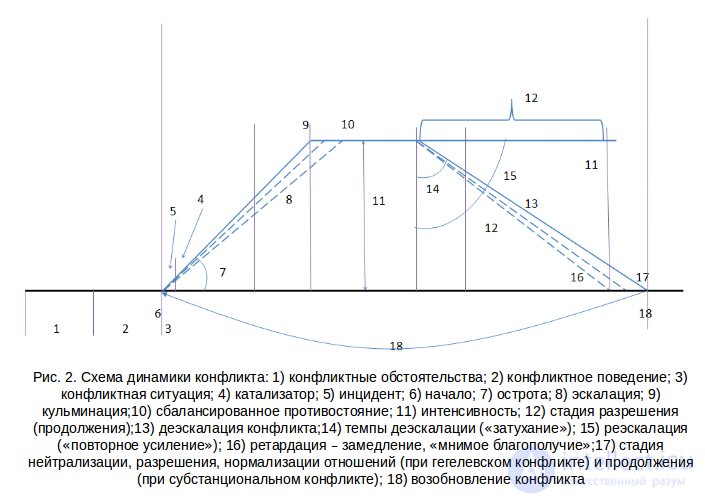
15. The course of development and change of a conflict under the influence of the factors and conditions acting on it is called:
16. Which of the following is NOT a form of conflict resolution:
17. The psychological concept which holds that the essence of intrapersonal conflict lies in overcoming the contradiction between biological drives and socio-cultural norms, between the conscious and the unconscious, belongs to:
18. The psychological concept which holds that the contradictory interaction of the "peaks" of the motivational sphere, of a person's various motives, forms an intrapersonal conflict, belongs to:
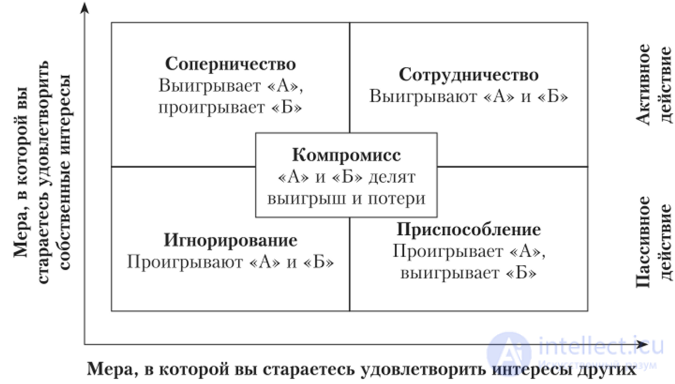
19. The style of interaction in a conflict in which the subjects of the conflict are inclined toward certain concessions is called:
20. The style of interaction in a conflict in which the other party's interests are preferred over one's own is called:
21. Tolerance for another person's way of life, opinion, behavior, and values is called:
22. The psychological state of people (individuals or groups) that arises from prolonged dissatisfaction with the existing state of affairs and leads to social conflicts is called:
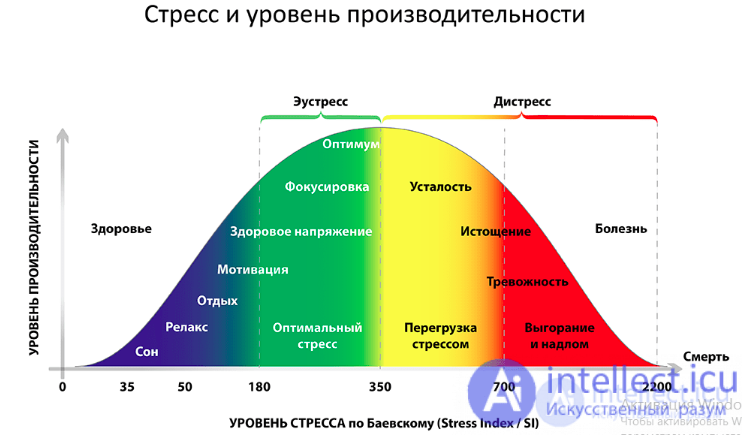
23. Excessive strain that reduces the body's ability to respond adequately to the demands of the external environment is called:
24. Which of the following is NOT a type of conflict within an organization:
25. Are the following statements correct? A. Conflict prevention is a type of managerial activity that consists of the early detection, elimination, or weakening of conflict-generating factors, thereby limiting the possibility of their occurrence or destructive development in the future. B. Maintaining cooperation can be regarded as a universal way of preventing conflicts.
26. The conflict-regulation technology that consists of working with informal leaders and microgroups, reducing social tension, and strengthening the socio-psychological climate within a group is:
27. Conducting negotiations with the participation of a specially trained intermediary is called:
28. Indicate the item that is NOT a principle of mediation:
29. Are the following statements correct? A. In teaching practice, an authoritarian style ensures strict control over students' activities, thereby helping to prevent the emergence of conflicts. B. Vertical and horizontal conflicts along the lines of interaction "administration–teacher," "teacher–teacher," and "administration–administration" do not represent typical organizational conflicts.
30. In a conflict situation, a teacher is obliged to choose the following style of behavior:
1. Are the following statements correct? A. Conflict studies as a science originated within psychology B. Conflict studies was recognized abroad as an independent science at the beginning of the 20th century
2. The most acute way of resolving significant contradictions arising in the course of interaction, usually accompanied by negative emotions, is understood to be:
3. The idea that the only universal law reigning in the cosmos is "war is the father of all things and king of all things" belongs to the ancient Greek philosopher:
4. The foundations of the modern sociological theory "Conflict Model of Society" were laid by:
5. The test methodology for determining people's tendency toward one of the modes of behavior in a conflict situation was proposed by:
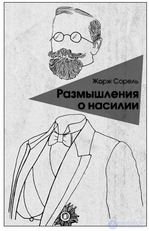
6. The researcher who viewed violence as the fundamental form of governance and the creative force of history is:
7. In modern conflict studies, research is conducted within the framework of:
8. Are the following statements correct? A. The subject of study of conflict studies is the sources of conflicts arising in society and the ways of preventing conflicts B. The attitude toward the object serving as the object of a conflict is determined by specific historical conditions
9. Which of the following is NOT among the objective elements of conflict:
10. The third party in a conflict, called upon to ensure a constructive discussion and resolution of the conflict, is called:
11. A combination of circumstances that objectively creates grounds for real confrontation between social subjects is called:
12. Based on their sphere of manifestation, the following types of conflicts are distinguished (indicate the odd one out):
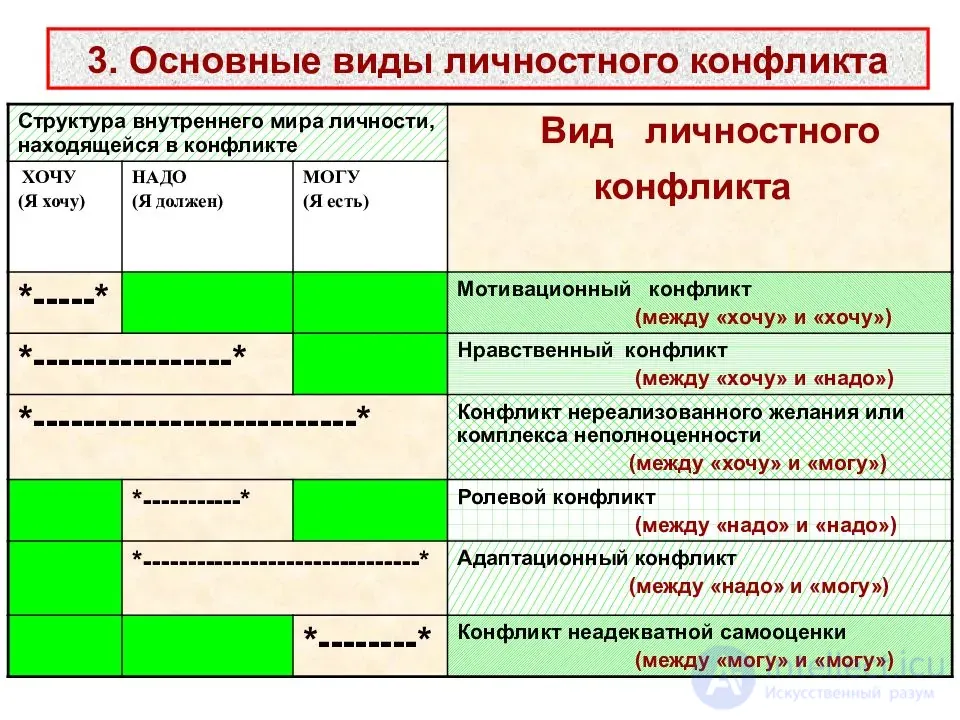
13. Intrapersonal conflict between desire and duty, between moral principles and personal attachments, is called:
14. The positive function of conflict that ensures the stability of the social system and the formation and consolidation of groups is called:
15. The stage at which the subjects of interaction become aware of a problem situation belongs to:
16. One of the extreme ways of resolving conflicts, in which forms of coercion are used against an individual or group, is called:
17. The psychological concept which holds that intrapersonal conflict is generated by an existential vacuum belongs to:
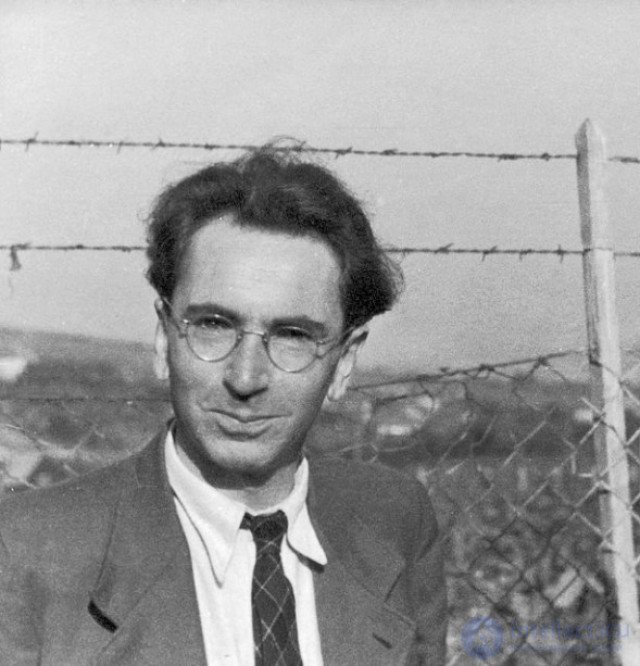
According to the author of the theory, intrapersonal conflict in the form of a noogenic neurosis arises from spiritual problems and is associated with a disturbance of the "spiritual core of the personality," in which the meanings and values of human existence are localized, playing a determining role in the person's behavior. Thus, noogenic neurosis is a disturbance of the internal structure of the personality caused by an existential vacuum, by the person's lack of meaning in life.
18. The psychological concept which holds that intrapersonal conflict arises as a result of the gap between the striving for self-actualization and the impossibility of realizing this higher need in real life belongs to:
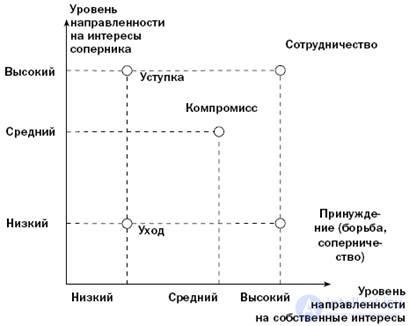
19. Are the following statements correct? A. The style of interaction in a conflict in which the subjects of the conflict are inclined toward certain concessions is called accommodation B. The style of interaction in a conflict in which preserving the relationship between the parties is more important than achieving specific goals is called collaboration
20. The style of interaction in a conflict characterized by an absence of a drive toward cooperation and an absence of a drive to achieve one's own goals is called:
21. Conflict resolution can be achieved by administrative means, which include (indicate the odd one out):
22. The form of manifestation of managerial conflict in which existing group norms and administrative-bureaucratic rules come into non-compliance with new conditions and factors is called:
23. Tension that mobilizes and activates the body to fight the source of negative emotions is called:
24. The clash of interests, opinions, and assessments between representatives of different groups regarding labor relations (conditions, content, organization of work, and its pay) is called:
25. The type of intergroup conflict in which resources serve as the object of the conflict is called:
26. The conflict-regulation technology that consists of eliminating an information deficit, excluding false and distorted information, and stopping rumors is:
27. The form of mediation in a conflict distinguished by a clearly developed, legislatively established procedure of proceedings, as well as by the binding nature of the decisions made by the third party for the participants in the conflict, is called:
28. The negotiation strategy oriented toward implementing a partnership approach and involving participants' striving for positive interaction is called:
29. Are the following statements correct? A. In teaching practice, all conflicts should be avoided B. Knowledge of conflict studies helps a teacher choose a style of behavior in a conflict situation
30. Conduct a transactional analysis of the interpersonal interaction: A teacher addresses a student with words of reproach: "You should always do your homework on time." The student replies: "But other teachers assign us so much."
1. Are the following statements correct? A. Conflict studies as a science originated within sociology B. Conflict studies was recognized abroad as an independent science only at the end of the 20th century
2. The conceptual scheme for describing conflict was first proposed by:
3. The idea that "the negative consequences of clashes will eventually force people to live in a state of peace" belongs to the ancient Greek philosopher:
4. The creator of the Theory of Elites is:
5. The foundations of the modern sociological theory of "positive-functional conflict" were laid by:
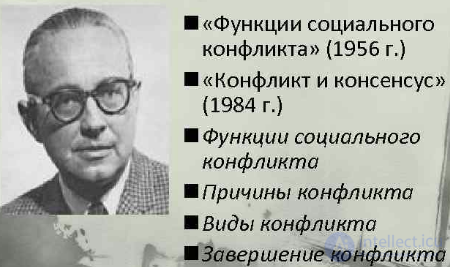
6. The author who believed that conflict is based on people's opposing interests is:
7. In modern conflict studies, research is conducted within the framework of:
8. Are the following statements correct? A. The subject of study of conflict studies consists of the patterns and mechanisms of the emergence and development of conflicts, as well as the principles and technologies for managing them B. The contradictions that give rise to conflict are always objective in nature
9. Which of the following is NOT among the indirect participants of a conflict:
10. Words or actions (or the absence of actions) that can lead to conflict and provoke indignation, rage, anger, and other negative emotional states are called:
11. Indicate the odd factor in this classification of the causes of conflict emergence:
12. A conflict within a person's psychological world, representing a clash of their oppositely directed motives (needs, interests, values, goals, ideals, etc.), is called:
13. An unproductively resolved contradiction between a person and aspects of reality that are significant to them, accompanied by painfully distressing experiences of failure, the unattainability of life goals, and the irretrievability of loss, is called:
14. The role that conflict plays in relation to society and its various structural formations — social groups, organizations, and the individual — is:
15. In the dynamics of conflict, the incident belongs to:
16. The function of conflict in which unresolved problems are revealed and shortcomings are detected is called:
17. The psychological concept which holds that intrapersonal conflict is generated by a dissonance between the "self-concept," on the one hand, and the "ideal self," on the other, belongs to:
18. The psychological concept which holds that intrapersonal conflict is generated by an inferiority complex that has formed in a person belongs to:
19. Are the following statements correct? A. The style of interaction in a conflict in which the subjects of the conflict are inclined toward certain concessions is called compromise B. The style of interaction in a conflict in which preserving the relationship between the parties is more important than achieving specific goals is called accommodation
20. The style of interaction in a conflict in which only one's own interests are pursued without regard for the interests of the other party is called:
21. Conflict resolution can be achieved by pedagogical means, which include (indicate the odd one out):
22. The most acute form of manifestation of managerial conflict, which leads to a split and the dismantling of the existing management system, is called:
23. The way of resolving intrapersonal conflicts in which psychic energy is transferred into other spheres of a person's activity is called:
24. A clash of oppositely directed actions of the participants in a conflict, caused by a divergence of interests, behavioral norms, and value orientations, arising from a mismatch between formal organizational principles and the real behavior of members of a collective, is called:
25. The type of intergroup conflict in which power and influence serve as the object of the conflict is called:
26. The conflict-regulation technology that consists of organizing communication between the subjects of the conflict interaction and their supporters, and ensuring effective communication and negotiations, is:
27. The conflict-regulation technology that consists of resolving personnel issues, using methods of reward and punishment, and personnel reshuffles is:
28. The way of settling conflicts through the joint activity of the opposing parties to find a mutually acceptable solution to the problem is called:
29. Are the following statements correct? A. In teaching practice, a teacher should avoid harsh, tactless reactions to students' deviant behavior B. The pedagogical process is impossible without various kinds of conflicts
30. Conduct a transactional analysis of the interpersonal interaction: A student's father addresses the teacher with the words "You must give him an excellent grade, he is going to apply to a university." The teacher replies: "Let's take a look at the grade book."
Correct answers
|
|
|
|
|
|
|
|
|
|
|
|
|
|
|
|
|
|
|
|
|
|
|
|
|
|
|
|
|
|
|
|
|
|
|
|
|
|
|
|
|
|
|
|
|
|
|
|
|
|
|
|
|
|
|
|
|
|
|
|
|
|
|
|
|
|
|
|
|
|
|
|
|
|
|
|
|
|
|
|
|
|
|
|
|
|
|
|
|
|
|
|
|
|
|
|
|
|
|
|
|
|
|
|
|
|
|
|
|
|
|
|
|
|
|
|
|
|
|
|
|
|
|
|
|
|
|
|
|
|
|
|
|
|
|
|
|
|
|
|
|
|
|
|
|
|
|
|
|
|
|
|
|
|
|
|
|
|
|
|
|
|
|
|
|
|
|
|
|
|
|
|
|
|
|
|
|
|
|
|
|
|
|
|
|
|
Criteria for evaluating test results in the course of conflict studies
|
|
|
|
|
|
|
|
|
|
|
|
|
|
|
|
|
|
|
|

Comments