
Lecture
Intelligence (from Latin intellectus, "perception," "understanding," "comprehension," "notion," "reason") or mind is a quality of the psyche consisting of the ability to perceive new situations, the capacity for learning and remembering based on experience, understanding and applying abstract concepts, and using one's knowledge to control the environment surrounding a person . It is the general capacity for cognition and problem-solving that unites the cognitive abilities of sensation, perception, memory, imagination, and thinking, as well as attention, will, and reflection.
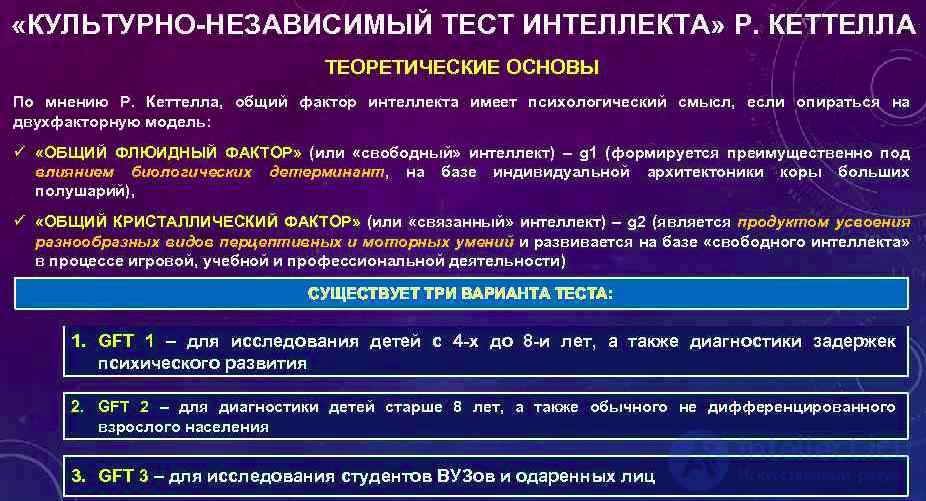
According to the theory of intelligence developed by psychologist Raymond Cattell, intelligence can be conditionally divided into fluid and crystallized intelligence. The former consists in the ability to think logically, analyze, and solve problems that go beyond previous experience; the latter includes accumulated experience and the ability to use acquired knowledge and skills.
In general, there is the problem of the types of intelligence, closely tied to the factor theories of intelligence, which are divided into two main groups—single-factor and multi-factor theories.
Intelligence is defined in various ways: as the ability for logic, understanding, self-awareness, learning, emotional knowledge, reasoning, planning, creativity, critical thinking, and problem-solving. More generally, it can be described as the ability to perceive or draw inferences from information and retain it as knowledge that can be applied to adaptive behavior in an environment or context. There are conflicting ideas about how intelligence is measured, ranging from the notion that intelligence is fixed at birth to the idea that it is malleable and can change depending on a person's thinking and effort. Some subcategories of intelligence, such as emotional intelligence or social intelligence, are actively debated as to whether they are traditional forms of intelligence. They are usually considered to be separate processes that occur, although there is an assumption that they are more closely linked to traditional intelligence than previously thought. Despite using the word "intelligence," some terms may have little or no relation to the cognitive processes mentioned.
Intelligence is most often studied in humans, but it is also observed in animals and plants, despite disagreements about whether some life forms possess intelligence. Intelligence in machines is called artificial intelligence, which is usually implemented in computer systems using software, and sometimes specialized hardware.
Before discussing the most well-known theoretical directions in the study of thinking, it should be noted that in examining this issue we will for the first time encounter concepts such as intelligence and intellectual abilities.
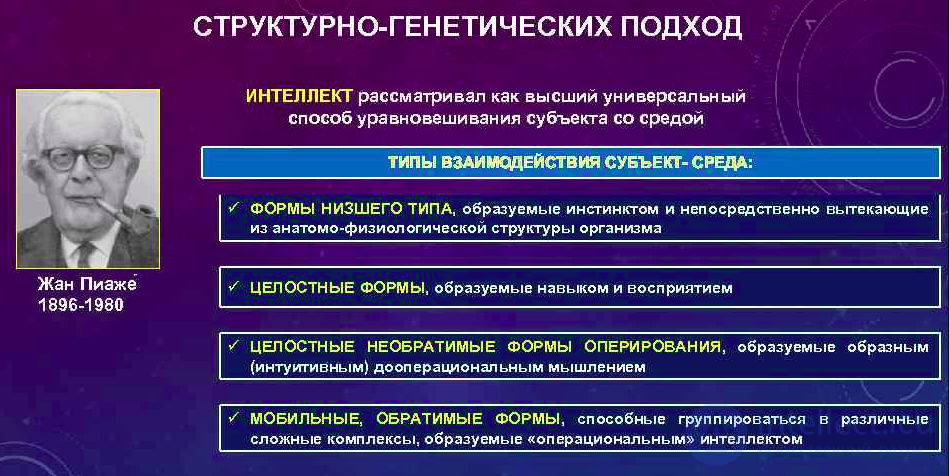
The word "intelligence" comes from the Latin intellectus, which translates into English as "reason," "understanding," "comprehension." It should be noted that there is still no unified understanding of this term. Various authors associate the concept of "intelligence" with a system of mental operations, with the style and strategy of solving life's problems, with the effectiveness of an individual's approach to a situation requiring cognitive activity, with cognitive style, and so on. Another widespread view is that of J. Piaget, who held that intelligence is what ensures a person's adaptation.
It should be noted that to this day there is no single generally accepted interpretation of the concept of "intelligence." Today there are two main interpretations of intelligence: a broader one and a narrower one. In the broader sense, intelligence is a global, integral biopsychical characteristic of a person that describes their capacity for adaptation. Another, narrower interpretation of intelligence combines in this concept a generalized characteristic of a person's mental abilities.
What meaning shall we give to the concept of "intelligence"? Would it be correct to consider every manifestation of our thinking to be intelligence? And would it be correct, conversely, to exclude certain manifestations of thinking from intelligence?
We shall proceed from the premise that in modern psychological science, intelligence is associated with the process of thinking, and thinking, in turn, is a cognitive mental process that completes the processing of information we receive from the external world. Thinking forms concepts about objects and an understanding of their interrelationships. At the same time, the concepts we possess serve as the starting platform for shaping our behavior, since in forming conscious behavior we actively use a variety of concepts.
Thus, it can be argued that thinking is directly involved in the process of adaptation. Moreover, its involvement in adaptation is not limited merely to forming basic concepts. In shaping behavior, a person proceeds from the moral values existing in society, their personal interests, and the tasks they need to solve. Consequently, the shaping of behavior and the choice of paths to achieve a goal occur through repeated weighing of options and analysis of all the underlying concepts. In these processes, thinking plays the leading role.
Often our choices are contradictory, but they are always either correct or incorrect. The adequacy of our choice depends significantly on the degree of development of the criticality of our thinking. Criticality of thinking consists in how successfully we identify shortcomings in our own judgments and in the judgments of others. However, our behavior is not always conscious in nature. Often we act without thinking or use a previously developed behavioral stereotype without having time to bring it into line with changed conditions of activity. Consequently, behavior and thinking are connected only in certain problematic cases, when we need to solve a specific mental task whose purpose is to shape behavior. When there is no such task, the formation and regulation of behavior can be carried out at
other levels and by means of other mechanisms.
Besides shaping motivated behavior, thinking is involved in activity. The performance of any transformative or creative activity cannot do without the process of thinking, for before creating anything, we solve a whole series of mental tasks and only then bring into practice what we have created in our consciousness through thinking. Moreover, each of us possesses a certain level of development of so-called creative thinking, that is, thinking associated with the formation of fundamentally new knowledge, with the generation of one's own ideas. However, in speaking of how thinking is involved in activity, we must emphasize that thinking primarily provides the cognitive aspects of activity.
Thus, a person's adaptation, their behavior, and their creative activity, insofar as these are conscious (rational) in nature, are closely connected with the process of thinking. Therefore, often when we say "reason" or "mind," we mean the process of thinking and its particular features.
In addition to the above, in forming the concept of "intelligence," let us proceed from the fact that there are manifestations of our thinking that we can evaluate and study using fairly objective methods. These manifestations are connected with solving certain mental tasks based on processing perceived information and creating original, fundamentally new ideas. Other manifestations of thinking are most often hidden from our consciousness, and even if they are recognized, it is in a relatively vague form. These manifestations are connected with adaptation and the formation of motivated (conscious) behavior. Therefore, these processes cannot be evaluated directly using special tests. We can judge the particular features of thinking's manifestation in this sphere only from indirect information obtained through the study of personality and the study of human behavior. Thus, in the process of thinking we can distinguish, from the standpoint of experimental research, quite independent components connected with solving various mental tasks, which allows thinking to be regarded as an independent mental process. We can also speak of components of thinking that cannot be considered separately from other mental processes. These components are involved in the regulation of behavior.
At the same time, it should be taken into account that the emergence of the concept of "intelligence" is connected with attempts to assess a person's mental and creative capacities using special psychological tests. Consequently, it is more correct to relate intelligence to a person's abilities to perform a certain mental activity. Moreover, intelligence cannot be regarded solely as a set of characteristics ensuring a person's adaptation to the external environment, because a person lives in society, and their adaptation is connected with moral values and the goals of their activity, and the formation of moral values and goals of activity cannot be explained solely by their being consciously recognized. Often the formation of motives and values occurs at the unconscious level. Moreover, the success of adaptation also depends on a person's physiological and psychophysiological characteristics. Therefore, in linking intelligence with thinking, it is advisable to relate it to a person's cognitive activity, that is, to the sphere of manifestation of thinking connected with the processing of information and the solving of certain mental tasks—a sphere that can, to a certain extent, be singled out from the entire flow of mental processes and studied independently.
. Thus, by intelligence we shall mean the totality of the most varied mental abilities that ensure the success of a person's cognitive activity.
All the best-known theories attempting to explain the presence of thinking in humans and its origin can be divided into two large groups. The first group includes theories proclaiming that humans possess innate intellectual abilities. According to the tenets of these theories, intellectual abilities are innate and therefore do not change over the course of life, and their formation does not depend on living conditions.
One of the best-known theories belonging to the first group is the theory of thinking developed within Gestalt psychology. From the standpoint of this scientific direction, intellectual abilities and intelligence itself are defined as a set of internal structures that ensure the perception and processing of information for the purpose of obtaining new knowledge. It is held that
Names
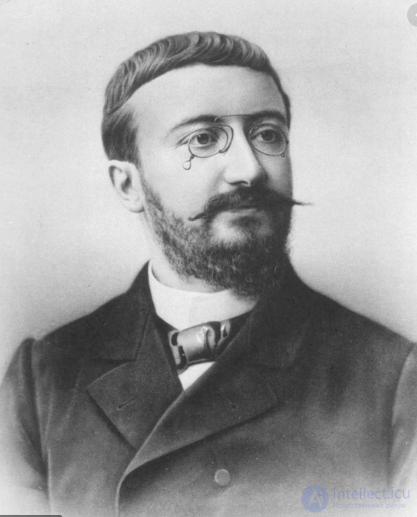
Alfred Binet (1857-1911)—French psychologist, one of the founders of French experimental psychology, and the creator of testology. He received an education in law, medicine, and biology. In 1889 he founded the first laboratory of experimental psychology in France, at the Sorbonne. From 1894 he was director of this laboratory. At the beginning of the 20th century, together with T. Simon, he began developing tests of children's level of mental development, which summarized research on the study of memory, attention, and thinking. He introduced the concept of mental age as a level of intellectual development. He worked on such problems as the pathology of consciousness and personality, mental fatigue, conceptual thinking, and individual differences in memory processes. He was one of the first to study higher mental processes under natural conditions.
that the corresponding intellectual structures exist in a person from birth in a potentially ready form, gradually manifesting themselves as the person matures and as the need for them arises. In this view, the ability to transform structures and to perceive them in real actuality is the basis of intelligence.
Another group of theories views mental abilities as developing over the course of a person's life. They attempt to explain thinking either on the basis of external environmental influences, or on the idea of the subject's internal development, or on the basis of both.
Active research on thinking has been conducted since the 17th century. The initial period of research on thinking was characterized by the fact that thinking was essentially identified with logic, and conceptual theoretical thinking was regarded as the only type subject to study. The very capacity for thinking was considered innate, and therefore, as a rule, was considered apart from the problem of the development of the human psyche. Among the intellectual abilities recognized at that time were contemplation (as a kind of analog of abstract thinking), logical reasoning, and reflection. The operations of thinking were considered to be generalization, synthesis, comparison, and classification.
Later, with the emergence of associative psychology, thinking, in all its manifestations, was reduced to associations. The connection between traces of past experience and impressions received in present experience was regarded as the mechanism of thinking. The capacity for thinking was regarded as innate. However, representatives of this school were unable to explain the origin of creative thinking from the standpoint of the doctrine of associations. Therefore, the capacity for creativity was regarded as an innate ability of the mind independent of associations.
Thinking was also widely studied within behaviorism. Here thinking was represented as a process of forming complex connections between stimuli and reactions. The undeniable merit of behaviorism was that, within the problem being studied, it considered the formation of skills and abilities in the process of solving tasks. Thanks to this school of psychology, the problem of practical thinking entered the field of study of thinking.
Psychoanalysis also made a certain contribution to the development of the psychology of thinking, paying great attention to the problem of unconscious forms of thinking, as well as to the study of the dependence of thinking on a person's motives and needs. It was precisely through the search for unconscious forms of thinking in psychoanalysis that the concept of "defense mechanisms" was formed.
In Russian (Soviet) psychology, the problem of thinking developed within the framework of the psychological theory of activity. The development of this problem is associated with the names of A. A. Smirnov, A. N. Leontiev, and others. From the standpoint of the psychological theory of activity, thinking is understood as a capacity, formed during a person's lifetime, for solving various tasks and for the purposeful transformation of reality. A. N. Leontiev proposed a conception of thinking according to which there are analogies between the structures of external (behavior-forming) and internal (thinking-forming) activity. Internal mental activity is not merely derivative of external, practical activity, but has fundamentally the same structure. Within it, as in practical activity, individual actions and operations can be distinguished. At the same time, the internal and external elements of activity are interchangeable. Mental, theoretical activity may include external, practical actions, and conversely, the structure of practical activity may include internal, mental operations and actions. Consequently, thinking, as a higher mental process, is formed in the process of activity.
It should be noted that the activity theory of thinking contributed to solving many practical problems connected with the education and mental development of children. On its basis were built well-known theories of learning and development, among them the theories of P. Ya. Galperin, L. V. Zankov, and V. V. Davydov. However, more recently, with the development of mathematics and cybernetics, it became possible to create a new information-cybernetic theory of thinking. It turned out that many of the special operations used in programs for machine information processing are very similar to the operations of thinking that people use. This made it possible to study the operations of human thinking using cybernetics and machine models of intelligence. At present, a whole scientific problem has even been formulated, known as the problem of "artificial intelligence."
Alongside theoretical searches, experimental research into the process of thinking has continually been conducted. Thus, at the beginning of the 20th century, French psychologists A. Binet and T. Simon proposed determining the degree of mental giftedness by means of special tests. Their work marked the beginning of the widespread introduction of tests into the study of thinking. At present there is an enormous number of various tests intended for people of different ages, from 2 to 65 years old. All the tests intended for studying thinking can be divided into several groups. First of all, there are achievement tests, which indicate that a person has a certain body of knowledge in a particular scientific-practical field. Another group consists of intelligence tests, intended mainly for assessing how well the intellectual development of the person examined corresponds to their biological age. Yet another group is criterion-referenced tests, intended to assess a person's ability to solve certain intellectual tasks.
The Stanford-Binet test is widely known today. It consists of scales for assessing general knowledge, level of speech development, perception, memory, and the capacity for logical thinking. All the tasks in the test are distributed by age. A judgment about intellectual development (the intelligence quotient) is made by comparing the results of a specific person's examination with the average indicators of the corresponding age group. Therefore, this test can be used to determine the so-called mental age of the person examined (the correspondence of the obtained result to the average indicator of the corresponding physical age).
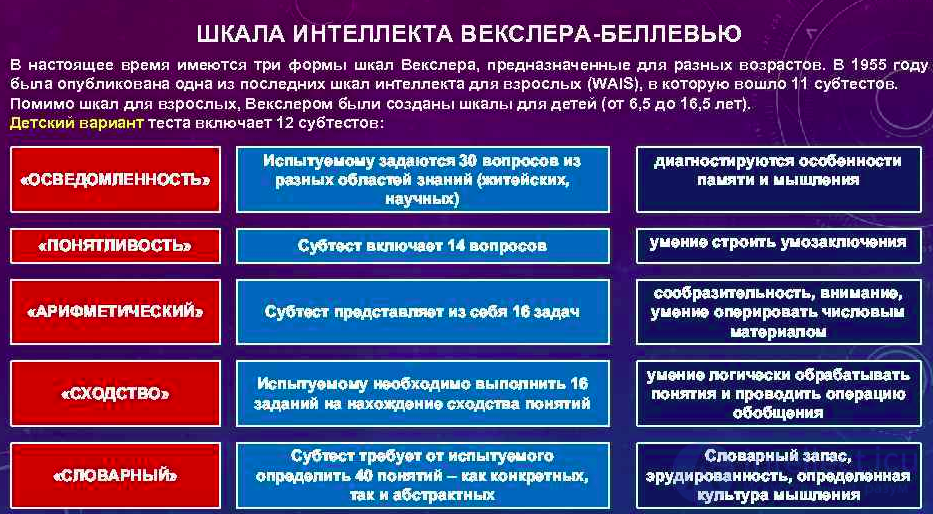
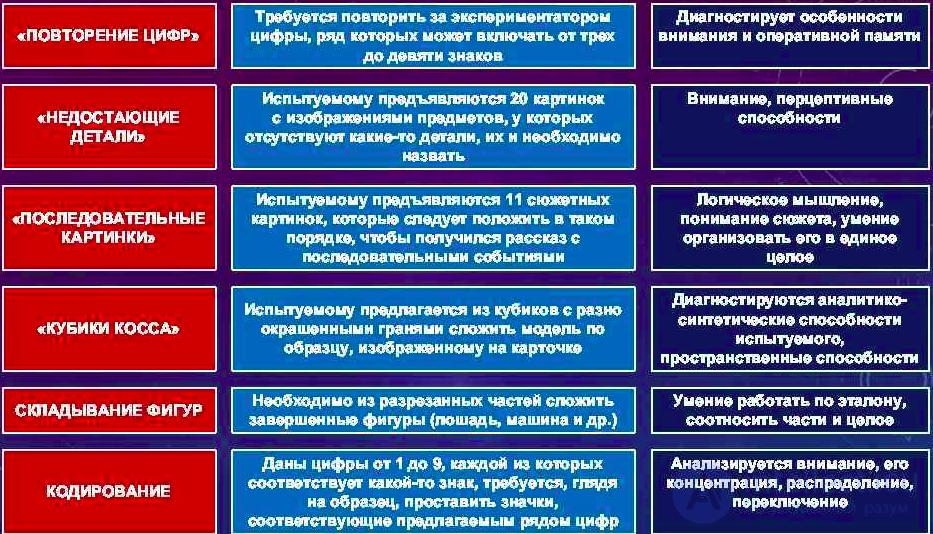
Another, no less well-known test for assessing intellectual development is the Wechsler test. There are several versions of this test, used according to the age of those examined. The test consists of separate subtests. The results shown by the person examined on these subtests are taken into account in forming the test's two main indicators: the VIQ—verbal intelligence quotient, which sums the indicators of subtests using speech;
and the PIQ—performance (nonverbal) intelligence quotient, consisting of the results of completing tasks in which speech is not directly used.
An independent group of tests are the criterion-referenced tests, which, as noted above, are intended to assess a person's ability to solve certain intellectual tasks. The best-known tests of this group in Russian psychology are the MIOM test and the modification of E. Amthauer's intelligence test battery proposed by B. M. Kulagin and M. M. Reshetnikov (the "KR-3-85" test). These tests consist of a number of subtests that assess the level of development of logical and analytical thinking, the ability to perform arithmetic operations, the level of development of imaginative thinking, the level of development of verbal and nonverbal memory, and so on. On the basis of the results of these tests, a conclusion is drawn about the level of development of certain mental processes that allow the person examined to successfully perform certain intellectual actions. Therefore, criterion-referenced tests are, as a rule, used in solving problems of professional selection.
Achievement tests have recently come into wide use. For example, in the course of school education, students are given control tests to check the quality and volume of their knowledge. Like criterion-referenced tests, achievement tests are widely used in solving problems of professional selection. This is justified by the fact that successfully mastering a profession requires a certain general educational level. The more complex the profession to be mastered, the stricter the requirements placed on the general educational preparation of candidates.
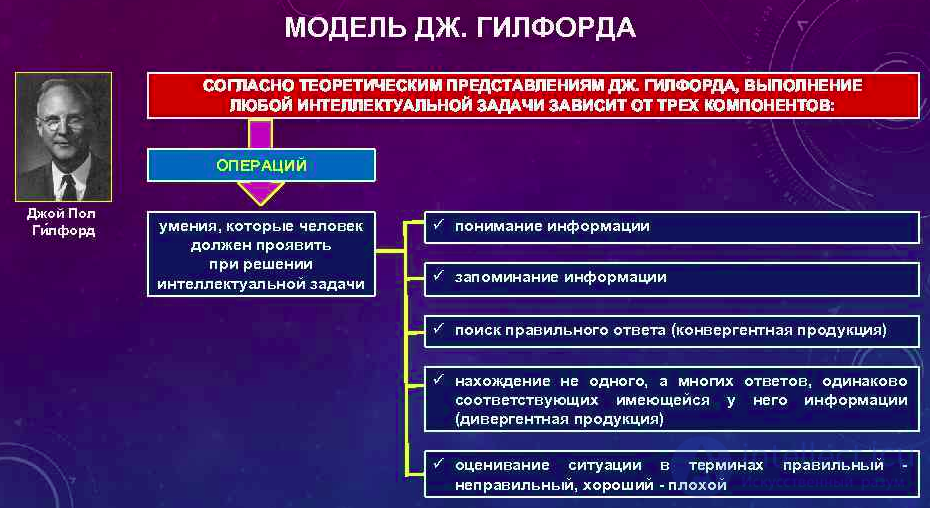
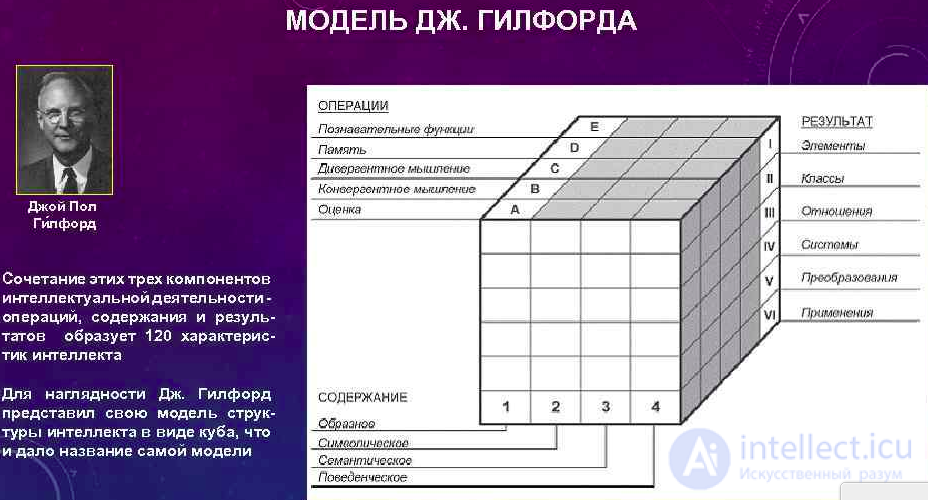
It should be noted that any test intended to assess intellectual development can, to a greater or lesser degree, be regarded as a kind of experimental model. Moreover, in the course of experimental research, a whole series of conceptual-experimental models of intelligence has been created. One of the best-known models is the model of intelligence proposed by J. Guilford (Fig. 12.3). According to Guilford's conception, intelligence is a multidimensional phenomenon that can be assessed along three dimensions: content, product, and operation. A mental operation included in intelligence may, by its character, be one of the following: evaluation, synthesis, analysis, memory, cognition. By product, a mental operation may be: a unit, a class, a relation, a system, a transformation, an implication (reasoning). By content, a mental operation may represent an action with objects, symbols, the transformation of meanings, or behavior. In total, Guilford's model of intelligence includes 120 different intellectual processes. All of them reduce to 15 factors: five operations, four types of content, and six types of products of mental activity.
The operations include: cognition (the processes of understanding and perceiving information), memory (the processes of memorizing, retaining, and reproducing information), divergent productive thinking (the means of generating original creative ideas), convergent thinking (the processes that ensure the solving of tasks having a single correct answer), and evaluation (the processes that allow one to assess the correspondence of the result obtained with the result required, and on this basis to determine whether the task has been solved).
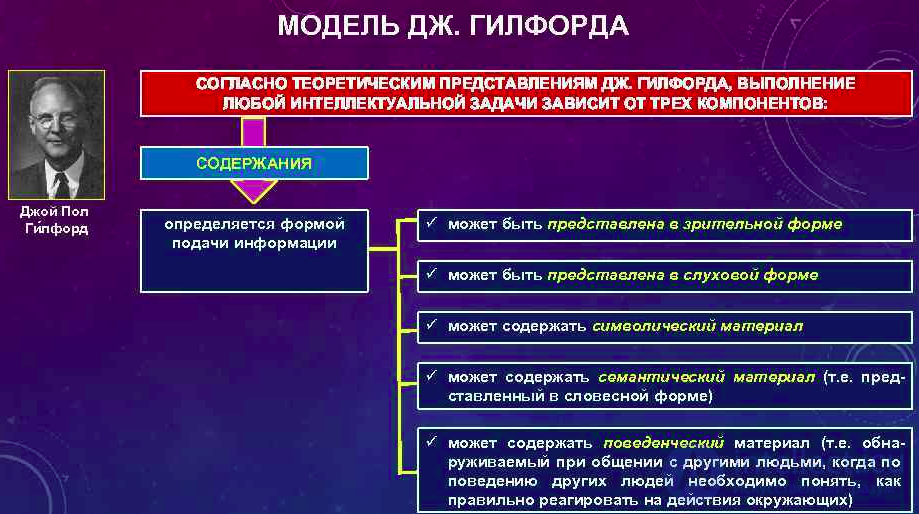
The types of content of mental operations include: figural content (visual-imagistic information), symbolic content (signs, letters, etc.), semantic content (ideas and concepts), and behavioral content (feelings, thoughts, moods, desires).
In turn, the products of mental activity can take the form of a unit (individual pieces of information), a class (a set of information grouped by common essential features), a system (blocks consisting of elements and the connections between them), and a transformation (the conversion and modification of information).
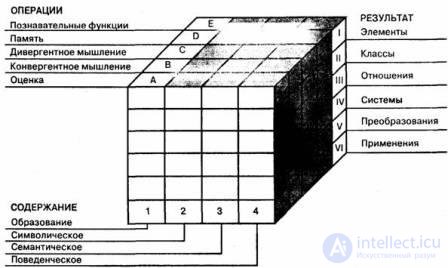
Fig. 12.3. Model of intelligence proposed by J. Guilford
It should be noted that, despite numerous theoretical searches and experimental studies, there is no single opinion on the structure and nature of thinking. What is undisputed at present is that thinking is one of the higher cognitive mental processes, exerting a significant influence on all of a person's activity, and that certain mental operations can be distinguished within the structure of thinking.
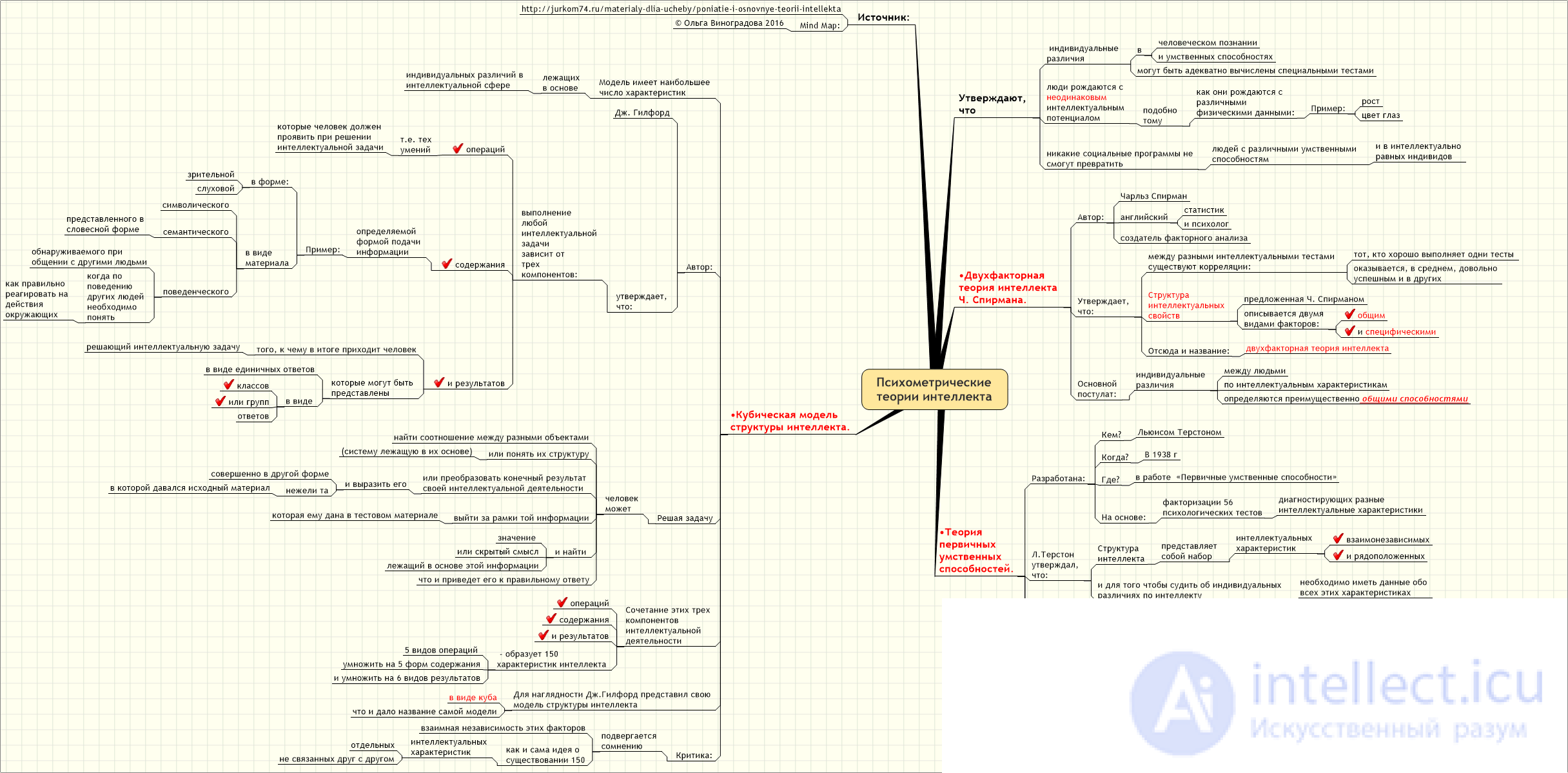
They assert that individual differences in human cognition and mental abilities can be adequately measured by special tests
People are born with unequal intellectual potential, just as they are born with different physical characteristics:
Example: height, eye color—no social programs can turn people with different mental abilities into intellectually equal individuals.
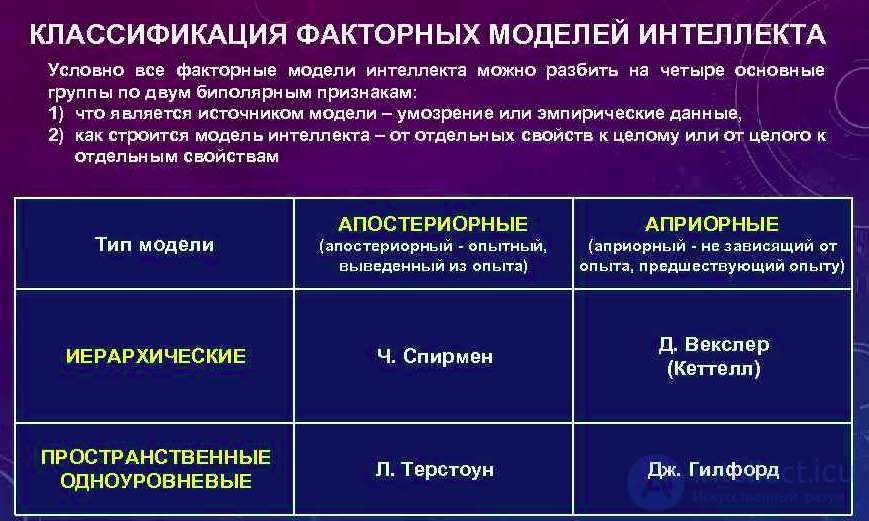
•Charles Spearman's two-factor theory of intelligence.
Author: Charles Spearman, an English statistician and psychologist, the creator of factor analysis.
Asserts that: there are correlations between different intelligence tests: someone who performs well on some tests
turns out, on average, to be fairly successful on others as well
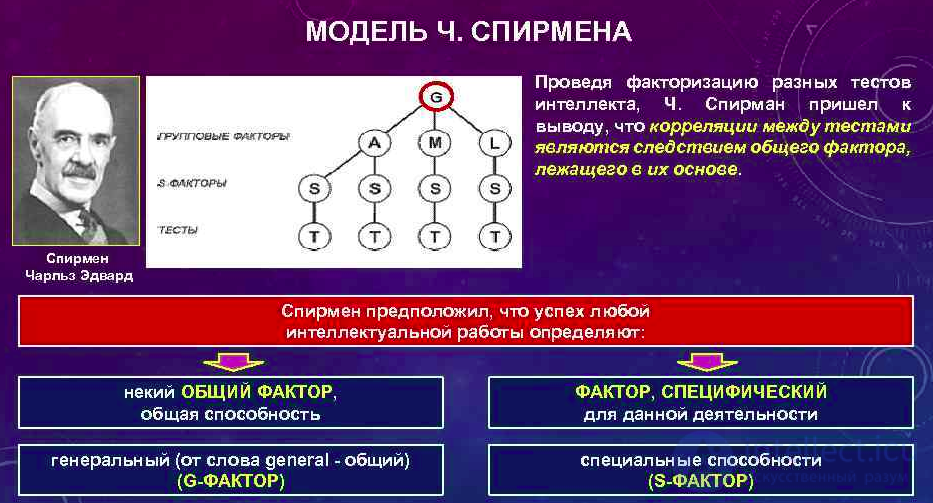
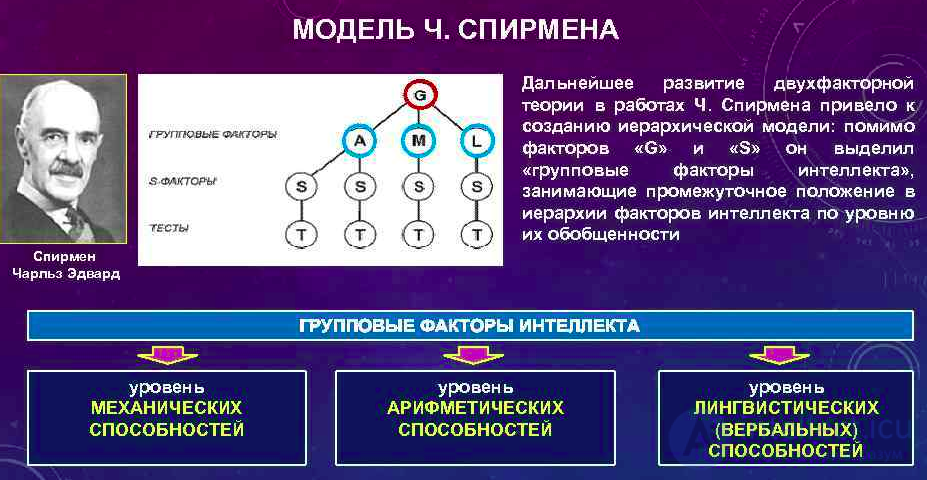
The structure of intellectual properties proposed by C. Spearman is described by two kinds of factors: a general factor and specific factors.
Hence the name: the two-factor theory of intelligence.
Basic postulate: individual differences between people in intellectual characteristics are determined predominantly by general ability
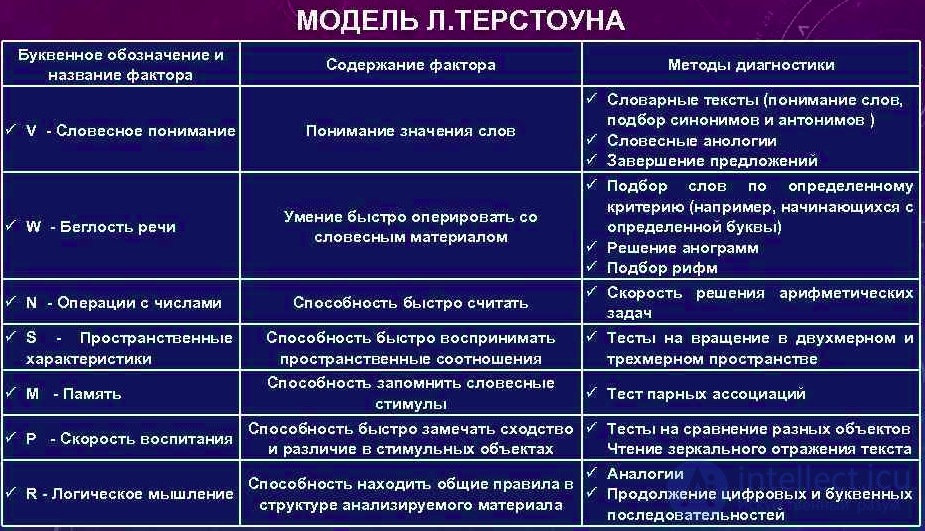
•The theory of primary mental abilities.
Developed by: Louis Thurstone, in 1938, in the work "Primary Mental Abilities"
Based on: the factor analysis of 56 psychological tests diagnosing various intellectual characteristics.
L. Thurstone asserted that: the structure of intelligence represents a set of mutually independent
and coordinate intellectual characteristics, and in order to judge individual differences in intelligence one must have data on all of these characteristics
In the works of L. Thurstone's followers, the number of factors obtained in factoring intelligence tests
(and consequently the number of intellectual characteristics that need to be determined when analyzing the intellectual sphere)
was increased to 19. But, as it turned out, this was far from the limit.
• The cubic model of the structure of intelligence.
This model has the largest number of characteristics underlying individual differences in the intellectual sphere
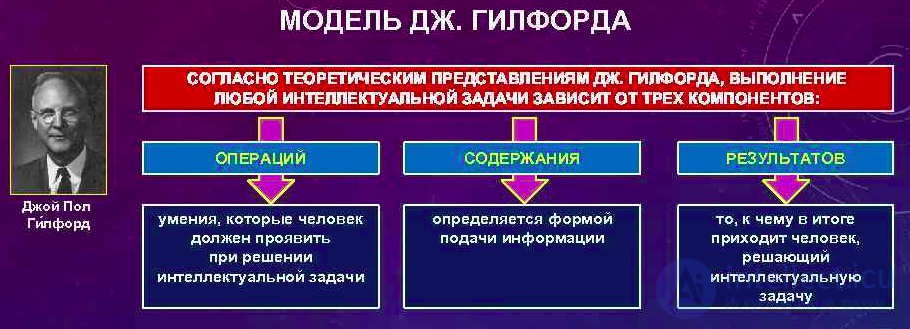
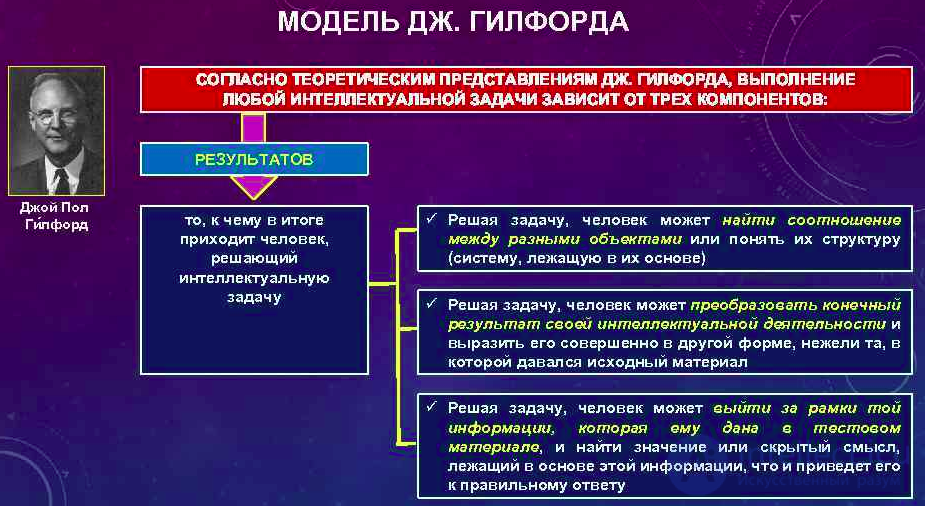
Author: J. Guilford asserts that: the performance of any intellectual task depends on three components: operations, i.e., the skills a person must demonstrate in solving an intellectual task; content, determined by the form in which the information is presented, for example: in visual form, auditory form, in the form of material, symbolic, semantic, presented in verbal form, behavioral
detected when interacting with other people, when it is necessary to understand from other people's behavior how to respond correctly to the actions of those around one; and results—what a person solving an intellectual task ultimately arrives at
which can be represented:
In solving a task, a person can find the relationship between different objects or understand their structure (the system underlying them)
or transform the final result of their intellectual activity and express it in a completely different form
than the one in which the original material was given, going beyond the information given in the test material
and finding the meaning or hidden sense underlying this information, which will lead them to the correct answer.
The combination of these three components of intellectual activity—operations, content, and results—forms 150 characteristics of intelligence
5 types of operations multiplied by 5 forms of content and multiplied by 6 types of results
For clarity, J. Guilford represented his model of the structure of intelligence in the form of a cube, which gave the model its name.
Criticism: the mutual independence of these factors is called into question, as is the very idea of the existence of 150 intellectual characteristics
that are separate and unconnected to one another.
CATTELL'S MODEL
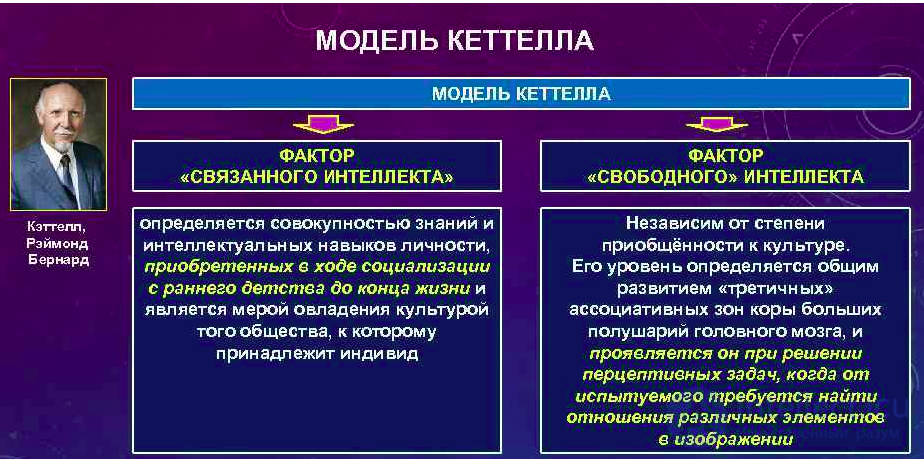
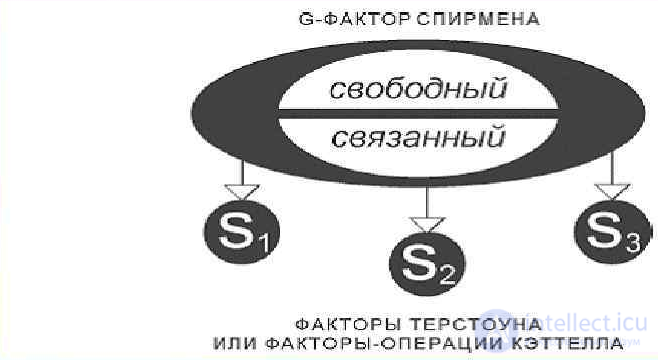
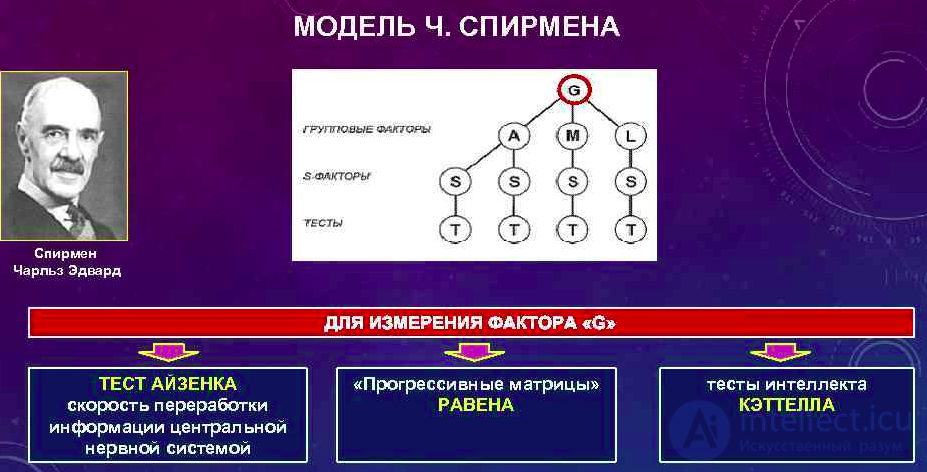
According to the authors, the "fluid intelligence" factor per R. Cattell corresponds to Spearman's "G" factor, while L. Thurstone's primary factors correspond to the operational factors of Cattell's model
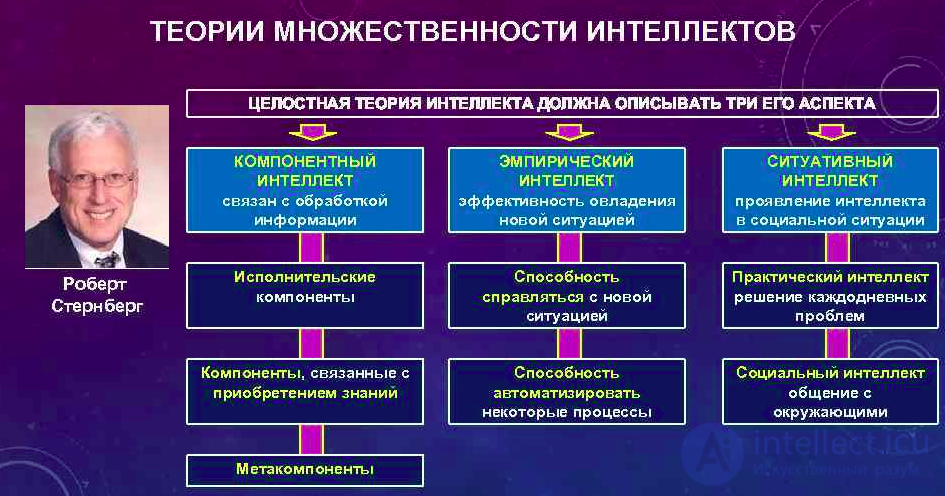
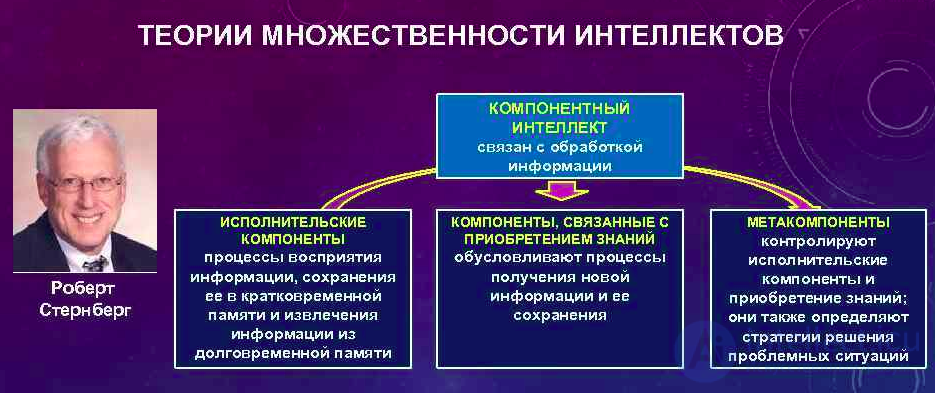
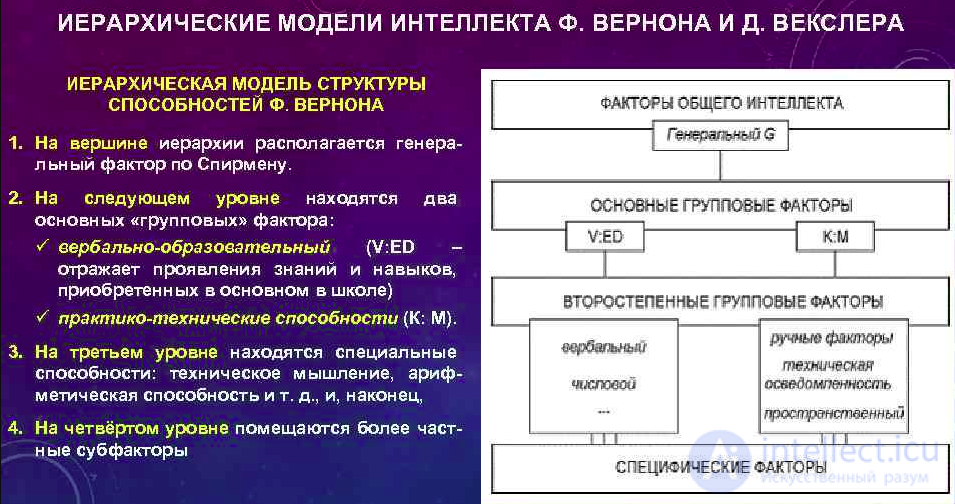
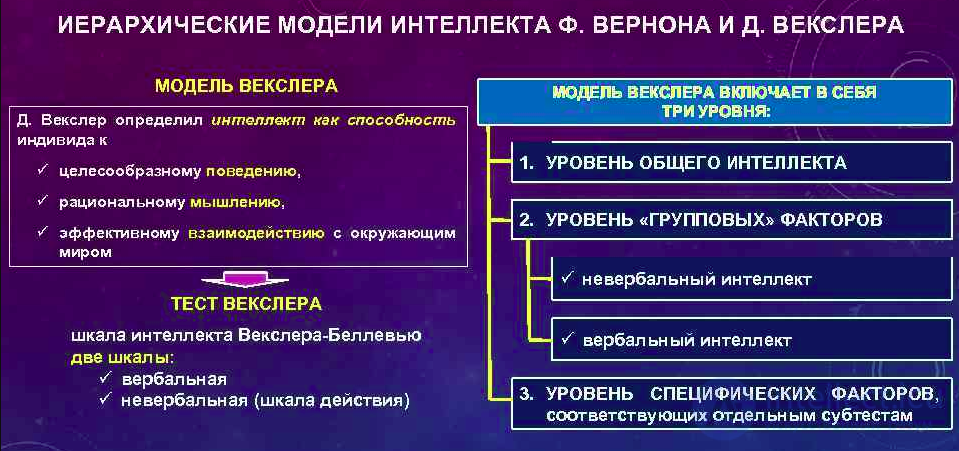
Intelligence and thinking are closely related, but they are not identical. Intelligence includes acquired knowledge, experience, and the ability to further accumulate and use them in mental activity. Thinking is the active function of intelligence. The mental operations of analysis and synthesis, judgment, and inference are independent categories, but they are carried out on the basis of intellectual capacities. Thinking is intelligence in action.
Intelligence is, above all, the basis for goal-setting, resource planning, and building a strategy for achieving a goal. There is reason to believe that animals possess the rudiments of intelligence, and even at this level their intelligence, through the mechanisms of goal-setting and goal achievement, has influenced and continues to influence the evolution of animals . The study of animal intelligence is the concern of a relatively young field of science, cognitive ethology.
The influence of intelligence extends beyond the life of a single person. The development of intelligence in humans set them apart from animals and became the beginning of the development of society, and later of human civilization.
Intelligence as a capacity is usually realized through other abilities, such as: the ability to learn, to acquire knowledge, to think logically, to systematize information by analyzing it, to determine its applicability (to classify it), to find connections, patterns, and differences within it, to associate it with similar information, and so on. Intelligence can be said to be present when all these abilities occur together; individually, none of them constitutes intelligence. A system can possess intelligence even though none of its constituent elements individually possesses intelligence.
The parameters that shape the distinctive features of the human intellectual system include:
Some researchers of intelligence and working memory believe that working memory and fluid intelligence are strongly linked to one another and are, to a significant extent, equivalent constructs, while others hold that although these entities are correlated, they are autonomous, like height and weight.[14] It has been shown that individual differences in working memory account for between a third and a half of all individual differences in general intelligence.[15][16]
Different content of activity requires the development of certain intellectual abilities in the individual. But in all cases, sensitivity on the part of the individual to what is new, to pressing problems, and to trends in the possible development of a situation is necessary.
An essential quality of an individual's mind is foresight of the possible consequences of the actions they undertake, and the ability to prevent and avoid unnecessary conflicts. One of the main features of developed intelligence is the ability to solve complex problems intuitively.
The development of particular qualities of intelligence is determined both by the given individual's genotype and by the breadth of their life experience. In conformist individuals, so-called goal-directed thinking is formed—the sphere of the individual's thinking narrows to extremely limited everyday bounds, intellectual infantilism becomes widespread, and among intellectuals, contemplativeness. In group thinking, common stereotypes, template orientations, and schematized behavioral patterns begin to predominate. Deformations arise in the content of intelligence. Deformations are also possible in the structure of intelligence, in its organization. A negative quality of intelligence is rigidity of thinking—its inflexibility, biased attitude toward phenomena, exaggeration of the sensory impression of them, and adherence to formulaic assessments.
Thomas Aquinas, in the Summa Theologiae (Part 1, Q. 79, A. 2), held that in God intellect is His essence (Latin in solo Deo intellectus est eius essentia), whereas in man it is merely "a power of the soul" (potentia animae). At the same time, in man, reason (ratio) and intellect are indistinguishable; however, intellect pertains to the contemplation of theoretical (intelligible) things, whereas reason is directed toward the comprehension of concrete, sensorily perceived phenomena.
According to Linda Gottfredson, intelligence is a very general mental capability that involves the ability to reason, plan, solve problems, think abstractly, comprehend complex ideas, learn quickly, and learn from experience. It is not merely book learning, a narrow academic skill, or test-taking smarts. Rather, according to this scholar, intelligence reflects a broader and deeper capability for comprehending our surroundings—for grasping the essence of things and figuring out what to do in a given situation.
F. N. Ilyasov defines intelligence as "the ability of a system to create, through self-learning, programs (primarily heuristic ones) for solving problems of a certain class of complexity and to solve those problems."
At the beginning of the 20th century, Charles Spearman showed that if a person is good at solving certain tasks, they are also successful at solving others—that is, that all intellectual abilities are statistically related. In 1904 Spearman introduced the concept of the "g factor" of general intelligence, reflecting the efficiency of performance on all cognitive tasks . In practice it turned out that the "g factor" is difficult to measure directly. However, on its basis it proved possible to formulate quantities that can be measured and that represent approximate measures of g. One such parameter is the intelligence quotient (IQ). Psychologist James Flynn was the first to conduct extensive research into the dynamics of IQ in various countries around the world over a long period, and he showed that this coefficient rose continuously over 50 years (the Flynn effect).
According to N. Bostrom's book:
Unlike N. Bostrom's terms, the generally accepted understanding of intelligence coincides with HLI and contradicts the terms animal intelligence, game artificial intelligence, and ambient intelligence, while the generally accepted "artificial intelligence" coincides with AHLI.
An intellectual disorder (dementia/feeble-mindedness) is a psychiatric intellectual-mnestic syndrome; a congenital (intellectual disability) or acquired (dementia) impairment of intelligence, as a result of which a person's ability to understand the connections between surrounding phenomena decreases, the ability to distinguish the essential from the incidental is lost, and critical awareness of one's own statements and behavior is lost. If the dementia is acquired, memory weakens and the store of knowledge and ideas diminishes. A profound impoverishment of the emotional-volitional sphere and of the personality is observed[21]. At first there may be observed a single, monotonous, flat affect, followed by emotional bluntness, either with apatho-abulia or with psychomotor agitation. The personality changes and character becomes distorted. In psychiatry, dementia is classed among the changes to the process of rational cognition, appearing as a complication of, or a total inability to, acquire knowledge[21], make inferences, form judgments, or exercise critical faculties. In acquired dementia, the use of previously acquired knowledge, skills, and abilities also becomes complicated or impossible.
The symptoms within the structure of dementia can vary, but negative symptoms predominate . If it is defined by these alone, it is simple dementia. More often, especially in the initial stage, there is psychotic dementia with delusions, hallucinations, and manic or depressive syndrome. The more pronounced these are, the milder the dementia, and vice versa—in total dementia they disappear completely. As H. Maudsley (English)Russian. put it: "In the most extreme cases of dementia, even absurd ideas cannot be formed."
By etiology, a distinction is made between:
Human intelligence is the intellectual power of human beings, distinguished by complex cognitive skills and a high level of motivation and self-awareness. Intelligence allows people to remember descriptions of things and to use these descriptions in future behavior. It is a cognitive process. It gives people the cognitive capacity to learn, form concepts, understand, and reason, including the abilities to recognize patterns, innovate, plan, solve problems, and use language to communicate. Intelligence allows people to experience and to think.
Intelligence is different from learning. Learning refers to the process of memorizing facts, information, or abilities and the capacity to recall them for future use, while intelligence is the cognitive capacity of a person to carry out these and other processes. Various attempts have been made to quantify intelligence through testing, such as the intelligence quotient (IQ) test. However, many people disagree with the validity of IQ tests, claiming that they cannot accurately measure intelligence.
There is debate about whether human intelligence is based on hereditary factors or environmental factors. Hereditary intelligence is the theory that intelligence is fixed at birth and cannot grow. Environmental intelligence is the theory that intelligence develops throughout life depending on a person's surrounding environment. An environment that promotes the development of intelligence challenges a person's cognitive abilities.
Much of the definition given above also applies to the minds of non-human animals.
Social intelligence is the ability to correctly understand people's behavior. This ability is necessary for effective interpersonal interaction and successful social adaptation. The term "social intelligence" itself was introduced into psychology by E. Thorndike in 1920 to denote "foresight in interpersonal relations." Many well-known psychologists have contributed to the interpretation of this concept. In 1937, G. Allport linked social intelligence to the ability to make quick, almost automatic judgments about people and to predict a person's most likely reactions. According to G. Allport, social intelligence is a special "social gift" that ensures smoothness in relationships with people, the product of which is social adjustment rather than depth of understanding. Later, many well-known scholars revealed the abilities of social intelligence within the structures of general intelligence. Among these, the models of intelligence proposed by J. Guilford and H. Eysenck are the most prominent. Among psychologists, there is still ongoing debate around the definition of intelligence given by E. Boring: intelligence is what intelligence tests measure. There are various points of view on the assessment of this statement. According to V. F. Anurin, it is fairly tautological, trivial, and directly invites criticism. Other researchers consider this definition recursive, which is extremely common in mathematics, computer science, computer programming, and artificial intelligence. H. Eysenck disagrees with E. Boring's definition: intelligence tests, he argues, are not composed at random but are based in their development on well-known, identified, and verified natural patterns, such as the principle of "positive manifold."
Emotional intelligence is a group of mental abilities that are involved in recognizing and understanding one's own emotions and the emotions of others. Emotional intelligence is the ability to convey emotions to others in a comprehensible way, as well as to accurately read the emotions of others. Some theories suggest that higher emotional intelligence may also lead to faster generation and processing of emotions in addition to accuracy. [25] In addition, it is believed that higher emotional intelligence helps us manage emotions, which has a positive effect on our problem-solving skills. Emotional intelligence is important for our mental health and is linked to social intelligence.

Although humans have been the focus of intelligence researchers, scientists have also tried to study animal intelligence, or more broadly, animal cognition. These researchers are interested in studying both the mental abilities of a particular species and comparing the abilities of different species. They study various ways of solving problems, as well as numerical and verbal reasoning abilities. Some challenges in this field involve defining intelligence in a way that has the same meaning across different species (for example, comparing intelligence between literate humans and illiterate animals), as well as devising a measure that accurately compares the mental abilities of different species and contexts.
Wolfgang Köhler's study of ape intelligence is an example of research in this area. Stanley Coren's book The Intelligence of Dogs is a well-known book on the subject of canine intelligence. (See: The Intelligence of Dogs.) Non-human animals particularly well known and studied with regard to their intelligence include chimpanzees, bonobos (especially the language-using Kanzi), and other great apes, dolphins, elephants, and to some extent parrots, rats, and crows.
Cephalopod intelligence also represents an important area of comparative research. Cephalopods appear to possess considerable intelligence, but their nervous system differs radically from that of animals with a backbone. Vertebrate animals, such as mammals, birds, reptiles, and fish, have shown fairly high levels of intelligence, which vary by species. The same is true for arthropods.
Evidence of a general intelligence factor has been observed in non-human animals. The general intelligence factor, or g-factor, is a psychometric construct that summarizes the correlations observed among a person's scores across a wide range of cognitive abilities (also known as general intelligence, general mental ability, or the general intelligence factor). First described in humans, the g-factor has since been identified in a number of other non-human species. [27]
Cognitive abilities and intelligence cannot be measured using the same scales that rely heavily on words developed for humans. Instead, intelligence is measured using various interactive and observational tools focusing on innovation, habit change, social learning, and response to novelty. Studies have shown that g accounts for 47% of individual variance in cognitive ability scores in primates [27] and 55% to 60% of variance in mice (Locurto, Locurto). These values are similar to the accepted variance in IQ explained by g in humans (40-50%).
The g-factor is used in psychometrics. It is a variable that summarizes the positive correlations between different cognitive tasks, reflecting the fact that a person's performance on one type of cognitive task tends to be comparable to that person's performance on other types of cognitive tasks. The g-factor typically accounts for 40 to 50 percent of individual differences in performance on a given cognitive test, and composite scores ("IQ scores") based on many tests are often regarded as estimates of a person's position on the g-factor. The terms IQ, general intelligence, general cognitive ability, general mental ability, and simply intelligence are often used synonymously to refer to this common core shared by cognitive tests. The g factor targets a specific measure of general intelligence.
The existence of the g factor was first proposed by the English psychologist Charles Spearman in the early 20th century. He noticed that children's performance scores on seemingly unrelated school subjects were positively correlated, and reasoned that these correlations reflected the influence of an underlying general mental ability that was involved in performance on all kinds of mental tests. Spearman proposed that all mental abilities could be conceptualized in terms of a single general ability factor, which he denoted as g, and many narrow, task-specific ability factors. Shortly after Spearman proposed the existence of g, Godfrey Thomson challenged it, presenting evidence that such intercorrelations between test scores could arise even if the g-factor did not exist. Modern factor models of intelligence typically represent cognitive abilities as a three-level hierarchy, with many narrow factors at the bottom of the hierarchy, several broader, more general factors at an intermediate level, and at the top a single factor, called the g factor, which represents the variance common to all cognitive tasks.
It has been argued that plants should also be classified as intelligent based on their ability to sense and model the external and internal environment and adjust their morphology, physiology, and phenotype accordingly to ensure self-preservation and reproduction. [29] [30]
The opposing argument is that intelligence is generally understood as the creation and use of persistent memories, as opposed to computations that do not require learning. If this is taken as the definition of intelligence, then it includes artificial intelligence in robots capable of "machine learning," but excludes the purely autonomous sensory reactions observed in many plants. Plants are not limited to automated sensorimotor responses; however, they are able to distinguish between positive and negative experiences and "learn" (register memories) from their past experience. They are also able to communicate, precisely calculating their circumstances using a complex cost-benefit analysis, and taking tightly controlled actions to mitigate and control various environmental stress factors.
Scientists in Japan have managed to prove the intelligence of fungi — Professor Toshiyuki Nakagaki of Hokkaido University showed, through numerous experiments, that mycelium is capable of gathering and organizing information about its environment, understanding its location in space, and passing this data on to its offspring.
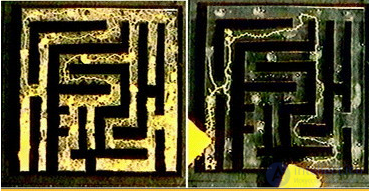
The Japanese biologist used a maze of the kind used to test the memory and intelligence of laboratory rats. At one entrance, he placed a yellow slime mold, and at the exit, a piece of sugar. Detecting the scent of food, the fungus Physarum polycephalum instantly sent out strands in search of it.
At every branching point in the maze, the strands split in two. As soon as one of them reached a dead end, it turned back and then unerringly followed the "route" of the more successful growth. By the end of the day, the fungus had reached the sugar. In the next stage of the experiment, the scientist took the same fungus and placed it at the entrance of an identical maze, with sugar again lying at the exit.
This time, the already "trained" fungus sent out only two strands: one immediately found the correct path to the treat, while the other climbed up to the "ceiling" of the maze and reached the sugar directly. According to the Japanese scientist, such abilities of the mycelium demonstrate the existence of intelligence and memory in fungi.
Californian scientist Alan Ohayon claims that very soon the ethical line in growing brain organoids will be crossed: mini-brains will learn to feel pain. The question is whether ethical doubts are enough to freeze one of the most promising areas of biological research.
One of the most important achievements of modern biotechnology is considered to be the creation of brain organoids — simplified pea-sized models of the human brain. These structures can be used to study a whole range of diseases affecting the brain, from the Zika virus to Alzheimer's and Parkinson's disease, as well as to test drugs.
Although some organoids already display the same electrical activity as the brain of premature infants, scientists are confident that these structures do not feel anything and do not possess consciousness.
This allows experiments to be carried out on them without regard to ethical norms.
However, not all experts agree that the development of brain organoids is ethical, notes the Guardian. For example, Californian neuroscientist Alan Ohayon claims that these structures are close to attaining sentience. He is calling for a freeze on all research in which organoids might develop the beginnings of consciousness and start to experience pain.
To continue their experiments, biologists will have to prove that their models are not suffering.
Last year, a group of scientists, lawyers, philosophers, and ethicists announced the need for a debate on the issue of brain organoids. According to them, although the technology is not yet sufficiently developed, it is necessary to resolve the related ethical problems now.
The brain is far from the only organ whose simplified copies are used in research. For example, the first system of three organoids — liver, pancreas, and bile ducts — was recently created. It will help study the causes of diseases and test drugs.
Artificial intelligence (or AI) is both the intelligence demonstrated by machines and the branch of computer science aimed at creating it through "the study and design of intelligent agents" [32] or "rational agents," where an intelligent agent is a system that perceives its environment and takes actions that maximize its chances of success. [33] Kaplan and Haenlein define artificial intelligence as "a system's ability to correctly interpret external data, learn from such data, and use those learnings to achieve specific goals and tasks through flexible adaptation." [34] Advances in artificial intelligence include narrow, well-defined tasks, such as games, crossword solving, and optical character recognition, as well as some more general problems, such as autonomous vehicles. General intelligence, or strong AI, has not yet been achieved and remains a long-term goal of AI research.
Researchers hope that machines will possess qualities such as reasoning, knowledge, planning, learning, communication, perception, as well as the ability to move around and manipulate objects. [32] [33] There is no consensus in the field of artificial intelligence on how precisely the brain should be modeled.
In English, this concept is used by most of the authors mentioned above as "intelligence" (razumnost', or human intelligence), rather than "intellect" — for which there is a separate article. Therefore, when attempting to combine them into a single concept in Russian, misunderstandings and contradictions arise.
In particular, this is related to the translation of the terms IQ and EQ. Tests measuring the level of intelligence were called IQ (intelligence quotient). After some time, American psychologists raised the alarm that people had begun to be evaluated by it as a whole — based on its name, rather than merely as a test of logic — based on its actual substance. And so EQ appeared, to indicate that intelligence (the word "intelligence" had, because of these tests, come to be associated with pure logic) also has an emotional and social component.
In the Russian-speaking world, upon seeing that IQ tests were tests of logic, it was translated as "intelligence coefficient" (koeffitsient intellekta) rather than "index of reasonableness." And so this kind of skew did not arise. EQ, correspondingly, would be more accurately translated as "index of emotionality" (adding "and sensitivity," if one looks at the essence of the concept) rather than "emotional intelligence." And social intelligence would be "social reasonableness."
The word "Intelligence" comes from the Latin nouns "intelligentia" or "intellēctus," which in turn derive from the verb "intelligere," to understand or perceive. In the Middle Ages, the word intellectus became a scholarly technical term denoting understanding, and a translation of the Greek philosophical term nous. This term, however, was closely tied to the metaphysical and cosmological theories of teleological scholasticism, including theories of the immortality of the soul and the concept of the active intellect (also known as the active intelligence). This approach to the study of nature was firmly rejected by early modern philosophers such as Francis Bacon, Thomas Hobbes, John Locke, and David Hume, all of whom preferred "understanding" (instead of "intellectus" or "intelligence") in their English philosophical works. Hobbes, for example, in his Latin work De Corpore, used "intellectus intelligit," translated in the English version as "the understanding understandeth," as a classic example of a logical absurdity. Thus, "intellect" became less common in English-language philosophy, but was later revived (along with the scholastic theories it now implies) in more modern psychology.
When people speak of "limited intelligence" (or "restricted intelligence"), they usually mean a level of intellectual ability that is significantly below the average level of human intelligence. This term can be used to describe limited cognitive abilities or intellectual capacity in a person or in artificial intelligence.
Limited intelligence can manifest itself in various areas, including limited abilities in learning, adaptation, information analysis, and decision-making. This may be the result of genetic factors, illness, injury, or other limiting factors.
In the context of artificial intelligence, "limited intelligence" can mean that an algorithm or model has restricted capabilities in solving certain tasks or a limited body of knowledge. This might be, for example, a neural network that cannot perform complex tasks that are easily solved by more powerful models.
The notion of "limited intelligence" is sometimes used in colloquial speech or to describe deficiencies in the intellectual abilities of a person or a machine. It can be perceived as a negative expression, so it is important to use it respectfully toward others and to carefully consider the context in which it is applied.

Comments