You get a bonus - 1 coin for daily activity. Now you have 1 coin

The Scale of Emotional Tones and the Map of Emotions

Lecture


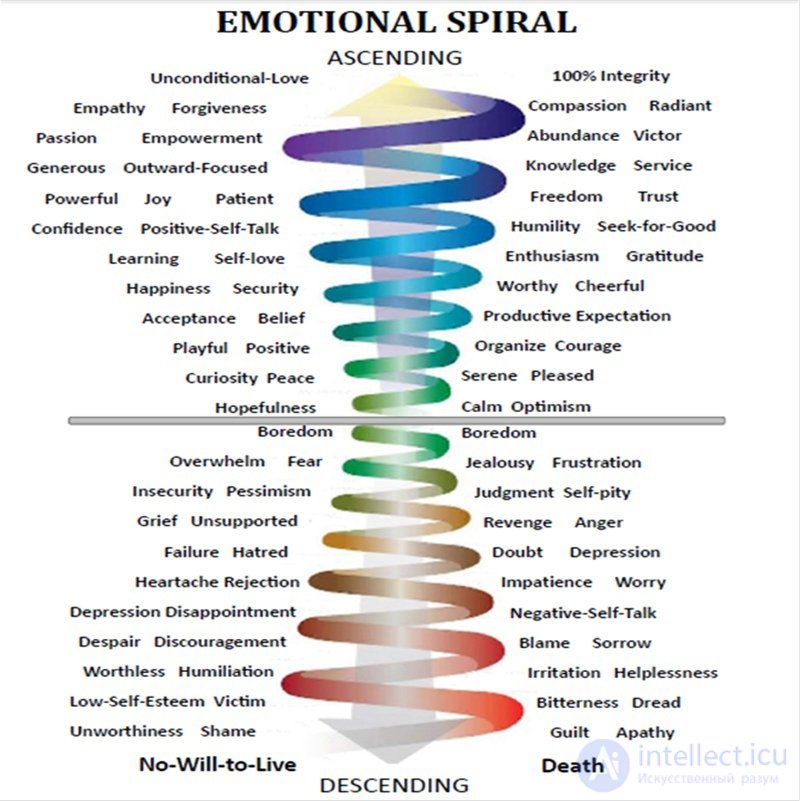
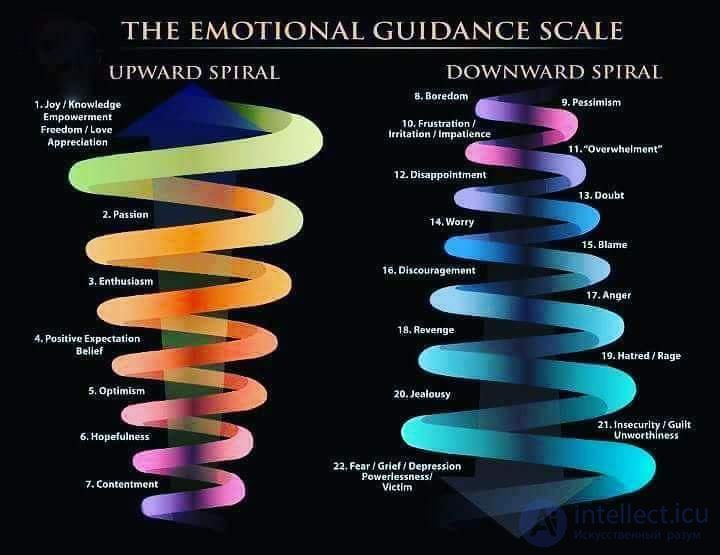
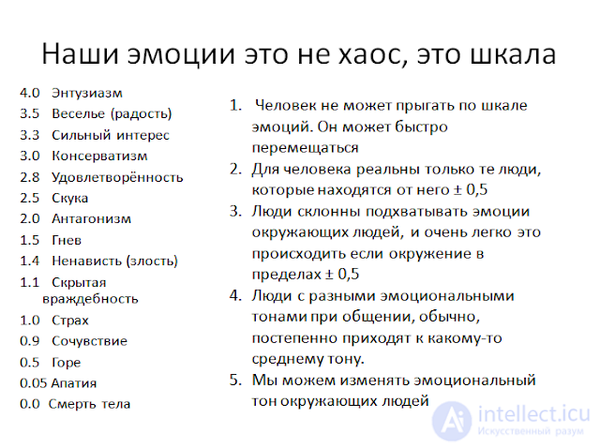
The concept of the "tone scale" was introduced in the 1950s by the American writer and philosopher L. Ron Hubbard to describe a person's emotional state. This scale characterizes a person's condition during different periods of life. It is conventionally depicted using numbers from 0.0 to 4.0. A person positioned high on the tone scale behaves optimally in their surroundings and feels good. A person whose position on the scale of emotional tones is low is incapable of rational action and feels unwell. Some people are unable to remain in low tones for long, while others get stuck in destructive emotions, and this becomes their problem.
The Scale of Emotional Tones and the Map of EmotionsThe Scale of Emotional Tones and the Map of Emotions
The Scale of Emotional Tones and the Map of Emotions

A person's emotional state is heavily influenced by their environment. If a person lives for a long time surrounded by emotions such as anger, despair, or guilt, one can expect their emotional tone to drop. This can be observed at work, in the family, and on the street — a person tends to adjust to the general emotional level around them. At work, this means adjusting to the boss's emotional tone; at home, to the spouse's; on the street, to that of the surroundings. There are a great many negative emotions in our lives, coming from the people around us, from television, from newspapers.

What should you do when the people around you are showing aggression, fear, or despondency, and how do you keep yourself in a high emotional state?

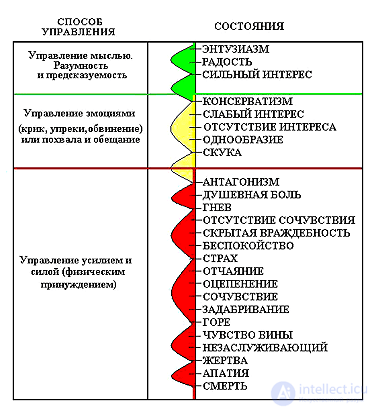
To do this, you need to be able to manage both your own emotional state and the emotions of the person you are talking to. Such management is only possible based on precise knowledge of the psychological laws governing the existence and interaction of various emotions, as reflected in the Scale of Emotional States.

You can use knowledge of the Scale of Emotional States when hiring people and when choosing partners. The scale accurately shows what to expect from a person and lets you predict people's behavior. In addition, it gives you an idea of what might happen to you in a given environment or in the company of certain people — how some groups can "drag" you down into emotions such as "anger," "propitiation," or "fear," and how others can quickly lift you up to an emotional state such as "cheerfulness" or even "enthusiasm."

For example:

  • if a coworker is constantly in a state of "anger" (extremely displeased, irritated, shouting), they will pull you down toward "fear," or, at best, "antagonism" (an unwillingness to communicate). Moreover, this person, while in "anger," will constantly be drawn toward people who are in the emotional state of "antagonism."
  • if your spouse is constantly in the emotional state of "cheerfulness" (cheerful, "ready to move mountains"), you rise into the state of "interest."

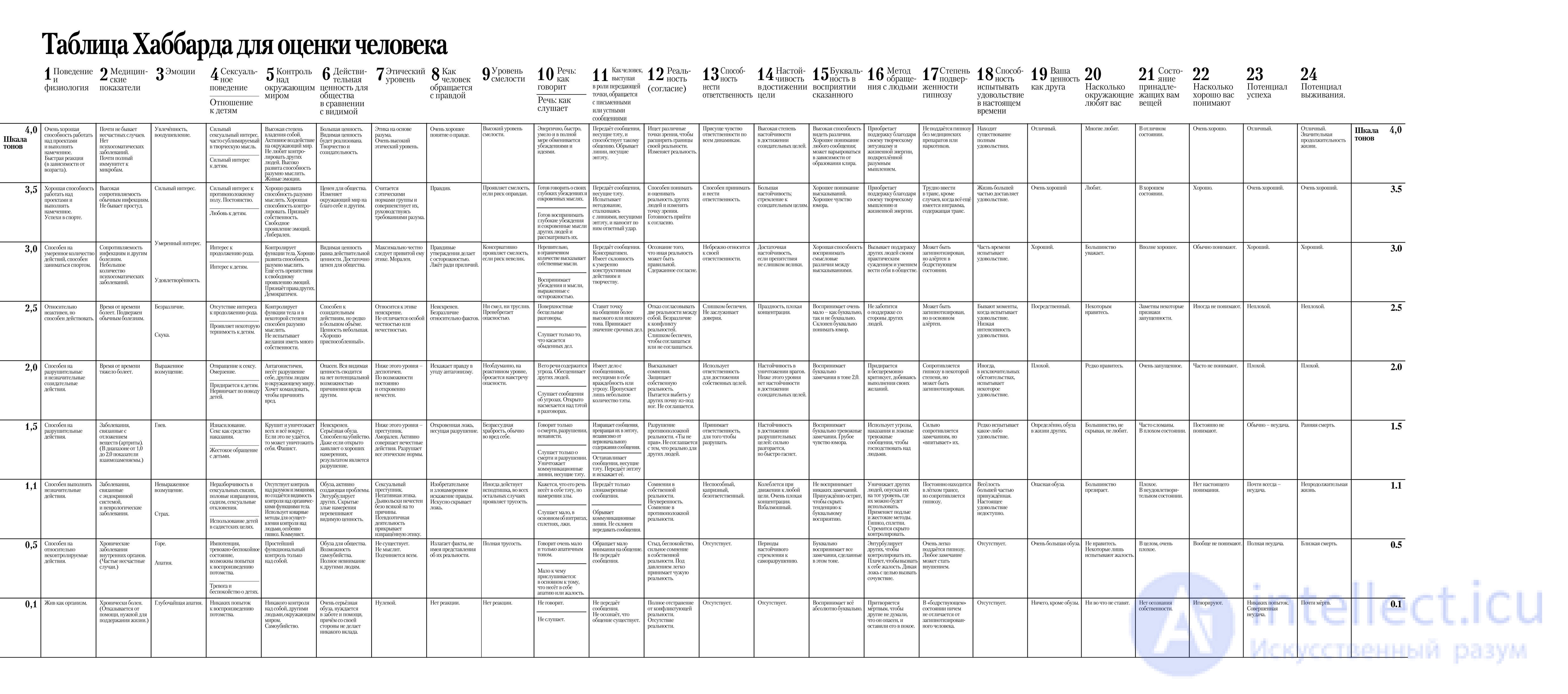
Each emotional state corresponds to typical human behavior, characteristic illnesses, a certain degree of psychological adaptability, and a certain ability to make decisions and achieve what one has set out to do. In the table shown in the figure, a wavy line depicts the mutual influence between tones. It's important to know that when a person remains in one emotional state for a long time, they begin to attract people (friends, staff, business partners) who are only in that particular emotional state.

In short, a person's emotional state affects their success in life, as well as their health. What's the use of following the latest methods for organizing your work if you have no mood, desire, or energy to actually do the work? What's the point of swallowing mountains of expensive medication if the root of the illness lies in your own low spirits?

By using the Scale of Emotional States, based on the psychological laws governing the existence and interaction of various emotions, you can accurately determine your predominant emotional state, as well as raise your emotional tone.
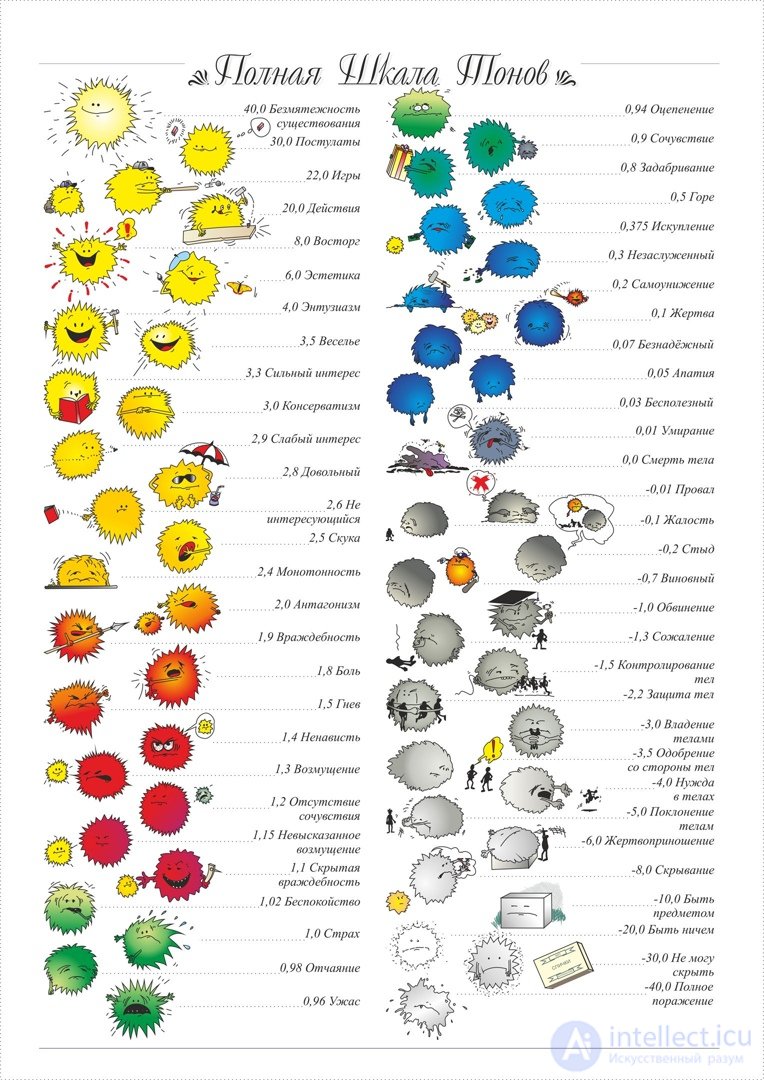
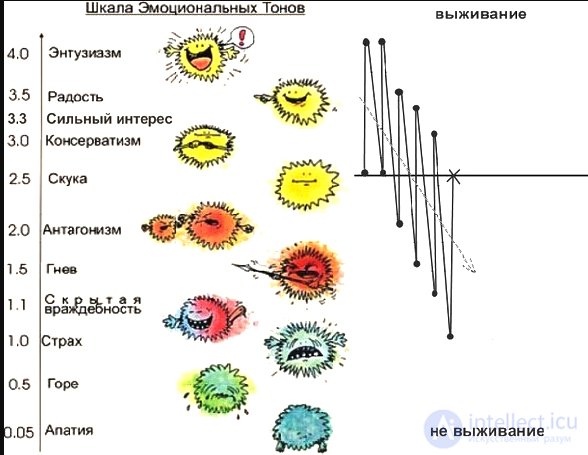
The Scale of Emotional Tones and the Map of Emotions

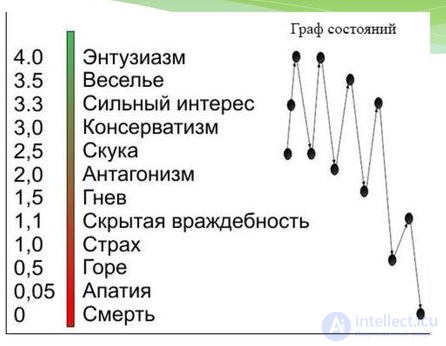
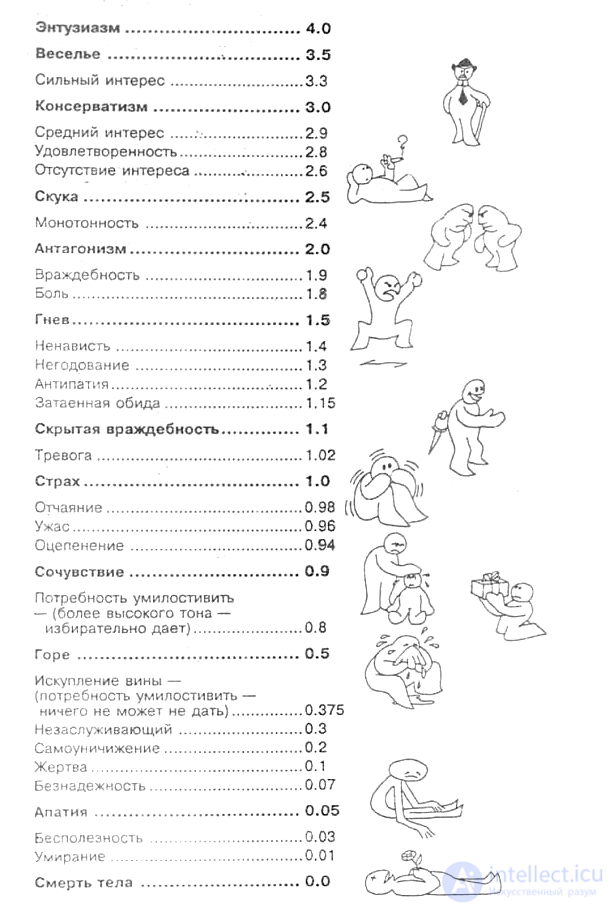
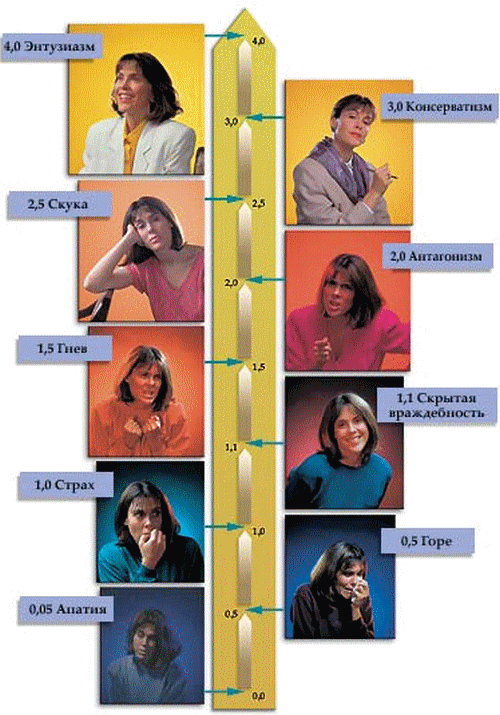
In simplified form, this scale looks like this.
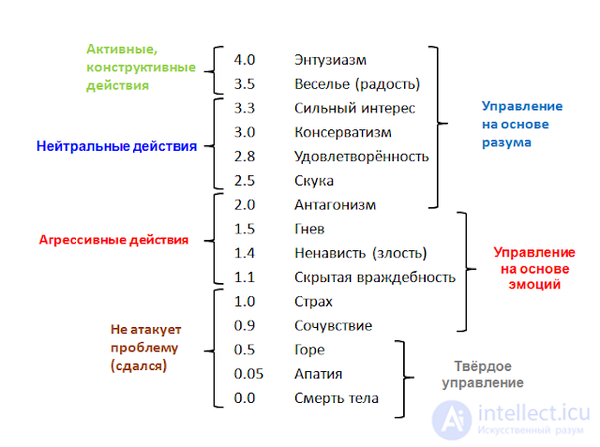
4.0 Enthusiasm: "I can do anything and everything. Life is a wonderful game!"
3.5 Cheerfulness: (liveliness) "I'm great, and living is wonderful!"
3.3 Interest: "This is really cool, let's do it!"
3.0 Conservatism: "I know exactly how life should be lived, and I'm confident in myself."
2.5 Boredom: "Life is just life. Let it go however it wants, and I'll take it easy."
2.0 Antagonism: "You're wrong! Stop it!"
1.8 Pain: "Damn it! Blast it! Oh no, not this! Oh, is that how it is?!"
1.5 Anger (rage): "I'll kill you!!!"
1.2 No sympathy (coldness): "That's your problem, I couldn't care less."
1.1 Covert hostility (insincerity): "Everyone's a scoundrel. I'll have to pretend to be nice. Fine, we'll see who wins."
1.0 Fear: "Oh God, Mommy, what is this? Help!"
0.9 Sympathy: "You poor thing, I feel so sorry for you! But everything's so bad, and there's nothing to be done!"
0.8 Propitiation: "I live for you!... I'll do whatever you want!..."
0.5 Grief: "Boo-hoo-hoo!!! How unhappy I am! I feel so-o-o sorry for myself!"
0.1 Apathy: "It's all over. Nothing can be done. Leave me alone."
The Scale of Emotional Tones and the Map of Emotions
Map of Emotions

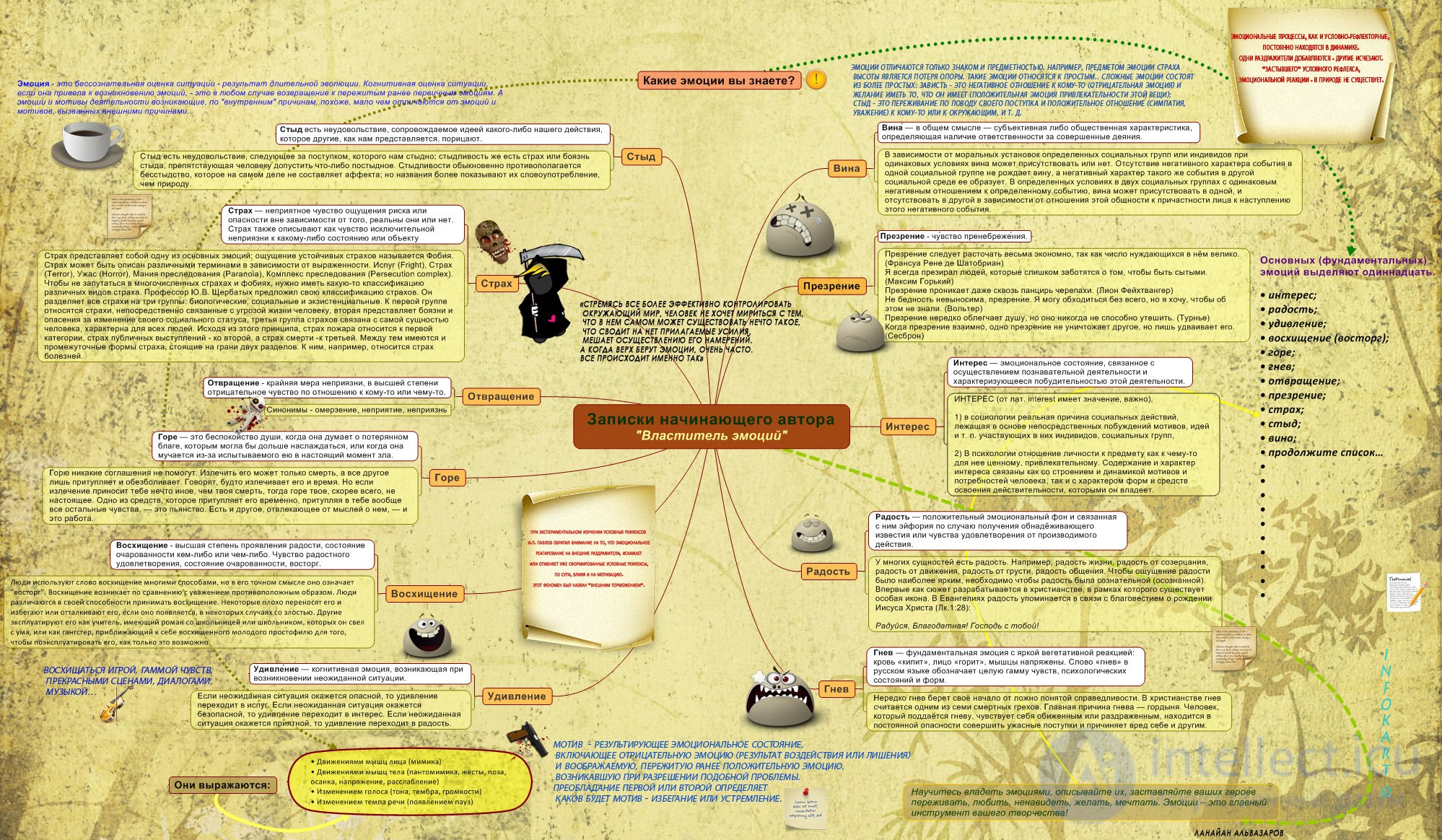
The researchers under discussion were originally focused on obtaining a practical tool for managing emotions and raising overall emotional tone. And all of them, starting with Ron Hubbard, arrived at expanded emotion scales comprising 100 to 300 emotional states. At the same time, a person's control system carries out its intentions through our working memory. And its capacity is limited by the "Miller's pocketbook" of 5 to 9 units. That is, the core of an effective emotion scale has the same dimensionality. Let's look at the classic portrait of the small scale.
The Scale of Emotional Tones and the Map of Emotions

Studying the Emotion Scale

Everything in existence moves and
develops along a spiral path.

Ivan Yefremov
"Andromeda Nebula."


Above, I examined several theories concerning the nature of human emotions. Of course, there are far more theories dealing with the structure of human consciousness, including the nature of emotions, than have been discussed above. The theories examined represent a range of characteristic approaches to solving this question.
It should be noted that all of these theories acknowledge that, from birth, the human body — and in particular its nervous system — possesses various genetically determined characteristics. All the theories acknowledge the influence of the social factor on human consciousness. All the theories acknowledge that emotions are connected with a person's assessment of their environment. The difference between them lies in how various researchers view the relationship between these factors.
It should also be noted that all researchers of human consciousness are influenced by certain ideas, certain religions, or philosophical beliefs. The peculiarity of this situation is that the very subjects of faith, philosophical belief, and worldview are themselves, to a full extent, products of human consciousness.
A researcher's faith and worldview play a role even in modern physics and mathematics, but when it comes to the human mind, this becomes fully apparent. This fact says a great deal about the overall level of development of psychology. In physics, a similar situation existed in the time of Copernicus, when some scientists believed the Sun revolved around the Earth, while others believed the Earth revolved around the Sun.
The difference between the approaches to the nature of emotions discussed above is due, above all, precisely to the personal convictions of the researchers and the traditions of the psychological schools they represent. And this difference lies in how they each see the source of emotions. Proponents of differential emotions theory believe that emotions first developed as one of the mechanisms regulating the organism, and only later did the signals from these regulatory systems come to be perceived by the higher nervous system as emotions and used in communication between individuals. Proponents of transactional theory believe that emotions first developed as scripts for communication between individuals, and only later did the organism's physiological systems begin to use these scripts for their own purposes and come to be perceived by the higher nervous system as emotions. Proponents of information theory believe that the perception of emotions developed together with the higher nervous system, and that the assessment of a situation and the signals from the organism's regulatory systems merely serve as factors that determine the emotion. Proponents of these viewpoints quite reasonably believe that the emergence of emotions was originally tied to one single specific cause, but each school sees that cause differently.

Whereas psychological theories locate the source of the emotional mechanism in the human body, Hubbard holds a different point of view. He was a proponent of the doctrine of multiple lifetimes and believed that after the death of the body, the sentient being enters another body and continues to live, usually forgetting its past life. According to his concept, he divided emotions into two groups: emotions characteristic of the "merger" of the spiritual being with the human body, which are shown on the scale from 0 to 4, and emotions characteristic of the spiritual being itself. He plotted the emotions characteristic of the spiritual being on an expanded scale. Hubbard was not at all interested in the physiological mechanisms associated with emotions; he considered the source of emotions to be the spiritual being, which he called a thetan, from the ancient Greek letter theta, which ancient hermetic societies used to denote the mind.
Bearing in mind, of course, that Simonov was a committed materialist, while Hubbard was an even more committed opponent of materialist philosophy, I would like to note that Scientology's theory of emotions is closest to the informational concept of the emotional mechanism. Both concepts view emotions, above all, as an assessment of the current situation. Hubbard believes that this assessment is carried out by the thetan, while Simonov attributes it to certain structures of the brain. Nevertheless, there is a definite correlation between Hubbard's emotion scale and Simonov's classification of emotions.
In analyzing this correlation, I plotted the emotions identified by Simonov onto Hubbard's emotion scale. Emotions that Simonov classified as involving "a small need" did not make it onto Hubbard's scale, with the exception of the emotion "indifference," which I equated with Hubbard's tone of "apathy." I placed the remaining emotions on the scale in a way that achieved the closest possible match. I equated liveliness, triumph, and inspiration with Hubbard's tone of cheerfulness, and the emotions of confidence, courage, and fearlessness with the tone of enthusiasm. This produced the following tables:
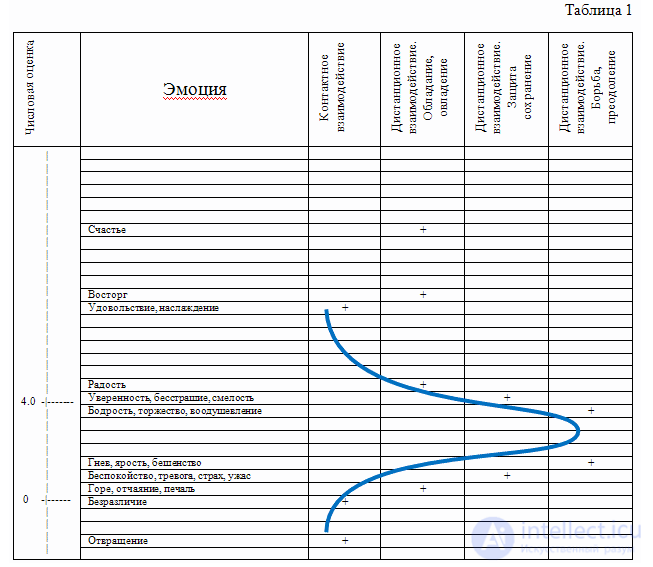
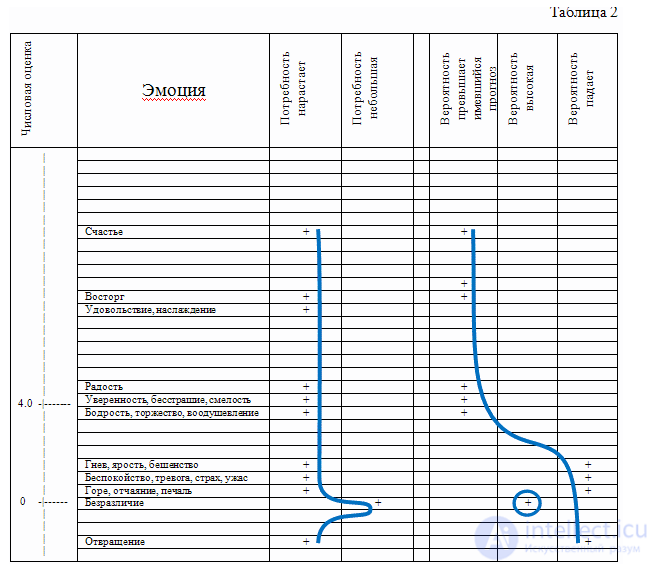
The Scale of Emotional Tones and the Map of Emotions

The placement of emotions in the second column and the classification by Simonov in the last four columns were done independently, that is, without deliberately adjusting them to fit a predetermined result. I myself was interested in objective information. Nevertheless, a certain relationship can be traced in this diagram.
I might suggest (Simonov's own opinion on this scale is unknown to me, and this scale was most likely unknown to Simonov) that he would have defined the tones between liveliness and anger as emotions connected with fighting for one's own interests, both positive and negative. He would define anxiety, worry, and fear as a state of defending one's interests in a situation of clear danger (with a negative sign), and confidence as an emotion indicating that the situation is moving in the desired direction toward a more stable and safe state (defending one's interests with a positive sign). He connects joy with gaining something (positive sign), and grief with losing something (negative sign). He identifies both of these with possession, and these emotions should evidently be positioned symmetrically relative to the state of struggle. I have no direct evidence that Simonov reasoned this way, but this approach seems logical to me.
Simonov grouped the emotions of happiness, delight, and joy together. On Hubbard's expanded scale, these emotions are absent; I placed them according to my own sense of these emotions. If, however, one follows Simonov's classification exactly, the emotions of happiness and delight should be moved onto the same line as joy, and then the table clearly reveals a bell-shaped curve

The Scale of Emotional Tones and the Map of Emotions


From the columns "need is increasing" and "need is small," one can determine that only overt, strong emotions directed at objects of great importance make it onto Hubbard's scale. I will examine this in more detail in the second chapter.
The columns "probability exceeds the existing forecast" and "probability is dropping" correspond to the division of emotions into positive and negative, fully in accordance with the formula E = f{N, (In - Is), ...}.
The emotion of "indifference" stands out from the general sequence; it can be associated with Hubbard's "apathy." Here we see a different approach to the causes that give rise to apathy/indifference.
This kind of joint examination of Simonov's classification of emotions and Hubbard's emotion scale, which were evidently constructed independently of one another, gives grounds to conclude that they are examining, from different points of view, one and the same phenomenon that really exists.
Compared to differential emotions theory, which describes emotions as separate, unconnected affects, Simonov's classification and the theory of emotions adopted in Scientology view all emotions as part of a continuous process taking place in consciousness. This reminds me of the situation that existed in chemistry in the mid-nineteenth century, when D. I. Mendeleev discovered the periodic law of chemical elements based on their atomic weight. Before this law was discovered, each chemical element was considered in isolation, but Mendeleev proposed a systemic approach, which opened up possibilities for deeper research and the discovery of the atomic structure of the elements.
According to differential emotions theory, no such system as a periodic law should exist for emotions, because each emotion is tied to a specific physiological mechanism. In differential emotions theory, systematicity is limited only to the existence of opposite pairs of emotions.
Transactional theory likewise does not provide for the existence of a periodic law, because according to it, emotions are merely a special language of communication. And the emotion scale proposed by Hubbard is interesting precisely because it offers a basis for just such a systemic approach. I have already noted that in Hubbard's works, the affinity tone scale is presented simply as something he discovered in the course of observation. This kind of empirical approach is generally characteristic of Hubbard, who was more interested in developing practical methods than in providing a precise theoretical basis for them.
After becoming familiar with the description of the emotion scale, I began testing it and eventually concluded that it does indeed accurately reflect the processes taking place. Having reached this conclusion, I became interested in why the emotions are arranged in this particular sequence on the scale, and what law might explain this phenomenon.
Some time ago, while working with this tone scale, I made an observation. I noted a pattern in the arrangement of tones on the emotion scale that had not previously been noted or described. This observation led me to seriously take up the study of this scale, and I discovered several further patterns in the arrangement of tones on the affinity scale. What followed was somewhat like assembling a multidimensional puzzle, in which individual facts and information from psychology, Scientology, and other sources, which had previously existed on their own, began to come together into a coherent, logical system. I found this process interesting; it required a certain amount of effort and a great deal of time, but it produced very interesting results.
As I noted above, the tone scale from 0 to 4 is the most thoroughly studied and best described. In studying precisely this part of the scale, I discovered a recurring, periodic pattern. Below is a description of the key tones on this scale that most clearly reflect it.
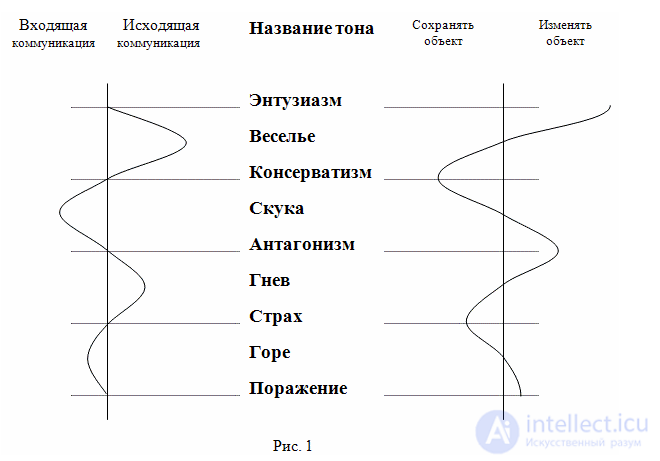
The upper point of this interval, tone 4.0, is "Enthusiasm." In this emotional tone, a person is active. They control the objects around them, study them, and actively transform them. In order to study an object, one needs to receive information from it — this is the incoming flow of communication. Transforming the object is the outgoing flow of communication. For effective control, these flows must be coordinated and commensurate, and in enthusiasm they are roughly equal.
Below on the scale is tone 3.5, "Cheerfulness." In this tone, outgoing communication significantly exceeds incoming communication. A person in cheerfulness feels they are a cause in relation to the world around them and actively acts upon it. However, in this tone, a person is somewhat uncritical. The reduced incoming communication prevents them from objectively assessing their surroundings.
When a person descends the scale to tone 3.0, "Conservatism," the incoming flow of communication increases again and becomes commensurate with the outgoing flow. The reality of the environment is quite high, but now the person's activity is directed not at transforming the object but at preserving it. In terms of magnitude, both the incoming and outgoing flows are somewhat lower than in enthusiasm.
In the tone 2.5, "Boredom," outgoing communication becomes significantly smaller than incoming. In this tone, a person is passive; they will be glad if someone comes along and can cheer them up, if someone comes up with something amusing or interesting. Experiencing an emotion such as boredom, a person becomes an effect of the events taking place. They take in information about their surroundings but act upon it very little.
Lower still, in tone 2.0, "Antagonism," a person feels dissatisfied with something that already exists and seeks to change it or otherwise make use of it. Activity toward the environment is significantly higher than in boredom, but lower than in enthusiasm and conservatism. Incoming and outgoing flows of communication are again roughly equal here.
In tone 1.5, a person experiences strong irritation, or "Anger." In anger, outgoing communication is significantly more intense than incoming. The person takes in incoming information poorly, and their picture of the world around them is often mistaken. In anger, a person tries to become a cause in relation to the object or objects they are directed at. If the attempt to be a cause fails, the person tends to destroy the obstacle.
The next key point on the tone scale is 1.0, "Fear." In this tone, a person tends to avoid contact with objects that threaten them, but may still actively use their environment fairly actively to neutralize the danger or to get out of the danger zone. Incoming and outgoing communication are commensurate and significantly lower than in conservatism. In fear, a person seeks to preserve themselves and their immediate surroundings from the threat.
Further down the tone scale, in tone 0.5, "Grief," a person is passive toward their surroundings and toward the object that caused this emotion. The perception of loss or the threat of defeat predominates. Incoming communication predominates, and it is much more intense than outgoing.
Still lower on the scale, a person falls into apathy in relation to their original intention to do something with the object. They acknowledge their "Failure," their inability in this area. They pay almost no attention to the object, take it in poorly, and make no attempt to act upon it. Their actions are directed only at changing themselves, their own actions, and their own postulates. For example, in this tone, a person may decide to stop engaging in activity connected with this object. Incoming and outgoing communication are minimal and roughly equal to each other.
I want to draw particular attention to this section of the tone scale. Originally, on the scale from 0 to 4, tone zero was designated as the death of the body. Undoubtedly, if a person remains in apathy for a long time toward everything around them and toward their own body, controlling nothing and reacting to nothing, as if in a lethargic sleep, this can cause the death of the body. But when a person falls into apathy toward some specific object or group of objects, this by no means signifies the death of the whole body. In this case, it is more accurate to speak of a failure or a defeat with respect to the particular object at which this emotion is directed. On this point, it is worth referring to the book of scales "Scientology 0-8" and the table given in it: "The Emotional Tone Scale." In this table, opposite the number 0 on the tone scale, it says: "Death. Body. Failure." The main translations of the word "Failure" into Russian are "неудача" or "провал." It is quite appropriate to use the word "defeat" to convey the meaning of what happens in this tone.
All of this can be represented visually in the form of the graphs in Figure 1.

The Scale of Emotional Tones and the Map of Emotions

The graph on the left shows how the difference between incoming and outgoing communication depends on the affinity tone. The graph on the right shows the predominance in the direction of a person's activity toward preserving or toward changing the object. I want to specifically draw your attention to one thing. The graphs show precisely the difference between outgoing and incoming communication. This difference is greatest on this graph in the tone of Cheerfulness, but even in this tone there is both an incoming and an outgoing flow of communication. Likewise, in the tone "Boredom," incoming communication is much greater than outgoing, but both are present. The same is true in the tone "Anger." It's hard to explain anything to a person who is in anger, but it's still possible, through communication, to raise them to the tone "Antagonism," in which they will dispute many things but will nonetheless also listen to the other person.
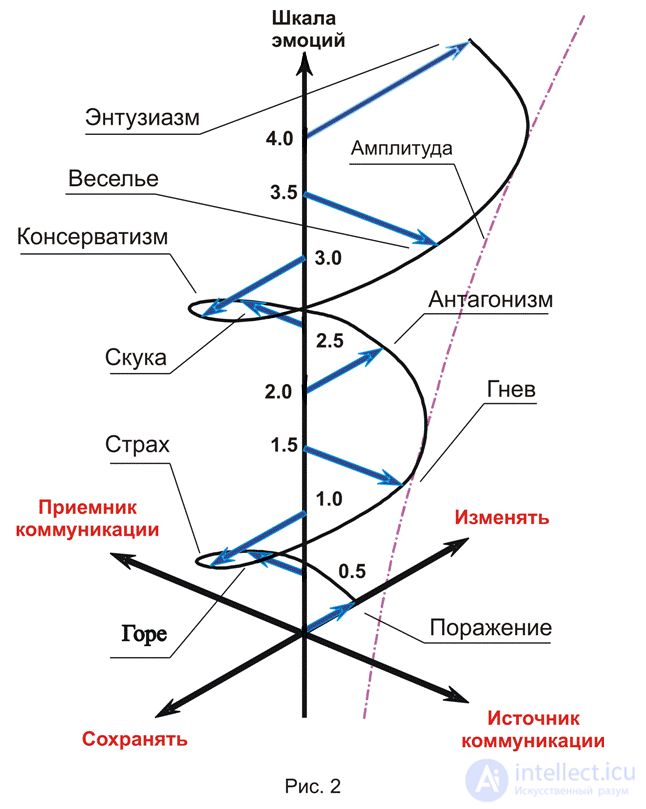
The two graphs in Figure 1 are similar to the front and side projections of a technical drawing. That is, they resemble a view of an object from the front and a view from the side. If these two graphs are combined, you get a three-dimensional figure — a spiral that narrows at the bottom and widens at the top (Fig. 2). This representation is more illustrative.

The Scale of Emotional Tones and the Map of Emotions

From this figure, it is clear that the spiral makes two full turns over the interval from 0 to 4. At the points 0, 2.0, and 4.0 of this spiral lie, respectively, the tones "Failure," "Antagonism," and "Enthusiasm." At these points on the tone scale, a person is actively changing something. In the tone "Enthusiasm," they change their environment by creating something new; in the tone "Antagonism," they change their environment by re-creating something that already existed and correcting its shortcomings; and in the tone "Failure," they change themselves.
At the points 1.0 "Fear" and 3.0 "Conservatism," a person seeks to preserve something. In the tone "Conservatism," this means preserving the existing state of affairs, while in the tone "Fear," it means saving something from harm.
Other tones on the scale with similar characteristics are 1.5 "Anger" and 3.5 "Cheerfulness." In the tone "Cheerfulness," a person feels they are in a position of cause in relation to the object. In the tone "Anger," they are striving to attain a position of cause, working to achieve it. In both tones, a person is active and does not perceive their surroundings particularly well.
At the points 0.5, tone "Grief," and 2.5, tone "Boredom," a person is passive and is, for the most part, a receiver of communication. In boredom, a person takes in their surroundings. In grief, a person perceives a loss, or the prospect of a highly likely or inevitable defeat.
All the other points on the scale, located between the key points mentioned above, likewise correspond to the pattern discovered. For example, the tone "Mild interest" (2.8) is located between the tone "Boredom" (2.5) and the tone "Conservatism" (3.0). This tone is characterized by the following. The person is, to a greater degree, a receiver of the flow of communication. They perceive the object but react to it sluggishly. In communicating with the object, they prefer to leave things as they are, tending more to preserve than to change. But if necessary, they will not object to changes.
The tone "Covert hostility" (1.2) is located between the tone "Fear" (1.0) and the tone "Anger" (1.5). A person in this tone is characterized by a slight excess of outgoing communication over incoming. And they are afraid of the situation changing, since this tone is close to the tone "Fear."

Many discoveries of recent decades occur at the intersections of different sciences, such as physical chemistry or chemical physics, which approach problems in a comprehensive way. This fully applies to the study of phenomena connected with human consciousness. In order to move further in this direction, it is necessary to take into account not only data from physiology and psychology, but also to consider human consciousness from the standpoint of the laws governing complex information systems, and to take into account data that can be drawn from non-traditional methods.
Contemporary psychologists do not consider information obtained from sources such as Osho, Hubbard, and a number of other researchers to be reliable material. In much the same way, Hubbard, in his own works, states that modern psychology is antisocial and warns Scientologists against using information obtained from psychologists. The truth is that there are serious researchers of human consciousness both among psychologists and among the proponents of non-traditional approaches. They use different terminology and hold different philosophical and religious views, and, in describing the same phenomena, explain them with different causes, but what unites all of them is a genuine desire to understand what human consciousness actually is.
I am not trying to idealize any of them. Hubbard, in his denial of the existence of objective reality, seems to me just as irrational as the scientists who deny the existence of certain phenomena simply because "that cannot be," according to their beliefs. For example, back in the nineteenth century, the French Academy of Sciences, at one of its sessions, decided not to consider reports of two kinds — about the invention of a perpetual motion machine and about stones falling from the sky — precisely because "that cannot be." While the first part of this decision still holds true today, the second part had to be reversed after the next meteor shower.
In order to make sense of the spiral-shaped pattern on the emotion scale described above, I had to conduct my own research, drawing equally on the works of psychologists and on the works of alternative researchers.
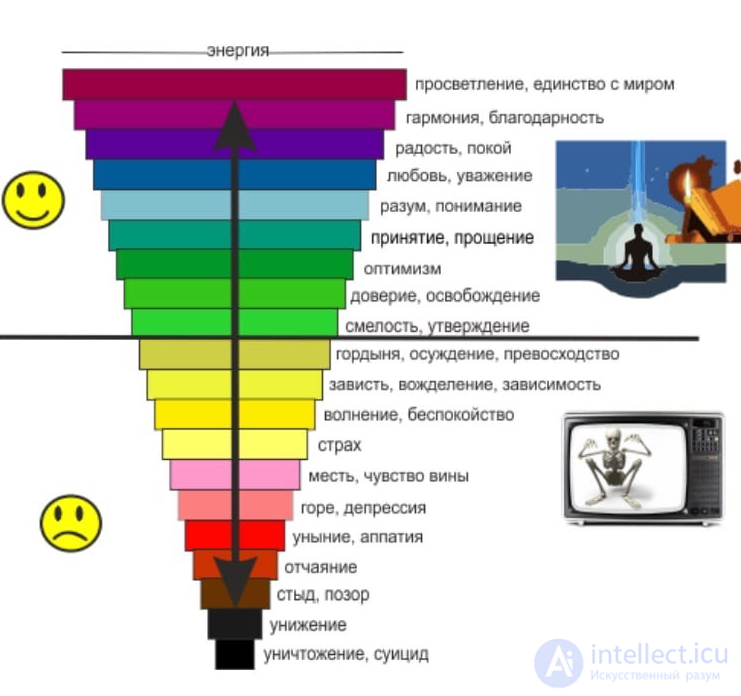
Vibrations of the Body

The Scale of Emotional Tones and the Map of Emotions

The totality of all the vibrations of the body.
High vibrations are bright thoughts (love — 150 Hz, gratitude — 90 Hz).
Low frequencies are destructive thoughts (pity — 3 Hz, grief — 0.1 Hz).
With positive emotions, the muscles relax and blood flows freely. A person's vibration frequency rises.

See also

  • [[b6687]]
  • [[b8798]]
  • [[b8485]]
  • [[b6687]]
  • [[b6683]]
  • [[b4773]]
  • [[b270]]
  • [[b8599]]
  • [[b8600]]
  • [[b2699]]
  • Stressor
  • Conflict
  • Affect [[b6992]]
  • Nonspecific adaptive reactions of the body
  • Physiological adaptation
  • Shock
  • Frustration
  • Bruxism
  • Coping
  • Tissue stress
  • Occupational stress
  • Work stress
  • Stress inoculation therapy
  • Type D behavior

See also

Comments

To leave a comment

If you have any suggestion, idea, thanks or comment, feel free to write. We really value feedback and are glad to hear your opinion.
To reply

Lectures and tutorial on "General psychology"

Terms: General psychology