
Lecture
Studying and researching a student's willpower is an important area of pedagogical and psychological science that allows us to better understand how motivation, goals, and determination affect the learning process and a student's overall success. A student's will can be studied from different perspectives and using various methods and tools.
Offer the student the questionnaire "What is willpower?"
What is willpower?
What kind of person is called strong-willed?
What is persistence?
What is stubbornness?
Do you consider yourself a strong-willed person? Why?
How can you cultivate willpower in yourself?
Using the observation method, collect data on the volitional qualities of the student's personality:
What volitional qualities does the student display in daily life (decisiveness, indecisiveness, organization, discipline, lack of discipline, persistence, stubbornness, restraint, lack of restraint, capriciousness, etc.)?
Which of these qualities have become character traits? Which of them appear only occasionally?
Identify the features of how volitional action unfolds during learning activities. Analyze the stages of volitional action, and the features of overcoming internal and external difficulties when completing classwork and homework.
Which motives predominate in children's actions? (determine this through conversation)
What role do feelings play in the student's volitional actions?
Formulate conclusions about the features of the observed student's will. What shortcomings of will and character should the student overcome? By what means?
Here are some features and methods for studying a student's will:
Conducting questionnaires and surveys with students can help identify their personal motivations, goals, and their level of confidence and determination in achieving academic success. Questions may concern their learning goals, interests, expectations, and the difficulties they face.
Teachers and educators can observe students' behavior in the learning environment. This includes the degree of activity in class, participation in class discussions, effort in completing assignments, and other indicators of motivation and will.
Personal conversations and interviews with students can help understand their personal goals, fears, ambitions, and obstacles to success. This can also help teachers and counselors better tailor their teaching methods and provide additional support.
Studying a student's achievements, academic performance, and progress can provide insight into their level of motivation and will. Comparing indicators before and after any motivational interventions can also be useful.
There are standardized psychometric instruments and tests that can measure motivation, goals, and other aspects of a student's will. An example would be the "Learning Motivation Scale" or self-assessment tests.
Specialists in psychology and counseling can provide valuable assistance in researching and supporting students' willpower. They can conduct individual consultations and develop motivational training programs.
(the questionnaire-test by A.V. Zverkov and E.V. Eidman)
Purpose of the study: to determine the level of development of volitional self-regulation.
Study procedure
The study of volitional self-regulation using the questionnaire-test is conducted either with a single subject or with a group. To ensure the independence of the subjects' answers, each one receives the text of the questionnaire and an answer sheet on which the question numbers are printed with a column next to them for the answer.
Instructions to the subject: "You are offered a test containing 30 statements. Read each one carefully and decide whether the statement is true or false with respect to you. If it is true, mark a plus sign (+) next to the number of the statement on the answer sheet, and if you consider it untrue with respect to you, mark a minus sign (-)."
Test
Processing the results
The purpose of processing the results is to determine the values of the volitional self-regulation indices on the items of the general scale (V) and the indices on the subscales "persistence" (P) and "self-control" (S).
Each index is the sum of points obtained by counting matches between the subject's answers and the key for the general scale or subscale.
The questionnaire contains masking statements. Therefore, the overall total score on the "V" scale should fall within the range of 0 to 24, on the "persistence" subscale — from 0 to 16, and on the "self-control" subscale — from 0 to 13:
Key for calculating the volitional self-regulation indices.
|
General scale |
1-, 2+, 3+, 4+, 5+, 6-, 7+, 9+, 10-, 11+, 13-, 14-, 16-, 17+, 18+, 20+, 21-, 22-, 24+, 25-, 27+, 28-, 29-, 30- |
|
"Persistence" |
1-, 2+, 5+, 6-, 9+, 10-, 11+, 13-, 16-, 17+, 18+, 20+, 22-, 24+, 25-, 27+ |
|
"Self-control" |
3+, 4+, 5+, 7+, 13-, 14-, 16-, 21-, 24+, 27+, 28-, 29-, 30- |
Analysis of results
In the most general sense, the level of volitional self-regulation is understood as the degree of mastery over one's own behavior in various situations, and the ability to consciously control one's actions, states, and impulses.
The level of development of volitional self-regulation can be characterized both overall and separately for such character traits as persistence and self-control.
Levels of volitional self-regulation are determined by comparison with the mean values of each scale. If they make up more than half of the maximum possible sum of matches, then this indicator reflects a high level of development of general self-regulation, persistence, or self-control. For the "V" scale this value is 12, for the "P" scale — 8, and for the "S" scale — 6.
A high score on the "V" scale is typical of emotionally mature, active, independent, self-reliant individuals. They are distinguished by calmness, self-confidence, steadiness of intentions, realistic views, and a well-developed sense of duty. As a rule, they reflect well on their personal motives, methodically realize the intentions that arise, know how to distribute effort, and are capable of controlling their actions, possessing a pronounced socially positive orientation. In extreme cases, they may experience growing internal tension associated with the desire to control every nuance of their own behavior and anxiety about the slightest spontaneity in it.
A low score is observed in people who are sensitive, emotionally unstable, vulnerable, and unsure of themselves. Their reflectiveness is low, and their general level of activity is usually reduced. They are characterized by impulsiveness and instability of intentions. This may be linked either to immaturity or to a pronounced refinement of nature not backed up by the capacity for reflection and self-control.
The "persistence" subscale characterizes the strength of a person's intentions — their drive to complete what they have started. At the positive pole are energetic, capable people who actively strive to accomplish what they have planned; they are mobilized by obstacles on the way to a goal but distracted by alternatives and temptations, and their main value is the task at hand. Such people tend to respect social norms and strive to fully subordinate their behavior to them. In extreme expression, this can result in a loss of behavioral flexibility and the emergence of obsessive tendencies. Low values on this scale indicate increased lability, insecurity, and impulsiveness, which can lead to inconsistency and even erratic behavior. A reduced level of activity and capacity for work in such individuals is usually compensated for by heightened sensitivity, flexibility, ingenuity, and a tendency toward a free interpretation of social norms.
The "self-control" subscale reflects the level of voluntary control over emotional reactions and states. A high score on this subscale is achieved by emotionally stable people who control themselves well in various situations. Their characteristic inner calm and self-confidence free them from fear of the unknown, increase their readiness to accept new and unexpected things, and are usually combined with open-mindedness and a tendency toward innovation and radicalism. At the same time, the drive for constant self-control and excessive conscious restriction of spontaneity can lead to increased internal tension, a predominance of constant worry, and fatigue.
At the other pole of this subscale, spontaneity and impulsiveness combined with touchiness and a preference for traditional views protect a person from intense experiences and internal conflicts, and contribute to an unruffled mood.
The social desirability of high scores on this scale is ambiguous. High levels of development of volitional self-regulation can be associated with problems in organizing one's life activities and relationships with people. They often reflect the emergence of maladaptive traits and forms of behavior. In contrast, low levels of persistence and self-control in some cases perform compensatory functions. But they can also indicate disturbances in the development of personality traits and in a person's ability to build relationships with others and respond adequately to various situations.
Having obtained information about the conscious features of self-regulation, one can develop an improvement program, identifying the traits that most need development or correction.
Purpose of the study: to determine the locus of subjective control.
Materials and equipment: a questionnaire-test developed by E.F. Bazhin and colleagues based on J. Rotter's locus of control scale, an answer sheet, a pen.
Study procedure
This method allows for a relatively quick and effective determination of the level of formation of subjective control in either a single person or several people at once. Each subject must be provided with an individual copy of the questionnaire text and an answer sheet. The answer sheet is a numbered list corresponding to the questionnaire text.
Instructions to the subject: "The questionnaire offered to you contains 44 statements. Read them and answer whether you agree with the given statement or not. If you agree, mark a "+" sign before the corresponding number on the answer sheet; if you disagree, mark a "-" sign. Remember that there are no "good" or "bad" answers in this test. Express your opinion freely and sincerely. The preferred answer is the one that first comes to mind."
Questionnaire
Processing the results
The purpose of processing the results is to obtain an indicator of the locus of subjective control, that is, an indicator of general internality "Io." It represents the sum of matches between the subject's answers and the answers to the questions given in the key.
Key
|
Answer |
Question numbers |
|
"+" agree |
2, 4, 11, 12, 13, 15, 16, 17, 19, 20, 22, 25, 27, 29, 31, 32, 34, 36, 37, 39, 42, 44 |
|
"-" disagree |
1, 3, 5, 6, 7, 8, 9, 10, 14, 18, 21, 23, 24, 26, 28, 30, 33, 35, 38, 40, 41, 43 |
Analysis of results
Locus of control is a characteristic of a person's volitional sphere that reflects their tendency to attribute responsibility for the results of their actions to external forces or to their own abilities and efforts. Attributing responsibility for the results of one's activity to external forces is called an external, or extrinsic, locus of control, while attributing responsibility to one's own abilities and efforts is called an internal, or intrinsic, locus of control.
Thus, two polar personality types are possible depending on the localization of control: external and internal. Every person occupies a certain position on the continuum stretching from the external to the internal type.
0 _______________¦______________ 44
external internal
The locus of control indicator (Io) obtained during the processing of results is interpreted as follows:
|
Io value |
Locus of control |
|
0–21 |
– external |
In general, the greater the degree of internality, the lower the externality.
A person's characteristic locus of control is universal with respect to any types of events and situations they may encounter. The same type of control manifests itself both in cases of failure and in cases of achievement, and this is observed across different spheres of the subject's life activity.
To determine the level of locus of control, the following boundaries of the internality scale are used.
|
Internality indicator (Io) |
Level of locus of control |
|
10 – 11 |
– low level of internality |
|
12 – 32 |
– average level of internality |
|
33 – 44 |
– high level of internality |
With a low level of internality, people rarely trace a connection between their own actions and significant events in their lives. They do not consider themselves capable of controlling the development of such events and believe that most of them are the result of chance or the actions of other people. Therefore, "externals" are emotionally unstable, prone to informal communication and behavior, not very sociable, and have poor self-control and high tension.
A high level of internality corresponds to a high level of subjective control over any significant situations. People with this locus of control believe that most of the important events in their lives have been the result of their own actions, that they can manage them, and they feel responsible both for these events and for how their life as a whole turns out. "Internals" with high subjective control scores possess emotional stability, perseverance, and decisiveness, and are distinguished by sociability, good self-control, and restraint.
An average level of internality is typical of most people. The features of their subjective control can vary somewhat depending on whether a situation seems complex or simple, pleasant or unpleasant to the person, and so on. But although their behavior and their psychological sense of responsibility for it depend on specific social situations, it is still possible to identify a predominant type of locus of control even in them.
Thus, subjective locus of control is linked to a person's sense of their own strength, dignity, and responsibility for what happens, as well as to self-respect, social maturity, and personal independence. Therefore, when drawing up recommendations for self-improvement, it should be taken into account that:
Studies have shown that internals are more popular and occupy a more favorable position within the system of interpersonal relationships. They are more benevolent, more self-confident, and more tolerant.
People with an internal locus of control prefer non-directive methods of upbringing and psychological correction. And when working with externals, it is important to focus on reducing the anxiety and depression that are often observed in them.
INSTRUCTIONS: Read the questions below and try to answer them as objectively as possible. If you agree with the content of the question, answer "yes"; if you are doubtful or unsure, answer "don't know" (or "sometimes," "it happens"); if you disagree, answer "no."
Questionnaire
Processing the results
A "yes" answer is worth 2 points; "don't know" — 1 point; "no" — 0; the points obtained are then summed up. If you scored:
1–12 points — things are not going well for you when it comes to willpower. You simply do what is easier and more interesting, even if it might harm you. You often treat your responsibilities carelessly, which tends to cause problems for you. Your attitude is roughly: "Why should I need this more than anyone else?" You perceive almost any request, any duty, as something close to physical pain. This isn't just a matter of weak will, but of selfishness as well. Try to look at yourself with this assessment in mind — it may help you change your attitude toward those around you and rework something in your character. If you succeed, you will only benefit.
13–21 points — your willpower is average. If you encounter an obstacle, you will start acting to overcome it. But if you see a way around it, you'll take it right away. You won't overdo things, but you will keep your word. You will try to get through unpleasant work, though grumbling along the way. You won't voluntarily take on extra responsibilities. This sometimes has a negative effect on how your superiors view you, and doesn't show you in the best light in the eyes of others either. If you want to achieve more in life, train your willpower.
22–30 points — everything is fine with your willpower. People can rely on you — you won't let them down. You aren't scared off by new assignments, long trips, or tasks that intimidate others. But sometimes your firm and uncompromising stance on non-essential matters annoys those around you. Willpower is good, but you also need qualities such as flexibility, leniency, and kindness.
Purpose of the study: to determine the level of persistence.
Materials and equipment: three numbered sheets with sets of words, paper and a pen for writing, a stopwatch.
Study procedure
The experimenter conducts the study of persistence together with the subject, one on one. It is important to seat the subject comfortably at a well-lit table. During the study, the subject is successively presented with sheets containing sets of words and asked to form sentences out of the words. The difficulty of forming sentences from the first and second sets of words is practically the same, while it is practically impossible to form a sentence from the third set — but the subject must not know this.
Instructions to the subject: "Using all the words in the set printed on the sheet, form a meaningful sentence. The time you take is being recorded."
The experimenter's task is to record the time taken to complete each sentence-forming task and to note the subject's emotional reactions.
|
Word sets |
||
|
Set No. 1 |
Set No. 2 |
Set No. 3 |
|
Summon |
Country |
Country |
|
Authorities |
Imperialism |
Assessment |
|
Fit |
Condition |
Grow |
|
Situation |
Before |
Representatives |
|
Measures |
In |
In |
|
Malice |
American |
That is |
|
Goals |
Unity |
Peaceful |
|
In |
Worsening |
Actions |
|
Circles |
Significance |
Consider |
|
Polish |
Situation |
Message |
|
Normalization |
Whole |
Arab |
|
In |
Actions |
Of |
|
In |
Caused |
Establish |
|
Right-wing |
Acquire |
Experts |
|
Take |
Socialist |
Tension |
|
Poland |
Great |
Help |
|
|
Policy |
Staff |
|
|
International |
|
Processing the results
When processing the results, first check whether the subject completed the tasks correctly, then compare the time the subject spent forming each sentence and calculate the persistence indicator.
Example of correctly formed sentences from the sets of words
If the first two sentences are formed correctly, the persistence indicator "Pp" is then calculated.
The persistence indicator is the ratio of the time spent on solving the third task to the average time spent on solving the first two tasks:
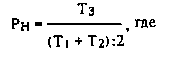
T1 — time spent forming the first sentence;
T2 — time spent forming the second sentence;
T3 — time spent attempting to form the third sentence.
Analysis of results
The level of persistence is determined by the value of the "Pp" indicator using the following scale:
Pp value — level of persistence:
from 0 to 1.9 — low level of persistence;
from 2.0 to 2.9 — average level of persistence;
3.0 and above — high level of persistence
When analyzing the results, the length of time the subject spent on solving the tasks should be taken into account. In general, the more time spent, the more persistent the person is. Persistence is usually understood as a personality trait linked to the ability and desire to achieve a set goal while overcoming external and internal (psychological) obstacles. Persistence is related to the specifics of the development of voluntary control over mental processes. When analyzing the results of the study, it is important to compare them with the student's academic performance and to take them into account when drawing up a program for developing self-regulation and self-education.
Studying a student's will helps create more effective teaching methods and provide support for students, helping them overcome obstacles and achieve their educational goals. This is an important aspect of building a motivating and effective educational environment.

Comments