Instructions for taking social psychology tests:
-
Preparation:
- Familiarize yourself with the basic concepts and theories of social psychology. Study key aspects such as social perception, social influence, intergroup relations, and other topics typically covered in social psychology.
- Read textbooks, articles, or other specialized literature on social psychology. This will help broaden your knowledge and understanding in this field.
- Work through practical assignments and exercises related to social psychology. This will help you apply your knowledge in practice and develop skills in analyzing social situations.
-
Understanding the questions:
- Carefully read each test question and make sure you understand its meaning.
- Pay attention to key words and phrases in the questions that may point to specific concepts or theories of social psychology.
- If a question seems unclear, reread it several times or consult your knowledge and study materials for clarity.
-
Analyzing the answer options:
- Carefully review all the offered answer options before choosing one.
- Compare each answer option with the wording of the question and consider which option best matches your knowledge and understanding of social psychology.
- Avoid hasty decisions and make well-reasoned choices based on your knowledge and logic.
-
Time:
- Pay attention to any time limits. Allocate your time so that you have enough to answer each question.
- If you get stuck on a question you cannot answer, don't spend too much time on it. Move on to the next question and come back to it later if time allows.
-
Trusting your knowledge:
- Remember that you have prepared and studied social psychology. Trust your knowledge and intuition when choosing answers.
- Avoid sudden changes to your answers unless you have sufficient grounds and arguments for changing them. Don't give in to doubt if you are confident in your original answer.
-
Checking before submitting:
- Before submitting the test, go through all the questions and make sure you have chosen an answer for each one.
- If time allows, read the questions again and check your answers for logical consistency and correspondence with the theories and concepts of social psychology.
Follow these instructions to make the best use of your knowledge and skills in social psychology when taking the tests. Good luck!
single-choice tests, diagrams as hints. Answer key at the end of the tests
Option 1
1. Social psychology is the science that studies:
- A) the psychological mechanisms and processes underlying consumption and other forms of economic behavior
- *B) the patterns of behavior and activity of people determined by their inclusion in social groups, as well as the psychological characteristics of these groups
- C) the psychological patterns behind the formation of criminal attitudes and criminal intent, and the creation of criminal behavior stereotypes
- D) the psychological and socio-psychological factors that determine the characteristics of a person's personality
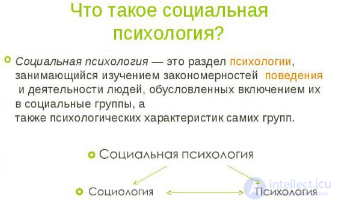
2. The object of research in social psychology is:
- *A) the individual, the social group (from a dyad to a nation and a mass social movement), their behavior and activity, the processes of development of the individual and of a specific group, and the processes of interpersonal and intergroup perception
- B) the psychological methods used in sociological research
- C) the sociological methods used in psychological research
- D) the developing individual
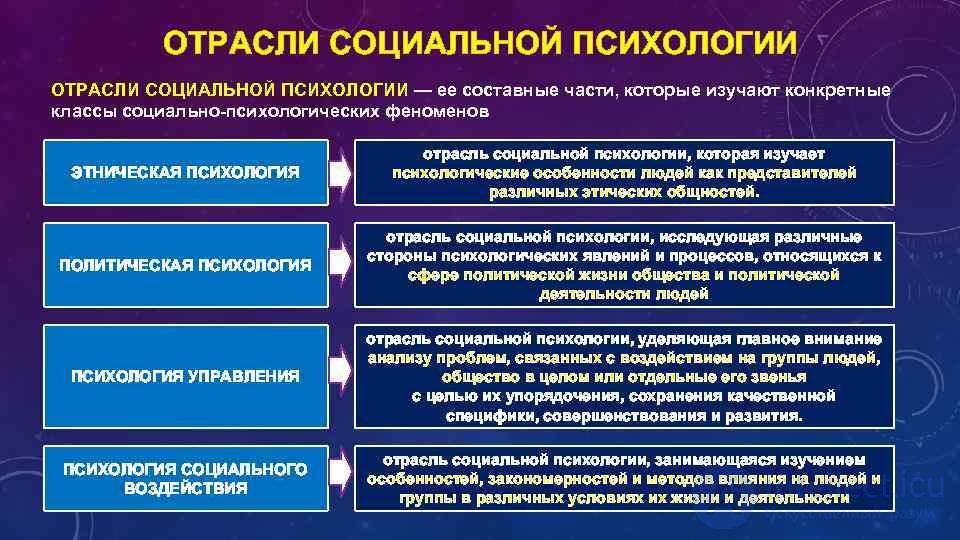
3. Which of the following is NOT a branch of social psychology:
- A) economic psychology
- B) political psychology
- C) ethnic psychology
- *D) industrial psychology

4. Foreign social psychology was formed as an independent science:
- A) at the beginning of the 19th century
- *B) at the turn of the 19th–20th centuries
- C) in the mid-20th century
- D) at the end of the 20th century
5. The founders of the theory of peoples (Völkerpsychologie) are:
- A) G. Tarde, G. Le Bon
- B) W. McDougall
- C) S. Freud, A. Freud
- *D) M. Lazarus, H. Steinthal
6. A relatively stable body of people, connected by a system of relationships regulated by shared values and norms, is:
- A) a collective
- B) a society (socium)
- *C) a group
- D) society
7. Which of the following is NOT part of the structure of communication:
- *A) the nonverbal component
- B) the communicative component
- C) the perceptual component
- D) the interactive component
8. The interpersonal perception effect characterized by people's tendency to trust information presented to them in a scientific, magical, or ritual context is:
- A) the halo effect
- B) the set (Einstellung) effect
- *C) the Barnum effect
- D) the projection effect
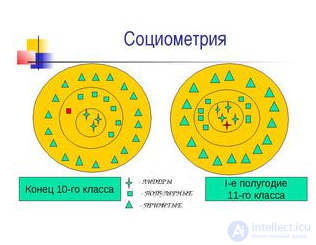
9. The sociometry method does NOT allow one to reveal:
- *A) the opinions of various people about social-psychological phenomena and processes
- B) mutual likes and dislikes among group members
- C) the presence of and connections between microgroups
- D) the socio-psychological structure of relationships in a small group
10. The study of crowd psychology was the subject of which theoretical concept:
- A) the psychology of instincts
- B) the psychology of peoples
- *C) mass psychology
- D) the psychology of personality types
11. The type of interaction characterized by the achievement of individual or group goals and interests under conditions of confrontation between people is:
- A) cooperation
- *B) competition
- C) covert interaction
- D) crossed interaction
12. Which of the following is NOT a function of nonverbal means of communication:
- A) strengthening or weakening verbal influence
- B) the perception of a holistic image of a communication partner
- *C) violating the rules of interaction while performing a specific task
- D) revealing the speaker's true intentions
13. The component of communication consisting of the exchange of knowledge, ideas, mutual incentives, and actions is:
- A) the communicative component
- *B) the interactive component
- C) the perceptual component
- D) the motivational-goal component
14. The mechanism of getting to know another person, based on forming a stable positive attitude toward them, is:
- A) empathy
- B) reflection
- *C) attraction
- D) stereotyping
15. The intragroup perception effect characterized by a tendency to give a positive assessment of other people's behavior is:
- *A) the leniency effect
- B) the first-impression effect
- C) the Barnum effect
- D) the projection effect
16. The emergence of new qualities in people included in a group (qualities they did not have before joining that group) is:
- *A) an objectively proven fact not recognized by the subject
- B) an objectively proven fact recognized by the subject
- C) a subjectively proven fact recognized by the subject
- D) a subjectively proven fact not recognized by the subject
17. Large organized social groups occupying a strictly defined place in the historically established system of economic and social relations of a specific society, distinguished by their relationship to the means of production, by their role in the social organization of labor, and by the methods and amount of the share of wealth they possess, are:
- A) nations
- *B) classes
- C) the crowd
- D) political parties
18. A state of readiness of an individual or group to respond in a certain way to particular phenomena of social reality, based on past experience that directs, distorts, or otherwise affects people's behavior, is:
- *A) social attitudes
- B) social norms
- C) religious attitudes
- D) political attitudes
19. Socio-psychological influence on the behavior and worldview-formation of other people through the unconscious, spontaneous induction of a particular emotional state is:
- A) persuasion
- *B) emotional contagion
- C) imitation
- D) fashion
20. A group whose goals, opinions, and values a person shares, and by which he or she is guided when evaluating themselves and others, is:
- *A) a reference group
- B) a real group
- C) a primary group
- D) a formal group
21. The intergroup perception effect consisting of a negative evaluation of members of an outgroup and the results of their activity – is:
- A) the consistency effect
- B) the favoritism effect
- *C) the discrimination effect
- D) the outgroup homogeneity effect
22. The style of interpersonal communication whose aim is to reinforce ties with one's own group, one's own attitudes and values, and to raise self-esteem and self-respect, is:
- *A) the ritual style
- B) the conformist style
- C) the altruistic style
- D) the manipulative style
 \
\
23. A group that has a structure officially set from outside is:
- A) conditional
- B) real
- *C) formal
- D) informal
24. The set of objectively inherent characteristics of a person that determines how they are perceived by other members of the group, and their position in the system of group relations, is:
- *A) status
- B) role
- C) personality type
- D) position (job title)
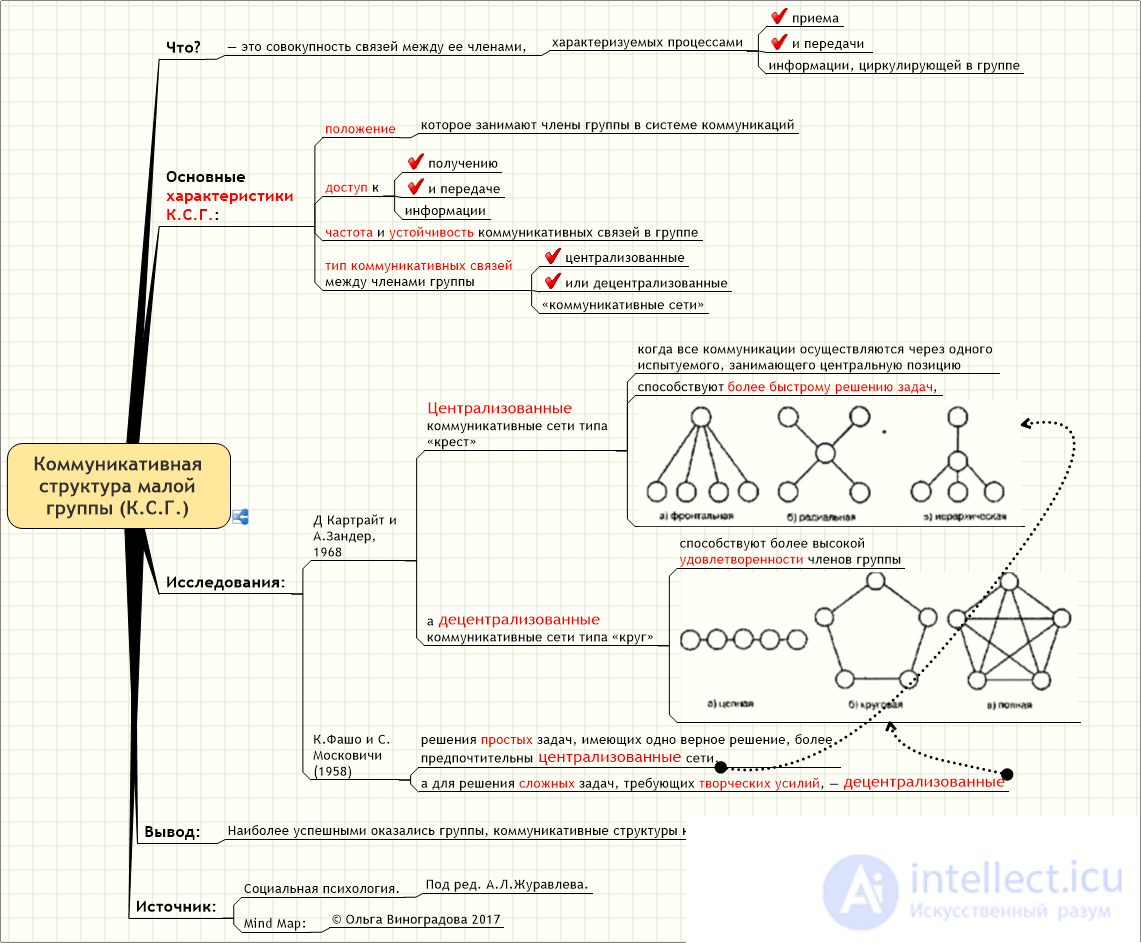
25. Which of the following is NOT a decentralized communication network of a small group:
- A) chain
- *B) radial
- C) circular
- D) unrestricted (fully connected)
26. The type of leader who primarily puts forward and upholds the group's values, goals, norms, and rules, and is responsible for solving the official tasks assigned to the group by the administration, is:
- A) formal
- *B) institutional
- C) effective
- D) interpersonal
27. Uncritical acceptance by a person of someone else's opinion, and compliance with real or imagined pressure from a group or leader, is:
- A) infantilism
- B) maladjustment
- C) group integration
- *D) conformity
28. A relatively static moment in the dynamics of a group, characterized by the stability, consolidation, and repetition of the actions and mental states of the group's members, as well as of the socio-psychological features of their relationships, is:
- A) group processes
- *B) group states
- C) group effects
- D) levels of group development
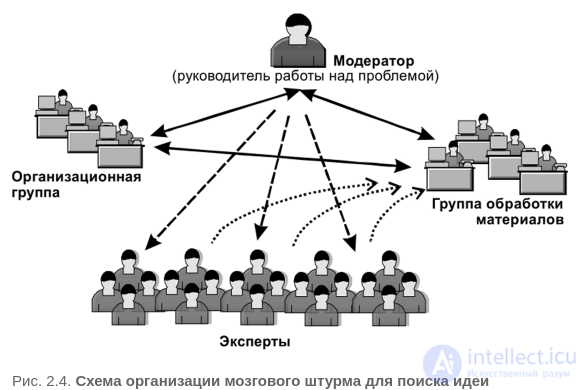
29. Which of the group effects dominates during "brainstorming" and helps generate a large number of ideas:
- A) the psychophysiological effect
- B) the pendulum effect
- C) the groupthink effect
- *D) the synergy effect
30. One type of ethnic identity, characterized by a state of self-awareness and behavior in which achieving nationally oriented goals and the interests of one's own people begins to be perceived as the primary value to strive for:
- *A) ethno-dominant identity
- B) ethnic fanaticism
- C) ethnic indifference
- D) ethnocentric identity
Option 2
1. The subject matter of social psychology is:
- A) the patterns of teaching and upbringing of the younger generation
- B) the study of the characteristics of the development of a person's personality and psyche at different stages of ontogenetic development
- *C) the patterns of mental activity, behavior, and interaction of people as representatives of social groups, the psychological characteristics of these groups, and the psychological aspects of other phenomena of social life
- D) the study of the facts, mechanisms, and patterns of a person's mental life
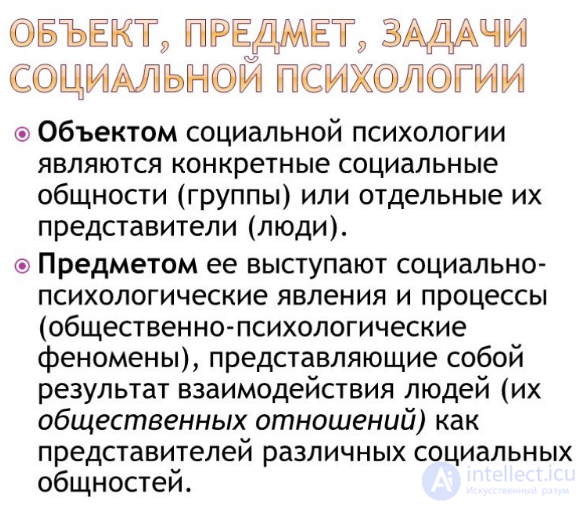
2. Which of the following is NOT a branch of social psychology:
- A) the psychology of personality
- B) the psychology of the group
- *C) the psychology of management
- D) the psychology of mass phenomena of the psyche
3. Of the tasks listed, choose the one that is NOT a task of social psychology:
- A) studying and making sense of socio-psychological phenomena and processes
- *B) humanizing labor activity and promoting personal development within it
- C) identifying the patterns by which socio-psychological phenomena and processes manifest under various conditions
- D) forecasting political, ethnic, and other processes in the development of the state and society
4. Which of the following is NOT a source of social psychology (according to G.M. Andreeva):
- A) the theory of the psychology of peoples
- B) the theory of mass psychology
- *C) the theory of the psychology of peoples and masses
- D) the theory of social instincts
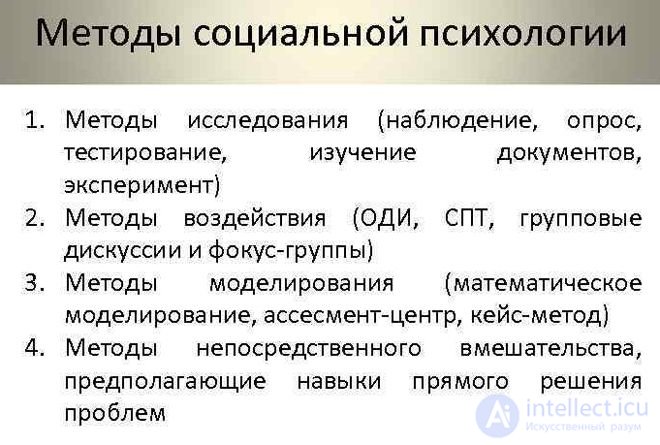
5. Which of the following is NOT a method of social psychology:
- A) observation
- B) sociometry
- *C) a "photograph" of the working day (time-and-motion study)
- D) referentometry
6. Choose the incorrect definition of communication:
- A) a complex, multifaceted process of establishing and developing contacts and connections between people, generated by the needs of joint activity and including the exchange of information and the development of a unified strategy of interaction
- B) the exchange of information between people, their interaction
- C) interaction between subjects carried out through sign-based means, caused by the needs of joint activity and aimed at bringing about a significant change in the partner's joint activity, behavior, and personal-semantic formations
- *D) activity aimed at satisfying needs and transforming the surrounding world
7. The type of interpersonal interaction in transactional analysis, characterized by the fact that the partners, on the one hand, display an inadequate understanding of the other participant's positions and actions, while on the other hand, clearly display their own intentions and actions, is:
- A) cooperation
- B) competition
- C) covert interaction
- *D) crossed interaction
8. The strategy of interaction in a conflict characterized by the parties negotiating and striving to make mutual concessions is:
- A) accommodation
- B) competition
- *C) compromise
- D) cooperation
9. Which of the following is NOT a nonverbal means of communication:
- *A) spoken and written speech
- B) visual means
- C) auditory means
- D) tactile means
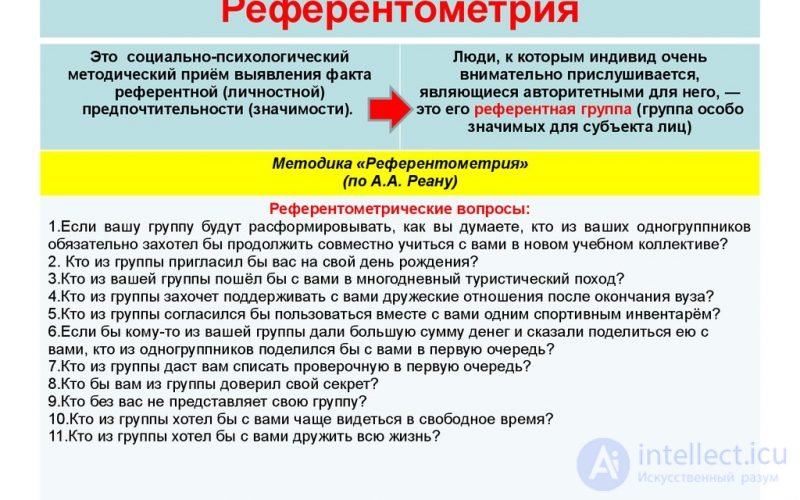
10. The referentometry method reveals:
- A) the effectiveness of a group's activity
- B) the effectiveness of an individual's activity
- *C) the people significant to a person, whose opinions they listen to and whose views they share
- D) a person's awareness of their place in the system of intergroup relations
11. Standardized, impersonal roles built on the basis of rights and obligations regardless of who performs them, and associated with social status, profession, or type of activity, are:
- A) interpersonal roles
- *B) social roles
- C) active roles
- D) prescribed roles
12. Which of the following is NOT one of the mechanisms of social perception:
- *A) emotional contagion
- B) identification
- C) attraction
- D) causal attribution
13. One of the mechanisms of social perception, by which an individual or group comes to know other people through comparing or contrasting the internal states or positions of a communication partner with their own psychological or other characteristics, or through the conscious or unconscious likening of oneself to another person or of another person to oneself, is:
- A) causal attribution
- *B) identification
- C) empathy
- D) reflection
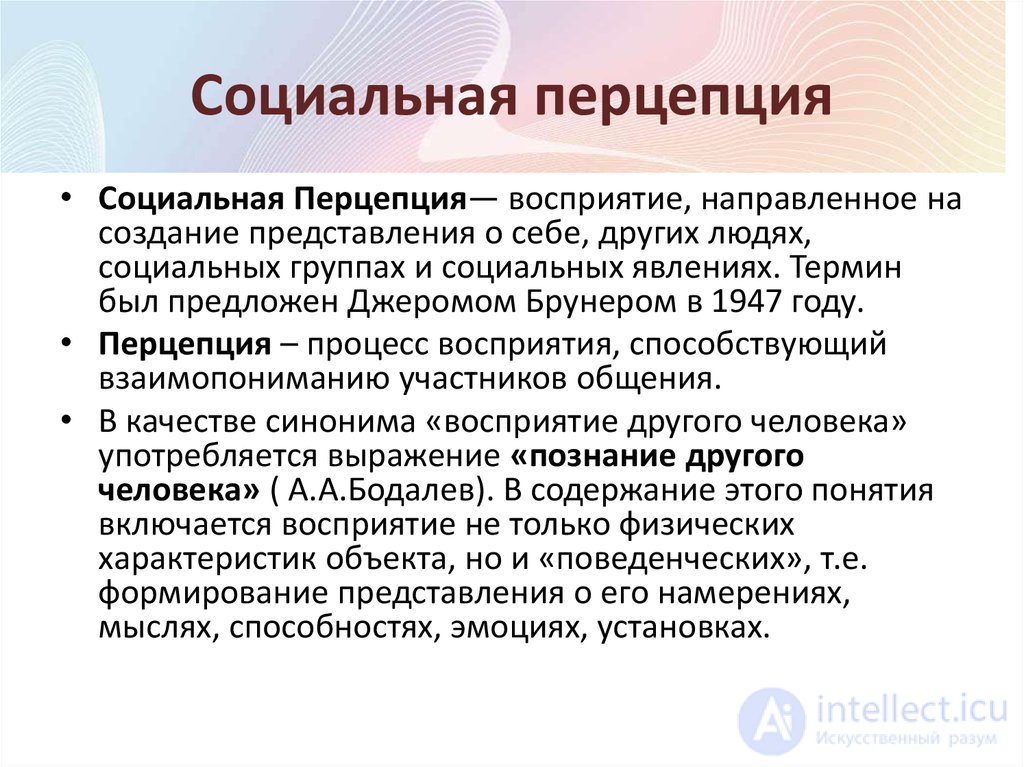
14. The component of communication representing an observer's activity in assessing the outward appearance, psychological characteristics, actions, and deeds of the observed person or object, as a result of which the observer forms a specific attitude toward the person observed and develops certain ideas about the possible behavior of specific people and groups, is:
- A) the communicative component
- B) the interactive component
- *C) the perceptual component
- D) the motivational-goal component
15. The mechanism of social perception that consists in interpreting another person's (or group's) actions and feelings by attributing causes underlying those feelings and actions is:
- *A) causal attribution
- B) identification
- C) empathy
- D) reflection
16. The objectivity of intergroup conflict means:
- A) people can assess a conflict objectively
- B) every conflict has an object of conflict
- *C) every conflict has its own logic of emergence and development
- D) people consciously control intergroup conflicts
17. The two-way process by which an individual assimilates and actively reproduces the social experience of the society to which they belong is:
- A) upbringing
- *B) socialization
- C) adaptation
- D) resocialization
18. The interpersonal (intergroup) perception effect consisting of a distortion of the image of an interlocutor due to the unconscious overlay of past experience onto them is:
- A) the context effect
- B) the recognition effect
- C) the set (Einstellung) effect
- *D) the apperception effect
- E) the perception effect

19. The intergroup perception effect whereby a member of one's own group who follows (or does not follow) norms and rules is rated higher than a member of an outgroup who follows (or does not follow) those same requirements is:
- A) the intergroup differentiation effect
- *B) the "black sheep" effect
- C) the outgroup homogeneity effect
- D) the favoritism effect
20. A method of socio-psychological influence (verbal or figurative) that presupposes a person's psychological readiness to accept that influence, causing uncritical perception and/or assimilation of some information, is:
- A) persuasion
- B) emotional contagion
- C) imitation
- *D) suggestion
21. Which of the following is NOT a communicative barrier to understanding other people or groups:
- A) the logical barrier
- B) the phonetic barrier
- C) the semantic barrier
- *D) distrust of others
22. Which of the following is NOT a means of communicative influence:
- A) persuasion
- B) emotional contagion
- *C) identification
- D) suggestion
23. In which of the following groups is the kind of conformity known as collectivist self-determination most clearly displayed:
- A) reference group
- B) diffuse group
- C) highly developed group
- *D) collective
24. Which of the following is NOT part of the structure of a small group:
- A) the communicative structure
- B) the power structure
- C) the sociometric structure
- *D) the auto-sociometric structure
25. Which of the following is NOT a way of making a group decision:
- A) group interview
- B) "brainstorming"
- C) group discussion
- *D) groupthink
26. The method of social psychology aimed at making a group member aware of their place in the system of intergroup relations is:
- A) expert assessments
- B) conversation (interview)
- C) survey
- *D) auto-sociometry
27. The group effect consisting of people's tendency to exert less effort when they pool their anonymous efforts to achieve a common goal:
- A) the social facilitation effect
- B) the synergy effect
- *C) the social loafing effect
- D) the pulsar effect
28. Which type of communication network is realized mainly during "brainstorming"
- A) hierarchical
- B) chain
- C) circular
- *D) full (unrestricted)
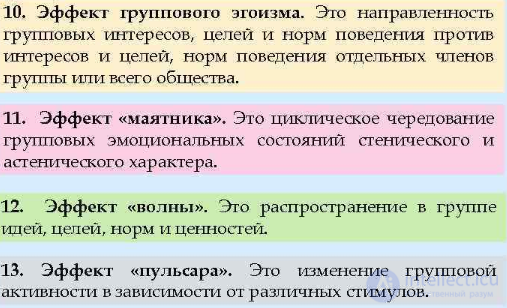
29. The group effect characterized by the alternation of sthenic and asthenic emotional states within a group is:
- A) the psychophysiological effect
- *B) the pendulum effect
- C) the wave effect
- D) the pulsar effect
30. One of the mechanisms of socialization, characterized by carrying out an internal dialogue in which a person examines, evaluates, accepts, or rejects various values characteristic of different institutions of society, family, peers, significant others, etc. – is:
- A) the institutional mechanism of socialization
- B) the stylized mechanism of socialization
- *C) the reflexive mechanism of socialization
- D) the interpersonal mechanism of socialization
Correct answers
|
Question No.
|
Option 1
|
Option 2
|
Points
|
|
1
|
B
|
C
|
1
|
|
2
|
A
|
C
|
1
|
|
3
|
D
|
B
|
1
|
|
4
|
B
|
C
|
1
|
|
5
|
D
|
C
|
1
|
|
6
|
C
|
D
|
1
|
|
7
|
A
|
D
|
1
|
|
8
|
C
|
C
|
1
|
|
9
|
A
|
A
|
1
|
|
10
|
C
|
C
|
1
|
|
11
|
B
|
B
|
1
|
|
12
|
C
|
A
|
1
|
|
13
|
B
|
B
|
1
|
|
14
|
C
|
C
|
1
|
|
15
|
A
|
A
|
1
|
|
16
|
A
|
C
|
1
|
|
17
|
B
|
B
|
1
|
|
18
|
A
|
D
|
1
|
|
19
|
B
|
B
|
1
|
|
20
|
A
|
D
|
1
|
|
21
|
C
|
D
|
1
|
|
22
|
A
|
C
|
1
|
|
23
|
C
|
D
|
1
|
|
24
|
A
|
D
|
1
|
|
25
|
B
|
D
|
1
|
|
26
|
B
|
D
|
1
|
|
27
|
D
|
C
|
1
|
|
28
|
B
|
D
|
1
|
|
29
|
D
|
B
|
1
|
|
30
|
A
|
C
|
1
|
Criteria for evaluating test results in the social psychology course
|
Number of points
|
Performance
(% of correct answers)
|
Grade
|
|
from 30 to 26
|
from 100 to 86%
|
5
|
|
from 25 to 21
|
from 85 to 70%
|
4
|
|
from 20 to 16
|
from 69 to 51%
|
3
|
|
less than 15
|
less than 50%
|
2
|
See also
- [[b7324]]
- [[b7347]]
- [[b8014]]
- [[b8015]]
- [[b8016]]
- [[b8017]]
See also
- Psychological processes: Teaching, learning, learning, learning activities. addiction, imprinting, capturing, sensitization, associative learning, habit formation, play, memorization
- Tests with answers to educational psychology
- 100 Tests with Answers and Diagrams - Fundamentals of General Psychology
- Pedagogical psychology test questions with answers - developmental psychology with diagrams
- 60 Tests with Answers — Pedagogical Psychology, with Hints
- Tests with answers and diagrams on the topic — Social Psychology


Comments