Pedagogical psychology contains many interesting and important concepts that help us better understand the processes of children's learning and development. But how well have you mastered these concepts? To test your knowledge and find out how well you understand pedagogical psychology, we have prepared special tests with answers. Take our series of tests and assess your grasp of pedagogical psychology. After completing the tests you will be able to evaluate your own results and identify the questions on which you should deepen your knowledge. Don't miss the chance to test your expertise and learn more about pedagogical psychology.
All tests are single-answer choice.
Variant 1
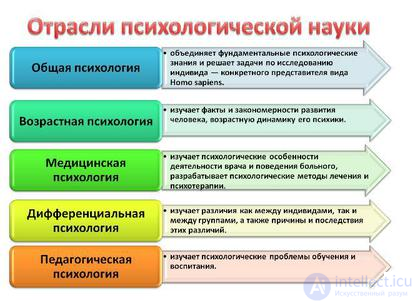
1. The branch of psychological science that studies the regularities of the stages of mental development and personality formation across a person's ontogeny from birth to death:
- A) genetic psychology
- B) age psychology
- C) genetic epistemology
- D) comparative psychology
- E) developmental psychology
2. A method based on studying the regularities of mental development by modeling its essential conditions:
- A) the clinical interview method
- B) the cross-sectional age method
- C) the longitudinal method
- D) the experimental-genetic research strategy
- E) the comparative method
3. The principle of developmental psychology manifested in the fact that the chronological boundaries and features of each age are not static but are determined by socio-historical factors and society's social mandate:
- A) the principle of the creative character of development
- B) the historical principle of developmental psychology
- C) the principle of the leading role of the socio-cultural context in development
- D) the principle of joint activity and communication as the driving force of mental development
- E) the principle of amplification of development
4. A category of developmental psychology denoting discrete time intervals of a person's life, derived from a specific theory of development and its principle of periodization:
- A) period
- B) stage
- C) crisis
- D) chronological age
- E) psychological age

5. The theory of mental development based on the idea that the development of the human psyche is culturally conditioned, and that natural forms are transformed into cultural (higher) mental functions:
- A) the theory of recapitulation
- B) the theory of social learning
- C) the cultural-historical concept
- D) the theory of the convergence of two factors
- E) the epigenetic theory of development
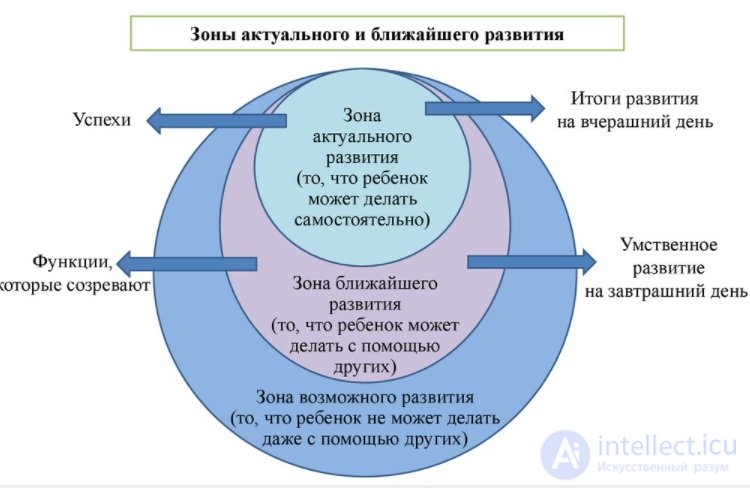
6. The gap between the level of difficulty of tasks a child can solve independently and under the guidance of an adult:
- A) level of mental development
- B) level of cognitive development
- C) actual level of development
- D) level of potential development
- E) zone of proximal development
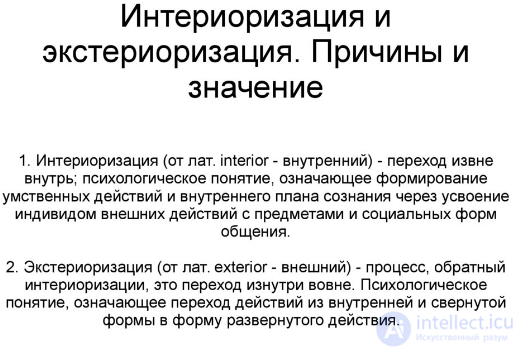
7. In the course of ontogeny, mental actions are formed through the process of:
- A) exteriorization
- B) transformation
- C) identification
- D) internalization
- E) amplification
8. Special, relatively short-lived periods of ontogeny characterized by abrupt psychological changes, belonging to the normative processes necessary for a person's progressive development:
- A) lytic periods
- B) ages
- C) stages
- D) age-related crises
- E) individual crises
9. The type of development in which the stages of development and the final outcome are set and fixed from the very outset:
- A) the spontaneous type of development
- B) the non-preformed type of development
- C) the preformed type of development
- D) the determined type of development
- E) the cyclical type of development
10. Developmental psychology arose as a science:
- A) in the mid-19th century
- B) in the late 19th century
- C) in the early 20th century
- D) in the early 19th century
- E) in the 18th century
11. The idea that learning leads development was developed by:
- A) J. Piaget
- B) E. Erikson
- C) L.S. Vygotsky
- D) S. Freud
- E) W. Stern

12. In L.S. Vygotsky's conception, age-related crises are viewed as:
- A) a negative result of the clash between the developing personality and social reality
- B) a result of disrupted parent-child relations
- C) «growing pains»
- D) conventional points on the developmental curve separating one age from another
- E) normative phenomena, the central mechanism of the dynamics of ages
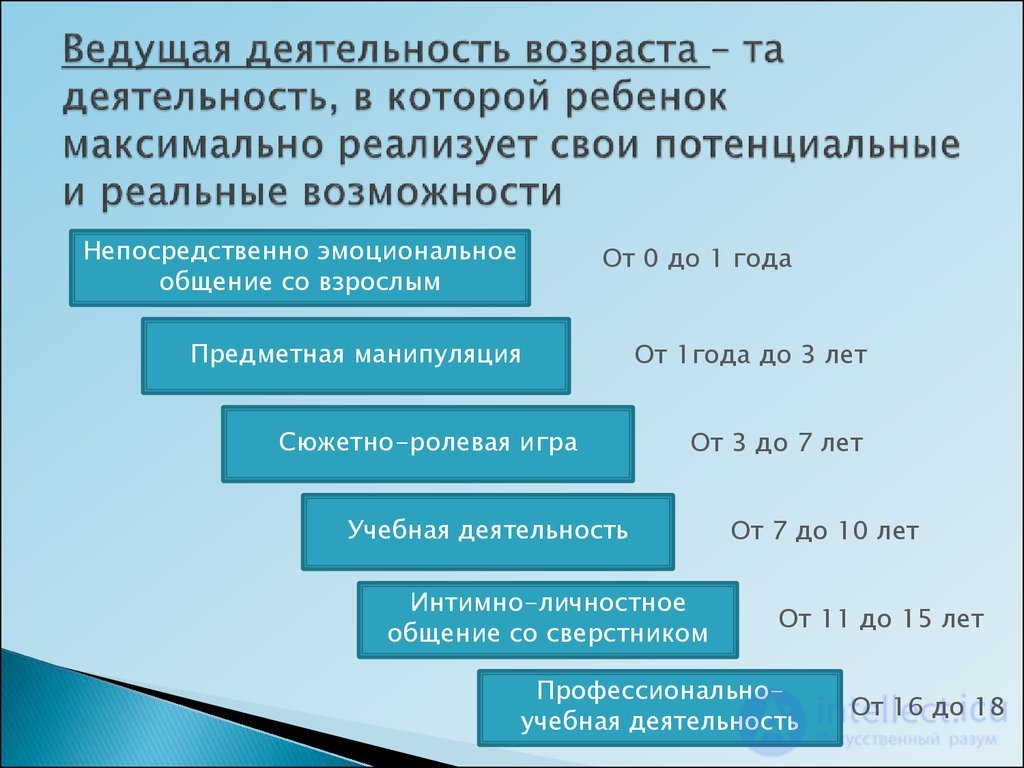
13. Leading activity is:
- A) the activity to which the child devotes most of their time at a given stage of development
- B) the activity most interesting to the child
- C) the activity within which other types of activity arise and the age's main neoformations are formed
- D) the activity into which the child is prompted by an adult
- E) the activity in which social experience is acquired
14. Learning «leads development» when:
- A) its content is structured as a system of scientific concepts
- B) any learning plays the leading role
- C) learning is structured as problem-based learning
- D) the child, in the course of learning, strives to imitate the adult
- E) the child begins to develop reflection
15. According to L.S. Vygotsky, the structure of an age consists of:
- a) the social situation of development
- B) leading activity
- C) neoformations
- D) all of the above
- E) crisis
16. The syndrome of pathological child mental and personal development that appears in a child as a result of separation from the mother and early institutionalization:
- A) deviant behavior
- B) Alzheimer's disease
- C) hospitalism
- D) assimilation
- E) abulia
17. A stage of ontogeny accompanied by a sharp and radical restructuring of children's established personal neoformations and by such symptoms as negativism, stubbornness, obstinacy, self-will, protest-rebellion, devaluation of adults and despotism, culminating in a transition to a new type of relationship with others:
- A) the crisis of the newborn
- B) the crisis of age 1
- C) the crisis of age 3
- D) the crisis of age 7
- E) the adolescent crisis
18. Object-related actions include:
- A) correlating actions
- b) tool-using actions
- C) all of the above
- D) correlating-manipulative actions
- E) manipulative actions
19. The psychological reactions of emancipation, «negative imitation», grouping, and hobby interests (the hobby reaction) arise in:
- A) preschool age
- B) primary-school age
- C) adolescence
- D) youth
- E) early adulthood
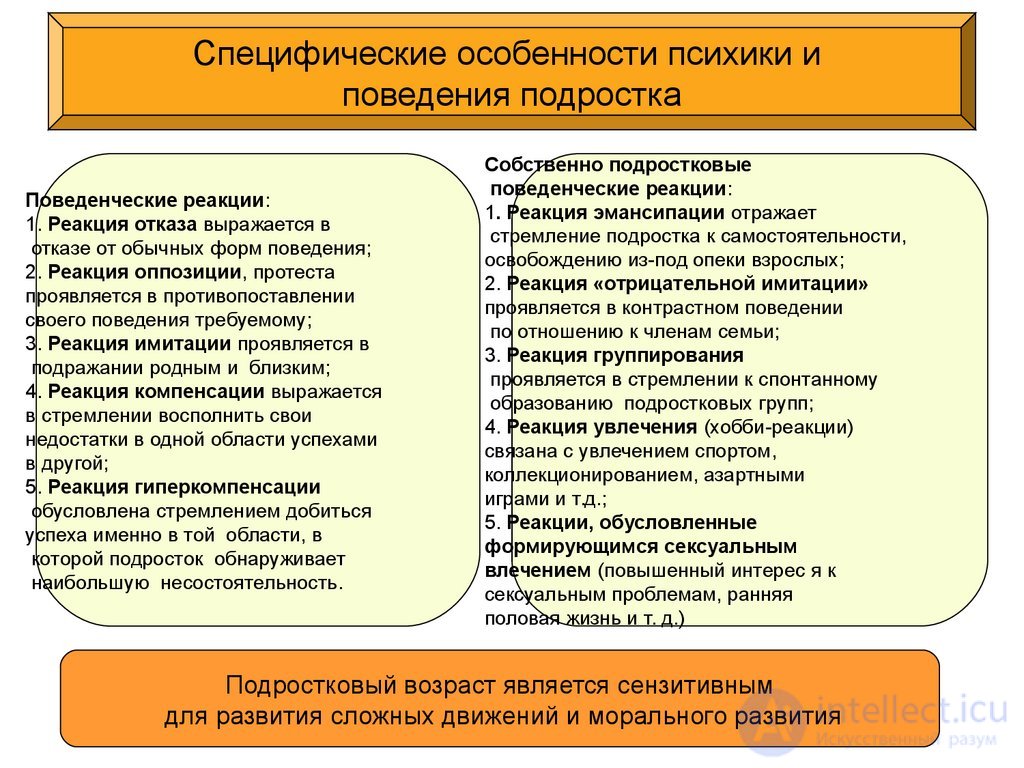
20. The subjective experience of an adolescent's readiness to be a full-fledged member of the adult community, expressed in a striving for independence, a desire to show one's «adulthood», and the defense of one's own point of view:
- A) dysmorphomania
- B) reflection
- C) the need for recognition
- D) the sense of adulthood
- E) a sense of alienation
21. A type of children's activity in which they reproduce, in make-believe situations, one or another sphere of adult activity and communication, with the aim of mastering key social roles and developing skills of formal and informal communication:
- A) direct emotional communication
- B) learning activity
- C) educational-professional activity
- D) object-manipulative activity
- E) play activity
22. The sense of adulthood is a psychological neoformation of:
- A) infancy
- B) early childhood
- C) primary-school age
- D) adolescence
- E) early youth
23. Professional and moral self-determination is a psychological neoformation of:
- A) early childhood
- B) preschool age
- C) primary-school age
- D) adolescence
- E) early youth
24. The components of psychological readiness for school:
- A) intellectual
- B) motivational
- C) emotional-volitional
- D) communicative
- E) all of the above
25. The period of formation of visual-active thinking and the earliest forms of visual-figurative thinking:
- A) the neonatal period
- B) infancy
- C) early childhood
- D) preschool age
- E) primary-school age
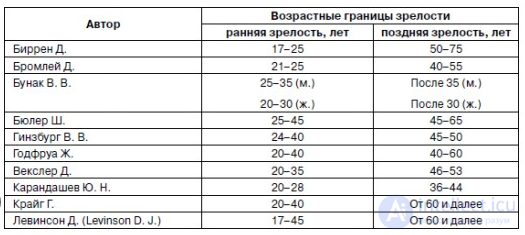
26. According to B. G. Ananiev, adulthood is a period of:
- A) stabilization of the functional levels of the main activities and the formation of an indefinitely long stationary state
- B) resistance to involutionary processes in the form of restitutive and constructive processes
- C) «psychological ossification», a plateauing of capacities
- D) complex processes that disrupt the stationary state
- E) the onset of steady involution
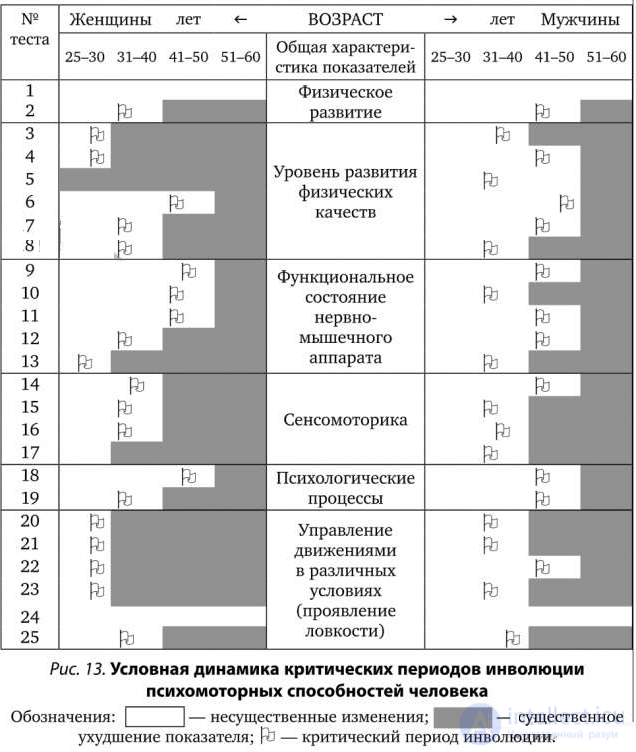
27. The crisis of adulthood:
- A) passes unnoticed and does not manifest in any qualitative changes in the personality
- B) carries a destructive element, resulting from the realization that the goals set in youth cannot be reached
- C) is not observed in all individuals and often leads to regression, to an infantile level of personality development
- D) carries a positive element, since it promotes self-knowledge and self-development
- E) has not been identified
28. The concept of «vitauct», as a system of processes aimed at maintaining a high level of functioning and prolonging life in old age, was introduced into gerontology by:
- A) V. V. Frolkis
- B) I. V. Davydovsky
- C) A. A. Bogomolets
- D) I. I. Mechnikov
- E) V. Alperovich
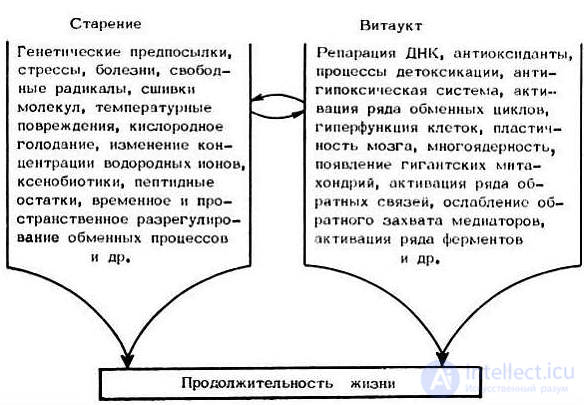
29. Under conditions of normal aging, change in the core of the personality:
- A) does not occur
- B) occurs, but is not pathological
- C) depends on the strategy of adaptation to old age
- D) inevitably occurs; it is a natural process of involution
- E) has not been the subject of experimental research
30. In old age, the cognitive sphere is characterized by the fact that:
- A) «verbal» intelligence is generally preserved at its previous level, while «nonverbal» intelligence tends to decline
- B) «nonverbal» intelligence is generally preserved at its previous level, while «verbal» intelligence tends to decline
- C) all structures of intelligence show signs of involution
- D) intelligence declines overall owing to deteriorating perception and memory.
- E) intelligence declines owing to the absence of compensatory processes
Variant 2
1. An approach to analyzing the child's psyche that views development as a succession of the units most significant and essential for development, integrating all other changes:
- A) functional
- B) holistic-genetic
- C) systemic
- D) structural
- E) normative
2. The process and result of an individual's assimilation and active reproduction of social experience, carried out through communication and activity:
- A) development
- B) socialization
- C) upbringing
- D) instruction
- E) adaptation to the social environment
3. The system of relations, specific to each age period, of the subject within social reality, reflected in their experiences and realized through joint activity with other people:
- A) the central neoformation of the age
- B) the level of development of communication
- C) leading activity
- D) the social situation of development
- E) social space
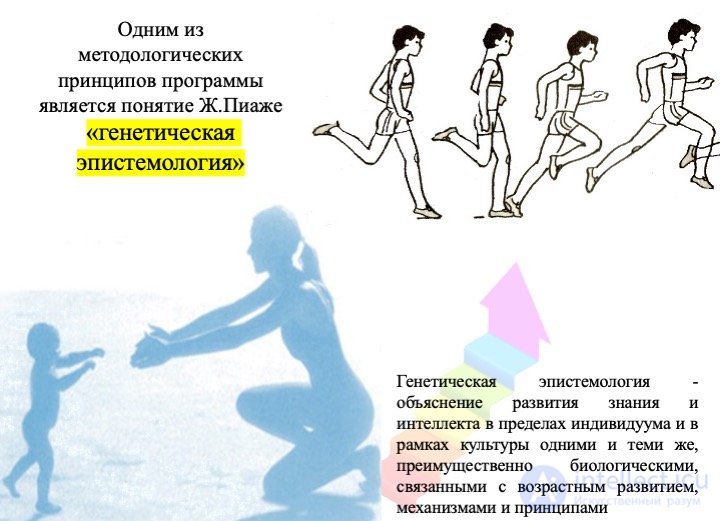
4. The science of the mechanisms and conditions for the formation in humans of various forms and types of knowledge, concepts and cognitive operations:
- A) genetic epistemology
- B) genetic psychology
- C) cognitive psychology
- D) developmental psychology
- E) age psychology
5. A category of Russian developmental psychology denoting the principal path of a person's ontogenetic development: the individual's mastery of the achievements of humanity's material and spiritual culture:
- A) accommodation
- B) appropriation
- C) enculturation
- D) adaptation
- e) assimilation
6 . This is stated by the website https://intellect.icu . The law of mental development formulated by L.S. Vygotsky, according to which every function in a child's cultural development appears twice: first on the social plane, and then on the psychological plane:
- A) the law of metamorphosis
- B) the law of heterochrony of development
- C) the general genetic law of cultural development
- D) the law of the cyclicity of development
- E) the biogenetic law
7. The author of the cultural-historical theory of the development of mental functions is:
- A) S.L. Rubinstein
- B) A.N. Leontiev
- C) P.Ya. Galperin
- D) D.B. Elkonin
- E) L.S. Vygotsky
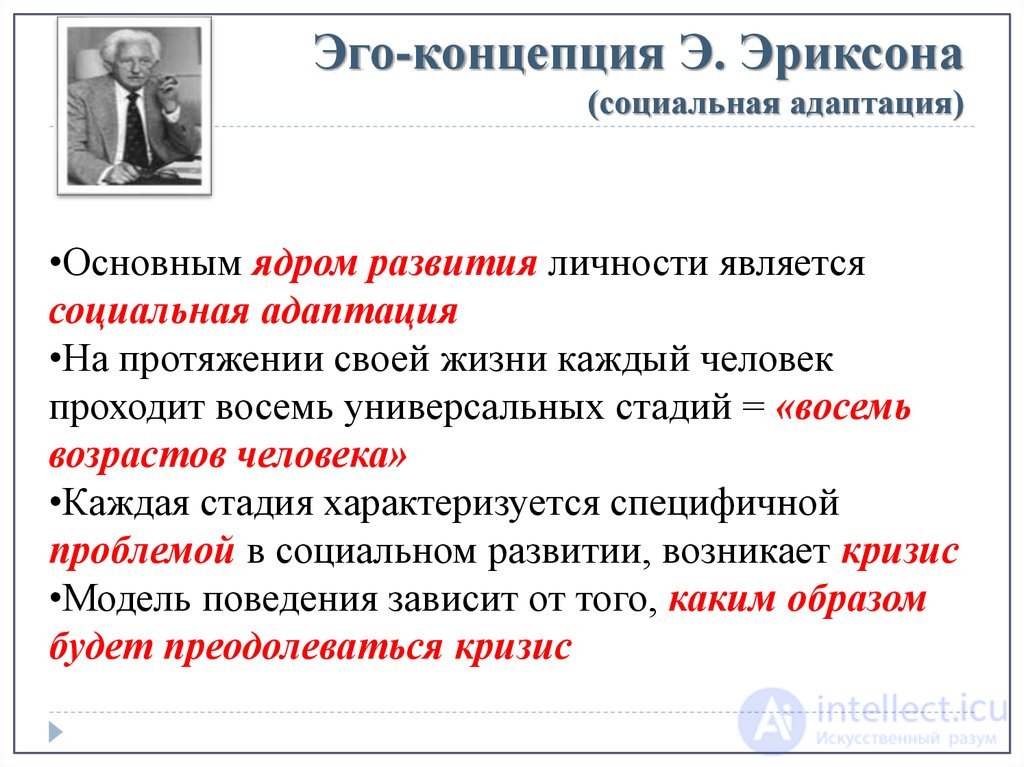
8. The central concept of E. Erikson's theory, denoting the emotional-cognitive unity of one's ideas about oneself, one's place in the world, and one's position within the system of interpersonal relations:
- A) ego identity
- B) ego integration
- C) selfhood
- D) self-concept
- E) self-awareness
9. The concept of a brief, time-compressed repetition in ontogeny of the features of phylogenetic (historical) forms:
- A) the concept of the convergence of two developmental factors
- B) the concept of recapitulation
- C) the concept of the three stages of development
- D) the cultural-historical concept
- E) the sociogenetic concept
10. Representatives of the biogenetic approach to the study of the ontogeny of the psyche are:
- A) S. Hall, W. Stern, K. Bühler
- B) N. Miller, R. Sears
- C) J. Whiting, J. Dollard
- D) U. Bronfenbrenner, J. Aronfreed
- E) A. Bandura, R. Walters, J. Gewirtz
11. The characteristics of psychological age are determined by:
- A) the concrete historical conditions of the individual's development
- B) the nature of upbringing and the specifics of the individual's activity and communication
- C) a combination of the above factors
- D) the specifics of the development of functional systems
- E) the characteristics of growth
12. Russian psychology views the course of child development as:
- A) a path from the individual to the social
- B) a path from the social to the individual
- C) a combination of these, with one predominating at different stages of childhood
- D) a continuous evolutionary process
- E) a process of adjusting to social norms
13. The phenomenon of the «zone of proximal development» testifies to:
- A) the fact that the pace of development changes with age: the younger the child, the faster the changes in their behavior
- B) the possibility of new forms of behavior arising on an instinctive basis
- C) the level to which the child has mastered social space
- D) the level of development achieved through the child's imitation of the adult
- E) the leading role of instruction in the child's mental development
14. Representatives of the sociogenetic approach to the study of the ontogeny of the psyche are:
- A) St. Hall, A. Gesell
- B) W. Stern, K. Bühler
- C) J. Piaget, H. Wallon
- D) A. Bandura, N. Miller, R. Sears
- E) L.S. Vygotsky, A.N. Leontiev, D.B. Elkonin
15. Chronological age is determined by:
- A) time frame
- B) the child's individual characteristics
- C) the physiological characteristics of the child's development
- D) the psychological characteristics of the child's development
- E) the cognitive characteristics of the child's development
16. A positive emotional attitude toward the surrounding world, primarily the social world, that forms in a child in early childhood given a psychological atmosphere of love, warmth and support from adults:
- A) basal anxiety
- B) affective reaction
- C) attribution
- D) basic trust
- E) deprivation
17. The behavioral complex of «pride in one's own achievements» is a psychological neoformation of the crisis of:
- A) age 1
- B) age 3
- C) age 7
- D) the adolescent crisis
- E) ages 16–17
18. The sign-symbolic function of consciousness is formed in:
- A) infancy
- B) preschool age
- C) primary-school age
- D) early childhood
- E) the neonatal period
19. Intimate-personal communication is the leading activity (in D.B. Elkonin's periodization) in:
- A) infancy
- B) early childhood
- C) primary-school age
- D) adolescence
- E) early youth
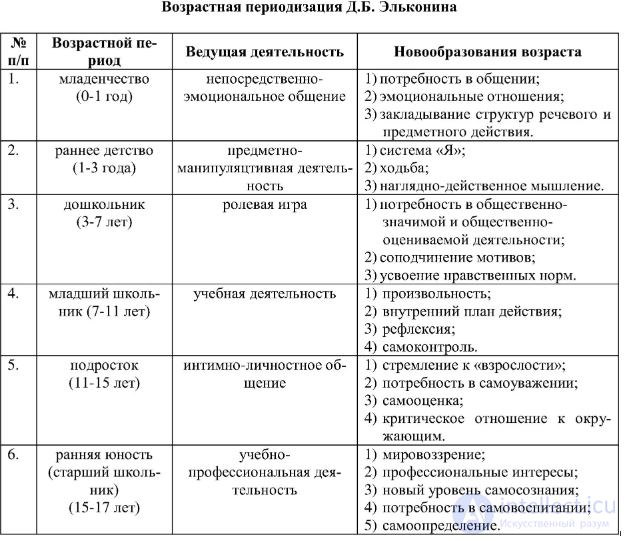
20. Direct emotional communication serves as the leading activity (in D.B. Elkonin's periodization) in:
- A) infancy
- B) early childhood
- C) primary-school age
- D) adolescence
- E) early youth
21. A system of views on the objective world and a person's place within it:
- A) empathy
- B) expectations
- C) prosocial behavior
- D) worldview
- E) wisdom
22. Visual and auditory concentration is a psychological neoformation of:
- A) the neonatal period
- B) infancy
- C) early childhood
- D) preschool age
- E) primary-school age
23. Voluntariness of behavior and mental activity is a psychological neoformation of:
- A) early childhood
- B) preschool age
- C) primary-school age
- D) adolescence
- E) early youth
24. The conventional designation for the peak of development, the moment of the greatest flowering of the human personality:
- A) «Peak of development»
- B) «Culmination»
- C) «Acme»
- D) «Limit of development»
- E) «Equilibrium»
25. The Russian psychologist, founder of the school studying the mature personality, who gave a new assessment of adulthood as a stage of ontogenetic development:
- A) A. A. Bodalev
- B) B. G. Ananiev
- C) L. S. Vygotsky
- D) D. B. Elkonin
- E) L. I. Bozhovich
26. The most important characteristics of a mature personality are:
- A) activity and the orientation of the personality
- B) developed self-awareness and a mature «self-concept»
- C) a combination of these characteristics
- D) the discovery of one's own «self», experienced as a sense of one's individual wholeness and uniqueness
- E) the formation of reflection
27. A sense of inner unity, based on satisfaction with taking stock of one's life and perceiving it as a single whole, is:
- A) egocentrism
- B) ego integrity
- C) «self-image»
- D) individuation
- E) the catharsis of old age
28. The most typical mental state in old age is:
- A) euphoria
- B) frustration
- C) anxiety
- D) age-situational depression
- E) hypochondriac fixation
- f) procrastination
29. Old age is a period of:
- A) involution at the biological and psychological levels
- B) biological involution and stabilization at the personal level
- C) possible development of the personality
- D) stabilization at the level of cognitive processes
- E) inevitable degradation of the personality
30. According to the research of P. Baltes's school, wisdom is:
- A) an expert knowledge system oriented toward the practical side of life
- B) a system of deep theoretical knowledge
- C) emotional acceptance of one's own old age
- D) acceptance of one's own life as a whole as a result of reflecting on it
- E) an optimistic attitude toward reality
Variant 3
1. The process of individual development from birth to death:
- A) phylogeny
- B) ontogeny
- C) maturation
- D) growth
- E) sociogenesis
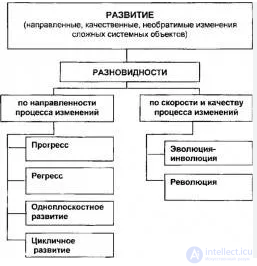
2. A regular change in mental processes over time, expressed in their quantitative, qualitative and structural transformations:
- A) epigenesis
- B) development
- C) maturation
- D) growth
- E) sociogenesis
3. The process and result of an individual's assimilation and active reproduction of social experience, carried out through communication and activity:
- A) sociogenesis
- B) development
- C) socialization
- D) maturation
- E) epigenesis
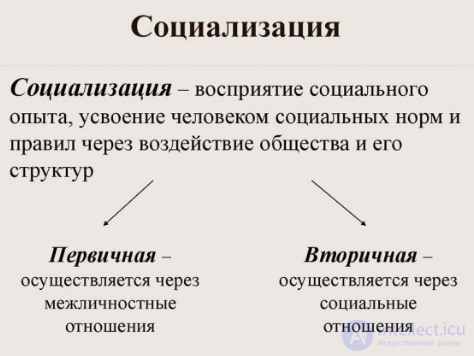
4. Development that occurs through the emergence of neoformations and the differentiation of parts of a whole:
- A) sociogenesis
- B) development
- C) socialization
- D) maturation
- E) epigenesis
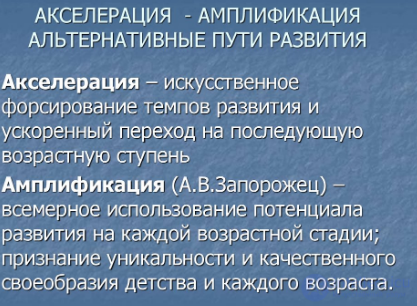
5. The comprehensive use of the potential for psychic development at each age stage through the improvement of the content, forms and methods of upbringing:
- A) amplification
- B) internalization
- C) exteriorization
- D) involution
- E) affiliation
6. The level of development that manifests in a child during joint activity with an adult but is not yet realized in the child's independent activity:
- A) the level of potential development
- B) the level of actual development
- C) the level of post-operational development
- D) the level of proximal development
- E) the level of pre-operational development
7. The irreversible weakening or disintegration of mental functions:
- A) evolution
- B) internalization
- C) exteriorization
- D) involution
- E) habituation
8. The fusion and non-differentiation of mental functions in the early stages of human development:
- A) syncretism
- B) empiricism
- C) hypokinesia
- D) hyperpathia
- E) hypermnesia

9. A characteristic of an individual's stance, a property of a person's thinking and behavior consisting in the inability to understand and take into account other points of view and positions:
- A) egoism
- B) egocentrism
- C) infantilism
- D) syncretism
- E) empiricism
10. A research method consisting in comparing the results obtained by subjects of different ages on particular experimental tasks:
- A) the longitudinal cross-section
- B) the cross-sectional age method
- C) the double stimulation method
- D) the genetic method
- E) the twin method
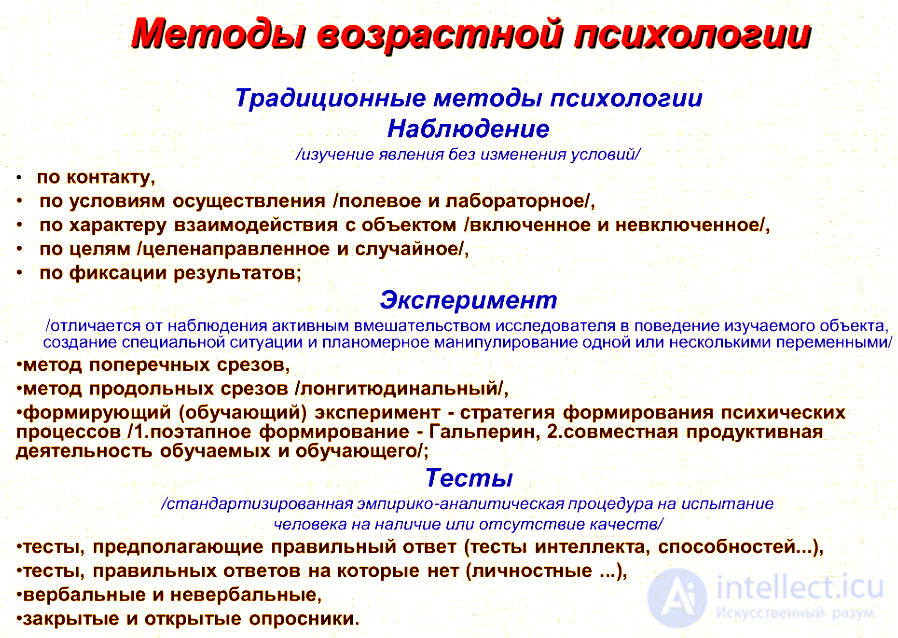
11. The prolonged and systematic study of the same subjects, allowing the range of age-related and individual variability of the phases of the human life cycle to be determined:
- A) the longitudinal cross-section
- B) the cross-sectional age method
- C) the double stimulation method
- D) the genetic method
- E) the twin method
12. Activity directed at mastering the socially developed ways of using various «cultural objects»: tools, toys, furniture, articles of clothing, and so on:
- A) tool-based activity
- B) manipulative activity
- C) play activity
- D) communication
- E) object-oriented activity
13. Autonomous child speech, one of the stages in the development of a child's speech in the early stages of ontogenetic development, is characterized by:
- A) situational dependence, which causes the instability, indeterminacy and polysemy of word meanings
- B) a distinctive mode of generalization based on subjective sensory impressions rather than on the objective features or functions of an object
- C) the absence of inflections and syntactic relations between words
- D) all of the above
- E) only answer A) is correct
14. Arranging objects in order of increasing or decreasing magnitude of a trait:
- A) seriation
- B) classification
- C) abstraction
- D) generalization
- E) symbolization

15. A psychological syndrome that forms in adolescence and manifests as the adolescent's preoccupation with their own experiences and fantasies at the expense of active outward activity and communication:
- A) psychological encapsulation
- A) demonstrative nihilism
- C) infantilism
- D) habituation
- E) sensitization
16. An excessively close bond between a child and an adult that negatively affects the development of the child's personality and hinders the formation of the child's independence and autonomy:
- A) attachment
- B) psychological symbiosis
- C) infantilism
- D) habituation
- E) sensitization
17. In E. Erikson's theory of personality development:
- A) it is argued that development can be crisis-free
- B) a normative approach to studying child development from birth to age 16 is developed
- C) it is shown that psychosocial crisis is a necessary link in personality development
- D) periods of personality development up to adulthood are presented
- E) the relations between the individual and society are treated as relations of antagonism and confrontation
18. The concept of «psychological age» was introduced into developmental psychology by:
- A) A.N. Leontiev
- B) E. Erikson
- C) L.S. Vygotsky
- D) D.B. Elkonin
- E) J. Piaget
19. L.S. Vygotsky's contribution to the study of the specifics of critical periods lies in the fact that he was the first researcher to:
- A) identify and describe the crises of age 3 and age 7
- B) show the positive psychological significance of crises
- C) formulate the conditions for organizing a child's upbringing under which developmental crises can be avoided
- D) experimentally prove the possibility of crisis-free development
- E) describe the adolescent crisis
20. The specificity of human ontogeny, as distinct from the ontogeny of animals, lies in the fact that:
- A) alongside the natural environment, the social environment is an important factor in human mental development
- B) animals inherit their species-typical traits, while humans do not
- C) human development takes the form of the appropriation of socio-historical experience
- D) in the course of individual development, a person repeats the development of the human race
- E) in the process of ontogeny, humans, compared with animals, acquire more complex forms of individual, variable behavior
21. According to L.S. Vygotsky, learning and development are related as follows:
- A) learning «leads development»
- B) learning «follows development»
- C) learning and development are identical to one another
- D) learning and development are independent of one another
- E) learning and development are mutually conditioning processes
22. In the theory of mental development of A.N. Leontiev, D.B. Elkonin and A.V. Zaporozhets:
- A) heredity is regarded as a necessary and sufficient condition for development
- B) the social environment is regarded as the source of development
- C) the social environment is regarded as the source of childhood traumas
- D) development is the result of the convergence of inner predispositions and external conditions
- E) the child's development takes place through the imitation of the adult
23. According to D.I. Feldstein, the life of an adult is:
- A) stabilization, a consolidation at the level already achieved
- B) a restitutive process
- C) an involutionary process
- D) an alternation of involutionary and stable periods
- E) movement, change, development
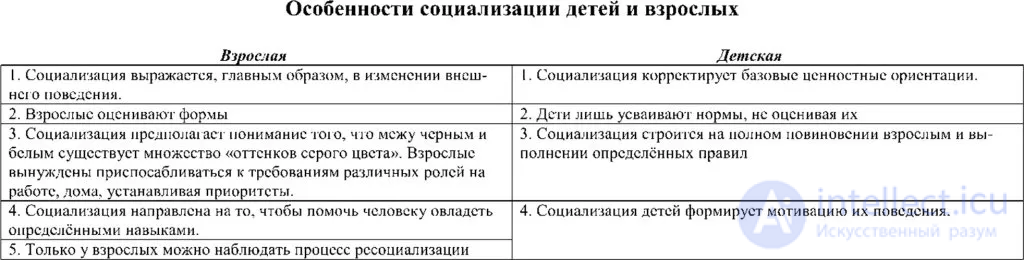
24. Adult socialization:
- A) is subjective in nature; it is self-development through making choices
- B) is objective in nature; it is the appropriation of social experience
- C) is the development of socially significant qualities
- D) is a conventional notion; genuine socialization is the task of earlier age periods
- E) is a process that has been little studied in psychology
25. According to the findings of B.G. Ananiev's school, what is most often observed in adulthood is:
- A) stabilization of psychophysiological functions
- B) positive shifts in psychophysiological functions
- C) negative shifts in psychophysiological functions
- D) stagnation of psychophysiological functions
- E) no general trend in the dynamics was identified
26. In Western psychology, adulthood was first most fully described as an age of development by:
- A) C. Jung
- B) C. Bühler
- C) E. Erikson
- D) W. Stern
- E) A. Adler
27. A person's adjustment, as an individual, to existing in society in accordance with that society's requirements and with their own needs, motives and interests:
- A) assimilation
- B) agglutination
- C) adaptation
- D) affiliation
- E) accommodation
28. A school of psychology that arose as a critical reaction to associationism and structural psychology, viewing consciousness as a dynamic, field-type whole in which every point interacts with all the others:
- A) behaviorism
- B) the humanistic school
- C) the existential school
- D) Gestalt psychology
- E) cognitivism
29. The law formulated by E. Haeckel states that the embryos of any species pass, in their embryonic development, through roughly the same stages as the evolutionary ancestors of that species — that is, embryogenesis is a brief, compressed repetition of phylogeny:
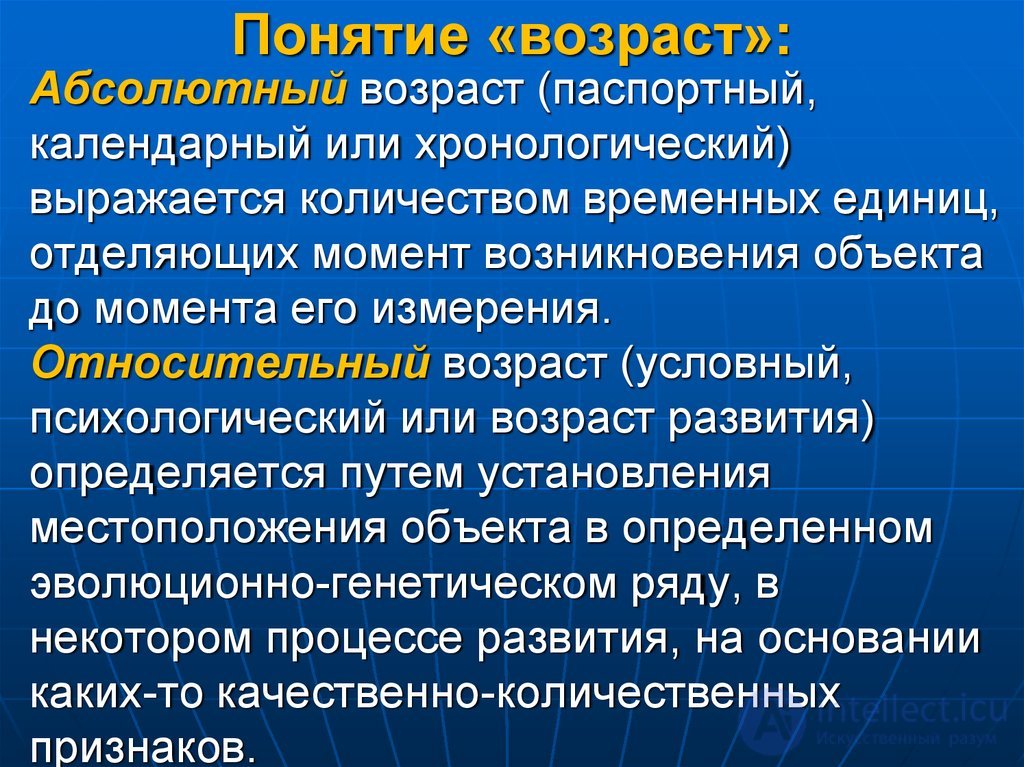
- A) absolute age
- B) social age
- C) psychological age
- D) subjective age
- E) relative age
30. A quantitative indicator of the degree of development of particular functions or structures, determined by relating reference measures to normative characteristics established for different chronological ages:
- A) absolute age
- B) social age
- C) psychological age
- D) subjective age
- E) relative age
* The test partially draws on material from Ermolaeva M.V., Psychology of Adulthood and Old Age in Questions and Answers. — Moscow, 2004. — 280 pp.
Correct Answers
|
Question No.
|
Variant 1
|
Variant 2
|
Variant 3
|
Points
|
|
1
|
B
|
B
|
B
|
1
|
|
2
|
D
|
B
|
B
|
1
|
|
3
|
B
|
D
|
C
|
1
|
|
4
|
E
|
A
|
E
|
1
|
|
5
|
C
|
B
|
A
|
1
|
|
6
|
E
|
C
|
D
|
1
|
|
7
|
D
|
E
|
D
|
1
|
|
8
|
D
|
A
|
A
|
1
|
|
9
|
C
|
B
|
B
|
1
|
|
10
|
B
|
A
|
B
|
1
|
|
11
|
C
|
C
|
A
|
1
|
|
12
|
E
|
B
|
E
|
1
|
|
13
|
C
|
E
|
D
|
1
|
|
14
|
A
|
D
|
A
|
1
|
|
15
|
D
|
A
|
A
|
1
|
|
16
|
C
|
D
|
B
|
1
|
|
17
|
C
|
B
|
C
|
1
|
|
18
|
C
|
D
|
C
|
1
|
|
19
|
C
|
D
|
B
|
1
|
|
20
|
D
|
A
|
C
|
1
|
|
21
|
E
|
D
|
A
|
1
|
|
22
|
D
|
A
|
B
|
1
|
|
23
|
E
|
C
|
E
|
1
|
|
24
|
E
|
B
|
A
|
1
|
|
25
|
C
|
B
|
B
|
1
|
|
26
|
B
|
C
|
C
|
1
|
|
27
|
D
|
B
|
C
|
1
|
|
28
|
A
|
D
|
D
|
1
|
|
29
|
C
|
C
|
C
|
1
|
|
30
|
A
|
A
|
E
|
1
|
Criteria for Evaluating Test Results for the Course in Developmental Psychology
|
Points
|
Performance
(% of correct answers)
|
Grade
|
|
from 30 to 26
|
from 100 to 86%
|
5
|
|
from 25 to 21
|
from 85 to 70%
|
4
|
|
from 20 to 16
|
from 69 to 51%
|
3
|
|
under 15
|
under 50%
|
2
|
See also
- [[b7324]]
- [[b7347]]
- [[b8014]]
- [[b8015]]
- [[b8016]]
- [[b8017]]
See also
- Psychological processes: Teaching, learning, learning, learning activities. addiction, imprinting, capturing, sensitization, associative learning, habit formation, play, memorization
- Tests with answers to educational psychology
- 100 Tests with Answers and Diagrams - Fundamentals of General Psychology
- Pedagogical psychology test questions with answers - developmental psychology with diagrams
- 60 Tests with Answers — Pedagogical Psychology, with Hints
- Tests with answers and diagrams on the topic — Social Psychology


Comments