
Lecture
tests with answers on the topic of Work Psychology
Work psychology is an important field of research that studies the influence of psychological factors on work and labor activity. Work occupies a significant part of our lives, and understanding how psychological aspects affect our well-being and productivity in the workplace is of great importance for creating a healthy and effective work environment.
One of the important tools for studying work psychology is tests with answers and reference diagrams. Testing makes it possible to obtain an objective assessment of various aspects of work psychology, such as motivation, stress, communication, leadership, and others. Tests are structured tools that help measure the psychological characteristics and traits of employees, their preferences, skills, and abilities.
Reference diagrams, in turn, are a visual representation of test results and help analyze the data obtained. They represent a graphical display of various indicators and the relationships between them. Reference diagrams help researchers and practicing psychologists analyze test results and draw conclusions about the psychological state and needs of employees.
The purpose of this material is to provide tests with answers and reference diagrams on the topic of work psychology. This will allow readers not only to independently study and test their psychological characteristics, but also to gain a deeper understanding of the topic of work psychology. The presented tests and reference diagrams will cover various aspects related to work and labor activity and will help expand knowledge in this field.
It is important to note that test results and analysis of reference diagrams are not final and absolute. They serve only as one of the tools for studying and understanding work psychology. When interpreting the results, the individual characteristics and context of each person's work situation must be taken into account.
The proposed tests and reference diagrams are a valuable resource for students, researchers, practicing psychologists, and everyone interested in work psychology. Let this material help you deepen your knowledge and understanding of the importance of psychological factors in the sphere of work.
All tasks have a single correct answer.
Option 1
1. Work psychology is a science that studies:

2. Which of the following is NOT an applied branch of work psychology:
3. The first scientific organization of labor activity was proposed by:
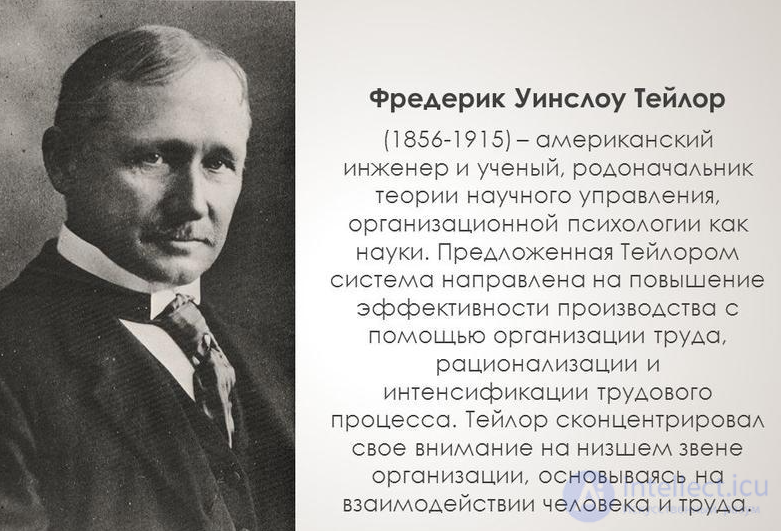
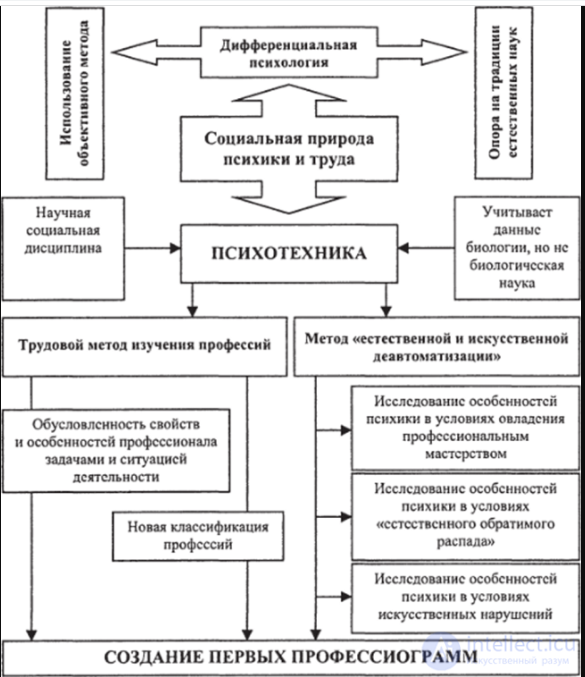
4. In the late 19th - early 20th century, work psychology developed within the framework of:

5. Which of the following is NOT one of the criteria for evaluating an operator's work:


6. Which of the following is NOT one of the main performance indicators of the "human-machine" system:
7. The factor determining an operator's work reliability, characterized by resistance to the onset of fatigue by the end of the workday, especially under monotonous conditions, is:
8. The system "human-collective-machine-environment-society-culture-nature" is studied in:

9. A specific, normatively defined labor process that includes the object, means, goals and tasks of labor, and the rules for performing the work (the technology of the labor process) is:
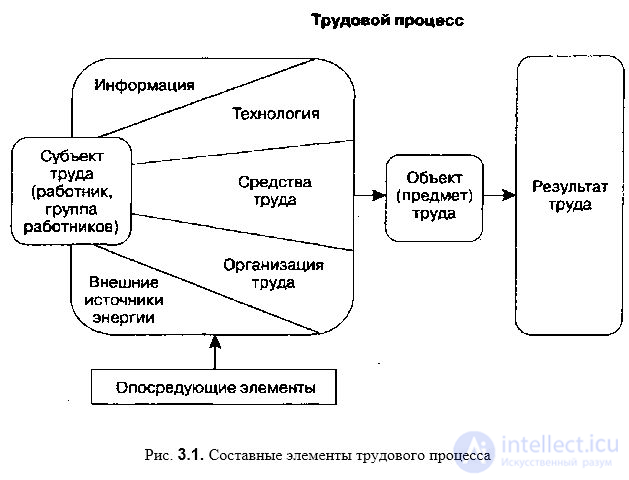
10. The interaction of the subject and object of labor, or, in a more expanded form, the system "human-collective-machine-environment-society-culture-nature," is:
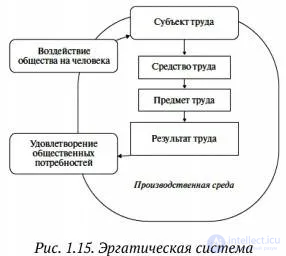
11. A method of work psychology that consists of obtaining information about the features of an activity from an experimenter who is directly engaged in the labor process is:
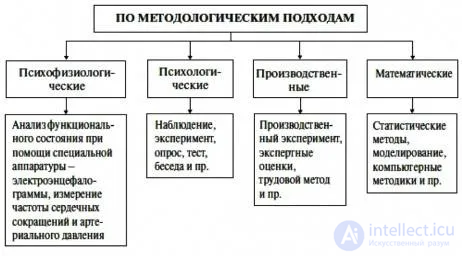

12. Which of the following is NOT one of the main psychological regulators of labor:
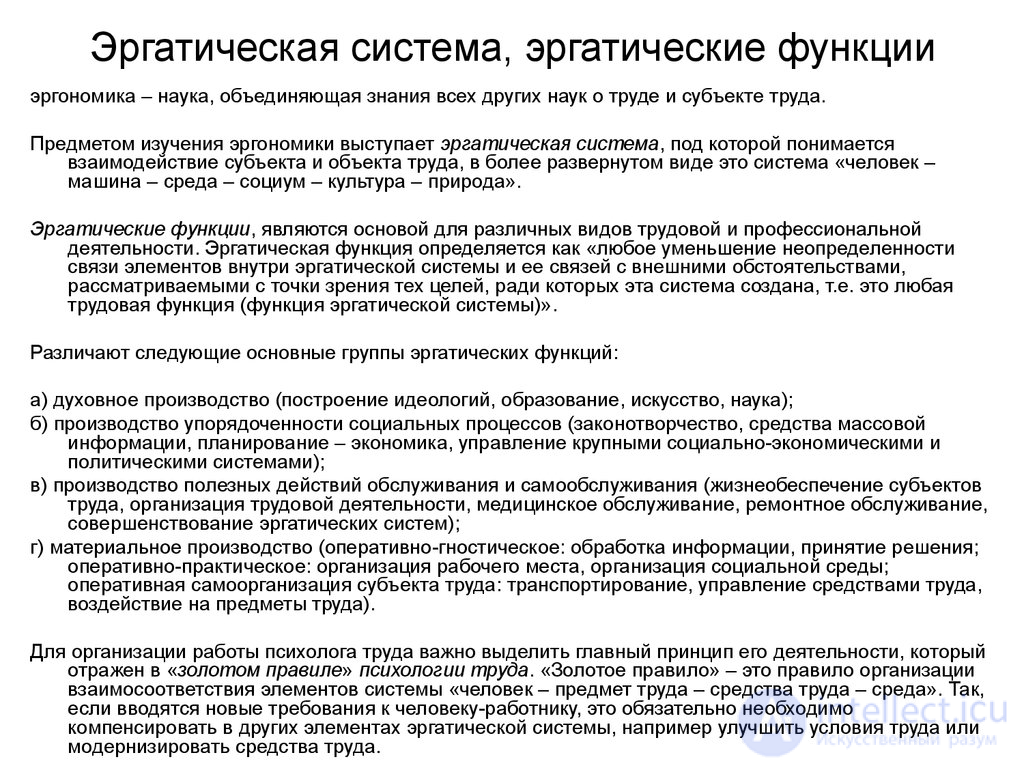
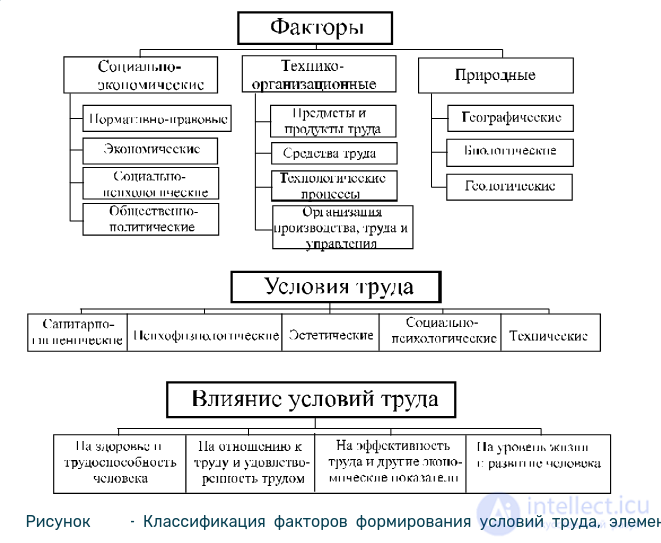
13. Which of the following is NOT one of the working conditions that determine its effectiveness:
14. Which of the following is NOT part of the structure of the subject of professional activity:
15. The author of the classification of labor-activity motives consisting of the motive of benefit, safety, convenience, satisfaction, and "the opinion of one's colleagues":
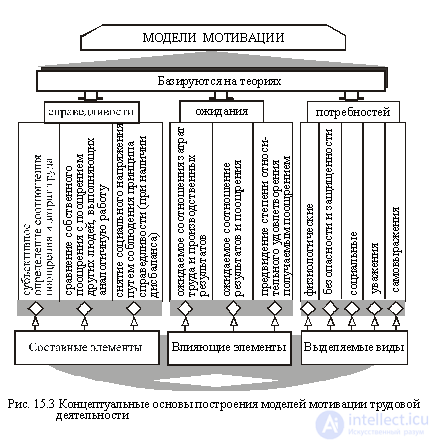
16. A set of specialized knowledge, abilities, and skills acquired through professional education and on-the-job experience that are necessary to perform a particular type of activity within a given profession:
17. The four-tier general classification of professions was developed by:
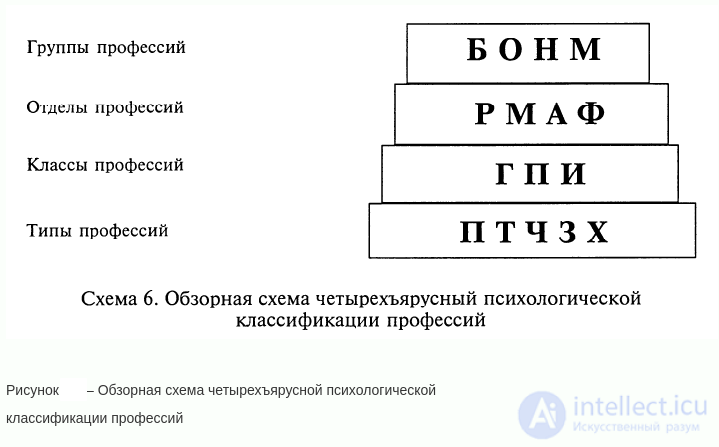
18. The set of an individual's personal characteristics, when present, that make him meet the requirements set by a profession is:
19. Which of the following is NOT one of the professional types according to E.A. Klimov:
20. The first stage of work capacity is:
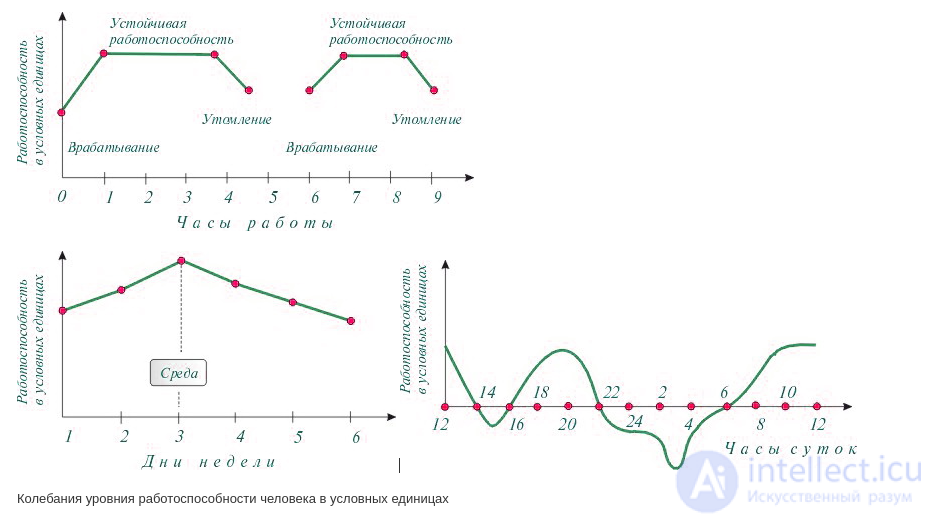
Fluctuations in a person's level of work capacity, in conventional units
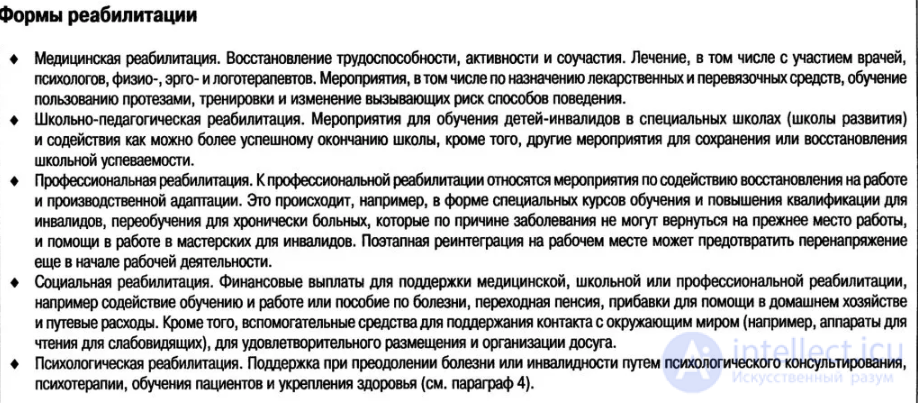
21. The type of rehabilitation that involves returning a patient to labor activity, taking into account the consequences of the illness and the remaining work capacity, is:
22. The difference between labor productivity and the actual work-capacity indicator is:
23. The type of adaptation that consists of the organism getting used to new physiological and psychophysiological loads, schedule, pace, and rhythm of work, and to the sanitary-hygienic conditions of the production environment, is:
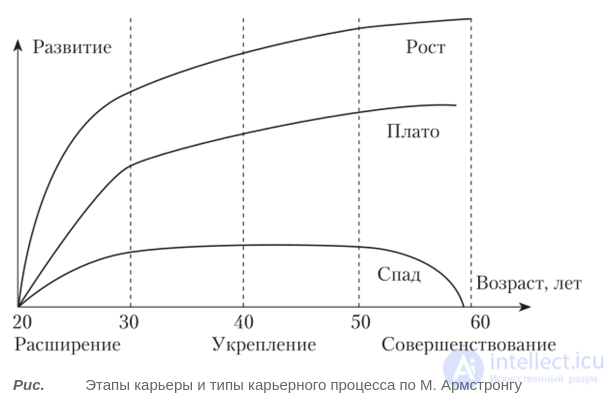
24. A halt in career and professional growth is:
25. A descriptive-technological characterization of various types of professional activity, drawn up according to a certain scheme to solve particular problems, including a description of the working conditions, the rights and duties of employees, the necessary knowledge, abilities and skills, professionally important qualities, and contraindications, is:

26. A holistic characterization of mental activity over a certain period of time, showing the distinctive way mental processes unfold depending on the specifics of how objects and phenomena are reflected, the preceding state, and the person's mental properties, is:
27. An emotional state characterized by an experience of strong spiritual elation, complacency, bliss, and serenity, accompanied by high optimism, is:
28. Exhaustion of the nervous system, underlying the inhibition of the cerebral cortex and subcortical structures, is the physiological basis of:
29. Guidance from the school and all public institutions responsible for raising young people in the process of forming students' professional life plans and choosing their career path is:
30. A manifestation of professional deformation of a person's motivational sphere, consisting of an excessive absorption in one's work as an attempt to escape from the difficulties and problems of real life, is:
1. The subject matter of work psychology is:

2. From the tasks listed, choose the one that is NOT a task of work psychology:
3. The creator of the sociological concept of bureaucracy, in which an organization was viewed as a kind of impersonal organism whose basic rule is clear-cut functioning aimed at obtaining maximum profit.
4. Which of the following is NOT a problem addressed by work psychology:
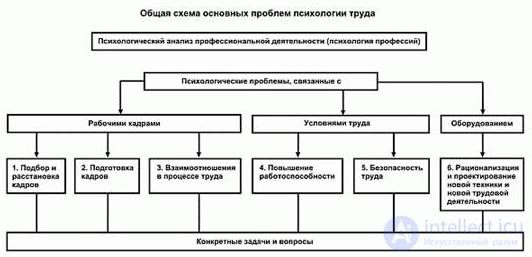
5. Which of the following is NOT one of the methods of engineering psychology:
6. Which of the following is NOT one of the factors determining an operator's work reliability:
7. The factor determining an operator's work reliability that consists of resistance to internal distracting factors is:
8. A system of skills, methods, and techniques for solving the tasks of a given activity that is characteristic of a given individual and ensures its more or less successful performance is:
9. The order, duration, and volume of the performance of labor tasks is:
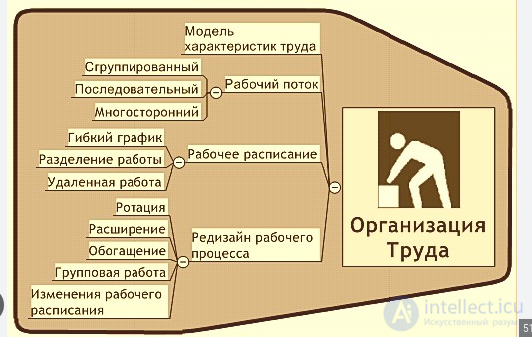
10. One of the methods of work psychology, consisting of recording changes over time in certain parameters of the labor process, is:
11. A multidimensional, multi-featured systemic formation whose main components are: the goals of labor, the specified object of labor, the system of means of labor, the system of labor duties, and the system of employees' rights:
12. Material, energy-related, and informational formations by means of which an activity is carried out, or a set of tools capable of enhancing a person's ability to recognize the features of the object of labor and act upon it, is:
13. The working conditions under which a favorable course of a person's mental functions is observed, ensuring the highest efficiency and reliability of his activity, is:
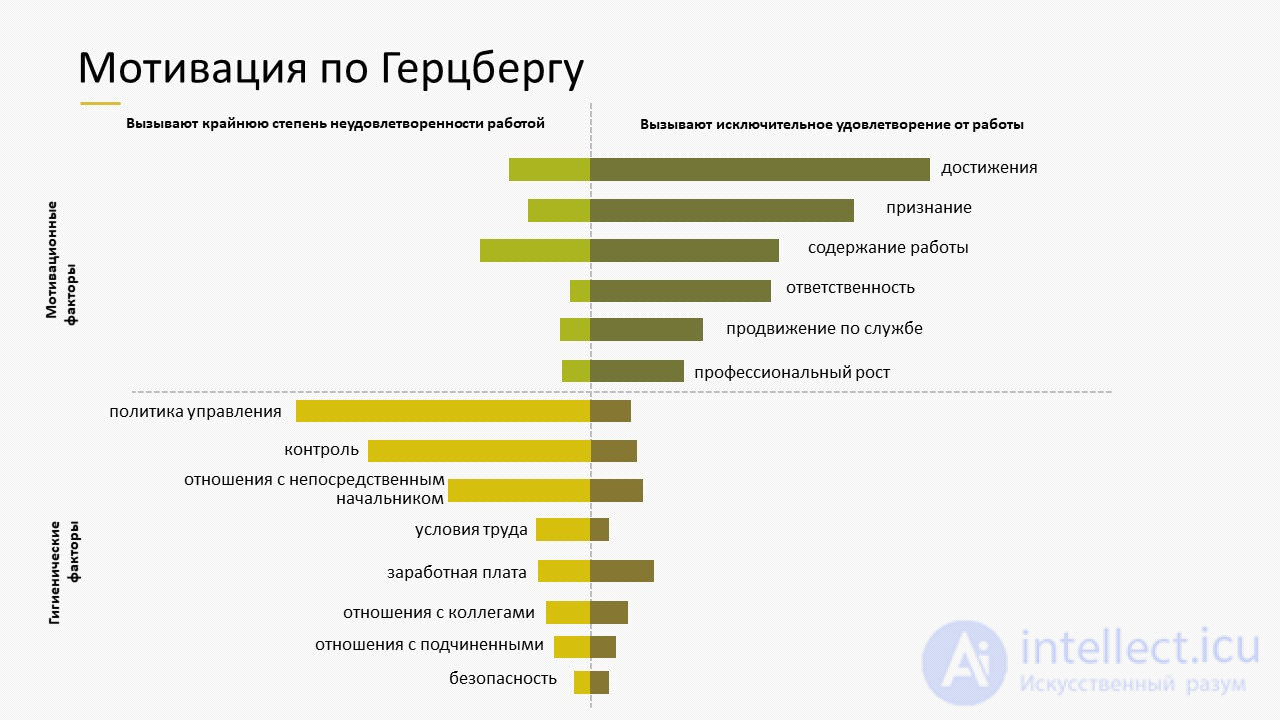
14. The two-factor theory of work motivation was created by:
15. One of the methods of job profiling, consisting of obtaining information about the types of tasks, the external forms of an employee's actions, their sequence, and the time spent on them, is:
16. Choose the incorrect definition of a profession:

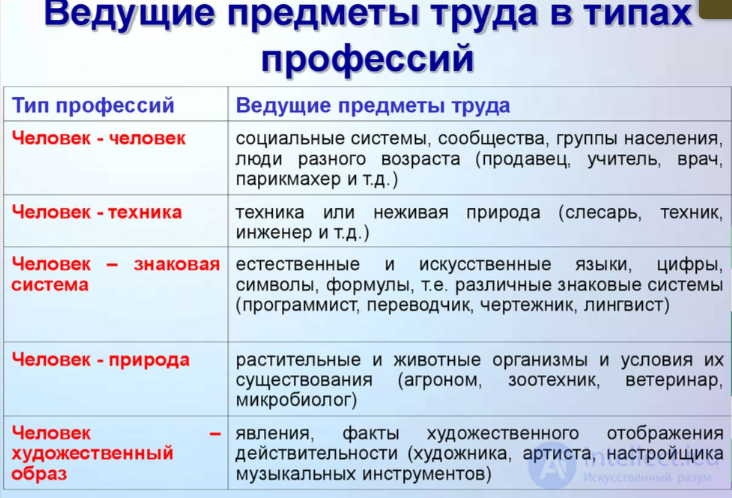
17. The type of profession associated with medical, household, and information services, the protection of society and the state, and the upbringing and education of people is:
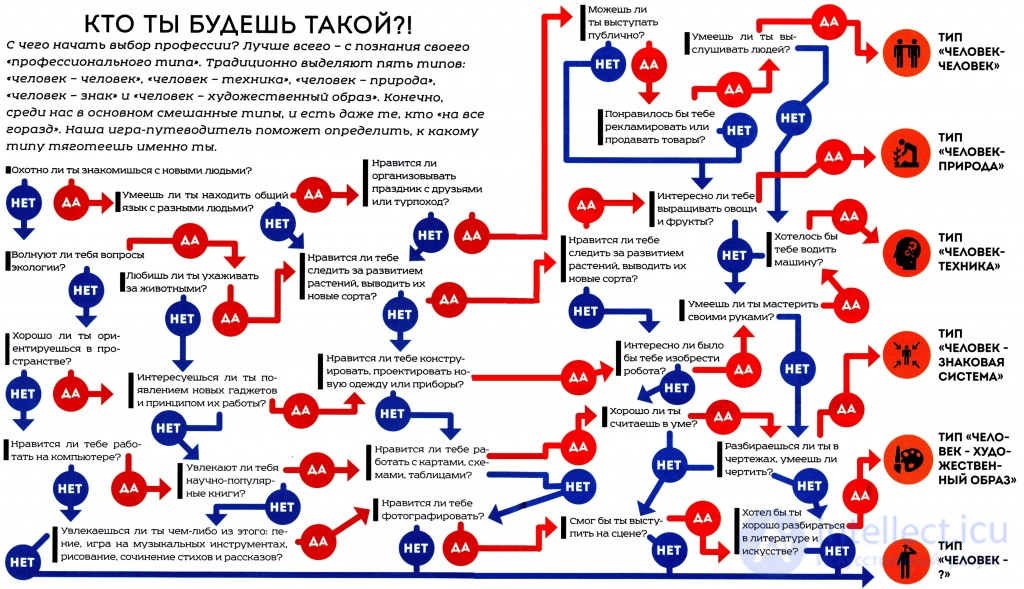
18. The type of work capacity characterized by a certain amount of purposeful activity, performed with a certain intensity, within a set time, according to set quality criteria, at a set level of reliability, provided that the organism's expended resources are normally restored according to a certain daily schedule and rhythm of work and rest, is:
19. Which of the following is NOT one of the subjective factors of professional suitability:
20. The type of professional adaptation that consists of specialists who already have professional experience adjusting to a company's staff and to new working conditions is:
21. The type of career characterized by two or more attempts, which may be forced (dismissal from a job, loss of work capacity) or voluntary (change of interests), is:
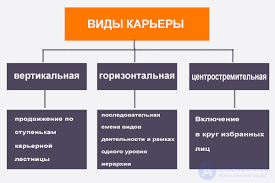
22. Which of the following is NOT one of the subjective factors that determine career success:
23. The identification and description of the qualities necessary for the successful performance of a given labor activity is:



24. A psychogram drawn up after a single (one-time) examination is:
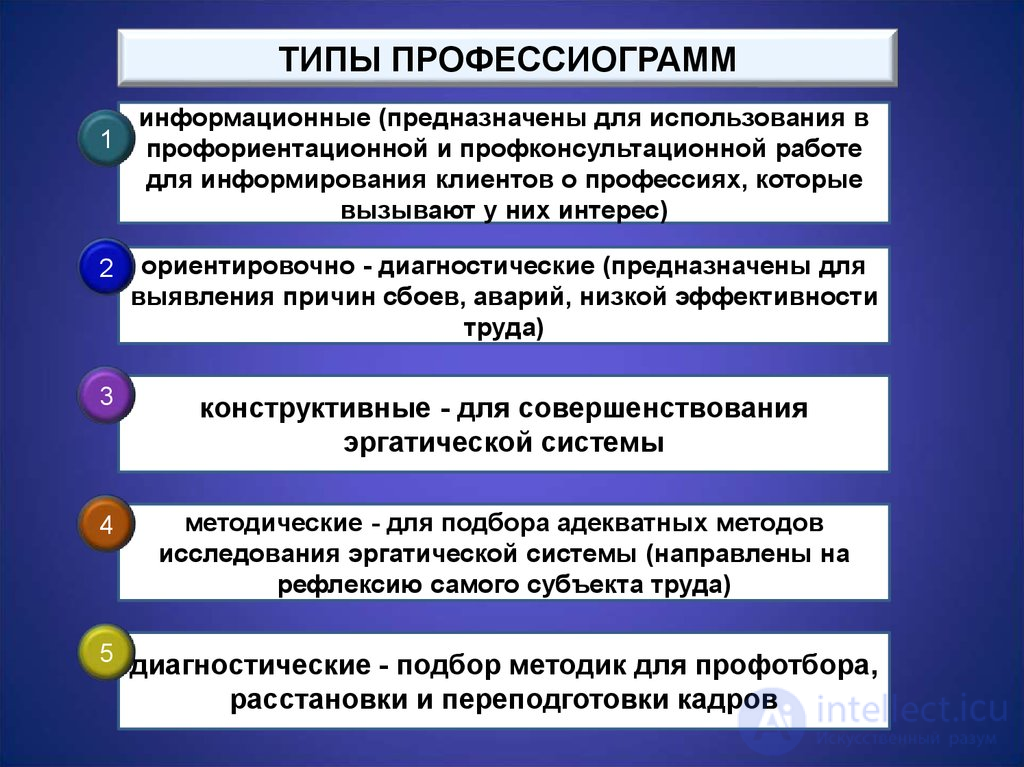
25. The type of job (occupational) profile used to identify the causes of breakdowns, accidents, and low labor efficiency, implemented by comparing the actual work of a given person or work group with a standard, is:
26. Strain arising from the need to frequently switch attention from one object to another is:
27. A temporary decline in physical and mental strength caused by intensive or prolonged work, accompanied by a temporary decrease in work capacity, is:
28. In cases of severe overexertion (overwork), the first thing used to restore the resources of the nervous system and the body is:
29. Determining a person's suitability for a specific type of work:

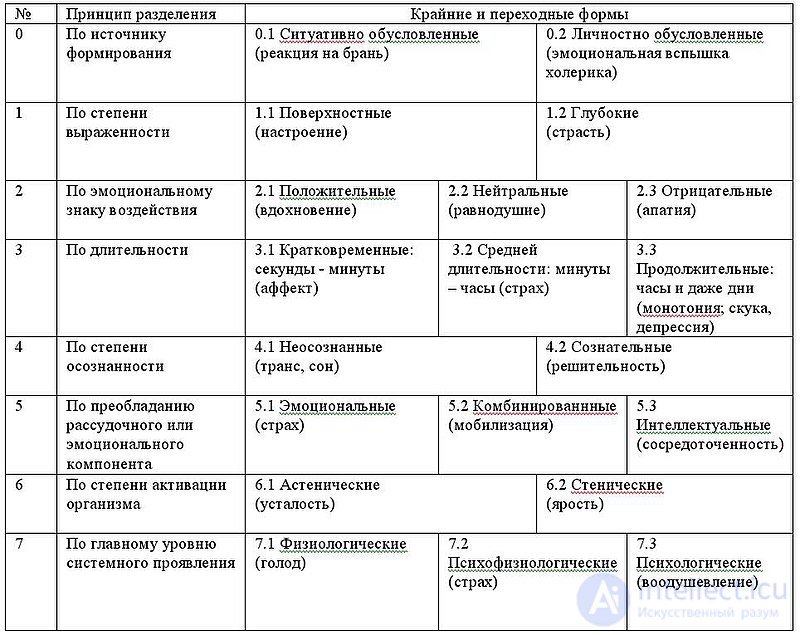
30. A mental state caused by the monotonous performance of actions and heightened demands for concentration of attention is:
Correct answers
|
|
|
|
|
|
|
|
|
|
|
|
|
|
|
|
|
|
|
|
|
|
|
|
|
|
|
|
|
|
|
|
|
|
|
|
|
|
|
|
|
|
|
|
|
|
|
|
|
|
|
|
|
|
|
|
|
|
|
|
|
|
|
|
|
|
|
|
|
|
|
|
|
|
|
|
|
|
|
|
|
|
|
|
|
|
|
|
|
|
|
|
|
|
|
|
|
|
|
|
|
|
|
|
|
|
|
|
|
|
|
|
|
|
|
|
|
|
|
|
|
|
|
|
|
|
|
|
|
|
|
|
|
|
|
|
|
|
|
|
|
|
|
|
|
|
|
|
|
|
|
|
|
|
|
Criteria for evaluating the results of testing in the work psychology course
|
|
|
|
|
|
|
|
|
|
|
|
|
|
|
|
|
|
|
|

Comments