
Lecture
Verbal means of communication represent ways of transmitting information and expressing thoughts using words and language. The effective use of verbal means of communication is a key element of successful communication. Here are some of the main verbal means of communication:
Verbal expression: The use of words to formulate thoughts, ideas, and feelings. This includes not only word choice but also their sequence and sentence structure.
Speech: This is the utterance of words and phrases with a certain accent, tone, intonation, and speed. Speech can convey emotional undertones and information about the speaker's mood.
Linguistic means: These are specific linguistic elements, such as vocabulary, grammar, synonyms, antonyms, and metaphors, which help express thoughts more precisely and richly.
Communicative skills: Effective communicative skills include the ability to listen, ask questions, express one's opinion, and heed the opinions of others.
Specific communicative genres: These include various forms of verbal communication, such as presentations, discussions, negotiations, interviews, and others. Each genre has its own characteristics and requires specific skills.
Ability to adapt: The capacity to adapt to the audience and the context of communication. This includes choosing the level of formality, the style of communication, and taking cultural differences into account.
Active listening: The skill of attentively and actively listening to the interlocutor, understanding their message, and asking clarifying questions.
Articulation and pronunciation: Clear and correct pronunciation of words and sounds so that the message is understandable to others.
Conflict resolution: The ability to effectively discuss disagreements and find constructive solutions in conflict situations.
Functions of the person as a subject of communication
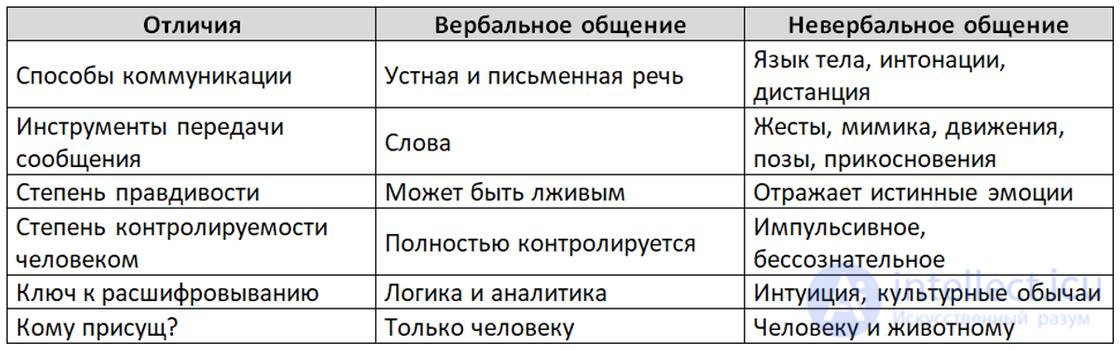
Communication is carried out by various means. Verbal and
nonverbal means of communication are distinguished. Verbal communication (sign-based) is carried out by means of words. Human speech is among the verbal means of communication. Communication specialists have calculated that a modern person
utters approximately 30 thousand words a day, or more than 3 thousand words an hour. Depending on the communicants' intentions (to report something, to find out, to express
an assessment or an attitude, to prompt someone to do something, to reach an agreement, etc.), various speech texts arise. In any text (written or oral), the system of the language is realized.
V. N. Panferov, who has worked on this issue both
at the theoretical and at the empirical level, identifies the following six
functions of the person as a subject of communication:
1. Communicative functions. In the process of communication, through these
functions the interconnection of people is realized at the individual,
group, and societal levels of interaction. This interconnection is achieved
through speech and other natural expressive means of the person
(facial expressions, pantomime, gestures, voice, a person's object-related actions), as well as
technical means (writing, print, the telegraph, radio, television, etc.).
Communicative functions also serve the goals of the social integration of people
into various forms of communities.
2. Informational functions. In the process of communication, the content of people's practical experience accumulates and information is transmitted from
one person to another. The informational function here is realized in
unity with the communicative one. According to the purposes of the message, information can, in the most general terms, be divided into informative, regulatory, and emotional. If only data about an object is conveyed, the information has
an informative purpose. If the message is intended to prompt a person toward a specific action, this information acquires a regulatory load. If, however, the information is aimed at arousing certain feelings, it acquires an emotional character.
3. Cognitive functions. In the process of communication, the comprehension
of perceived meanings occurs through representation, imagination, and thinking.
Cognitive functions manifest themselves in the processes of one person's cognition of another.
These functions are realized more fully when there is mutual understanding among the participants in communication. On the whole, the relationships that arise between people depend on the content of their mutual interpretation. Thus, the cognitive functions of communication are linked with the emotive ones.
4. Emotive functions. They manifest themselves in a person's experiencing of their own
relationships with other people. These experiences find secondary expression
in various kinds of relationships (sympathy – antipathy, love – hatred, friendship – enmity, etc.). Emotionally charged relationships
determine the psychological background of interaction, bring joy or sorrow, and for many are the highest value, goal, and meaning of life.
5. Conative functions. They provide a controlling influence on
the personality in all processes of life activity, are connected with a person's striving for certain values, express their motivating forces, regulating
the behavior of partners in joint activity through the process of communication. Through the exchange of thoughts and feelings, the coordination of the communication partners' interaction takes place.
6. Creative functions. They are aimed at transforming people in the processes of communication, at changing and educating the personality. Special
mechanisms of mental activity serve this purpose, facilitating the mutual influence of the partners. These include imitation, emotional contagion, suggestion,
and persuasion. Thanks to these mechanisms, changes occur in the views,
behavior, and traits of the personality. The classification of the functions of the person as a subject of communication proposed by V. N. Panferov makes it possible to generalize various phenomena of the human psyche, based on the logic of their functioning in the process of communication.
The sign system of language is the most universal means
of human communication. Language is a system of signs and ways of combining them,
it serves as an instrument for expressing thoughts, feelings, and the will, and is
a means of communication. The Russian language (like any other language) represents a system. A system (from the Greek systema – a whole composed of parts; a joining) is a union of elements that are in relations and connections that form an integrity, a unity. Consequently, every system:
– consists of a multitude of elements;
– has elements that are connected with one another;
– has elements that form a unity, a single whole.
In characterizing language as a system, it is necessary to determine what elements it consists of, how they are connected with one another, what relations are established between them, and in what the unity is manifested. Language consists of the following
units:
– sound,
– morpheme (prefix, root, suffix, ending),
– word,
– phraseological unit (a set phrase),
– free phrase,
– sentence (simple, complex),
– text.
Speech represents oscillations of a complex form, depending on the words uttered, the timbre of the voice, intonation, and the sex and age of the speaker. The main parameters used in describing a speech signal are:
– the statistical distribution of sounds, syllables, and words in the pronunciation of speech;
– the temporal characteristics of sounds;
– the fundamental tone of speech;
– the speech spectrum;
– the distribution of formant frequencies.
These parameters play an important role in building speech coding
systems.
The primary function of the individual lies in ensuring thought. Speech is
a distinctive instrument of mental activity. It is a historically formed shape of communicative interactions realized through linguistic
constructions. The word represents the basic structural unit of language systems. As a concept, a word contains far more information and data than is carried by an elementary combination of sounds. The process
of shaping thoughts by means of words, and their comprehension, inevitably causes
a distortion of the semantic load of the message. Nevertheless, individuals still understand one another. Comprehension is constantly subject to correction, because the means by which people communicate is not simply the transmission of information, knowledge, and messages through verbal and nonverbal instruments, but an exchange of data
that presupposes feedback.
Remarks that are not oriented toward the communication partner take the form
of a monologue. In the monological transmission of messages, the total loss of informational content can reach from 50% to 80% of the amount of the original information. Psychologists maintain that the most effective form of communication is dialogue. It presupposes a fluent and free command of speech, the ability to distinguish sincere and honest answers from those of evasive and
untruthful people, and sensitivity to nonverbal signals as well. The foundation of dialogical communication is the skill and ability to ask questions of
oneself and of the other subjects of the communicative process. Compared with monological communication, dialogical communication is considered more effective. After all, it is far more productive to transform one's own ideas into questions and to test them in conversation with colleagues and peers. The use of questions makes it possible to understand whether the speaker's ideas are supported or not. The very fact of asking a question shows a willingness to take part in
communicative interactions, ensuring their further direction
and deepening.
No interaction is conceivable without observing the rules of verbal
etiquette, which is connected with the forms and style of speech and with vocabulary. The transmission of messages can take various forms. Information can be conveyed in the form of a conversation, a talk, a lecture, or even an argument. Speech as a means of communication is the primary mode of communication belonging solely to human beings. It is chiefly divided into internal speech – an individual's mental conversation with themselves, by means of which the motivation for their
behavior is understood – and external speech, i.e., speech directed at an interlocutor. Internal speech
is the foundation of external speech. The transformation of the essence of internal speech into
an externally directed one is associated with the emergence of the difficulty of uttering it aloud.
Externally directed speech may be oral or written.
In speech activity, the leading types of speech are distinguished.
External speech is the primary means of communication. It is speech for others, uttered aloud, heard and understood by those around, directed at
communication or interaction with them. It is characterized by relative
elaborateness and richness.
Internal speech is the primary means of thought. It is speech for oneself,
proceeding from without inward, devoid of external, audible, sound formatting,
occurring at the level of thought and performing the functions of planning activity and processing information. It is characterized by fragmentariness,
discontinuity, and situationality.
External speech includes oral speech (monological and dialogical) and written speech.
Dialogical speech is speech conditioned by the situation and by the context
(the meaning) of the preceding utterance. Dialogical speech is not only the more
advanced form of verbal communication, but also historically the first one. Dialogue is a process of a two-way exchange of information; it is a conversation in which turns are taken, where for
each partner the periods of speaking and listening alternate. Dialogical
speech is compressed in time; much in it is merely implied thanks to the interlocutors' shared knowledge of the situation.
Monological speech is a relatively elaborate form of speech, a sequential, coherent exposition of a system of thoughts and knowledge by one person without relying
on the interlocutor's speech. A monologue usually serves the process of a one-way
exchange of information. In a monologue, a person expresses emotion and makes use
of mimic and gestural means, which underscore the expressiveness of the speech information.
Egocentric speech is a unique combination of the monological and
dialogical, internal and external kinds of a person's speech, and a necessary
stage in the formation of a child's speech development. It consists of thoughts and reasoning aloud,
carried out in a question-and-answer form; it is a conversation with oneself as
with an imagined communication partner. The function of egocentric speech is akin to the function of internal speech. It is "speech for oneself," as opposed to socialized speech "for others," used when the child talks with a partner.
Written speech is a means of storing and reproducing information. It is speech for an interlocutor that is a variety of monological
speech. It is more elaborate than oral monological speech, but at the same time
more deliberate. This is due to the fact that written speech presupposes a delay in, or the absence of, feedback from the interlocutor: they cannot ask us to repeat ourselves, and we cannot judge from their behavior whether they
have understood us correctly.
A child's speech development depends on many factors, including
psychophysiological ones. The full development of the visual and auditory analyzers and of a child's motor functions has a favorable influence on
the formation of their speech. Fully developed, independent speech, based on adequate and sufficiently clear ideas about the surrounding world of objects,
turns out to be one of the leading factors in a child's mental and moral development. The child observes and tries to imitate the speech movements
of those around them, just as they imitate other expressive movements. The influence
of the visual analyzer on the development of speech was studied in detail by M. E. Khvattsev,
M. A. Piskunov, A. G. Litvak, I. M. Solovyov, M. B. Eydinova, and others. In the opinion of
M. E. Khvattsev, vision, which has substantial significance in the development of verbal
speech, appears already in the first half-year, but is still poorly differentiated.
In the first months of a child's life, the analyzers that are more developed are those closely connected
with the acts of feeding. But gradually they yield in importance in the child's life to the leading analyzers – the auditory and the visual. From the moment of such a shift (at two years of age), the stage of rapid speech development in the child begins.
M. A. Piskunov likewise holds that in the early stage of speech development, in the stage of its
formation, vision plays a secondary, subordinate role. The importance of the visual receptor is diminished by the fact that visual perception, and even more so
the differentiation of speech articulation, largely yields to the perception and
differentiation of speech sounds by hearing. Indeed, a significant part of speech articulation occurs in the larynx, the nasopharynx, and the oral cavity, and manifests
itself outwardly only indirectly: in the general movements of the lower jaw, the cheeks, and the throat.
The "visible" positions of the lips when pronouncing sounds that differ in their speech meaning (P-B-M, F-V) are in fact externally indistinguishable from one another, and,
consequently, are perceived visually without differentiation, whereas
the clear phonetic variations of these speech sounds are produced by means of small fluctuations in the strength and duration of muscular tension and the engagement of new mechanisms (voice, nasal resonance). The formation of ideas about objects
is likewise carried out predominantly with the help of vision.
The reflection of reality by means of the visual analyzer is
a complex process, in which the sensory and motor
components of the visual system interact, ensuring the dynamism, integrity,
simultaneity, and remoteness of the perception of objects, processes, and phenomena.
With the help of vision, the basic features of objects are recognized: shape, size, light and color characteristics, and spatial
relations between objects are established. Visual perception is always realized
in interaction with other kinds of sensitivity. The gradual formation of systemic connections between vision and other kinds of sensitivity
has been described by such authors as A. I. Zotov, S. V. Kravkov, N. I. Kasatkin,
A. G. Litvak, I. M. Solovyov, M. B. Eydinova, and others. The formation, with the participation
of vision, of a child's sensory cognitive experience is based on the development of complex systemic visual-auditory, visual-tactile, and visual-motor connections, which are the physiological basis for the further
development of higher forms of cognitive activity.
Visual images, as sensory and, later, verbal-logical experience accumulates, become, according to L. S. Vygotsky, an alloy
of diverse mental functions, which are constantly changing and being restructured under the influence of external conditions.
Another crucially important factor in speech development is the full
perception of verbal acoustic signals, which is ensured by the normal functioning of the auditory analyzer. This question was studied
by M. E. Khvattsev, M. A. Piskunov, N. I. Zhinkin, and others. In the process
of auditory perception of the acoustic features of sounds (intensity, frequency,
duration), which are generalized in phonemes, the auditory and kinesthetic images of words, phrases, and sentences are actualized.
In ontogenesis, reactions to sound stimuli are observed already in the newborn child. They are expressed in a startle of the whole body, blinking, and in
a change in breathing and pulse. Somewhat later, in the second week, sound
stimuli begin to cause the child's general movements to stop, and crying to cease. All these reactions have the character of innate, i.e., unconditioned
reflexes. The first conditioned reflexes to sound stimuli are formed
in children at the end of the first and the beginning of the second month of life. As a result of the repeated reinforcement of a sound signal (for example, a bell) by feeding, the child begins to respond to this signal with sucking movements. Somewhat
later, in the third and fourth month of life, the child begins to differentiate qualitatively different sounds (for example, the sound of a piano and the ringing of a small bell) and homogeneous sounds of different pitch. The main semantic
load at the age of 3 to 6 months is carried by intonation. During this time, the child
develops the ability to differentiate intonations and to express their own feelings (for example, pleasant or unpleasant) by means of shades of voice. In
the following months of the first year of life, further development of
the auditory analyzer is noted. The child begins to distinguish more subtly the sounds of the surrounding world and the voices of people, and to respond to them in various ways. However, at
this age, the work of the auditory analyzer continues to proceed at the level of
the first signaling system. A child of six to eight months can already correctly respond to the word "clock," spoken by someone, by pointing to the corresponding object. In this way, the child recognizes a word by its rhythm,
by its overall sound shape. The sounds that make up the word, however, are still perceived
by the child diffusely, and can therefore be replaced by other, acoustically similar sounds.
As the child develops, among the multitude of sounds around them,
increasing significance is acquired by the voices of the people close to them, by their speech. As
the child communicates with their mother and other people close to them while performing various
actions with objects, they begin to understand individual utterances,
repeated to them many times in the same situations. At the age of 9–10 months, the child understands individual words and phrases addressed to
them. Speech activity develops in the child themselves.
A word is the basic elementary meaningful unit of language. A word
serves to designate objects, features, phenomena, and actions. The lexical
meaning of a word is its semantic content, which relates the word to some object, phenomenon, or action. Words may be unambiguous, having one lexical meaning (birch, bus), or polysemous, having
several lexical meanings (golden, key).
Speech tempo is the rate of utterance of speech elements (sounds, syllables,
words). It relates to prosodic elements and is one of the components
of intonation. It should be noted, however, that the absolute tempo of speech depends on
the individual traits of the speaker, the features of their emotional state,
and the situation of communication and the style of pronunciation; moreover, a dependency is observed between the length of a speech unit and the speed of its utterance (a tendency toward isochrony): the longer the word or syntagma, the shorter the average
duration of the sound (syllable) within it. Speech tempo can be measured by:
– the number of speech elements uttered per unit of time (most often per second);
– the average duration of an element.
An increase in speech tempo is achieved through a reduction in the duration
of both vowel and consonant sounds, whereas a decrease in tempo is achieved
193
mainly through an increase in the duration of vowels. As a means of intonation, tempo performs the function of contrasting the more and
less important components of an utterance. The most important words or syntagmas are characterized by a slowed tempo, while segments carrying secondary
information (these include, in particular, parenthetical words) are characterized by an accelerated one. A slowing of tempo toward the end of an utterance is one of the means of shaping
its integrity, in which the syntactic function of intonation is manifested. Tempo
can also be understood as a characteristic that determines the degree of articulatory tension and the auditory distinctness of speech. Thus, at a slow tempo, words appear in their full sound forms.
Intonation (Lat. intonō – "I pronounce loudly") is the totality of the prosodic characteristics of a sentence: pitch (the melody of speech), loudness, the tempo
of speech and of its individual segments, rhythm, and features of phonation. Together with stress, it forms the prosodic system of a language. Unlike segmental phonetic units (phonemes) and differential features, which have no content plane of their own, all intonational units are two-sided; in other
words, they are signs that express one meaning or another. Two types of intonational means (intonemes) are distinguished:
– phrasal accents – located mainly on the stressed syllables
of words; their main feature is a break in pitch. They perform the most important functions of intonation: the direction of pitch movement indicates the purpose of the utterance,
or illocution (thus, in Russian, a rising movement of pitch serves as the marker of a general question); the place of the phrasal accent marks the "focus" of the utterance
(the element of the sentence of greatest interest to the speaker: cf. Is Vanya arriving
on Tuesday? and Is Vanya arriving on Tuesday?);
– integral (non-accentual) characteristics – cover entire groups
of words or whole sentences. The same intonational means can
be used both as part of phrasal accents and as integral characteristics of an intonational group (a phrase, a sentence). In a sentence, intonational features of both types form various combinations. In writing, intonation is partly expressed through punctuation marks, through the division
of the text into paragraphs, and through variation in fonts; however, the range of meanings available to
intonation is significantly broader than that of punctuation.
The Manifestation of Emotional States in the Voice
Among the features of human behavior, the voice has remained the least studied.
Research into the expression of emotions through the voice was begun in the century before last by naturalists and scientists observing the behavior of humans and animals. Even in Charles Darwin's book "The Expression of the Emotions"
the change in the voice of humans and animals under the influence of various emotions was examined. This scientific topic remained relevant for a long time in psychology as well, especially during the period of active research into nonverbal behavior. However, no unambiguous conclusions or scientifically reliable results were obtained. To some extent this can be linked to an insufficiently developed technical base. In 1982, an article by Klaus R. Scherer, "Methods for Researching Vocal Communication: Paradigms and Measurements," was published, which to
this day remains a fairly detailed and thorough survey of all the possible approaches to the study of the voice and of the theories linking the voice to various mental phenomena. Scherer distinguishes three groups of vocal characteristics that can be studied by technical means: characteristics of duration, characteristics of intensity, and characteristics of frequency.
This, in fact, is all that we can technically measure in the human voice. And
although almost 30 years have passed since the publication of this article, and the technical equipment
available to researchers in psychology has improved significantly, it is still impossible to objectively measure
emotions from the voice. A direct relationship between vocal characteristics and specific emotions has also not yet been found. Which
is quite surprising, since we somehow still do understand the emotions
of an interlocutor from their voice. However, this was not the only way of studying
emotions and the voice.
Rhetoric (from anc. Greek ῥητωρική – "the art of oratory," from ῥήτωρ –
"orator") is a philological discipline that studies the art of speech, the rules
for constructing literary speech, oratory, and eloquence. The ability
to listen is the most important condition for correctly understanding the interlocutor's point of view, and, on the whole, is the guarantee of successful business communication. Genuine "skill in listening" is manifested in the fact that the listener:
– always refrains from expressing their own emotions while
the speaker is presenting information;
– "helps" the speaker with encouraging gestures (nods), a smile,
and brief remarks, unobtrusively, but in such a way that the speaker continues the conversation. Statistics show that 40% of the working time of modern managers
is devoted to listening, while 35% is spent on speaking, 16% on reading, and
9% of working time on writing. However, only 25% of managers
actually know how to listen. The ability to listen is influenced by everything: a person's personality, their character, interests, sex, age, and the specific situation, etc.
The effective use of verbal means of communication can help improve your relationships with those around you, improve communication, and achieve successful results in various spheres of life, including the professional and the personal.

Comments