
Lecture
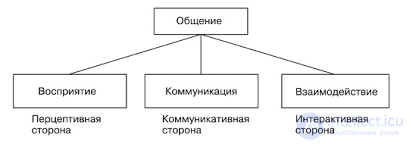
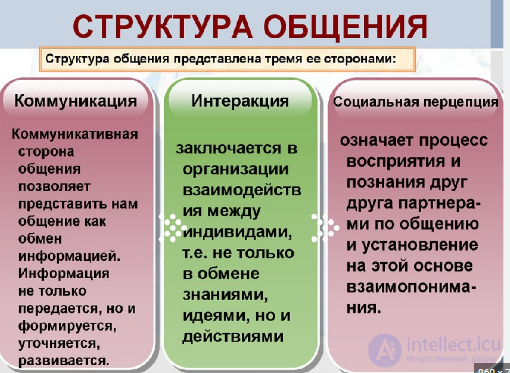
Communication is a complex, multifaceted process of establishing and developing contacts between people and groups, generated by the needs of joint activity and including at least three distinct processes: communication proper (the exchange of information), interaction (the exchange of actions), and social perception (perceiving and understanding one's partner).
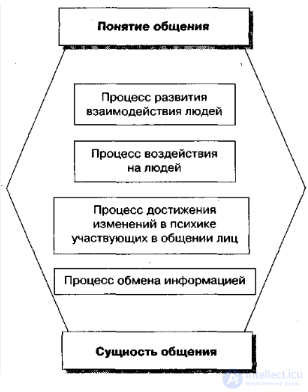
Communication is the process of transmitting and exchanging information, ideas, feelings, and opinions between people or other beings. This phenomenon plays a fundamental role in the life of the individual and of society. Let us look in more detail at the essence, structure, and functions of communication:
1. The essence of communication:
Transmission of information: The main purpose of communication is the transmission of information. People exchange knowledge, experience, ideas, and feelings with one another. This information may be verbal (through words) or nonverbal (through gestures, facial expressions, etc.).
Creation of bonds: Communication helps to establish and maintain social bonds. It promotes the formation of relationships, friendship, and cooperation, and strengthens social ties.
Expression and self-expression: Through communication people express their thoughts, feelings, and beliefs. It allows them to express themselves and to understand themselves better.
2. The structure of communication: Communication usually includes the following elements:
3. Functions of communication:
Informational function: The main function of communication is the transmission of information. People exchange knowledge, experience, and facts in order to understand the world around them and make decisions.
Emotional function: Communication allows people to express and share emotions and feelings. It helps people resolve conflicts, relieve stress, and feel supported and connected to others.
Motivational function: Communication can stimulate action and motivate people. Support and encouragement from others can be powerful motivators.
Socialization function: Communication promotes the socialization of the individual in society. Through communication people learn the norms and values of their culture and society.
Educational function: Learning is often carried out through communication. People learn from one another by exchanging knowledge and experience.
Affirmation of personal identity: Communication helps people form and affirm their personal identity. It allows them to express their beliefs, interests, and values.
Recreational function: Communication can serve as a means of entertainment and relaxation. Communication in the form of conversations, games, and entertainment promotes relaxation and enjoyment.
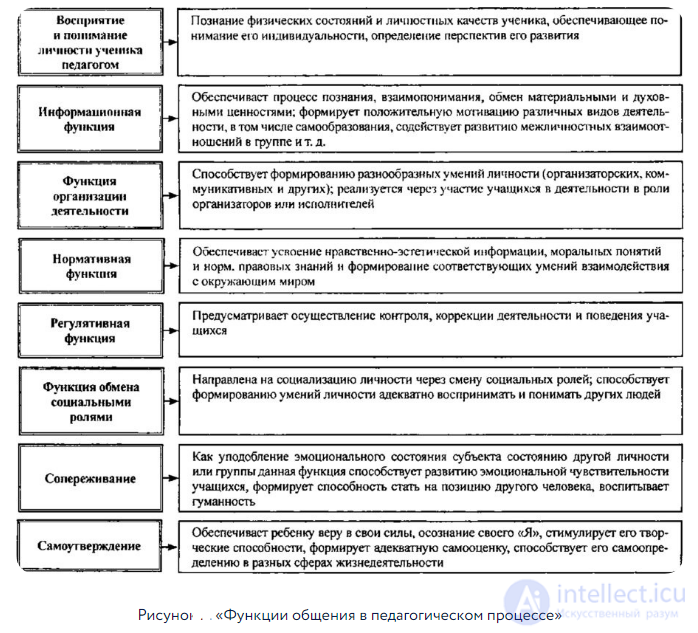
fig. functions of communication
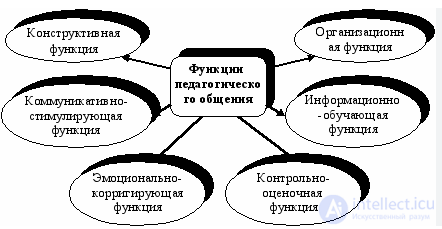
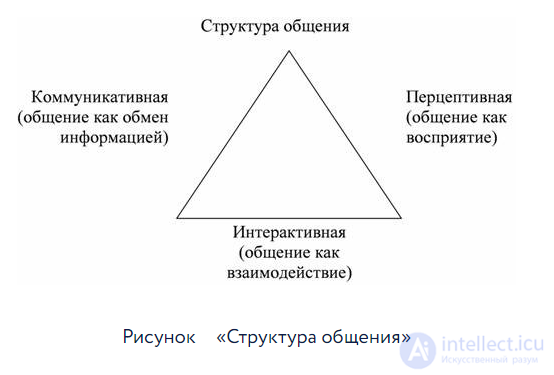
Human activity is impossible outside of communication. The structure of communication can be characterized by identifying three interrelated aspects within it: the perceptual, the communicative, and the interactive. The perceptual side of communication is the process of people perceiving, knowing, and understanding one another, followed by the establishment, on this basis, of certain interpersonal relations. The communicative side of communication consists in the mutual exchange of information between people, in the transmission and reception of knowledge, ideas, opinions, and feelings. The interactive side of communication consists in the exchange of actions, that is, in organizing interpersonal interaction that allows those communicating to carry out some shared activity together. Let us consider the functions of communication. The affective-communicative (perceptual) function, based on the perception and understanding of the other person, one's partner in communication, is linked to the regulation of a person's emotional sphere, since communication is one of the most important determinants of a person's emotional states. The entire range of specifically human emotions arises and develops under conditions of interpersonal communication — either a convergence of emotional states occurs, or their polarization, mutual intensification, or attenuation. The informational-communicative function of communication consists in any kind of exchange of information between interacting individuals. The exchange of information in human communication has its own specific features:
The regulatory-communicative (interactive) function of communication consists in regulating behavior and in the direct organization of people's joint activity in the process of their interaction. In this process a person can influence motives, goals, programs, decision-making, and the performance and monitoring of actions. Overall, communication is a key aspect of human life and society, providing an exchange of information, support, social bonds, and much more.

Comments