
Lecture
Communicative skills and abilities play an important role in successful interaction with others and in achieving personal and professional goals.
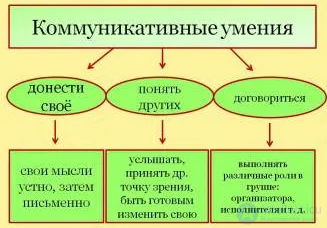
Here are some of the main communicative skills and abilities:
Active listening: Effective communication begins with active listening. This means giving your full attention to the other person, without interrupting or judging. Active listeners ask clarifying questions and express understanding of what has been said.
The ability to ask questions: Asking good questions helps deepen communication and understand the other person's point of view. Questions can be open (requiring a detailed answer) or closed (requiring a brief answer).
Nonverbal communication: Facial expressions, gestures, intonation, and eye contact all make up nonverbal communication. The ability to correctly interpret and use nonverbal cues helps improve communication.
The ability to express oneself: Communicative skills also include the ability to express one's thoughts and feelings clearly and precisely. This includes using correct grammar and linguistic precision.
Empathy: The ability to put oneself in another person's place and understand their feelings and experiences. Empathy helps improve relationships and makes communication deeper.
The ability to resolve conflicts: Conflicts often arise in communication. The ability to resolve conflicts constructively and effectively helps maintain harmonious relationships.
Adaptability: The ability to adapt one's communication style to different people and different situations. This includes the ability to switch between formal and informal communication, as well as between different communication styles.
Managing emotions: The ability to control one's emotions and express them adequately and constructively during communication.
The ability to give feedback: The ability to give and receive feedback is an important aspect of communicative skills, especially in a professional environment.
Knowledge of cultural differences: In a multinational society, it is important to take into account cultural characteristics and norms when communicating with people from different cultures.
The ability to work in a team: Communicative skills include the ability to work effectively in a group, listen to others, and contribute to the common cause.
To master the technique of communication, one should first understand the particulars of one's own sociability, and then follow certain rules,
constantly monitoring oneself in exercises. It is recommended to first determine the overall level of sociability using V. F. Roshchakhovsky's test, answering unambiguously either "yes" or "no".
After answering all the questions, assign 2 points to each "yes" answer, 1 point to each "sometimes" answer, and 0 points to each "no" answer. Add up the points earned and
determine your level of sociability using the scale below.
30–32 points. You are clearly uncommunicative, and you suffer greatly from it yourself. It is not easy for the people close to you. You are hard to rely on in matters requiring group effort. You need intensive communication training.
25–29 points. You are withdrawn, taciturn, and prefer solitude. You probably have few friends. New work and the need for new contacts with
people weighs on you. You know this and are therefore often dissatisfied with yourself. It is within your power to overcome these traits of character. Hasn't it happened that when
you were strongly engaged in something, you achieved complete sociability?
19–24 points. You are sufficiently sociable and feel quite confident in unfamiliar surroundings. New problems do not frighten you. At the same time, you approach new people with some caution. You take part in discussions and arguments reluctantly. Your statements sometimes contain too much sarcasm
without any real grounds for it. These shortcomings can be corrected.
14–18 points. You have normal sociability. You are curious, readily listen to an interesting companion, are patient enough in dealing with others, and defend your point of view without losing your temper. You meet new people without unpleasant experiences. At the same time, you do not like
noisy company, and extravagant behavior and talkativeness irritate you.
9–13 points. You are quite sociable, sometimes even excessively so, curious, talkative, and like to speak out on various matters, which sometimes
irritates those around you. You readily make new acquaintances. You like being the center of attention and never refuse anyone's requests, although you cannot always
fulfill them. You may lose your temper, but you calm down quickly. What you lack is perseverance, patience, and courage when facing serious problems. If you wish, however, you can force yourself not to give up.
4–8 points. You are clearly an easygoing, sociable type. Sociability just pours out of you. You are always in the know about everything. You like taking part in all
discussions, although serious topics can give you the blues. You readily take the floor on any question, even with only a superficial idea of it. You feel right at home everywhere. You take on any task, although you do not always manage to bring it successfully to completion. Think about these facts!
3 points or fewer. Your sociability is painful for the people around you. You are talkative and verbose, and you get involved in matters that are none of
your business at all. You take it upon yourself to judge problems in which you are completely incompetent. Willingly or unwillingly, you become the cause of various conflicts in your environment. You are quick-tempered, easily offended, and often unobjective. Serious work is not for you. People find you difficult. You should work seriously on yourself. Above all, cultivate patience and self-restraint, and treat people with more respect. Also think about your health – this kind of lifestyle does not pass without a trace.
Having sorted out the general features of your own sociability, try to improve yourself in the technique of communication. It cannot take place
only in your head – it requires constant practice with self-control. The emotional barriers that hinder the development of the art of communication must be removed through autogenic training. To do this, it helps to follow
a few rules.
1. Analyze every act of your communication that has already taken place from the standpoint of your own needs and the needs of your partner.
2. Try to clearly and precisely determine the goals and motives of the partners entering into contact with one another. The questions "What do I want? What does he want?" require a precise answer.
3. When you attribute motives and communication goals to someone else, check them. If they
do not match your partner's behavior, reject the hypothesis you put forward and construct a new one. The motivation for communication is flexible and changes not only depending on the situation
but also depending on the personality of the person you are talking to.
4. Do not impose your own behavioral patterns and motivation on someone else.
Perform those actions that evoke in your partner the reactions
desirable to you. Your actions should serve as a stimulus for your partner's actions.
5. Strive to be natural and do not take on a role that is difficult to play. The falseness of your behavior will immediately be noticed
by your communication partner.
6. Do not put psychological pressure on your partner. Any pressure in communication provokes defensive behavior on their part, which leads to alienation between people.
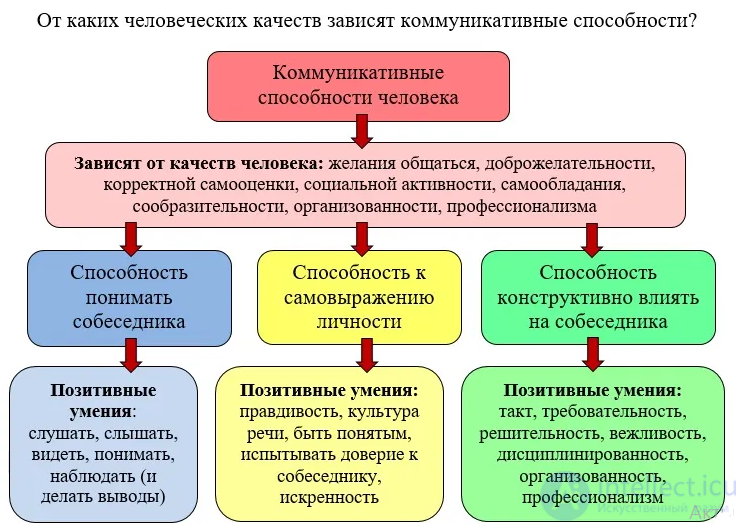
To increase your own sociability, regular
training is recommended, including a cycle of self-improvement in elements of interpersonal
communication through complex exercises
. Let us suggest starting with simple exercises.
Try to increase the amount of your own communication with other people:
try to strike up conversations with colleagues, fellow students, and so on. For example,
start by setting yourself the task of speaking on your own initiative with
three people a day, then gradually widen your circle of communication.
Reduce the time you spend alone. Try to discuss any new impression,
fact, or piece of information with one of your acquaintances.
When making contact with someone you know, note the changes that have occurred in them since your last meeting. Take note of
this. While talking with the other person, constantly analyze whether it is interesting for them
to be with you or not, and what the reasons for this are.
Almost certainly, among your acquaintances there is someone you find unpleasant, whom
you avoid meeting. Having prepared a natural topic of conversation in advance,
despite your strained relations with them, force yourself to be the first to
speak to this unpleasant person when you meet.
In every group, a teacher has students they find likeable and students they find
unlikeable. Set yourself the task of making contact, during class, primarily with the listeners you find unlikeable. Once you manage to establish contact with them as freely and naturally as with the others, complicate the task: ask a colleague to attend the class and try, from your
behavior, to figure out which of the trainees you particularly like or dislike. If they fail to do so, consider that you have succeeded
in this exercise.
If during a conversation with someone you feel the urge to interrupt your partner, overcome that urge. Make yourself listen to the speaker to the end.
Try to find within yourself the beginnings of feelings that you are not experiencing
at the given moment: joy, anger, indifference, grief, despair, indignation, resentment, and so on. For different situations, try to find pedagogically appropriate forms of expressing emotions.
If you are anxious about situations of public speaking, under no circumstances try to avoid them, since as a result a stable negative stereotype may form. Maximize the number
of your public appearances.
Ask your close ones, relatives, and friends more often which, in their
view, are the communication shortcomings most characteristic of you: inattention to
your partner, an inability to listen, to enter into the inner position of those around you, and
so on. Respond constructively to the assessments of people who are well disposed toward you, and correct your communication techniques. Strive to correct the existing shortcomings in your communicative activity.
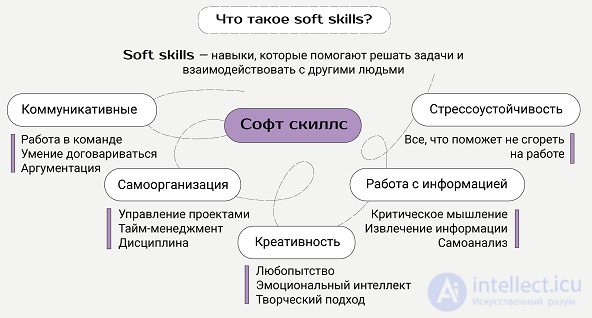
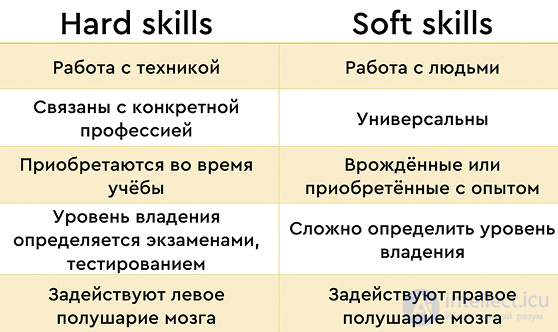
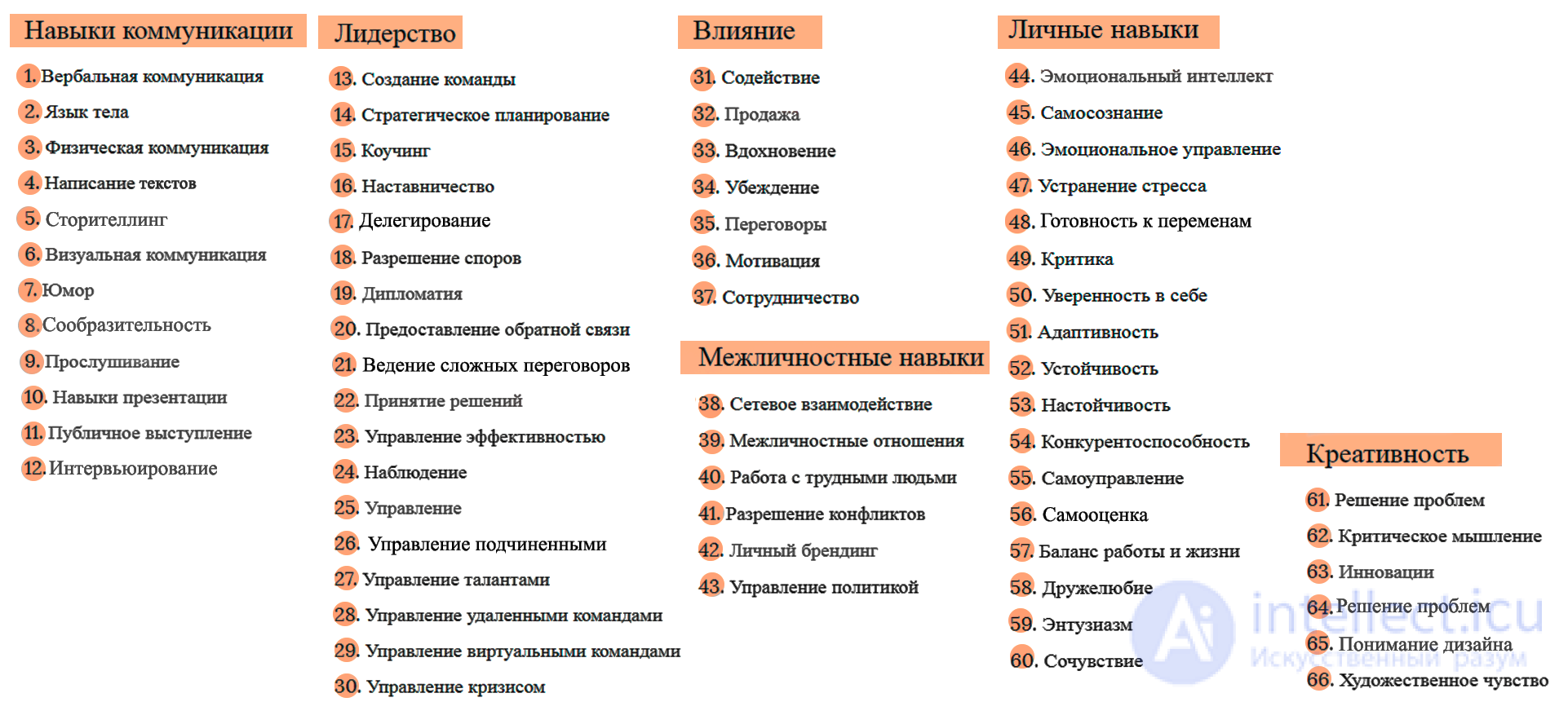
The development of communicative skills should be carried out comprehensively, in the context of soft skills. "Soft skills" are skills and personal characteristics that are not tied to specific technical skills and knowledge, but play a key role in successful communication, interaction with other people, and professional success. Here are some of the most important soft skills:
Communication: Effective spoken and written communication is one of the most important skills. This includes the ability to express one's thoughts clearly and concisely, to listen attentively, and to respond appropriately to the opinions and points of view of other people.
Empathy: Empathy is the ability to understand and share the emotions and feelings of other people. It allows one to establish deep interpersonal connections and be more understanding and supportive in relationships with colleagues and partners.
Leadership: Leadership skills include the ability to lead and inspire others. Leaders typically possess skills in motivation, time management, decision-making, and conflict resolution.
Time management: The ability to manage time effectively allows one to be more productive and organized. This includes the ability to set priorities, plan tasks, and meet deadlines.
Adaptability: The world is changing rapidly, and the ability to adapt to new conditions and technologies is becoming increasingly important. Flexibility and openness to learning new things are key elements of this skill.
Creativity: Creativity makes it possible to find new ways of solving problems and to come up with innovative ideas. This is especially important in fields related to art, design, and creative work.
Teamwork: The ability to work effectively in a group and contribute to achieving a common goal is a key element of success in today's world of work.
Conflict resolution: The ability to resolve conflicts and find compromises is an important skill for maintaining harmonious relationships both at work and in personal life.
Self-motivation: Self-motivation is the ability to motivate oneself and achieve set goals without external support.
Self-confidence: Confidence in oneself contributes to successful communication and the achievement of goals. This does not mean being arrogant, but believing in one's own abilities.
Developing and improving these soft skills can significantly improve your professional and personal life, helping with job searches, career advancement, and interaction with other people.
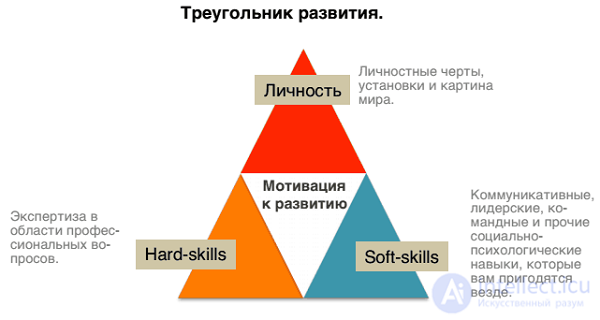
The development of communicative skills begins in childhood and has a significant influence on the formation of every person's personality. Communication is not only an integral part of our lives, but is also necessary for successful functioning in society. However, communicative skills do not develop on their own – they are shaped by various factors, beginning in childhood and continuing throughout life.
In childhood, the formation of communication skills is influenced above all by parents. They act as the first teachers, demonstrating how to communicate and interact properly with others. Later, in the process of education and socialization, the role in forming communicative skills is taken on by kindergarten, school, university, and other educational and social institutions.
Communicative skills develop through several key aspects:
Speaking: Children begin learning to speak from the earliest age, and this is the first step in developing communicative skills. It is important to learn to express one's thoughts clearly and precisely.
Listening: Effective listening is no less important a part of communicative skills. This means the ability to listen attentively to the other person, ask clarifying questions, and show interest in their point of view.
Observation: Observing the behavior and reactions of other people helps to better understand their emotions and needs. This is an important aspect of nonverbal communication.
The following methods can be useful for developing communicative skills in childhood:
However, the development of communicative abilities is not limited to childhood alone. It continues throughout life. A well-rounded person is able to communicate with people on any topic and adapt to different situations. For adults, the development of communicative skills can be advanced through participation in various events, trainings, courses in public speaking and effective negotiation, as well as through self-awareness and work on oneself.
For an adult who experiences difficulties in communication and wants to improve their communicative skills, there are several effective strategies:
Actively communicating with people: The first step is to begin communicating with people as often as possible. The more practice you get, the better. Take part in conversations, talk with colleagues, friends, and strangers. Try to listen attentively and analyze their reactions.
Observing nonverbal signals: Learn to observe the nonverbal signals of the person you are talking to, such as facial expressions, posture, and gestures. This will help you better understand their emotions and mood, which is an important element of effective communication.
Reading specialized literature: Studying books and articles about communication can provide you with useful insights and techniques. You can find materials on how to improve listening skills, ask questions, actively participate in conversation, and other aspects of communication.
Taking part in communication training: If you have a fear of communication, attending communication training can be very useful. There you will be able to practice new communication skills in a safe environment, receive feedback, and build confidence.
Professional help: If your difficulties in communication are serious and interfere with your professional or personal life, consider the possibility of turning to a psychologist or a communication specialist. They can conduct individual sessions or recommend specialized programs for developing communication skills.
Constant improvement: Developing communicative skills is a process that requires constant improvement. Do not be afraid to experiment, to learn from your mistakes, and to strive for continuous improvement.
It is important to remember that communication is a skill that can be developed and improved over time. With persistence and practice, you will be able to become a more confident and effective communicator.
The connection between emotional intelligence (EI) and communicative skills is very close. Emotional intelligence reflects a person's ability to understand, manage, and express their own emotions, as well as to understand the emotions of other people. These skills play an important role in communication, since emotions are often a key part of what we express and perceive in the process of communication.
Here is how emotional intelligence and communicative skills are connected:
Self-awareness: EI includes the ability to recognize one's own emotions and their influence on behavior and decisions made. People with high EI can better understand which emotions they are feeling during communication and how these emotions affect their communicative behavior.
Self-regulation: EI also includes the ability to manage one's emotions and respond to them appropriately. This helps maintain emotional stability during communication and prevents negative emotional outbursts.
Empathy: Empathy is the ability to understand and perceive the emotions of other people. It is a fundamental part of communicative skills, since it allows you to better understand the point of view and feelings of the person you are talking to.
Social skills: Social skills include the ability to establish and maintain relationships with other people. EI helps you feel more comfortable in social situations, as well as better read the nonverbal signals and emotions of other people.
Emotional expressiveness: Expressiveness is the ability to express one's emotions and thoughts clearly and effectively. High EI can help you express your emotions in such a way that they are understood and accepted by other people.
Overall, emotional intelligence plays a key role in how we interact and communicate with other people. A high level of EI can significantly improve your communicative skills, making you a more effective and empathetic communicator. It is important to develop both EI and communicative skills for successful interactions in professional and personal life.
Developing emotional intelligence (EI) can have a positive effect on the development of communicative skills. Here is why this matters:
Better understanding of your own emotions: By developing EI, you better understand your own emotions and how they affect your communication. This allows you to control your reactions and communicate more effectively in various situations.
Emotional stability: A high level of EI helps you manage your emotions and avoid emotional outbursts during communication. This contributes to calmer and more productive communication.
Empathy: Developing EI improves your ability to understand and perceive the emotions of other people. Empathy is a key part of successful communication, since it helps you better respond to the needs and feelings of the people you talk to.
Better interpersonal interaction: EI helps you better establish and maintain relationships with other people. You can be more open, tolerant, and supportive in communication, which contributes to positive interpersonal relationships.
Effective conflict resolution: EI helps you better understand the causes of conflicts and find constructive ways to resolve them. Emotional intelligence can improve your ability to conduct constructive dialogues and find compromises.
Thus, developing emotional intelligence contributes to more successful and effective communication with other people. This is an important skill both in the professional sphere and in personal life. If you want to improve your communicative skills, investing in the development of your EI can be very useful.
The spatial organization of communication, also known as "proxemics," studies the use of space in communication between people. This aspect of communication includes the physical location and proximity of the participants in communication, the use of gestures and facial expressions, as well as the organization of space around oneself. Proxemics can influence the effectiveness of communication and the perception of messages. Here are some important aspects of the spatial organization of communication:
Proxemic zones: The American anthropologist Edward T. Hall identified four main proxemic zones:
Where the speaker and the listener sit also matters. Where the speaker and the listener sit plays an important role in communication. This is also part of the spatial organization of communication and can affect the character and effectiveness of a conversation. Here are some aspects that should be taken into account:
Position of the speaker and the listener: The position of the participants in a conversation can be face-to-face (when they look directly at each other), parallel (when they are oriented in the same direction), or at an angle (when they are turned toward each other but not fully facing one another).
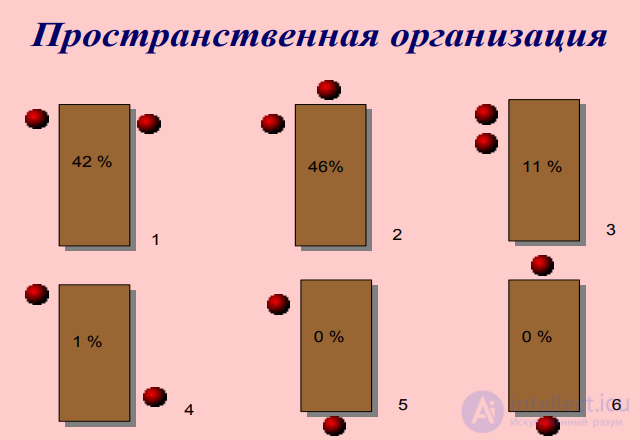
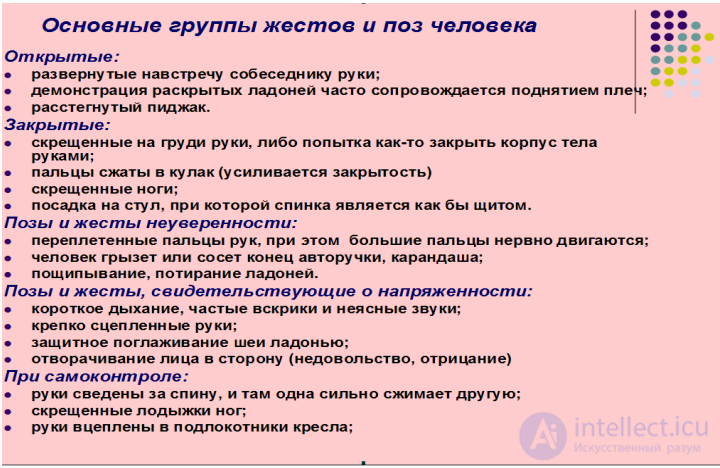
fig. main groups of human gestures and postures.
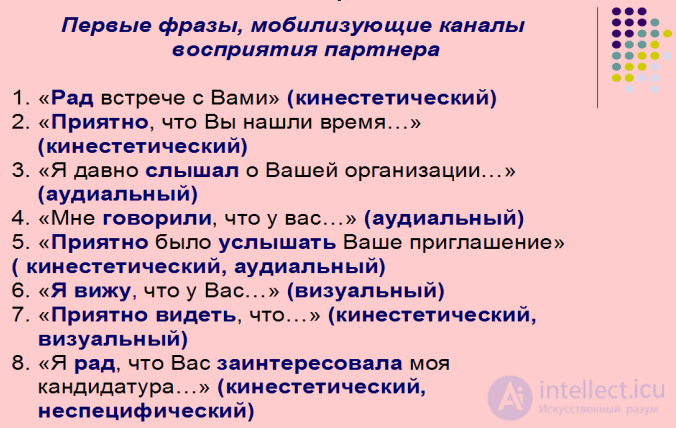
fig. opening phrases that mobilize the partner's channels of perception
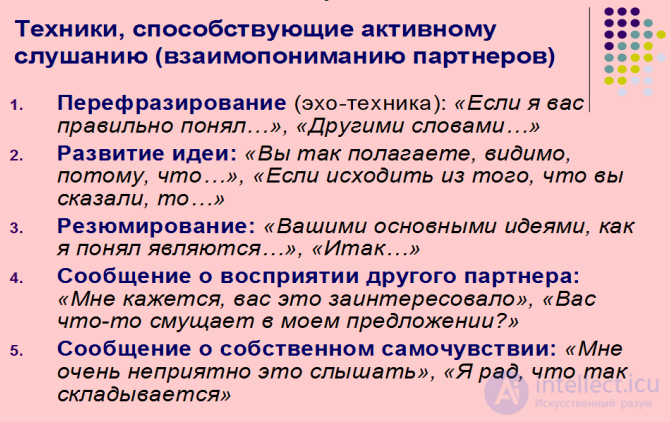
fig. techniques that promote active listening and mutual understanding between partners
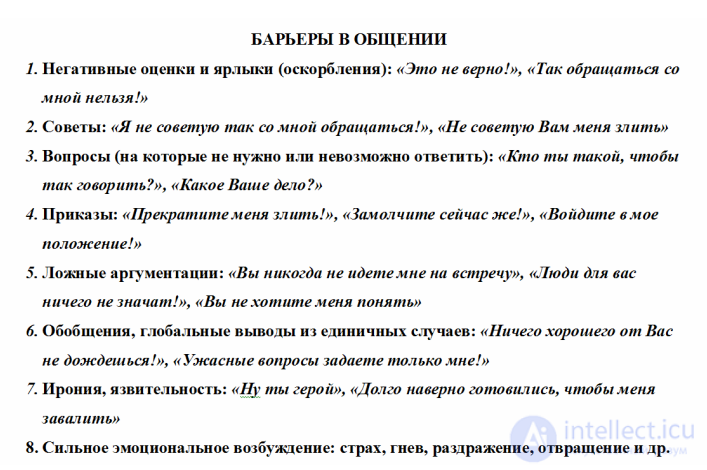
fig. communication barriers
It should be remembered that only the accumulation of productive experience of interacting with people will help overcome negative layers in
communication and will build positive emotions from these important elements of a teacher's work, which are necessary to them. If, after a month of regular exercises,
you feel that you can no longer communicate the way you used to, this means that your sociability has changed for the better.
Communicative skills and abilities can be developed and improved through practice and learning. Good communication is an important element of a successful career and personal relationships, and improving communicative skills can significantly improve quality of life.

Comments