
Lecture
Organization of research – is an activity aimed at putting the conduct of research work in order.
Main organizational tasks
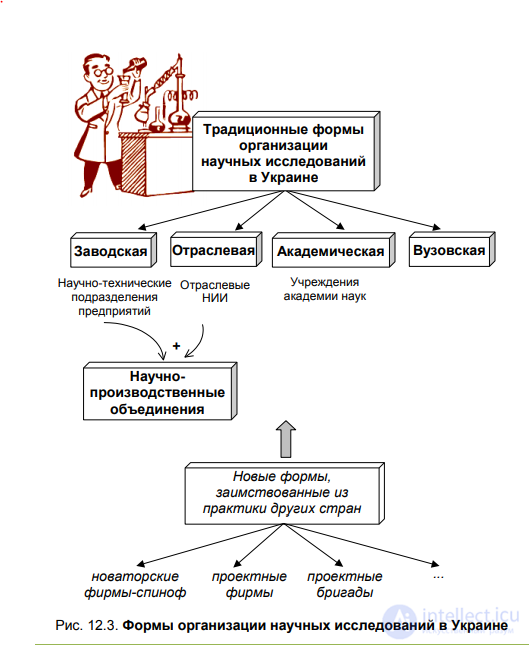
The organization of scientific research is understood as a system of interrelated structures and functions that provide the conditions for carrying out research work, as well as the continuous improvement of scientific work. The organization of scientific research is carried out in various forms (Fig. 12.3).
One of the classical forms of organizing research activity is the academy of sciences.
The system of state academies of sciences of Ukraine includes [27]:
1) the National Academy of Sciences of Ukraine;
2) branch academies of sciences – the Ukrainian Academy of Agrarian Sciences, the Academy of Medical Sciences of Ukraine, the Academy of Pedagogical Sciences of Ukraine, the Academy of Legal Sciences of Ukraine, the Academy of Arts of Ukraine.
In addition, non-state specialized academies operate in Ukraine, which bring together scientists according to the profile
of their scientific activity (for example, the Ukrainian International Academy of Original Ideas, the Academy of Engineering Sciences, the Ukrainian Technological Academy and others).
The National Academy of Sciences of Ukraine (NASU) is the highest
scientific organization of Ukraine, which organizes and carries out
fundamental and applied research on the most important problems of the natural, technical and humanities sciences [11].
The composition of the bodies, organizations and institutions of the NAS of Ukraine is shown in Fig. 12.4
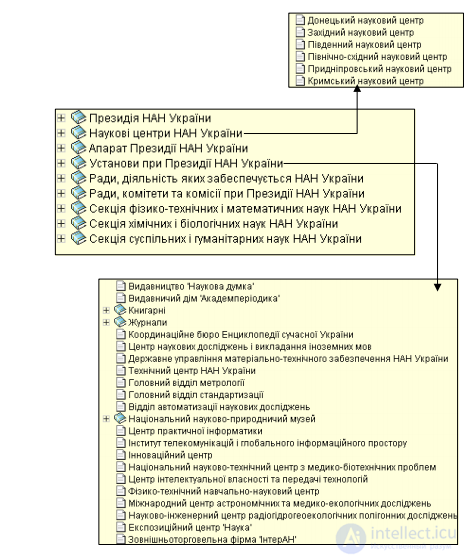
Fig. 12.4. Subjects of the NAS of Ukraine [62]
The National Academy of Sciences has three sections, uniting 13 departments of sciences:
- department of mathematics;
- department of computer science;
- department of mechanics;
- department of physics and astronomy;
- department of earth sciences;
- department of physical and technical problems of materials science;
- department of physical and technical problems of energy;
- department of chemistry;
- department of molecular biology, biochemistry, experimental and clinical physiology;
- department of general biology;
- department of economics (Fig. 12.5);
- department of history, philosophy and law;
- department of literature, language and art studies
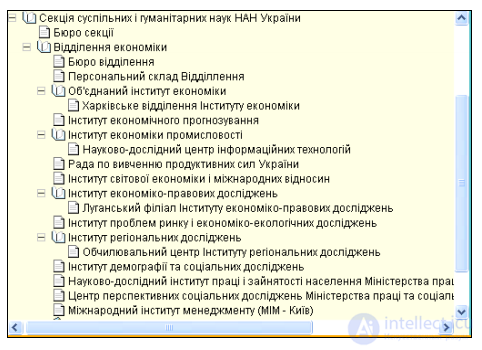
Fig. 12.5. Subjects of the department of economics of the NAS of Ukraine [62]
The departments bring together the corresponding research institutes, which are the main link in the structure of the NAS of
Ukraine.
The supreme body of the NAS of Ukraine is the general assembly of its members (at present the members of the Academy include 512 full members and corresponding members, as well as 130 foreign members). Leadership of the Academy's work between sessions of the general assembly
is exercised by the Presidium of NASU, composed of the president, vice-presidents, the chief scientific secretary and members of the Presidium.
More detailed information on the activity of the NAS of Ukraine can be found on its website http://www.nas.gov.ua/ua/main.html.
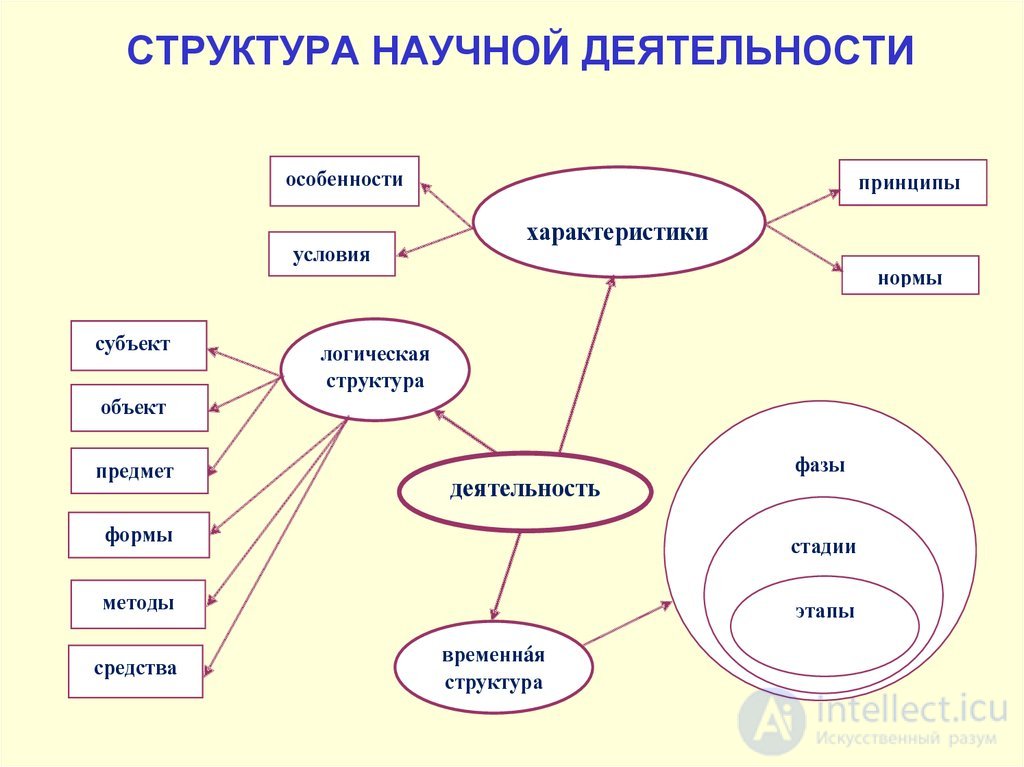
Structure of scientific activity
| 1. Form of additional duties | increasing the workload of personnel with additional duties of research work |
| 2. Organization of creative groups | creation of specialized groups from the most creative and active part of the personnel, releasing the members of these groups from their main work for the duration of the research |
| 3. Form of external consulting | inviting specialists from consulting firms on a contractual basis |
| 4. Form of internal consulting | creation of the organization's own consulting or research structures |
| 5. Complex form | combination of the forms named above |
When organizing research, the following must be taken into account:
The choice of one or another form of organizing the research is determined by its purpose, scale, available resources, planned duration, the qualification of the researcher and many other factors.
At large enterprises, in the process of creating new technology, a large list of research work of a technical, organizational-economic and socio-psychological nature is carried out.
The main structural unit of an enterprise in which research work is carried out is the laboratory. The chief specialists of an enterprise (chief designer, chief technologist, chief metallurgist, chief power engineer, chief metrologist) sometimes have their own corresponding laboratories. Laboratories of a technological profile are often combined into a central plant laboratory.
Research of an organizational-economic and social nature is carried out in laboratories of economic analysis, scientific organization of labor and management, and sociological research.
Regulations are drawn up for each laboratory, approved by the director of the enterprise or his deputy. The regulations set out the goals, objectives, structure of the laboratory, and the list of work performed. Laboratories must carry out scientific and practical developments, which are tested on an experimental basis or directly under production conditions.
In order to develop fundamentally new technology, advanced technology, and progressive methods of organizing production and labor, it is necessary to study domestic and foreign experience and conduct information and patent searches. For this purpose, a scientific and technical information service has been created at enterprises.
The following types of specialization of research units are distinguished: subject-based, functional and mixed. Subject-based specialization involves carrying out research on specific objects (machines, equipment, assemblies); functional specialization is aimed at carrying out work to study particular characteristics of products, materials, processes (anti-corrosion properties, strength characteristics). In many cases these types of specialization are combined, producing a mixed, subject-functional specialization, in which the laboratory studies only individual aspects of the product or process being created.
In practice, the rigid assignment of employees to specific laboratories, groups and topics predominates. Such a structure makes it possible to plan and account for work and to perform control functions. But the rigid assignment of workers to units does not allow for maneuvering labor resources and leads to an increase in the number of personnel.
Temporary creative teams have become widespread at enterprises. To solve a specific task, creative teams of specialists of different profiles are created for the entire cycle: theoretical research — experimental design work — technological work — introduction into production. Individual stages of the cycle are combined in time. The head of the work brings in individual specialists as needed to resolve specific issues. Once the assigned task is solved, the team disbands. Such a system of organizing work makes it possible to shorten the cycle of creating and mastering new technology and to improve the quality of developments, since it becomes possible to use the knowledge and experience of different specialists, to respond quickly to the latest achievements in world science and practice, and to adapt to changes in research directions. However, such a system disrupts the work of large specialized units, part of whose staff are temporarily diverted to solve particular problems.
One of the rational forms is the matrix system of management organization for the creation of new technology, which involves coordinating the functional responsibility of the scientific head "vertically" with the performance of work "horizontally" by specialized units (Fig. 5.1).
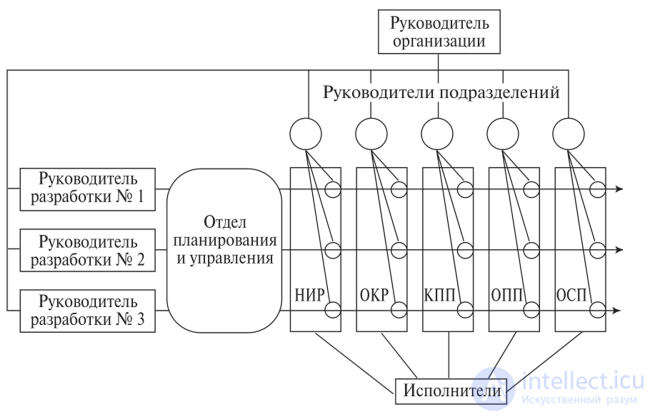
Fig. 5.1. Matrix structure of production preparation management

Comments