
Lecture 21 min.
Scientific communication — the processes and mechanisms for promoting scientific ideas within the scientific community and beyond it, that is, in society; in other words, it is the dissemination of scientific knowledge about the surrounding reality through various channels, means, forms and institutions of communication.
Two stages of scientific communication are distinguished: internal and external. At the initial, or internal, stage of scientific communication, the subjects of communication are scientists within the scientific community. The second stage, the external one, is characterised by the interaction of the scientific community with a broad audience; it is the transmission of scientific knowledge into mass consciousness, that is, the popularisation of science.
Starting from the 17th century, a practice of scientific communication based on personal connections and reinforced by personal meetings and the exchange of letters took shape in Europe. The activity of informal communities of the most educated people of Europe, which went down in history under such names as the "Invisible Colleges" (the term was introduced by Robert Boyle in 1646), or the "Republic of Letters" (first used by P. Bayle in 1684), and later — the "Republic of Scholars" (M. Mersenne, who was a voluntary disseminator of scientific information, the organiser of scientific correspondence with 78 correspondents in various countries). The Republic of Scholars united such intellectuals of the modern era as F. Bacon and G. Galileo, I. Newton and R. Descartes, B. Pascal, R. Boyle, G. Leibniz, M. Mersenne and others. The role of scientific communication in this period consisted in coordinating scientific information, transmitting it by means of correspondence and periodicals, and introducing it into the educational process .
Derek John de Solla Price put forward the hypothesis of "invisible colleges" — self-organising communicative associations of researchers working on new promising problems; these are groups of scientists working simultaneously on the same range of problems in different organisations and countries. The consolidation of scientists in an "invisible college" is short-lived: for the period needed to solve a specific scientific problem .
At the turn of the 19th—20th centuries, an increase in the interest of the broad masses in scientific achievements and in science as such is observed. Society is moving towards the ideal of accessible, open science. This is due to several reasons: first, new forms of interaction between subjects within the scientific community appeared. Science went beyond the boundaries of traditional scientific centres (universities), independent scientific laboratories began to appear, and the level of the scientist's responsibility to society increased. Second, in the era of the information society, the importance of informing society grows. Science is forced to interact with other subsystems of society, since this is necessary for its existence . In the 1970s, Jurgen Habermas noted that the mass media became the means for carrying out scientific communication. The mass media united the internal and external stages of scientific communication and became an important tool for the popularisation of science .
The means of scientific communication within the scientific community are systems of scientific citation indexes. This system makes it possible to search for information, determine the connections between publications, and analyse the dynamics of the development of science.
In its development, scientific communications have gone through the following stages.
Starting from the 17th century, a practice of scientific communication based on personal connections and reinforced by personal meetings and the exchange of letters took shape in Europe. The activity of informal communities of the most educated people of Europe, which went down in history under such names as the "Republic of Scholars" (17th century), the "Invisible Colleges" (19th—20th centuries), and the "Republic of Letters", consisted in the voluntary dissemination of scientific information and in the organisation of scientific correspondence. The role of scientific communication in this period consisted in coordinating scientific information and transmitting it by means of correspondence, periodicals and a system of bulletins.
The next stage in the development of scientific communication is characterised by the transition to open science. At the turn of the 19th—20th centuries, an increase in the interest of the broad masses in scientific achievements and in science is observed. Society is moving towards the ideal of accessible, open science. This is due to several reasons: first, new forms of interaction between subjects within the scientific community appeared. Science went beyond the boundaries of traditional scientific centres, independent scientific laboratories began to appear, and the level of responsibility of researchers-scientists to society increased. Second, in the era of the information society, the importance of informing society grows. Science is forced to interact with other subsystems of society, since this is necessary for its existence.
In the 1970s, the means of carrying out scientific communication became the mass media, which united the internal and external stages of scientific communication and became an important tool for the popularisation of science. In the last decades of the 20th century and the beginning of the 21st century, all kinds and forms of scientific communication evolved rapidly. The growth in the volume of scientific information and its ultra-fast transmission around the world via the global Internet network led to a reduction in information distances and to the formation of interactive networks of scientific information.
The present stage in the development of scientific communications is connected with the growth in the volume of scientific information and the electronic nature of the means of communication. The development of the Internet influences the emergence of new forms and kinds of scientific communications (electronic journals, Internet publications, open archives of scientific articles, etc.). The time from conducting research to publishing results is shortened, making scientific publications a more prompt source of information. Electronic communication creates the possibility of forming new networks. The asynchrony of electronic communication significantly simplifies the work of teams operating on different schedules and in different countries.
In most developed countries, scientific communication has developed into a separate professional and academic discipline. As an academic discipline, scientific communication is engaged in studying issues related to the processes of transmission and perception of scientific information in society.
The main role of scientific communications for the profession of the scientist-researcher is due both to the internal specifics of science (the process of generating new knowledge and its transformation into recognised scientific values as a result of polemics, discussion, debate and exchange of information), and to the peculiarities of the interaction of science with the social environment (with the economy, politics, law, morality, etc.).
The basis of scientific communication is professional communication, representing a complex, multifaceted process of establishing and developing contacts between people, generated by the needs of joint activity and including the exchange of information, the development of a unified strategy of interaction, and the perception and understanding of people by one another. The problems of professional communication are dealt with by representatives of various sciences: philosophers, psychologists, linguists, sociologists, culturologists, and others.
Scientific communication covers the totality of the kinds and forms of professional communication of scientist-researchers, and is realised both by means of written publications (theses, articles, abstracts, reviews, critiques, essays, etc.), and by means of a range of oral or electronic means of communication (seminars, discussions, debates, polemics, etc.)
Scientific communication is aimed at the following main target audiences:
One should distinguish between the concepts accepted in international practice of scientific communication (Science communication), that is, the processes and forms of interaction between science and society, the popularisation of scientific results, and the presentation of results to non-experts, and communication in science (Scientific communication) as part of the information society and the sociology of science, characterising the social features of formal and informal communication among scientists. Methodologically different approaches and principles for studying scientific communication are researched in the scientific school of the Russian linguist Valeria Yevgenyevna Chernyavskaya. A wide range of problems of scientific communication has been developed by her in connection with research on scientific text and scientific discourse. In V. Ye. Chernyavskaya's linguo-epistemic concept, it is shown that the specifics of the dissemination of knowledge in science are conditioned by the linguistic aspect as a factor promoting or hindering the successful presentation of a publication to the scientific community. A set of factors is considered that influence the perception of an author's results in the modern information society, and the professional interaction of scientists and specialists in PR, science journalists, and science communicators popularising science.
The main functions of communication include:
Scientific communications are divided into written, oral, internal and external kinds (fig. 1).
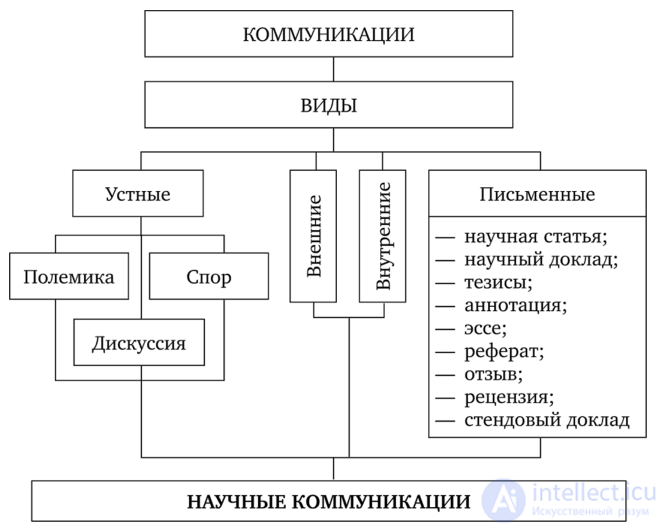
Fig. 7. Kinds of scientific communications
Scientific communication is a kind of professional communication whose aim is the exchange of information in the scientific mental activity of people [10; 22; 23]. A generalised scheme of scientific professional communication is presented in fig. 2. It includes interconnected components: motivational, cognitive and behavioural.
The following leading processes occur in professional communication: communication, interaction and perception. It includes communicative, interactive and perceptive aspects. Professional communication performs communicative, cognitive, informational, creative and emotive functions.
As scientists believe, professional communication consists two-thirds of speech communication. Linguists study the processes of speech formation and its perception, communicative attitudes, and factors that hinder professional communication and increase its effectiveness, etc.
In the process of professional communication, the transmission of scientific information can be carried out:
a) top-down. Setting the task (what, when to do); instructing (how, in what way, who);
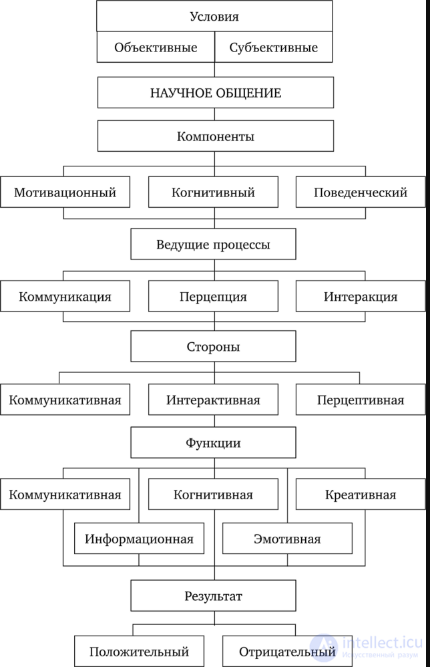
Fig. 2. Scheme of professional communication
Professional scientific societies possess the necessary informational and organisational resources that allow them to attract specialists to work on the most significant problem and to promote scientific ideas and developments within scientific circles. At this stage of internal scientific communication, information is exchanged between members of the scientific community, and the scientific idea is also formalised, in accordance with the scientific method and scientific criteria, into scientific literature. At this stage of scientific communication, the scientific style of language is used, and special attention is paid to the empirical part of the work . The formats of scientific communication within the scientific community are: a) direct connections — personal conversations, in-person scientific discussions, oral papers, seminars; b) connections mediated by technical means of reproducing information, — publications of scientific journals, abstract journals, monographs; c) scientific conferences, congresses, scientific and technical exhibitions .
The means of scientific communication within the scientific community are systems of scientific citation indexes, for example Web of Science (a citation index of scientific articles) with three databases (the Science Citation Index (SCI), the Social Science Citation Index (SSCI) and the Arts and Humanities Citation Index" (AHCI)). This system was created in 1961 at the Institute for Scientific Information (Philadelphia, USA). The WoS system includes bibliographic information about current publications and information about their authors, and the references cited in these works. The system makes it possible to search for information, determine the connections between publications, and analyse the dynamics of the development of science .
Representatives of government and business are a target group of scientific communication: not being representatives of the academic community, government and business show a professional interest in science. This is because government, primarily, provides financial and infrastructural support to science: funding research through federal agencies, and engaging corporate scientific communities (associations) to determine the directions of the development of science. For example, in the USA the National Science Foundation and the American Association for the Advancement of Science were created , while in Russia the Russian Science Foundation (RSF), the Agency for Strategic Initiatives for promoting new projects (ASI), the Russian Venture Company (RVC), and the National Technology Initiative (NTI) were created. For example, in Russia in 2016 budget funding will go to the first four areas of the NTI: AeroNet (unmanned aerial vehicles), AutoNet (unmanned vehicles), MariNet (unmanned marine transport), NeuroNet (distributed components of consciousness). The RVC creates venture funds to form private investment for the creation of new technology markets with a horizon out to 2035 .
After the stage of approval of a scientific idea within the scientific community, scientific communication moves on to a new stage — the stage of popularisation. Within the framework of scientific communication, the scientific community acts as a transmitter of science to the broad masses. Possessing the necessary specialised knowledge, the scientific community stores it and transmits it to the masses by means of the mass media, which serve as an intermediary of communication between scientists and society as a whole . The means of popularisation are popular science magazines (the magazine "Science and Life", the popular science magazine "Schrödinger's Cat"), popular science blogs ("Biomolecule"), scientific electronic libraries (CyberLeninka), educational programmes (the TV channel "Science 2.0", "Discovery Channel", TASS's science-education project "Attic"), exhibitions, the science museology of "LabyrinthUm", and science festivals (the All-Russian Science Festival NAUKA 0+). For successful external scientific communication, it is important to adapt the language of conveying information; moreover, the emphasis is placed not on the empirical part of the research, but on the results of activity, practical usefulness and forecasts .
Failure to comply with the requirements for citation and references to sources of information used in a work is called plagiarism. Today, in the world and in Russia, special computer programmes have been created to check for the presence of plagiarism in a publication , for example Antiplagiat. In Russia, a Commission for Combating Pseudoscience and Falsification of Scientific Research has been created under the Russian Academy of Sciences.
Due to the fact that the quality and significance of scientific work is assessed by the quantitative indicator of the citation index of scientific articles, there are cases of falsification of scientometric indicators (the Hirsch index, the impact factor). For example, in Russia in 2016 a group of scientists from the Institute of Theoretical and Experimental Biophysics (ITEB RAS) increased scientometric indicators by inserting references into other people's articles. Such violations are not regulated by law, only by ethical codes and norms of scientific ethics.
In November 2009, a scandal called Climategate caused the failure of the UN climate conference on climate change in Copenhagen. It was revealed that Professor Michael Mann pressured journal editorial boards and hindered the publication of his opponents, which is contrary to scientific ethics.
The South Korean biologist Hwang Woo-suk, a specialist in stem cells and cloning, was accused in 2005 of violating medical ethics and falsifying data, when it turned out that his research was fabricated. His article, published in the journal Science, was retracted. The scandal caused enormous damage to biotechnology research and to the prestige of South Korean science.
The German radiophysicist Jan Hendrik Schön achieved worldwide fame while working at Bell Labs, thanks to the publication of a series of discoveries in the field of physics. He received several very prestigious awards, and he was tipped for the Nobel Prize. Schön published about 90 "scientific" articles in the prestigious journals Science and Nature, but in 2002 he was caught falsifying data. The articles were retracted, the awards annulled, Schön was dismissed from Bell Labs and stripped of his doctoral degree.
In most developed countries, scientific communication has developed into a separate professional and academic discipline. In 2010, a collection was published, prepared by the Directorate-General for Research of the European Commission, combining more than 100 educational programmes on scientific communication and journalism in Europe (the European Guide to Science Journalism Training). In Russia, only in November 2015 did ITMO University in St. Petersburg launch the first educational course on scientific communication, "Mission SciComm". As a professional discipline, scientific communication includes such activities as communication within research organisations, science journalism, audiovisual communication, work in museums and science centres, scientific visualisation and illustration, science policy, and much more. As an academic discipline, scientific communication is engaged in studying issues related to the processes of transmission and perception of scientific information in society.

Comments