
Lecture
Note!
All the information used by the DM in the decision-making process can be divided into three types: formalized, partially formalized and unformalized. In accordance with the degree of formalization, types of decisions are also defined — structured, partially structured and unstructured.
An example of formalized information is the presentation of an organization's performance results in the form of numerical tables, such as financial statements, monetary transactions, payments, operational summaries, orders, invoices, etc. Actions with formalized information are easily automated and can proceed with virtually no human involvement, using information Transaction Processing Systems {Transaction Processing Systems — TPS).
Some information is initially unformalized but lends itself to partial formalization. For example, using such a strategic analysis tool as the BCG matrix {Boston Consulting Group — BCG)', applied to assess the influence of environmental factors or the responsive actions of the enterprise itself. In these cases, decision-making is carried out through the DM's interaction with the IS: the final decision is chosen by the person, using a set of scenarios provided by the information system. Scenarios are built on the «what if...?» principle using information Decision Support Systems {Decision Support System — DSS).
A significant part of the information, especially at the upper level of management, is unformalized — information about partners and competitors, information from stock and currency exchanges, consolidated informal reports, business correspondence, minutes of meetings and seminars, scientific publications and reviews, hypertexts on the Internet. In this case, responsibility for the decision and its results lies with the manager, with his knowledge, business experience, competence and intuition playing the main role, while interaction with the IS is of secondary importance and only supplements these qualities. IS that are intuitively simple to use but have the widest possible access to reliable internal and external information are called Executive Support Systems {Executive Support Systems — ESS).
For each organizational-managerial level, there are also other categories of information systems serving it (discussed in more detail below), which help successfully solve the above-mentioned classes of tasks by processing the type of data corresponding to each level (Table 4.2, Fig. 4.5).
Table 4.2
Categories of IS supporting decision-making at various organizational-managerial levels
|
Levels |
Decisions |
||
|
structured |
partially structured |
unstructured |
|
|
Strategic: goal management |
Expert IS {EIS) |
Executive-support IS (ESS) |
|
|
Operational: function regulation |
Management IS {MIS) |
Decision-support IS (DSS) |
|
|
Tactical: information provision |
Office-automation IS {OAS) |
Knowledge-work IS (KWS) |
|
|
Tactical: operations execution |
Transaction-processing IS ( TPS) |
— |
— |
1 Henderson B. Product Portfolio // Boston Consulting Group BCG Review: digest. Moscow: Boston Consulting Group, 2008. — Issue 02. — Pp. 7—8.
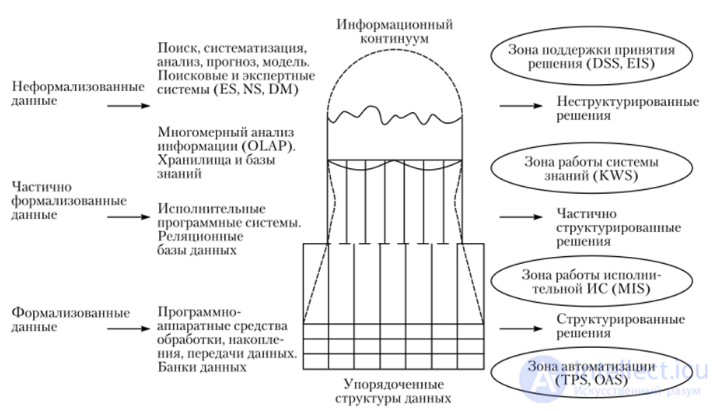
Fig. 45. Categories of IS for processing various types of information1
The main characteristics of the processes supported by the information systems under consideration are summarized in Table 4.3.
Table 43
Characteristics of the processes supported by information systems2
|
Types of systems |
Information inputs |
Processing |
Information outputs |
Users |
|
ESS |
Aggregate data; external, internal |
Graphics; simulation; interactivity |
Projections; responses to queries |
Senior managers |
|
DSS |
Weakly formalized data; analytical models |
Modeling; analysis; interactivity |
Special reports; decision analysis; response to queries |
Professionals; personnel managers |
|
MIS |
Summary operational data; high-volume data; simple models |
Routine reports; simple models; elementary analysis |
Summaries and exceptions |
Middle managers |
|
KWS |
Technical project data; knowledge base |
Modeling; playback |
Models; graphics |
Professionals; technical staff |
|
OAS |
Documents; schedules |
Management documents; planning; communication |
Documents; graphics; mail |
Clerical staff |
|
TPS |
Transactions; results |
Sorting; listing; merging; updating |
Detailed reports; lists; summaries |
Operating staff; managers |

Comments