
Lecture
The construction of the utility (value) function of a generalized criterion is significantly simplified if this function is additive.
Definition
The utility function φ(y1, y2 ..., ym) of the generalized criterion of a two-criterion DMP is called additive if it can be represented in the form

with functions 
The class of additive functions is quite large. In particular, if the utility function has the form 
then, since an arbitrary monotonic transformation can be applied while obtaining an equivalent criterion, let us take the logarithm of the described function φ. Then we also obtain an additive function

where 
Let us describe the necessary and sufficient conditions for the existence of an additive utility function in the case of two criteria. Suppose the utility function is additive. Then for an arbitrary point A(y1, y2) ∈ Y the following representation holds

Let us consider four points:  for which the LRS are defined (Fig. 8.5).
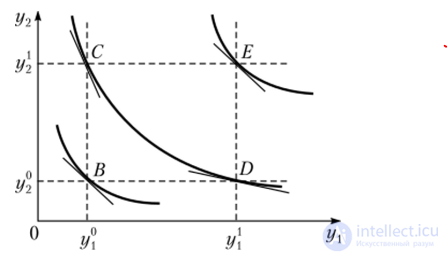
Fig. 85. Conditions for the existence of an additive utility function
The local rate of substitution at point E will be calculated as
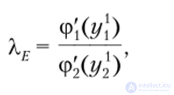
where φ', and φ3 — are the derivatives of the functions φ, and φ2 respectively. Then the following relation can be written

Consequently, a necessary condition for the existence of an additive utility function is the condition of corresponding substitutions

where XB, XC XO — are the LRS at points B, C and O respectively.
It can be proved that this condition is sufficient.
The procedure for constructing indifference curves in the case of an additive utility function of the form (8.2) is simpler than in the general case.
As already mentioned in section 8.4, the utility function is not uniquely determined. Therefore, it is first necessary to set an origin, i.e. to specify a set of points of zero utility, and units of measurement for the indifference curves being constructed. For this, the DM must specify the minimum admissible values of the criteria y and y®, for which we set

Then it is necessary to choose a point y > y®, for which we set (φ1(y1) = 1, thereby setting the scale of measurement.
Next, the DM must specify a value y1 > y® For the second criterion such that the pairs (y, y®) and (y, Y2) are equally preferable, i.e. F (y, y) = φ(/y1, y'1,). For this value we set φ2(y 2) = 1. The DM must also specify such values y > y and y > y for the first and second criteria respectively, so that the pairs (y, y2°), (y, y.1 ) and (y, y1) are equally preferable or equivalent for the DM. Then we set φ,(y7) = = φ2(y2) = 2, which indeed can be done since the following relations hold

Similarly

Connecting the equivalent points, we obtain an approximation of the indifference curve.
Next, the search for new values continues in an analogous manner, i.e. y1 > y and y > y1 are chosen for the first and second criteria respectively, such that the pairs (y1, y®), (y1, y2), (y, y2) and (y®, y) are equally preferable or equivalent for the DM. Having chosen such values, we set φ,(y?) = φ2(y2!) = 3- Connecting the equivalent points, we obtain an approximation of the next indifference curve. The construction of the remaining curves is carried out in an analogous manner (Fig. 8.6).
As can be seen from the construction, the procedure considered places fairly high demands on the «sensitivity» of the DM — indefinite answers from the DM regarding the preferability of certain criteria values are not permissible. Here the comparison of criterial points is carried out repeatedly. In order to eliminate inconsistency in the DM's answers to questions about the preferability of points, it is necessary, during the procedure of constructing the indifference curves and the utility function, to check condition (8.3). Note also that as the number of criteria increases, the complexity of the task of constructing the utility function increases many times over.
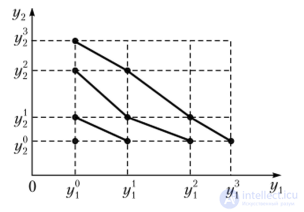
Fig. 8.6. Construction of indifference curves
Since the described procedure for constructing the utility function is complex to apply, in practice alternative methods are more often used, which will be described below in other chapters.

Comments