
Lecture
Since a managerial decision is an action taken by the decision maker with respect to the managed system under study, it is necessary to analyze the factors arising from the systems approach to constructing an MD and affecting it, in order to broaden the content of the construction procedure that uses the scheme of its life cycle.
The result of this will be a refined procedure for constructing an MD, based on implementing the scheme of the decision's life cycle and reflecting the managerial approach to construction. The advantage of the refined decision-construction procedure will be a certain independence of the successively implemented stages of constructing the MD, resulting from the use of the MD life-cycle (LC) scheme, and the consideration of those factors that arise from the management process itself and affect the formation of the MD.
Pay attention!
Since the managerial approach is applied only to the construction of the MD, the influence of management factors will manifest itself in the implementation of the 1st and 2nd stages of construction based on the scheme of its LC. In this case, the content of both stages will be closely related to each other because they are influenced by the same factors.
The first and second stages of forming an MD based on the scheme of its LC involve carrying out the following actions, the content of which we shall examine in more detail below (Fig. 3.9):
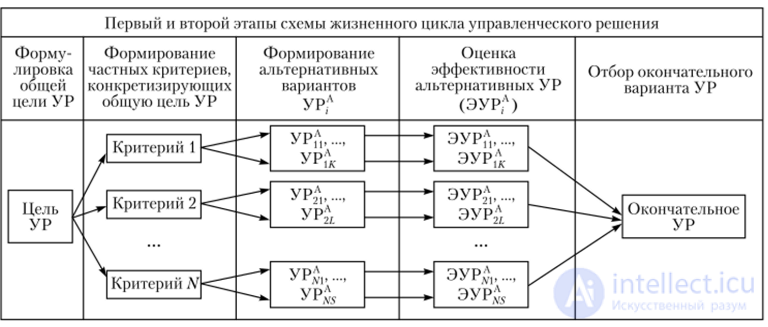
Fig. 3.9. Scheme of forming an MD based on the construction of its alternative variants
Let us analyze the factors arising from management — the DM's action on the studied management system — that (these factors) affect the procedure for constructing the MD, implemented within the 1st and 2nd stages of the MD's LC, i.e., that affect the content of the specified sequence of actions.
Earlier, factors were identified that affect the studied management system, the DM's goal, and, through them, the managerial decision being formed . Below we shall focus on additional factors that act directly on the MD and arise from the management process.
Formulation of the overall goal of the MD. Since the MD is the DM's action on the studied management system aimed at achieving the DM's goals with respect to the studied management system (the object of management), the overall goal of the MD coincides with the DM's goal. This means that all the factors that affect the studied management system — factors F-1, F-2, F-3, and those that affect the DM's goal — F-5, F-7, F-8, will also affect the overall goal of the MD (Fig. 3.10, parameter P1).
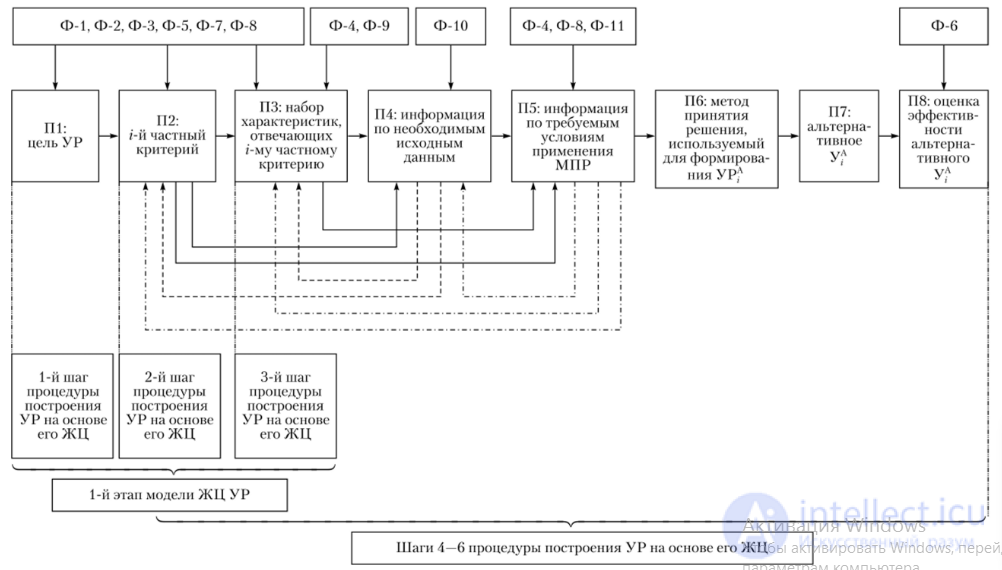
Fig. 3.10. Scheme for implementing the procedure for forming an individual MD based on its life cycle
taking into account the specifics of the management process
Formation of partial criteria, specifying the overall goal of the MD. Naturally, this, too, as in the formation of the overall goal of the MD, must take into account the influence of factors F-1, F-2, F-3, F-5, F-7, F-8 (see Fig. 3.10, parameter P2).
Formation of alternative variants of the MD*. For each of the alternative variants of the MD*, this involves using a scheme of interrelated parameters (Fig. 3.11, see Fig. 3.10).
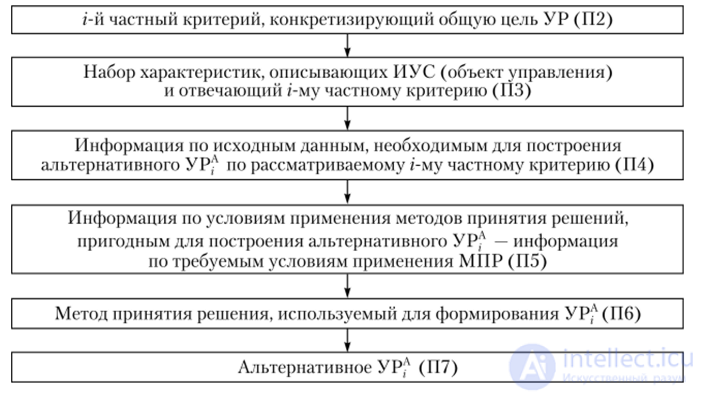
Fig. 3.11. Scheme for forming alternative variants of the MD/*
In studying the factors determining the specifics of the studied management system, it was shown that factor F-4 — the pattern of change over time of the characteristics describing the system — affects parameter P3 — the set of characteristics describing the studied management system (the object of management) and corresponding to the k-th partial criterion (see Fig. 3.10). In addition, factor F-4 must be taken into account when forming information on the required conditions for applying the decision-making method — parameter P5 (see Fig. 3.10).
In studying the factors describing the studied management system and the DM's goal, it was shown that factors F-1, F-2, F-3, F-5, F-7, F-8, F-9 must be taken into account when forming the set of characteristics describing the studied management system and corresponding to the k-th partial criterion (P3), while factor F-8 must be taken into account when forming information on the required conditions for applying the decision-making method — parameter P5 (see Fig. 3.10).
The selected partial criterion (P2) and the set of characteristics describing the studied management system and corresponding to that criterion (P3) determine the necessary initial data, i.e., the information required for constructing the alternative MD* according to the partial criterion under consideration (P4, see Fig. 3.10):

However, it should be noted that the need for one or another piece of information cannot always be met. This is explained by the influence of factor F-10 «Information available on the subject area under study» (see Fig. 3.10)'.
The analysis and comparison of the necessary initial information and the information available on the subject area gives the DM the opportunity to:
The parameters of the alternative managerial decision P2, P3, P4, necessary for forming this MD, determine the required conditions for applying the decision-making method (P5, see Fig. 3.10; Fig. 3.12).
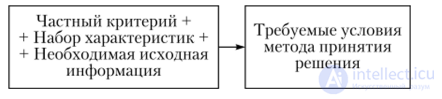
Fig. 3.12. Scheme for forming decision-making conditions
In this case, if the conditions of the decision-making method required in accordance with the named parameters of the alternative MD point to a specific method, it is used to form the corresponding alternative MD (Fig. 3.13; see Fig. 3.10).

Fig. 3.13. Scheme for forming decision-making conditions
However, it must be kept in mind that it is not always possible to immediately indicate a decision-making method whose conditions of application ideally match the specific requirements of parameters P2, P3, P4. In such situations the DM:
In this case, the selection of the corresponding decision-making method must be carried out taking into account factor F-11 — «Decision-making methods and the conditions for their application» (see Fig. 3.10) .
Pay attention!
The factors determined by the specifics of the procedure for forming a managerial decision include:
f-10 — «Information available on the subject area under study»;
F-11 — «Decision-making methods and the conditions for their application».
Evaluation of the effectiveness of alternative variants of the MD. It is carried out for each alternative variant in accordance with the requirements of stage 2 of the life-cycle scheme . When determining the value of parameter P8 (evaluation of the effectiveness of the alternative MD), factor F-6 must be taken into account — the relationship between the DM's interests regarding the studied management system and the goals of creating and (or) operating the studied management system.
Selection of the final variant of the MD. It is carried out after the alternative variants of the MD have been formed, in the construction of which factors arising from the management process itself were taken into account.

Comments