Since ancient times people have faced the need to choose the best course of action in situations that required the use of analytical research methods. Mathematicians of the 17th—18th centuries developed efficient numerical methods and applied them to a wide range of mathematical and physical optimization problems. At the same time, the basic laws of probability theory appeared, which served as the foundation for decision-making under uncertainty. Nevertheless, the most vivid period in the history of the emergence and development of operations research (OR), systems analysis (SA) and decision theory (DT) was the 1940s—1970s. Some landmark events and pioneering works are given below in chronological order1. The list given cannot claim to be complete or objective in its selection of the most significant facts, which is due to the very wide range of scientific fields and applied disciplines that are closely interrelated with the decision-making process.
• 1936—1937 — the period in which the field of operations research originated, within the formation of radar-tracking research stations as part of Great Britain's Royal Air Force. The authorship of the name «operations research» {operations research or operational research) belongs to A. P. Rowe, the head of the scientific group at the Bawdsey station. At the same time the British Operational Research Society was formed. The establishment and rapid development of this discipline came in the pre-war years and was driven by the need to solve important practical problems, primarily related to increasing the effectiveness of combat operations. Later, the methods of OR, being largely universal tools for the study of systems, came to be successfully applied in many other scientific fields, including economic analysis. An important element of the scientific method used within OR is the construction of a model of the object under study, on the basis of which an explanation and prediction of the behavior of the real object of study is built. This is especially relevant with respect to complex socio-economic systems, for which conducting a real experi-
' See in more detail in the book: Cass I. S., Assad A. A. An Annotated Timeline of Operations Research: An Informal History. Springer, 2005. P. 224.
ment on them is impossible or involves enormous expenditure of resources.
- • 1936 — development of economic-mathematical models of interindustry analysis by V. V. Leontief.
- • 1939 — the work of L. V. Kantorovich «Mathematical Methods of Organizing and Planning Production», which formed the basis of linear programming. This term first appeared later, in 1951, in the works of G. Dantzig and T. Koopmans, although the first studies on linear programming were carried out precisely by L. V. Kantorovich in the late 1930s: the statement of the problem, the formalization of optimality criteria, economic interpretation, and solution methods. Many economic situations are connected with multistep decision-making processes, which are described within the methodology of dynamic programming, whose founder is the American mathematician R. Bellman .
- • 1943 — in the works of W. McCulloch and W. Pitts, the simplest version of a mathematical model of an artificial neuron was first proposed, which became the starting point for the development of neural-network methods of data analysis.
- • 1944 — the book by J. von Neumann and O. Morgenstern «Theory of Games and Economic Behavior» was published, presenting concepts for choosing optimal behavior strategies of economic agents and their application in the economic and social spheres.
- • 1957 — the first international conference on operations research, Great Britain, Oxford. The theme of the conference was «Unification and Extension of Scientific Knowledge in the Field of Operations Research». The work of C. West Churchman, Russell L. Ackoff and E. Leonard Arnoff «Introduction to Operations Research» was published, devoted to operations research, which summarized the knowledge accumulated in this field.
- • 1959 — Mathematical Methods of Operations Research, Thomas L. Saaty, McGraw-Hill, New York, 1959. In this work Thomas Saaty for the first time consistently presented the main mathematical aspects of OR, such as methods for solving optimization problems, linear programming, game theory, probability theory, statistics, and queueing theory. The work also gives examples of solving applied problems.
- • 1961 — the foundations of the approach using «decision trees» were laid within the courses taught by Howard Raiffa and Robert O. Schlaifer at the Harvard Business School.
- • 1962—1965 — the emergence and development of ideas and methods based on the notion of fuzziness and on fuzzy set theory, which originate from the publications of Professor Lotfi A. Zadeh «Fuzzy sets». This title is most often translated into Russian as «Nechetkie mnozhestva». The greatest scientists who made a significant contribution to the development of the theory of fuzzy systems also include E. Mamdani, R. Bellman, and A. Kaufmann.
- • 1964 — the first works of Edward S. Quade, which played an important role in creating the methodology of systems analysis for use in the decision-making process in the military and civilian sectors. Systems analysis is an applied science oriented toward developing options for overcoming the problem situations that arise before the DM, based on identifying and analyzing the entire complex of sources of these situations simultaneously .
- • 1965 — the beginning of the application of expert systems, which allow the use of accumulated knowledge, the experience of specialists, and the principles of logical inference to solve complex unstructured problems. The first expert systems were, as a rule, narrowly specialized. For example, the DENDRAL system was developed to evaluate the structure of complex organic molecules based on a number of their chemical properties. A key feature of the system was the use of expert rules, which made it possible to significantly reduce the search space. Later, in the early 1970s, Edward Feigenbaum and Bruce Buchanan began studying the use of programs based on «what — if» rules and production models of knowledge representation.
- • 1966 — systematization of the knowledge accumulated within the scientific field of «Decision Analysis». The 1966 work by Ronald Howard was the first to present the foundations of decision theory and its areas of practical application .
Please note!
Methods and theories such as mathematical programming, optimal control theory, queueing theory, game theory, simulation modeling, the theory of stochastic processes, OR, SA and a number of others are used as the methodological basis of decision theory.
Operations research is a set of scientific methods for the quantitative justification of decisions being made. Problems solved within OR are characterized by the following features:
- 1) the objective nature of the models used. In this case, mathematical models reflect an objectively existing reality, which is primarily characteristic of engineering and other natural sciences;
- 2) the main goal of the research, the achievement of which is the analysts' responsibility, is to find a solution at the DM's request. In doing so, the DM may provide additional information during the research, but his main task is to implement the resulting solution;
- 3) there is an objective criterion of success in applying OR methods, owing to which it is possible to directly evaluate the advantages of the optimal solution found relative to the existing one .
The following can be identified as the main methodological principles of operations research:
1) a systemic approach to analyzing the problem and formulating tasks;
- 2) the research is conducted comprehensively, along various lines. An operations group is set up for this purpose. In order to give comprehensive consideration to the problems of developing possible solutions and evaluating them, the group includes specialists from various fields;
- 3) mathematical modeling of the objects and operations under study is used as the main method of analysis and synthesis of optimal solutions .
The following main stages of operations research can be identified .
- 1. Problem statement:
- • identifying the problem, analyzing and selecting the factors describing it;
- • formulating goals and criteria;
- • constructing a mathematical model.
- 2. Search for the optimal solution:
- • by individual criteria;
- • synthesis of a compromise solution.
- 3. Making and implementing the decision:
- • making the decision;
- • evaluating the result obtained;
- • adjusting the model (if necessary).
The science within which the study of complex systems developed is called systems analysis. To solve problems, systems analysis uses a wide range of scientific research tools, ranging from strictly formalized methods to operations that are extremely poorly amenable to formalization: optimization methods, modeling, scientific observation, experiment, problem description and generation of alternatives.
The problems considered in decision theory differ from OR problems in that solving them requires more than objective models — additional information from the DM is needed, which may be based on his experience and intuition. This information represents the subject's point of view and is therefore subjective; nevertheless, the DM's preferences must lie within a certain rational system . An additional feature is the possibility that expert information from the DM may be presented in a qualitative, difficult-to-formalize form, which must be taken into account when choosing the methods and procedures for developing and justifying decisions, which fall within the subject area of decision theory.
An unambiguous determination of the place of OR, SA and decision theory among the mathematical sciences related to management is made difficult by their mutual penetration and the overlapping of the functions they perform. One well-known version of the relationship between these disciplines is shown in Fig. 6.1 .
One approach to solving the terminology problem is to use the abbreviation ORASA proposed by Rolf Tomlinson (Operational Research and Applied Systems Analysis), which combines the di-
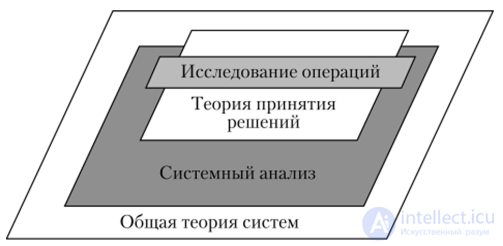
Fig. 6.1. Relationship between scientific disciplines
rections of OR and SA, between which it is difficult to draw a clear boundary. The subject of study of ORASA is the interdisciplinary scientific, systemic study of problems and the decision-making process, carried out with the aim of improving the quality of decisions made.
One of the pressing issues at present is that the successful practical use of SA and related disciplines, such as OR, often proves difficult due to an incomplete and often incorrect methodology. Premises are often used that do not hold up to criticism under real-life conditions. One such assumption is that the problem under study can be formalized and expressed in mathematical terms, after which the model can be studied in isolation from the human being and organizational elements. Another questionable assumption is that the implementation of analysis results in practical activity can be separated from the systems-analysis process itself. Overcoming such problems requires the involvement of experts from fields such as philosophy, psychology and sociology .
See also
- [[b94]]
- [[b9657]]
- [[b9708]]
- [[b9699]]
- [[b6661]]
- [[b4938]]
- Bayesian statistics
- Causal decision theory
- Choice modelling
- Satisficing
- Decision-making
- Evidential decision theory
- Game theory
- Multiple-criteria decision-making
- Operations research
- Optimal decision
- Decision quality
- Preference (economics)
- Quantum cognition
- rationality
- Secretary problem
- Signal detection theory
- Small number game
- Stochastic dominance
- TOTREP
- Two envelopes problem
- Daniel Kahneman
- Prospect theory
See also


Comments