
Lecture
It is determined by
the degree to which the system covers methodological information (the second methodological aspect) and by the content of the specific tasks assigned to the system (Fig. 5.1).
Each DSS is developed or improved for the specific managerial or economic problem being solved and must take into account the features of the decision-making process that exist in the organization. Nevertheless, three main functional components of a DSS can be identified: a database (or knowledge base), a library of models, methods and tools, and an interactive user interface. This is precisely why, for the decision maker, the following subsystems are of particular importance in the structure of a DSS:
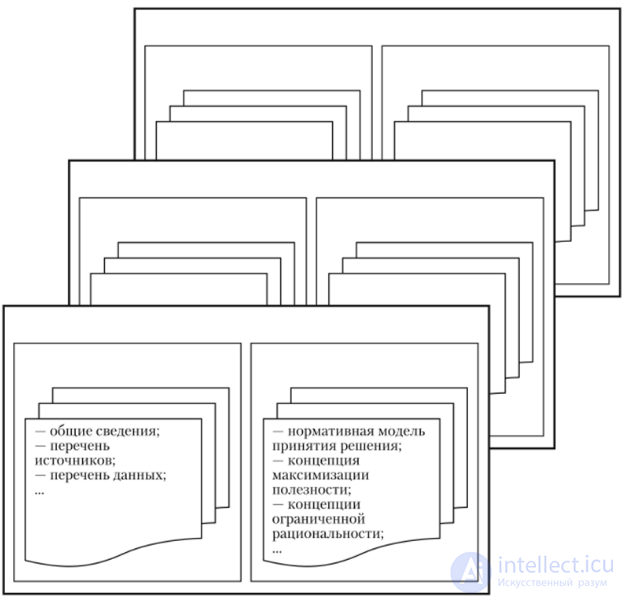
Fig 5.1. Conceptual diagram of a DSS (in the broad sense)
The content of subsystems 1 and 2 should essentially represent reference information used in forming managerial or economic decisions, i.e., used when solving the specific tasks considered within subsystem 3. In fact, subsystems 1 and 2 provide the informational and methodological support used for the operation of subsystem 3; solving specific tasks within subsystem 3 presupposes the use of the knowledge that they provide. This is precisely why the volume of reference information in subsystems 1 and 2 will directly depend on the specifics of the tasks solved by subsystem 3.
Note that subsystem 3, at the same time, is in fact an independent DSS considered in the narrow sense, in which the questions of methodological and informational support for the task-solving process related to forming the final managerial or economic decision are taken «outside its scope».
Subsystem 1 «General informational and methodological support for decision-making» (Fig. 5.2). The purpose of this subsystem is to provide general methodological information that the DM must take into account when making specific managerial or economic decisions.
Since a DSS can be used both for processing information and for forming alternative and/or final decisions, the following sections can be identified within the general methodological information:
Within Section 1 «Methodological information related to solving information-processing tasks», in turn, the following blocks can be identified:
• Block 1 — a general characterization of information as the main resource used in forming managerial or economic decisions;
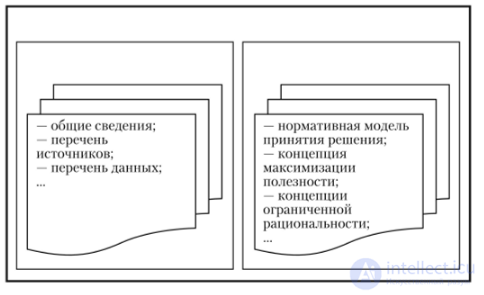
Fig. 5.2. Structure of Subsystem 1 «General informational and methodological
support for decision-making»
Other additional blocks can also be identified.
Section 2 «Methodological information, related to solving the tasks of forming alternative and (or) final decisions» may include the following blocks:
The list of blocks can be continued. Thus, into a separate block
methodological information can be singled out that is related to the specifics of constructing managerial or economic decisions for socio-economic systems, as well as to such notions as «modeling», «Pareto set», «criteria», «importance of criteria», «fuzzy sets», etc.
Subsystem 2 « General information on economic-mathematical methods and tools for decision-making» (Fig. 5.3), whose purpose is to provide methodological support for decision-making by supplying information on possible decision-making methods and tools.

Fig. 53. Structure of Subsystem 2 «General information on economic-mathematical methods and tools for decision-making»
Since economic-mathematical methods and tools can be used both for solving information-processing tasks and for forming alternative and/or final decisions, the information of this subsystem can also be systematized into two sections:
In Section 1 «Information on economic-mathematical methods and tools for decision-making, related to solving problems of information processing», in turn, the following blocks can be identified:
Other additional blocks may also be identified in Section 1.
In Section 2 «Information on economic-mathematical methods and tools for decision-making, related to solving problems of forming alternative and (or) final decisions» information blocks can be identified taking into account the DM's adopted classification of decision-making methods and the available software.
As an example of an aggregated classification of decision-making methods, the following can be proposed:
Examples of software used to implement various mathematical methods of information processing may include the software environments MATLAB , Mathematica , the analytical platform Deductor , and others.
Useful for the DM in Subsystem 2 may be not only a description of specific software for data processing and the implementation of particular economic-mathematical methods and computational algorithms used to support decisions, but also an account of its potential applications.
Subsystem 3 «Specific tasks of the subject domain» (Fig. 5.4), the purpose of which is to provide and use specific methods and tools for solving problems related to forming managerial or economic decisions.
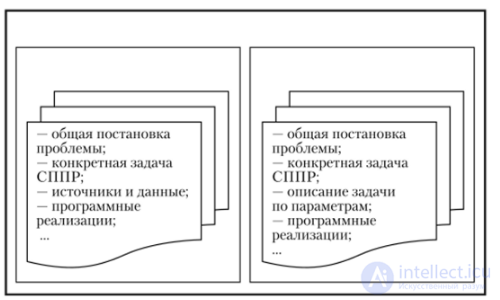
Fig. 5.4. Structure of Subsystem 3 «Specific tasks of the subject domain» —
DSS in the narrow sense
This subsystem includes the description and solution of specific tasks passed to the decision support system. In doing so, the methods and tools systematized in Subsystems 1 and 2 are used.
The information provided by this subsystem is structured in content into two sections:
Section 1 «Solving specific tasks related to information processing» should contain the following information blocks:
The list of blocks can be expanded.
Recently, the use of the DSS for processing large data arrays that change rapidly over time . The task of the DSS in this case comes down to processing and presenting them to the DM in a form convenient for analyzing the situation. An example is data from real sales receipts, which can be used to analyze situations regarding the volumes, locations, and timing of demand for particular goods and services.
Section 2 «Solving specific tasks, related to forming alternative and final decisions» may include the following independent blocks:
Additional blocks may also be identified.
Overall, Subsystems 1—3 implement three main functional components of the DSS: a database (or knowledge base), a library of models, methods and tools, as well as an interactive user interface.

Comments