
Lecture
One of the main components of a decision-making problem is the concept of the preference of the person making the decision.
Definition
The DM's preference is understood to be his personal judgment, expressed in some way, about the presence or absence of an advantage of one of the options (alternatives) of choice in relation to another option or to all other options, either as a whole or with respect to certain individual characteristics .
The subjectivity of preferences is expressed in the fact that each DM may have his own system of values. Preferences can be described explicitly or identified using some rules or principles described by means of logical-mathematical methods.
Example: the subjectivity of preferences. The director of a certain enterprise needs to select a suitable candidate for the position of his deputy. Naturally, he will make the choice based on his own system of preferences. For one director, the most preferable candidates will be those with unconventional thinking, for another — responsible and diligent candidates, and for a third — conformists.
Please note!
To solve a DMP, it is important to know the DM's system of preferences.
Thus, identifying the best options from the available set for the DM is done on the basis of his idea of the quality of these options. This idea of the quality of the options is characterized by means of the optimality principle, whose mathematical expression is the choice function .
Definition
Let X denote the set of alternatives of the problem, from which the most preferable ones for the DM must be selected.
Let X' denote the set of the most preferable options for the DM, then X' is a subset of the set X: X' ⊂ X.
The choice function C is called a rule that assigns to a set X its subset of alternatives X': C(X) = X'
Thus, the optimality principle defines the concept of the «best» or most preferable alternatives for the DM:
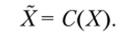
In this case it is possible that C(X) = 0, which is interpreted as a refusal to choose. Examples of such a refusal could be situations where a customer does not purchase any goods in a store, or where no one from a group of students is selected to participate in an olympiad.
Definition
|| The mathematical model of preferences is called the pair (X, C(X))
It should be noted that not every function that assigns to a given set its subset can be interpreted as a choice function. Certain restrictions must be imposed on the choice being made. At the same time, it is impossible to unambiguously single out a list of restrictions or properties of such a function, since the principles of choice depend on the specific decision-making problem. For example, if some enterprise turns out to be among the best in the ranking of enterprises in its country but does not make it into the best in its industry, such a ranking seems strange and at the very least unjustified. At the same time, it is quite possible that among the schoolchildren who obtained the best results in their final exams there may be some who are not winners or prize-holders of olympiads.
Depending on the characteristics of the specific problem, certain restrictions are imposed on the choice function. Let us list the characteristic properties that a choice function may satisfy.
1. Heredity property: if Y ⊂ X, then C(X) ∩ Y ⊂ C(Y).
This property can be illustrated by the following example. If X — is the set of students of the economics faculty, and Y is the students of one of the groups of this faculty, then the best students of the economics faculty who study in this group will be among the best students of this group.
2. Agreement property: if X = Y ∪ Z, then C(Y) ∩ C(X) ⊂ C(X).
If, for example, X — is the set of girls studying at the economics faculty, then the girls who turn out to be on the list of the best students of group Y will be among the best students of the economics faculty.
3. Discard property: if C(X) ⊂ Y ⊂ X, then C(Y) = C(X).
For the example described above, this property means that excluding from the competition those students who are not among the best does not change the composition of the best students of the faculty.
4. Strict heredity property: if Y ⊂ X, Y ∩ C(X) ≠ ∅ or C(X) = ∅, then C(Y) = Y ∩ C(X) for X, Y ≠ ∅.
For the example described, this property means that only the best students of the faculty will be included in the lists of the best students of the groups of this faculty. This property imposes stricter requirements than heredity property 1. Property 4 holding implies that property 1 holds, but property 1 holding does not necessarily imply that property 4 holds.
Please note!
Despite the fact that the properties listed seem quite natural, there are practically interesting problems whose choice functions do not satisfy any of them.

Comments